
Review · NAGANO TOURS
From Nagano: Tateyama-Kurobe Alpine Route
The Tateyama-Kurobe Alpine Route turns one train-and-bus day into a true mountain journey. You get Kurobe Dam first, then a stack of different lifts and trolley rides that deliver you up to Murodo at 2,450 meters. The big win is that you are not just looking at mountains, you are moving through them.
The tradeoff is simple: it is a long day with multiple vehicle changes and a lot of people in peak seasons. If you are the kind of person who needs downtime, plan to pace yourself at each stop.
In This Review
- Key things that make this day trip work
- A one-day route that feels like Japan’s mountain highlight reel
- Your morning in Nagano: start early, arrive ready
- Ogisawa up to the dam: the first taste of scale
- Kurobe Dam: national pride with real-world power
- The ascent feels like a ride system, not just transportation
- Daikanbo and Murodo at 2,450m: the top feels remote
- The snow corridor and 20-meter ice-wall feel
- Getting back down to Nagano: plan for a tired, satisfied finish
- Price and value: what $232 is really buying
- What to bring (and what can ruin the snow moment)
- Who should book this one, and who should skip it
- Should you book the Nagano to Tateyama-Kurobe day trip?
- FAQ
- What time do I meet the guide in Nagano?
- How long is the tour?
- What’s included in the price?
- Is lunch included?
- Where does the tour take you at the highest point?
- What should I wear or bring?
- Are pets allowed?
- What happens if the weather is bad?
- Is the tour cancellable?
Key things that make this day trip work
- Kurobe Dam guided time plus mountain views, not a quick drive-by
- Real variety of mountain transport, including a tunnel trolley segment and ropeway
- Murodo at 2,450m, Japan’s highest station experience
- Snow corridor viewing, with an easy-to-miss but very memorable ice-wall style section
- Well-run schedule potential, with guides praised for managing timing and crowds
- Optional flexibility with day-of pacing, since traffic and group pace can adjust stops slightly
A one-day route that feels like Japan’s mountain highlight reel
There are mountain trips, and then there is this one. The Tateyama-Kurobe Alpine Route is famous because it strings together iconic sights in a way that feels built for wonder, not just transportation. You start in Nagano city, then gradually climb into the high-alpine zone where the weather, air, and light change fast.
What I like about this kind of day is the structure. You do not wander around trying to figure out connections. An English-speaking guide keeps you together through the move-ups to Ogisawa, the dam area, and the final push to Murodo. You also get enough time at the top to actually experience the place, not just stand in line and move on.
The route is also very “Japan.” One minute you are dealing with big infrastructure, and the next you are riding a ropeway and trolley systems designed specifically for steep mountain terrain.
A few more Nagano days to weigh up
- 1-Day Snow Monkeys, Zenko-ji Temple & Sake in Nagano
★ 5.0 · 1,020 reviews - Nagano: Snow Monkeys, Zenkoji Temple & Sake Day Trip
★ 4.9 · 833 reviews - From Tokyo: Snow Monkey 1 Day Tour with Beef Sukiyaki Lunch
★ 4.6 · 295 reviews
Your morning in Nagano: start early, arrive ready
The day begins at JR Nagano Station, meeting your guide at 08:15. The meeting point is in front of the Information Board, directly opposite the shinkansen ticket gates. From there, you board a tour bus that runs about 1.5 hours to Ogisawa, arriving around 10:15.
This timing matters. By late morning, you are already positioned near the mountain access points, so you can start the ascent without losing half the day to city traffic. Also, Ogisawa is where you switch from the comfort of a coach to the mountain transport system.
Before you go, I’d treat the first hour as your “get ready” window:
- wear comfortable shoes (you will walk at multiple stops)
- have sunglasses handy (high elevations can be bright)
- keep layers accessible, because mountain weather can turn fast
If you tend to take photos slowly, that is fine. Just know there is a rhythm to the day, and your guide will keep the group moving.
Ogisawa up to the dam: the first taste of scale
Once you reach Ogisawa, you start preparing for the ascent, including boarding the Kanden Tunnel trolley bus. The schedule lists a 11:00 start for that first mountain transport leg.
A lot of people expect the Alps portion to start immediately with snow. In reality, the dam stop is the dramatic opener. You are walking into a completely different type of mountain story, one about engineering, power, and how humans carved routes through steep terrain.
You are also going to learn something important about this route. It is not one single ride, it is a sequence. Each transport segment is there because the next part of the mountain demands a different solution.
If you get motion sensitive, this is a day where you should plan for it. The day includes multiple vehicle transfers, so bringing a neck pillow or adjusting your seating habits can make a real difference.
Kurobe Dam: national pride with real-world power
Your first major stop is Kurobe Dam. You get a guided tour, sightseeing time, and a walk in the area for about 2.5 hours.
The dam is Japan’s highest dam. It was constructed between 1956 and 1963, and the effort is described in the tour as involving up to 10 million workers. That number gives you the right mindset: this is not a small sightseeing stop, it is a landmark built with massive resources.
What you should do with your time there:
- Take the guided explanation seriously, because it helps you read what you are seeing.
- Spend a little time looking at the surrounding mountain slopes and valleys before you rush to the next ride.
- Enjoy the pacing. The dam stop gives you a more grounded, human-scale break before the high station experience.
A key value here is balance. Some “viewpoint” stops feel like you are doing a photo checklist. The dam stop is more about understanding why this corridor exists and what it represents.
A different sort of day in Japan:
- Matsumoto Castle Tour & Samurai Experience
★ 4.9 · 128 reviews - 1-Day Tour from Nagano and Matsumoto Kamikochi & Matsumoto Castle
★ 5.0 · 105 reviews - Full-Day Tour: Matsumoto Castle & Kamikochi Alpine Valley
★ 4.8 · 78 reviews - Private Nagano 1-Day Tour:Snow Monkeys,Zenko-ji,Obuse,Sake,Onsen
★ 5.0 · 71 reviews
The ascent feels like a ride system, not just transportation
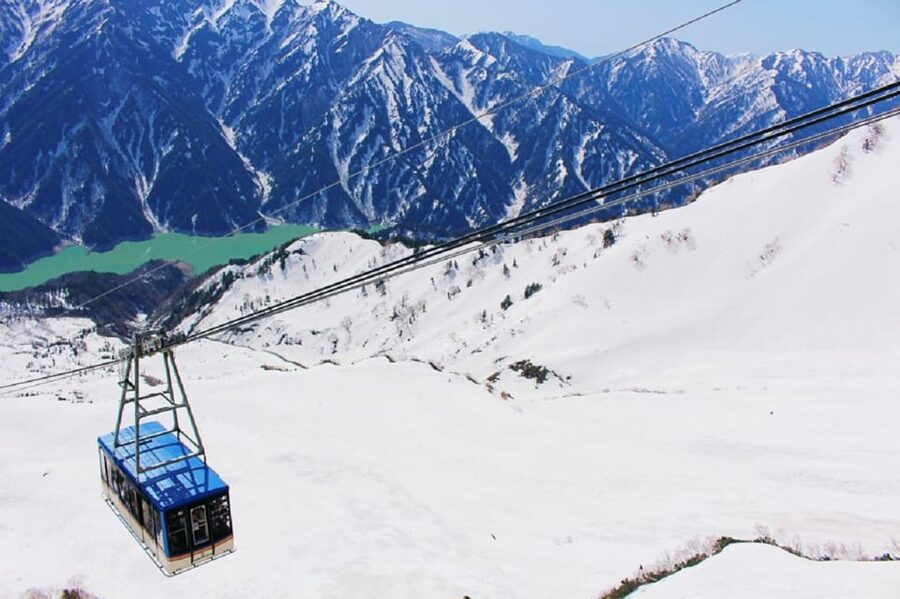
After the dam, you head to the Tateyama Ropeway, then continue on to the highest area via additional mountain transport. The ropeway spans 1,700 meters, lifting you to the final stop of Daikanbo, where you take the final trolley bus up to Murodo.
This is where the route earns its reputation. You are not trapped in one vehicle for the entire day. You experience the mountain through multiple “mechanical viewpoints,” each one giving a slightly different sense of steepness and elevation.
Some guide feedback I found particularly useful was about timing and group management. People have credited guides such as Teddy and Orlando for keeping the schedule moving smoothly and for giving enough time at each key spot. That matters here, because the route only works when the transfers feel organized. Another set of comments praised guides like Endo and Aiko (Joyce) for managing a schedule despite transport changes and group size.
What I’d watch out for is the human factor of peak days. This is a popular route, and you can run into queues during vehicle transfers. If you want fewer delays, a calmer mindset helps. You are not just sightseeing, you are also participating in an organized climb.
Daikanbo and Murodo at 2,450m: the top feels remote
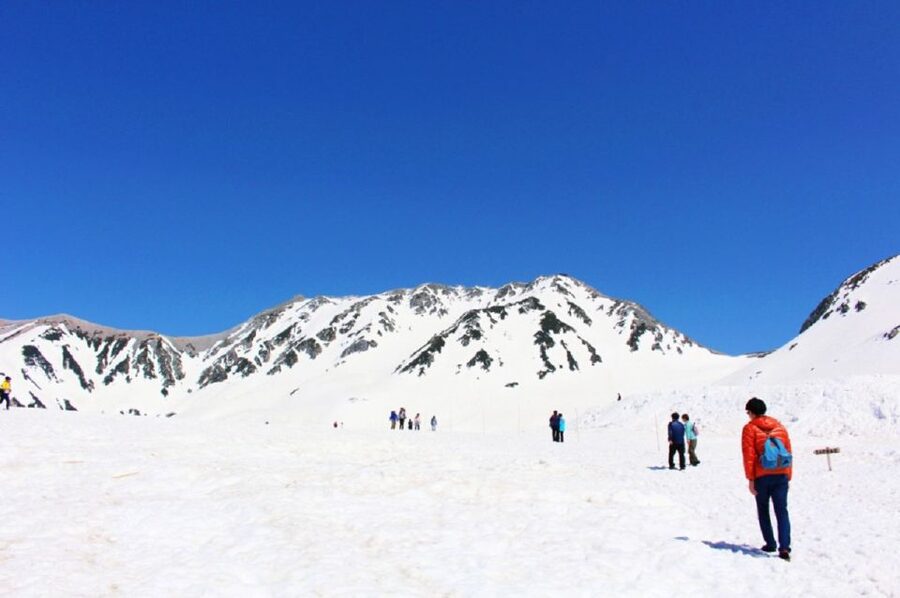
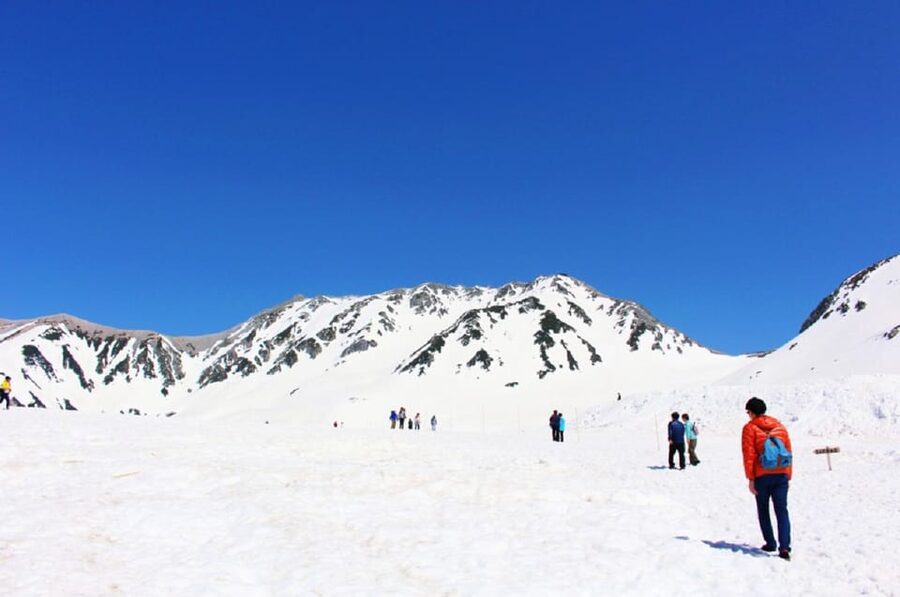
At 2,450 meters, Murodo is Japan’s highest station and an isolated outpost in a dramatic, inhospitable-feeling environment. The tour includes a guided segment and about 2 hours for sightseeing and walking at Murodo.
Then you get the highlight time: the snow corridor area. The schedule gives 1.5 to 2 hours of free time at the top. That window is important. It is long enough to walk around, check out museums, and make your own route through the area.
Daikanbo is the bridge point between systems. The ropeway takes you up, then you switch again. The good news is that because the route is designed as a sequence, you are not stuck trying to interpret signs or figure out which lift is next.
A practical note from the tour guidance: the snow corridor routes can close during extreme weather. That means your “must-see” moment depends on conditions. If you are traveling at a time when weather can shift quickly, you should keep your expectations flexible and stay warm.
The snow corridor and 20-meter ice-wall feel
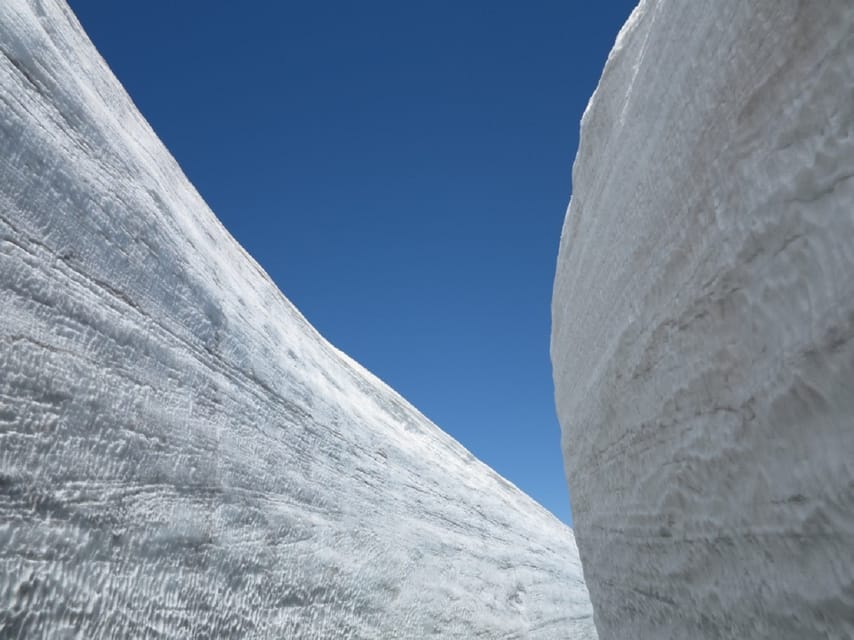
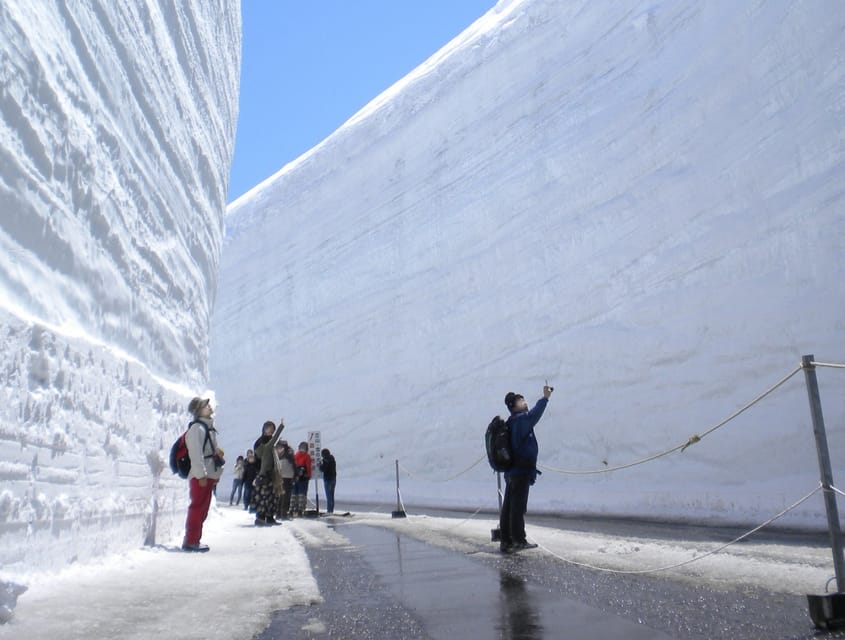
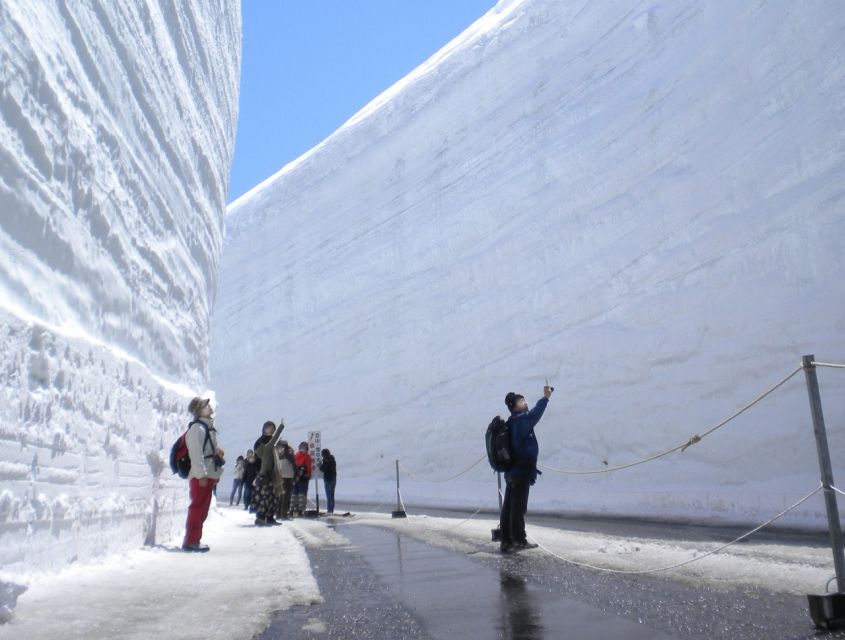
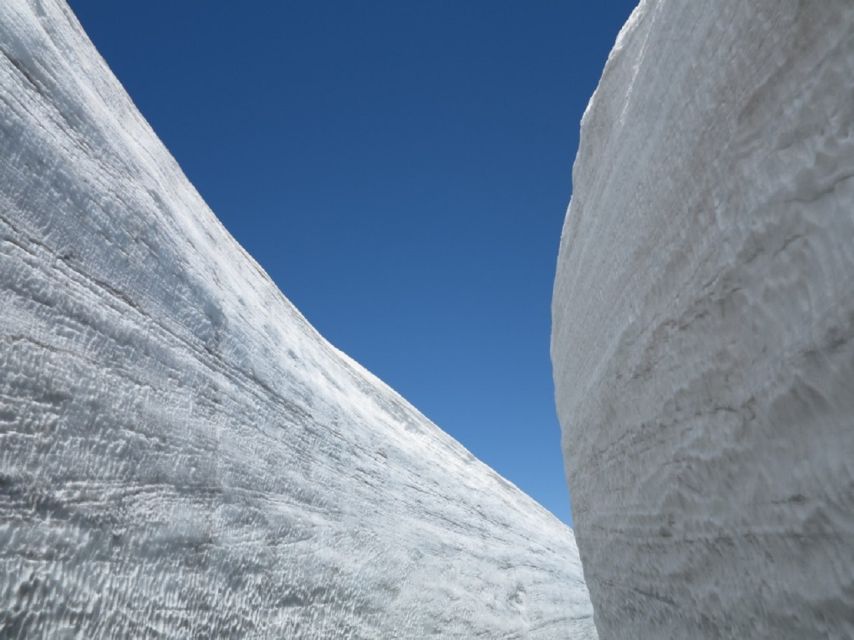
One of the most memorable parts is the iconic snow corridor, a section where the “wall” rises about 20 meters above you. This is the place where photos and reality line up. The corridor structure gives you a strong sense of scale, and the height makes it feel less like a walkway and more like being inside a high-altitude world.
You’ll have time to explore on your own. Use the free time strategically:
- Start with the corridor early so you are not rushed by peak foot traffic.
- Then balance photos with indoor or sheltered stops, like the museums mentioned for the area.
- Save a few minutes to just stand and watch light change across the snow and structures.
One piece of feedback that really matches the route reality: the trip can be tiring because it blends multiple transport types with crowds. That does not mean you should skip it. It just means you should treat the day like an “active sightseeing” outing, not a relaxed stroll.
Sunglasses also matter here. Even in cooler weather, brightness at elevation can surprise you.
Getting back down to Nagano: plan for a tired, satisfied finish
After your high-station time, the day reverses. You start the journey back to Nagano via the mountain transport connections, then board the bus for about 1.5 hours back to Nagano Station.
Your timeline is tight enough that you should avoid last-minute “I’ll run back for one more photo” decisions. With multiple vehicle legs, it is easy to lose time chasing a single shot at the wrong moment.
This is also where pacing pays off. If you have a bigger group, it can help to stick close when your guide gives the next meeting instruction. Feedback also points to how important the guide is for keeping things orderly across stops, including smooth entry and exit during different legs. When it runs well, you feel the structure, not the stress.
At the end of the day, you should expect to feel:
- legs worked from walking at dam and top areas
- slightly mentally “busy” from the transport changes
- satisfied because the route is built around iconic moments, not random detours
Price and value: what $232 is really buying
The listed price is $232 per person for a 1-day experience. Here is how I think about value on a day like this.
What you get that can be expensive or annoying on your own:
- return transport arranged from Nagano to Ogisawa
- the Tateyama-Kurobe Alpine Route ticket, including transport to and from the summit area
- an English-speaking guide
What is not included:
- lunch
- additional snacks and drinks
- any shinkansen tickets you might need to reach Nagano
This matters because the “summit access” part is not just a single cable car ticket. It is a bundle of different transport systems that work together. Paying once for the full route reduces the risk of getting stuck at a transfer point, which is a real cost in time and stress.
In other words, $232 is not just paying for views. It is paying for the machinery of getting you up to 2,450m with less friction.
If you want the most value from the day, budget for snacks and a simple lunch plan. Since lunch is not included, bring something you can eat quickly, or be ready to buy food at your stops if options are available during your travel dates.
What to bring (and what can ruin the snow moment)
This route is practical, but it does ask for basic mountain prep.
Bring:
- comfortable shoes for walking on possibly snowy trails
- sunglasses
- layers for colder air near the top (even when Nagano feels mild)
Not allowed:
- pets
Know before you go:
- extreme weather can close parts of the snow corridor route
- the itinerary may adjust slightly based on traffic conditions and the group pace
- every listed activity depends on availability, meaning there can be small schedule swaps if a specific part cannot run as planned
A small but important tip: at crowded stations, ticket confusion can happen. One comment noted an issue related to ticket purchasing on part of the journey. I’d simply stay alert to what ticket you already have, and follow your guide’s instructions about where and when to buy anything.
Who should book this one, and who should skip it
This is a strong fit if you want:
- one-day access to the famous Tateyama-Kurobe experience from Nagano
- a mix of engineering wonder (Kurobe Dam) and high-altitude snow scenery (Murodo and the snow corridor)
- an organized guide-led day with English support
It can be less ideal if:
- you hate crowds and vehicle transfers
- you are very sensitive to tiring schedules (the day is active and can feel long)
- you are traveling during periods when weather might frequently disrupt access to snow areas
Wheelchair accessibility is noted as available, which is encouraging for mobility planning. Still, because the route involves multiple transport changes and walking, I’d assume you will need to move with the group and manage short walks at each stop.
Should you book the Nagano to Tateyama-Kurobe day trip?
If you want the big names of Japan’s mountain world in one organized day, I think this is an easy yes. The mix of Kurobe Dam, ropeway and trolley transports, and time at Murodo gives you a complete story instead of a single scenic stop.
I’d book it if you can handle a long, active schedule and you are okay with weather-dependent snow corridor access. If your priority is a calm, no-transfers day, you might prefer something simpler in the region.
FAQ
What time do I meet the guide in Nagano?
You meet your guide at JR Nagano Station at 08:15. The meeting point is in front of the Information Board, directly opposite the shinkansen ticket gates.
How long is the tour?
The duration is 1 day.
What’s included in the price?
The price includes return transportation from Nagano Ogisawa, the Tateyama Kurobe Alpine Route ticket (including all transport to and from the summit), and an English-speaking guide.
Is lunch included?
No. Lunch is not included, and you will need to plan for additional food, snacks, and drinks.
Where does the tour take you at the highest point?
The highest station is Murodo at 2,450 meters, reached after Daikanbo and the final trolley bus leg.
What should I wear or bring?
Wear comfortable shoes for walking on possibly snowy trails, and bring sunglasses. The terrain and lighting at higher elevation can be demanding.
Are pets allowed?
No, pets are not allowed.
What happens if the weather is bad?
In extreme weather conditions, routes to the snow corridor may close. The schedule may also be adjusted slightly based on traffic and the group’s pace.
Is the tour cancellable?
Yes, there is free cancellation up to 24 hours in advance for a full refund.
Newly listed around Nagano
- From Nozawa Onsen: Snow Monkeys and Zenko-ji Day Trip & Sake★ 4.9 · 13 reviews
- Food & Cultural Walking Tour around Zenkoji temple in Nagano★ 5.0 · 16 reviews
- 1 Day Tour: Snow Monkeys & Snow Fun in Shiga Kogen★ 5.0 · 52 reviews
- Nagano/Matsumoto: Matsumoto Castle and Narai-juku Day Trip★ 5.0 · 23 reviews
- From Matsumoto/Nagano: Nakasendo Trail Walking Tour★ 4.9 · 33 reviews
- Matsumoto Discovery – Half Day Walking Tour★ 5.0 · 43 reviews
- 1-Day Tour from Matsumoto: Walk the Nakasendo Trail★ 5.0 · 39 reviews
- Matsumoto Castle Town Walking Tour★ 4.8 · 58 reviews
Nagano Tours, compared.

1-Day Snow Monkeys, Zenko-ji Temple & Sake in Nagano
Read our review →
Nagano: Snow Monkeys, Zenkoji Temple & Sake Day Trip
Read our review →
Snow Monkey 1 Day Tour with Beef Sukiyaki Lunch
Read our review →
1-Day Tour from Nagano and Matsumoto Kamikochi & Matsumoto Castle
Read our review →
Full-Day Tour: Matsumoto Castle & Kamikochi Alpine Valley
Read our review →
Private Nagano 1-Day Tour:Snow Monkeys,Zenko-ji,Obuse,Sake,Onsen
Read our review →Browse the lists this tour appears in