
Review · LOCAL FOOD WALKS
Takoyaki making experience ~Japan’s popular street food~
Hot octopus balls, teach-yourself style. In Shinjuku’s Kabukicho, this is a hands-on take on Japan’s favorite street snack, close to the Godzilla hotel area. I love that you cook and flip the batter into real takoyaki, not just watch from the sidelines, and you get to control the toppings at the end.
What makes it especially family-friendly is the small setup and a calm instructor vibe, with guides like Mai showing up as patient and encouraging when you are learning to handle the sticks. The one thing to consider is language support: some staff use a translation machine, so the class may lean more on demonstrations and written steps than long, detailed spoken lectures.
In This Review
- Key Highlights You’ll Actually Notice
- Takoyaki in Shinjuku, The Street Snack Made Personal
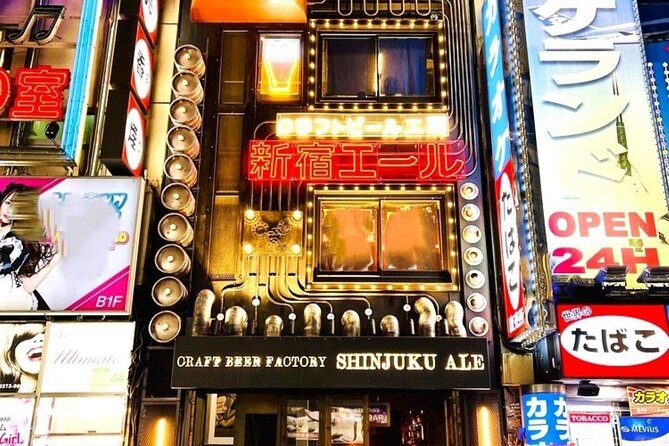
- Where You Meet: Shinjuku Ale, Easy to Find and Easy to Start
- The Class Flow: How Your Hour Unfolds
- The Takoyaki Griddle Setup: Sharing a Cooker Makes It Social
- Making Takoyaki: Batter, Octopus, Heat, and That First Flip
- Toppings Are Where You Make It Yours
- What You’ll Eat, What Pairing Makes Sense
- Price and Value: Is $26.43 Worth It?
- Language and Instructions: How to Get the Most Out of the Hands-On Part
- Who This Is Best For (And Who Might Want to Skip It)
- Should You Book This Takoyaki-Making Experience?
- FAQ
- How long does the takoyaki making experience take?
- Where is the meeting point for the class?
- How many takoyaki can I make?
- Is bottled water included?
- What is included in the price?
- Are drinks included?
- Do two people share one cooker?
- Do you need to be a certain age to join?
- Can I get help if I do not speak much English?
Key Highlights You’ll Actually Notice
- Small group feel (max 6 travelers), so there is time to get unstuck while you cook.
- One griddle per two people, which keeps it social and avoids waiting in line.
- You can make up to 12 takoyaki per person, so you are not stuck with a single sad sample.
- Flipping takes finesse, and that learning moment is part of the fun.
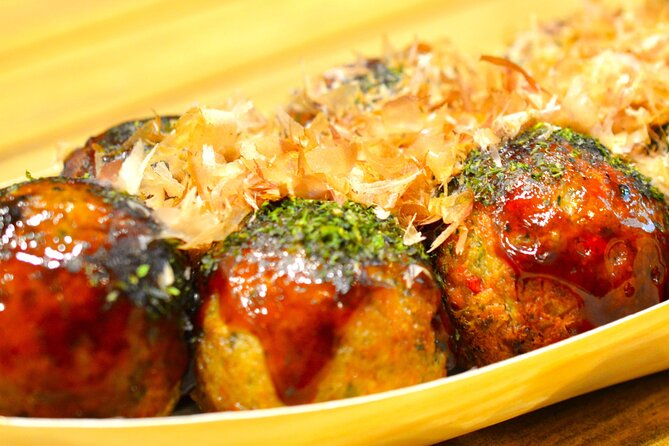
- Finish your own plate with sauce, mayonnaise, bonito flakes, and aonori.
- About one hour end-to-end, including cooking and eating, then you are done.
Takoyaki in Shinjuku, The Street Snack Made Personal
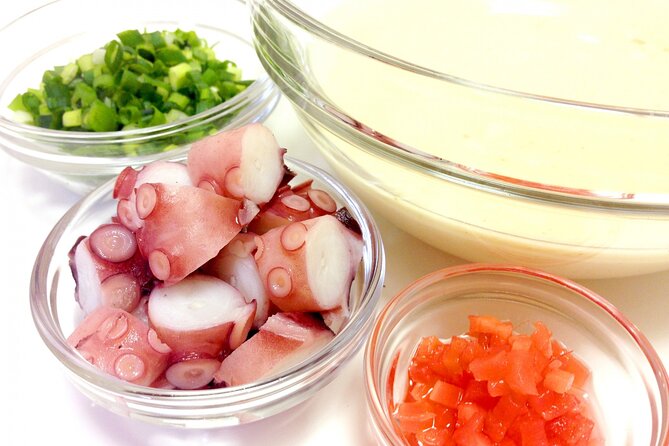
Takoyaki is one of those Tokyo foods that feels simple, but it is really about technique. The core idea is straightforward: flour batter goes into a round hole on a hot griddle, chopped octopus lands inside, and the balls cook into that classic round shape.
Here is why this kind of experience works so well in real life: it turns street food into something you understand with your hands. You learn why they come out crispy outside and fluffy inside, and you get a feel for how the surface sets before you flip.
Also, takoyaki is easy to eat while you are standing, walking, and snacking in Japan. In a class like this, you get the best of both worlds: you practice the cooking, then you eat your own batch hot.
More Food Tours in Tokyo
- Shinjuku Izakaya Food Tour
★ 5.0 · 1,041 reviews - Casual Japanese SAKE tasting and snack experience in Kabukicho
★ 5.0 · 159 reviews - Experience Comparing Sake and Delicacies in shinjyuku
★ 5.0 · 41 reviews
Where You Meet: Shinjuku Ale, Easy to Find and Easy to Start
Your meetup point is Shinjuku Ale, and the location is listed as 1F and 2F in Kabukicho, Shinjuku City. The experience also says it is near public transportation, which matters because Kabukicho can feel like a maze if you arrive stressed.
You will use a mobile ticket, so make sure it is ready before you leave your hotel. When you get there, you should inform the staff of your reservation for the experience.
This part sounds basic, but it sets the tone. Getting checked in quickly means you spend more of your one hour cooking, instead of waiting around with your appetite getting louder.
The Class Flow: How Your Hour Unfolds
This is not a long lecture, and that is a good thing. You will go from setup to cooking to eating, and the experience ends when you finish eating, around one hour total.
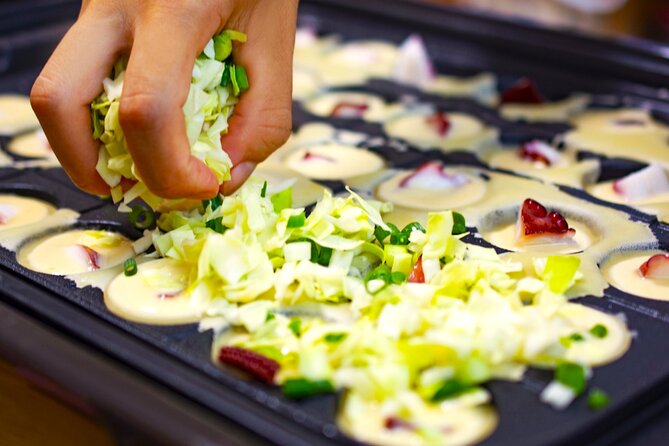
In that time, you are doing the main action that makes takoyaki interesting: heating the griddle, using a batter pour, placing chopped octopus, then cooking until the balls are ready to be shaped and turned.
A key practical point from the way these classes are usually run is that you will likely get hands-on at the griddle sooner than you expect. That is where the learning curve hits, especially with flipping. One of the best bits of feedback you can take seriously is that flipping really is tricky at first, and it takes some finesse to get those little round balls turning nicely.
The Takoyaki Griddle Setup: Sharing a Cooker Makes It Social
The setup is simple but smart: two people use one takoyaki cooker. That means you are cooking with your group, and you are not stuck watching while someone else does everything.
Even better, you can make up to 12 takoyaki per person. That is enough food to feel like a real meal, not a gimmick snack, especially when you add the toppings.
If you are traveling as a couple or with friends, sharing the cooker can be a win. You can trade tasks, take turns flipping, and still both feel like you contributed.
If you are coming with kids, sharing also helps keep momentum. Everyone stays in the game, and nobody feels like they are waiting for their turn forever.
More Food Walks in Tokyo
- Tokyo: Night Foodie Tour in Shinjuku
★ 4.8 · 275 reviews - Tokyo: Shinjuku Food Tour (13 Dishes at 4 Local Eateries)
★ 5.0 · 6,603 reviews - Tokyo: Shinjuku Food Tour (15 Dishes and 4 Eateries)
★ 4.9 · 2,033 reviews - Tokyo Night Foodie Tour in Shinjuku – Seasonal Sushi, Wagyu Beef
★ 5.0 · 1,161 reviews
Making Takoyaki: Batter, Octopus, Heat, and That First Flip
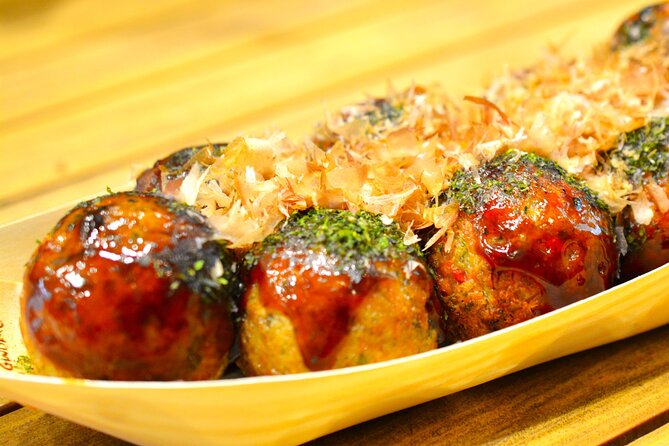
This is the heart of the experience, and it follows the classic takoyaki method. Flour batter made from water and eggs gets poured into the round holes on the griddle. Then chopped octopus goes inside each one.
From there, the goal is shape and cooking control. Takoyaki is all about timing, because the batter needs to cook enough to hold together before you start flipping. If you flip too soon, it can get messy. If you flip too late, it may not shape as neatly.
Here is the real-world lesson you’ll take home: the flipping moment is where you earn your takoyaki bragging rights. A lot of the fun comes from learning how to use the sticks, not just when to flip, but how to coax the balls into a good round shape.
So yes, plan for a few imperfect turns. That is normal for a first batch. The payoff is when you get the rhythm, then you start producing balls that look like what you see at street stalls.
Toppings Are Where You Make It Yours
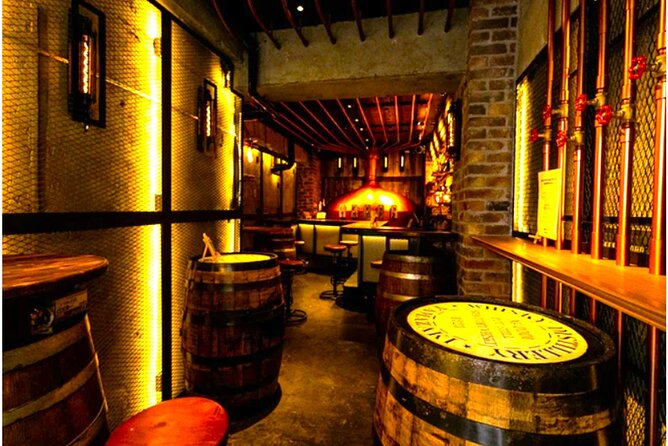
After cooking, you plate your hot takoyaki and finish it your way. The basic style includes dipping or topping with dried bonito flakes, aonori (green laver), takoyaki sauce, and mayonnaise.
This matters more than it sounds. Different toppings change the taste in different ways. Sauce brings that savory-sweet, mayonnaise adds richness, and bonito flakes add a smoky punch. Aonori adds a light green sea aroma that feels very Japan, very instant snack.
If you are a toppings person, this part is why you should book instead of simply buying takoyaki elsewhere. You get to see how the finish changes the final bite, and you get to eat it hot right away.
And if you are not a toppings person, you still get the core flavors. You can usually keep it simple and let the takoyaki itself do the work.
What You’ll Eat, What Pairing Makes Sense
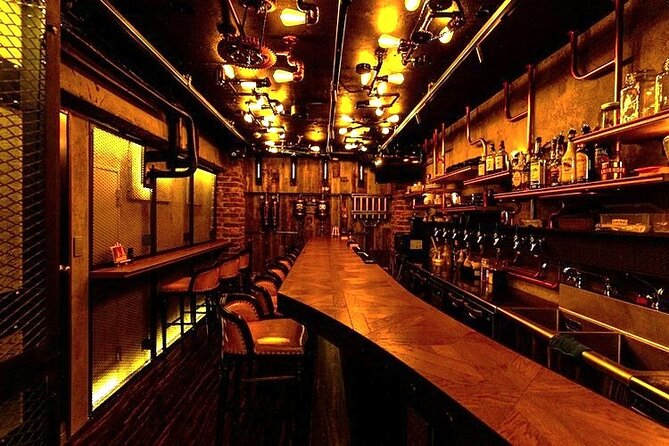
You finish by eating what you made. Takoyaki is described as crispy on the outside and fluffy on the inside, and it is easy to eat. It is also noted as a snack that pairs well with beer, which is a very Japanese street-food pairing.
Bottled water is listed as not included, so if you want a drink, plan on buying it on site or bringing your own options. Additional meals and drinks are also not included, so treat any beverage add-on as extra budget.
One small caution: optional drinks can add up fast, so decide early if you want to pair with beer or go soft drinks only. It keeps the value calculation clean.
Price and Value: Is $26.43 Worth It?
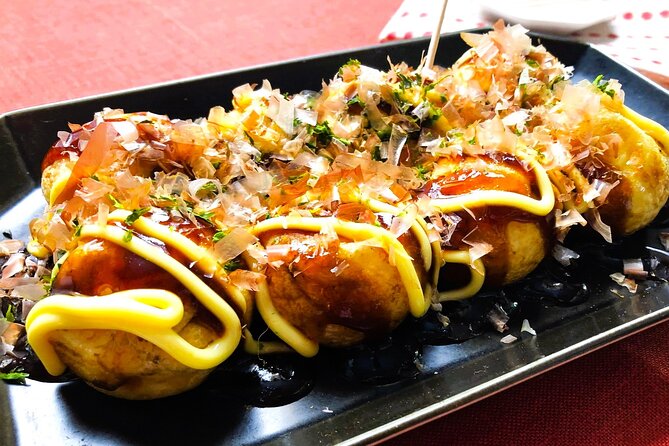
For $26.43 per person, you are paying for a one-hour, hands-on food class in central Tokyo, with all fees and taxes included.
Here is the real value logic. You are not just paying for takoyaki. You are paying for access to the griddle, the ingredients, the controlled cooking setup, and the chance to practice the technique that makes takoyaki worth chasing.
If you love street food but hate the part where you stand in line and hope you get a decent piece, this class flips the script. You control the cooking and you leave with a skill you can repeat at home, even if your first home batch is not as perfect.
The price also makes sense because you can make up to 12 takoyaki per person. That means you are eating what you cook, not just getting a token sample.
The only way it feels expensive is if you expected a longer, more formal lesson. Some communication will depend on staff comfort with English, so you are mostly learning by doing.
Language and Instructions: How to Get the Most Out of the Hands-On Part
This experience explicitly notes that some staff may not be fluent in English, and the team may use a translation machine. That means your results depend on the mix of demonstrations, written guidance, and translation support available that day.
My practical advice: treat this like a cooking class, not a lecture. Watch the griddle first, then jump in when it is your turn. If something is unclear, ask a simple question early rather than trying to guess while batter is cooking.
Also, read any step-by-step instructions on the spot. One piece of feedback you should take seriously is that some people felt the steps were not explained much beyond pointing you to instructions. If you prefer lots of spoken coaching, go in knowing you may get more visual guidance than verbal teaching.
Who This Is Best For (And Who Might Want to Skip It)
This is a great fit if you want a family-friendly, practical food experience in Tokyo without a huge time commitment. The small group size and the hands-on format work well when you are traveling with kids, especially if they enjoy actively making something instead of passively eating.
It is also a strong choice for food lovers and first-timers to Japanese street snacks. You learn the core method, then you eat the result hot, which is how street food should feel but often does not when you are sightseeing.
You might want a different activity if:
- you prefer a longer guided talk rather than a hands-on session
- you need very detailed spoken instruction in English (since translation may be used)
Should You Book This Takoyaki-Making Experience?
Yes, I would book it if your goal is skill plus snack, in a short, friendly window. For $26.43, you get real cooking time, a solid portion size (up to 12 per person), and the toppings that make takoyaki taste like takoyaki.
Two final tips to help you get the most out of it:
- Arrive ready to cook, not ready to watch. This is a do-it-yourself class.
- Ask about the steps once early, then follow the griddle. Timing and flipping matter more than perfect English.
If you are in Shinjuku already, this is a smart use of an hour. You leave with warm, saucy octopus balls, plus the confidence to say, I made these, and I figured out the flip.
FAQ
How long does the takoyaki making experience take?
The experience takes about one hour.
Where is the meeting point for the class?
You meet at Shinjuku Ale 1F and 2F, 1-chōme-14-5 Kabukichō, Shinjuku City, Tokyo 160-0021, Japan.
How many takoyaki can I make?
You can make up to 12 takoyaki per person.
Is bottled water included?
No, bottled water is not included.
What is included in the price?
All fees and taxes are included.
Are drinks included?
Additional meals and drinks are not included, so any extra beverages would be an add-on.
Do two people share one cooker?
Yes, two people can use one takoyaki cooker.
Do you need to be a certain age to join?
Participants under 20 years old must be accompanied by a parent or guardian, and underage drinking is prohibited under the Minors’ Alcoholic Beverage Law.
Can I get help if I do not speak much English?
Some staff are not good at English, and the experience may use a translation machine.
More Food & Drink in Kabukicho
- Tokyo Tsukiji Fish Market Food and Culture Walking Tour
★ 5.0 · 3,184 reviews - Tokyo: Tsukiji Fish Market Food and Walking tour
★ 5.0 · 1,724 reviews - 1-Day Snow Monkeys, Zenko-ji Temple & Sake in Nagano
★ 5.0 · 1,020 reviews - Osaka Backstreet Nightlife & Street Food Walking Tour
★ 5.0 · 1,011 reviews
More Food Walks in Kabukicho
- Osaka: Shinsekai Food Tour with 13-15 Dishes at 5 Eateries
★ 4.8 · 2,204 reviews - Osaka Food Tour: 13 Dishes at 5 Local Eateries
★ 5.0 · 2,149 reviews - Kyoto Night Foodie Tour in Gion (9+ dishes + 6 Sake tastings)
★ 5.0 · 1,762 reviews - Hungry Osaka Street Food Tour:15 Tastings & 3 Drinks with a Local
★ 5.0 · 1,727 reviews
Newly listed around Kabukicho
- Shinjuku Nightlife Tour★ 5.0 · 15 reviews
- Samurai Show Ticket with 2 Drinks:SHINJUKU *18 years or older★ 4.0 · 44 reviews
- Tokyo Walking Tour with Licensed Guide Shinjuku★ 5.0 · 114 reviews
- Full-Day Private Nikko Tour from Tokyo wd English Speaking Driver★ 4.5 · 6 reviews
- Shinjuku, Tokyo: Samurai Show Ticket in Kabukicho with 2 drinks★ 5.0 · 6 reviews
- Kabukicho Macabre Tour The Real Tokyo Vice★ 5.0 · 33 reviews
- Futuristic Show at Samurai Restaurant with Meal or 2Drinks★ 4.5 · 12 reviews
- Experience Comparing Sake and Delicacies in shinjyuku★ 5.0 · 41 reviews
Local Food Walks, compared.
Shinjuku Food Tour (13 Dishes at 4 Local Eateries)
Read our review →
Shinsekai Food Tour with 13-15 Dishes at 5 Eateries
Read our review →
Osaka Food Tour: 13 Dishes at 5 Local Eateries
Read our review →
Shinjuku Food Tour (15 Dishes and 4 Eateries)
Read our review →
Kyoto Night Foodie Tour in Gion (9+ dishes + 6 Sake tastings)
Read our review →
Hungry Osaka Street Food Tour:15 Tastings & 3 Drinks with a Local
Read our review →
Tokyo Night Foodie Tour in Shinjuku – Seasonal Sushi, Wagyu Beef
Read our review →
Browse the lists this tour appears in