
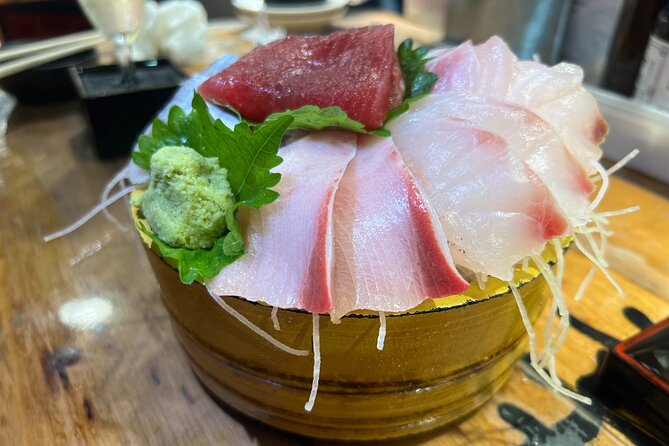
Review · LOCAL FOOD WALKS
Tokyo: Shinjuku Food Tour (13 Dishes at 4 Local Eateries)
Shinjuku is a maze of food spots. This 3-hour walking tour lines up 13 tastings at four local eateries, with drinks included and a guide sharing what makes Omoide Yokocho, Kabukicho, and Golden Gai tick.
I love that you do not have to stop and pay for meals, so you can stay in eating mode instead of price-checking menus. I also like the small group feel, capped at 12, which helps a guide like May or Hoshi keep everyone moving and comfortable.
One drawback to plan for: it is a walking tour, so wear good shoes, and if you crave lots of detail about each dish, be ready to ask questions.
In This Review
- Key highlights
- Shinjuku, the foodie maze, and why this tour works
- Price and value: $86.22 buys 13 dishes and less stress
- Meeting, pacing, and how the 3-hour loop feels
- Omoide Yokocho: narrow alleys, tiny stalls, and big atmosphere
- Kabukicho: the entertainment district, plus a real meal
- Golden Gai: post-war Tokyo in tiny alleys and micro bars
- The 4th eatery and the sweet finish you might not plan on
- How guides like May, Hoshi, and Agathe change the whole experience
- Solo travel, groups, and keeping your appetite under control
- What to do after you eat your way through Shinjuku
- Should you book this Shinjuku food tour?
- FAQ
- How long is the Shinjuku Food Tour?
- How many dishes do I get to try?
- Are drinks included, or do I pay extra?
- Where do I meet, and where does the tour end?
- Is this a small group tour, and do I receive a ticket on my phone?
- Is gratuity included, and can I cancel for a full refund?
Key highlights
- 13 included Japanese dishes across 4 local eateries, so you do not waste time hunting menus
- Two complimentary drinks (alcohol and non-alcohol) during the walk
- Omoide Yokocho, Kabukicho, and Golden Gai give you three very different Shinjuku flavors
- Small group size (max 12), which helps on a tight alley-and-stair kind of route
- Guides like May and Hoshi tend to add culture context plus practical ordering tips
- You may end with a sweet like taiyaki, depending on the flow of the final stop
Shinjuku, the foodie maze, and why this tour works
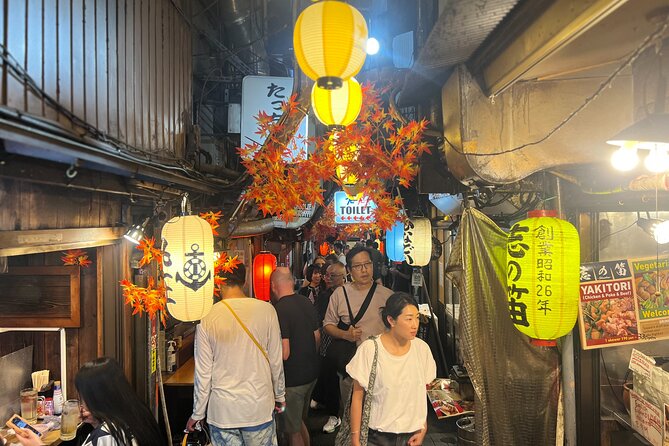
Shinjuku can feel like you are walking through ten cities at once. One minute you are in narrow alleyways with smoke and lantern light, the next you are under neon signs that never sleep. The food is there, but figuring out where to eat, what to order, and how not to get turned around takes real effort.
This tour is built for people who want results. You get a guide to do the decision-making. You eat a lot, without having to stop for payment while the group is still moving. And you get context, not just receipts. When the guide explains why Omoide Yokocho’s tiny stalls exist or what Golden Gai’s alleys preserve, the food starts to make sense, not just taste good.
The big win for you is time and momentum. In about three hours, you cover key pockets of Shinjuku that would otherwise take you multiple tries to piece together.
More Food Tours in Tokyo
- Tokyo Tsukiji Fish Market Food and Culture Walking Tour
★ 5.0 · 3,184 reviews - Tokyo: Shinjuku Food Tour (15 Dishes and 4 Eateries)
★ 4.9 · 2,033 reviews - Tokyo: Tsukiji Fish Market Food and Walking tour
★ 5.0 · 1,724 reviews
Price and value: $86.22 buys 13 dishes and less stress
At $86.22 per person, this is not a budget snack crawl. But it also is not “pay-as-you-go meals” pretending to be a deal. Here, the price includes the food itself: 13 Japanese dishes at 4 eateries, plus two complimentary drinks.
That combination matters in Tokyo. Even if you are careful, a single sit-down meal plus drinks plus dessert can add up fast. This tour flips it: you pay once, then eat repeatedly while a guide handles the ordering and timing.
You can also think of it as paying for friction removal. You are not scanning menus with half-understood photos. You are not asking, Will this place accept credit cards? You are not guessing where lines go fastest. The route is designed for walking efficiency, and the tastings are built into the plan.
One practical note: gratuity is not included. It is optional, like most service-based tours. If you had a great guide, plan on tipping.
Meeting, pacing, and how the 3-hour loop feels
You meet at AOKI Shuknunishiguchi Honten, 1-chōme-8-5 Nishishinjuku, Shinjuku City, Tokyo. The tour ends near the Southeast Exit of JR Shinjuku Station. That ending location is useful because it drops you back into the rail network without forcing a long backtrack.
The tour runs about 3 hours. It is structured as a steady walking loop through distinct neighborhoods, with stops where you actually sit or stand close to where locals eat. The group size is kept to a maximum of 12, which helps on narrow paths and in tight seating.
Pacing is generally relaxed enough that most people can keep up, but it is still a walking tour. A good way to judge your fit is to think about how you handle repeated short transfers in one evening. If you have mobility limits, you can ask questions ahead of time. Some guides have helped coordinate cabs when needed, but that is not automatic, so tell your guide directly.
If you are traveling solo, the small size is a plus. It is easy to connect with the people next to you while you are waiting for tastings.
Omoide Yokocho: narrow alleys, tiny stalls, and big atmosphere
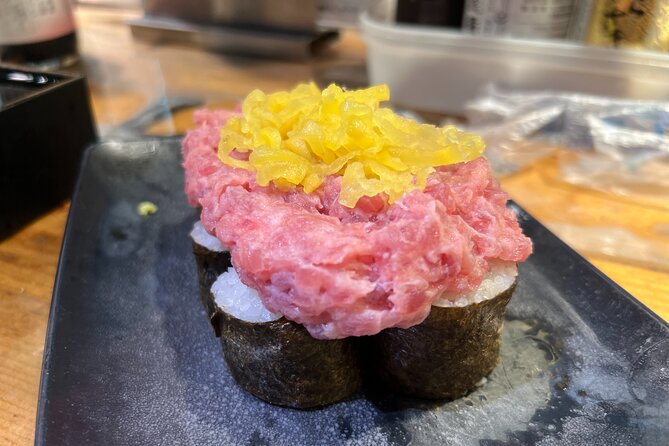
The first stop is Omoide Yokocho, the narrow, lantern-lit alley known for its packed lines and tiny izakayas. This is one of those places where Shinjuku’s personality shows up in physical form: low ceilings, close tables, and a street layout that forces you to slow down and pay attention.
This stop works well early in the tour. You are fresh, and the setting makes the food feel like part of a scene, not a chore. Expect a more “stall and quick bites” vibe than a polished dining room. The guide will set the tone, including how to approach the tastings so you do not feel lost when you arrive at a counter full of choices.
Why I like this stop for you: it trains your instincts. After Omoide Yokocho, you learn what local snack pacing looks like, and you get more confident ordering during later stops. Also, the stories tied to the alley help you understand why places here feel stubbornly local even while Shinjuku changes every year.
Possible drawback: alley seats and counters can be tight. If you dislike close quarters, go in knowing you will be standing or inching along for short stretches.
More Food Walks in Tokyo
- Tokyo Night Foodie Tour in Shinjuku – Seasonal Sushi, Wagyu Beef
★ 5.0 · 1,161 reviews - Shinjuku Izakaya Food Tour
★ 5.0 · 1,041 reviews - Eat and Drink Like a Local: Tokyo Ueno Food Tour-Taverns&Ramen
★ 5.0 · 957 reviews - Tokyo: Shibuya Food Tour (13 dishes and 4 Eateries)
★ 5.0 · 770 reviews
Kabukicho: the entertainment district, plus a real meal
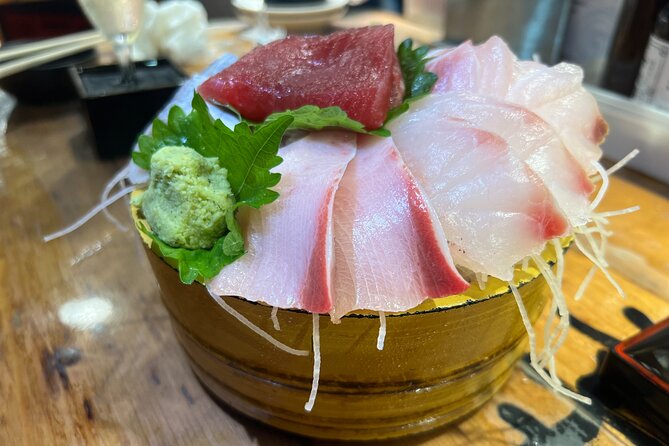
Then you roll into Kabukicho, Tokyo’s well-known entertainment district. This is where Shinjuku’s louder face shows up. Neon, signage, and constant foot traffic. The guide’s job here is important: they connect what you see to how locals move through the area, and then you transition from street energy into an actual traditional restaurant experience.
This stop is about variety. After Omoide Yokocho’s alley style, Kabukicho gives you a more structured setting, where the guide explains establishments and helps the group settle into the right restaurant rhythm. It is also a good place for learning how different Japanese dining styles feel, even when the menu basics overlap.
The practical value is that you stop trying to “figure it out” mid-trip. The guide directs you through the district and into the meal, so you are not wandering and guessing.
What to watch for: in busy entertainment areas, it is easy to feel like you are surrounded by tourists. This tour keeps you anchored. You follow the guide to the dining spots, and you keep eating while the neighborhood is loud around you.
Golden Gai: post-war Tokyo in tiny alleys and micro bars
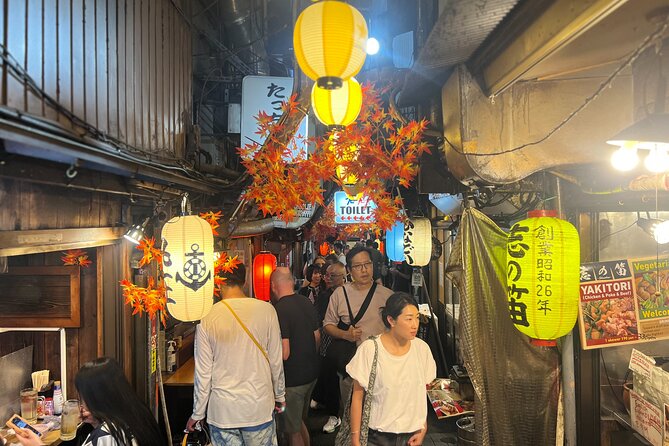
Next is Shinjuku Golden Gai, famous for narrow alleys packed with tiny bars, including spaces that preserve post-war Tokyo. Golden Gai is not your typical bar scene. It is small rooms, close doors, and lots of character squeezed into a footprint.
This stop is where the tour feels most story-driven. You are not just drinking or nibbling in a cool area. You are walking through an environment that is literally built around the idea of “small.” The guide helps you notice what makes the alleys and bar layouts distinctive.
Why this stop is worth it: it teaches you to read Tokyo’s layers. Shinjuku is modern in places, but pockets like Golden Gai hold onto older urban patterns. When someone points that out while you are in the maze, you remember it long after the food is gone.
A tip for your mindset: do not treat Golden Gai like a checklist photo moment. Go slow. Let the alley feel small. If your guide names details about what is preserved, listen closely, because you might not notice the clues on your own.
One possible drawback is crowd tolerance. Even with a small group, Golden Gai’s alleys are narrow, and other people are everywhere at peak hours.
The 4th eatery and the sweet finish you might not plan on
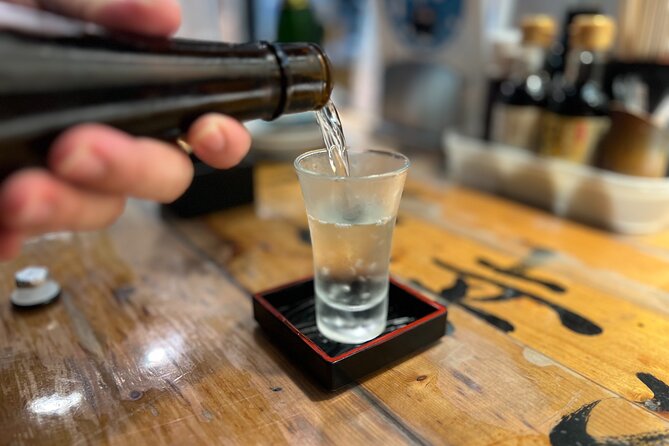
You are promised tastings at four eateries, with food types described as a stall, an izakaya, a traditional eatery, and a gastrobar. One of the most satisfying parts of this tour is that it staggers those styles so the meal variety feels intentional, not random.
The plan also tends to include a final sweet moment at the end. In one example, the group finished with taiyaki. You should treat that as a possibility rather than a guarantee, because the exact flow of the last stop can vary. Still, the bigger point is clear: you end with something that feels like a Tokyo food signature, not just another savory bite.
How to use this section for maximum enjoyment:
- Come hungry. The tour can easily fill you up.
- Eat slowly at the later stops. Your first “wow” flavor can make you forget to savor the last ones.
- If you have dietary needs or preferences, tell the guide early. The tour is set up for a guided ordering flow, so your voice matters.
How guides like May, Hoshi, and Agathe change the whole experience
This type of tour is only as good as the guide’s ability to connect food to place. The strongest versions of this experience have two traits: clear English and a calm ability to keep the group on pace without rushing the tastings.
I especially like how some guides bring practical ordering confidence. Guides like Hoshi are often praised for excellent English and for explaining food and food culture in a way that sticks. Others, like May, are known for making the evening feel fun and story-rich, not just procedural. There are also guides like Agathe who work well with solo travelers, keeping the experience social without forcing it.
If you want to maximize the value, use the first minutes to set your expectations. Ask how the tastings are made, what to notice in each dish, and which items are “most local” versus “most tourist-friendly.” When a guide is great, you get not only food, but also a better ability to eat on your own afterward.
One warning from real-world patterns: a minority of people felt they did not get enough explanation about what they were eating. If you are someone who needs detail to enjoy food fully, ask for it. Guides can usually adjust their approach when you ask direct questions.
Solo travel, groups, and keeping your appetite under control
A big part of the appeal is that it is friendly for solo travelers. With a max group size of 12, you are not stuck in a giant herd. The walk itself is social. People naturally talk while waiting for a seat, and it is easy to end up comparing favorite bites.
At the same time, the tour can feel like a lot of people if you are sensitive to crowds. The best strategy is to treat the tight spots as temporary. When you hit an alley or bar interior, focus on the immediate moment. The experience is short enough that the crowding does not ruin it unless you are already having a rough day.
Also, because 13 dishes are included, you need to plan your day. Do not schedule a huge lunch right before. Your future self will thank you. And if you are the type who wants to order extra drinks or additional food after the tour, save that for the evening outside the tastings.
If mobility is a concern, do not just hope for the best. Tell the guide. Some guides have helped coordinate cabs in cases of mobility issues, which can make a big difference when you are facing stairs or crowded sidewalks.
What to do after you eat your way through Shinjuku
Ending near Shinjuku Station Southeast Exit is convenient. You can take trains in any direction without a long slog back across town. The guide also often gives useful pointers for the rest of your Tokyo time, including where to go next for food or sights.
I like using the tour as a “starter map.” After Omoide Yokocho, Kabukicho, and Golden Gai, you will have a mental model for Shinjuku’s different zones. You can then pick your next plan with less guesswork. Want more alley energy? You know where to aim. Want a more structured meal situation? You now understand what that feels like.
And because you have tasted multiple Japanese styles back-to-back, you are better at ordering on your own. Even if you do not remember every dish name, you will remember flavors and textures. That makes the next restaurant stop feel less intimidating.
Should you book this Shinjuku food tour?
Book it if you want a high-output evening in a compact time window. For many people, the biggest selling points are simple: no extra payment for food, 13 included dishes, two drinks, and a guide that helps you navigate neighborhoods you might not tackle alone.
Do not book it if you hate walking, crowds, or you want a very slow, super detailed “every dish explained” format. Some guides are more talkative than others, and because the tastings are included, you might sometimes feel like you are just eating the next item. If you enjoy learning through conversation, you should still be fine, but bring a curious attitude and ask questions.
Also consider this: Golden Gai and the “tiny spaces” vibe are the emotional core for a lot of people. If that sounds like your kind of Tokyo, you are in the right place. If you prefer wide streets and big venues, you might find the narrow alley nature a bit intense.
Overall, this is a strong value when you want Shinjuku to do the work for you, and you want to come away with tastes plus neighborhood context, not just random snacks.
FAQ
How long is the Shinjuku Food Tour?
The tour lasts about 3 hours.
How many dishes do I get to try?
You will try 13 Japanese dishes across 4 local eateries.
Are drinks included, or do I pay extra?
Two complimentary drinks are included, with both alcohol and non-alcohol options.
Where do I meet, and where does the tour end?
You meet at AOKI Shuknunishiguchi Honten (1-chōme-8-5 Nishishinjuku, Shinjuku City, Tokyo). The tour ends near the Southeast Exit of JR Shinjuku Station.
Is this a small group tour, and do I receive a ticket on my phone?
Yes. The group size is capped at a maximum of 12 travelers, and you receive a mobile ticket.
Is gratuity included, and can I cancel for a full refund?
Gratuity is not included. You can cancel up to 24 hours in advance for a full refund. If you cancel within 24 hours of the start time, the amount paid is not refunded.
More Food & Drink in Tokyo
- Tokyo: Tsukiji Fish Market Food and Culture Walking Tour
★ 4.7 · 757 reviews - Tsukiji Fish Market: Street Food & Culture Walking Tour
★ 5.0 · 669 reviews - Tsukiji Fish Market Small-Group Food Walking Tour
★ 5.0 · 621 reviews - Best of Shibuya Food Tour
★ 5.0 · 612 reviews
More Shibuya & Shinjuku Nightlife Around Tokyo
- Tokyo Bar Hopping Tour in Shinjuku (All-You-Can-Drink + Dinner)
★ 5.0 · 3,587 reviews - Official Street Go-Kart in Shibuya
★ 5.0 · 3,435 reviews - Tokyo: Shinjuku Local Bar and Izakaya Guided Walking Tour
★ 4.9 · 1,794 reviews - Tokyo: Street Kart Experience in Shibuya
★ 4.9 · 1,484 reviews
Newly listed around Tokyo
- Tokyo private transfer for Yokohama Port★ 4.5 · 63 reviews
- Luxury Kimono Photoshoot at Ginza Tokyo★ 5.0 · 7 reviews
- Tokyo Allstar Food Tour★ 4.5 · 206 reviews
- Tokyo: Best Ginza Food Tour at 3 Local Eateries★ 5.0 · 83 reviews
- Private One Day Nikko Tour with Bilingual driver★ 3.5 · 11 reviews
- Tokyo Art Aquarium Museum E-Ticket with optional Tokyo Metro Pass★ 5.0 · 17 reviews
- PRIVATE tour in 180SX to Daikoku+++++★ 5.0 · 6 reviews
- Kabuki Talk★ 5.0 · 10 reviews
Local Food Walks, compared.
Shinsekai Food Tour with 13-15 Dishes at 5 Eateries
Read our review →
Osaka Food Tour: 13 Dishes at 5 Local Eateries
Read our review →
Shinjuku Food Tour (15 Dishes and 4 Eateries)
Read our review →
Kyoto Night Foodie Tour in Gion (9+ dishes + 6 Sake tastings)
Read our review →
Hungry Osaka Street Food Tour:15 Tastings & 3 Drinks with a Local
Read our review →
Tokyo Night Foodie Tour in Shinjuku – Seasonal Sushi, Wagyu Beef
Read our review →
Osaka Backstreet Nightlife & Street Food Walking Tour
Read our review →Browse the lists this tour appears in