
Review · FUJI FIVE LAKES TOURS
Fujisan Sushi Making Lesson
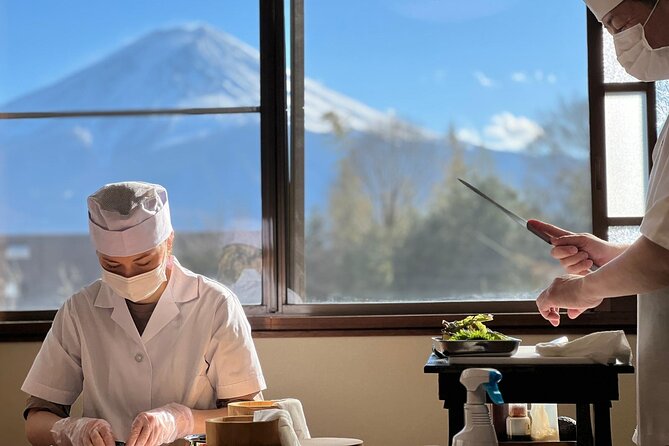
Sushi, with Mount Fuji looking on. That setting alone makes this Fujisan Sushi Making Lesson feel special, but what really sticks with me is the hands-on way you learn techniques you can actually repeat later. You also get an easy-flowing intro to sushi culture, served with real Japanese hospitality.
I especially like the focus on making nigiri sushi and sushi rolls, not just watching someone else work. And because you are close to Mount Fuji while you cook, the whole experience feels like more than a food demo.
One consideration: even though the chef explains the process in English, you may still pick up key Japanese table etiquette and food terms in Japanese. If you want fully English-only everything, it helps to mentally prepare for some Japanese language moments.
In This Review
- Key things you should know before you go
- Fujikawaguchiko sushi class energy, near Mount Fuji
- Getting started at Kawaguchiko Station, then right into cooking mode
- Your hands do the work: making nigiri sushi the practical way
- Sushi rolls: learning to roll neatly and think like a maker
- Japanese table etiquette and sushi culture that makes the food make sense
- The chef and language mix: what to expect for English explanations
- Vegetarian sushi option and allergy planning you should take seriously
- Value check: does $229.91 make sense for a 3-hour class?
- Who this Fujikawaguchiko lesson is perfect for
- Booking timing and what to do when plans change
- Should you book the Fujisan Sushi Making Lesson?
- FAQ
- How long is the Fujisan Sushi Making Lesson?
- Where is the meeting point for the lesson?
- Is this a private experience or a group class with others?
- What sushi will I learn to make?
- Is there a vegetarian option?
- What should I do if I have allergies?
- Will the chef teach in English?
Key things you should know before you go
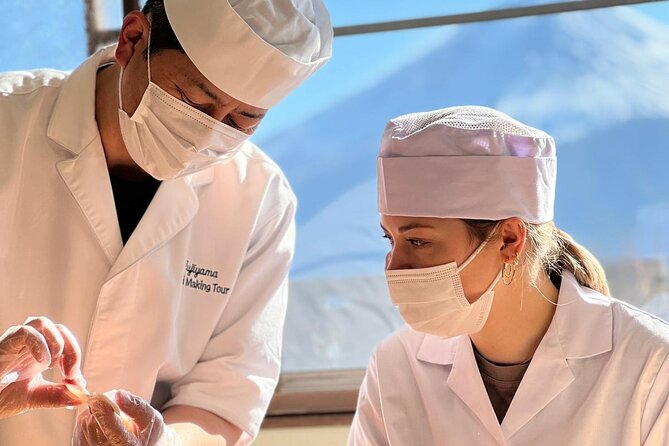
- Hands-on nigiri and sushi rolls so you practice the techniques, not just observe
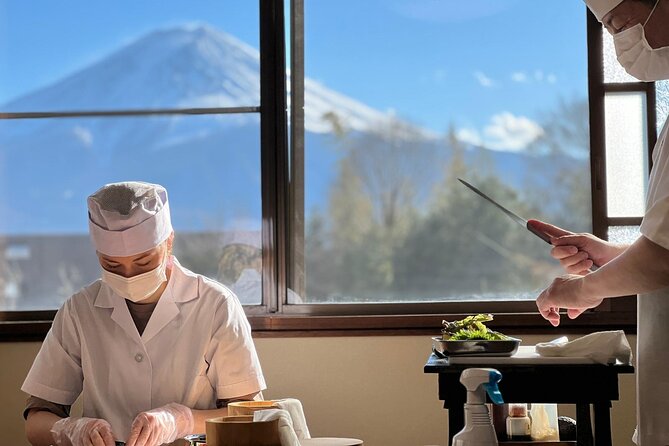
- Mount Fuji views while you work, which makes the class feel like a moment, not a task
- Chef instruction in English, backed by Japanese food culture context
- Table etiquette + sushi traditions included with cooking steps
- Trivia questions and an informative slideshow to help the history and habits stick
- Vegetarian option available if you prefer a meat-free lesson
Fujikawaguchiko sushi class energy, near Mount Fuji
This lesson is in Fujikawaguchiko-machi, a great base if you want the Mount Fuji area without the high-pressure pace of a big city. The class is designed to feel approachable, even if sushi is one of those foods you think requires special talent. You will learn how to make nigiri and rolls with methods you can imitate at home, which matters if you are going beyond tourism and into actual skills.
The “near Mount Fuji” part is not just decoration. Having that view nearby changes your mood while you work. Sushi is detail work, and when the environment feels calm, you tend to focus better on rice, cuts, shaping, and rolling. In a good class, technique plus attention equals results.
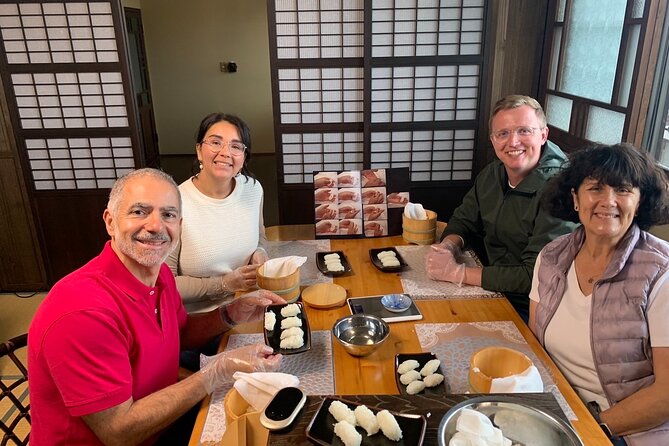
Group format also helps. This is not an overly large crowd experience, since it is private for your group. That usually means less waiting around, more time to follow along, and a better chance to ask the kinds of questions that come up when your hands start doing different things than your brain planned.
More Sushi workshops in Fujikawaguchiko machi:
- Sushi Cooking Class at Sushi Factory -KIWAMI- Mt.Fuji
★ 5.0 · 23 reviews - View of Mt. Fuji is good! Sushi making experience class
★ 5.0 · 6 reviews - Sushi Making Tokyo Roll and Authentic Japanese Sushi Class
★ 5.0 · 3,971 reviews
Getting started at Kawaguchiko Station, then right into cooking mode
You meet at Kawaguchiko Station, at 3641 Funatsu, Fujikawaguchiko, Minamitsuru District, Yamanashi 401-0301, Japan. It is also listed as near public transportation, which is useful in the Mount Fuji area where timing can make or break your day.
From your first minutes, the class is about switching from tourist mode into “chef apprentice” mode. You are not signing up for a lecture. You are there to make nigiri and roll sushi, and the structure reflects that.
Because the lesson is about 3 hours, it hits a sweet spot. Long enough for a real process, short enough to keep your energy up. If you are planning a Mount Fuji day with other activities, this length also tends to fit neatly, especially when you are staying in the Fujikawaguchiko area.
Your hands do the work: making nigiri sushi the practical way
Nigiri is the most reassuring part of a sushi lesson, because it shows you what to do, even if your knife skills are rusty. The key is learning techniques you can repeat at home, and this class is built around that goal.
As you make nigiri, pay attention to the basics the chef is guiding you on. The lesson emphasizes cooking methods you can easily imitate, which usually means you will learn how the chef approaches the “why” behind the steps, not just the “do this, then that.” That is where home success comes from later.
Also, watch for the pacing. Nigiri is a sequence of small actions. If you rush, the rice feels wrong or the topping does not sit right. If you slow down, you learn the feel. A good teacher helps you find that middle ground.
If you are a beginner, this part can feel slightly intimidating at first, but that is exactly why it is valuable. Sushi looks elegant, yet most of the work is careful, repeatable motion. Once you understand the method, it gets less mysterious. And when you can shape it yourself, you stop thinking of sushi as “something you order” and start thinking of it as “something you can make.”
Sushi rolls: learning to roll neatly and think like a maker
After nigiri, you move into sushi rolls. Rolling is where many people discover their biggest gap: rice distribution and even pressure. Even if your ingredients are good, the roll can fail if the thickness varies or the seam does not seal properly.
This class includes the hands-on roll segment, so you are not left guessing. You learn the method with guidance, which helps you build muscle memory. You will likely notice that small adjustments matter. Slight changes in how you spread the rice or how tight you roll can make the difference between a roll that looks tidy and one that falls apart.
Another reason rolls are great in this lesson: they turn sushi into a repeatable template. At home, rolls are easier to experiment with, because you can vary fillings while staying within a familiar structure. If you want one cooking skill that transfers beyond this single class, rolling techniques often do that best.
A few more Fujikawaguchiko machi days to weigh up
- Scenic Spots of Mt Fuji and Lake Kawaguchi 1 Day Bus Tour
★ 4.5 · 585 reviews - Mt Fuji Area Private Guided Tours in English-Nature up close, quiet, personal
★ 5.0 · 288 reviews - Explore Mt. Fuji Ice Cave in Aokigahara Forest
★ 5.0 · 243 reviews - Private guided hidden gems tour by local English speaking driver
★ 5.0 · 142 reviews
Japanese table etiquette and sushi culture that makes the food make sense
Cooking is only half the story. This lesson also covers Japanese table etiquette and the history of sushi, because the culture changes how you handle the food.
Table etiquette sounds formal, but in practice it usually comes down to small habits: how you set things down, how you handle chopsticks, and how you treat sushi in a way that respects the craft. When you understand the etiquette, eating feels more intentional, not just snack-time.
The sushi history and tradition part also helps you avoid the common mistake of learning technique without context. Sushi is not just raw fish and rice. It comes from a long development of methods and taste preferences. Even when you are not memorizing dates, you start to understand why certain practices exist.
And there is learning support that makes the culture easier to keep. One review highlighted trivia questions and an informative slideshow. That means the class likely uses structured teaching, not just “chef says things while you cook.” Trivia helps you remember details, and a slideshow gives you a visual anchor for concepts like traditions, terminology, or how sushi evolved.
The chef and language mix: what to expect for English explanations
The class is led by a veteran chef with worldwide cooking experience, and the chef explains the process in English. That is a big deal if you want to understand what you are doing as you do it.
At the same time, one key detail from customer feedback is that the class also uses Japanese in the lesson experience. That can be a plus if you are picking up language while traveling. Japanese food etiquette terms and technique vocabulary can be useful, and you may hear or see more than just plain English commands.
For you, the best approach is simple: focus on following the chef’s demonstrations and repeat the steps during your practice. If you hear a Japanese term you do not know, do not stress. You can often infer meaning from the action, and you will remember the technique even if the vocabulary takes one more trip to sink in.
Vegetarian sushi option and allergy planning you should take seriously
You can request a vegetarian option. That is a helpful choice because sushi lessons often assume fish or seafood ingredients by default. If you want to participate without compromising your preferences, this is a clear advantage.
Allergies also need advance notice. The experience asks you to let them know if you have food allergies, so you can plan safely. I like this kind of prompt, because sushi involves multiple components, and ingredients can vary.
When you book, be specific about what you need to avoid. Even if you think it is obvious, write it clearly. Food allergy and vegetarian requests are not the kind of detail you want to leave vague.
Value check: does $229.91 make sense for a 3-hour class?
At $229.91 per person for about 3 hours, this is not a cheap “try sushi” activity. It is in the premium range, and you should judge it by what you gain, not by what you consume.
Here is what you are paying for, based on the lesson design:
- A professional sushi chef teaching you practical methods
- Hands-on instruction for both nigiri and sushi rolls
- Culture lessons (table etiquette and sushi history)
- A setting with Mount Fuji views, which you generally cannot replicate in a city kitchen
- Added learning support like trivia questions and a slideshow
If you come away able to make sushi at home, that skill has real value. Sushi lessons can also be worth it if you are traveling with someone who loves cooking, since it becomes an experience you share and remember.
If you are only looking for a quick bite of sushi, this price may feel high. But if your goal is to learn techniques you can imitate, the cost aligns with the focused, chef-led format.
Who this Fujikawaguchiko lesson is perfect for
This lesson fits best if you fall into one of these groups:
- You want a hands-on cooking class that teaches repeatable technique
- You are planning a Mount Fuji area trip and want an activity with a memorable setting
- You enjoy food culture, so you appreciate etiquette and history alongside cooking steps
- You are traveling with friends or family and want a private group experience
It is also a good pick if you are learning Japanese or just curious about the language side of food. One reviewer liked that the class involved Japanese, and that points to a learning experience that does more than just translate.
On the other hand, if you hate structured classes and prefer total freedom in a market or kitchen, you might find this lesson more “guided” than you want. But for most people who like clear steps and coaching, the structure is a feature.
Booking timing and what to do when plans change
Confirmation is received within 48 hours of booking, subject to availability. The experience also offers free cancellation, with full refund if you cancel at least 24 hours before the start time, based on local time.
If you are juggling a Mount Fuji day, treat this lesson like a key anchor. Mount Fuji plans can be weather-dependent, so keep flexibility. Even with a free-cancellation policy, you still want to give yourself enough time to reshuffle without stress.
For the day itself, a mobile ticket is included, so you are not hunting for printed documents. That sounds minor, but it helps on travel days when you are already moving between sites.
Should you book the Fujisan Sushi Making Lesson?
I would book this if your top goal is to learn nigiri and sushi rolls in a guided way, with a chef who explains the process in English and ties in etiquette and sushi tradition. The Mount Fuji setting is not the only reason, but it is a real bonus because sushi is easiest to learn when you feel relaxed and focused.
Skip it or consider alternatives if you mainly want a casual meal experience, or if you are looking for a very casual, unstructured activity. This is a class format, with teaching and practice, and you get the most value when you lean into that.
If you do book it, do two things: come with curiosity, not just hunger, and ask questions when you hit confusion points. Sushi is hands-on, and the best learning comes when you connect what you are doing to why it works.
FAQ
How long is the Fujisan Sushi Making Lesson?
The lesson is about 3 hours.
Where is the meeting point for the lesson?
You meet at Kawaguchiko Station (3641 Funatsu, Fujikawaguchiko, Minamitsuru District, Yamanashi 401-0301, Japan).
Is this a private experience or a group class with others?
It is private, so only your group participates.
What sushi will I learn to make?
You will learn how to make Nigiri-sushi and sushi rolls.
Is there a vegetarian option?
Yes, a vegetarian option is available.
What should I do if I have allergies?
Let the organizer know in advance about any food allergies.
Will the chef teach in English?
Yes, the veteran chef explains the cooking process in English.
Newly listed around Fujikawaguchiko machi
- Cute & Fun E-Car tour following guide around Lake Kawaguchiko★ 5.0 · 54 reviews
- Ramen Cooking Class at Lake Kawaguchiko (Short Course)★ 5.0 · 42 reviews
- View of Mt. Fuji is good! Sushi making experience class★ 5.0 · 6 reviews
- Private Local Hiking to enjoy the nature and culture of Mt.Fuji★ 5.0 · 22 reviews
- Ramen Cooking Class at Ramen Factory in Mt.Fuji★ 5.0 · 101 reviews
- Sushi Cooking Class at Sushi Factory -KIWAMI- Mt.Fuji★ 5.0 · 23 reviews
- Mt. Fuji Five Lakes Area Private Tour with Licensed Guide(Kawaguchiko area Dep)★ 5.0 · 55 reviews
- Hidden Fuji drive tour with a Local English speaking guide★ 5.0 · 43 reviews
Fuji Five Lakes Tours, compared.

Scenic Spots of Mt Fuji and Lake Kawaguchi 1 Day Bus Tour
Read our review →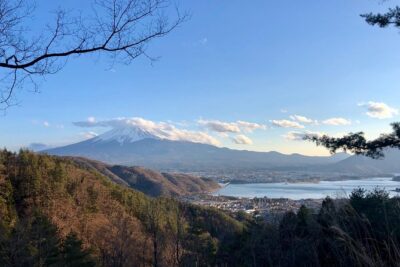
Mt Fuji Area Private Guided Tours in English-Nature up close, quiet, personal
Read our review →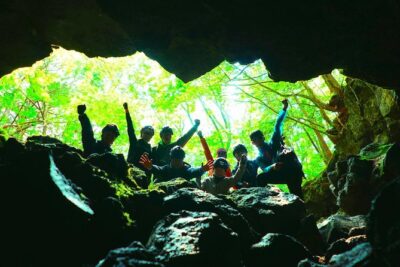
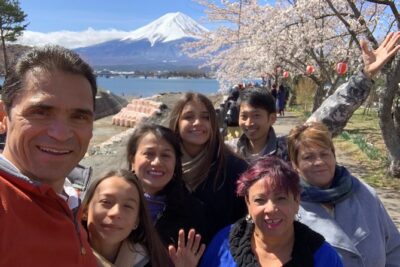
Private guided hidden gems tour by local English speaking driver
Read our review →
Private Mt Fuji Tour from Tokyo: Scenic BBQ and Hidden Gems
Read our review →
Ramen Cooking Class at Ramen Factory in Mt.Fuji
Read our review →Browse the lists this tour appears in