
Review · SHRINE & TEMPLE VISITS
Fukuoka: Nanzoin Temple and Reclining Buddha Guided Tour
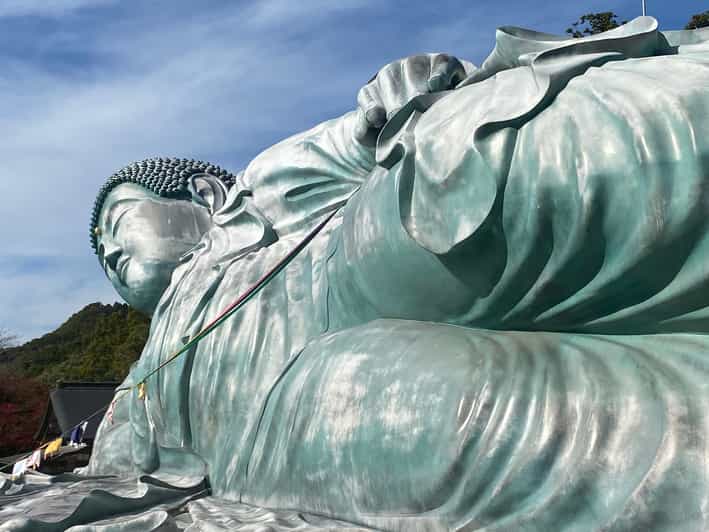
A giant Buddha in Fukuoka, and quiet enough to hear your thoughts. I like how the tour guides you through the Nehanzō reclining Buddha experience with clear etiquette, and how you also get context around the sacred statues. I also like that the walk is paced for sightseeing, not speed-walking through a checklist.
One possible drawback to weigh: the tour price can feel high if you are expecting the organizer to handle all transit and extras beyond the guided portion.
If you’re the type who likes learning small rules, like how to wash your hands and how to bow properly, this kind of temple visit can be deeply satisfying. Guides such as Morry and Chiyako have shared practical Shingon Buddhism tips and made the grounds feel understandable. Still, you should expect uneven paths and steps, so this is not ideal if mobility is limited.
In This Review
- Key highlights worth your time
- Nanzoin Temple in Fukuoka: what the tour actually delivers
- The money question: is $65 good value?
- Meeting points and how the pacing works
- Stop-by-stop: what you see and why it matters
- 1) The approach: entrance to the main hall views
- 2) The reclining Buddha: Nehanzō, scale and details
- 3) Fudo Myo-o: the statue stop with focused energy
- 4) Okunoin sanctuary: a calmer, more reflective pace
- 5) The waterfall inside the grounds
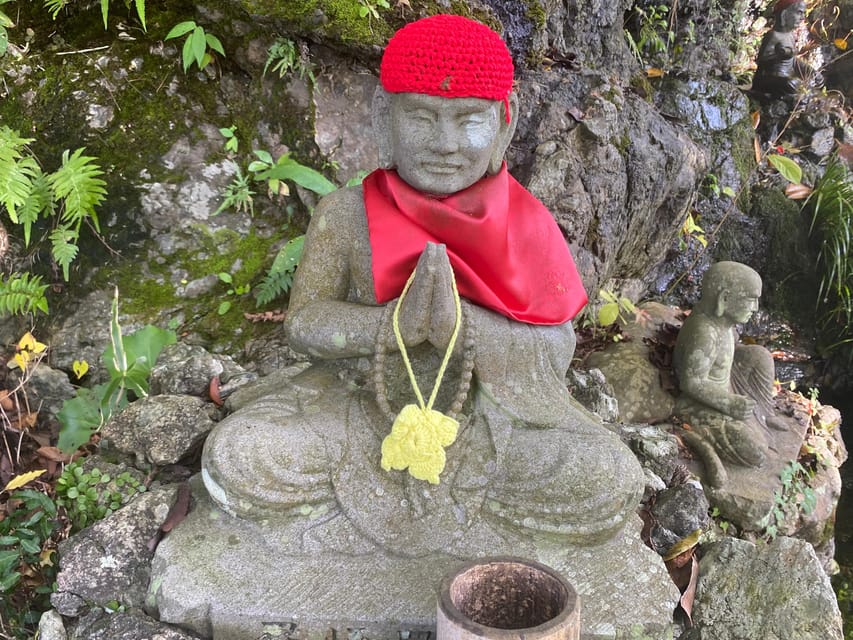
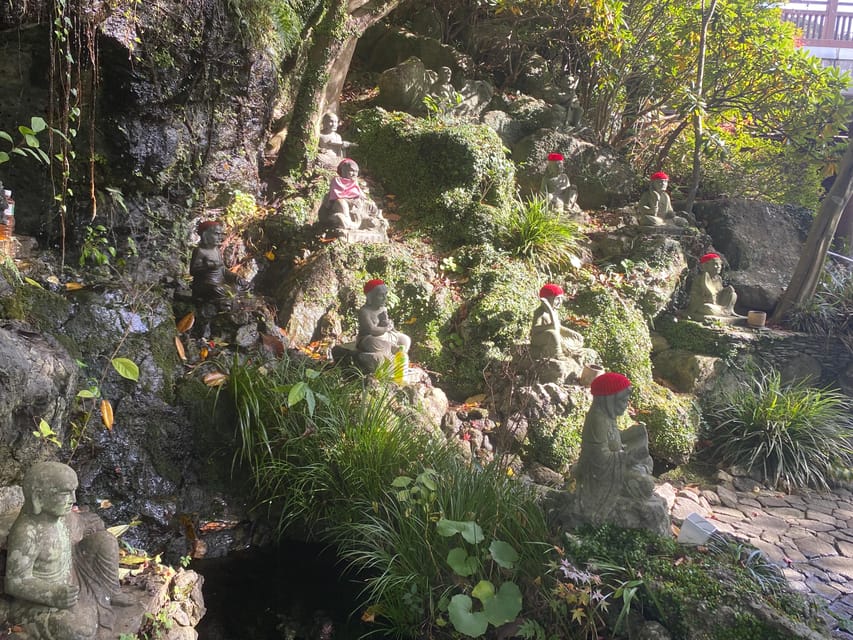
- 6) Mizuko Jizo rows: protection of children, in stone
- Guides make the difference: Morry, Erika, Chiyako
- Photography, etiquette, and the small rules that matter
- Comfort and logistics: wear shoes, plan for steps
- Who this tour fits best
- Should you book: my honest take
- FAQ
- How long is the Nanzoin Temple guided tour?
- Where does the tour start?
- What train transportation is included?
- What is included in the price?
- What language is the guide available in?
- Can I take photos?
- What should I bring?
- Is this tour suitable for wheelchair users or mobility impairments?
Key highlights worth your time
- The Nehanzō reclining Buddha, one of the largest in the world, with time to admire details and views
- Temple etiquette explained, including simple, respectful practices like bowing and praying correctly
- Shingon stops beyond the Buddha, including the Fudo Myo-o statue and the Okunoin sanctuary
- A waterfall inside the temple grounds, a calm pause point during the walk
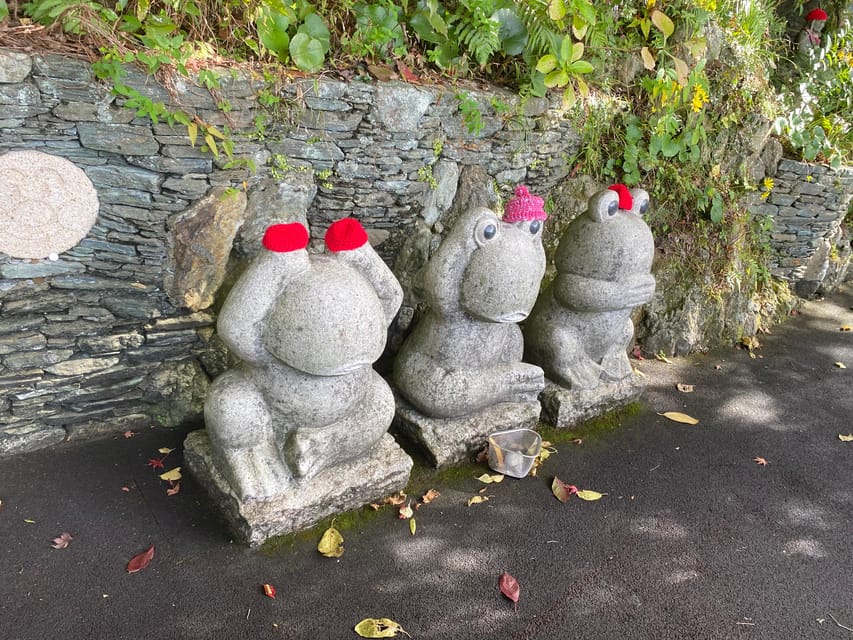
- Mizuko Jizo rows, a moving spiritual stop tied to protection of children
- Small, private-group feel, with a live guide in English or Japanese
Nanzoin Temple in Fukuoka: what the tour actually delivers
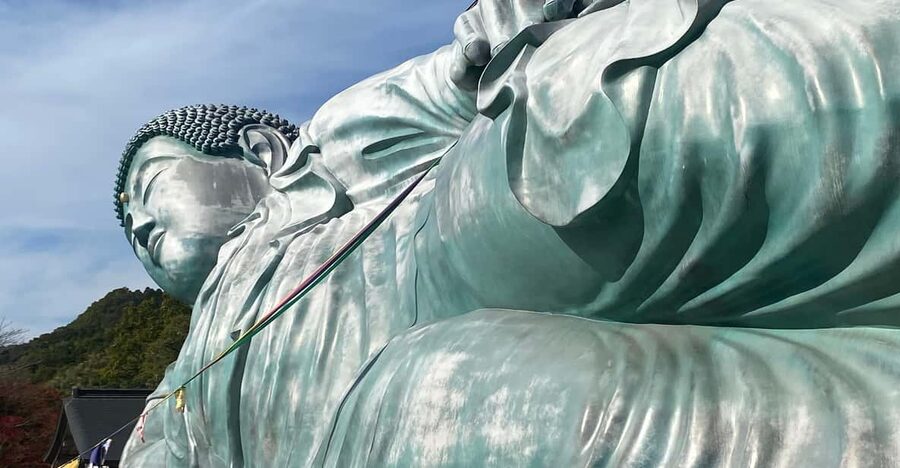
Nanzoin Temple sits just outside the usual rush of Fukuoka sightseeing. It feels more like a spiritual walk than a “look and leave” attraction. This guided format matters because it helps you read what you are looking at, especially at the Buddha hall where manners and meaning are part of the experience.
What you get for the money is not just access. You also get structure: an order to follow on the grounds, time to look closely at key images, and explanations tied to Shingon practice. The “huge reclining Buddha” is the headline, but the day’s value comes from the in-between stops that many people miss when they go DIY.
One more note: this is a private group tour with a live guide. That usually means less confusion at meeting points and more Q and A time once you’re inside the grounds.
More Shrine and Temple visits in Fukuoka:
- Fukuoka: Beppu Hells HotSpring, Frog Temple & Yufuin DayTrip
★ 4.4 · 84 reviews - Fukuoka’s Sacred Path: Temples, History & Culture
★ 5.0 · 17 reviews - Kyoto: Fushimi Inari, Kinkakuji, Bamboo Grove 1 Day Bus Tour
★ 4.8 · 4,316 reviews
The money question: is $65 good value?
At $65 per person for a 2-hour to 210-minute experience, the value depends on which meeting option you choose and what you were planning to pay anyway.
Here’s the clean way to think about it:
- The tour includes the guided tour of Nanzoin Temple
- It includes the admission fee for the reclining Buddha
- It includes train transportation to/from JR Kidonanzoinmae Station only when you meet at Hakata Station
So if you are starting near Hakata and you were going to take the train anyway, you’re essentially paying for guidance plus the reclining Buddha admission, while the organizer handles that specific transit segment. If you choose the meeting point closest to the temple, you save time but you may still need to cover your own getting to JR Kidonanzoinmae Station.
My advice: before you book, check where you’ll be that morning. If you’re already near Hakata, choose the Hakata meeting option to avoid extra logistics. If you’re staying near the other station, the closer meeting point can keep the day simple.
Meeting points and how the pacing works
You have two meeting options:
- 城戸南蔵院前駅 (JR Kidonanzoinmae Station area)
- 福岡市観光案内所・博多駅 (Hakata Station area, via the Fukuoka tourism info office)
From the Hakata meeting point, you take a train for about 25 minutes to reach the temple area. Then you do the guided visit, then return by train for about 25 minutes again. The entire tour window is listed as about 2 hours to 210 minutes, which is a realistic range for a guided temple walk plus photo time.
This timing matters because Nanzoin is not only about one big statue. You are moving through several sacred spots, plus you want a moment to slow down at the waterfall and then again at the Jizo rows. If you try to do it DIY, it’s easy to rush or miss the etiquette that makes the visit more meaningful.
Stop-by-stop: what you see and why it matters
A few more Fukuoka days to weigh up
- Mt. Aso & Takachiho Gorge Tour with Optional Boat Ride
★ 4.7 · 222 reviews - Fukuoka: Takachiho Gorge & Scenic Railway One Day Tour
★ 4.8 · 178 reviews - Private Fukuoka Tour with a Local, Highlights & Hidden Gems 100% Personalised
★ 5.0 · 143 reviews - Fukuoka Private and Personalized Walking Tour with a Local
★ 4.7 · 46 reviews
1) The approach: entrance to the main hall views
The tour starts at your selected meeting point and then you head toward the temple grounds. Early on, you’ll follow the guide’s route from the entrance area toward the main hall. This first stretch is where the ground rules help.
A knowledgeable guide can explain how to behave without making it complicated. You may learn how to wash your hands correctly, when and how to bow, and how to treat the statues as living parts of practice rather than just photo subjects. If you care about respectful travel, this guidance can completely change how you experience the place.
The main hall area also gives you a chance to settle your eyes. You are not only looking at architecture, you are looking at the way the space frames views and movement.
2) The reclining Buddha: Nehanzō, scale and details
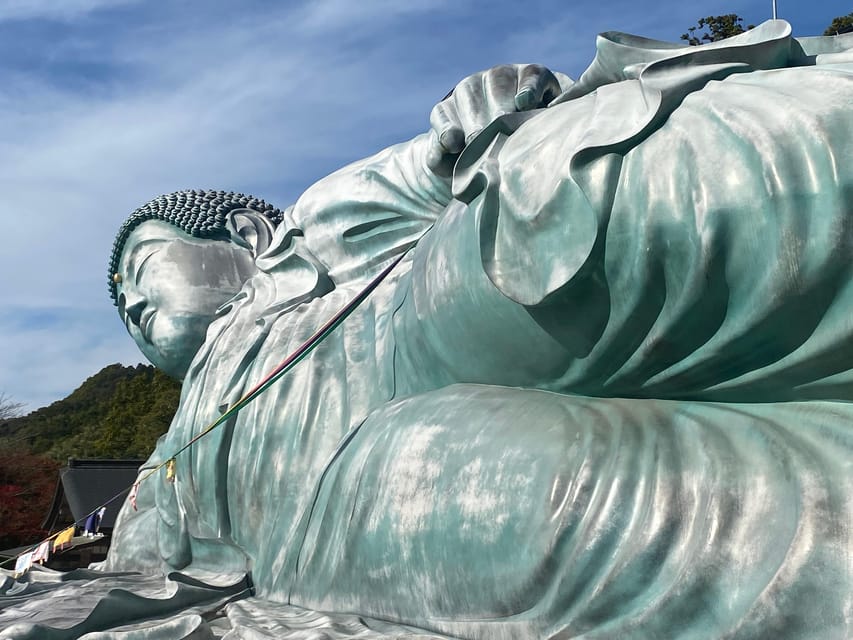
The star stop is the Nehanzō reclining Buddha, famous for being one of the largest in the world. On a guided visit, you get more time than a quick self-guided pass because you’re not scrambling to figure out what is important.
What you should expect:
- Clear time to admire the reclining form and the fine details
- Space for photos, while still being mindful of worshippers and sacred areas
- An option to explore the Buddha’s interior for a more grounded, spiritual perspective
That interior access is a big deal. It turns your visit from “I saw it” into “I understand it a bit better.” The admission fee for the reclining Buddha is included, so you’re not reaching for your wallet at the key moment.
3) Fudo Myo-o: the statue stop with focused energy
After the main hall highlight, the tour weaves through sacred points, including the Fudo Myo-o statue. This stop is valuable because it shows how the temple is not a single-monument attraction. Shingon practice is full of specific figures and meanings, and a guide can help you connect the image to its role in devotion.
Even if you know little about Buddhism, you can still appreciate how the statue’s presence changes the tone of your walk. It’s one of those spots where you feel the place get quieter in your head.
4) Okunoin sanctuary: a calmer, more reflective pace
Next comes the Okunoin sanctuary. “Sanctuary” is a good word here because the tour slows down for a reason. This part is about stillness and atmosphere, not shopping for the next view.
If you want a temple experience that feels like a gentle reset from city noise, this is often the part that people remember most later. The guide’s route and pacing can help you stay present instead of watching the clock.
5) The waterfall inside the grounds
One of the most surprising parts of Nanzoin Temple is that there’s a waterfall inside the temple grounds. During a guided walk, you typically get a moment to stop, look, and listen. It’s a natural pause that makes the spiritual stops easier to absorb.
Practical tip: bring water, and take your camera out only when the waterfall is in the right light. You’re allowed to photograph, but flash photography is not allowed. That rule helps keep the quiet mood intact.
6) Mizuko Jizo rows: protection of children, in stone
On the return route, you pass the Mizuko Jizo rows. This is one of those places where symbolism turns visible. Mizuko Jizo is tied to spiritual protection, specifically connected to children, and the rows of statues create a sense of ongoing care.
This stop can be emotional, especially if you travel with empathy. Even without a deep background, you can feel the repetition and the intention. And because it’s on the return side, you often notice it more once you’ve already seen the larger main attractions.
Guides make the difference: Morry, Erika, Chiyako
The biggest praise in the experience is not just the sights. It’s the people guiding you through them.
One guide named Morry is noted for explaining Shingon Buddhism practices in a practical way. He also shared extra local Fukuoka context, including tips related to nighttime food stalls, and even some magic tricks. That mix might sound random, but it actually works well when you’re on a temple visit. It helps break the formality without disrespecting the sacred tone.
Another guide, Chiyako, is described as very knowledgeable and insightful, making the visit feel well organized and genuinely enjoyable.
Erika is also highlighted for her warm, friendly approach and her understanding of the temple grounds. In short: when the guide can translate what you see, you leave with a clearer memory, not just pictures.
If you prefer a tour that feels like a conversation, not a lecture, these guide traits are exactly what you want.
Photography, etiquette, and the small rules that matter
This is a temple. That means small rules are not “technicalities,” they are part of how respect is shown.
From the tour info:
- Photography is allowed, but please be mindful of worshippers and sacred areas
- Flash photography is not allowed
- Smoking and littering are not allowed
What I’d do in practice:
- Take wide shots early, then switch to slower, detail-focused photos once the crowd pattern shifts
- Keep your camera ready, but lower it when people are praying
- If you feel unsure about where to stand, let the guide show you the correct approach
The hand-washing and bowing basics can be especially helpful. One reviewer mentioned learning the correct way to wash your hands, bow, and pray. That’s the kind of knowledge that makes your photos feel better later, because you remember how you behaved there.
Comfort and logistics: wear shoes, plan for steps
You’ll be walking on uneven ground and there may be stairs and steps. The tour specifically says it is not suitable for people with mobility impairments or wheelchair users.
So the practical checklist is short:
- Wear comfortable shoes
- Bring water
- Expect a fair amount of walking between stops
If you are traveling with older family members or someone who tires easily, consider whether a guided pace will help them stay comfortable, or whether a simpler option might be better.
Who this tour fits best
This guided tour is a strong match if you:
- Want the reclining Buddha experience with meaningful context, not just a photo stop
- Like temple etiquette guidance and respectful explanations
- Prefer a structured route through multiple sacred sites
- Want a calm walk that includes nature sounds from the waterfall
It’s less ideal if you:
- Need wheelchair access or have mobility limitations
- Only want one attraction and would rather DIY everything else
Also, if you’re the sort of traveler who enjoys learning small customs, you will likely get a lot out of the guidance at the start and around the main hall.
Should you book: my honest take
Book this tour if you want a guided temple walk where the big statue is only the beginning. The inclusion of reclining Buddha admission and the transport segment from Hakata can make it feel more rational, and the guide-led explanations are a clear part of the experience.
Skip or reconsider if:
- You are expecting the tour fee to cover every piece of local transit no matter where you start
- Your priority is purely visual and you don’t care about temple etiquette or explanations
- You or your group has mobility needs that make steps and uneven ground hard
If your style of travel is “show me what to pay attention to, then let me enjoy it,” this is a good fit. The day ends on the Mizuko Jizo rows, and that final spiritual tone is exactly the kind of memory that sticks in Fukuoka.
FAQ
How long is the Nanzoin Temple guided tour?
The tour duration is listed as 2 hours to 210 minutes, depending on the starting time and pacing.
Where does the tour start?
You can choose one of two meeting points: 城戸南蔵院前駅 (JR Kidonanzoinmae Station area) or 福岡市観光案内所・博多駅 (Hakata Station area).
What train transportation is included?
If you meet at Hakata Station, the tour includes the transportation fee by train to and from JR Kidonanzoinmae Station. If you meet at JR Kidonanzoinmae Station, the transportation fee to and from that station is not included.
What is included in the price?
The price includes the guided tour of Nanzoin Temple, admission for the Reclining Buddha, and (for the Hakata meeting option) the train transportation fee to and from JR Kidonanzoinmae Station.
What language is the guide available in?
The live tour guide is available in English and Japanese.
Can I take photos?
Yes, photography is allowed, but flash photography is not allowed. Be mindful of worshippers and sacred areas.
What should I bring?
Wear comfortable shoes, bring a camera, and bring water.
Is this tour suitable for wheelchair users or mobility impairments?
No. The tour is not suitable for people with mobility impairments or wheelchair users.
Newly listed around Fukuoka
- Fukuoka: Yufuin & Beppu Day Tour (Dazaifu / Brewery Options)★ 4.6 · 31 reviews
- Fukuoka: Okinawa-Style Shisa Amulet Making Workshop★ 5.0 · 7 reviews
- Fukuoka: Private Nightlife and Hidden Gems Tour with a Local★ 5.0 · 11 reviews
- Fukuoka’s Sacred Path: Temples, History & Culture★ 5.0 · 17 reviews
- Fukuoka Private Custom Tour with Local Guide★ 5.0 · 11 reviews
- Fukuoka: Takachiho Gorge, Amano Iwato & Scenic Train Tour★ 3.8 · 12 reviews
- Fukuoka: Hakata Doll Painting Experience★ 4.8 · 30 reviews
- Fukuoka Private and Personalized Walking Tour with a Local★ 4.7 · 46 reviews
Shrine & Temple Visits, compared.
Fushimi Inari, Kinkakuji, Bamboo Grove 1 Day Bus Tour
Read our review →

Meiji Shrine, Asakusa, Skytree Bus Tour and Cruise
Read our review →
Fushimi Inari Hidden Hiking Tour (Private Option Available)
Read our review →
Osaka/Kyoto:Kinkakuji,Arashiyama,FushimiInariShrine,NaraPark
Read our review →
Asakusa Walking Tour with Sensoji Temple Visit
Read our review →
Nikko: Kegon Falls, Lake Chuzenji & Toshogu Temple
Read our review →
Kamakura & Enoshima Day Trip including Temple Tickets
Read our review →Browse the lists this tour appears in