
Review · STREET KART RIDES
Go Karting Tokyo Bay Experience | 9 Top Destinations in 120 Mins
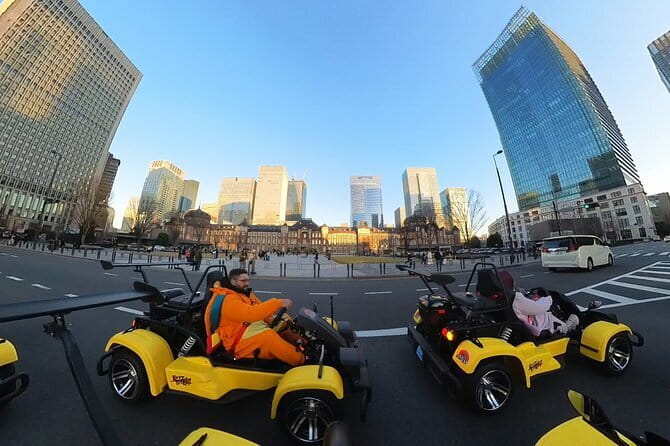
Tokyo on a go kart beats walking. I like the 360-degree photos and videos you get from the ride, because they turn a fast sightseeing lap into something you can actually relive. I also like how this is built as a small-group route that hits major landmarks in about two hours.
The one thing to think about first is your driving paperwork. You need the right license setup, including an International Driving Permit under the 1949 Geneva Convention in most cases, or you will not be able to ride.
In This Review
- Key Things To Know Before Your Kart Starts
- Why This Tokyo Go Kart Route Feels Faster Than Normal Sightseeing
- Your Go Kart Kit: What’s Included and Why It’s Good Value
- Driving Rules in Japan: The Paperwork That Can Stop the Ride
- From Higashiyotsugi to the First Big Views
- Tokyo Skytree and Ryogoku: Broadcast Tower Energy and Sumo Territory
- The Tokyo Sword Museum Stop: Not Just Weapons, Symbols
- Tokyo Station Marunouchi: Architecture You Notice at Speed
- Akihabara to Ueno Park: Tech Pop Culture Meets Art and Temples
- Asakusa: The Low City Feeling You Can Still Notice From the Road
- Imperial Palace: A Calm, Important Stop
- How Toyosu Fish Market Fits the Big Landmark Plan
- Safety, Timing, and the Pace You Should Expect
- Price and Value: $117.27 for a Two-Hit, Photo-Forward Experience
- Who This Tour Suits Best (And Who Might Prefer Something Else)
- Should You Book This Tokyo Bay Go Kart Experience?
- FAQ
- How long is the go karting experience?
- What is the price per person?
- What is included in the tour?
- What driving documents do I need?
- Is pickup and dropoff provided?
- What is the group size limit?
- Where is the meeting point?
Key Things To Know Before Your Kart Starts
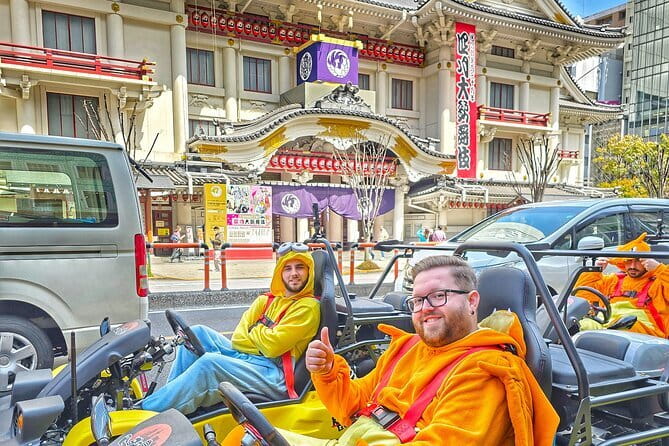
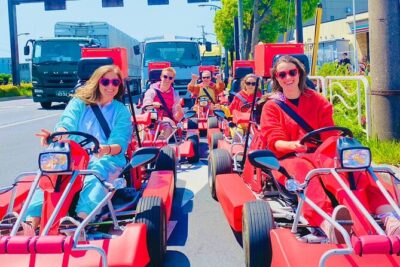
- 360-degree photo and video included so you have real ride footage, not just phone snapshots
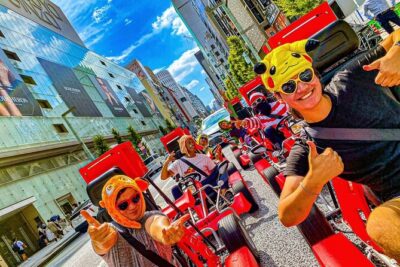
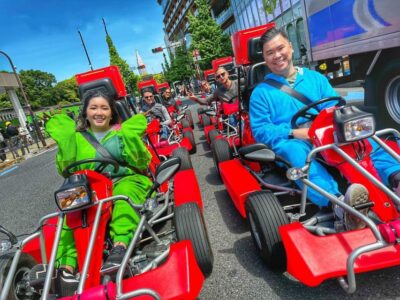
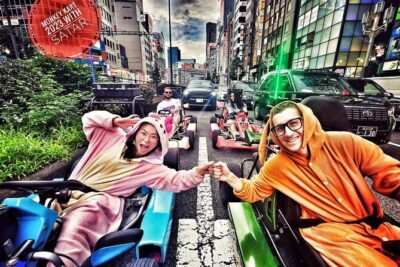
- Novelty costume included for an easy, goofy start that makes photos more fun
- Max 10 riders keeps the pace tight and the experience feeling controlled
- A tight landmark loop featuring Skytree, Ryogoku, Tokyo Station, Akihabara, Ueno Park, Asakusa, and the Imperial Palace area
- Good weather matters because the activity depends on conditions
Why This Tokyo Go Kart Route Feels Faster Than Normal Sightseeing
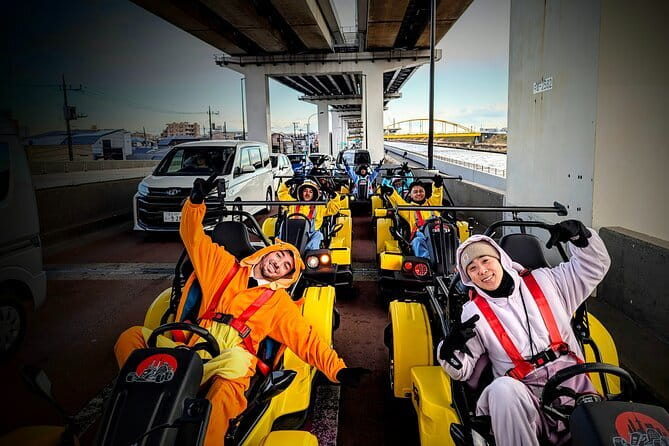
This tour is basically a shortcut through Tokyo. Instead of spending your whole day commuting and walking, you get to cover a long list of neighborhoods and landmarks in about 1 hour 40 minutes. The guide also talks as you go, so the ride becomes more than driving, it becomes context.
You will likely recognize the names right away: Tokyo Skytree, Ryogoku, Tokyo Station, Akihabara, Ueno Park, Asakusa, and the Imperial Palace. Even when you cannot fully explore each place on foot, you still get the big visual hits from the kart route.
It is also small-group by design, with a maximum of 10 travelers. That matters in Tokyo, where roads, crowds, and traffic planning can make big group tours feel chaotic. Here, the format is more controlled, so you spend less time waiting.
More Street Kart rides in Tokyo:
- Flagship 2-Hours Official Street Go-Kart Tour – Tokyo Bay Shop
★ 5.0 · 4,974 reviews - Official Street Go-Kart in Shibuya
★ 5.0 · 3,435 reviews - Official Street Go-Kart Tour – Akihabara
★ 5.0 · 1,578 reviews
Your Go Kart Kit: What’s Included and Why It’s Good Value
This experience includes the stuff that usually becomes a surprise cost later. You get go kart rental, fuel, and insurance built into the price, along with a tour guide. You also get a costume to wear during your drive, plus photo and video coverage.
The media part is a big deal. Phone videos are fine, but they are hard to keep steady while driving. Here, you are set up for the kind of souvenir that actually captures the full feel of the ride, including a 360-degree angle.
Two small items you should be aware of:
- There is no pickup or dropoff included, and the tour ends back at the meeting point.
- A data card for a camera is not included, though it is available for purchase. If you are planning to bring your own camera setup, plan for that.
Driving Rules in Japan: The Paperwork That Can Stop the Ride
Before you get excited about the route, check your license situation. This tour requires you to provide your driving documents correctly, and it is strict about the originals.
Here is what the experience data states:
- For most riders, you need a local driving license plus an International Driving Permit issued under the 1949 Geneva Convention.
- You must also have your passport.
- If you are in Japan with US Forces status, a SOFA driving license is required.
- If you fail to provide the original local driving license and the International Driving Permit, your tour can be canceled with no refund.
There is also a note for certain nationalities (Switzerland, Germany, France, Belgium, Monaco, and Taiwan). Driving is allowed if you can provide a Japanese translation of your driving license, but you have to contact the operator about a month in advance if you need assistance.
If you want this to be stress free, do this simple checklist before you book your final days in Tokyo:
- Confirm you have the correct International Driving Permit type (1949 Geneva).
- Make sure your documents are valid for the dates you will ride.
- Double-check that you have the originals in hand at the meeting point.
From Higashiyotsugi to the First Big Views
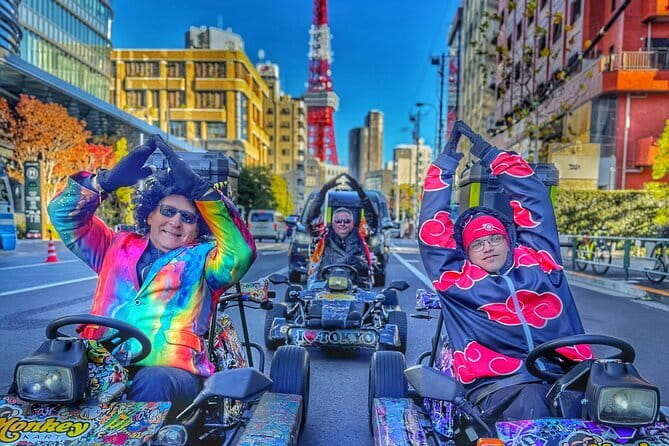
The tour meeting point is in Katsushika City, in Higashiyotsugi: Japan, 124-0014 Tokyo, Katsushika City, Higashiyotsugi, 1-chōme202. The activity starts there and ends back there.
Because pickup and dropoff are not included, you will want to plan your transit time. The good news is the meeting point is described as near public transportation, so you should be able to get there without a long taxi bill.
Also plan your arrival time with real Tokyo buffer. Even if you are close to a station, go a little early, so you can handle check-in calmly, get fitted, and not rush the first part of the ride.
A few more Tokyo days to weigh up
- Tokyo Go Kart: Asakusa, Skytree, and Akihabara **IDP MUST**
★ 5.0 · 988 reviews - Shibuya Official Street Go-Kart in Shibuya Annex
★ 5.0 · 972 reviews - Tokyo: Asakusa, Skytree & Akhihabara Go-Kart City Experience
★ 4.7 · 761 reviews - Official Street Go-Kart Tour in Asakusa
★ 5.0 · 461 reviews
Tokyo Skytree and Ryogoku: Broadcast Tower Energy and Sumo Territory
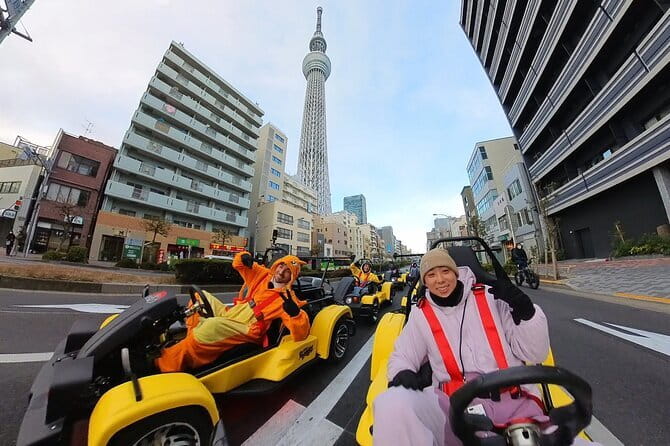
A first landmark stop is Tokyo Skytree, the world’s tallest broadcasting and communication tower and the third tallest structure. Even if you have seen it in photos, it hits different when you are near it and rolling through the surrounding streets. You are getting that “Tokyo is vertical” feeling fast, which is a nice way to start.
From there, the route shifts toward Ryogoku, where the Sumo Stadium becomes the star. Ryogoku is strongly tied to sumo culture, and this stop works as a contrast to Skytree. You go from a modern broadcasting icon to a neighborhood area defined by tradition and ceremony.
This is where the guided format pays off. The guide is not just narrating, they are connecting what you see to Japanese culture and architecture, which helps the drive feel meaningful instead of random.
The Tokyo Sword Museum Stop: Not Just Weapons, Symbols
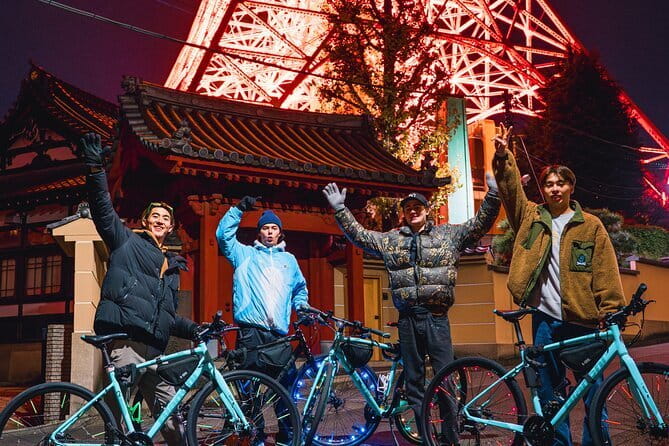
One of the more unusual stops on the route is the Tokyo Sword Museum. The focus is not on gore or action movie stuff, it is on how Japanese swords are treated as symbols of authority, works of art, and objects of worship.
If you like history that you can actually point at, this is a smart inclusion. It is also a nice pace change, because sword culture is not something most Tokyo first-timers automatically plan to see while doing an outdoor driving tour.
Even if your kart time around the stop is brief, the guide’s explanation helps you understand why this museum exists and what these swords represent beyond their shape.
Tokyo Station Marunouchi: Architecture You Notice at Speed
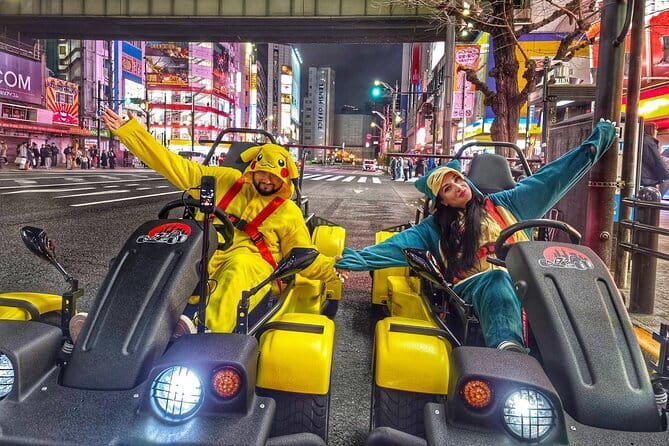
Another highlight is Tokyo Station, specifically the Marunouchi district. Tokyo Station is described as a symbol of architectural brilliance, and it dates to the early 20th century.
Riding through this area gives you something you cannot really get from walking alone: a sense of how Tokyo moves. Station districts are where urban design, traffic flow, and business life collide. In a kart, you experience that flow directly.
If you are the kind of person who enjoys city planning and big civic buildings, this stop tends to feel extra rewarding. It is not just a landmark, it is a lesson in how Tokyo was built to handle massive daily movement.
Akihabara to Ueno Park: Tech Pop Culture Meets Art and Temples
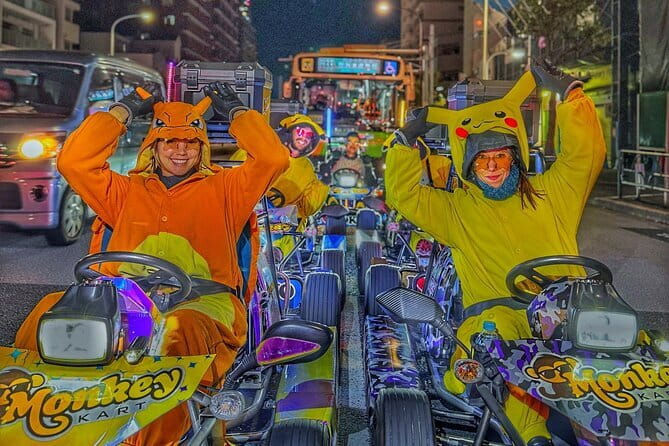
You then head into Akihabara, known for electronics and pop culture. The tour also frames Akihabara’s history as dating back to the Meiji period, and it is commonly associated with the otaku capital identity.
This is a fun stretch because Akihabara is both visual and loud in vibe. Even from a kart, you can often sense the neighborhood’s theme without needing to stop and shop.
Next up is Ueno Park. The tour information notes that Ueno rose to prominence shortly after the Tokugawa Shogunate in Edo around 1603. It started with Buddhist temples and townsfolk activity, then shifted into a hub for modern Japanese art and culture.
The practical benefit here is that Ueno Park is a free admission area. Even if your kart time is what you are here for, Ueno’s “real Tokyo” identity makes it a strong contrast to Akihabara’s entertainment energy.
Asakusa: The Low City Feeling You Can Still Notice From the Road
Asakusa is one of the oldest-feeling areas on the route. The tour notes its origins date back about 1400 years to the Asuka period. It is also positioned as an authentic slice of Tokyo’s shitamachi, often described as the low city.
Asakusa is where Tokyo’s past gets more visible in daily life, not just in museums. Even if you cannot wander every street during this format, passing through the area helps you understand why people keep returning.
If you want a souvenir strategy, Asakusa is a great place for it. You can plan your phone photos for quick pulls, while still staying on track for the ride.
Imperial Palace: A Calm, Important Stop
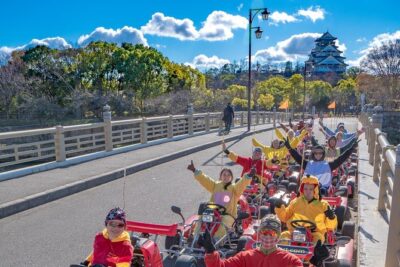
The final big-name stop is the Tokyo Imperial Palace area. The tour describes it as the residence of the Japanese Emperor and Empress, and it references construction in 1457 by Ota Dokan within the expansive grounds of Edo Castle.
This stop gives your eyes a break. You go from neon and storefront energy to something that reads as formal, ordered, and historically layered. In a kart, that contrast is exactly what makes the route feel like Tokyo, not just one theme.
This is also a good point to appreciate why your guide matters. When someone explains the layers behind a place like the Imperial Palace, it changes your experience from photo stop to understanding what the space means.
How Toyosu Fish Market Fits the Big Landmark Plan
The tour overview says you will take in major city landmarks that include the Toyosu Fish Market. You should think of this as part of the broader “Tokyo hits” strategy, not a long sit-down visit.
In other words, you are not coming here for hours of market browsing. You are coming for the big visual and informational experience, with driving time used efficiently.
That trade-off is worth it if your goal is to see many different sides of Tokyo in a short window, especially if you do not want to spend your whole day hopping between neighborhoods on public transit.
Safety, Timing, and the Pace You Should Expect
The experience is about action, but it is also built with safety in mind. The tour includes insurance, plus you ride with a guide guiding the route and the explanations.
The duration is roughly 1 hour 40 minutes, so the pace is active. You will likely feel the thrill of moving through Tokyo streets, but you should not expect the kind of slow, leisurely sightseeing you might get from a half-day walking tour.
If you want the ride to feel enjoyable rather than stressful, go into it ready to focus. Tokyo driving has its own rhythm, and this kart format works best when you keep your attention on instructions and spacing.
Price and Value: $117.27 for a Two-Hit, Photo-Forward Experience
At $117.27 per person, this tour is not a budget impulse buy. But it can be good value because several major costs are bundled into the price:
- Go kart rental
- Fuel
- Insurance
- Tour guide
- Costume
- Photo and video package
When a tour includes those basics up front, you avoid the usual add-ons that stack quickly. And the landmark list is what really sells the value for me. You are getting a high-density route: Skytree, Ryogoku, Tokyo Station, Akihabara, Ueno Park, Asakusa, and the Imperial Palace area, plus the guide narration tying it together.
It is also a popular booking, with an average booking window of 29 days in advance. If your dates are fixed, it is smart to lock it in earlier rather than gamble.
Who This Tour Suits Best (And Who Might Prefer Something Else)
This go kart experience fits best if you:
- Want to see Tokyo landmarks without spending the day transferring trains.
- Like active sightseeing, not just standing and taking photos.
- Appreciate guided context about culture and architecture while you drive.
- Want a keepsake media package, especially 360-degree photos and video.
It might be less ideal if:
- You cannot meet the driving permit requirements in time.
- You prefer slow exploration with lots of time on foot in each neighborhood.
- You are relying on pickup or dropoff, since this ends back at the meeting point.
Also keep in mind the tour requires good weather. If conditions are poor, the activity can be canceled and you would be offered another date or a full refund.
Should You Book This Tokyo Bay Go Kart Experience?
If your Tokyo plan includes multiple neighborhoods and you want to pack them into a short, memorable block, I think this is a strong choice. The combination of small-group kart driving, major landmarks, and the built-in photo and video package makes it feel more like an experience than a simple ride.
Book it if you already know you can handle the driving paperwork and you have the flexibility to ride in good weather. Skip it if you are still unclear about the license and permit rules, because that is the one thing that can shut the whole plan down.
If you do book, arrive early, bring your documents in original form, and treat the first minutes like training. Once you are comfortable, the route becomes an efficient way to get that Tokyo feeling, with souvenirs you can actually rewatch later.
FAQ
How long is the go karting experience?
The experience duration is approximately 1 hour 40 minutes.
What is the price per person?
The price is listed as $117.27 per person.
What is included in the tour?
It includes go kart rental, a tour guide, a costume, fuel, insurance, and photo and video.
What driving documents do I need?
For most riders, you need a local driving license and an International Driving Permit issued under the 1949 Geneva Convention, plus your passport. US Forces in Japan need a SOFA driving license. If you cannot provide the original local driving license and the International Driving Permit, the tour may be canceled with no refund.
Is pickup and dropoff provided?
No. The tour starts at the meeting point and ends back at the same meeting point.
What is the group size limit?
This tour has a maximum of 10 travelers.
Where is the meeting point?
The meeting point is listed as Japan, 124-0014 Tokyo, Katsushika City, Higashiyotsugi, 1-chōme202 小島貸事務所.
Newly listed around Tokyo
- Private Tokyo Food Tour – A Journey Through Time Through Food★ 5.0 · 36 reviews
- Private Tokyo Tour with Licensed Guide & Vehicle (Max 15 persons)★ 5.0 · 107 reviews
- Private Tokyo Custom Full-Day Tour by Chartered Vehicle★ 5.0 · 16 reviews
- Private Tokyo Custom Half-Day Tour by Chartered Vehicle★ 4.5 · 13 reviews
- Private Sightseeing to Mt Fuji and Hakone with English Driver★ 5.0 · 51 reviews
- Private Snow Monkeys park Day Trip From Tokyo or Nagano★ 4.5 · 26 reviews
- Private Outstanding Nikko Tour with English Speaking Driver★ 4.0 · 11 reviews
- 4 Day Tour – Mount. Fuji, Tokyo, Hakone, Kamakura and Yokohama★ 5.0 · 19 reviews
Street Kart Rides, compared.
Flagship 2-Hours Official Street Go-Kart Tour – Tokyo Bay Shop
Read our review →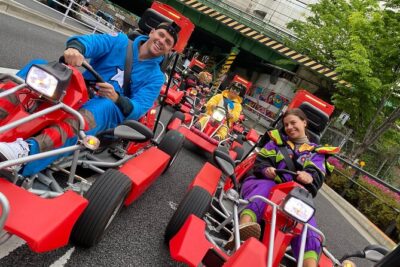
Tokyo Go Kart: Asakusa, Skytree, and Akihabara **IDP MUST**
Read our review →
Shibuya Official Street Go-Kart in Shibuya Annex
Read our review →
Browse the lists this tour appears in