
Review · STREET KART RIDES
Iconic Tokyo Uptown Landmarks Go Kart Tour (120 Minutes)
Steer Tokyo from a go-kart seat. I love the two-way radio guidance, it keeps you calm in real traffic, and you still get live stories instead of just driving. I also love the comfort-focused karts, built for stability so first-timers feel in control. The one catch, you need the right driver’s license, or you will not be able to join.
This 120-minute route is designed for street-level Tokyo, not just the usual neon strip. You’ll pass major icons like Tokyo Skytree, Tokyo Station, and Ginza, with stops and talks that help you understand what you’re seeing as you’re seeing it. If you want to capture the ride, the option for an onboard Insta360 is a big plus, just remember you’ll need a microSD card.
One practical consideration: you’re driving, so photos are not always point-and-shoot easy. If you go at night, the neon lights look great, and if it rains, rain gear may be available, plus you’ll usually have a dry plan for the end.
In This Review
- Key highlights worth getting excited about
- How the Tokyo Uptown route gives you real Tokyo, fast
- Kartzilla check-in and the moment you take the wheel
- Safety on a go-kart tour, with two-way radio control
- Stop-by-stop: Skytree and Ryogoku, Tokyo icons at street level
- Quick reality check
- Tokyo Imperial Palace surroundings and Tokyo Tower: classic sights with driving focus
- Ginza and Kabukiza Theatre: photo-friendly streets before you wrap up
- Capturing your ride: Insta360 option and free photos
- Price and value: is $116 worth 2 hours of driving Tokyo?
- Who should book this go-kart tour, and who should skip it
- Practical advice to help you enjoy every minute
- Should you book the Tokyo Uptown Go Kart Tour?
- FAQ
- Do I need a driver’s license to join?
- What locations does the Tokyo Uptown route include?
- How long is the go-kart tour?
- Where do I meet the group?
- What languages are offered for the live guide?
- Are karts comfortable for larger riders?
- Is the Insta360 camera included?
- What is included in the price?
- What is not included?
- Is the tour canceled for bad weather?
- What kind of cancellation policy is available?
Key highlights worth getting excited about
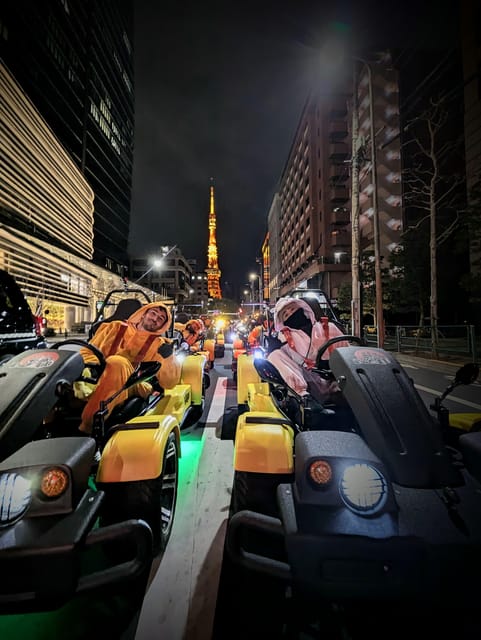
- Live landmark storytelling from a local guide, delivered during the ride
- Real-time safety guidance via two-way radio, so you are not guessing
- Street-legal, comfort-focused karts with stability for big and tall riders
- Iconic Uptown route that hits Skytree, Ryogoku, Tokyo Station, Imperial Palace areas, Ginza, and Kabukiza
- Optional Insta360 capture plus free photos after the experience
How the Tokyo Uptown route gives you real Tokyo, fast
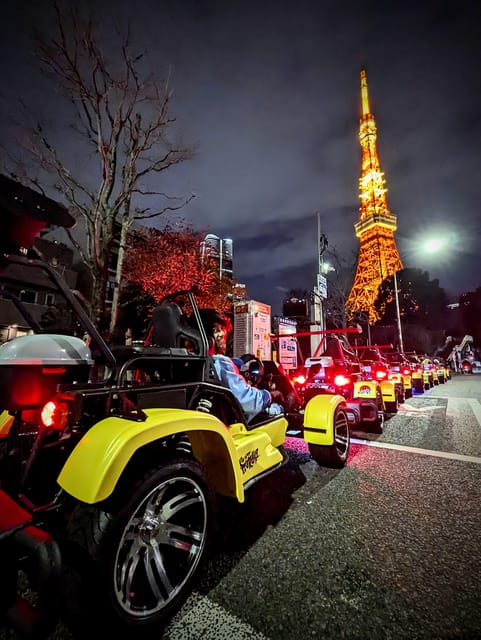
This tour is built for travelers who want Tokyo at street level. You are not stuck in a bus window, and you are not only seeing the “big hits” from a distance. Instead, you drive through neighborhoods where Tokyo’s day-to-day rhythm actually shows up, from landmark approaches to the surrounding streets.
The pacing is also a big part of the value. It is a beginner-friendly go-kart experience, not a racing event. That matters, because you can pay attention to the guide’s context and the details around you while still feeling like you can handle the kart.
A helpful detail from past guests: guides have a knack for making directions clear. People have credited guides like Travis for first-stop Tokyo tips, and Sata for making driving instructions easy. You should expect the guide to keep you moving smoothly and explain what to look for as you pass each spot.
More Street Kart rides in Tokyo:
- Flagship 2-Hours Official Street Go-Kart Tour – Tokyo Bay Shop
★ 5.0 · 4,974 reviews - Official Street Go-Kart in Shibuya
★ 5.0 · 3,435 reviews - Official Street Go-Kart Tour – Akihabara
★ 5.0 · 1,578 reviews
Kartzilla check-in and the moment you take the wheel
You start at the Kartzilla Go Kart facility, which is an 8-10 minute walk from Yotsugi Station (Keisei Line). The building is marked, and Google Maps is usually straightforward, which helps if you arrive early for the required check-in.
Plan to arrive at least 40 minutes early. That timing is not random. You’ll need the safety briefing, your license check, and time to get comfortable with the kart controls before you join the route.
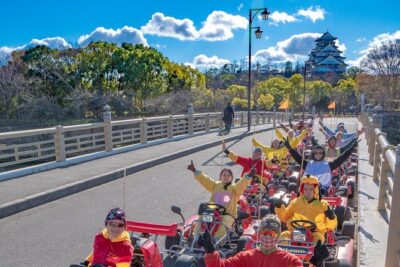
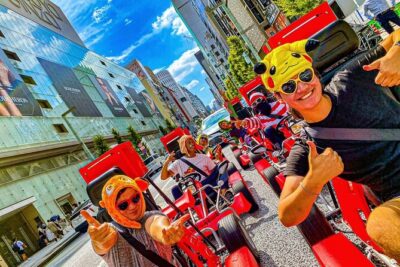
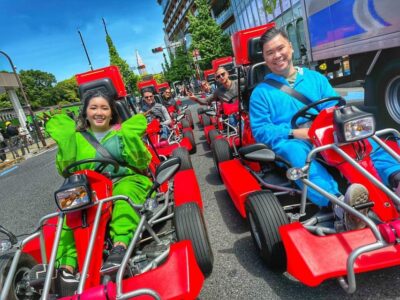
Now the karts themselves. These are professionally engineered, street-legal go-karts, and the big advantage is comfort and stability. The tour info highlights advanced suspension for a smoother ride, hydraulic brakes for precise stopping, and reinforced frames designed to handle bigger and taller riders with more confidence. That usually translates to less white-knuckle driving for nervous first-timers, and more time enjoying the scenery.
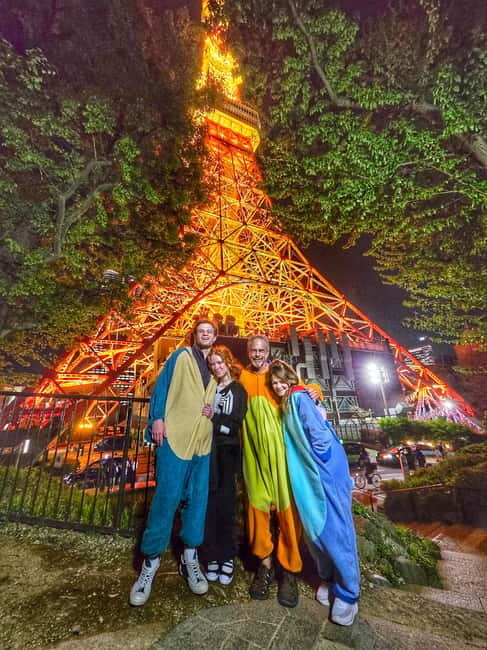
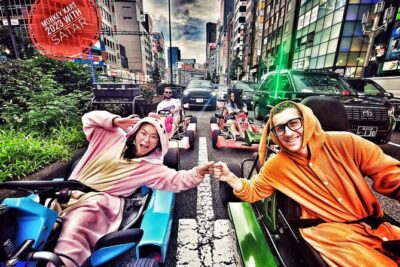
Also, the experience includes an anime costume rental. Whether you wear it the whole time is up to you, but it’s there to add fun and make the photos more memorable.
Safety on a go-kart tour, with two-way radio control
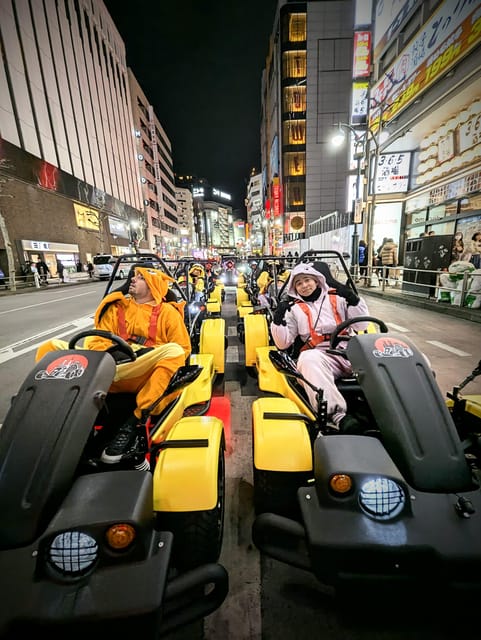
The biggest “peace of mind” feature here is the two-way radio communication with your guide. That means you are not just following hand signals or hoping you guessed the route correctly. The guide can share live storytelling and landmark context, while also giving real-time driving and safety guidance to keep the group moving smoothly.
This is the kind of setup that helps with stress. Tokyo streets can feel intense, even for confident drivers, and anything that reduces uncertainty makes a tour like this much more enjoyable. Because you are driving the kart, the route needs to be organized, and radio guidance is one of the reasons this feels controlled instead of chaotic.
One more useful detail: the karts are designed for stability and easy handling. The tour is explicitly not about racing, which helps you keep your focus on the drive and the sights rather than on speed.
Stop-by-stop: Skytree and Ryogoku, Tokyo icons at street level
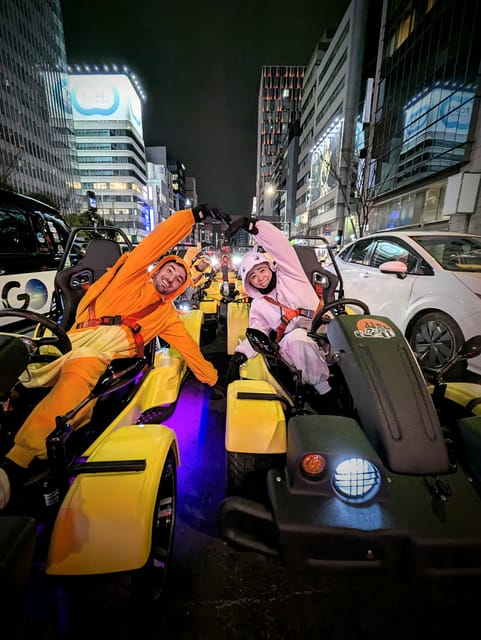
Your first major landmark stop is Tokyo Skytree. Expect a guided moment plus scenic driving on the way there. This is one of those places where the scale is hard to capture from photos. From the street, you can actually feel how Tokyo stacks height and density together, and the guide’s stories help you make sense of what you’re seeing beyond the landmark itself.
Next up is Ryogoku Kokugikan, known as the Ryogoku Sumo Stadium. This stop is special because it connects Tokyo with tradition. Even if you are not a sumo fan, you’ll likely notice how the area has a different character than the flashy shopping zones. Watching it from a go-kart seat gives you a fast, grounded view of how Tokyo’s cultural landmarks sit inside everyday city life.
After that, you’ll head toward Tokyo Station. This is another “picture-perfect” spot, but the value here is how your route approaches it. You’re not only seeing the station, you’re moving through the surrounding streets as the city shifts from one identity to another. If this is your first time in Tokyo, Tokyo Station is also a great reference point for orientation later in your trip.
A few more Tokyo days to weigh up
- Tokyo Go Kart: Asakusa, Skytree, and Akihabara **IDP MUST**
★ 5.0 · 988 reviews - Shibuya Official Street Go-Kart in Shibuya Annex
★ 5.0 · 972 reviews - Tokyo: Asakusa, Skytree & Akhihabara Go-Kart City Experience
★ 4.7 · 761 reviews - Official Street Go-Kart Tour in Asakusa
★ 5.0 · 461 reviews
Quick reality check
You will not be doing long walks at every stop. The format is guided driving plus guided looks. That’s why it’s a smart choice if you want coverage in 2 hours, but still want more meaning than a quick photo stop.
Tokyo Imperial Palace surroundings and Tokyo Tower: classic sights with driving focus
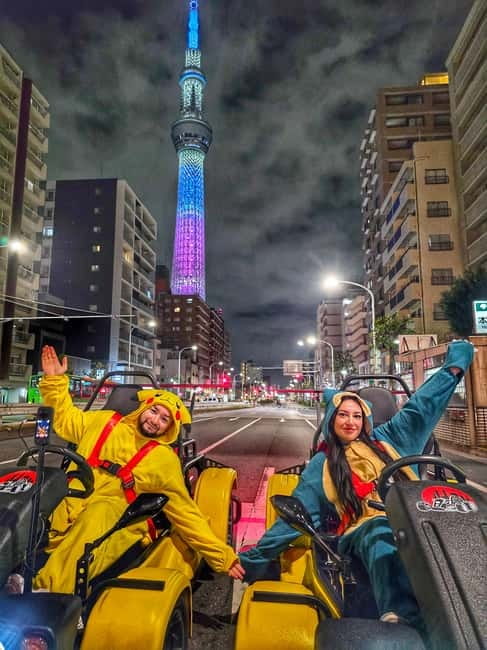
Then comes the Tokyo Imperial Palace surroundings. This is one of the stops where the guide’s commentary matters, because palace grounds can feel visually quiet compared to other Tokyo areas. From the kart, you get the contrast of calm, structure, and ceremony in a city that otherwise feels fast and layered.
After that, you’ll pass toward Tokyo Tower. Tokyo Tower is an easy landmark to recognize, but experiencing it while driving through the streets gives a different feeling than seeing it from a fixed viewpoint. You’re watching the city shift around the tower, and the tour’s scenic drive segments help you connect the skyline to the streets you are actually rolling through.
If you’re the type who likes to understand how Tokyo “moves,” this part is where the logic of the route clicks. You’re transitioning between major icons and the neighborhoods that frame them.
Ginza and Kabukiza Theatre: photo-friendly streets before you wrap up
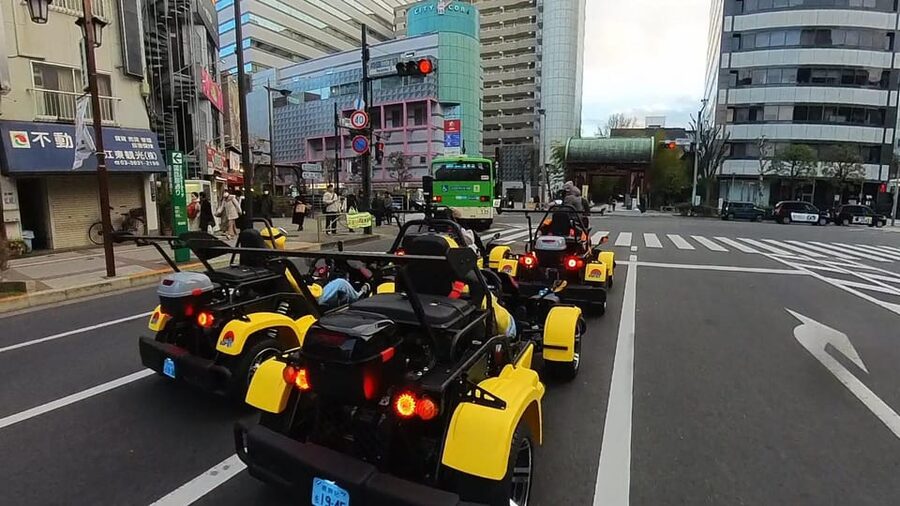
The later portion of the Uptown route includes Ginza. Ginza is famous for shopping and polished city energy, and from the kart you get that character quickly. What I like about this stop is that it’s not only the shopping frontage. You see the street layout and the flow of people and traffic around it, which makes Ginza feel like a real district, not just a brand name.
Then you finish with Kabukiza Theatre. This is a strong choice for culture-minded travelers because it ties Tokyo’s modern identity to the performance world. From the kart, it’s also easier to get to the area and back than trying to coordinate multiple transit changes during a short stay.
You return to Kartzilla to end the session. Past guests have mentioned that having practical items on hand helps at the end, like towels and hair dryers, especially if you had rain or foggy weather. That is the kind of detail that makes the experience feel more complete.
Capturing your ride: Insta360 option and free photos
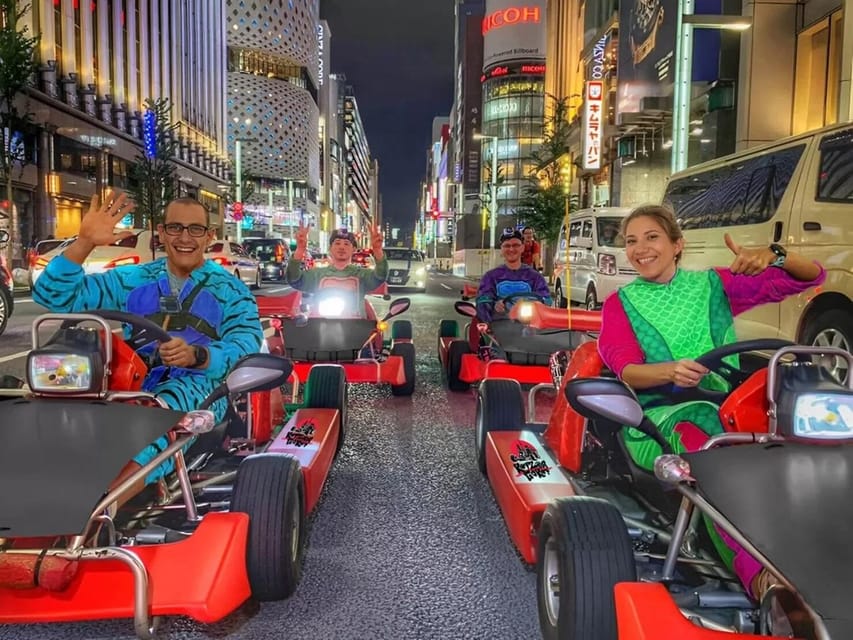
If you want a hands-free perspective, each kart offers the option to use an onboard Insta360 camera. The catch is simple: you’ll need a microSD card, which is available for purchase onsite.
This setup is great for two reasons. First, it captures the actual drive line you are taking, so the final video feels like your day in Tokyo, not just random landmark snapshots. Second, it can reduce the temptation to stop and fumble with your phone while you are driving.
The tour also includes free photos of your experience. That’s a nice value add, because it covers the moment when you are more focused on driving than posing.
Weather tip from real experience: the route can include rain, and rain jackets are available. If you are doing this at night, plan for the possibility that lighting plus wet streets changes how the road feels, and focus on the guide’s instructions.
Price and value: is $116 worth 2 hours of driving Tokyo?
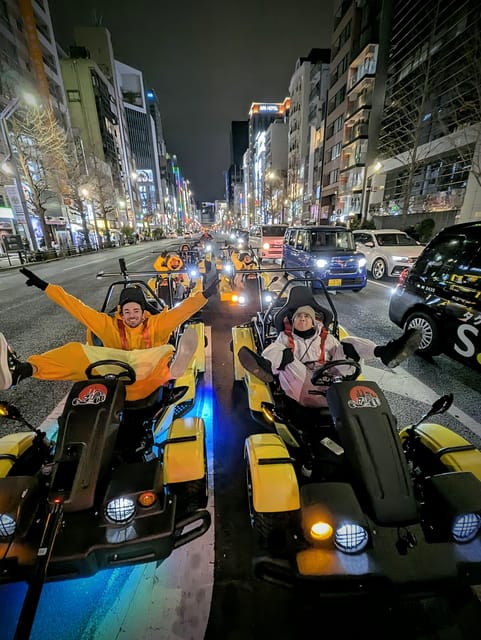
At $116 per person for 2 hours, this is not the cheapest way to see Tokyo. But it is also not trying to be. You’re paying for several things at once:
- A street-legal go-kart rental with comfort-focused engineering
- A professional local guide leading a specific route, with storytelling
- Fuel for the entire experience
- Two-way radio safety support, which reduces stress and improves coordination
- Accident insurance
- Drinks (water, tea, coffee)
- Anime costume rental
- Optional Insta360 use, plus free photos
If you compare this to the cost of doing a guided city tour plus entry fees plus a separate activity, it can start to make sense. The strongest value is the combination of: (1) real city driving, (2) landmark context, and (3) a small group cap of 10 participants, which usually means the guide can manage you without rushing.
Who should book this go-kart tour, and who should skip it
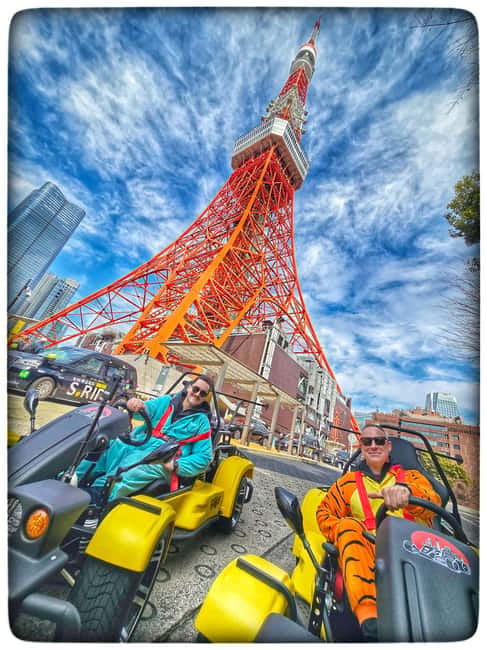
This tour is a great fit if you want Tokyo from ground level and you like hands-on activities. It also works well for people who might not enjoy long walking days but still want to feel like they explored, not just rode.
You should consider skipping it if any of the “not suitable” points apply. The tour is not suitable for:
- Children under 18
- Visually impaired people
- People without a driver’s license
- People over 95 years
- Drivers under 18
The other major filter is the driver’s license rules. You will need a valid accepted license, and certain digital or expired licenses are not accepted. Also, if you do not show up with the right paperwork, you cannot join, and there are no refunds.
Practical advice to help you enjoy every minute
If you want this to feel smooth from the start, do these three things.
First, bring your documents. You’ll need passport and your driving license details, including an international driving permit if required for your country. The rules are strict, so check that your permit is valid under the accepted formats.
Second, arrive early enough to handle the safety briefing. That 40-minute buffer is your friend.
Third, if you can choose your time slot, consider your priorities. Night rides can make the Tokyo skyline and streets feel extra dramatic because of neon lighting. Just be ready for the possibility of rain and follow the guide’s safety instructions closely.
Should you book the Tokyo Uptown Go Kart Tour?
I’d book it if you want a high-energy, guided way to see major Tokyo landmarks in a short window, and you like the idea of driving a comfort-focused street-legal kart with two-way radio safety. The combination of landmark storytelling plus real-time guidance is what makes this feel more than a gimmick.
I wouldn’t book it if you hate driving, you are short on time to get there early for the briefing, or your license paperwork might be unclear. In those cases, the driving requirement becomes the limiting factor, and you’ll spend the experience thinking about admin instead of Tokyo.
FAQ
Do I need a driver’s license to join?
Yes. You need a valid and accepted driving license on the day of the tour. The tour notes that participants without the required accepted license cannot participate and no refunds are provided.
What locations does the Tokyo Uptown route include?
The route includes stops and guided moments around Tokyo Skytree, Ryogoku Kokugikan, Tokyo Station, the Imperial Palace surroundings, Tokyo Tower, Ginza, and Kabukiza.
How long is the go-kart tour?
The experience duration is 120 minutes.
Where do I meet the group?
You meet at the Kartzilla Go Kart facility. It is about an 8-10 minute walk from Yotsugi Station and is accessible by the Keisei Line.
What languages are offered for the live guide?
The live tour guide is available in English, German, and Spanish.
Are karts comfortable for larger riders?
The tour info says the go-karts have reinforced frames and stable handling that comfortably accommodate big and tall riders.
Is the Insta360 camera included?
Use of the on-board Insta360 camera is optional and included with the activity, but you must have a microSD card. You can purchase a microSD card on-site.
What is included in the price?
Included items are street-legal go-kart rental, fuel, a professional local tour guide, anime costume rental, on-board Insta360 use (with your own microSD), accident insurance, and drinks (water, tea, coffee).
What is not included?
The tour does not include hotel pickup and drop-off, a microSD card for the camera, and meals.
Is the tour canceled for bad weather?
The information provided does not specify weather cancellation rules. If weather affects driving, the tour’s safety guidance and any available rain gear will matter.
What kind of cancellation policy is available?
The tour offers free cancellation up to 24 hours in advance for a full refund, and it also offers a reserve now & pay later option.
Newly listed around Tokyo
- Graffiti in Tokyo Walking Tour: Shibuya and Harajuku★ 5.0 · 41 reviews
- Tokyo Oldtown: Historic Landmarks Go Kart Tour (100 Minutes)★ 5.0 · 8 reviews
- Wagyu Beef & Sake Pairing Foodie Tour in Tokyo★ 5.0 · 16 reviews
- Ginza, Tokyo: Sake Experience with traditional vessels★ 4.7 · 8 reviews
- Ginza Tokyo: Easy Matcha (Green Tea) Experience★ 5.0 · 7 reviews
- Full Tokyo: Meiji Shrine, Imperial Palace, Asakusa & Skytree★ 4.7 · 16 reviews
- GINZA: Go Kart Experience with NEO GINZA★ 4.9 · 30 reviews
- Full Day Tokyo City Private Tour Sightseeing Full Customised★ 4.7 · 8 reviews
Street Kart Rides, compared.
Flagship 2-Hours Official Street Go-Kart Tour – Tokyo Bay Shop
Read our review →
Tokyo Go Kart: Asakusa, Skytree, and Akihabara **IDP MUST**
Read our review →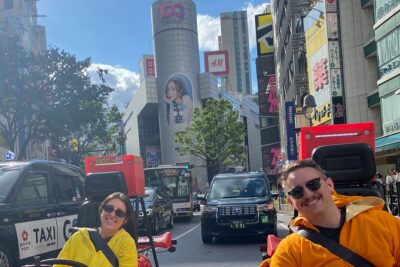
Shibuya Official Street Go-Kart in Shibuya Annex
Read our review →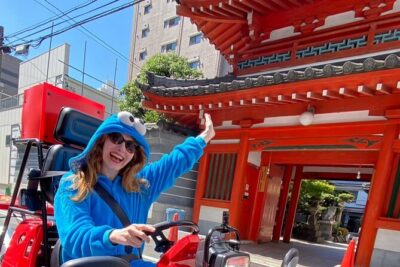
Browse the lists this tour appears in