
Review · NAGOYA TOURS
Shirakawago & Takayama Bus Tour from Nagoya w/Optional Lunch
One day, two historic worlds. This Nagoya bus tour strings together Edo-era Takayama and UNESCO Shirakawa-go gassho-style houses, with round-trip bus comfort and a real plan for winter weather. It is a fast, efficient way to see Gifu highlights when you are short on time but still want countryside vibes.
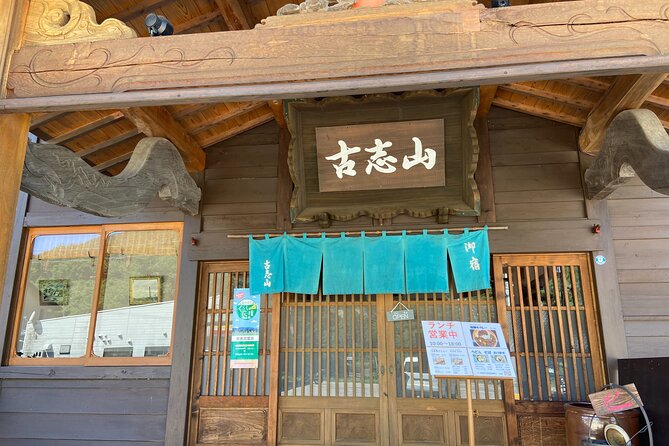
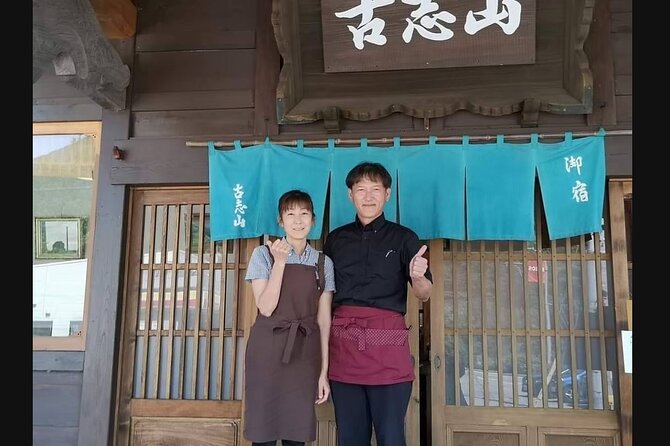
I especially like the option to add lunch at Koshiyama, where you can try Hida Beef (and on the meal plan, an oden set). I also like the way the day is paced, you get guided context on the bus and then time to wander on your own at each key stop.
One thing to consider: it is a 9 to 10 hour day, and time in Takayama can feel tight, especially if rain slows you down or you decide to shop for rain gear.
In This Review
- Key things to know before you go
- Nagoya, Takayama, Shirakawa-go, all in one long day
- Price and value: what $65.78 gets you
- Meeting point and timing: the part people mess up
- Takayama in 1.5 hours: Edo streets, shops, and rain reality
- Koshiyama lunch: Hida Beef teppanyaki and oden on the meal plan
- Shirakawa-go: gassho-zukuri houses, the swaying bridge, and village details
- Winter roads and the Gujo Hachiman backup plan
- Guides, language, and the bus experience
- What to wear, pack, and plan for on foot
- Should you book this Nagoya tour?
- FAQ
- How long is the tour from Nagoya?
- What time does the tour start, and where do I meet?
- Is the lunch included?
- What happens if roads close due to snowfall?
- Is the tour guided, and what languages are offered?
- Where do the stops take place?
- What about luggage on the bus?
- Can I cancel for free?
Key things to know before you go
- Hida Beef lunch option at Koshiyama, with Oden included on the meal plan
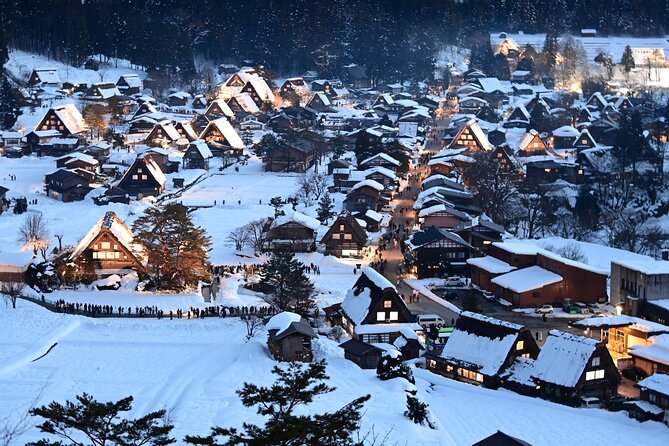
- UNESCO Shirakawa-go with classic gassho-zukuri houses and several photo stops
- Encounter Bridge is narrow and sways, and yes, it feels thrilling
- Shuttle to an observation deck exists, or you can walk 10 minutes, it costs 300 yen one way
- Winter backup plan to Gujo Hachiman if snow forces road closures
- Guides may run mixed-language commentary, depending on participant numbers
Nagoya, Takayama, Shirakawa-go, all in one long day
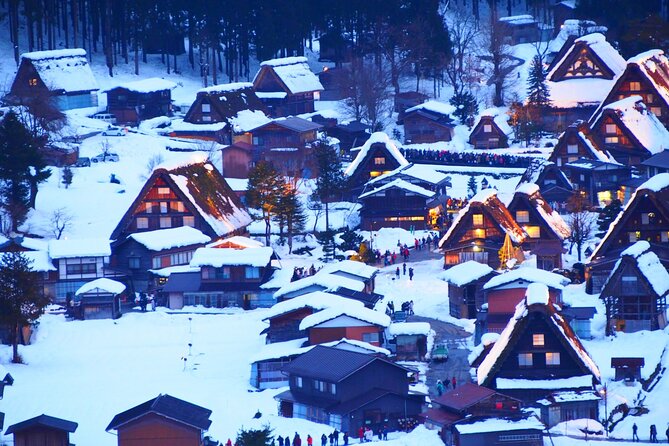
This tour is built for people who want the big names in Gifu without doing a complicated rail and bus puzzle. You leave Nagoya in the morning, then spend your day moving between old towns and mountain village scenes. The appeal is clear: Takayama gives you Edo-era streets and craft-town energy, while Shirakawa-go delivers the iconic thatched-roof look, rice paddies, and a quieter pace.
I like that the trip balances guided input and free time. The bus ride is where you get orientation, then you step out to explore. That matters in Japan, because the best moments often happen when you are walking at your own speed, ducking into small lanes, and not waiting for the next group cue.
It is also worth noting that the experience is designed to work even when weather turns. If snow or conditions shut roads to Shirakawa-go, the plan can switch to Gujo Hachiman, known as the Little Kyoto of Gifu. That kind of backup is not always guaranteed on one-day tours, so it is a real plus.
A few more Nagoya days to weigh up
- From Nagoya: Gujo, Hida Takayama, and Shirakawa-go Day Tour
★ 4.4 · 398 reviews - Ghibli Park 1-Day Bus Tour from Nagoya
★ 4.5 · 277 reviews - From Nagoya: Hida Takayama & Shirakawa-go Tour w/Opt. Lunch
★ 4.5 · 256 reviews
Price and value: what $65.78 gets you
On paper, $65.78 per person sounds like a day pass. In practice, you are paying for three things: round-trip bus transport from Nagoya, guided commentary, and fees that cover the tour framework. Admissions are listed as free in the itinerary for the main stops, which helps your sense of value because you are not stacking ticket costs on top.
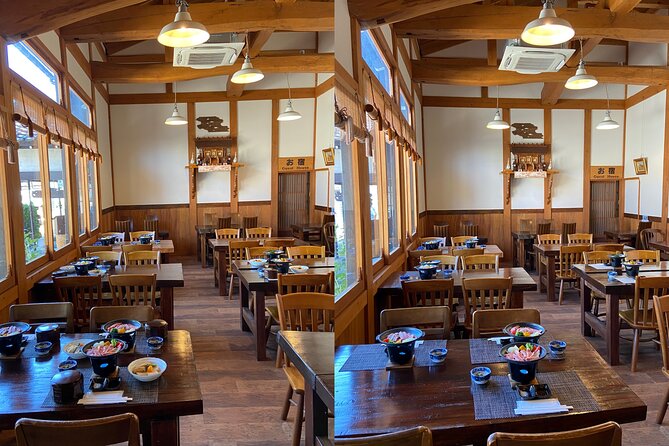
The optional lunch is where you can increase the value of the day. If you choose the meal plan, you get a Japanese-style teppanyaki set lunch at Koshiyama featuring Hida Gyu, plus an oden set. That is a meaningful splurge for a day trip, and it keeps lunch simple. You are not hunting menus in a small town on limited time.
If you do not add lunch, you will still have time in Takayama to eat on your own. Just know that Takayama’s best food spots can have lines. Planning to eat at a set time, rather than winging it, often makes the day feel smoother.
Meeting point and timing: the part people mess up
You meet at VIPLINER Nagoya bus stop at 20-20 Tsubakichō in Nakamura Ward. Departure is 8:00 am, and the bus will not wait if you show up late. This is not a small detail. In Japan, bus schedules are firm, and a few minutes can turn into a missed seat.
You also need to be organized about the exact meeting location. The directions note that you should check the photo on the product page and scan the QR code for a reference. I would treat that as mandatory prep, not a suggestion. Nagoya can feel straightforward, until you are standing outside with the wrong terminal number.
Luggage is limited to one piece per person, and it must be manageable within vehicle storage, with a max of 155cm total (height plus width plus depth). Any items stored in the trunk are not accessible between stops, so keep your valuables and anything you need for comfort on you.
Takayama in 1.5 hours: Edo streets, shops, and rain reality
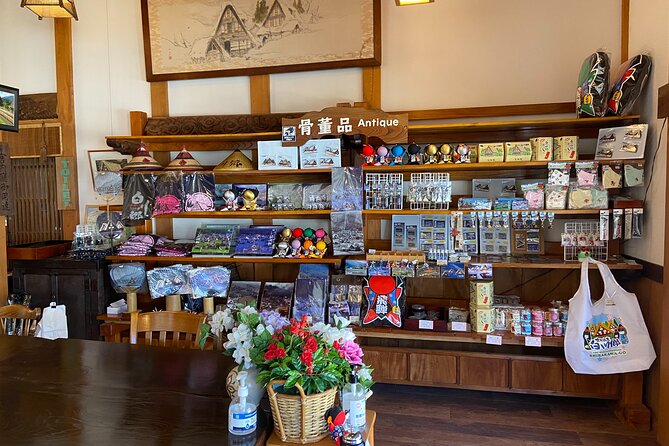
Takayama is often the easier sell on this route. It has the historic vibe without needing you to understand complicated transit, and it feels like a town you could wander for days. On this tour, your stop is about 1 hour 30 minutes, so think of it as highlights time.
What you can realistically do in that window:
- Walk the areas around the main old-street lanes and see traditional-looking town scenes
- Use the time to snack or buy a small souvenir, since many shops cluster near the walking areas
- If you are traveling in winter or rain, prioritize a warm layer and quick photo stops, because wet ground can slow you down
One practical drawback: that stop can feel short if the weather is bad or if you want to do more than look. I can see why people wish it were longer, especially when rain forces you to stop for rain gear and keeps you from lingering.
Still, even in a short stop, Takayama gives you the sense of an old town with modern convenience. It is a strong setup for Shirakawa-go, because it gets you in the historic mood before the rural scenery takes over.
A different sort of day in Japan:
- Hiking the Historic Nakasendo Trail [1 Day Tour from Nagoya]
★ 5.0 · 104 reviews - Nagoya Highlight Tour guided by a friendly local
★ 5.0 · 86 reviews - Nagoya: Japanese Traditional Sweets making and Tea Ceremony
★ 4.9 · 76 reviews - Magome-juku, Tsumago-juku & Ena-kyo 1d Bus Tour from Nagoya
★ 4.6 · 75 reviews
Koshiyama lunch: Hida Beef teppanyaki and oden on the meal plan
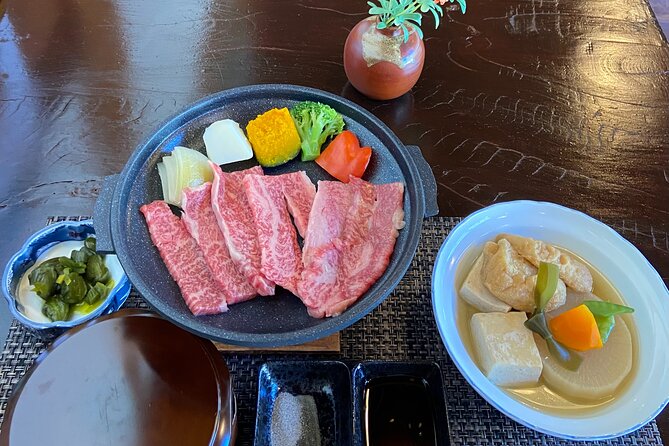
Lunch is one of the best value-added parts of the day, because it is scheduled for you. Koshiyama is in Shirakawa-go, so you are not stuck eating in a random convenience shop between sightseeing spots.
If you pick the meal plan, you get a teppanyaki set lunch featuring Hida Gyu, plus an oden set. Hida Beef is one of Japan’s well-known beef types, and having it in the right region matters. This is not just eating, it is aligning food with place, which is why it feels like a real tour upgrade.
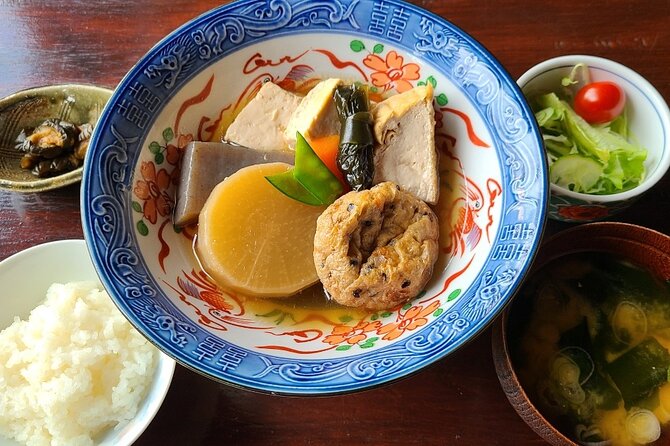
If you need a vegan option, you might be able to choose tofu lunch instead, depending on what is available when your group is booked. Since the exact meal choice is not detailed in the core info, the safest move is to ask when you confirm your booking or when the operator sends details.
Practical tip: eat what you can, then save your energy for walking. Shirakawa-go involves multiple short walks, plus time at viewpoints and preserved areas.
Shirakawa-go: gassho-zukuri houses, the swaying bridge, and village details
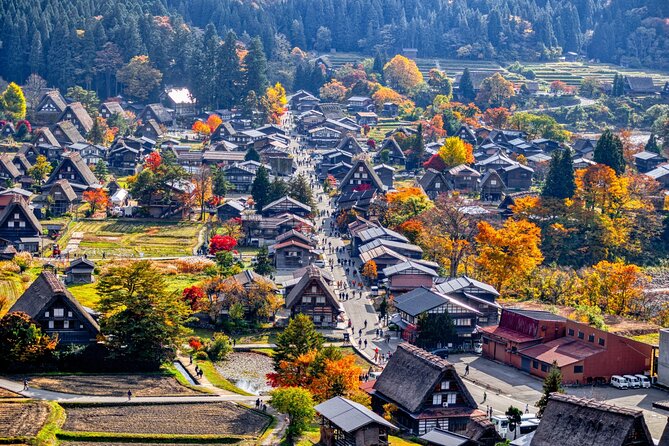
This is the main event. Shirakawa-go is UNESCO-listed, and the village is famous for gassho-zukuri thatched roofs. In plain terms, you are stepping into a mountain farming setting that looks frozen in time, with houses arranged among rice paddies and fields.
Your visit includes a mix of guided stops and self-exploration. Expect the classic thatched-roof streets, then a set of specific points that help you understand the village beyond just photos.
A few standout moments you should not skip:
- The Encounter Bridge, made of concrete and narrow, with a noticeable swaying feel. It sounds like a gimmick until you are standing on it, then you get why people call it thrilling.
- The view from the observation deck. You can go by shuttle bus (300 yen one way) or walk about 10 minutes. Either way, the payoff is the valley view over forested hills, rice fields, and farms.
- A sericulture history spot, focused on raising silkworms. Even if you are not a history nerd, it gives context for why this region looked the way it did.
- A preserved area with wooden gassho-style houses built in the late 19th century. This is where the village’s shape and materials really make sense.
- A shrine stop that can feel very powerful and quiet, like a real moment of stillness inside the busy scenery.
One consideration: Shirakawa-go can be crowded, and lines happen, especially in peak seasons. If you want the most calm photos, keep your eyes open for smaller side angles and be ready to shoot while you have a gap in the crowd flow.
Also, wear shoes with good grip. Reviews mention slippery ground in winter, and even outside of deep winter, the village is on uneven paths.
Winter roads and the Gujo Hachiman backup plan
This tour includes an important winter reality check. Snowfall can occasionally lead to road closures to Shirakawa-go. If that happens, the operator transitions to a substitute route to Gujo Hachiman, described as the Little Kyoto of Gifu.
Gujo Hachiman is known for historic streets with traditional buildings, and the idea here is simple: you still get an old-town experience, even when the main mountain village cannot be reached. I like this approach because it respects your time. You are not just returned to Nagoya disappointed, you still see something that fits the theme of the day.
What to do as a traveler:
- Pack warm layers and a rain shell even if the forecast looks mild
- Assume you might walk more than you expect if routes shift
- Keep flexible expectations on exact scenery, but hold onto the fact that the tour aims to protect your day
Guides, language, and the bus experience
This is a bus tour, so the guide experience matters. Included in the tour are an English or Chinese-speaking conductor, plus English and Chinese commentary might be given on the same bus when participant numbers are lower.
That matters for you if you strongly depend on English. A practical move is to confirm your preferred language before travel, especially if you are booking last minute or traveling with a small group. If commentary is shared, it can mean you sometimes get less English at certain moments, depending on how they manage the group.
On the positive side, the day can feel very well run. People specifically named guides like Bara-san, Liu, Alberto, and Miss Guo for punctual, friendly, and detailed explanations. Even when you are mostly free to explore at the stops, it helps when the guide gives clear “what to see first” suggestions and bus-time context.
If you like planning your own route once you arrive, this tour fits. You are not locked into a museum-style script. You get hints, then you walk, then you come back on schedule.
What to wear, pack, and plan for on foot
You are walking in two very different settings. Takayama is town walking. Shirakawa-go is village paths and viewpoints. Winter turns both into slip-and-slide situations if you are not ready.
I would pack around these needs:
- Warm layers for morning departure and mountain air later
- Rain gear, because weather can change fast and you may end up searching for a coat
- Shoes with traction, especially if you visit in winter
- A small bag you can keep with you, since trunk luggage is not accessible between stops
Also, remember you will be moving for much of the day. Even if each stop feels manageable alone, the total time adds up. Build in a slower pace at Shirakawa-go. That is where you want the best photos and the least stress.
Should you book this Nagoya tour?
I think this is a good book if your priorities are clear: you want Takayama + Shirakawa-go in one day with transport handled. The optional Hida Beef lunch at Koshiyama is one of the stronger reasons to choose the meal plan, and the winter backup to Gujo Hachiman is a smart feature for seasonal travel.
I would not book it if you want a deep, unhurried Takayama experience, because the time there can feel short. It is also worth your attention if language accuracy is critical for you. The tour runs with English or Chinese-speaking staff, and commentary can be mixed depending on participant numbers.
If you want a practical, highlights-focused day trip from Nagoya that still delivers real atmosphere and UNESCO scenery, this one makes sense.
FAQ
How long is the tour from Nagoya?
The bus tour runs about 9 to 10 hours.
What time does the tour start, and where do I meet?
You meet at the VIPLINER Nagoya bus stop at 8:00 am. The meeting point is at 20-20 Tsubakichō, Nakamura Ward, Nagoya.
Is the lunch included?
Lunch is included only if you select the meal option. The meal option is at Koshiyama and features a Japanese-style teppanyaki set lunch with Hida Beef, and an oden set (on the meal plan).
What happens if roads close due to snowfall?
If snowfall leads to road closures to Shirakawa-go, the tour switches to a substitute journey to Gujo Hachiman, known as the Little Kyoto of Gifu.
Is the tour guided, and what languages are offered?
The tour includes an English or Chinese-speaking conductor. English and Chinese commentary might be provided on the same bus depending on participant numbers.
Where do the stops take place?
You visit Takayama, then Koshiyama (for the lunch option), and then Shirakawa-go. The route also includes several Shirakawa-go points such as the Encounter Bridge and viewpoints.
What about luggage on the bus?
You can bring one piece of luggage per person, stored in the trunk. The trunk luggage size limit is 155cm total (height plus width plus depth). Trunk items are not accessible between stops.
Can I cancel for free?
Yes, you can cancel for a full refund up to 24 hours before the experience start time.
Newly listed around Nagoya
- Discover The Hidden Pottery Town of Tokoname★ 4.5 · 12 reviews
- Walking Small-Group Nagoya City Tour★ 5.0 · 13 reviews
- Shirakawa-go and Hida-Takayama Private Day Trip from Nagoya★ 4.5 · 11 reviews
- Toyota Automobile Tour for Car Lovers★ 4.5 · 11 reviews
- Private Full-day Nagoya City Tour★ 5.0 · 22 reviews
- Nagoya: 2026 Hida Takayama Shirakawa-go Light-up Winter Tour★ 3.5 · 16 reviews
- Pub Crawl in Nagoya★ 5.0 · 15 reviews
- Nagoya Private Tour with a Local: Highlights & Hidden Gems★ 5.0 · 13 reviews
Nagoya Tours, compared.

Hiking the Historic Nakasendo Trail [1 Day Tour from Nagoya]
Read our review →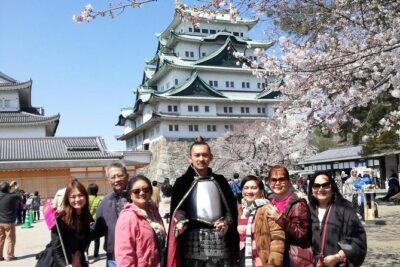
Nagoya Highlight Tour guided by a friendly local
Read our review →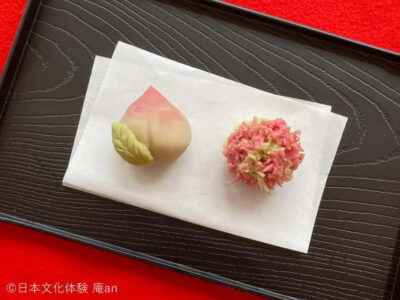
Japanese Traditional Sweets making and Tea Ceremony
Read our review →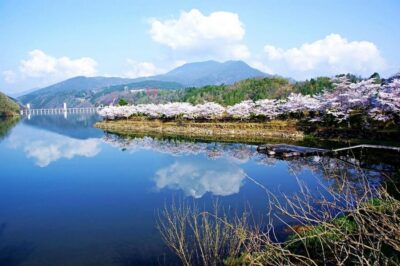
Magome-juku, Tsumago-juku & Ena-kyo 1d Bus Tour from Nagoya
Read our review →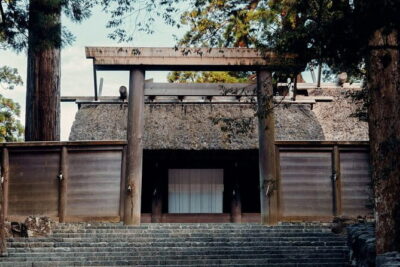
Ise’s Sacred Shrines and Captivating Coastlines – From Nagoya
Read our review →Browse the lists this tour appears in