
Review · LOCAL FOOD WALKS
Specialties of Nagoya Food Tour
Nagoya has a food story worth following. This 3.5-hour, small-group walk is designed to help you eat your way through local favorites without the usual stress of ordering and paying on the spot. I like the tastings included setup and the way the guide helps you order for you, so you can focus on what you are eating and why it matters.
The best part is that the menu leans hard into Nagoya identity, not generic Japanese food. You may end up with miso nikomi udon in red miso broth, pickles made from the world’s longest radish, and the eel dish locals love, hitsumabushi. One drawback to note: this tour is not suitable for vegans or vegetarians, and the food is pre-selected and can change based on availability.
In This Review
- Key highlights
- Nagoya’s food personality, and why this tour fits it
- Price and value: what you actually pay for in $150.89
- The walking rhythm: planned breaks in Sakae and beyond
- Stop 1 in Sakae: getting oriented while you start tasting
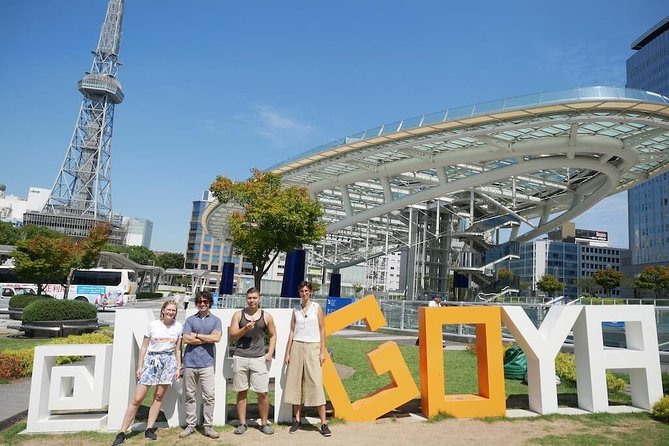
- Oasis 21: a photo stop with purpose, not a random detour
- Matsuzakaya Nagoya underground: where the food feels extra local
- The cultural storytelling you can actually use
- Unagi and hitsumabushi: learning how to eat the Nagoya way
- Miso, wings, and beer: what a nighttime izakaya stop adds
- Food notes that matter: pre-selection, allergies, and dietary limits
- Guides: what makes the experience feel human
- Who should book this Nagoya food tour, and who should skip it
- Should you book this Nagoya food tour?
- FAQ
- How many foods and snacks are included?
- Are drinks included?
- What is the tour duration?
- Will the guide help if I do not speak Japanese?
- Where do I meet, and where does the tour end?
- Is this tour suitable for vegans or vegetarians?
Key highlights
- Small group of up to six, so you are not stuck in a human line
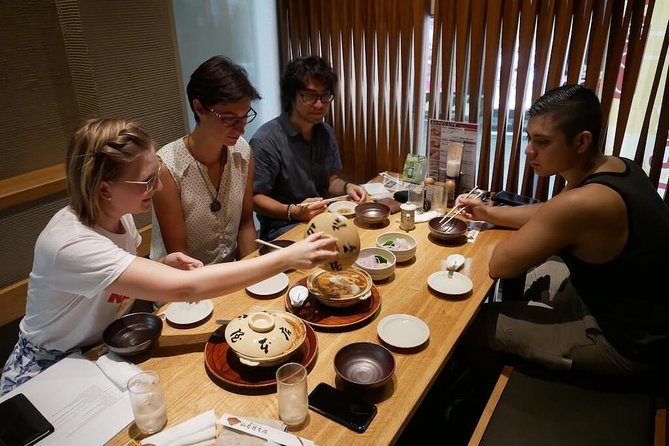
- Guide orders the food, helping you avoid language headaches
- 5-6 foods and snacks plus drinks for nighttime tours
- Sakae, Oasis 21, and Matsuzakaya Nagoya stops with planned breaks
- Cultural context, including demon and famine stories tied to a sweet potato treat
- A chance to learn how to eat hitsumabushi the Nagoya way
Nagoya’s food personality, and why this tour fits it
Nagoya is where comfort food gets its own rules. Instead of chasing sushi counters or landmark snacks, you get pulled toward miso-forward flavors, eel-focused meals, and crunchy-sour pickles that show up alongside rice. If you want local food culture that feels specific, not copy-paste Japan, this tour is built for that.
I also like that you do not just get food, you get the reasoning behind it. The guide talks about how Japanese demon and famine stories connect to a local sweet potato treat, which turns a snack stop into something you remember. It is a simple trick, but it works. Food plus context turns eating into learning.
More Food Tours in Nagoya
- 2.5-Hour Nagoya Tour: Castle History, Local Food & City View
★ 4.5 · 36 reviews - Nagoya Street Food Walking Tour of Osu
★ 5.0 · 28 reviews - Nagoya Endoji Food and Cultural Tour
★ 5.0 · 12 reviews
Price and value: what you actually pay for in $150.89
At $150.89 per person for about 3 hours 30 minutes, you are paying for time saved and decisions handled for you. You are not paying for transportation, and you are not doing a DIY hunt across multiple neighborhoods. Instead, the cost covers all fees and taxes, 5-6 foods and snacks, and for nighttime tours, a drink at the last stop.
That is the key value angle. Nagoya has lots to eat, but planning which places match your tastes, your schedule, and your ability to order can take real effort. Here, the guide sorts it out, including ordering. You end up buying fewer mistakes and eating more of the good stuff.
One more practical point: this tour is booked about 60 days in advance on average, so if your dates are firm, do not wait. Popular food tours tend to fill when flights are planned and people settle into their itineraries.
The walking rhythm: planned breaks in Sakae and beyond
This is a walking tour, and yes, you will move. The good news is that the structure includes breaks at restaurants throughout the route. That matters because food tours can be either fun or exhausting. This one aims for steady pace, eat, rest, repeat.
The start point gives you a clear anchor in Nagoya. You meet at Chubu Electric Power MIRAI TOWER in the Nishiki area of Naka Ward, then the tour ends back at the meeting point. Having the same start and end location helps if you are juggling dinner plans or catching transit after.
Also, the tour uses a mobile ticket, which is one less thing to manage while you are walking around with snack-scented clothing.
Stop 1 in Sakae: getting oriented while you start tasting
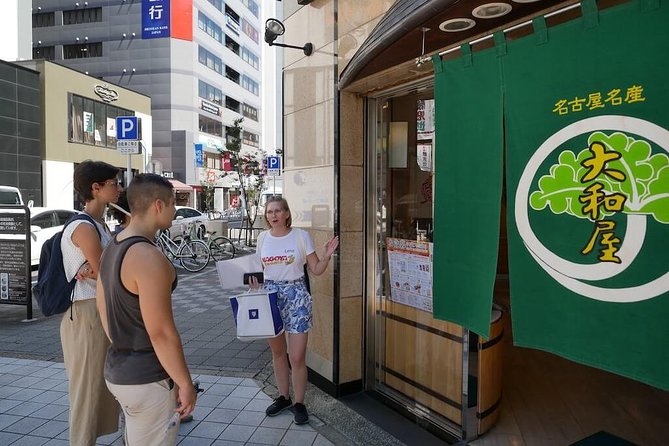
Sakae is Nagoya’s key shopping and city-center zone, and it is a smart place to begin. You get your bearings early, then you start eating before you feel like you are fully lost in the streets.
Even if you are only in Nagoya for a short time, Sakae helps you connect the dots. You can look around at the urban layout while the tour gets going, then food arrives at the right moments so you are not stuck eating while trying to find directions.
Potential drawback: because Sakae is busy, it can feel a little crowded around the edges. The tour format helps, since you are not trying to navigate alone while deciding what to order.
More Food walks in Nagoya:
- Tokyo: Shinjuku Food Tour (13 Dishes at 4 Local Eateries)
★ 5.0 · 6,603 reviews - Osaka: Shinsekai Food Tour with 13-15 Dishes at 5 Eateries
★ 4.8 · 2,204 reviews - Osaka Food Tour: 13 Dishes at 5 Local Eateries
★ 5.0 · 2,149 reviews - Tokyo: Shinjuku Food Tour (15 Dishes and 4 Eateries)
★ 4.9 · 2,033 reviews
Oasis 21: a photo stop with purpose, not a random detour
Oasis 21 is a striking Nagoya landmark, and it works well in a food tour route because it breaks up the walking. You get a visual moment, then you move back into eating mode.
This is also where pacing matters. The route keeps you from burning out early. You are not just consuming snacks back-to-back. You are doing city sightseeing in the gaps between meals, which keeps the tour from feeling like a blur of small bites.
If you are the type who hates forced sightseeing, Oasis 21 is your “okay, I see it, now let’s eat” checkpoint. It is not the whole point, but it helps you understand where the tastings land.
Matsuzakaya Nagoya underground: where the food feels extra local
The most interesting architecture stop is at Matsuzakaya Nagoya, especially the underground level. The tour is set up to let you explore that space as part of the experience, not as an awkward maze you wander through alone.
This is also where you are likely to feel the tour’s focus on Nagoya-specific food. Expect tastings built around miso flavors and local pickles. One example on the menu is miso nikomi udon, with udon noodles served in steaming hot soup made from red miso paste. If you are used to lighter noodle soups, this feels richer and deeper, like the dish has a built-in flavor target.
You may also taste pickles made from the world’s longest radish, a detail that sounds like trivia until you bite into it. Long radish pickles bring a sharp crunch that cuts through savory foods and rice.
And yes, the tour also includes shrimp-focused rice flavors. The guide talks about the story behind rice balls stuffed with shrimp tempura, which turns a snack into something with local meaning.
Small downside: the food is pre-selected and may be changed based on availability. That is normal for a walking tour, but if you are traveling with a strict must-eat list, keep your expectations flexible.
The cultural storytelling you can actually use
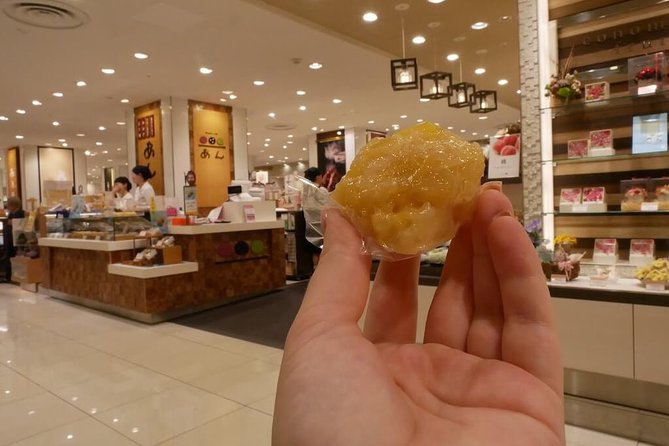
A big reason this tour works well is that you get more than items on a menu. You get connections. The guide explains how demon and famine stories link to a local sweet potato treat. Even without special background, you walk away understanding that food in Japan is often tied to regional ideas, not just taste.
I also love the practical side of this storytelling. When the guide frames a dish with local context, it becomes easier to order again later, even if you are on your own. It helps you recognize what makes Nagoya eating different the next time you see miso, eel, or pickles on a sign.
If you are the type who tunes out when the topic drifts into legends, you might want to keep an eye on the guide and follow the dish connection. The stories are not random. They point back to what you are tasting.
Unagi and hitsumabushi: learning how to eat the Nagoya way
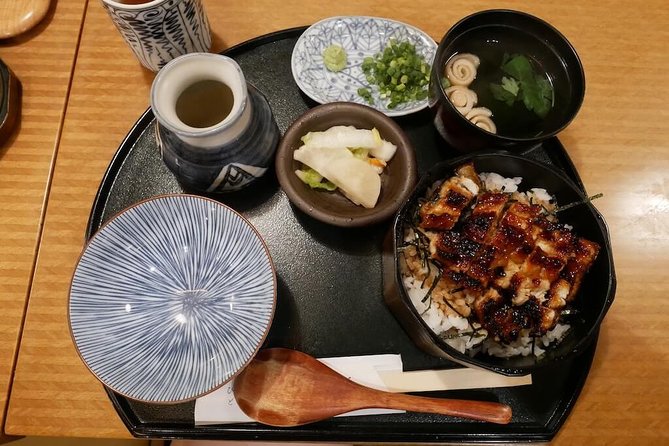
For many people, the food highlight is eel. This tour teaches you about hitsumabushi, made from freshwater eel, and it includes guidance on how to eat it. That detail is huge. Eel dishes can be confusing if you only know the version you had once at home. Here, you learn the local flow and what to pay attention to.
You might also get grilled eel as part of the tastings, depending on the schedule. If you have never tried unagi, this is a good entry point because the dish is presented with structure, not just a plate and a shrug.
From the guide’s explanation, you start to see why Nagoya does eel with confidence. It is not a gimmick. It is a core comfort-food style, built around sauce, texture, and rice.
Miso, wings, and beer: what a nighttime izakaya stop adds
If you book the nighttime option, the tour shifts into Japan’s drinking culture. You head to a popular Nagoya izakaya scene and get a drink at the last stop, alcoholic or non-alcoholic.
One tasting mentioned in the tour experience is spicy chicken wings. The guide helps you match the heat with the right beverage, and that makes the flavors feel more complete. If you want the classic pairing vibe, you might have a cold Japanese beer alongside the wings.
The izakaya angle adds warmth to the tour. Daytime food tours can feel clinical, like a list with timestamps. Nighttime feels more like locals actually eat and talk. Just remember: your walking time still has structure, so pace yourself. If you are planning a late-night agenda after the tour, keep it light.
Food notes that matter: pre-selection, allergies, and dietary limits
This tour is not suitable for vegans and vegetarians. It is built around meat and fish, including eel, and it includes items like shrimp tempura rice balls.
Food is also pre-selected and can change based on availability. That means you might not get every exact item on a given day. The tour still aims for the Nagoya theme, so you should expect similar flavor families: miso, eel, pickles, and snack-sized portions.
If you have allergies or other dietary restrictions, the tour asks you to let them know. That is the difference between a smooth meal and a stressful one, especially when a guide is doing the ordering for you.
Guides: what makes the experience feel human
Even with a set itinerary, the guide quality changes everything. You can get a tour guided by people like Patricia, Erica, or Lena, based on past experiences. One stand-out detail is Patricia’s background, including Peruvian roots with Japanese ancestry and moving to Japan at age 19. That kind of perspective often makes the explanation feel personal, not scripted.
You may also notice the guide’s ordering skill as the glue that holds the tour together. When you do not have to worry about translating menus, you stay present for the food and the story.
Who should book this Nagoya food tour, and who should skip it
This is a strong pick if you:
- Want Nagoya-specific dishes like red miso udon and hitsumabushi
- Prefer a small group of six over a big bus-style tour
- Would rather have a guide order for you than wrestle with menus
- Like eating with breaks and not turning the day into a marathon
You should think twice if you:
- Need a vegan or vegetarian menu
- Have strict allergies and want a fully customized menu, since the food is pre-selected
- Hate walking, even with rest stops, because the route does involve quite a bit of moving on foot
Should you book this Nagoya food tour?
If your goal is to eat the best of Nagoya without wasting time researching menus or practicing ordering Japanese food, this tour is a smart buy. The tastings included format, small group size, and guide-ordered meals solve the three biggest friction points in food travel: planning, language, and pacing.
Book it when you have dates, because it can sell out, and the food is designed around a tight set of tastings that match Nagoya’s identity. If you are an eel fan, a miso-udon person, or you want to learn how to eat hitsumabushi correctly, you will likely feel like the tour earned its price fast.
FAQ
How many foods and snacks are included?
You get 5-6 foods and snacks included in the tour.
Are drinks included?
Alcoholic beverages are included. For nighttime tours, you get one drink at the last stop, alcoholic or non-alcoholic.
What is the tour duration?
The tour runs for about 3 hours 30 minutes.
Will the guide help if I do not speak Japanese?
Yes. The guide orders the food for you, which helps you avoid language barriers.
Where do I meet, and where does the tour end?
You meet at Chubu Electric Power MIRAI TOWER in Nishiki, Naka Ward, Nagoya, and the tour ends back at the same meeting point.
Is this tour suitable for vegans or vegetarians?
No. The tour is not suitable for vegans and vegetarians. If you have allergies or dietary restrictions, you should let the provider know.
More Food & Drink in Nagoya
- Sake & Seasonal Delights Sake Pairing Lunch at the Brewery
★ 5.0 · 8 reviews - Tokyo Tsukiji Fish Market Food and Culture Walking Tour
★ 5.0 · 3,184 reviews - Kyoto Night Foodie Tour in Gion (9+ dishes + 6 Sake tastings)
★ 5.0 · 1,762 reviews - Hungry Osaka Street Food Tour:15 Tastings & 3 Drinks with a Local
★ 5.0 · 1,727 reviews
Newly listed around Nagoya
- Sake & Seasonal Delights Sake Pairing Lunch at the Brewery★ 5.0 · 8 reviews
- Nagoya Super Market Tour & Home Cooking Class with a Local, Akiko★ 5.0 · 10 reviews
- Tea Ceremony Experience★ 4.8 · 7 reviews
- Nagoya: Toyota Commemorative Museum Guided Tour★ 4.7 · 22 reviews
- Nagoya: Traditional Japanese Sweets-Making Workshop★ 4.6 · 14 reviews
- Nagoya: Full-Day Nagoya City Tour★ 5.0 · 8 reviews
- From Nagoya: Shirakawa-go UNESCO Village Day Trip w/ Pickup★ 4.0 · 8 reviews
- Nagoya Private Custom Tour with Local Guide★ 5.0 · 15 reviews
Local Food Walks, compared.
Shinjuku Food Tour (13 Dishes at 4 Local Eateries)
Read our review →
Shinsekai Food Tour with 13-15 Dishes at 5 Eateries
Read our review →
Osaka Food Tour: 13 Dishes at 5 Local Eateries
Read our review →
Shinjuku Food Tour (15 Dishes and 4 Eateries)
Read our review →
Kyoto Night Foodie Tour in Gion (9+ dishes + 6 Sake tastings)
Read our review →
Hungry Osaka Street Food Tour:15 Tastings & 3 Drinks with a Local
Read our review →
Tokyo Night Foodie Tour in Shinjuku – Seasonal Sushi, Wagyu Beef
Read our review →
Browse the lists this tour appears in