
Review · LOCAL FOOD WALKS
Tokyo Allstar Food Tour
Neon and snacks, planned for you. This evening food walk links classic Ginza shine with the gritty, fun mood of Gado Shita under the train tracks, then lands in Shimbashi for that more local izakaya feel. Add in a small group and a local guide, and you get a route that feels like Tokyo after dark, not a museum stroll.
I especially love the small group format. It means your guide can actually respond to what you eat, what you ask, and how adventurous you want to be. I also really like the way the tour mixes savory yakitori energy with sweet stops, including dessert.
One possible drawback: the price is not cheap for 3 hours. Some parts lean more toward tasting and learning than a big, heavy meal, so you may want a real dinner plan after the tour, just in case.
In This Review
- Key things I’d circle before booking
- A 4:00 pm Tokyo taste walk that actually feels like Tokyo at night
- Meeting at Seiko House Ginza Clock Tower, then finding your way through famous Ginza landmarks
- Gado Shita under the train tracks: yakitori, izakayas, and that 1970s backstreet energy
- Ginza’s sweet and fancy side: pastries, designer melons, and tea-tasting style stops
- Shimbashi at the end: rustic eateries, charming izakayas, and an easier landing for dinner plans
- What you actually eat and drink: 4 food stops, dessert, and a real yakitori focus
- Price and value: $231 for access, time, and not guessing menus alone
- Choosing a guide and getting the most from the group vibe
- How to prepare: walking comfort, drink pacing, and dietary questions that save time
- Should you book this Tokyo Allstar Food Tour?
- FAQ
- How long is the Tokyo Allstar Food Tour?
- What time does the tour start, and where does it meet?
- Where does the tour end?
- What’s included in the price?
- Is hotel pickup or drop-off included?
- Are transportation costs included?
- Can the tour accommodate dietary restrictions?
- What are the drink age requirements?
- Is the tour suitable for children?
Key things I’d circle before booking
- Small group size (max 10): more time for your guide and fewer awkward bottle-necks at each shop
- Gado Shita under the tracks: a Tokyo scene that most visitors never get to experience
- Four food stops plus dessert: structured enough to be easy, flexible enough to keep things fun
- Ginza contrast: you walk from old-school backstreets to upscale streets in the same evening
- Dietary flexibility: vegan, vegetarian, pescetarian, and gluten-free friendly options are offered
A 4:00 pm Tokyo taste walk that actually feels like Tokyo at night
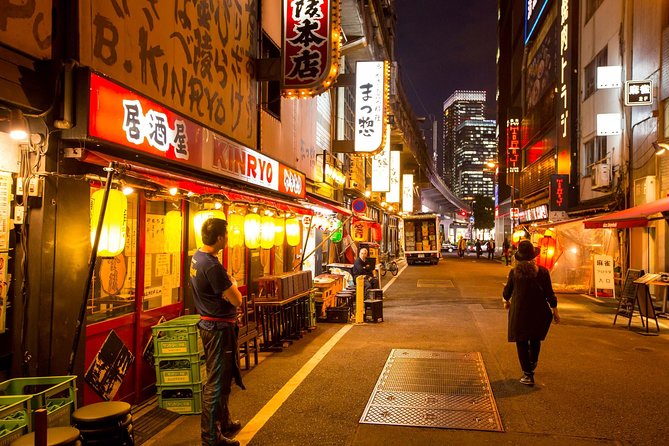
Starting around 4:00 pm is smart. Tokyo looks different after work hours. Street lighting pops. Shop fronts glow. The backstreets feel livelier, especially in areas like Gado Shita where the elevated tracks loom above the narrow lanes.
This is also a good time to learn Tokyo food customs because you are watching people eat while the city is in motion. You are not stuck in daytime “sightseeing mode,” where everything feels a bit too early and too quiet. Here, meals feel like meals.
You’ll walk enough to feel it. Even with short tastings, this is an on-your-feet experience, not a seated dinner. Good shoes matter, and you will want your phone charged for the mobile ticket.
More Food Tours in Tokyo
- Tokyo: Best Ginza Food Tour at 3 Local Eateries
★ 5.0 · 83 reviews - Japanese Whisky Tasting Experience at Local Bar in Tokyo
★ 5.0 · 59 reviews - Adventurous Japanese Food Tour in Tokyo
★ 4.5 · 53 reviews
Meeting at Seiko House Ginza Clock Tower, then finding your way through famous Ginza landmarks
You meet at Seiko House Ginza Clock Tower and then move through the Ginza zone around Wako Ginza and the surrounding sights. You pass big-name landmarks that help you orient fast, including Ginza Six and Kabuki-za. You also make time for a stop near Karasumori Jinja, which gives the evening a more grounded feel as you transition toward Shimbashi.
This part matters for two reasons.
First, Ginza can be intimidating if you arrive with no plan. A guided start gives you an easy entry point, so you are not spending your first hour just figuring out which way to turn.
Second, the tour uses Ginza as contrast. You see upscale streets after you have spent time with lower-key backstreet energy. That “from polished to gritty” shift is one of the most Tokyo things you can experience in a single evening.
Gado Shita under the train tracks: yakitori, izakayas, and that 1970s backstreet energy
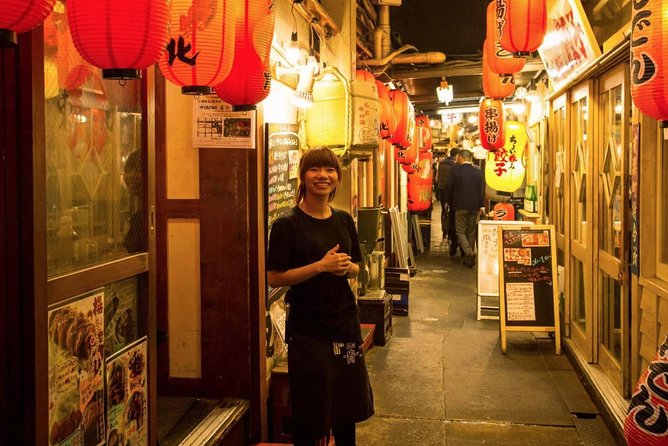
Gado Shita is the highlight for me, even before you taste anything. The vibe is immediate: narrow streets, neon signs, smells drifting out, and that sense of Tokyo that feels older than the glossy postcards.
You’ll go to a busy restaurant area directly under the elevated train tracks. It’s loud in a normal way, meaning full of locals and constant motion. And because it’s under the tracks, the atmosphere feels different from standard “dinner street” Tokyo. The elevated rail makes the area feel like a world of its own.
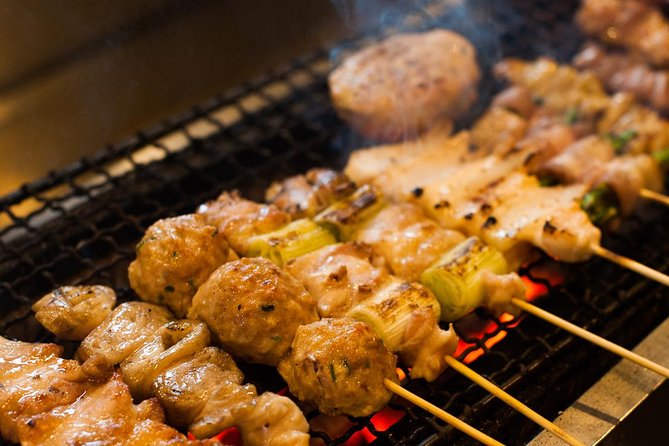
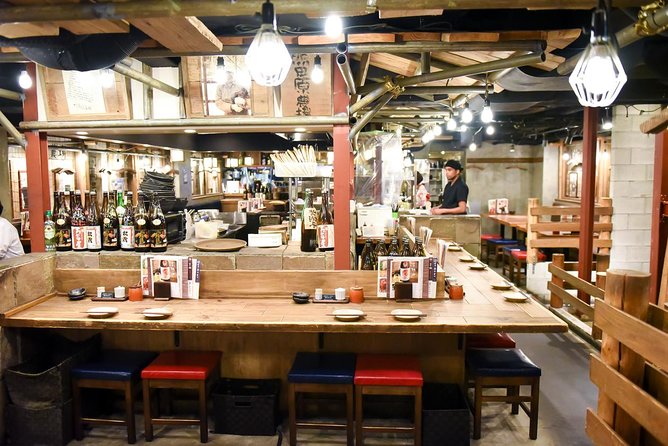
From there, you head to local-style izakayas where you sample variations of yakitori plus drinks. This is where the tour earns its keep. Yakitori is not complicated, but doing it well is cultural. Your guide can help you read the menu logic, figure out what to try first, and understand why people order in certain patterns.
Also, the tour’s small group size matters a lot here. Izakayas are typically tight spaces. If you have more than a few people, you end up waiting, squeezing, and fumbling. With a max group of 10, it stays more human.
Ginza’s sweet and fancy side: pastries, designer melons, and tea-tasting style stops
After the Gado Shita portion, you shift next to Ginza’s more upscale neighborhoods. This is where the tour plays with contrast again.
You may pass high-end food shops where you can see things like designer melons sold for huge prices, plus carefully decorated pastries in the display cases. Even if you do not buy anything, it sets your expectations. In Tokyo, food is not only about taste. It is also about presentation, craft, and the social role of eating well.
The tour also includes stops for sweets and drinks. Some groups get tastings that can include tea and snack-like items such as cookies, plus dessert. In the experience overall, dessert stands out because it signals a full arc, from savory evening eats to a sweet finish.
One review detail that stuck with me: mochi shows up in this tour’s tasting lineup for some groups. So if you like chewy, soft desserts, keep an eye out for a mochi-style moment.
Practical tip: Ginza stops can include places where you are standing and nibbling. You’ll want to keep water in mind. The tour includes one complimentary drink, but additional drinks are not included, so pace yourself.
More Food Walks in Tokyo
- Chef’s Choice Sushi and Tempura Luxury Foodie Tour in Ginza
★ 5.0 · 35 reviews - Tokyo: Shinjuku Food Tour (13 Dishes at 4 Local Eateries)
★ 5.0 · 6,603 reviews - Tokyo: Shinjuku Food Tour (15 Dishes and 4 Eateries)
★ 4.9 · 2,033 reviews - Tokyo Night Foodie Tour in Shinjuku – Seasonal Sushi, Wagyu Beef
★ 5.0 · 1,161 reviews
Shimbashi at the end: rustic eateries, charming izakayas, and an easier landing for dinner plans
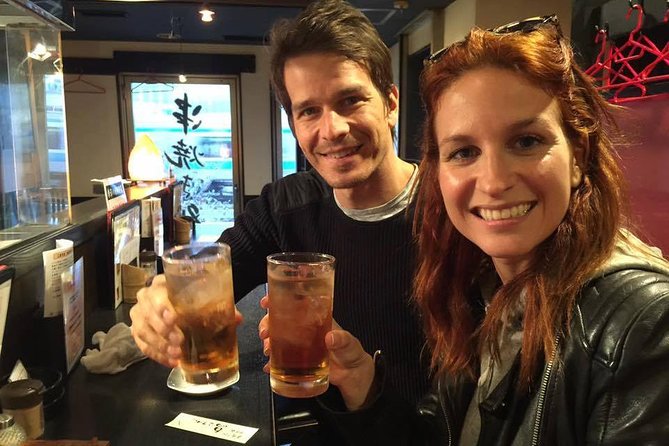
The tour finishes in Shimbashi, near Shimbashi Station. This matters because Shimbashi is naturally suited to the kind of evening you just lived through: older, slightly rougher, more local, and filled with small places where people pop in for a quick meal and a drink.
Your route includes landmark time around Ginza and then lands in Shimbashi with a better sense of what to look for. You’re not only seeing restaurants. You’re seeing the patterns behind them: what kinds of izakayas feel approachable, what environments work for short stays, and how locals treat food as part of the night, not a separate event.
Ending near the station also helps you keep control of the rest of your evening. Once the tour ends, you can choose:
- a nearby dinner that matches how full you feel
- a quick bite in the same neighborhood without backtracking
- an easy transit move because you are close to JR access
If you are the type who likes a full last course, plan it. A couple of people have felt the tour is more of a tasting walk than a full meal, which is exactly why Shimbashi is a handy finish. You can keep eating without spending your night in transit.
What you actually eat and drink: 4 food stops, dessert, and a real yakitori focus
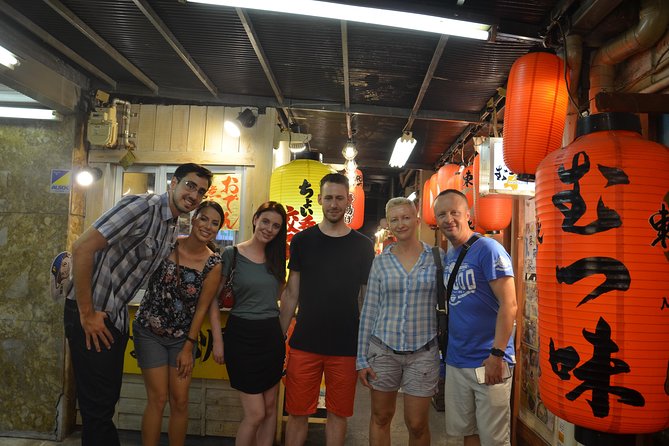
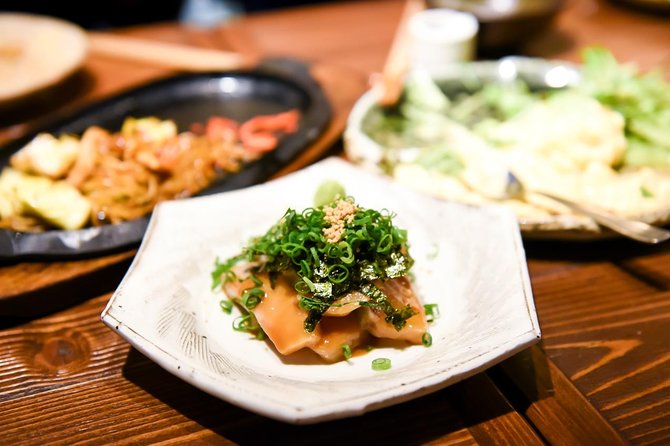
Here’s the core structure: four food stops plus regional food tastings including dessert, and one complimentary drink.
Because the tour is designed as a walking tasting experience, it is unlikely to feel like a sit-down feast. The goal is variety, not just quantity. That’s why the four stops are spaced out through the evening neighborhoods.
Yakitori is a key feature. You’ll have chances to try different varieties during izakaya stops. That’s a great way to learn how Japanese grilling can vary even when the general form is similar.
You also get help with customs and culture. The tour is not only about taste. It is about how people order, what the food categories mean, and what to notice when you sit down in these places.
Dietary needs: the tour says it is vegan, vegetarian, pescetarian, and gluten-free friendly. That’s genuinely useful, especially in Japan where you often need to ask the right questions. Still, one caution: if you do not eat pork, ask before you go. Some food tours struggle with that specific requirement, and your experience could be better if you confirm what substitutions are possible.
Price and value: $231 for access, time, and not guessing menus alone
At $231 per person, this is a mid-to-higher priced food tour. So the value question is fair.
Where the price can make sense:
- You get a local guide who can steer you into places that are hard to find or awkward to enter on your own.
- You get structured tastings across multiple neighborhoods, including the big contrast between Ginza and Gado Shita.
- You get dessert included, not just savory bites.
- You get the logistics of a timed evening route that fits into a Tokyo day without you mapping everything.
Where the price might feel less worth it:
- The tour may feel “lighter” than you want if you expect a full meal experience.
- One or two stops can lean more toward sampling or selling, which is normal in Japan. But it can reduce the wow factor if you wanted heavier food portions.
My practical advice: treat this as an excellent introduction and selection of starters, then plan to eat a real dinner afterward. If you go in expecting variety and stories, not a knockout final dinner, the tour usually feels priced more reasonably.
Also, small-group attention can be the hidden value. With a max group of 10, you are more likely to get real back-and-forth, not just a recitation while you hold paper cups.
Choosing a guide and getting the most from the group vibe
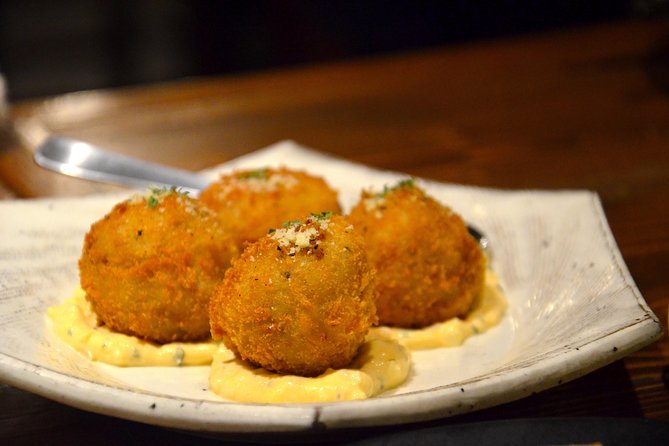
Guide style can make or break a food tour. In the reviews, names like Josh, Ryan, Norma, Bryan, and Shige show up with consistent praise for being warm, funny, and good at connecting food with local context. You’ll also hear about guides like Kay, Hirotake Watanabe, and Yuko being helpful and thoughtful.
You don’t need to know your guide’s name ahead of time. But you should know how to use the guide you get. Ask quick questions during tastings:
- What’s the difference between these yakitori types?
- Is there a way locals order them, or do people just follow the menu?
- If I like this, what else should I look for in Tokyo?
That kind of interaction is where you squeeze more value out of the price.
How to prepare: walking comfort, drink pacing, and dietary questions that save time
A few practical points so you start the evening relaxed.
- Wear comfortable shoes. The route moves through tight streets and between neighborhoods.
- Bring a light layer. You’re out late afternoon into evening, and weather can change fast in Tokyo.
- Keep your phone ready. You’ll use a mobile ticket, and you’re close to public transportation but still walking between areas.
- For dietary needs, be clear early. The tour says options exist for vegan, vegetarian, pescetarian, and gluten-free. If pork is an issue for you, double-check what is possible.
One more tip: since only one drink is included, if you love Japanese beer, highballs, or other drinks, save room in your budget for extra beverages after the tour, especially if Shimbashi pulls you in.
And yes, the tour may adjust stops due to restaurant schedules, public holidays, or weather. That’s normal for food tours, and it usually means substitutions that still keep the neighborhood idea intact.
Should you book this Tokyo Allstar Food Tour?
Book it if you want a guided route that connects Tokyo’s extremes in one evening, Ginza polish to Gado Shita backstreets to Shimbashi izakaya mood. If you enjoy yakitori, want dessert included, and like learning food customs instead of just chasing the next restaurant, you’ll probably have a great time.
Skip or reconsider if you expect a big, heavy dinner meal for the price. This is more of a tasting walk. Plan a real meal after, and you’ll feel better about value.
If you have specific dietary needs, it looks promising on paper with vegan, vegetarian, pescetarian, and gluten-free friendly options. Just be extra careful about pork, since that is not guaranteed to be easy.
FAQ
How long is the Tokyo Allstar Food Tour?
The tour runs for approximately 3 hours.
What time does the tour start, and where does it meet?
It starts at 4:00 pm. The meeting point is Seiko House Ginza Clock Tower in Ginza.
Where does the tour end?
The tour ends in Shimbashi, near JR Shimbashi Station.
What’s included in the price?
Included are a local guide, regional food tastings including dessert, 1 complimentary drink, and four food stops.
Is hotel pickup or drop-off included?
No. Hotel pickup and drop-off are not included.
Are transportation costs included?
No. Transportation costs are not included.
Can the tour accommodate dietary restrictions?
Yes. The tour notes it is vegan, vegetarian, pescetarian, and gluten-free friendly.
What are the drink age requirements?
The minimum drinking age is 21 years.
Is the tour suitable for children?
Yes, it is family-friendly, but children must be accompanied by an adult. For kids 10 and above, a passport information copy is required.
If you want, tell me what you eat (and what you avoid), and I’ll help you map the best pre-tour snack and the likely dinner follow-up in Shimbashi.
More Food & Drink in Ginza
- Tokyo Tsukiji Fish Market Food and Culture Walking Tour
★ 5.0 · 3,184 reviews - Tokyo: Tsukiji Fish Market Food and Walking tour
★ 5.0 · 1,724 reviews - Shinjuku Izakaya Food Tour
★ 5.0 · 1,041 reviews - 1-Day Snow Monkeys, Zenko-ji Temple & Sake in Nagano
★ 5.0 · 1,020 reviews
More Food Walks in Ginza
- Osaka: Shinsekai Food Tour with 13-15 Dishes at 5 Eateries
★ 4.8 · 2,204 reviews - Osaka Food Tour: 13 Dishes at 5 Local Eateries
★ 5.0 · 2,149 reviews - Kyoto Night Foodie Tour in Gion (9+ dishes + 6 Sake tastings)
★ 5.0 · 1,762 reviews - Hungry Osaka Street Food Tour:15 Tastings & 3 Drinks with a Local
★ 5.0 · 1,727 reviews
Newly listed around Ginza
- Luxury Kimono Photoshoot at Ginza Tokyo★ 5.0 · 7 reviews
- Tokyo Art Aquarium Museum E-Ticket with optional Tokyo Metro Pass★ 5.0 · 17 reviews
- Tokyo: Best Ginza Food Tour at 3 Local Eateries★ 5.0 · 83 reviews
- Private One Day Nikko Tour with Bilingual driver★ 3.5 · 11 reviews
- PRIVATE tour in 180SX to Daikoku+++++★ 5.0 · 6 reviews
- Kabuki Talk★ 5.0 · 10 reviews
- Japanese Whisky Tasting Experience at Local Bar in Tokyo★ 5.0 · 59 reviews
- Full Tokyo: Meiji Shrine, Imperial Palace, Asakusa & Skytree★ 5.0 · 20 reviews
Local Food Walks, compared.
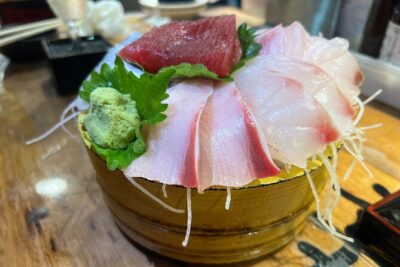
Shinjuku Food Tour (13 Dishes at 4 Local Eateries)
Read our review →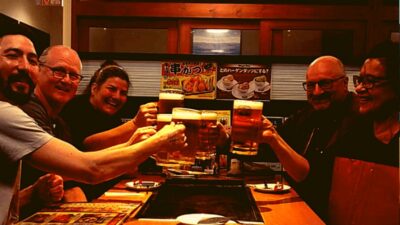
Shinsekai Food Tour with 13-15 Dishes at 5 Eateries
Read our review →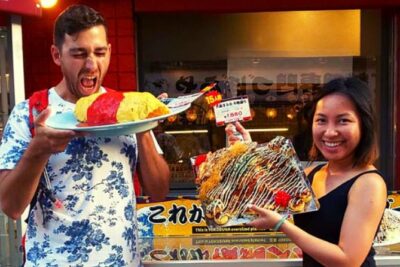
Osaka Food Tour: 13 Dishes at 5 Local Eateries
Read our review →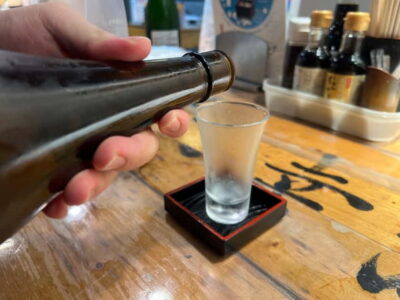
Shinjuku Food Tour (15 Dishes and 4 Eateries)
Read our review →
Kyoto Night Foodie Tour in Gion (9+ dishes + 6 Sake tastings)
Read our review →
Hungry Osaka Street Food Tour:15 Tastings & 3 Drinks with a Local
Read our review →
Tokyo Night Foodie Tour in Shinjuku – Seasonal Sushi, Wagyu Beef
Read our review →
Browse the lists this tour appears in