
Review · COOKING CLASSES IN OSAKA
Experience Cooking Takoyaki in its Birthplace, Osaka
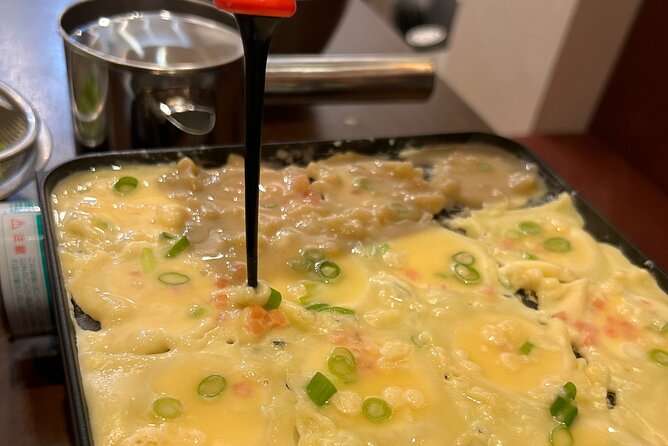
Takoyaki cooking feels like Osaka in miniature. In this 2-hour workshop at 369 Kitchen Studio, I like that you use a rotating takoyaki machine to get that crisp outside, tender inside result fast, and that the teaching style is patient and hands-on, like Zen and Lisa are reported to be. You also get to shape the fun with optional fillings beyond octopus, then eat your batch hot with a toothpick.
The main drawback is timing: it is not a quick snack stop. You need the full workshop block, so if your Osaka itinerary is packed minute-by-minute, plan extra breathing room.
In This Review
- Key takeaways before you go
- Why Osaka takoyaki hits different when you cook it
- 369 Kitchen Studio, the meeting point, and how the class runs
- Inside the rotating takoyaki machine, and why it matters
- Picking fillings: not just octopus, and not just one style
- The snack you eat and the drink that turns it into a ritual
- What the 2 hours actually feels like, from start to finish
- Price and value: why $42.35 can make sense
- Who should book this takoyaki workshop in Osaka
- Tips to get great takoyaki results (without overthinking it)
- Should you book this takoyaki class?
- FAQ
- How much does the Osaka takoyaki cooking experience cost?
- How long is the class?
- Where is the meeting point?
- Do I have to use octopus in the takoyaki?
- Is ramune included?
- What happens if the weather is bad?
Key takeaways before you go
- A rotating takoyaki machine does the heavy lifting while you learn the technique that makes the edges crisp
- Fillings are flexible so you can skip octopus and build your own flavor combo
- Ramune is included for a classic Osaka pause, with its signature glass ball
- Small group size (up to 12) means you get real attention while you cook
- Instruction comes with practical tips that let you replicate the results later at home
Why Osaka takoyaki hits different when you cook it
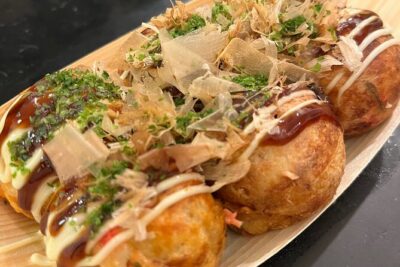
Takoyaki is one of those foods that feels instantly recognizable, even before you take a bite. Osaka origin or not, the magic is in the texture: a lacy, crisp exterior with a soft, steamy center, usually eaten right off the plate with a toothpick.
What makes this experience appealing is that you are not just purchasing street food. You are making it the way locals treat it, as something you can turn into a group activity at home with family and friends. That changes the whole vibe. Instead of eating a dish, you learn how to produce it, then you get to enjoy it while it is hot.
You also get a nice cultural anchor. Takoyaki is described as a food people of many ages enjoy, from kids to older folks. In practice, that matters because it signals the class is designed for a broad range of participants, not just hardcore foodies.
More Cooking Classes in Osaka
- Osaka: Ramen and Gyoza Cooking Class in Dotonbori
★ 5.0 · 378 reviews - Osaka Cooking Class: Okonomiyaki &Japanese cuisines experience
★ 5.0 · 261 reviews - Ramen and Gyoza Cooking Class in Osaka
★ 5.0 · 202 reviews
369 Kitchen Studio, the meeting point, and how the class runs
You meet at 巽住宅 梅田ビル (Osaka, Kita Ward, Sonezakishinchi). The address is listed as Japan, 〒530-0002 Osaka, Kita Ward, Sonezakishinchi, 2-chome-1-13. Since the location is described as near public transportation, you should be able to reach it without a complicated route, which makes the start time easier to manage.
The experience is listed at about 2 hours, and the cooking is paced so you can get takoyaki ready in roughly 20 minutes once you get into the rhythm. That is important. Some cooking classes move so fast you feel rushed, while others stretch out with lots of waiting. Here, the structure is clearly built around getting you to the satisfying moment, eating freshly made takoyaki while it is still at its best.
This is also a small-group class, capped at 12 travelers. In a setup like this, that cap matters more than it sounds. A smaller group helps the instructor keep an eye on your pan technique, and it reduces the awkward waiting that can happen in larger classes.
One more practical detail: it is a mobile ticket experience. That usually means you can keep everything simple on your phone, instead of hunting for paper after you arrive.
Inside the rotating takoyaki machine, and why it matters
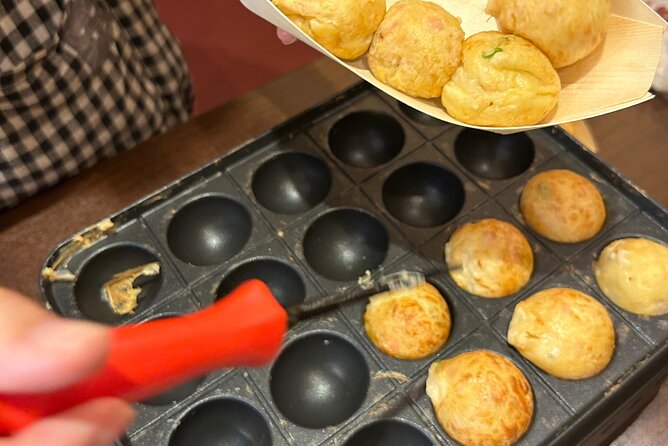
The core tool here is a special takoyaki machine, described as one you would find in many Osaka households. The key point is not just that it exists. It is that it rotates, and that rotation helps the batter and fillings settle into the pockets in a way that supports the classic shape.
If you have only ever bought takoyaki from a shop, you might not realize how much technique matters. In this class, the machine helps, but you still learn the “do this, then that” pattern that leads to crispy edges. That is where the instructor quality shows up.
The reviews highlight a consistent teaching theme: instructors are reported to be patient, and they walk you through the process step by step, sharing tips and tricks to sharpen technique. I take that seriously as a value marker. Cooking classes can be chaotic if the instructor just throws you tools and hopes for the best. Here, the repeated praise for clear guidance suggests you are less likely to feel lost.
You will also be eating what you make, not a pre-made sample. That means the machine, the timing, and the flipping or turning approach all end up becoming part of your memory. The goal is to leave with repeatable know-how, not just photos.
Picking fillings: not just octopus, and not just one style
Takoyaki is famous for octopus, but this class makes it clear you do not have to use octopus. That is a big deal for groups. If you have dietary preferences or you simply do not love the ingredient, you can still participate in a way that feels normal and tasty to you.
The experience also offers common alternatives like cheese and crab sticks. The broader idea is you build your takoyaki the way a home cook would: add the ingredients you like, then let the batter and pan technique do their job.
I like that the class frames this as a takoyaki party concept. You are not stuck with one flavor profile, and you do not have to pretend to be adventurous just to keep up. It also makes the experience more social. People can compare how their fillings affected the flavor and texture, even when everyone uses the same basic process.
One practical consideration: different fillings can behave differently once the batter sets. Since the class encourages making lots of original takoyaki, be ready to adjust on the fly. If you tend to overfill, expect a mess. If you underfill, you might miss the “stuffed” satisfaction. The best plan is to listen closely to instructor tips and aim for consistency.
A few more Osaka days to weigh up
- Osaka Sake Tasting with Takoyaki Cooking
★ 5.0 · 156 reviews - Osaka Sake Tasting & Takoyaki Cooking Experience
★ 5.0 · 149 reviews - Cooking Ramen&Gyoza/KatsuCurry/Bento/Okonomiyaki+Store Tour@Osaka
★ 5.0 · 138 reviews - Three Types of Ramen Cooking Class in Osaka
★ 5.0 · 119 reviews
The snack you eat and the drink that turns it into a ritual
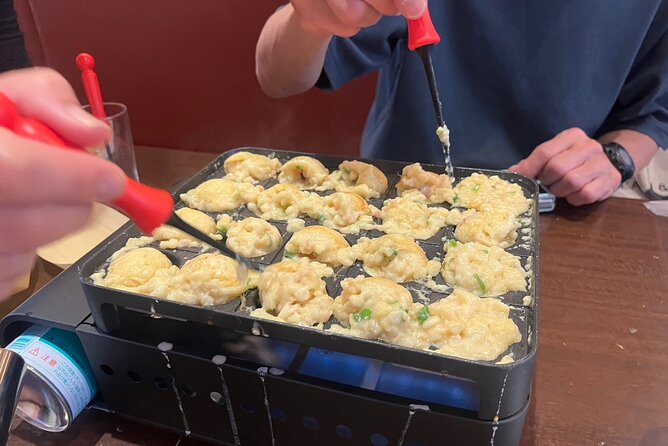
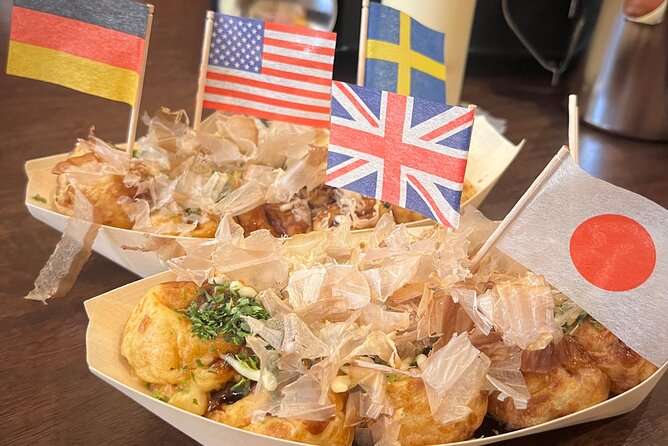
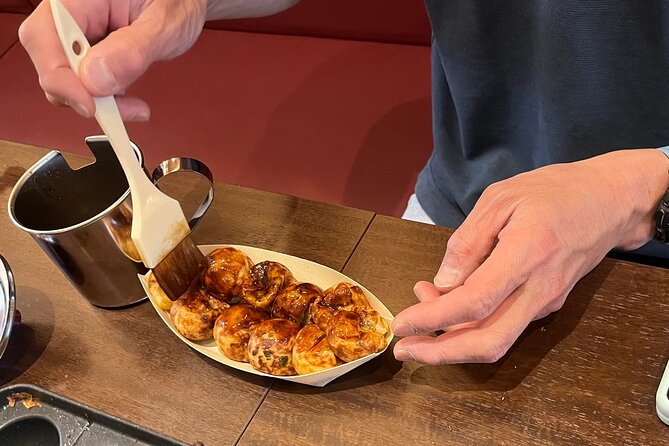
After the cooking comes the eating, and it is part of the design. You are told to eat freshly made, hot takoyaki. That matters because takoyaki is at its peak right away, when the outside still feels crisp and the inside still feels soft.
You eat takoyaki with a toothpick, which might sound like a minor detail. It is not. Toothpicks make takoyaki easy to share, easy to portion, and easier to keep eating while you chat. This fits the class theme of gathering with family and friends, rather than sitting stiffly as a group.
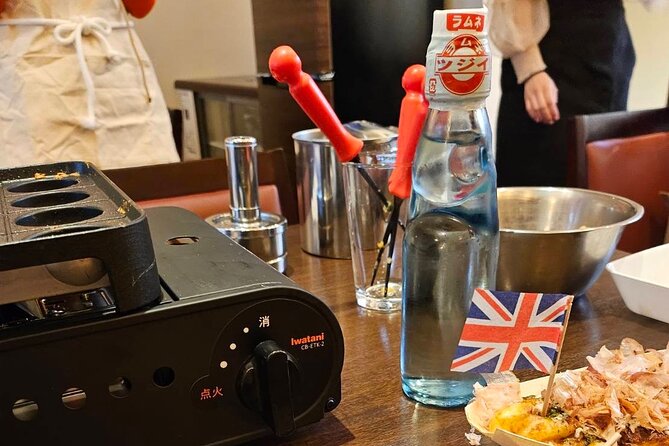
Then there is ramune, the traditional Japanese carbonated drink included with your takoyaki. It is described as featuring a glass ball inside the bottle. Even if you have had other Japanese sodas, this one has that playful mechanism, so it adds a small moment of theater to the meal.
I also like the pacing that ramune creates. You are cooking with heat and concentration, then you get a cold fizzy drink between bites. That rhythm makes the whole session feel less like “a class” and more like “a meal with a lesson attached.”
What the 2 hours actually feels like, from start to finish
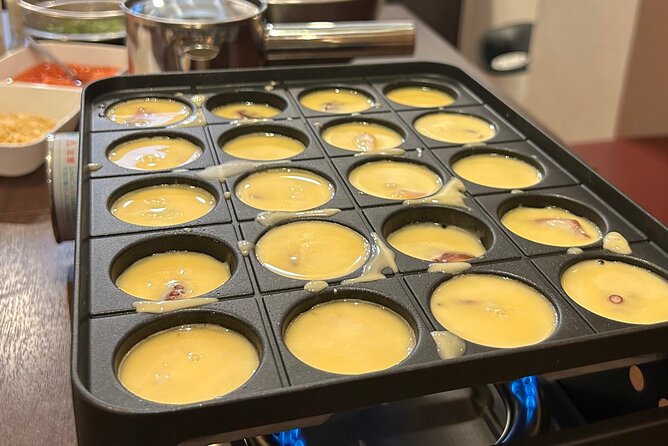
From the outside, a takoyaki workshop can look straightforward: mix, cook, eat. In reality, what makes the time useful is the order of operations and how you learn the feel of the batter and the pan.
Here is the practical flow you can expect based on the class structure:
- You start by setting up and learning the process using the rotating takoyaki machine
- You cook your takoyaki with a focus on getting that crisp outside and tender inside texture
- You eat what you make while it is hot, then enjoy ramune alongside
The class is designed to produce results quickly. You can expect takoyaki in about 20 minutes after you get going, even though the overall session runs around 2 hours. That means you are not waiting forever for the first bite.
Since the class is capped at 12 travelers, you should also feel less like you are competing for space on the machine. In small classes, you get more chances to ask questions while you cook, and that is where technique sticks.
Price and value: why $42.35 can make sense
At $42.35 per person for about 2 hours, this is not a bargain-basement food purchase. But I think the value comes from what you are actually buying.
You are paying for:
- A special takoyaki machine experience that you would not have access to as an individual
- Structured instruction on technique, including tips and tricks
- Ingredients and the chance to make multiple takoyaki pieces, not just one sample
- Included ramune to go with your food
If you only buy takoyaki from a shop, the cost is lower, but the payoff is also lower. You get taste, not technique. This class gives you a repeatable skill you can use at home, plus the fun of cooking in a group setting like Osaka locals do.
There is also a timing value. You are likely to book this class about 15 days in advance on average. If you care about a specific date, starting early can prevent disappointment, especially for smaller groups.
Who should book this takoyaki workshop in Osaka
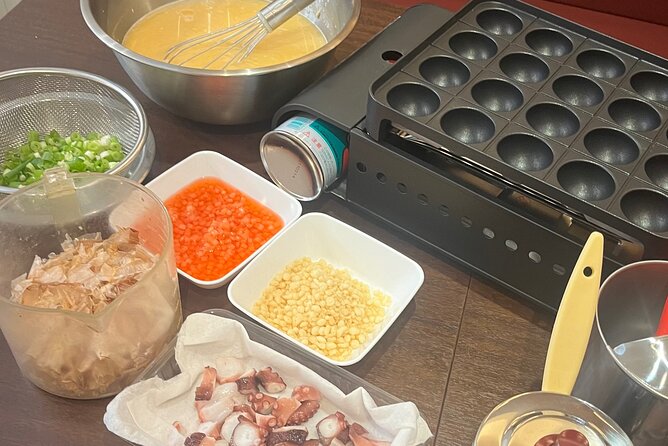
This experience is a strong fit if you want more than a quick snack. It is ideal for couples, friends, and families who enjoy hands-on activities and do not want to spend hours in a formal setting.
It also sounds especially well-suited for mixed-age groups. The class is described as something children can enjoy safely, and ramune plus toothpick eating keeps things casual and light. If you are traveling with kids, this is usually easier than a long sit-down meal where they need to behave politely for a long time.
If you are vegetarian, the class being able to accommodate at least some dietary needs is suggested by the way the experience is discussed. Since specific accommodations are not spelled out in the main details, I recommend messaging the provider before booking if that matters a lot to you.
What about people who might skip it? If you hate cooking tasks or you want purely sightseeing time, this might feel like one more structured activity. Also, if you are chasing a very specific kind of Osaka food tour, keep your expectations anchored on takoyaki technique rather than a wide food crawl.
Tips to get great takoyaki results (without overthinking it)
You do not need to be a home cook to succeed here. The biggest “skill” is learning the process so your pieces come out looking right and tasting right.
Here are practical ways to get more from your class:
- Watch closely when the instructor shows the technique, then copy it right away
- Keep your filling strategy simple at first. Cheese and crab sticks are easy starting points
- Aim for a consistent portion size so the pieces finish at similar times
- Ask questions while you cook. Small adjustments are easier while the batter is still being handled
- Eat promptly while hot. Takoyaki changes as it cools
Also, because the teaching is praised as patient, do not be shy about asking for a second explanation if something feels off. The whole point is to leave with technique you can repeat.
If you like taking photos, there may be an opportunity to pose with your takoyaki, since photo moments are part of the way the experience is described. Just keep your focus on cooking first, then do the fun shots once your batch is ready.
Should you book this takoyaki class?
If you want a hands-on Osaka experience that mixes food culture with real technique, I think you should book it. The rotating takoyaki machine approach makes the cooking approachable, and the consistent praise for patient instruction suggests you will not be left to figure it out alone. Add in included ramune and the ability to customize fillings beyond octopus, and you get a session that feels personal, not generic.
If your schedule is tight, consider booking a time where you can arrive calm and unrushed. It is also wise to plan around the weather, since the experience notes good weather as a requirement and offers a date change or refund if canceled for weather.
Overall, this is a class that gives you something you can do again later. You leave with takoyaki in your hands, and the technique in your head. That combo is hard to beat for the price.
FAQ
How much does the Osaka takoyaki cooking experience cost?
The experience costs $42.35 per person.
How long is the class?
It lasts about 2 hours.
Where is the meeting point?
The meeting point is Japan, 〒530-0002 Osaka, Kita Ward, Sonezakishinchi, 2-chome-1-13 巽住宅 梅田ビル.
Do I have to use octopus in the takoyaki?
No. You do not have to use octopus, and you can use other fillings like cheese or crab sticks.
Is ramune included?
Yes. The experience includes ramune, a traditional Japanese carbonated drink with a glass ball inside the bottle.
What happens if the weather is bad?
The experience requires good weather. If it is canceled due to poor weather, you will be offered a different date or a full refund. There is also free cancellation up to 24 hours in advance for a full refund.
Newly listed around Osaka
- 2 Hours of Bar Hopping in Osaka Style★ 5.0 · 22 reviews
- Same-Day Osaka Food Crawl with local food and Hidden gems★ 5.0 · 114 reviews
- Osaka Authentic Local Izakaya Hopping Experience: Food & Drinks★ 5.0 · 99 reviews
- Well-balanced BENTO (lunch box) Cooking Class★ 5.0 · 35 reviews
- Anime Cosplay Photshoot-50 Digital Photos Provided★ 5.0 · 8 reviews
- OSAKA:Feel the Power! Learn Taiko Drum from Professionals★ 5.0 · 28 reviews
- Three Types of Ramen Cooking Class in Osaka★ 5.0 · 119 reviews
- Urban Canvas: Osaka Street Art Bike Tour★ 5.0 · 47 reviews
Cooking Classes in Osaka, compared.
Osaka Cooking Class: Okonomiyaki &Japanese cuisines experience
Read our review →
Osaka Sake Tasting & Takoyaki Cooking Experience
Read our review →
Cooking Ramen&Gyoza/KatsuCurry/Bento/Okonomiyaki+Store Tour@Osaka
Read our review →
Eat Osaka: Street Food Cooking in an Authentic Kitchen!
Read our review →Browse the lists this tour appears in