Review · JAPANESE COOKING WORKSHOPS
Three Types of Ramen Cooking Class in Osaka
Ramen, made hands-on, in Osaka. This cooking class is built around three ramen styles you make yourself, starting with handmade noodles and finishing with the bowls you created.
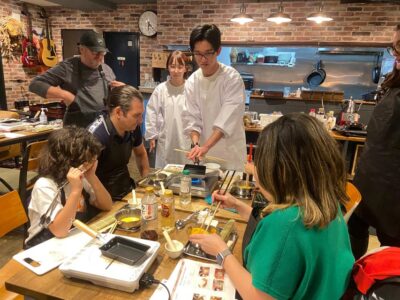
I love the small-group feel, capped at eight for a more personal class, and I also love that you are not just learning theory. You are actively cooking salt ramen, soy sauce ramen, and miso ramen in one smooth 2 hours 30 minutes session, then eating them together.
One thing to consider: there is no hotel pickup, so you’ll need to get to the meeting point on your own and show up ready to cook. For most people that’s a non-issue, but it matters if you are relying on tours that start at your lobby.
In This Review
- Key Things You’ll Be Doing in This Osaka Ramen Class
- Why This Osaka Ramen Class Works So Well
- Where the Class Starts: Banix Kitahorie and a Simple Meet-Up
- The Real Skill: Handmade Noodles From Scratch
- Salt Ramen: Juicy Pork, Bean Sprouts, and Seaweed
- Soy Sauce Ramen: Cabbage, Green Veg, and Sweet Corn
- Miso Ramen: Spicy Chicken, Eggs, and Green Onion
- Your Meal Isn’t Just a Side Dish: Dessert and Green Tea
- What You Leave With: Printed Recipe and Seasonal Fruits
- Instructor Quality and Communication (What Makes It Feel Stress-Free)
- Price and Value: Is $79.28 Worth It?
- Who This Class Is Best For (And Who Might Want a Different Option)
- Practical Tips Before You Go
- Should You Book It? My Decision Guide
- FAQ
- How long is the ramen cooking class in Osaka?
- What ramen types do I make during the class?
- Does the class include the meal and drinks?
- Do I need to bring ingredients or cooking tools?
- Is there a take-home recipe?
- How big is the group?
- Where does the class meet?
- Is hotel pickup included?
- Is vegetarian ramen possible?
- What is included in the price?
Key Things You’ll Be Doing in This Osaka Ramen Class
- Making noodles from scratch before you touch the broths
- Cooking three ramen bases in a single class: salt, soy sauce, and miso
- Custom toppings and sauces for each bowl, so every ramen tastes distinct
- Eating what you make, plus dessert and green tea included
- Taking home a printed recipe and seasonal fruits
- Small-group layout (limited to eight people, max 12 total)
Why This Osaka Ramen Class Works So Well
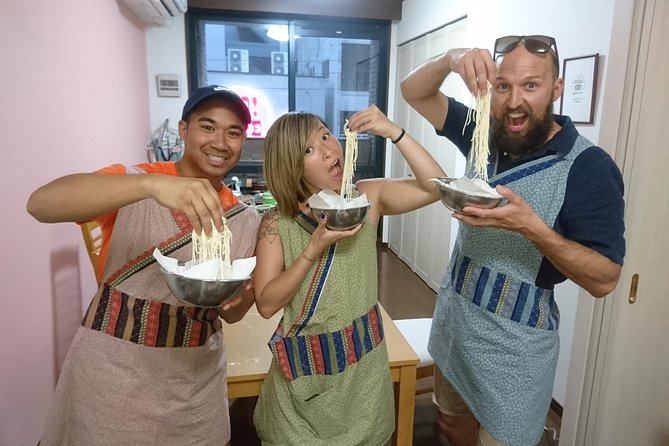
If you’re short on time in Osaka, this class is a smart way to learn real ramen technique without booking three separate experiences. You get the full arc: mixing and shaping noodles from scratch, building soup flavors, and assembling toppings. It’s the kind of hands-on class that turns food culture from a photo into something you can recreate.
I also like how structured it is. You don’t wonder what happens next, because the class moves step by step through the process, then ends with you eating your finished bowls. Reviews back up that the pace is clear and well organized, even for first-timers. And yes, it is designed so you walk away feeling confident, not intimidated.
The other big win is variety. Instead of one ramen, you make three, with three different soup directions and topping combinations. That gives you a practical map of how ramen changes when seasonings and ingredients shift. If you love ramen, you’ll leave with more than just a full stomach. You’ll have a clearer sense of what makes each style taste the way it does.
More Cooking Classes in Osaka
- Osaka: Ramen and Gyoza Cooking Class in Dotonbori
★ 5.0 · 378 reviews - Osaka Cooking Class: Okonomiyaki &Japanese cuisines experience
★ 5.0 · 261 reviews - Ramen and Gyoza Cooking Class in Osaka
★ 5.0 · 202 reviews
Where the Class Starts: Banix Kitahorie and a Simple Meet-Up
The class meets at Banix北堀江Japan, 550-0014 Osaka, Nishi Ward, Kitahorie, 3-chōme62 システマギャラリー. It also ends back at the meeting point. That “start and finish in one place” format is underrated, especially after a long travel day.
You’ll want to plan to arrive a few minutes early, since this is a cooking class and you’ll start with aprons and setup right away. Also, the tour is said to be near public transportation, which makes it easier if you’re using Osaka trains and walking.
No hotel pickup is included, so budget a little time for transit and a short walk. If your plan is very tight, I’d rather you overestimate travel time by 10 to 15 minutes than risk being late.
The Real Skill: Handmade Noodles From Scratch
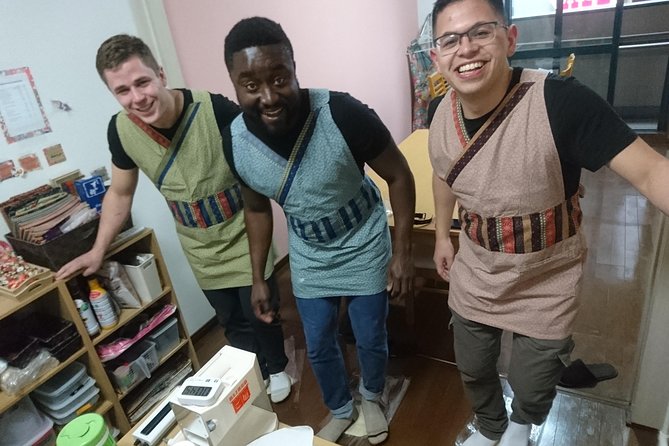
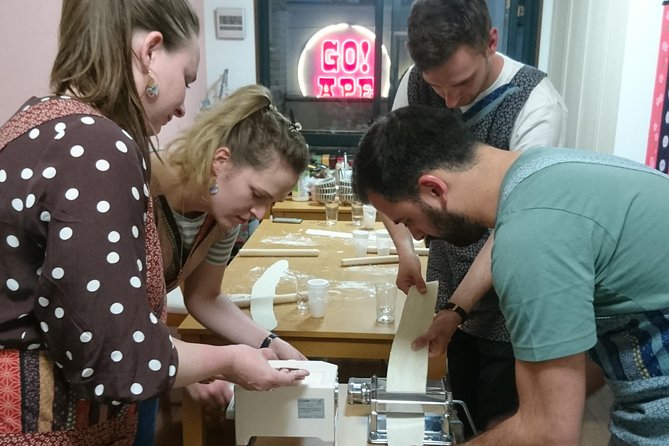
The class begins with you putting on an apron, then jumping into handmade noodle making. This is the part that makes this experience feel different from the typical “cook and eat” class where you mostly assemble. Here, you actually create the noodles first, then use them in three different ramen bowls.
You’ll also get a sense of the rhythm of making noodles in a real kitchen flow. Even if you have never cooked ramen at home, the class structure is designed to keep you moving, not stuck. Reviews repeatedly mention that the directions are easy to follow, and that the instructors spend time explaining each step clearly.
One extra detail I like: the class gives you a sense of portion and process rather than turning it into a food buffet you can’t control. The total noodle amount is listed as 100g, and that helps you understand what you are actually producing across the three bowls.
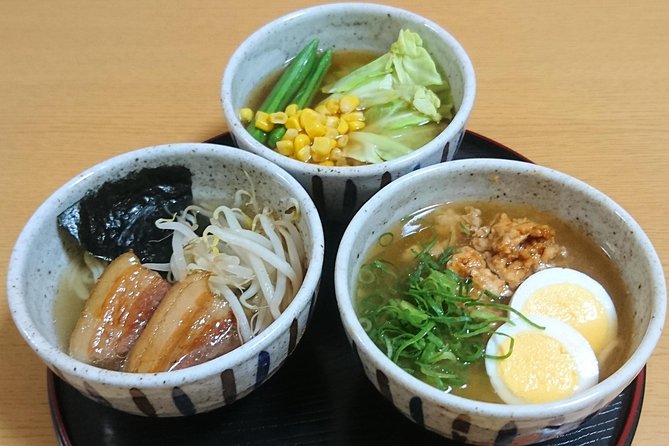
Salt Ramen: Juicy Pork, Bean Sprouts, and Seaweed
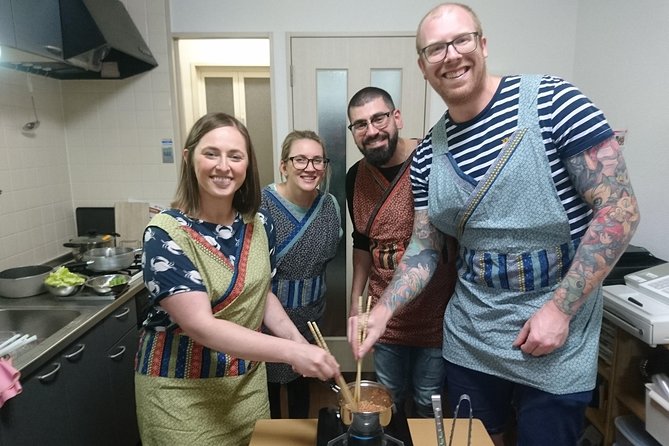
Once the noodles are ready, the class shifts into building the three ramen styles. First up is salt ramen, which is a great choice because it shows how seasoning defines the broth.
For salt ramen, your toppings are:
- sweet pork
- bean sprouts
- seaweed
This combination is classic in the sense that it gives you crunch (bean sprouts), umami and texture (seaweed), and that satisfying pork richness. If you’re used to “salt ramen” being a light-sounding menu item, you’ll likely be surprised by how full-flavored it can be when you start with good technique.
Practical tip: taste as you go. Even if the class provides guidance, ramen changes fast based on balance, temperature, and how you handle ingredients. Salt ramen rewards attention because small differences show up quickly in a clean broth style.
More Cooking Workshops in Osaka
- Osaka: Sumo Stage Show with Bento or Snack + Fight & Photo
★ 4.3 · 364 reviews - Cooking Ramen&Gyoza/KatsuCurry/Bento/Okonomiyaki+Store Tour@Osaka
★ 5.0 · 138 reviews - Osaka: Cooking Class Ramen & Gyoza Course in Nanba
★ 4.9 · 86 reviews - Osaka Cooking Class and Sake Tasting with Local Supermarket Visit
★ 5.0 · 79 reviews
Soy Sauce Ramen: Cabbage, Green Veg, and Sweet Corn
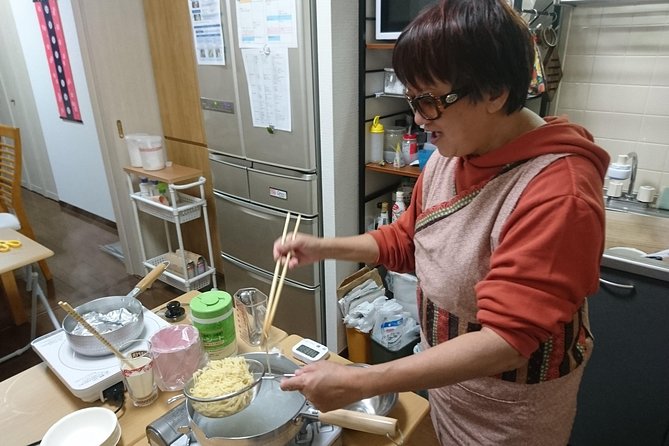
Next you make soy sauce ramen, which gives you a totally different ramen personality. Soy sauce tends to bring a deeper, savory edge, and this bowl is built with toppings that support that flavor.
For soy sauce ramen, your toppings are:
- steamed cabbage
- green vegetables
- sweet corn
The topping mix matters here. Cabbage adds softness and sweetness. Green vegetables bring freshness and color. Corn adds a gentle sweetness that plays well against soy-forward broth.
This is also a good ramen lesson: you start to see how toppings are not random. They are balancing acts. Soft versus crisp. Fresh versus savory. Mild versus punchy. Once you understand that, you’ll shop and cook ramen at home with more intention.
Miso Ramen: Spicy Chicken, Eggs, and Green Onion
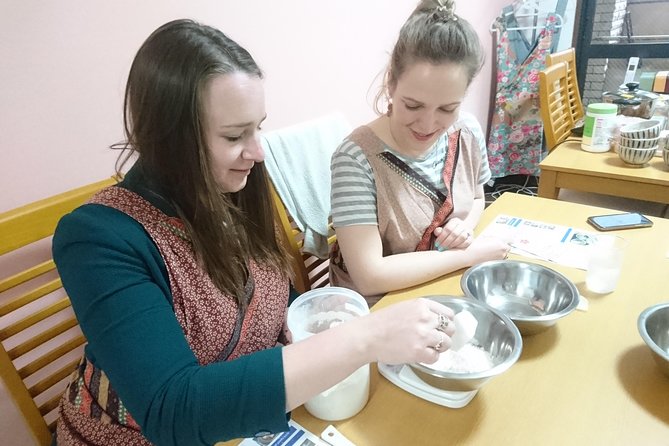
Finally you cook miso ramen, often the crowd favorite because miso brings both depth and a rounded richness.
For miso ramen, your toppings are:
- spicy chicken
- boiled eggs
- green onion
This is the style where you’ll most clearly notice how heat and richness work together. The boiled egg adds creamy protein, while green onion gives lift. Spicy chicken adds body and direct flavor impact, which helps miso taste bold rather than heavy.
One small caution from a review: be mindful with chili oil at the end. That review described enjoying the flavor but also feeling the effects afterward. It’s a good reminder that ramen can be deliciously powerful.
Your Meal Isn’t Just a Side Dish: Dessert and Green Tea
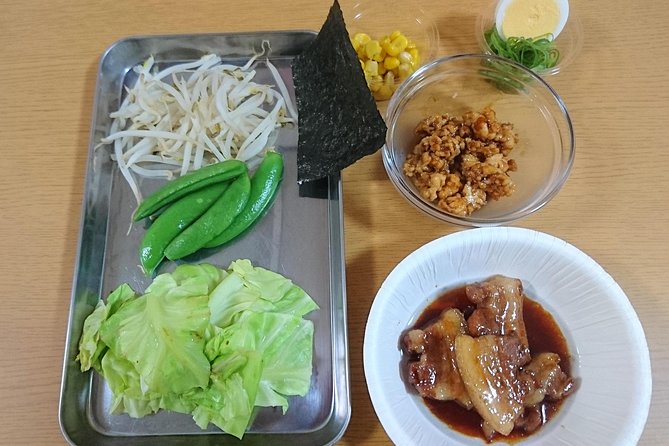
After cooking, you eat the ramen you made. The class ends by serving your dishes with chopsticks, and you start your meal with the Japanese custom phrase itadakimasu (as described in the class flow). Then you move on to dessert and green tea.
I like that the class doesn’t end right when the cooking is done. Many short workshops feel rushed at the finish line. Here, the meal is part of the point, because it helps you connect the techniques to flavor. You can actually ask yourself, Did I taste the difference between salt and soy? Did miso feel richer because of the topping mix?
Dessert and green tea also keep the experience grounded. It’s not just “eat three bowls, then leave.” You get a complete meal arc.
What You Leave With: Printed Recipe and Seasonal Fruits
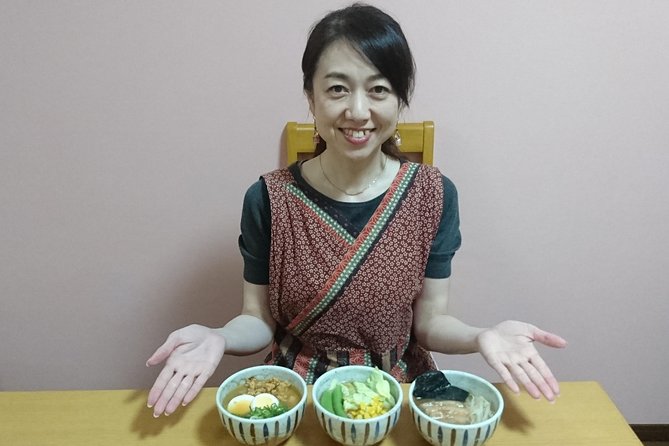
This class includes:
- all ingredients for your ramen meal
- kitchen utensils and equipment
- a printed recipe to take home
- seasonal fruits
The printed recipe is a practical souvenir. Photos are nice, but printed instructions help you cook again without guessing. It also means you can show your home kitchen exactly what you learned instead of trying to recreate it from memory.
Seasonal fruits are a small inclusion, but it’s the kind of finishing touch that makes the experience feel thoughtfully put together rather than purely transactional.
Instructor Quality and Communication (What Makes It Feel Stress-Free)
From the reviews, one theme shows up again and again: communication and patience. Multiple reviews mention that the instructors speak good English and give clear directions. People also mentioned that the class feels welcoming and cozy, sometimes even with very small groups, which turns it into almost a private lesson.
There are also mentions of accommodating dietary needs. One review specifically described a vegetarian ramen class request, with the instructor mindful about ingredients and making sure the broth does not contain animal products. If you’re planning a trip with dietary limits, that detail is worth noting.
Names that come up in the feedback include Fumi, Fumi-san, and Tomiko-san (and in one case Keigo and Keiyo are mentioned). Even without focusing on who is leading your session, it signals that the teaching team tends to be comfortable working with international guests.
The class also appears to have comfortable facilities, including air conditioning mentioned in feedback. On a hot Osaka day, that can make a noticeable difference to your energy level.
Price and Value: Is $79.28 Worth It?
At $79.28 per person, this isn’t the cheapest thing you can do in Osaka. But it is in the category where the “what you get” matters more than the sticker price.
Here’s the value math:
- You cook three types of ramen, not one
- You make noodles from scratch
- All ingredients and utensils are provided
- You get a full meal, plus dessert and green tea
- You receive a printed recipe to take home
- Group size is small, limited to eight
For many visitors, the big value is learning technique you can repeat. A meal you can make again is more useful than a one-time dish. Also, the small group size helps keep the class interactive. That can make a cooking lesson feel like a skill-building workshop rather than a show-and-tell.
If you are already a confident cook, you might compare it to buying ingredients and trying it on your own. But if you want the ramen shortcut, the guided process, and the satisfaction of seeing your noodles become three broths, it’s strong value.
Who This Class Is Best For (And Who Might Want a Different Option)
This class is especially good if:
- you love ramen and want to understand why it tastes the way it does
- you want a hands-on Osaka experience that’s still relaxing and structured
- you’re traveling with a partner or family and want something interactive
Reviews also mention that it works for kids, including a participant age 10 who stayed engaged. So it can be a family-friendly way to spend a couple of hours in the middle of a busy itinerary.
Where it might not be perfect:
- If you dislike cooking or you want a pure sightseeing tour, this is not that. It’s active.
- If you need hotel pickup, you’ll have to plan your own transport to the meeting point.
Practical Tips Before You Go
A few real-world tips based on how classes like this operate:
- Wear comfortable clothes and expect kitchen warmth, even if there is air conditioning.
- Bring a willingness to follow steps closely. Ramen rewards small timing and temperature cues.
- If you know you like spicy food, you can still go easy on any chili oil offered at the end. Start light and adjust.
- Take a moment to read or save the printed recipe when you get it. You want those notes fresh when you cook again later.
And if you have dietary needs, it’s worth communicating in advance that you want a vegetarian approach. There is evidence the instructor can adapt the broth and ingredients.
Should You Book It? My Decision Guide
Book this ramen class if you want a hands-on, skill-building Osaka food experience that ends in a satisfying meal you helped create. The big selling points are the noodle-making from scratch, the three distinct ramen styles you learn in one go, and the fact that you leave with a recipe you can use again.
I would skip it only if you hate cooking tasks, need hotel pickup, or you’re hunting for a purely low-effort activity. Otherwise, this is one of those tours that feels worth it even if you only have a small window of time.
FAQ
How long is the ramen cooking class in Osaka?
The class lasts about 2 hours 30 minutes.
What ramen types do I make during the class?
You make three types: salt ramen, soy sauce ramen, and miso ramen.
Does the class include the meal and drinks?
Yes. Your class includes the ramen meal, dessert, and green tea.
Do I need to bring ingredients or cooking tools?
No. All utensils and ingredients are provided.
Is there a take-home recipe?
Yes. You’ll receive a printed recipe to take home.
How big is the group?
It is a small-group class limited to eight people, and the activity has a maximum of 12 travelers.
Where does the class meet?
The meeting point is Banix北堀江Japan, 550-0014 Osaka, Nishi Ward, Kitahorie, 3-chōme62 システマギャラリー.
Is hotel pickup included?
No. Hotel pickup and drop-off are not included.
Is vegetarian ramen possible?
One review states the instructor accommodated a vegetarian ramen request and made sure the broth does not contain any animal products.
What is included in the price?
Your price covers all ingredients for the ramen meal, kitchen utensils and equipment, the printed recipe, seasonal fruits, and the ramen meal with dessert and green tea. Personal expenses or additional drinks are not included.
More Ramen Trips in Osaka
- Osaka: Five Must-See Highlights Walking Tour & Ramen Lunch
★ 4.7 · 411 reviews - Walking Tour of Osaka’s 5 Must-See Sights, with Ramen for Lunch
★ 5.0 · 158 reviews - Ramen Craftsman Experience in Osaka
★ 5.0 · 81 reviews - Ramen and Gyoza Cooking Class in Osaka Dotonbori
★ 5.0 · 73 reviews
Newly listed around Osaka
- Well-balanced BENTO (lunch box) Cooking Class★ 5.0 · 35 reviews
- Anime Cosplay Photshoot-50 Digital Photos Provided★ 5.0 · 8 reviews
- OSAKA:Feel the Power! Learn Taiko Drum from Professionals★ 5.0 · 28 reviews
- Urban Canvas: Osaka Street Art Bike Tour★ 5.0 · 47 reviews
- Volleyball in Osaka & Kyoto with Locals!★ 5.0 · 21 reviews
- 1.5〜2 Hours Traditional Kintsugi Work Shop in Namba Osaka★ 5.0 · 75 reviews
- Tour in Kyoto with a Certified Guide Pick up from Osaka Port★ 3.0 · 14 reviews
- Takoyaki DIY Cooking in the Heart of Osaka★ 5.0 · 7 reviews
Japanese Cooking Workshops, compared.

Ramen Cooking Class at Ramen Factory in Kyoto
Read our review →
Ramen & Gyoza Cooking Class in Tokyo with Local Supermarket Visit
Read our review →
Ramen Cooking Class at a Ramen Factory with Souvenir
Read our review →
Japanese Washoku Bento Small Group Cooking Class
Read our review →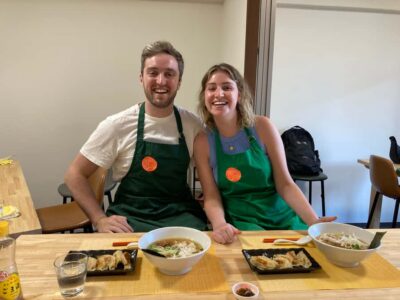

Sumo Stage Show with Bento or Snack + Fight & Photo
Read our review →