Review · FULL-DAY
Full-Day Accessible Tour of Tokyo for Wheelchair Users
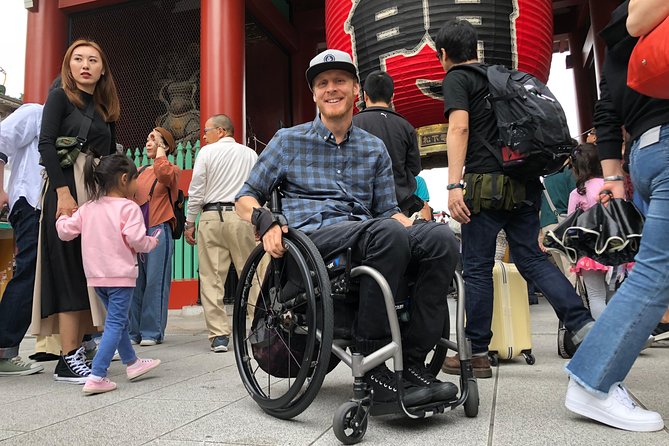
Tokyo is easier when your route is planned. This wheelchair-first tour is a full day of classic sights and modern neighborhoods, built around wheelchair-friendly logistics with the help of guides like Michiko, Machiko, and Fumiko. I also love that train tickets are included, so you are not stuck figuring out Japan’s transit while managing your mobility needs.
The big consideration is time: it runs about 7 hours, and even with a comfortable pace and plenty of questions, you will still be out for a long stretch. Since food and drinks are not included, I recommend bringing simple snacks and planning your energy breaks with your guide.
In This Review
- Key Things That Make This Tour Worth Your Time
- Why This Wheelchair-First Tokyo Day Beats DIY Planning
- Pickup, Train Tickets, and Pacing: The Logistics That Actually Matter
- Asakusa and Senso-ji: Old Tokyo Without the Added Hassle
- Shibuya Crossing and Cat Street: Teen Fashion Energy, Managed
- Meiji Jingu Shrine and Omotesando: Quiet Green Meets Design Street
- The Guides: How They Make Stations and Crowds Feel “Doable”
- What You Actually Get for the Price ($191.08): Value Check
- Who This Tour Fits Best (And Who Might Want to Think Twice)
- Should You Book This Accessible Tokyo Highlights Tour?
- FAQ
- What time does the tour start, and where does it begin?
- Is hotel pickup included?
- How long is the tour?
- Are train tickets included?
- Does the tour include food or drinks?
- Is the tour suitable for wheelchair users and can service animals travel?
- What is the cancellation policy?
Key Things That Make This Tour Worth Your Time
- Train tickets are included, so you can focus on the sights instead of the fare math
- Private, undivided attention means the guide adjusts on the fly when crowds or your pace change
- Hotel pickup and drop-off within Tokyo’s 23 wards cuts the day’s stress load fast
- A route designed for wheelchair users links iconic areas like Asakusa and Shibuya without wasting time backtracking
- Guides help with station assistance, and you can benefit from platform and slope-ramp support when needed
- Tour design includes both old Tokyo and trend districts, so you get temple atmosphere and street energy in one day
Why This Wheelchair-First Tokyo Day Beats DIY Planning
Tokyo can be wonderful, and also exhausting. The city is dense, stations are busy, and directions can feel like a pop quiz when you are in a wheelchair or using a rollator. What I like about this tour is that it treats mobility needs as the starting point, not an afterthought.
Instead of you hunting down the “right” exit, the “right” elevator, and the “right” transfer, the day is structured as one linked route. You ride the train like a local, but with train tickets handled for you and a professional guide managing the flow. That matters because Tokyo sightseeing often fails at the seams: one wrong station exit, one crowded transfer point, and the whole day gets harder.
This is also a private tour, which is huge if you want your questions answered without waiting for a group to shuffle forward. In the experience, guides have been praised for keeping things organized and tracking everyone in crowded areas, something you really notice in places like Shibuya.
A few more Tokyo days to weigh up
- Mt Fuji and Hakone 1-Day Bus Tour Return by Bullet Train
★ 5.0 · 26,383 reviews - 1-Day Tokyo Bus Tour
★ 5.0 · 14,250 reviews - Tokyo: TOKYO SKYTREE® Admission ticket
★ 4.5 · 11,192 reviews
Pickup, Train Tickets, and Pacing: The Logistics That Actually Matter
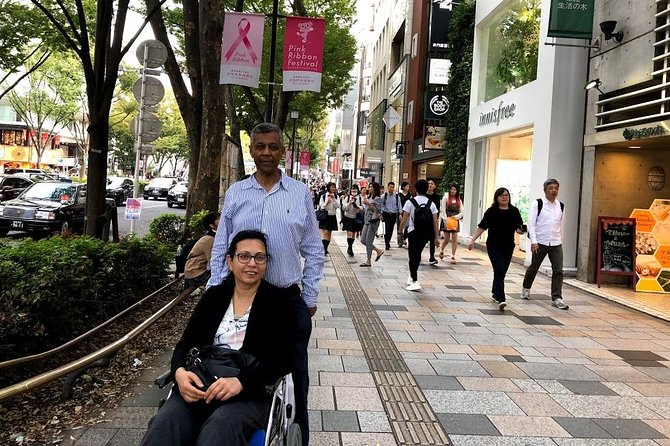
Here’s what you can count on. The tour starts at 9:30 am and ends back at the meeting point. Hotel pickup and drop-off are included if you are within Tokyo’s 23 wards, and the tour is set up as a private experience with a professional guide.
The practical win is the train tickets included. Tokyo’s transit system works well once you understand it, but it is not always intuitive at first. Several guide notes highlight how helpful it is to have someone explain the day ahead and help you navigate the train system step-by-step, including getting the tickets and moving through stations with confidence.
Another win is the pace. You go at your own comfort level and have time to ask questions. That is not just polite wording. Tokyo attractions like Asakusa and Shibuya have crowd flow, and a guide who can adjust the walking rhythm and choose easier routes can make the difference between a pleasant day and a stressful one.
One more detail I appreciate: it is designed to simplify transfers “from anywhere within Tokyo’s 23 wards.” That wording matters because many tours feel flexible on paper but get complicated once pickup is outside a narrow radius.
Asakusa and Senso-ji: Old Tokyo Without the Added Hassle
Your day begins in Asakusa, a neighborhood that feels like Tokyo remembering its past. You start at the Asakusa Culture Tourist Information Center, a newer building designed by Kengo Kuma. Even if you skip fancy facts, the location is smart: it is positioned as a resource hub, so you get grounded fast before heading into the sightseeing flow.
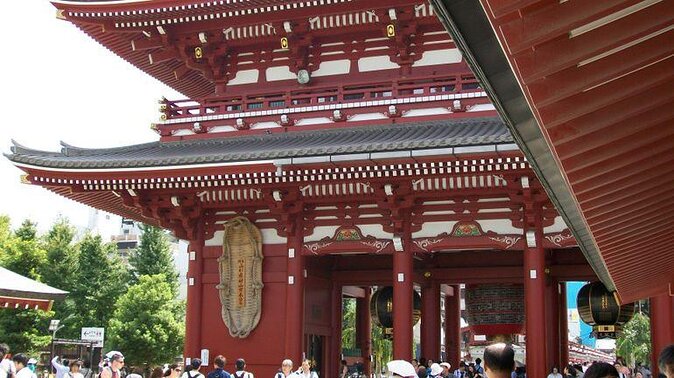
From there, you move to the outer gate area at Kaminarimon and the nearby Nakamise shopping street. This is the classic approach to Senso-ji, with that “I’m here” feeling the moment you see the gate and the street energy.
Then comes Senso-ji Temple, one of Tokyo’s most popular and colorful temples. The temple area is big, and it can get crowded. This is where the tour’s accessibility planning shows. Instead of treating the crowd like an obstacle, the day is designed to help you keep moving and still see what matters.
A practical tip for you: use the guide’s pacing and question time here. If you want the meaning behind what you are looking at, ask. The temple zone is packed with visual details, and a guide can help you sort what is essential versus what is just noise.
After that, you have Sumida Park along the Sumida River. One reason this stop feels worth it is the view. You can look toward Tokyo Skytree, and the riverfront vibe changes with the seasons, including a special atmosphere during cherry blossom time. Even in calmer seasons, it is a good reset between Asakusa’s street energy and the more intense movement of Shibuya later.
Shibuya Crossing and Cat Street: Teen Fashion Energy, Managed
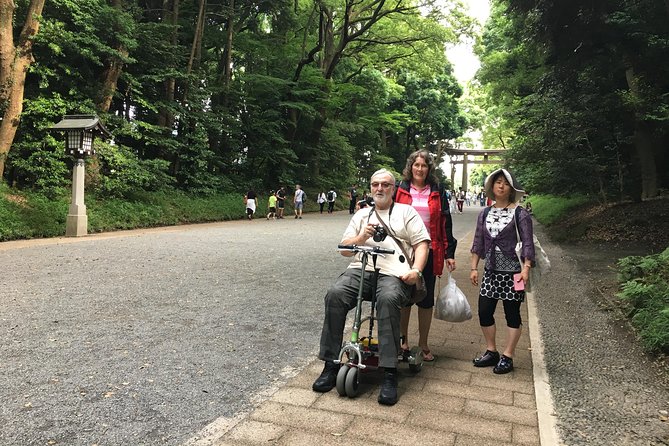
Shibuya is Tokyo’s loudest postcard. Shibuya Crossing is the star: a grid of zebra stripes where huge numbers of people cross at once. The scale is the point, and it is also why accessibility planning matters. Crowds can make even simple movements feel unpredictable.
This tour keeps Shibuya from turning into a stress test by giving you a guided, timed visit window. You also get nearby contrast right after. Shibuya Cat Street sits between Shibuya and Harajuku and is known for its streetwear atmosphere. It is a nice break from the crossing itself because it feels more like wandering a fashion corridor than trying to fight your way through a moving river.
Here’s the kind of thing I learned from the experience feedback: guides have been praised for staying on top of the group in dense areas and making sure people do not get lost even in heavy pedestrian traffic. That matters most when your attention is split between the route, the crowd flow, and keeping comfortable.
If you are using a wheelchair, consider this a day for slower, calmer observation. Look around first, then move. A guide can help you position for the best sightlines and reduce unnecessary detours.
A different sort of day in Japan:
- Tokyo: teamLab Planets TOKYO Digital Art Museum Entry Ticket
★ 4.6 · 9,779 reviews - Mt Fuji & Hakone Cruise, Drum Show Bullet Train 1 Day from Tokyo
★ 4.0 · 7,413 reviews - Tokyo: Sumo Show Experience with Chicken Hot Pot and a Photo
★ 4.8 · 6,678 reviews - Tokyo: Shinjuku Food Tour (13 Dishes at 4 Local Eateries)
★ 5.0 · 6,603 reviews
Meiji Jingu Shrine and Omotesando: Quiet Green Meets Design Street
The day shifts from urban intensity to a calmer, more reflective Tokyo stop at Meiji Jingu Shrine. It is dedicated to Emperor Meiji and Empress Shoken, and it sits near Harajuku Station, right alongside the fast-moving JR Yamanote Line.
You get a longer time here, about 50 minutes, which is meaningful. Shrine visits are not just photo stops. They are about pacing, breathing, and taking in the atmosphere. With more time, you can step back from the crowd rhythm and focus on the shrine’s mood instead of rushing through.
From there, you head to Omotesando, a stylish, tree-lined boulevard in Aoyama that ties parts of Shibuya and Minato together. Omotesando is the kind of street where the architecture is almost the attraction. It can be tempting to treat it as just a shopping zone, but if you slow down, you will notice how Tokyo mixes old cultural identity with modern design language.
This part of the day also works well because you move from shrine quiet to street structure. It keeps your senses from overheating.
The Guides: How They Make Stations and Crowds Feel “Doable”
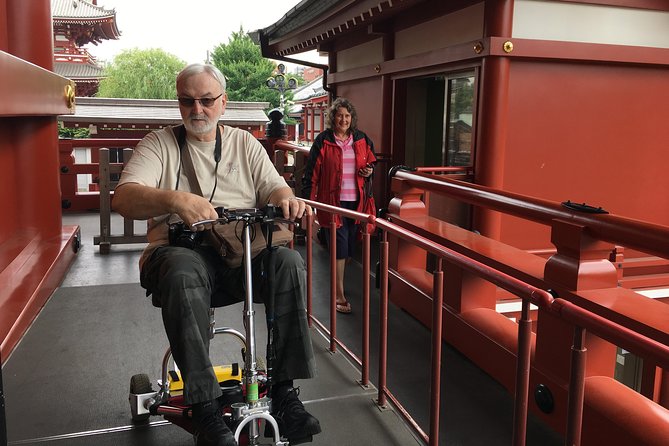
The strongest pattern across the feedback is not just that guides are friendly. It is that they are competent with real-world Tokyo navigation.
Several guides have been specifically mentioned by name, including Michiko, Machiko, Kaori, Fumiko, Emiko-san, and Yumi. The praise often points to the same things: careful planning, patience with mobility needs, and the ability to adapt quickly when the route gets crowded or when someone needs a different approach.
One of the most helpful moments described is how guides coordinate with station staff. In the experience feedback, station attendants were noted for providing a slope ramp at every station used. That tells you something important for your mindset. In Japan, help exists, but you do not always get it automatically. Having a guide who knows when and how to ask makes a real difference.
So here is my practical advice: treat the guide as your “translation layer” for stations. Ask questions early, especially at transfer points. If you need time, say it. The tour is set up for your pace, and guides have been praised for respecting it.
What You Actually Get for the Price ($191.08): Value Check
At $191.08 per person, this is not the cheapest way to see Tokyo. But it is also not a generic sightseeing bundle. You are paying for three big value drivers that matter more for wheelchair users than they might for able-bodied travelers:
- A professional guide for the full day
- Hotel pickup and drop-off within Tokyo’s 23 wards
- Train tickets included, which saves hassle and planning time
The private format adds value too. Tokyo crowds are intense, and group tours can feel like herding. Here, the guide is focused on your group, and the pacing is designed for comfort.
Also, the reviews show a near-perfect recommendation rate: a 4.9 rating with 32 reviews, and 100% recommended. While ratings alone do not tell you everything, they do suggest consistent service quality.
If you would otherwise spend time sorting accessibility-friendly routes, buying tickets, and negotiating station navigation on your own, this tour can feel like time insurance. You are buying less stress, smoother movement, and a plan that is already built for mobility needs.
Who This Tour Fits Best (And Who Might Want to Think Twice)
This tour is a great fit if you want a full-day overview of Tokyo highlights without turning the day into a logistics project. It is also a strong match for families with caregivers, since the minimum requirement includes caregivers: at least 2 people per booking.
It is also designed for wheelchair users, and service animals are allowed. The tour notes a moderate physical fitness level, which likely means you should be ready for some movement and station time even if the route is planned carefully. If you or your companion prefers very short outings or frequent rest stops, you might want to ask your guide how the day adapts to breaks.
One more practical note: you need a minimum age of 6 years, so it is not aimed at very young kids in general.
Should You Book This Accessible Tokyo Highlights Tour?
Yes, I think you should seriously consider booking it if you want the comfort of structure and a guide who can handle both train navigation and crowded areas. This is especially worth it when you want to cover Asakusa, Shibuya, Meiji Jingu, and a design-forward street like Omotesando in one day without building your own route from scratch.
I would hesitate only if you are the type who loves total spontaneity and wants full control over every stop and pace. This tour is flexible, but it is still a planned route. Also, because food and drinks are not included, plan your snack strategy so the day stays comfortable.
If you want Tokyo highlights that feel manageable, not chaotic, this tour is a practical, very well-reviewed way to do it.
FAQ
What time does the tour start, and where does it begin?
The tour starts at 9:30 am. The meeting point is the Asakusa Culture Tourist Information Center at 2-chōme189 浅草文化観光センタ, Taito City, Tokyo.
Is hotel pickup included?
Yes. Hotel pickup and drop-off are included within Tokyo’s 23 wards.
How long is the tour?
The tour lasts about 7 hours.
Are train tickets included?
Yes. Train tickets are included as part of the tour.
Does the tour include food or drinks?
No. Food and drinks are not included.
Is the tour suitable for wheelchair users and can service animals travel?
The tour is designed for wheelchair users, and service animals are allowed.
What is the cancellation policy?
You can cancel for a full refund if you do it at least 24 hours before the start time. If you cancel less than 24 hours before, the paid amount is not refunded.
Newly listed around Tokyo
- [1 Group Only] Explore Tokyo Ginza Food Tour for Family★ 5.0 · 24 reviews
- Wagyu Beef and Sake Pairing Foodie Tour in Tokyo★ 5.0 · 71 reviews
- Mount Fuji & Lake Kawaguchiko Private Tour: Beyond the Ordinary★ 5.0 · 78 reviews
- Daikoku Car meet & Tokyo Private JDM Night Tour in 700HP R34 GT-R★ 5.0 · 11 reviews
- Nikko Full Day Private Tour with English Speaking Driver★ 5.0 · 79 reviews
- 7 Kinds of Sake Tasting with Complementary Foods★ 5.0 · 11 reviews
- Full day Tokyo private experience with English Speaking Driver★ 4.5 · 25 reviews
- Explore Akihabara The Ultimate Anime & Food Tour Free For Kids★ 5.0 · 23 reviews
Full-Day, compared.

Mount Fuji Full-Day Private Tour from Tokyo (Customizable)
Read our review →
Hiroshima / Miyajima Full-day Private Tour with Government Licensed Guide
Read our review →
Full-Day Guided Bus Tour to Top Highlights & Tickets
Read our review →