
Review · HIKING & TREKKING
Hike Japan Heritage Hakone Hachiri with certified mountain guide
Hakone Hachiri feels like time travel with good shoes. This guided hike follows the Old Tokaido Highway through Hakone’s mountain pass, with Edo-era travel details and Mt Fuji viewpoints (when weather allows) along Lake Ashi and at Yamanaka Castle Ruins. I also like the small group max of 6, plus the calm, photo-friendly way the guide Aki keeps the day moving. The one real consideration: the route is weather-dependent, and rain or low clouds can change what you see, especially Mt Fuji.
This trip also makes smart sense of distance. You hike around 8km but you are not slogging the entire time, because you mix walking with local bus and a shared taxi, including a detour to skip a temporarily closed section. And you finish in Mishima, where you can keep going easily with trains and buses.
If you want a low-stress day with historical context, this is a great format. If you hate cobblestones, steep footing, or uncertain weather, you may find it less comfortable than a pure flat walk.
In This Review
- Key points to know before you go
- Hakone Hachiri in one day: Edo-era travel, mapped for modern feet
- Meeting at Hakone-Yumoto and easing into the trail
- Hakone Amazake Tea House area and the craft-village stop
- Lake Ashi and the Heiwa no Torii: Mt Fuji when the sky cooperates
- Cedar Trees of Hakone Old Road and the Hakone checkpoint moment
- The bus skip around a temporarily closed section
- Yamanaka Castle Ruins: finishing the Hakone Hachiri story on the Shizuoka side
- Mishima Station finish: Mishima Taisha and Genbe River
- Price and value: what $158.52 covers in real terms
- What to wear and what to expect on an 8 km, mixed-surface hike
- Weather and cancellations: how to plan when Mt Fuji might hide
- Who this hike is best for
- Should you book Hakone Hachiri with a certified mountain guide?
- FAQ
- How long is the Hakone Hachiri hike with a certified mountain guide?
- Where does the tour start and end?
- How far do you hike during the tour?
- What is included in the tour price?
- What costs should I plan for separately?
- What fitness level do I need?
- What happens if the weather is bad?
Key points to know before you go
- Edo-period route, not just a photo stop: Old Tokaido Highway segments, checkpoint context, and travel-life details as you walk.
- Lake Ashi views with iconic torii angles: Expect Heiwa no Torii and possible Mt Fuji sightlines from the Motohakone area.
- Small group, easy pace: Maximum of 6 travelers, ideal for questions and steady navigation.
- Certified mountain guide leadership: National certified pro guide, with wilderness first aid.
- Hike plus bus strategy: You cover the key points without turning it into a full-day endurance slog.
- End in Mishima, not backtracking: You finish near Mishima Taisha and Genbe River, then head out by rail or bus.
Hakone Hachiri in one day: Edo-era travel, mapped for modern feet
Hakone Hachiri is one of those names that sounds like a souvenir, then turns out to be a real travel route. This is a Japan Heritage walking experience tied to the Old Tokaido Highway, the main artery that connected Edo and Kyoto in the Edo period (17th century). In this section, the mountain pass mattered, because travel was slow, strict, and full of checkpoints.
What makes this day work for you is the balance. You do real walking on the historic path, but the guide’s plan uses short bus transfers to connect the dots. That means you still feel the mountain effort, especially with Hakone’s steep slopes, without turning the experience into a random series of staircases and bus rides.
You start at Hakone-Yumoto, then you work your way through the Hakone side of the heritage route, cross into the Shizuoka side for the Yamanaka Castle Ruins, and end at Mishima Station. It is a full narrative arc, from morning departure to shrine and river at the finish.
A few more Hakone days to weigh up
- Hike Japan Heritage Hakone Hachiri (Half Day)
★ 5.0 · 18 reviews - Hike Hakone Hachiri Japan Heritage Area
★ 5.0 · 10 reviews - World Heritage Shirakawa-go and Experience Tours from Kanazawa
★ 5.0 · 4,049 reviews
Meeting at Hakone-Yumoto and easing into the trail
The day begins at Hakone-Yumoto Station at 9:00 am. From there, you meet your certified guide and the group setup is straightforward. The tour is limited to up to 6 travelers, so you are not fighting a crowd, and it is easier for the guide to manage pace on stone and uneven sections.
Early on, you head toward the Amazake Tea House area. The trip uses a shared taxi to reach the trailhead, then you start walking for about an hour before reaching the wood crafting village segment. This part is a good warm-up because it is not about big climbs right away. It helps you get used to mountain footing and settle into the guide’s style of storytelling.
Amasake shows up as part of the food experience, with amasake and snacks along the way. Lunch is handled separately, and that matters for planning your energy. If you like to snack rather than wait, this day supports you well. If you hate calorie gaps, budget for the lunch timing near the Hakone checkpoint area.
Hakone Amazake Tea House area and the craft-village stop
This first stop is more than a cute name. The guide’s background talk connects what you see to how Edo-era travelers moved, rested, and refueled. You will reach a wood crafting village where you can watch artisans working and using local materials. Even if you do not plan to buy anything, it gives the route a human scale.
Why this stop is worth your time: it prevents the day from being only scenery and logistics. Hakone Hachiri is about how people traveled. That includes what was made near the road, what travelers ate and drank, and what they would have noticed as they passed through.
Also, it sets a tone for the rest of the hike. When you later hit checkpoint explanations and stone-paved sections, the details land better because you already saw how craft and travel life linked together.
Lake Ashi and the Heiwa no Torii: Mt Fuji when the sky cooperates
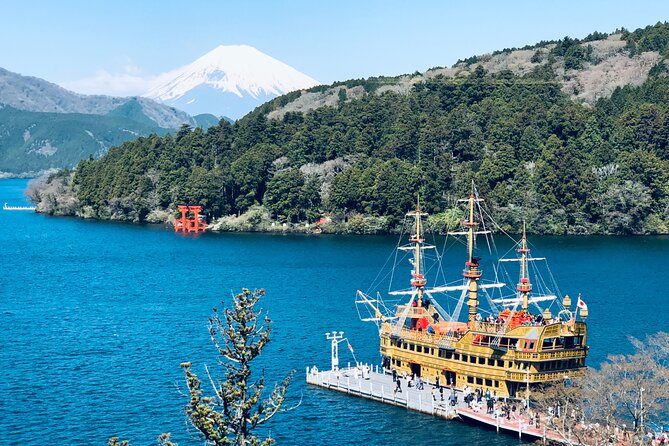
When you reach the Lake Ashi area, the day turns into a classic Hakone memory. Lake Ashi is one of the best places to frame Mt Fuji, and this route gives you multiple chances to catch it from different angles.
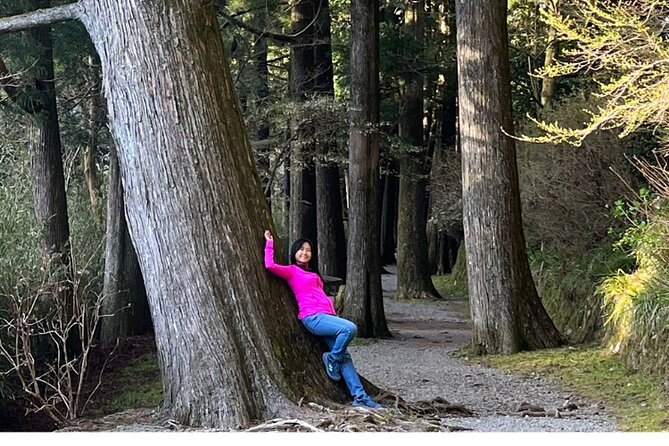
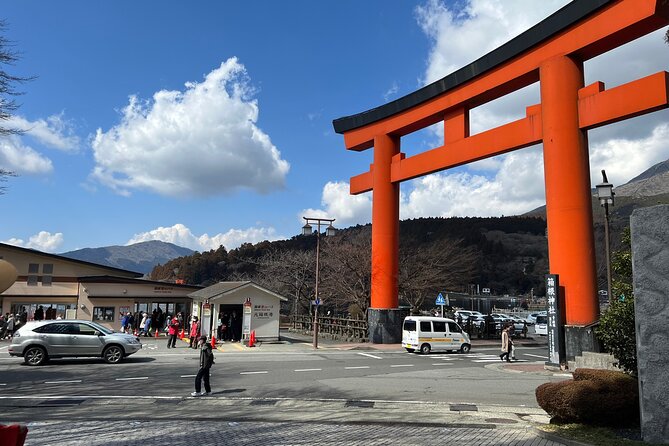
You arrive around the Motohakone-Ko Pier area. From there, you walk along the shoreline and look for the Heiwa no Torii, with Mt Fuji in the background when weather permits. The tour also heads through a cedar avenue after the lake segment, which helps transition you from open views back into forested path.
Here is the practical takeaway: Mt Fuji is not guaranteed. The tour is specifically designed for good-weather days, and clouds can hide the mountain. But the itinerary is not built on only one view. Even if Fuji vanishes, you still get the lake setting, the torii landmark, and the shift into the cedar-lined road.
If you want the best chance at Fuji, plan for patience. Your guide will keep you moving, but you can still use the walking time to look up and check the sky in short bursts.
A different sort of day in Japan:
- Mt Fuji and Hakone 1-Day Bus Tour Return by Bullet Train
★ 5.0 · 26,383 reviews - Mt Fuji & Hakone Cruise, Drum Show Bullet Train 1 Day from Tokyo
★ 4.0 · 7,413 reviews - Tokyo Mt Fuji 5th St & Hakone Cruise Bus Tour w/Bullet Train
★ 4.4 · 5,024 reviews - Tokyo: Mt. Fuji Tour, Hakone Ropeway, Owakudani, Lake Ashi
★ 4.7 · 4,002 reviews
Cedar Trees of Hakone Old Road and the Hakone checkpoint moment
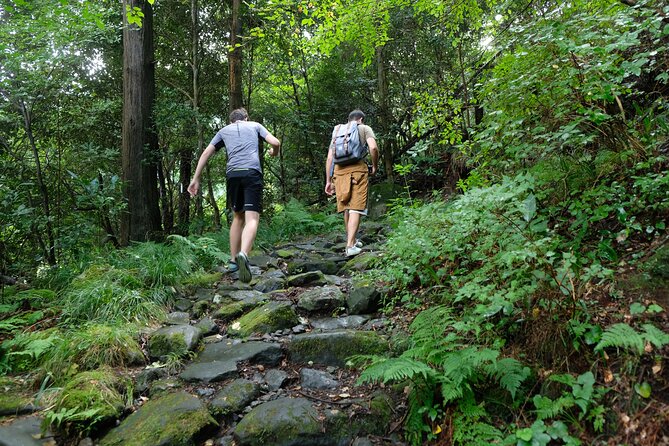
The cedar avenue is one of those small details that makes the whole hike feel “period.” The guide’s background talk here matters, because it turns a simple corridor of trees into part of the travel system.
Then you reach the Hakone checkpoint, described as something like an immigration department in modern terms. The guide explains why checkpoints mattered and what they meant for travelers moving between regions. This is a key reason to choose a guided experience, not a self-walk with just a map.
Why the checkpoint stop is so valuable for you: it reframes what you are walking on. Instead of thinking only about distance, you start imagining timing, rules, and who would have been watching the road. It is the difference between a nice hike and a hike that teaches you how the route functioned.
Lunch happens after this area, at a local Japanese restaurant nearby. Lunch is not included, and you should expect around 2,000 yen for your group for the lunch portion. Plan for a set meal experience rather than roaming for options, because the day runs on a guided schedule.
The bus skip around a temporarily closed section
One of the smarter parts of the planning is that you do not get stuck. After lunch near the Hakone checkpoint, you take a bus to skip a temporarily closed part of the route, then resume walking toward Mishima.
This matters because old road segments can close for maintenance, safety, or seasonal reasons. If you try to DIY the exact heritage line, closures can turn your day into guesswork. Here, you get a managed workaround.
It also explains the pacing. Even though the total hiking distance is about 8km, the full experience lasts around 7 hours, because you factor in transit, viewpoints, and the guide’s explanations.
If you prefer predictable timing, this bus-and-walk balance is a big advantage. If you want constant walking with no breaks, you may feel the pauses more than others, but they keep the day from turning frustrating.
Yamanaka Castle Ruins: finishing the Hakone Hachiri story on the Shizuoka side
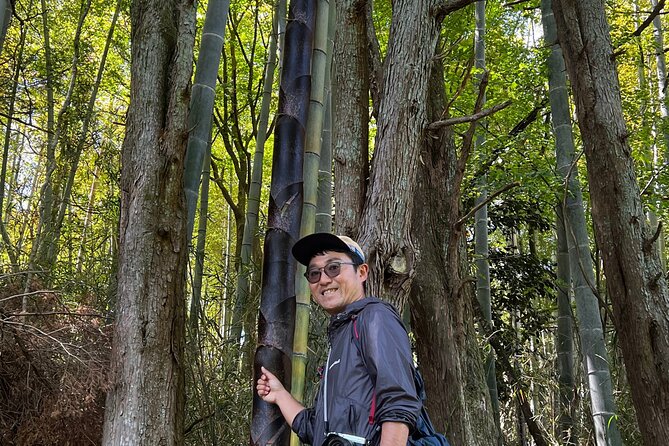
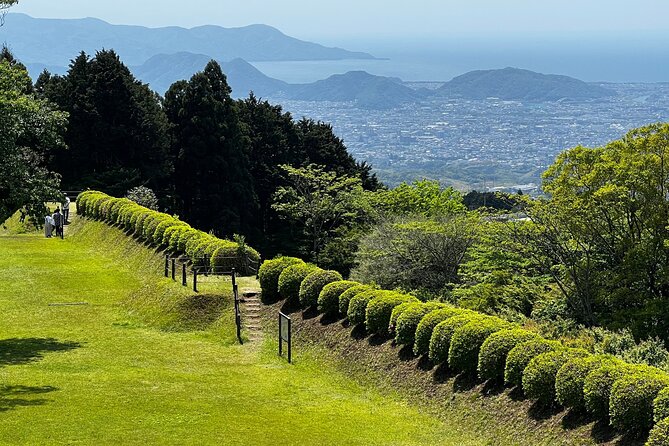
After the bus segment, you head toward the trailhead on the Shizuoka side of Hachiri. Then you reach Yamanaka Castle Ruins for about an hour.
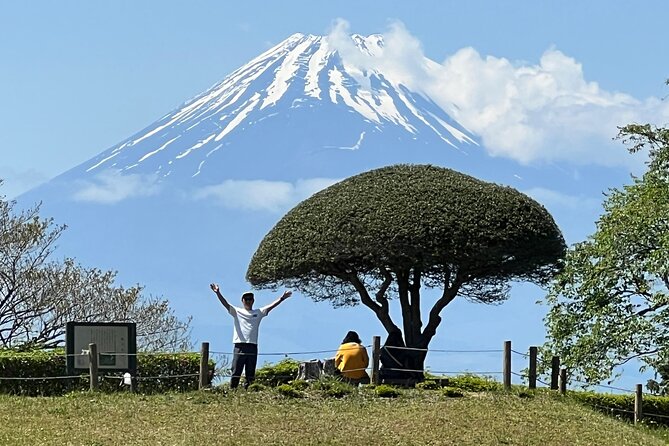
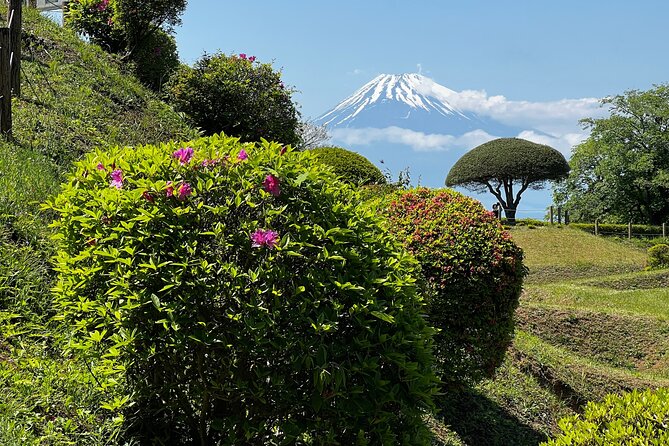
This is where the route adds elevation and a little drama. Even if you do not see Mt Fuji from every angle, the day is structured so the mountain view is possible from multiple spots, and Yamanaka Castle Ruins is one of those areas where Fuji may appear if conditions are right.
These ruins also give your brain a good shift. The earlier part of the day focused on travel corridors, lake landmarks, and checkpoints. Here, the story tilts toward control and defense in the region. It is still part of the travel narrative, but it adds another layer about why these passes and spots mattered.
Mishima Station finish: Mishima Taisha and Genbe River
Ending at Mishima Station is a practical win. From there, you can continue immediately, especially if you plan to return to Tokyo or re-route your day.
You also get a proper finish to the heritage route: visits to Mishima Taisha and Genba River. Mishima Taisha is described as the biggest shrine in Mishima, so you get a meaningful religious landmark rather than just walking back to a station.
Genba River adds a calmer final atmosphere after hours of trail and history talk. It is a nice contrast point, helping you decompress before trains and onward connections.
From Mishima Station, trains run back to Odawara in about 15 minutes for around 2,500 yen, and to Tokyo in about 45 minutes for around 4,400 yen. Buses also serve Hakone and other Izu locations, so you are not locked into a single next step.
Price and value: what $158.52 covers in real terms
At $158.52 per person, this is not a budget hike, but it also is not priced like a private custom tour. The value comes from three things you can feel in the day.
First, you have a national certified pro guide with wilderness first aid. That is not just paperwork. On mountain paths, it means someone is tracking safety, pacing, and navigation.
Second, you get small-group treatment with a maximum of 6 travelers. That changes the experience. You can ask questions, get photo help, and stay oriented without being swallowed by a crowd.
Third, you get logistics handled. Shared taxi to the trailhead, local bus transfers, and skipping a temporarily closed section are all part of how the tour functions. That saves you time and confusion, especially if you are not fluent with Japanese transit.
What is not included is important to know up front:
- Lunch (about 2,000 yen)
- Transportation to trailhead and between sites (around 2,000 yen by shared taxi or buses)
- Shinkansen fee from Mishima to Odawara or Tokyo
- Amasake and snacks are included along the way, but additional personal spending might come up
So when you budget, treat the listed price as the guided part, then plan for the meals and transport add-ons. If that fits your style, the day feels like a good use of time.
What to wear and what to expect on an 8 km, mixed-surface hike
This is listed as moderate physical fitness. You are not signing up for an all-day mountain summit effort, but you are walking around 8km on mixed surfaces, including cobbled and old road sections.
Here is how I’d prepare, practically:
- Wear sturdy shoes with grip for stone and uneven footing.
- Bring layers. Hakone weather can shift quickly, and forest shade can feel cooler even on sunny mornings.
- Use a camera strap or secure your phone. You will stop for viewpoints at Lake Ashi and at ruins, and the guide may take photos for your group.
- Pack a small day bag for snacks, water, and a light rain layer since weather matters here.
If Mt Fuji is a must-see, accept that clouds can steal it. The route is still worth it for the cedar avenue, checkpoint storytelling, torii views when visible, and the character of the old highway.
Weather and cancellations: how to plan when Mt Fuji might hide
The tour is marked as requiring good weather. If it is canceled due to poor weather, you are offered a different date or a full refund.
On misty days, the guide can still keep the experience meaningful by focusing on the places and explanations that remain even when the mountain disappears. That is one reason guided structure helps. It keeps the day from falling apart.
For you, the simplest strategy is to keep your schedule flexible if possible, and dress for rain just in case. If you absolutely need Mt Fuji, consider choosing a day with more stable forecast conditions.
Who this hike is best for
This is a strong fit if you:
- Want a guided walk that connects Old Tokaido Highway sights to how travel worked in the Edo period
- Like cultural stops, checkpoint explanations, and a bit of scenic theater at Lake Ashi
- Prefer a small group and clear routing, instead of navigating transfers on your own
- Want a finish that plugs into train travel immediately via Mishima Station
It is less ideal if you:
- Struggle with walking 8km on mixed surfaces
- Hate weather uncertainty and do not want to deal with possible cloud cover for Mt Fuji
- Want a fully inclusive meal and transport package, since lunch and some transit add-on costs are expected
Should you book Hakone Hachiri with a certified mountain guide?
Book it if you want Hakone Hachiri to feel like a story with structure. This tour’s best feature is not just the places, it is how the guide Aki connects them, keeps the group comfortable, and handles the day’s transit so you do not waste time figuring out what is open and what is not.
You are paying for two things: safety leadership and interpretation. The small group size makes both easier to enjoy. And the itinerary is built to give you multiple Mt Fuji opportunities when weather cooperates, without turning every minute into a waiting game.
If your ideal day is learning as you walk, with practical pacing and good photo moments along the way, this is a smart choice.
FAQ
How long is the Hakone Hachiri hike with a certified mountain guide?
It runs for about 7 hours.
Where does the tour start and end?
It starts at Hakone-Yumoto Station and ends at Mishima Station.
How far do you hike during the tour?
You hike around 8 km during the day.
What is included in the tour price?
A national certified pro guide with wilderness first aid certificate is included. Mobile ticket and group discounts apply, and admission for listed stops is free. Lunch is not included.
What costs should I plan for separately?
Lunch is around 2,000 yen. You should also plan for transportation fees between sites and from the trailhead area, around 2,000 yen by shared taxi or buses. If you continue by Shinkansen from Mishima, costs are around 2,500 yen to Odawara or about 4,400 yen to Tokyo.
What fitness level do I need?
The tour is listed for travelers with moderate physical fitness.
What happens if the weather is bad?
The experience requires good weather. If it is canceled due to poor weather, you will be offered a different date or a full refund.
Newly listed around Hakone
- Custom Private Tour in Hakone with a Certified Local Guide★ 5.0 · 91 reviews
- Traverse Outer Rim of Hakone Caldera and Enjoy Onsen Hiking Tour★ 5.0 · 30 reviews
- Hike Japan Heritage Hakone Hachiri (Half Day)★ 5.0 · 18 reviews
- Private Tour – Hakone Day Trip! A Tour to Explore All Must-Sees!★ 5.0 · 58 reviews
- Hike Hakone Hachiri★ 5.0 · 48 reviews
- Private Hakone Half-day Car Tour with Hotel Pickup – Local Guide★ 5.0 · 48 reviews
- Do You Want to Try Skywalk? A New Way of Enjoying Hakone!★ 5.0 · 7 reviews
- Hakone 8 hour Private Tour with Government-Licensed Guide★ 5.0 · 63 reviews
Hiking & Trekking, compared.
Fushimi Inari Hidden Hiking Tour (Private Option Available)
Read our review →
Hiroshima Local guided Hiking Tour&Open-air Tea Ceremony
Read our review →![Hiking the Historic Nakasendo Trail [1 Day Tour from Nagoya]](https://pic3.japaneseguides.com/wp-content/uploads/hiking-the-historic-nakasendo-trail-1-day-tour-from-nagoya-400x267.jpg)
Hiking the Historic Nakasendo Trail [1 Day Tour from Nagoya]
Read our review →
Magome & Tsumago Nakasendo Trail Day Hike with Government-Licensed Guide
Read our review →Browse the lists this tour appears in