
Review · LICENSED GUIDES & PRIVATE DRIVERS
Kobe 4hr Private Tour with Government-Licensed Guide
Kobe is made for small detours. This private 4-hour experience pairs a government-licensed guide with a choose-your-own plan, so you can skip the crowd and move at your pace. You can also start in the morning or afternoon, which matters in a hilly city where timing changes everything.
I like two things most. First, the 2-3 site customization lets you build a Kobe day around what you actually care about, whether that is Rokko mountain views, port history, or sake museums. Second, the licensed guide setup gives you real context for what you see, from the 1995 earthquake story to why Kitano Ijinkan-gai looks the way it does.
One possible drawback: this is a walking-first tour. Even with smart routing, you’ll be on your feet more than you would in a car-based day, and some stops involve stairs or slopes. If anyone in your group has limited mobility or hates hill climbs, plan for breaks and expect to spend extra on transportation.
In This Review
- Key Highlights Worth Planning Around
- A Four-Hour Kobe Walk With Real Local Guidance
- Picking Your Stops: How the 2-3 Site Customization Shapes Your Day
- Mt. Rokko and Shin-Kobe Ropeway Views: Where Kobe Turns Green
- The Port of Kobe Earthquake Memorial Park: A Quiet Stop With Heavy Meaning
- Kitano Ijinkan-gai and Kobe Harborland: Old Foreign Streets and Portside Life
- Kobe’s Nada Sake Museums: More Than Souvenirs
- Chinatown Nankinmachi: Flavor, Color, and Easy Walking
- Akashi Kaikyo Bridge: One Big Structure That Changes Scale
- Price and Value: What $108.99 Buys in Real Life
- Who Should Book This Private Kobe Tour
- Should You Book This Kobe 4-Hour Private Tour?
- FAQ
- How long is the Kobe private tour?
- Can I choose the start time?
- How many stops do we visit?
- Is transportation included?
- Is this tour mostly walking?
- What is included in the price?
- Are entrance fees included?
- Are service animals allowed?
- Is free cancellation available?
Key Highlights Worth Planning Around
- Government-licensed local guides who can explain the why behind Kobe’s sights
- Pick 2-3 stops from a menu that ranges from Rokko views to sake museums
- Free-to-enter featured places help stretch your yen (even if some add-ons cost extra)
- Morning or afternoon starts so you can match the light, your energy, and crowds
- Private pacing only your group, with room for local tips and photo stops
- Walking-based route with occasional public transport or taxi help at your own expense
A Four-Hour Kobe Walk With Real Local Guidance
Kobe is the kind of city where distance feels bigger than it looks on a map. Streets climb, views pop out around corners, and neighborhoods change personality fast. This tour is built for that reality, because you’re not locked into a big-group schedule. You get a government-licensed guide, and the structure is simple: about four hours, your pace, and a short list of stops chosen around you.
What you’re really paying for is not just time with a guide. It’s decision support. Your guide can help you choose the best mix of hill viewpoints, history stops, and food-and-drink experiences that fit your day. That becomes especially valuable if you only have a partial day in Kansai, or if you want a Kobe day that feels personal rather than checklist-driven.
Also, the guide style can make a difference. In the feedback, names like Harumi, Norio, and Yama show up again and again for punctuality, planning, and friendly storytelling. In at least one case, a guide went above and beyond to help the group find the correct train back to Osaka, which is the kind of stress-reducer you don’t appreciate until you need it.
More Private Guides in Kobe:
- Kyoto Full Day Tour from Kobe with Licensed Guide and Vehicle
★ 4.5 · 19 reviews - Exploring Nada Sake Breweries Kobe Private Tour with Government-Licensed Guide
★ 5.0 · 17 reviews - Private Kobe Tour with Licensed Guide and Vehicle
★ 5.0 · 10 reviews
Picking Your Stops: How the 2-3 Site Customization Shapes Your Day
The biggest practical feature here is that you choose 2-3 sites from the highlights list. That keeps the tour from turning into a sprint. It also gives you a way to build a Kobe day around your interests, not around someone else’s priorities.
Here are a few “smart combos” you can think about based on the places offered:
- Views plus history: Mt. Rokko for panoramas, then the Port of Kobe Earthquake Memorial Park for the 1995 moment.
- Old-to-new Kobe vibe: Kitano Ijinkan-gai for the foreign settlement district, then Kobe Harborland for the waterfront energy.
- Sake-focused Kobe: choose one or two of the Nada sake museums plus Chinatown (Nankinmachi) if you want food culture to balance the tasting explanations.
- High-contrast day: Mt. Rokko views plus Akashi Kaikyo Bridge if you want one “wow structure” moment.
You’ll also appreciate this customization if your group has different speeds. One person wants extra time for photos, another wants to get moving. With just your group, your guide can flex.
Mt. Rokko and Shin-Kobe Ropeway Views: Where Kobe Turns Green
If Kobe has a natural “wow” button, it is Mt. Rokko. At 931 meters, it is the highest peak in the Rokko mountain range, and it gives you that green backdrop over the urban area below. Even when your day is only half-done, this is the kind of stop that makes the rest of Kobe feel more meaningful.
The route often connects to the Shin-Kobe Ropeway, which lifts tourists up the southern slopes of the Rokko mountain chain. The departure area is right next to Shin-Kobe Station, which is handy if you are already using shinkansen or nearby transit.
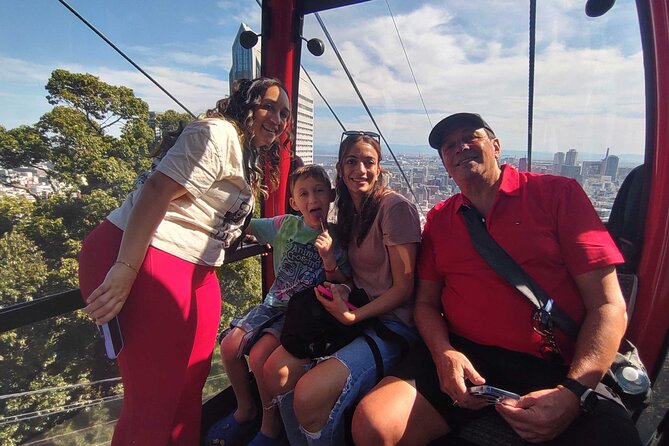
In the feedback, guides helped visitors make the most of the ride and the garden area at the top. Several people talked about the Herb Gardens on Rokko, including time spent in a scent-focused room where you could sample different fragrances. That is a very “Kobe” kind of stop, calm, sensory, and not something you can easily replicate on your own without planning.
Small note: weather can change everything. If visibility is poor, you’ll still have the gardens and scenery, but you may lose some of the big panoramic payoff. Consider stacking this stop earlier in your day so you aren’t stuck deciding in poor weather at the end.
The Port of Kobe Earthquake Memorial Park: A Quiet Stop With Heavy Meaning
Kobe’s modern story includes loss and rebuilding, and the Port of Kobe Earthquake Memorial Park is where that becomes real fast.
On January 17, 1995 at 5:46 am, the Great Hanshin Awaji Earthquake hit Kobe. The memorial references the tragedy, including more than 5,000 deaths and destruction of tens of thousands of homes. This is not a “fun photo stop,” and it is not meant to be.
What makes it valuable on a short tour is the context. When your guide explains what happened and where the memorial fits in the city’s memory, it turns a site from information into understanding. It also anchors your day so the rest of Kobe feels more than sightseeing. You see why people talk about resilience here.
Practical tip: go in with a slower pace. If your group tends to rush, ask your guide for a few minutes to sit or stand quietly before moving on. It changes how you leave the park.
A few more Kobe days to weigh up
- KOBE Sake Tasting Tour at Breweries (tasting fee included)
★ 5.0 · 154 reviews - Kobe Highlights & Hidden Gems: Private & Custom Tour with a Guide
★ 4.5 · 70 reviews - Kobe: Guided Sake Breweries Tour with Tastings
★ 5.0 · 55 reviews - Nijigen No Mori:Naruto & Boruto Theme Park Entry Ticket
★ 4.5 · 53 reviews
Kitano Ijinkan-gai and Kobe Harborland: Old Foreign Streets and Portside Life
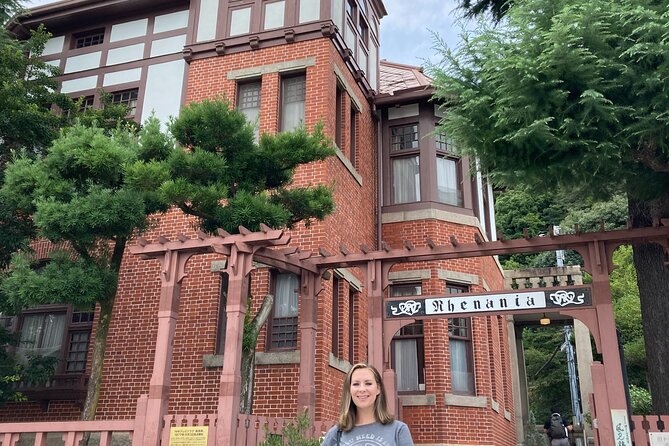
Kitano Ijinkan-gai is the district at the foot of Mt. Rokko where foreign merchants and diplomats settled after Kobe Port opened to foreign trade in the second half of the 19th century. That long-ago era still shows in the neighborhood feel, with a distinct atmosphere compared to typical Japanese commercial streets.
On a private tour, this is where your guide can make architecture and history feel human. Instead of just pointing at buildings, they can help you understand why the district took shape where it did, and how the relationship between Kobe’s port and outside trade influenced daily life.
Then you can flip the mood with Kobe Harborland, the shopping and entertainment district between JR Kobe Station and the waterfront. This part of town is useful for travelers because it is flexible. If your group has energy, you can browse shops and cafes. If you want a breather, you can find somewhere to sit without having to travel far.
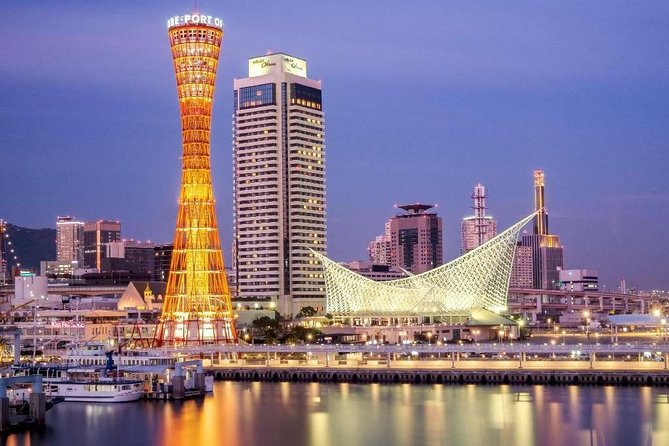
If you care about city views, some guides may also adjust the plan to include a skyline moment like Kobe Port Tower, which has come up in the feedback as a “must do” for some visitors. You’ll still want to stay realistic about walking time, because adding extra viewpoints can make the half-day feel fuller.
Kobe’s Nada Sake Museums: More Than Souvenirs
If you like food culture, this is the most “tangible Kobe” part of the day. The tour list includes several Nada-area sake stops, and each one teaches a slightly different slice of the story.
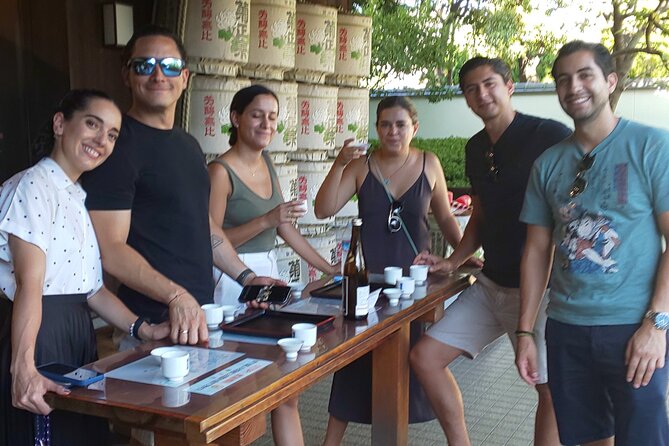
The Nada district is Japan’s top sake producing region, often credited to high quality rice, suitable water, and favorable weather. On a short private tour, you are basically trying to answer one question: why does Kobe sake taste like it does, and how did the brewing tradition develop here?
Here’s what each stop adds:
- Hakutsuru Sake Brewery Museum: introduces the broader Nada brewing reputation and takes you into the museum experience before you move into tastier territory.
- Sawanotsuru Museum: opened in 1978 to commemorate local sake heritage, and it was destroyed by the Great Hanshin Earthquake in 1995, then rebuilt afterward. That makes it emotionally different from a typical product museum.
- Sakuramasamune Kinenkan Sakuraen: a smaller exhibition space showing tools and simple machines used in past sake production, with a video presentation that helps you connect craft to process.
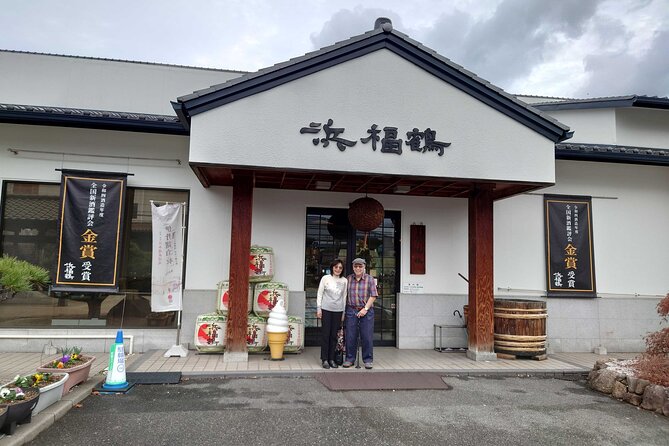
- Hamafukutsuru Ginjo Brewery: focuses on high-grade ginjo sake, with a second-floor explanation of the brewing process through diagrams and written information.
- Kiku-Masamune Shuzo Kinenkan: set in a wooden-plaster building with an atmospherically lit room that pairs traditional music with displays of tools, containers, and machinery.
- Kobe Shushinkan Brewery: mixes a large shop for sake and sake-related products with a restaurant serving Japanese cuisine alongside sake. It also offers free guided tours of the sake warehouse once per day.
What I like about this structure is that it is not just sales. Even if you don’t plan to buy anything, you’ll leave with a stronger sense of the craft and the region.
Two practical considerations:
1) You should expect sensory switching. One museum can be technical, another can feel more museum-like, then you move back into retail and tasting culture.
2) Because the tour is only 4 hours, don’t try to do too many tasting stops. Choose 1 to 2 sake places plus one food neighborhood stop, or you’ll be running on empty.
Chinatown Nankinmachi: Flavor, Color, and Easy Walking
Nankinmachi, or Chinatown, is a compact Chinatown in central Kobe and a key center of the Chinese community in the Kansai region. It grew from Chinese merchants who settled near Kobe Port after foreign trade opened.
On a private tour, this stop works for two reasons. First, it is easy to navigate without feeling overwhelmed. Second, it gives a food and street-life contrast to the more structured museum pacing of sake.
You can use it in a practical way, too. If you want a meal that feels local without booking a formal restaurant, Chinatown is often the kind of neighborhood where you can find something quickly. It is also a good “reset” after stepping through exhibits.
Akashi Kaikyo Bridge: One Big Structure That Changes Scale

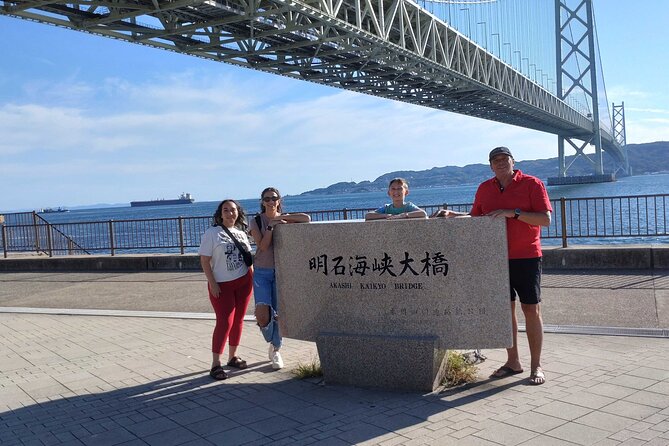
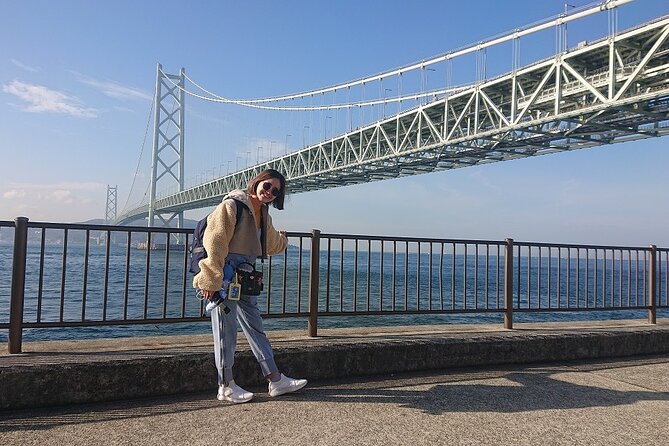
If you want a clear physical marker that Kobe is connected to the wider region, Akashi Kaikyo Bridge is it. It is the world’s longest suspension bridge, spanning the Akashi Strait between Kobe and Awaji Island. The length is close to four kilometers, and it opened in 1998.
On a four-hour tour, this is a high-impact choice if you care about engineering, photos, or simply want one landmark that makes Kobe feel connected beyond its coastline.
One caution: bridge time can stretch depending on timing and how much time you spend at viewpoints. If you are also doing museums and neighborhood wandering, choose whether you want the bridge as the main event or the closing moment. With only 2-3 stops total, you control this.
Price and Value: What $108.99 Buys in Real Life
At $108.99 per person for about four hours, this tour is priced like a true private guide, not a budget walking loop. The value comes from four things you actually feel:
- You get a licensed local guide.
- Your stops are customizable (2-3 sites).
- The tour is private to your group, which avoids wasted time.
- Many of the listed attractions are marked as free admission, which helps you spend more on food and less on entry fees.
What is not included matters for planning:
- Transportation fees are not included, and there is no private vehicle.
- Lunch is not included.
- Entrance fees are not included in the base price, even if many of the specific stops are free to enter.
In practice, guides have helped visitors move using trains and taxis when needed. That is a big deal if you want smooth logistics without feeling like you are figuring everything out mid-day. Still, you should budget for local transit and any entry costs that come up if you add extra places.
Also, the tour includes a mobile ticket and offers pickup. One important detail is that it’s a walking tour, and pickup is essentially on foot, meeting you within a designated area. So the “pickup” here is not a car drive to every stop.
Who Should Book This Private Kobe Tour
This is a good fit if:
- You have limited time in Kobe and want a short plan with real choices.
- You care about mixing views, history, and food culture, especially sake.
- You want someone to help with local navigation and story context.
- Your group prefers walking and pacing your day, not being rushed in a bus.
It may be less ideal if:
- You dislike stairs, long hill climbs, or long walking stretches.
- You are expecting a fully car-based tour.
- Your group needs very predictable English support. In the feedback, most guides are praised for communication, but one case noted a guide with more limited English and some routing confusion. That’s not the norm, but it’s worth knowing.
Should You Book This Kobe 4-Hour Private Tour?
I’d book it if you want a Kobe day that feels like it was built for your interests, not crammed into a group itinerary. The 2-3 stop format is the secret sauce, because it prevents the classic “private tour that still feels rushed” problem. Add in a government-licensed guide and the mix of Rokko, earthquake memory, Kitano, Harborland, sake museums, and Chinatown options, and you have a flexible half-day that can fit many traveler styles.
I’d hesitate only if your group hates walking hills or you need a very relaxed, low-steps day with minimal movement. If you do book, pick your three stops early, and include one “breather” type stop like a harbor stroll or a garden moment so you don’t end the day fried.
FAQ
How long is the Kobe private tour?
It’s about 4 hours.
Can I choose the start time?
Yes, you can choose from morning or afternoon start times.
How many stops do we visit?
You can customize the day to choose 2-3 sites from the available highlights list.
Is transportation included?
No. Transportation fees are not included.
Is this tour mostly walking?
Yes, it’s a walking tour, and pickup is on foot. You meet your guide within a designated area.
What is included in the price?
The price includes a licensed local English-speaking guide and a customizable tour of your chosen sites (2-3). It also includes the meet up with your guide on foot in the designated area, plus a mobile ticket.
Are entrance fees included?
No. Entrance fees are not included, and the guide entry fees are only covered for sights listed under the included expectations.
Are service animals allowed?
Yes, service animals are allowed.
Is free cancellation available?
Yes, you can cancel for a full refund up to 24 hours before the experience’s start time.
Newly listed around Kobe
- Next-Generation Local Guide: Private Kobe Tour★ 5.0 · 39 reviews
- Kobe Highlights & Hidden Gems: Private & Custom Tour with a Guide★ 4.5 · 70 reviews
- Kyoto Full-Day Excursion from Kobe (Osaka) Port★ 4.5 · 7 reviews
- Exploring Nada Sake Breweries Kobe Private Tour with Government-Licensed Guide★ 5.0 · 17 reviews
- Cruise Stop-Over: Private Custom Day trip to Kyoto from Kobe Port★ 4.5 · 12 reviews
- Private tour – Experience Kobe’s Best Gems with a local host★ 5.0 · 8 reviews
- Private Shore Excursion Kobe Port – Best of Kobe with a local★ 5.0 · 19 reviews
- Shore excursion: Full Day Private Kyoto Tour From Osaka/Kobe Port★ 4.5 · 36 reviews
Licensed Guides & Private Drivers, compared.
Tokyo 6hr Private Tour with Government-Licensed Guide
Read our review →
Kyoto Early Morning Tour with English-Speaking Guide
Read our review →
Tokyo 4hr Private Tour with Government-Licensed Guide
Read our review →
Kyoto 6hr Private Tour with Government-Licensed Guide
Read our review →
Hiroshima / Miyajima Full-day Private Tour with Government Licensed Guide
Read our review →Early Morning Tour with English-Speaking Guide
Read our review →
Tokyo Private Sightseeing Tour by Car- English speaking chauffeur
Read our review →
Mt Fuji Private Tour with English Speaking Driver
Read our review →Browse the lists this tour appears in