
Review · LICENSED GUIDES & PRIVATE DRIVERS
Kyoto 6hr Private Tour with Government-Licensed Guide
Kyoto changes fast when you have someone local. This 6-hour private outing is designed to cover Kyoto’s big-name sights without turning your day into a confused map shuffle, and you’ll travel using public transportation so you learn routes, not just landmarks. I like that you get a licensed local English guide who can explain what you are actually looking at, and I like that the stop mix is flexible so your day matches your interests. The main drawback is simple: it is a walking tour, and some major sights have admissions that are not included.
What makes this work especially well is the pace and the format. You spend your time where it matters, asking questions along the way, not waiting for a bus to catch up to your curiosity. Just note one more thing up front: lunch is not included, so if you want a proper break, plan that into your day during the tour setup.
In This Review
- Key Highlights You Will Feel Immediately
- A 6-hour Kyoto plan that keeps you moving, but not rushed
- Price and what you really get for $155.86
- Meeting up on foot and traveling like a Kyoto resident
- The Senbon Torii approach at Fushimi Inari-taisha
- Kiyomizu-dera and the Higashiyama slopes for pure first-day Kyoto
- Gion street corners, Nishiki Market, and Pontocho after the temples
- Nijo Castle and Kyoto Imperial Palace for power, not just beauty
- Zen temples that reward slow noticing: Ginkakuji, Nanzenji, Tofukuji, and Toji
- Kinkakuji, Ninna-ji, and Shugakuin for Kyoto when you want the full picture
- Arashiyama: Togetsukyo Bridge, bamboo walks, and gardens in the west
- Northern Kyoto with nature energy: Kibune and Kurama options
- Ryoan-ji and the northern Zen complexes for people who like quiet focus
- Eastern Kyoto and Uji (Byodoin) if you want a change of scenery
- How to pick your 3 to 4 stops so you do not waste your feet
- Practical advice so your day feels easy, not exhausting
- So, should you book this Kyoto private tour?
- FAQ
- How long is the Kyoto private tour?
- Is this tour private or a group tour?
- What is included in the price?
- Are admissions included?
- Is lunch included?
- Do I need to arrange my own transportation?
- How far in advance should I reserve?
- Can I cancel for a refund?
Key Highlights You Will Feel Immediately
- Government-licensed English guiding, with enough time for questions, not just photo stops
- 3 to 4 sites selected from classic Kyoto options, so you do not burn your day hopping randomly
- Public transportation coaching, so you can move around Kyoto on your own afterward
- A walking-first format, perfect for first-timers who want street-level Kyoto fast
- A strong track record, with a 4.9 average rating and about 98% recommending the tour
- A guide lineup that people rate highly, including Yuji, Joy Etsuko, Andy (Atsushi), Noriko, Emi, Kazuo, and Yasu
A 6-hour Kyoto plan that keeps you moving, but not rushed
Kyoto is famous for two things that fight each other: huge crowds at the top sights, and a city layout that makes those crowds harder to dodge. This tour is built for the in-between reality. You get a private guide, you pick a few priority stops, and you move between them with the help of someone who knows how to get you there and what to notice once you arrive.
The best part, in my view, is that the guide’s job is not only to name places. Your guide can explain why Fushimi Inari looks the way it does, what the main halls are for at temples, and what to look for at spots where people rush past the details. In the feedback, guides like Yuji and Emi come up again and again for being friendly, patient, and clear when it comes to history and what you are seeing. Other guides, like Noriko, are praised specifically for helping guests feel comfortable using the subway and trains, which matters a lot in Kyoto.
One realistic caution: since it is walking and public transit, comfort choices matter. Wear shoes that can handle temple stairs and long sidewalks. Bring water. And if you are traveling with older family members, choose a tour style with a pace that fits you, since Kyoto legs can get tired faster than your expectations.
More Private Guides in Kyoto
- Kyoto Early Morning Tour with English-Speaking Guide
★ 5.0 · 1,427 reviews - Kyoto: Early Morning Tour with English-Speaking Guide
★ 4.9 · 1,128 reviews - Kyoto 4hr Private Tour with Government-Licensed Guide
★ 5.0 · 629 reviews
Price and what you really get for $155.86
At $155.86 per person for roughly six hours, you are paying for something most DIY plans skip: time saved and confusion avoided by having a licensed English-speaking guide, plus the local route knowledge that comes with moving through Kyoto by transit.
A big part of the value is that your guide helps you in two ways at once:
- Route confidence: you learn how to get between areas without guessing wrong stops or taking the long way.
- Meaning on-site: you do not just see the famous picture, you understand what it is.
Tickets for temples and castles are not included across the board. Some stops are marked free, while others are not included, so you should think of the $155.86 as covering the guide and the guiding structure, not the attractions themselves. Lunch is also not included, so if you want a longer meal, plan it during your setup so you do not end up cutting the day short.
If you are only in Kyoto for a short window and you want your first day to feel organized, this price can make sense. If you already know how you want to get around and you hate structured itineraries, it may feel more than you need. The sweet spot is a traveler who wants a strong first orientation and then plans to explore the rest solo.
Meeting up on foot and traveling like a Kyoto resident
This tour uses a walking-first structure. Pickup and drop-off are on foot, and you meet your guide within a designated area. The good news is you are not stuck waiting for a private car. The tour is designed around public transportation, which is both efficient and educational.
Here is the practical benefit you may not think about until you have lived it: once you see how your guide uses trains and stations, you gain a mental map. That means your next day in Kyoto is smoother. In feedback, guides such as Noriko and Kazuo are highlighted for explaining the subway and trains clearly and for keeping the day flowing so guests are not left behind at transfers.
Still, walking tours have one shared reality: you need to manage energy. You will likely be out longer than you expect once you add station transitions, short waits, and time to walk between entrances. I suggest you keep your day simple before the tour. Do not stack heavy plans the night before, because Kyoto days can start earlier and end later than you think.
The Senbon Torii approach at Fushimi Inari-taisha
Fushimi Inari-taisha Shrine is one of those places where your first reaction is always the same: wow, those torii gates go on forever. The guide value here is in what you learn before you get lost in the visual rhythm of the red gates.
You will start at the well-known entry area and then head toward the lines of torii that create the tunnel effect. This is a free stop, so it is a great early win for your Kyoto day. With a guide, you also get help noticing patterns and understanding the stories tied to Inari, the deity associated with prosperity and the relationship between tradition and everyday life in Japan.
Potential drawback: the torii paths can feel crowded, especially when tour groups stack. If your schedule allows, going with a guide who can manage timing and crowd flow helps you keep the experience from turning into a shuffle.
Practical tip: bring a light layer. Even on sunny days, temple areas can cool down under stone and shade.
A different sort of day in Japan:
- PERFECT KYOTO 1-Day Bus Tour
★ 5.0 · 13,518 reviews - Kyoto: Fushimi Inari, Kinkakuji, Bamboo Grove 1 Day Bus Tour
★ 4.8 · 4,316 reviews - Kyoto: Tea Ceremony in a Traditional Tea House in Kiyomizu
★ 4.9 · 3,519 reviews - Kyoto Geisha Walking Tour: Gion District & Hidden Gems
★ 4.7 · 3,273 reviews
Kiyomizu-dera and the Higashiyama slopes for pure first-day Kyoto
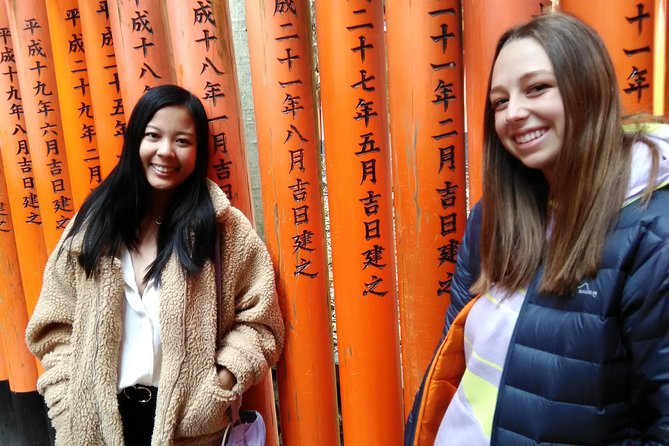
Kiyomizu-dera is Kyoto at postcard volume, but it is also more than the famous stage. With a guide, you get a structured look at the temple grounds and context for why this site matters, and you will spend time on the inside guided portion.
Pairing Kiyomizu-dera with the Higashiyama vibe works well because the area is built for slow wandering. You can look up at wooden facades, scan the steep street layouts, and watch how the neighborhood changes as you move along the slopes. Higashiyama Ward is also a free option, so it is a smart use of your tour time.
What to expect: photo opportunities, steep walking, and moments where you have to pause just to take in the view. Many first-timers find the best value comes from learning what the temple symbolizes and what you are seeing in the architecture.
Possible drawback: crowds and stairs. You will be walking. If you have knee issues, tell your guide during planning so they can adjust how you move through the grounds and streets.
Gion street corners, Nishiki Market, and Pontocho after the temples
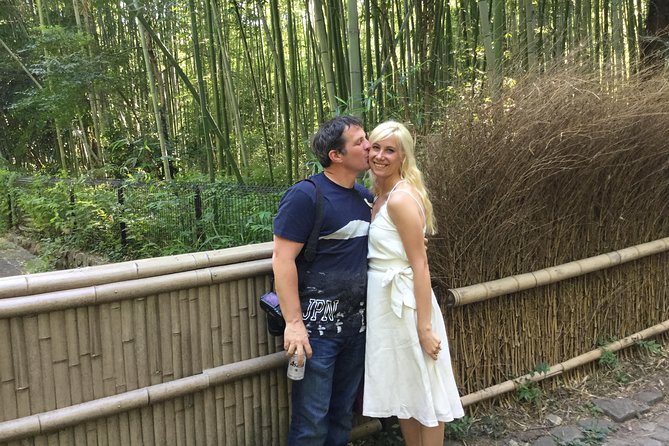
Kyoto does not only live in shrines and halls. It lives in alleys, signs, snack shops, and the way people move at street level.
Your guide can bring you into the right areas for that. Gion is a must for most first visits, and you will understand it better when someone explains how the district’s identity shows up in streets, etiquette, and the rhythm of the neighborhood. Nishiki Market is another powerful stop because it is known as Kyoto’s kitchen. It is a narrow shopping stretch with more than a hundred shops and restaurants, so your senses get busy fast.
Then there is Pontocho, the dining alley by the Kamogawa River. It is less about shopping and more about atmosphere. Even if you are not eating at every stop, walking the alley gives you a sense of Kyoto evenings.
Tickets note: these are marked free stops. That means you can budget your money without worrying about another ticket barrier.
Small consideration: these areas can get busy at peak hours. If you are sensitive to crowds, let your guide know where you stand, since timing can change how you feel in the space.
Nijo Castle and Kyoto Imperial Palace for power, not just beauty
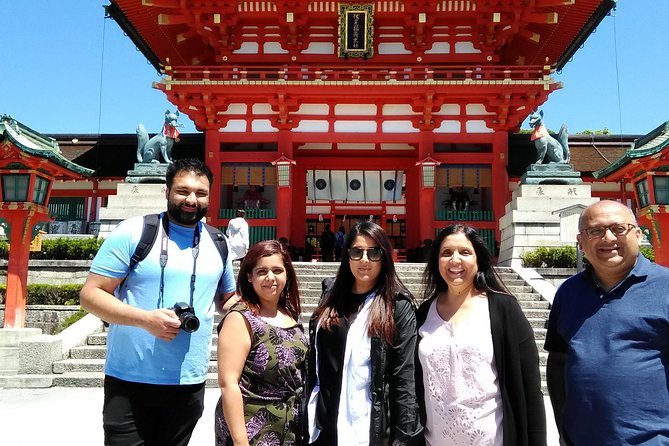
If you want Kyoto that feels political and historical, Nijo Castle and Kyoto Imperial Palace are strong choices.
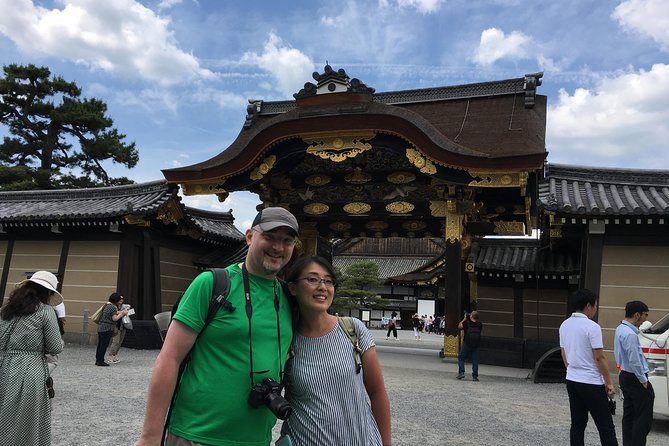
Nijo Castle shows the style meant to impress shogun Tokugawa Ieyasu’s era. It gives you a sense of how architecture communicates authority. A guided visit helps you notice what you might otherwise miss, like the design cues that connect the castle to the shoguns who shaped Japan.
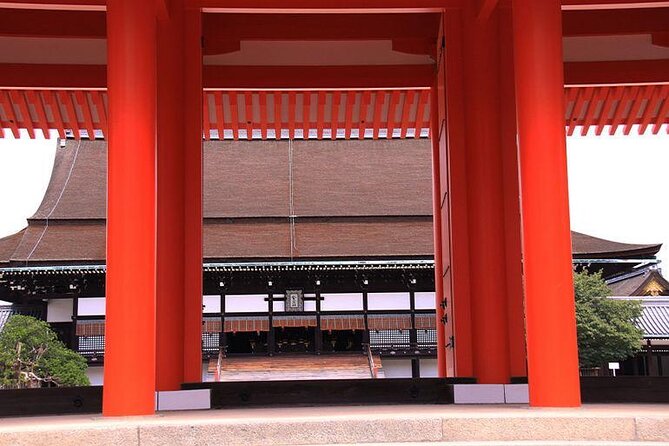
Kyoto Imperial Palace brings a different flavor. It used to be the residence of Japan’s Imperial Family until 1868, when the emperor and capital moved to Tokyo. Even if you are not a museum person, a guide helps you place the site into Japan’s larger historical timeline.
Potential drawback: castles and palace grounds can involve longer walking on uneven paths. It is not difficult in the way a mountain temple is, but it can feel long if you stack multiple temple heavy stops in one day.
Zen temples that reward slow noticing: Ginkakuji, Nanzenji, Tofukuji, and Toji
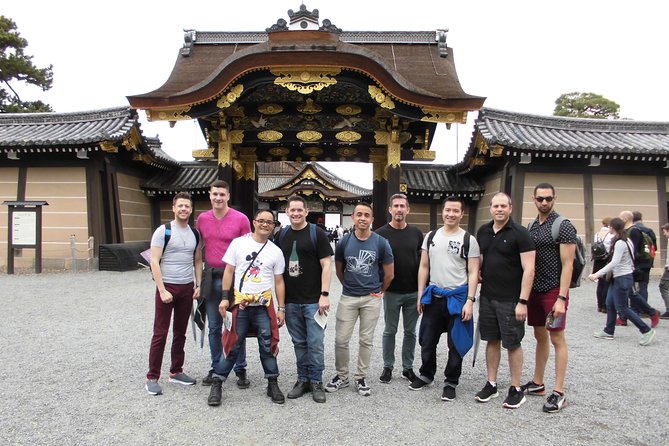
Kyoto’s Zen temple circuit can feel overwhelming if you try to DIY everything in one day. With a guide, you can pick the parts that match your mood: reflective, dramatic, or scenic.
Ginkakuji, also known as Silver Pavilion, is famous as a Zen temple along the eastern mountains. Even if you are not chasing a specific photo, it is a calm setting that lets you reset after busier streets.
Nanzenji is known for spacious grounds at the base of Higashiyama. It is also a head temple in one of the Zen lineages, and your guide can point out what that means in practice, beyond just the name.
Tofuku-ji is a large Zen temple in southeastern Kyoto. It is particularly famous for autumn colors, but the temple still offers a worthwhile visit in other seasons when you focus on layout and temple life rather than seasonal spectacle.
Toji Temple is another great option. It is literally East Temple and was founded around the time the capital moved to Kyoto in the late 700s. It is marked free in the stop details, which makes it a good budget-friendly anchor.
Possible drawback: Zen temples are less about one single iconic view and more about atmosphere and design. If you like only big, obvious landmarks, you may need your guide to point out what is worth your attention on-site.
Kinkakuji, Ninna-ji, and Shugakuin for Kyoto when you want the full picture
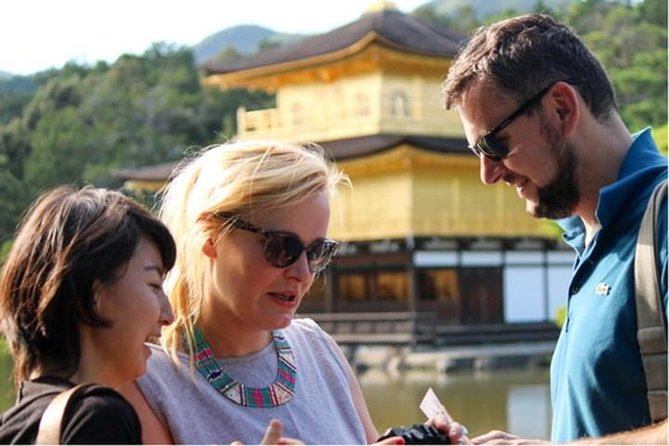
Kinkakuji, Golden Pavilion, is the kind of place people come to for one clear reason: the gold leaf on the top floors. A guide helps you understand the temple’s story and what the setting is doing, not only the gold finish.
Ninna-ji is a World Heritage listed site and an important head temple for the Omuro School of Shingon Buddhism. It can feel quieter than some of the most famous stops, and your guide can help you notice the characteristics that make it distinct.
Shugakuin Imperial Villa is a different type of experience. It is managed by the Imperial Household Agency and includes upper, middle, and lower villa areas. You get a taste of how imperial gardens and residences connect to Japan’s landscape thinking. Admissions are marked not included, so you should expect to budget for entry if you choose it.
This cluster works well if you want a day that moves beyond streets into architecture, power, and garden design.
Arashiyama: Togetsukyo Bridge, bamboo walks, and gardens in the west
Arashiyama is Kyoto at its most scenic and most tourist friendly, depending on timing. It is also one of the easiest places to feel like you are in a different world, with forests and walking paths nearby.
A common anchor here is the Togetsukyo Bridge, Moon Crossing Bridge. It is Kyoto’s iconic bridge, originally built in the Heian Period and reconstructed in the 1930s. Even if you just take a slow walk, it gives you an instant sense of place.
Then there are the bamboo grove walking paths. The tall bamboo stalks can sway in light wind, and the effect is very real when you see it in motion rather than through a single photo.
If you want something more structured and garden-focused, your guide may suggest Okochi Sanso Garden. It is the former villa of actor Okochi Denjiro, and it includes multiple gardens and buildings.
Tenryuji is another key Arashiyama option. It is ranked first among Kyoto’s five great Zen temples and is registered as a World Heritage site. Again, admissions are marked not included, so it is a budget consideration.
Practical drawback: Arashiyama can be busy. If you dislike crowds, start earlier in the day. If you do not mind crowds, focus on taking your time in the bamboo paths and on the bridge approach rather than rushing to the next photo.
Northern Kyoto with nature energy: Kibune and Kurama options
If your priority is to cool your day down with a quieter valley feel, consider Kibune and Kurama.
Kibune is a small town in a forested valley in northern Kyoto, developed around Kifune Shrine. Your guide can help you connect the legend elements to why people visit this area.
Kurama-dera sits in the rural mountain area of Kurama, and it is less than one hour from the city center. It is known for the temple and for hot spring access nearby.
This is a great choice if you want Kyoto beyond the classic temple thumbnails. Just keep expectations realistic: this is more travel time, and your day may feel slower and more about scenery than about ticking off major city sights.
Ryoan-ji and the northern Zen complexes for people who like quiet focus
Some of Kyoto’s best known Zen experiences feel almost impossible to understand without guidance, especially when you are staring at rocks and empty space and wondering what the point is.
Ryoan-ji is famous for Japan’s most well-known rock garden. Your guide can explain what you are looking at and how the design is meant to be read.
For a deeper Zen circuit, Daitoku-ji, Myoshinji, and related temple complexes in northern Kyoto can be excellent. Daitoku-ji is a large walled complex with many subtemples. Myoshinji includes about 50 subtemples, and while you might be able to enter a few halls, the rest of the experience is still about walking the grounds and observing.
Eikando Zenrinji and Sanjusangendo add different textures. Eikando is known for autumn colors and evening illumination, while Sanjusangendo is known for 1001 Kannon statues of mercy.
Kennin-ji is close to the busy streets of Hanamikoji and Shijo, but its grounds are expansive and pleasant to walk. That contrast can be refreshing on a long day.
Possible drawback: if you are not in a temple mood, this cluster can start to feel repetitive. Your best move is to balance one rock or one statue temple with one street or market stop so the day breathes.
Eastern Kyoto and Uji (Byodoin) if you want a change of scenery
Eastern Kyoto has some big spiritual landmarks, and it can also feel less rushed than the most central areas.
Sanjusangendo is a standout for statue lovers, with 1001 statues of Kannon. It is the kind of stop that becomes more impressive the longer you stand there and look.
Byodoin Temple in Uji is another choice, especially if you like UNESCO-level sites and iconic halls. The Phoenix Hall is known as a National Treasure of Japan and a UNESCO World Heritage site. One note: extra travel time is expected since Uji is in Kyoto prefecture, so this stop works best if your guide plans time around it.
If your day is tight, you might choose eastern Kyoto plus one central neighborhood instead of piling in multiple far-away districts.
How to pick your 3 to 4 stops so you do not waste your feet
Because this tour is designed around 3 to 4 sites from a list of options, the selection matters as much as the guide. Here is a simple way to choose.
If you want classic Kyoto in one day, pick:
- Fushimi Inari-taisha for the torii tunnel effect
- Kiyomizu-dera plus Higashiyama Ward for slopes and views
- One street neighborhood like Gion or Nishiki Market
If you want architecture and power:
- Nijo Castle
- Kyoto Imperial Palace
- Pair with either Toji or a Zen temple stop for balance
If you want scenery and atmosphere:
- Arashiyama (Togetsukyo Bridge plus bamboo walks)
- Add Okochi Sanso Garden if you want a garden-focused feel
- Finish with Pontocho for evening vibe
If you want Zen focus:
- Ryoan-ji rock garden
- Sanjusangendo for the 1001 Kannon statues
- Add either Ginkakuji or Nanzenji to keep the day calm
Also, tell your guide what matters most to you. In feedback, guides such as Joy Etsuko and Yasu are praised for tailoring the flow based on the day’s rhythm and guests’ interests. That kind of tailoring is exactly why private works. It is not about seeing more. It is about seeing the right things in the right order.
Practical advice so your day feels easy, not exhausting
Kyoto is not hard, but it is steady. Your job is to keep your energy stable.
Bring:
- Comfortable walking shoes
- A light layer for temple shade
- Water
Plan your day:
- If you want lunch, make sure your setup includes time for it, since the tour does not include lunch by default.
- If you have knee or mobility limitations, choose fewer steep temple grounds and avoid stacking multiple staircase-heavy sites.
Use your guide’s strengths:
- Ask questions as you go, especially on how the sites connect across Japan’s history. People cite guides like Kazuo and Ken for explaining the context in a way that makes each stop make more sense.
So, should you book this Kyoto private tour?
If you want a first-day Kyoto orientation and you have limited time, I think this is an easy yes. The combination of a licensed local English guide, a walking-first structure, and public transit help is ideal when you want your day to feel organized and meaningful, not like a chaotic sprint.
I would hesitate only if:
- You dislike walking and long transfers
- You want a full day of free wandering with no structure
- You plan to rely on major sights that require admissions you might not want to pay extra for
If you fall into the sweet spot, book it, show up with comfy shoes, and choose 3 to 4 stops that match your mood. Then let your guide do what this format is built for, connecting what you see with why it matters.
FAQ
How long is the Kyoto private tour?
It is approximately 6 hours.
Is this tour private or a group tour?
It is private. Only your group participates.
What is included in the price?
A licensed local English speaking guide is included, along with a customizable tour where you choose 3 to 4 sites from the available options.
Are admissions included?
Admissions are not included across the board. Some stops are marked free in the tour details, while others are marked admission ticket not included.
Is lunch included?
No, lunch is not included.
Do I need to arrange my own transportation?
A private vehicle is not included, but the tour is designed around public transportation. Pickup and drop-off are on foot.
How far in advance should I reserve?
You should reserve at least 2 weeks in advance.
Can I cancel for a refund?
Yes. Free cancellation is available if you cancel up to 24 hours in advance of the experience start time.
Newly listed around Kyoto
- Taste of Nishiki Market Walking Food Tour with Local guide★ 5.0 · 17 reviews
- Kyoto: Sushi Making Class with Sushi Chef★ 4.8 · 64 reviews
- Simple Plan with Maiko★ 4.4 · 10 reviews
- Shibori Furoshiki Course at Kyoto Shibori Museum★ 5.0 · 21 reviews
- Kyoto: City Secrets eBike Tour★ 4.9 · 196 reviews
- Sacred Pathways: Discover the Philosopher’s Path of Kyoto★ 4.9 · 20 reviews
- Private Tour to Monkey Park and Arashiyama Highlights★ 5.0 · 22 reviews
- Private Sake Tasting in Central Kyoto — 1 Group Only★ 5.0 · 11 reviews
Licensed Guides & Private Drivers, compared.
Tokyo 6hr Private Tour with Government-Licensed Guide
Read our review →
Kyoto Early Morning Tour with English-Speaking Guide
Read our review →
Tokyo 4hr Private Tour with Government-Licensed Guide
Read our review →
Hiroshima / Miyajima Full-day Private Tour with Government Licensed Guide
Read our review →Early Morning Tour with English-Speaking Guide
Read our review →
Tokyo Private Sightseeing Tour by Car- English speaking chauffeur
Read our review →
Mt Fuji Private Tour with English Speaking Driver
Read our review →
Mt Fuji Private Day Trip from Tokyo with English speaking driver
Read our review →Browse the lists this tour appears in