
Review · 1-DAY TOURS
Kyoto and Nara Day Trip from Osaka
Kyoto and Nara in one day is intense. What makes this tour smart is the time-saving train plan plus a guide who explains the big symbols behind each stop. I especially like that admission fees and transportation are wrapped in, so you are not hunting tickets all day. The main thing to consider is pacing, you get limited time per site, so this is best if your goal is seeing the highlights, not lingering.
If you want an efficient first look at Japan’s former capitals, this hits the main beats. You will visit Nijo Castle, Kinkaku-ji (Golden Pavilion), and Kyoto Imperial Palace, then continue to Nara for Todai-ji and Kasuga Shrine. You might find the day long and a little rushed, and a few past guests wished for more time to explore and easier audio during explanations.
In This Review
- Key highlights at a glance
- One-Day Kyoto and Nara From Osaka, Built for Speed
- Meeting at Hotel Granvia Osaka and the Morning Rail Sprint
- Nijo Castle: Tokugawa Power With Limited Time
- Kinkaku-ji Golden Pavilion: A World-Famous View, a Busy Reality
- Kyoto Imperial Palace, and Why the Kitano Tenmangu Backup Matters
- Lunch Choices: Included Means Simpler, But the Style Varies
- Nara First Stop: Kasuga Grand Shrine and the Deer Connection
- Todai-ji Temple: Big Scale, Included Admission, and a Must-See
- Nara Park and the Deer: Fun, But Follow the Rules
- Price and Value: What You Pay for, and What You May Feel
- The Real Skill Test: Can You Handle a Big Day?
- Should You Book This Kyoto and Nara Day Trip?
- FAQ
- How long is the Kyoto and Nara day trip from Osaka?
- Where do I meet the tour, and where does it end?
- Is lunch included?
- What lunch options are available?
- How do transfers work, especially for the trains?
- What happens if Kyoto Imperial Palace is closed?
- What happens if Nijo Castle is closed?
- Is there a limit on group size?
Key highlights at a glance
- Major UNESCO-style highlights packed into one day, including Nijo Castle and Kinkaku-ji
- English-speaking licensed-guide level experience for interpretation, plus added on-route assistants at key transfers
- Included admission fees and transportation costs, so the day feels simpler to budget
- Shinkansen and rail routing that saves time versus going all by local trains
- Back-up temple and palace options if closures affect your exact itinerary
- Nara’s signature stops, Todai-ji and Kasuga Grand Shrine, plus time near Nara Park
One-Day Kyoto and Nara From Osaka, Built for Speed
This is a full-day tour that runs about 11 hours 15 minutes. It starts early from Hotel Granvia Osaka around 7:15 am, then uses rail to get you into Kyoto and later back to Osaka. The structure is simple: see the top sights with a guide, keep moving, and make it back before dinner.
I like that the plan is realistic. You do not try to see everything in depth, you see the essential landmarks in a single circuit, with guides guiding you through the meaning, layout, and what to look for. Past guests also liked the way the guide kept the group moving while still sharing context, including named guide impressions like Momo and Hatchi in comments.
The tradeoff is obvious once you see the itinerary: most stops are around 40 to 70 minutes. If you are the kind of traveler who wants long photo breaks, slow temple wandering, or extra museum time, you will likely wish you had scheduled a second day.
A few more Osaka days to weigh up
- Osaka Go Karting Tour with Funny Costume
★ 5.0 · 2,658 reviews - Osaka Castle: Museum and Tower Entry Ticket
★ 4.5 · 2,380 reviews - Osaka: Shinsekai Food Tour with 13-15 Dishes at 5 Eateries
★ 4.8 · 2,204 reviews
Meeting at Hotel Granvia Osaka and the Morning Rail Sprint
Your day begins at Hotel Granvia Osaka in Umeda, with a start time of 7:15 am. From there, you take trains toward Kyoto, with the tour using public transportation and non-reserved seats. The tour notes that seating is not guaranteed, so if you get motion sick or you hate crowded commutes, keep that in mind.
One practical detail that matters: the tour says you will walk to the Sunrise Tours desk at Kyoto Avanti (B1F) after arriving at Kyoto Station. Then the plan uses a bus for the next leg. That means you should be ready for a quick orientation walk and getting everyone together before the first major site.
If you are traveling solo, this kind of group timing can feel tight. But if you want your day organized and you do not want to figure out transfers, it is a big advantage. Also, it ends back at Osaka-Namba Station around 6:30 pm, and the tour does not include hotel drop-off, so you will do the final hop on your own.
Nijo Castle: Tokugawa Power With Limited Time
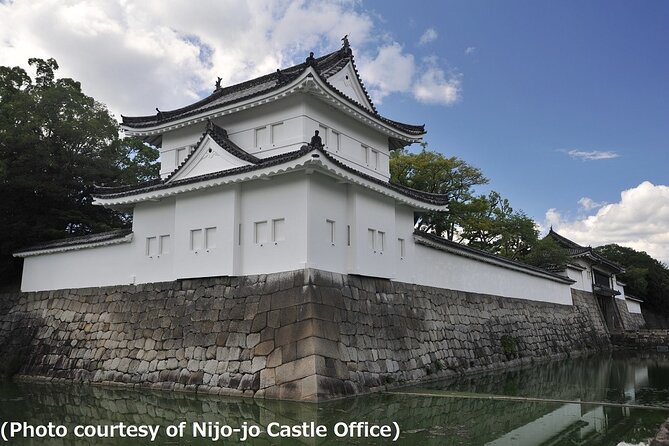
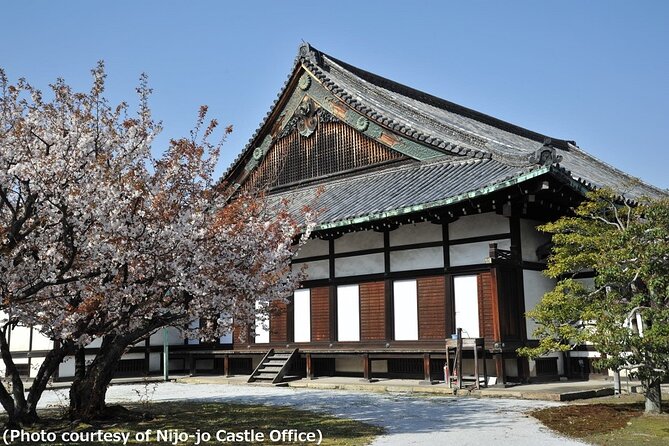
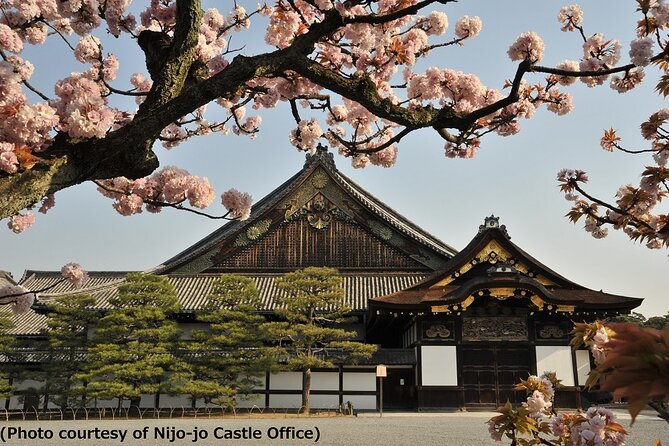
The first major Kyoto stop is Nijo Castle, a World Heritage site completed in 1626. The tour frames it as a residence tied to the Tokugawa shogun, with connections to Kyoto Imperial Palace. What you get is that classic Nijo experience: the strong exterior, then a more detailed interior story as you move room to room.
You are given about 50 minutes, with a guided walkthrough. This is enough time to understand the big picture and catch the standout features, but it is not enough if you want to read every panel slowly or stand in one room for ten extra minutes.
A common theme I see in feedback is how group size and movement affect your experience. Even when the guide explanation is good, a fast route through a large site can limit how much you can ask questions or explore details at your own pace. If you care most about architecture and layout, you will have to focus your attention on the rooms and features the guide points out.
Kinkaku-ji Golden Pavilion: A World-Famous View, a Busy Reality
Next up is Kinkaku-ji (Golden Pavilion), also listed as a World Heritage site. The tour describes the wooden architecture covered in thin layers of pure gold, surrounded by a pond. This stop is often the photo highlight of the day, and the time reflects that: about 45 minutes with admission included.
Here is the practical truth: Kinkaku-ji is popular, and when a site is packed, your time gets swallowed by crowd flow. Even with a guide, you may end up doing a lot of “see it, photograph it, move on.” That can still be satisfying because you are getting the icon plus context quickly.
If you want the best photos, look for the spots the guide guides you toward, then try a second angle during the brief lulls. And do not stress if you cannot linger at every viewpoint. This tour is built for recognition and understanding, not a long artist’s stroll.
A different sort of day in Japan:
- Osaka Food Tour: 13 Dishes at 5 Local Eateries
★ 5.0 · 2,149 reviews - Hungry Osaka Street Food Tour:15 Tastings & 3 Drinks with a Local
★ 5.0 · 1,727 reviews - Osaka: teamLab Botanical Garden Entry Ticket
★ 4.5 · 1,710 reviews - Osaka: Tea Ceremony Experience
★ 4.9 · 1,426 reviews
Kyoto Imperial Palace, and Why the Kitano Tenmangu Backup Matters
After Kinkaku-ji, the tour heads to Kyoto Imperial Palace. This was used as the Emperor’s residence until about 150 years ago, and the tour includes a guided look through the opulent chambers. You get around 40 minutes, and admission is free within the tour’s included access structure.
There is one key scheduling rule you should care about: Kyoto Imperial Palace is closed on Mondays (or the following day if Monday is a holiday), and also on days with Imperial Household Agency events. If it is closed, the tour switches to Kitano Tenmangu Shrine instead. If that closed-day case falls on the 25th, the alternative becomes Nishi Hongan-ji Temple.
This matters for your expectations. You are not just buying a ticket, you are buying a plan that can change based on government and palace calendars. If your top priority is specifically the Imperial Palace interior, check the day-of closure rules before you commit. If you are flexible, the swap can actually keep the day full and prevent you from feeling like you paid for an empty slot.
Lunch Choices: Included Means Simpler, But the Style Varies
Lunch is included only if you book the With Lunch option. The tour lists a Western-style set menu for the Western lunch option, and an Indian thali set menu for the Indian thali option (vegetarian-focused). If you choose No Lunch, you get free time to eat on your own in the Kyoto Station area.
This is one of the big value levers in the tour. When lunch is included, you avoid the mental load of finding food while switching neighborhoods. You also avoid the risk of the group meal timing, because the tour builds the rest of the day around it.
That said, lunch is where experiences can diverge. Some feedback called out lunch as less exciting than expected, even when it was served as a buffet. If you are a picky eater or you love traditional Japanese meals above all, you might prefer the No Lunch option so you can choose your own spot near Kyoto Station.
Nara First Stop: Kasuga Grand Shrine and the Deer Connection
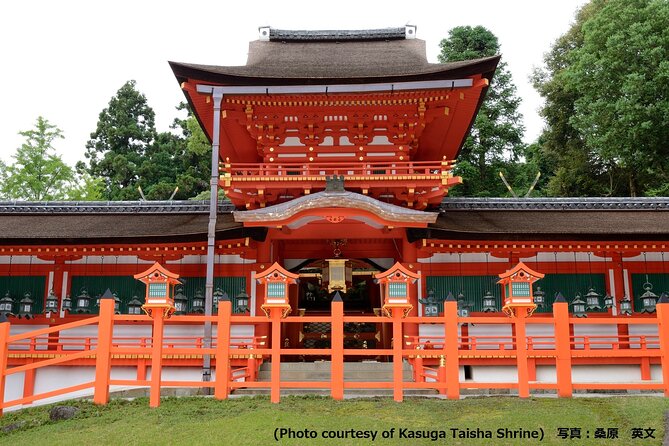
Once lunch and the Kyoto segment wrap up, you travel to Nara. The tour’s Nara focus starts at Kasuga Grand Shrine, a Nara Period shrine and a World Heritage site. The deer of Nara Park are tied into the shrine’s messenger story, which is a neat connection that makes the Nara experience feel more cohesive.
You get about 1 hour here, with admission included. The tour also mentions entering the Main Sanctuary special visit area at Kasuga Taisha. If that special area cannot be entered due to events or operations, you will visit the Kasuga Taisha Museum or Todaiji Museum instead.
This is one of those “good planning beats perfect conditions” moments. You might not get the exact sanctuary access every day, but you still keep a Nara cultural core. The museum alternative can actually help you understand what you are seeing, especially if you like background before going to the iconic temple buildings.
Todai-ji Temple: Big Scale, Included Admission, and a Must-See
Next is Todai-ji Temple, the symbol of the Nara Period and one of the world’s largest wooden structures. The tour highlights the main hall and the bronze Great Buddha, and the stop runs about 1 hour 10 minutes with admission included. This is your classic “wow scale” moment of the day.
Todai-ji is one of those places where the guide explanation helps. Even with limited time, you can understand how the site fits into Nara’s religious and historical status, then look for the main hall proportions and the Great Buddha itself. If you like photography, this is a place where even a short visit can still feel rewarding because the scale and shape are the star.
One practical note: Nara can be crowded, and Todai-ji is no exception. If you are sensitive to noise or you dislike dense groups, this is where you might feel the tour’s pacing most. Still, the time block is long enough to feel like you did not just “pass by” the site.
Nara Park and the Deer: Fun, But Follow the Rules
Between Todai-ji and the shrine timing, you also get time around Nara Park, known for the deer. One detail that comes up in feedback is the deer behavior around crackers. The deer can be friendly, but they can also get pushy if people act hesitant or throw food inconsistently.
If you buy crackers on site, keep it controlled. Hold back a little, do not wave food around, and do not treat it like a free-for-all. The deer bowing can be charming, but the safest approach is calm and consistent.
This part of the day is also where the schedule pressure shows up. You want enough time to enjoy the deer moment, but you also need to keep up with the group route. The tour structure is built around guided timing, so you may not have the freedom to wander deep into Nara Park the way you would if you were fully independent.
Price and Value: What You Pay for, and What You May Feel
At $198.15 per person for about 11 hours, the main value argument is that admission fees and transportation costs are included. You are also getting an English-speaking national government licensed guide interpreter and guided site time, plus shuttle and rail connections. For people who dislike planning, this bundled approach can feel like a fair trade.
However, price sensitivity is real here. Some past comments flagged the cost as high for the time spent per stop. Since your scheduled time at each site is relatively tight, you should treat this as a highlights tour, not a slow travel day.
My practical take: this tour is best when you value:
- having someone else manage transfers and ticket entry
- getting a guided narrative so you do not miss what matters
- seeing the “big names” even if you cannot linger
It is less ideal when you want deep exploration at just one or two temples, or when you want long quiet photo sessions without group motion.
The Real Skill Test: Can You Handle a Big Day?
A tour like this is as much about travel stamina as it is about sights. You have early departure, multiple transfers, guided walks, and then a rail ride back to Osaka. You also do not get hotel drop-off, so you will need to plan your final step from Osaka-Namba Station to your accommodation.
Audio can also be a factor. Some people noted difficulty hearing explanations, which can happen when groups move quickly and when accent differences make it harder to catch details. The tour does not state that headsets are provided, so if clear audio is a must for you, bring patience and ask the guide to repeat key points when you can.
Also, the pace means this is not perfect for very young kids or very elderly travelers who need long breaks. That does not mean it is impossible, but you should know your limits before you sign up.
Should You Book This Kyoto and Nara Day Trip?
Book it if:
- you have one day in the Osaka area and want a guided overview of Kyoto plus Nara
- you want tickets and admissions handled and a clear, timed plan
- you prefer seeing major landmarks efficiently, like Nijo Castle, Kinkaku-ji, Kasuga, and Todai-ji
Skip it or choose another style if:
- you want slow temple time, more freedom to roam, or extra museum depth
- lunch quality is a big deal for you, and you prefer choosing your own meal
- you dislike group pacing, crowded photo spots, and non-reserved train seating uncertainty
If your goal is getting your bearings fast and leaving with a strong map of what you want to revisit later, this tour can be a great value. Just go in expecting a fast, guided highlights day, not a relaxed day of unlimited wandering.
FAQ
How long is the Kyoto and Nara day trip from Osaka?
It runs for about 11 hours 15 minutes, starting at 7:15 am and returning to Osaka-Namba around 6:30 pm.
Where do I meet the tour, and where does it end?
You meet at Hotel Granvia Osaka (3-chome-1-1 Umeda, Kita Ward). The tour ends at Osaka-Namba Station, with no hotel drop-off provided.
Is lunch included?
Lunch is included only if you select the With Lunch option when booking. If you choose No Lunch, you get free time to eat on your own around Kyoto Station.
What lunch options are available?
The Western lunch option is a Western-style set menu. The Indian thali option is a vegetarian-friendly Indian thali set menu. Halal, gluten-free, and other meal requests are not available per the tour info.
How do transfers work, especially for the trains?
The tour uses public transportation, including Shinkansen travel between Shin-Osaka and Kyoto (non-reserved seats) and a return by Kintetsu rail from Nara to Osaka (also non-reserved if using public transportation). Seating is not guaranteed.
What happens if Kyoto Imperial Palace is closed?
Kyoto Imperial Palace is closed on Mondays (or the following day if Monday is a holiday) and on days with Imperial Household Agency events. If closed, the tour visits Kitano Tenmangu Shrine instead (with a specific switch to Nishi Hongan-ji Temple if the closure falls on the 25th).
What happens if Nijo Castle is closed?
Nijo Castle is closed on Tuesdays in January, July, August, and December. If it is closed, the tour visits Ryoan-ji Temple instead.
Is there a limit on group size?
The tour lists a maximum of 40 travelers.
Newly listed around Osaka
- 【Private】Sushi Making Osaka! Omakase Cooking Class in Japan!★ 5.0 · 9 reviews
- Kyoto & Nara & Uji: Full Day Sightseeing Tour from Osaka or Kyoto★ 4.5 · 39 reviews
- Kyoto Full Day Sightseeing Tour from Osaka or Kyoto★ 4.0 · 29 reviews
- Umeda Sky Building KUCHU-TEIEN OBSERVATORY★ 5.0 · 8 reviews
- Amanohashidate & Ine Funaya Kyoto coast day trip from Osaka/Kyoto★ 4.5 · 17 reviews
- Kyoto One Day Sightseeing Tour from Osaka or Kyoto★ 4.5 · 8 reviews
- Kitchen of Nation Food Tour★ 5.0 · 7 reviews
- Osaka 2-Hour Genuine Kendo / Samurai Experience In Japan★ 5.0 · 65 reviews
1-Day Tours, compared.
Mt Fuji and Hakone 1-Day Bus Tour Return by Bullet Train
Read our review →
Mt Fuji & Hakone Cruise, Drum Show Bullet Train 1 Day from Tokyo
Read our review →
Peaceful Hiroshima & Miyajima UNESCO 1 Day Bus Tour
Read our review →
Fushimi Inari, Kinkakuji, Bamboo Grove 1 Day Bus Tour
Read our review →

Browse the lists this tour appears in