Review · FULL-DAY
Kyoto & Nara & Uji: Full Day Sightseeing Tour from Osaka or Kyoto
One bus, three iconic regions of Japan. This full-day route connects Nara Park with major temples and ends with the red torii climb at Senbon Torii, so you get a true highlights flow without needing to plan every transfer. I like that it is built around easy, recognizable landmarks, but the schedule is tight and you will need to keep moving between stops.
I also like the value mix: air-conditioned transportation plus a guide who helps you stay oriented across Kyoto, Nara, and Uji. In the tour feedback I saw, guides like Amanda and John were praised for clear explanations and practical tips, including how to handle Nara deer safely.
One possible consideration is the human factor and pacing. The day runs with a fairly large group (up to 45), and some guides have limited English or switch into a fast, stop-by-stop briefing style, which can make the experience feel rushed if you want to linger.
In This Review
- Key things to know before you go
- Kyoto, Nara and Uji in One 9-Hour Day That Actually Makes Sense
- Nara Park (50 Minutes) and Todai-ji (30 Minutes): Deer First, Then the Big Buddha
- Uji Park (30 Minutes) and the Uji River (20 Minutes): A Reset Before Byōdo-in
- Byōdo-in (Phoenix Hall) and the 10 Yen Coin Icon: A World Heritage Moment That Needs Your Time
- Byōdo-in Omotesando (40 Minutes) for Matcha Shopping, Then Senbon Torii (1 Hour 20 Minutes)
- Group Size, Bus Comfort, and Why Some Days Feel Rushed
- Price and Ticket Reality: Is $67 Good Value?
- How to Have a Smooth Day: The Practical Checklist That Matters
- Should You Book This Kyoto, Nara and Uji Full Day Tour?
- FAQ
- How long is the Kyoto, Nara and Uji full day tour?
- Can I start from Osaka or Kyoto?
- What’s included in the price?
- Which entrance fees are not included?
- Is lunch provided?
- Is free cancellation available?
Key things to know before you go
- Two temple entrances cost extra, Todai-ji (¥800) and Byōdo-in (¥700)
- Short stop times mean you should focus on the main sights, not wandering
- Nara deer are the star, with approach behavior that calls for basic caution
- Uji fits matcha lovers well, especially the Byōdo-in Omotesando tea street
- Senbon Torii is a real walk, plan comfortable shoes and a steady pace
- Group size can affect comfort, especially on the bus
Kyoto, Nara and Uji in One 9-Hour Day That Actually Makes Sense
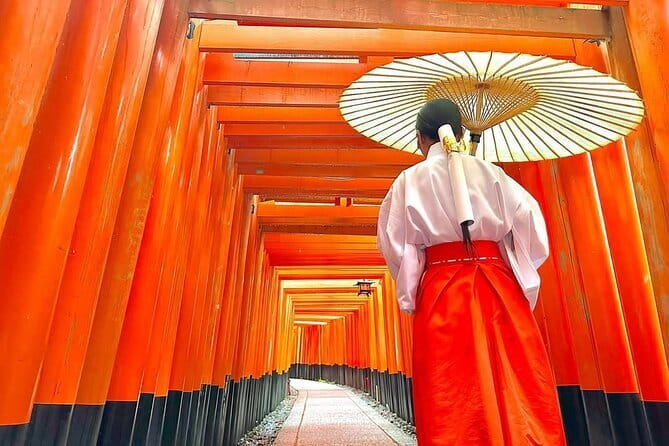
This tour is made for one big goal: see three of Kansai’s most famous cultural stops in a single day, starting in Osaka or Kyoto. The itinerary is built around a simple idea. Nara brings wildlife and one of Japan’s most famous temple complexes. Uji adds the calmer, tea-town feel and the Byōdo-in World Heritage Site. Then Kyoto caps the day with the intense visual rhythm of thousands of red torii at Senbon Torii.
The “why it works” part for you is efficiency. Instead of spending your day fighting routes and transfer timing, you are getting door-to-landmark style access with guidance at each stop window. It is also a good match for trip planning in a first-time Japan trip, where you want your anchors first and then decide what to revisit later.
The trade-off is also clear: this is not a slow, museum-style day. Each location is timed, so your best results come from choosing what matters most to you. If you want to meander through every side street in Uji or stop for lots of photos along the torii trail, you may feel the squeeze.
A few more Osaka days to weigh up
- Osaka Go Karting Tour with Funny Costume
★ 5.0 · 2,658 reviews - Osaka Castle: Museum and Tower Entry Ticket
★ 4.5 · 2,380 reviews - Osaka: Shinsekai Food Tour with 13-15 Dishes at 5 Eateries
★ 4.8 · 2,204 reviews
Nara Park (50 Minutes) and Todai-ji (30 Minutes): Deer First, Then the Big Buddha
Your first real hit of Nara is Nara Park, one of the oldest and most famous parks in Japan. The main reason you will feel the excitement quickly is the deer. They roam freely and often approach people in that not-quite-pushy, curious way that makes the park feel like a living postcard. It is fun, but it also means you should move thoughtfully, keep your eyes on where animals are, and avoid sudden swings around them.
You get about 50 minutes here and it is enough time to do the essentials: get photos, walk the main park area, and head to Todai-ji without feeling like you need to sprint. The park is also where you get oriented for the rest of the day. Nara feels open, and then Todai-ji feels monumental.
Then comes Todai-ji Temple, one of Nara’s signature temples and a UNESCO World Heritage Site as part of the Historic Monuments of Ancient Nara. You only get about 30 minutes, and the entrance fee is not included (¥800). The Great Buddha and the temple scale are the big payoff, but the short window means you will want to go straight to the main sights once you arrive.
A practical caution: if you are not at the right meeting point or you drift too far away from the group’s plan, you can lose time you needed for the best views. One report highlighted that arriving at the main entrance mattered, so I would treat the start and return instructions as part of the itinerary, not as optional details.
Uji Park (30 Minutes) and the Uji River (20 Minutes): A Reset Before Byōdo-in
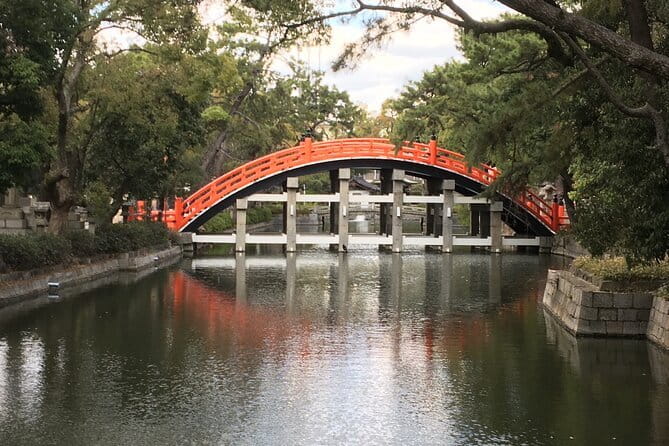
After Nara’s open park energy, Uji shifts the mood. You spend 30 minutes at Uji Park, a river-linked island park area connected by bridges, and then you get about 20 minutes along the Uji River**. That river break is not just scenery. It is a useful reset after crowds and animal encounters, and it helps your brain catch up before you hit another major temple.
The Uji River segment is also where the day starts to feel more “tea town” than “major sightseeing checklist.” The river itself is tied to Lake Biwa as its source, and it has been an important waterway historically. Even if you are not studying dates, you can feel the slower rhythm. People stroll, take photos, and treat the area more like a walk than a rush.
For many visitors, this part of the day is the easiest to enjoy because the expectations are lower. You are not trying to time a long climb or locate a single building. You are soaking in the Uji atmosphere in a short, manageable block.
Then you move on to the real reason Uji is on a lot of Japan itineraries: Byōdo-in Temple.
Byōdo-in (Phoenix Hall) and the 10 Yen Coin Icon: A World Heritage Moment That Needs Your Time
Byōdo-in Temple is a UNESCO World Heritage Site, and the star structure is the Phoenix Hall. The tour highlights a fun detail here, the Phoenix Hall is featured on the obverse side of the 10 yen coin, which makes the site feel familiar even before you arrive. You get about 30 minutes, and the entrance fee is not included (¥700).
In plain terms, this is where the tour earns its cultural credibility. It is not just “another temple stop.” The Phoenix Hall is instantly recognizable once you see it, and the temple complex is especially satisfying if you like structured, iconic architecture more than endless street scenes.
You may not get time for deep, slow wandering inside every corner, because the schedule moves on. But the window is realistic. Thirty minutes is enough to see the main hall, take a few photos, and walk the key grounds without feeling like you are being herded.
A different sort of day in Japan:
- Osaka Food Tour: 13 Dishes at 5 Local Eateries
★ 5.0 · 2,149 reviews - Hungry Osaka Street Food Tour:15 Tastings & 3 Drinks with a Local
★ 5.0 · 1,727 reviews - Osaka: teamLab Botanical Garden Entry Ticket
★ 4.5 · 1,710 reviews - Osaka: Tea Ceremony Experience
★ 4.9 · 1,426 reviews
Byōdo-in Omotesando (40 Minutes) for Matcha Shopping, Then Senbon Torii (1 Hour 20 Minutes)
Once you are done with Byōdo-in, you step into Byōdo-in Omotesando, a cobblestone-feeling shopping street known for matcha and tea products. You get about 40 minutes, and that is a solid chunk for doing the best kind of shopping: browse with no pressure, then pick one or two items you actually want to eat or carry home.
This is a great stop if matcha is part of your travel mission. You get the tea-town feel without needing to plan a separate detour. Even if you are not a tea person, it is a good time to recharge, use the restrooms, and snack so you do not hit Kyoto’s final temple run on empty.
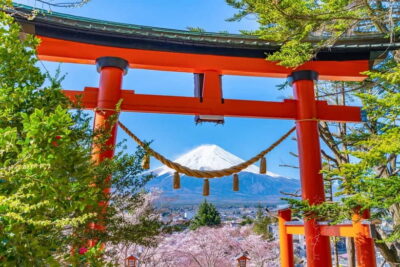
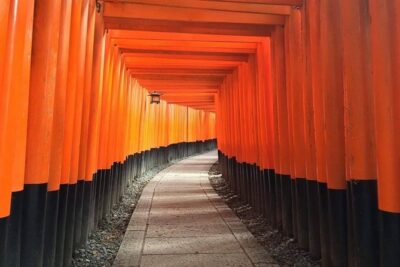
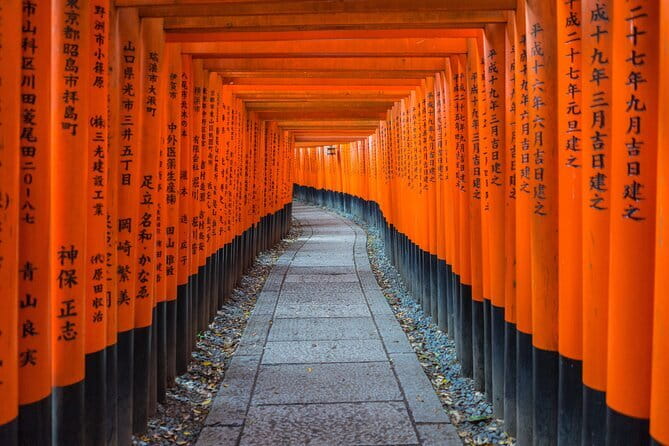
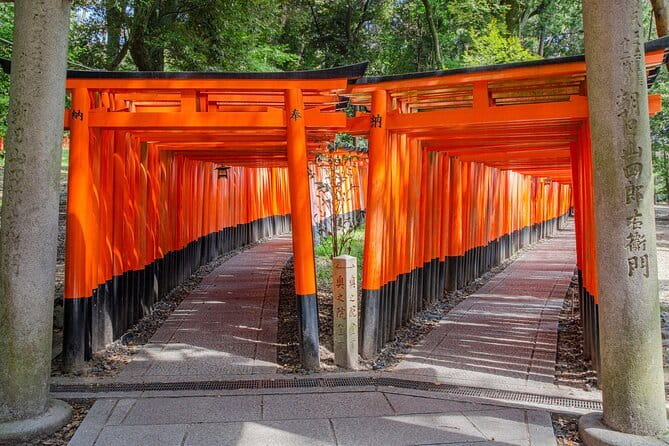
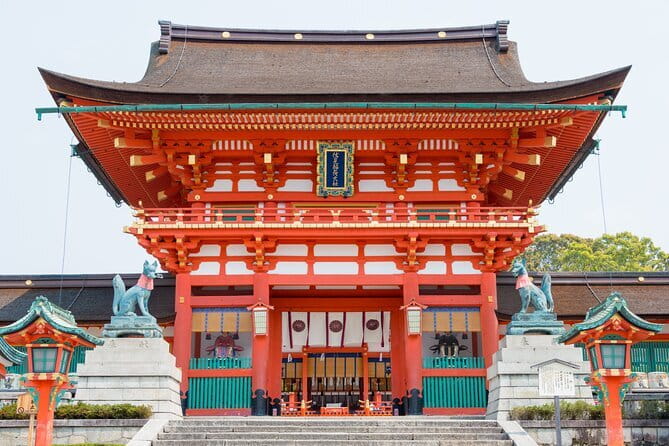
Then the day closes with Senbon Torii, the famous thousand torii gates associated with Fushimi Inari Taisha. You get 1 hour 20 minutes here, and it is free to enter. The experience is visual and physical at the same time. Thousands of vermilion red gates pull you forward, and the longer you choose to go, the more the trail becomes a walking path through repeated icons rather than a single view.
This is also the stop where I would be most honest with your expectations. One hour 20 minutes can feel long if you treat it like a stroll. It can feel short if you want to climb far into the upper shrine areas and stop for photos every few steps. Shoes matter, water helps, and it is smart to decide early how far up you want to go.
Group Size, Bus Comfort, and Why Some Days Feel Rushed
This tour caps at 45 travelers, and that matters more than you might think. On a large group day, the schedule stays tight because everyone boards and returns together. You will get time at each stop, but you will not get long detours or flexible “stay as long as you want” wandering.
The bus ride is included with air-conditioned transportation, and comfort usually depends on your seat position. Some reports mention tight seating and the practical issue of bus windows for viewing. If you have strong preferences, it can help to request seating where you can actually see outside.
Two other comfort points to plan for:
- You may not get a dedicated bathroom break on the bus. So if you are sensitive about timing, drink water earlier, not right before the last legs.
- The day can feel fast because you are switching environments often, deer park to big temple to river to tea street to torii gates.
One more human factor: guide communication. Many guides are praised for clear English and organization, and some guides use tools like group messaging to keep meeting points straight. But language ability varies by guide, and in some cases the day turns into a quick briefing plus self-time. If you rely on detailed explanations, you should choose this tour with that in mind.
Price and Ticket Reality: Is $67 Good Value?
At $67 per person, this tour is priced like a practical transport-and-guide day. What you get included is air-conditioned transportation and a guide. What costs extra are the two biggest temple admissions: Byōdo-in (¥700) and Todai-ji (¥800). Lunch is also not included, though you are given time for independent dining.
To judge value for you, think about what you are outsourcing:
- Getting to Nara and Uji from Osaka or Kyoto in one coordinated plan
- Handling arrival timing so you spend time at sights, not on transfers
- Having someone point you toward the right stops and meeting points
If you would otherwise spend hours piecing together trains, timing, and walking routes, the price starts to look very reasonable. If you already know how you like to travel, and you want control over timing, you might question whether the short stop windows are worth it. But if you want a single-day sampler of Nara, Uji, and Kyoto, this is in the “reasonable value” category.
The key is to budget for the paid entrances and a simple meal plan. Also keep in mind that the itinerary includes a lot of “see the main thing” time, so bring your patience and pick your priorities.
How to Have a Smooth Day: The Practical Checklist That Matters
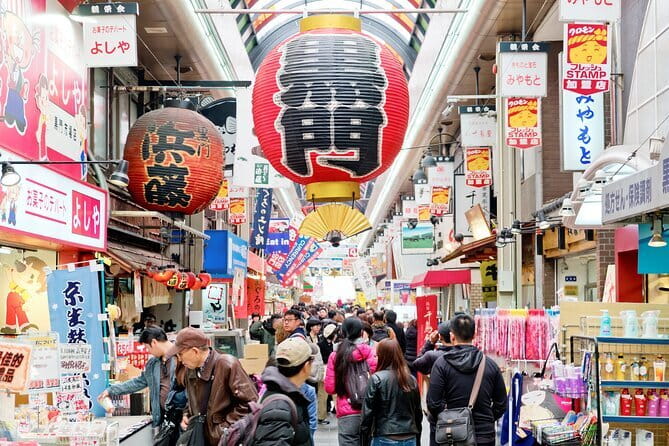
Here is how I would set you up for an easier experience on this kind of full-day route.
1) Wear walking shoes. You have multiple temple complexes plus a long torii-gate walk. Even if you do not climb far on Senbon Torii, the repeated stair-like terrain can add up.
2) Treat return times like appointments. When a group reconvenes, you lose momentum fast if people drift. If you want photos, take them quickly or move to an area where you can grab shots without blocking foot traffic.
3) Be smart with deer safety. Deer are part of the fun, but they act like animals, not pets. Give them space, keep your hands to yourself, and follow whatever basic deer guidance your guide provides.
4) Plan for temple ticket timing. Since Byōdo-in and Todai-ji require separate admission fees, you should expect that you will need cash and a little time buffer at each entry.
5) Decide your “must-do” order. For many people it is Todai-ji for the big Buddha, Byōdo-in for the Phoenix Hall, and Senbon Torii for the red gate run. If matcha shopping is a priority, treat it as a real block and do not let it slide at the end.
6) If you have luggage or a stroller, flag it when booking. The tour asks you to indicate this, which hints that logistics and vehicle assignment can matter.
Should You Book This Kyoto, Nara and Uji Full Day Tour?
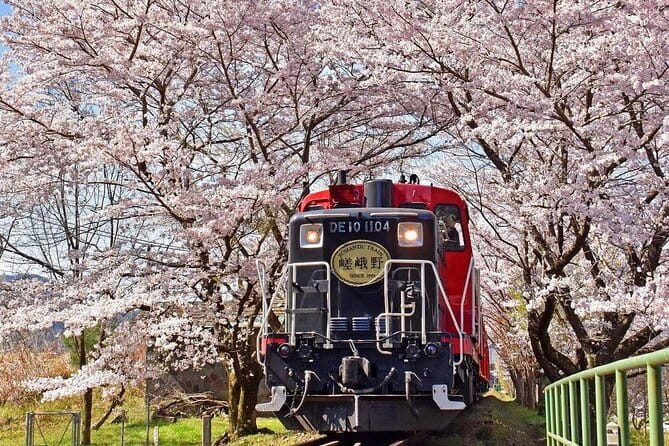
Book it if you want a first-time friendly, highlights-heavy day linking Nara deer and Todai-ji, Uji’s tea streets and Byōdo-in’s Phoenix Hall, and the torii spectacle at Senbon Torii. It is also a good call if you value the convenience of guided transport from Osaka or Kyoto and you are okay with short time windows at each site.
Skip it or choose carefully if you hate tight pacing, want lots of free roaming time in each area, or you need very detailed explanations at every stop. The guide language level and the group environment can shape your day, especially on a max-size bus.
If you’re traveling with family, this can be a fun structure too because it mixes wildlife, iconic temples, and snackable tea-town time, as long as everyone is prepared to keep moving.
FAQ
How long is the Kyoto, Nara and Uji full day tour?
The tour runs for about 9 hours.
Can I start from Osaka or Kyoto?
Yes. The tour departs from either Osaka or Kyoto.
What’s included in the price?
The price includes air-conditioned transportation and a guide. You also receive a mobile ticket.
Which entrance fees are not included?
Byōdo-in Temple costs ¥700 per person and Todai-ji Temple costs ¥800 per person. Lunch is also not included.
Is lunch provided?
No. Lunch is not included, but the schedule allows time for independent dining.
Is free cancellation available?
Yes. You can cancel up to 24 hours in advance for a full refund.
Newly listed around Osaka
- Kyoto and Nara Day Trip from Osaka★ 4.0 · 175 reviews
- 【Private】Sushi Making Osaka! Omakase Cooking Class in Japan!★ 5.0 · 9 reviews
- Kyoto Full Day Sightseeing Tour from Osaka or Kyoto★ 4.0 · 29 reviews
- Umeda Sky Building KUCHU-TEIEN OBSERVATORY★ 5.0 · 8 reviews
- Amanohashidate & Ine Funaya Kyoto coast day trip from Osaka/Kyoto★ 4.5 · 17 reviews
- Kyoto One Day Sightseeing Tour from Osaka or Kyoto★ 4.5 · 8 reviews
- Kitchen of Nation Food Tour★ 5.0 · 7 reviews
- Osaka 2-Hour Genuine Kendo / Samurai Experience In Japan★ 5.0 · 65 reviews
Full-Day, compared.

Mount Fuji Full-Day Private Tour from Tokyo (Customizable)
Read our review →
Hiroshima / Miyajima Full-day Private Tour with Government Licensed Guide
Read our review →

Full-Day Guided Bus Tour to Top Highlights & Tickets
Read our review →