
Review · COOKING CLASSES IN OSAKA
Osaka Okonomiyaki Cooking Experience!
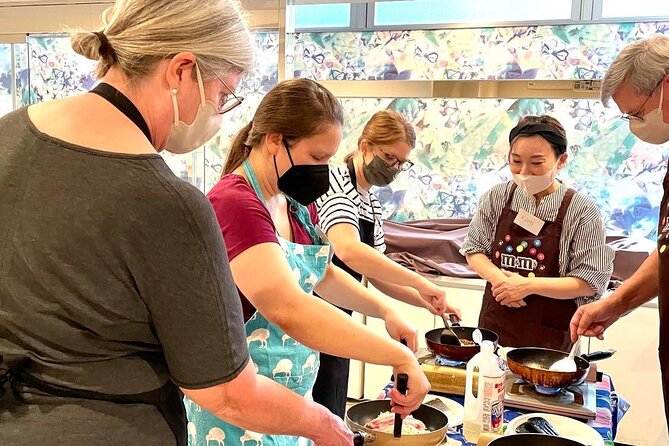
Okonomiyaki tastes better when you cook it. This small-group class takes place in a local Osaka hostel near Nagahoribashi, where you learn to make Osaka-style okonomiyaki and miso soup, with city locals joining in for the food and the conversation. It is a simple plan, but it feels like a warm detour from the usual restaurant routine.
I love the hands-on teaching. You make the dishes yourself, and the host team walks you through the process at a pace that lets you actually remember it later. I also love the local interaction angle, including Keiko and her mom (Sachiko), plus Osaka friends invited to cook and chat with your group.
One possible drawback to note is dietary planning. The host can accommodate vegan, vegetarian, and halal requests, but ingredients may include refined sugar, and there is a possibility of cross-contamination because it is a group class.
In This Review
- Key details at a glance
- Where You’ll Be Cooking: A Hostel Kitchen Near Nagahoribashi
- What You’ll Make: Osaka-Style Okonomiyaki and Miso Soup
- The Class Flow: From Instructions to Your Own Osaka Plate
- Meeting Keiko and Sachiko: Why the Conversation Part Matters
- Toppings, Options, and How Dietary Requests Work
- Price and Value: Is $49.55 Worth It?
- Location and Timing: The Easiest Way to Fit This Into Osaka
- Who This Is Best For (and Who Should Skip It)
- What to Watch For on the Day (Simple Tips)
- Should You Book This Osaka Okonomiyaki Cooking Class?
- FAQ
- What is the meeting point for this Osaka okonomiyaki class?
- What time does the class start, and how long does it last?
- How many people are in the group?
- What dishes do you learn to cook?
- Can the host accommodate vegan, vegetarian, or halal diets?
- Are there any notes about ingredients or cross-contamination?
- Is the class offered only in the afternoon?
- Is there a mobile ticket, and do I get confirmation?
- What is the cancellation policy?
Key details at a glance
- Max 6 people for a small-group feel and more hands-on attention
- Cook two classics: Osaka-style okonomiyaki plus miso soup
- Meet locals in a hostel setting with communication encouraged during the meal
- Dietary requests are welcome, including vegan, vegetarian, and halal (with notes about refined sugar and cross-contamination)
- Extras may happen, like mochi dessert and take-home written cooking info
- Time flexibility: it normally starts at 4:00 pm, with some nights offered depending on the day
Where You’ll Be Cooking: A Hostel Kitchen Near Nagahoribashi
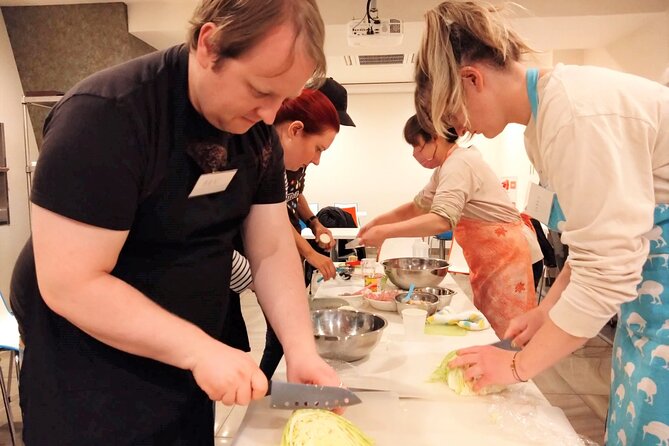
This is not a fancy studio with chef theatrics. It’s an intimate class in a hostel setting in Osaka, meeting near Nagahoribashi subway station, specifically at 1-chōme-1-3 Higashishinsaibashi, Chuo Ward, Osaka. The meeting point matters because getting started is easy, especially if you are already exploring Namba, Shinsaibashi, or the wider Chuo Ward area.
The schedule is built around a relaxed afternoon start, 4:00 pm, and the class runs about 2 hours. You end back where you started, so you do not have to figure out a second transportation plan right after eating.
The biggest practical upside here is group size. With a maximum of 6 travelers, you are not stuck waiting your turn or watching from a distance. That is one reason people rate this experience so highly: you get personal help while you’re cooking, not after the fact.
More Cooking Classes in Osaka
- Osaka: Ramen and Gyoza Cooking Class in Dotonbori
★ 5.0 · 378 reviews - Osaka Cooking Class: Okonomiyaki &Japanese cuisines experience
★ 5.0 · 261 reviews - Ramen and Gyoza Cooking Class in Osaka
★ 5.0 · 202 reviews
What You’ll Make: Osaka-Style Okonomiyaki and Miso Soup
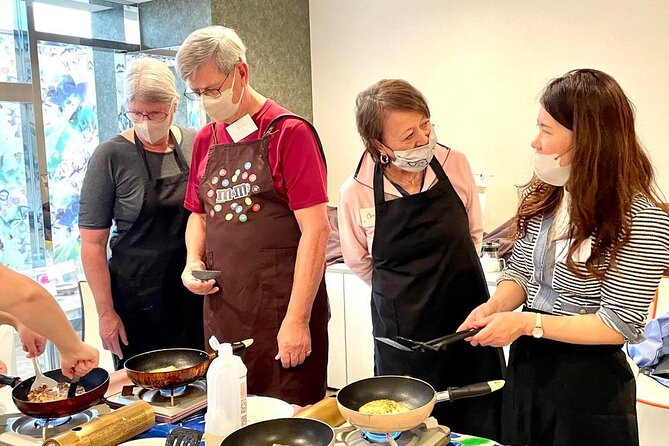
Okonomiyaki is often described as Osaka soul food, and you get to experience that meaning firsthand because you cook it yourself. You will make miso soup and learn the simplest way to cook okonomiyaki, the savory pancake-style dish Osaka is known for.
You are not just learning ingredients. You learn the workflow: mix, cook, and assemble in the order that makes sense for a successful pancake. And because it is hands-on, you also learn what to look for while it cooks, like the texture and doneness cues that tell you when to flip, adjust, or finish.
One extra layer that can deepen the whole experience is that the host covers history and regional differences, including how Osaka-style okonomiyaki compares with other styles such as Hiroshima. Even if you are not the type who cares about food trivia, those comparisons help you understand why toppings and textures vary, and it makes the dish feel more like culture than just food.
The Class Flow: From Instructions to Your Own Osaka Plate
Plan for a guided, conversation-friendly cooking session where you are doing the work. The host team teaches the method in a simple way, and your group cooks together. Because the class is small, you can ask questions while you are working, and you do not feel rushed.
A typical flow looks like this:
- You meet at the hostel and get introduced to the plan and basics.
- You cook miso soup alongside the okonomiyaki prep.
- You move into the okonomiyaki steps, mixing and shaping what you will cook.
- You cook your okonomiyaki and sit down together to eat.
- Depending on the day, you may get extra sweets like mochi, plus take-home written info.
In several past experiences, people also describe receiving written information after the class, so you can recreate the steps later without relying on memory. That is a big value point for me, because the best cooking class is the one you can actually repeat at home.
Meeting Keiko and Sachiko: Why the Conversation Part Matters
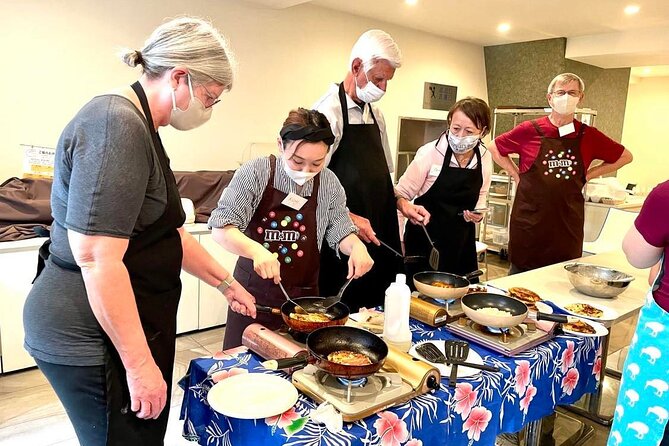
Food is only half the story here. The other half is the social side, and it’s clearly intentional.
Keiko is the main host, and her mom, Sachiko, also helps out. In many descriptions of the class, participants highlight how patient, warm, and engaging they are, and how much time gets spent talking, not just cooking. Keiko also invites Osaka friends, so you’re not only mixing with other visitors.
That can be surprisingly useful if you are trying to understand daily life in Osaka beyond what you see on a sightseeing checklist. Conversations can cover ingredients people use at home, how the dish fits family routines, and how cooking shows up in everyday Japanese culture.
There is also a language-practice angle. Some participants note that the setting feels like a place for language learning, including a comfortable environment to practice Japanese while you cook. If you like low-pressure interaction, this is the kind of class that naturally creates it.
A few more Osaka days to weigh up
- Osaka Sake Tasting with Takoyaki Cooking
★ 5.0 · 156 reviews - Osaka Sake Tasting & Takoyaki Cooking Experience
★ 5.0 · 149 reviews - Cooking Ramen&Gyoza/KatsuCurry/Bento/Okonomiyaki+Store Tour@Osaka
★ 5.0 · 138 reviews - Three Types of Ramen Cooking Class in Osaka
★ 5.0 · 119 reviews
Toppings, Options, and How Dietary Requests Work
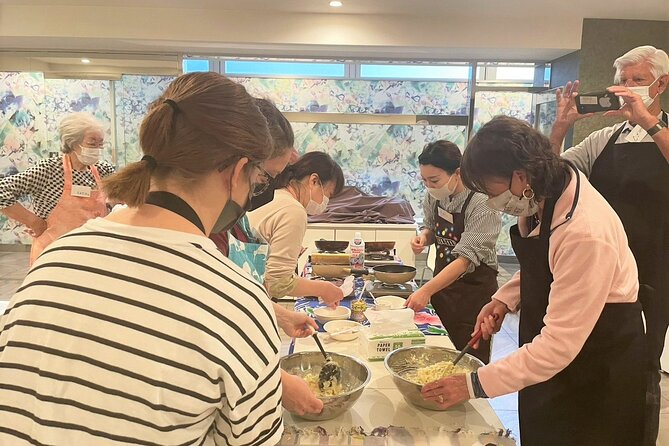
This is one of the most practical parts of the experience for real travelers, because people’s diets are different.
The host says they can accommodate requests like vegan, vegetarian, and halal. That means you can usually plan ahead for your needs rather than crossing your fingers and hoping there is something safe to eat.
But there are two important notes you should treat seriously:
- Ingredients may contain refined sugar.
- There is a possibility of cross-contamination due to group lessons.
So, if you have a severe allergy or strict dietary rule, you should message the host with details before booking and ask how they handle your specific case. The class is designed to help, but group cooking always creates shared surfaces and shared handling.
My advice: be clear early. Use the request option during booking (and follow up if that is possible), and ask questions about sugar and cross-contact. The host has shown flexibility in past classes, but you still want to reduce uncertainty.
Price and Value: Is $49.55 Worth It?
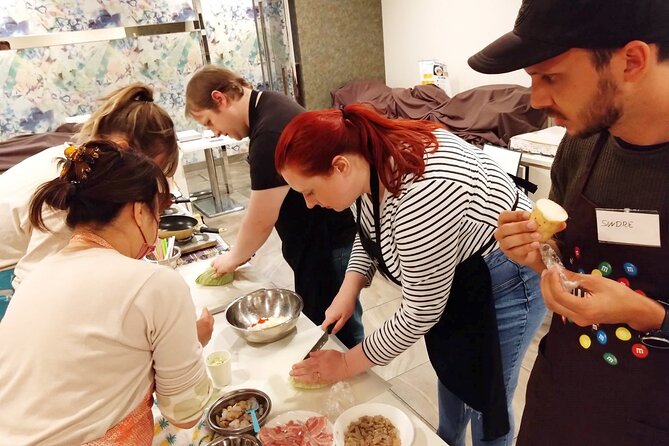
At $49.55 per person, this is not a bargain cooking workshop. It is also not a luxury experience. What makes the pricing feel fair is what you actually get for those two hours.
You’re paying for:
- a small max 6 group setting,
- hands-on instruction for both okonomiyaki and miso soup,
- the ingredients and tools needed to cook together,
- local conversation because Osaka friends are invited,
- and, in many cases, little extras like a souvenir bag and take-home written info.
When you compare it to the cost of eating at multiple restaurants plus paying for a cooking class where you only watch, the math works better. You are leaving with a meal you made, plus a method you can repeat.
Also, the experience is typically booked in advance, averaging 45 days ahead. That is usually a sign it fills up during peak periods. If you have firm plans for Osaka, lock in your spot early rather than assuming last-minute availability.
Location and Timing: The Easiest Way to Fit This Into Osaka
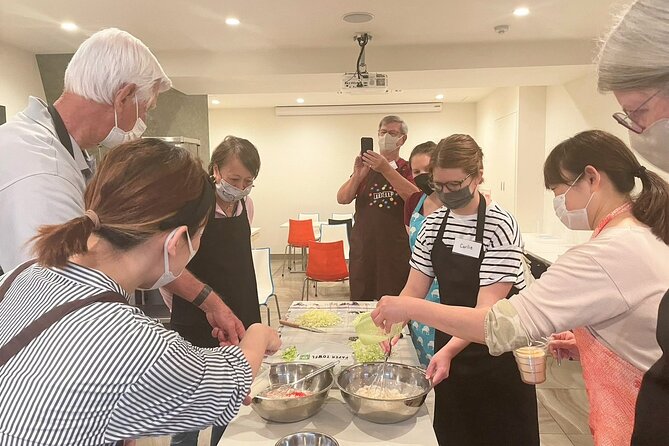
The class starts at 4:00 pm and lasts about 2 hours, and it ends back at the meeting point. That makes it easy to build into your day without needing a complex travel plan afterward.
Because it’s near Nagahoribashi station, you can often reach it with a short subway hop from central areas. If you want to keep your day simple, this fits well as an early dinner replacement. You eat what you cook, so you are not doubling up on dinner plans.
If you are trying to balance crowds and timing, 4:00 pm is a nice middle ground. It avoids both late-night fatigue and the early rush where you feel like you are sprinting from one place to another.
Who This Is Best For (and Who Should Skip It)
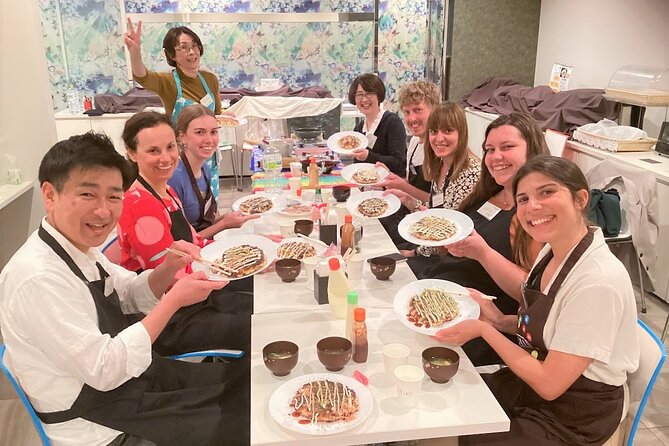
This class is a strong match if you want:
- a small-group Osaka experience where you cook, eat, and talk,
- a practical method for making okonomiyaki at home, not just a one-time tasting,
- cultural exchange with locals, including communication with Keiko and Sachiko,
- comfort-food style cooking in a hostel environment rather than a tourist restaurant scene,
- and dietary flexibility like vegan, vegetarian, or halal (with the notes about sugar and cross-contamination).
It may not be the best fit if:
- you want a silent, strictly observation-only experience,
- you have a very strict allergy situation and cannot handle any cross-contact risk,
- or you simply do not like hands-on cooking. This is active, not passive.
I also think it works well for pairs and small groups, and it has even been described as a family-friendly activity including children around primary-school age. Still, bring patience, because cooking takes time, and the setting is social.
What to Watch For on the Day (Simple Tips)
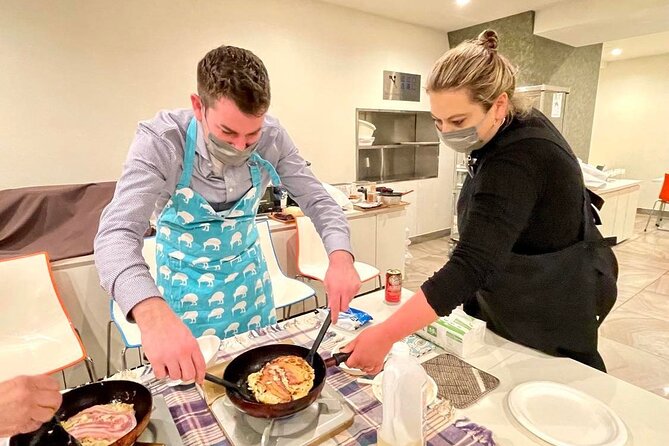
You will have a better time if you go in ready to participate. The host team teaches the simplest method, but you still need to focus when it’s your turn to mix and cook.
A few practical tips:
- Ask questions as you go. The small group size makes it easy.
- If you have dietary needs, double-check them before you start cooking and ask how they manage your specific request.
- Come with an appetite for conversation. The meal is part of the experience, and eating together is usually when the best talk happens.
- If you want something memorable, take a photo of your okonomiyaki before you dig in. In past classes, people share photos of their first pancake attempts with pride.
Should You Book This Osaka Okonomiyaki Cooking Class?
I’d book it if you want a genuine Osaka experience that is more than just eating. This is one of those classes where you can actually walk away knowing how to cook the dish, plus you get local conversation baked into the evening.
If your top priority is a quiet, no-interaction activity, choose something else. And if dietary safety is complicated, message the host early because refined sugar ingredients are possible and cross-contamination risk exists in a group kitchen.
For most people, though, this hits a sweet spot: small group, hands-on cooking, local warmth, and a comfort-food meal you’ll remember. If you are heading to Osaka, especially for food, I think it is a smart use of your time.
FAQ
What is the meeting point for this Osaka okonomiyaki class?
The meeting point is 1-chōme-1-3 Higashishinsaibashi, Chuo Ward, Osaka, 542-0083, Japan. The class ends back at the meeting point.
What time does the class start, and how long does it last?
The start time is 4:00 pm, and the duration is approximately 2 hours.
How many people are in the group?
This activity has a maximum of 6 travelers, which keeps it small-group and personal.
What dishes do you learn to cook?
You learn to prepare miso soup and okonomiyaki (Osaka-style savory pancakes).
Can the host accommodate vegan, vegetarian, or halal diets?
Yes. The host says they can accommodate requests such as vegan, vegetarian, and halal.
Are there any notes about ingredients or cross-contamination?
Yes. The host notes that ingredients may contain refined sugar, and there is a possibility of cross-contamination due to group lessons.
Is the class offered only in the afternoon?
No. The information says there is also the possibility of a night class depending on the day.
Is there a mobile ticket, and do I get confirmation?
Yes. This experience uses a mobile ticket, and you receive confirmation at the time of booking.
What is the cancellation policy?
You can cancel for free up to 24 hours in advance for a full refund. If you cancel less than 24 hours before the experience starts, the amount paid will not be refunded.
Newly listed around Osaka
- 2 Hours of Bar Hopping in Osaka Style★ 5.0 · 22 reviews
- Same-Day Osaka Food Crawl with local food and Hidden gems★ 5.0 · 114 reviews
- Osaka Authentic Local Izakaya Hopping Experience: Food & Drinks★ 5.0 · 99 reviews
- Well-balanced BENTO (lunch box) Cooking Class★ 5.0 · 35 reviews
- Anime Cosplay Photshoot-50 Digital Photos Provided★ 5.0 · 8 reviews
- OSAKA:Feel the Power! Learn Taiko Drum from Professionals★ 5.0 · 28 reviews
- Three Types of Ramen Cooking Class in Osaka★ 5.0 · 119 reviews
- Urban Canvas: Osaka Street Art Bike Tour★ 5.0 · 47 reviews
Cooking Classes in Osaka, compared.
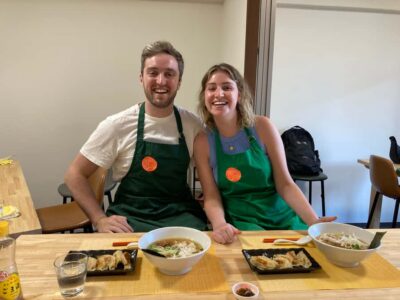
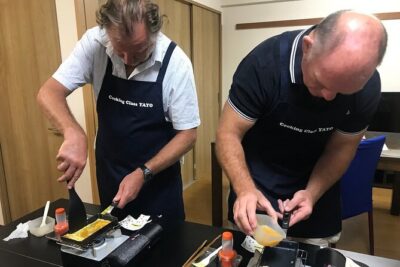
Osaka Cooking Class: Okonomiyaki &Japanese cuisines experience
Read our review →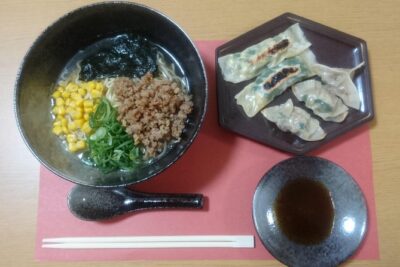
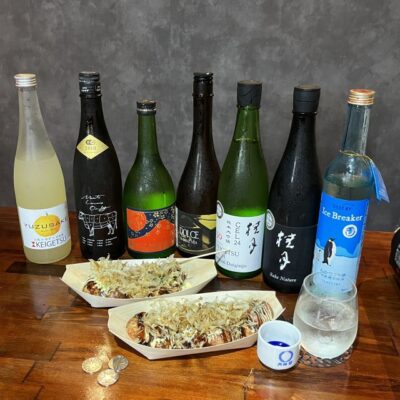
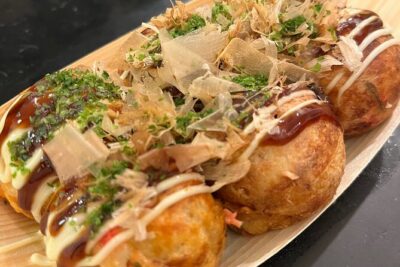
Osaka Sake Tasting & Takoyaki Cooking Experience
Read our review →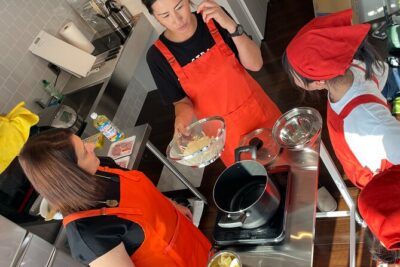
Cooking Ramen&Gyoza/KatsuCurry/Bento/Okonomiyaki+Store Tour@Osaka
Read our review →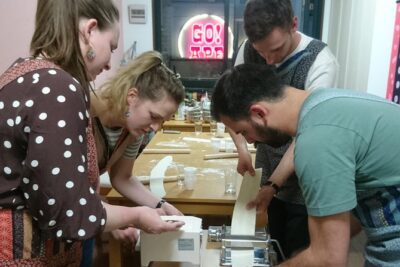
Eat Osaka: Street Food Cooking in an Authentic Kitchen!
Read our review →Browse the lists this tour appears in