
Review · FOOD TOURS IN OSAKA
Osaka: Traditional Mochi Pounding Experience with Tasting
Pounding mochi turns Japan food into a workout. In this Osaka class, you use traditional tools to press steamed glutinous rice into mochi, then you eat it right away with classic toppings and tea.
What I like most is how hands-on it feels, even with a small group of up to 4 people. I also like that the session includes a short, practical explanation of mochi and its meaning, led in English or Chinese by instructors such as Seina, Taka, Misaki, Moe, Grace, Pari, and Aiko.
One thing to consider is stamina and mess. Mochi dough is sticky, and you will be doing real pounding, so comfy clothes help, and you might want to accept a few floury fingerprints.
In This Review
- Quick, useful takeaways
- Where the mochi pounding happens near Dotonbori’s river
- The 10-minute mochi background that actually fits into your day
- Steaming rice, pounding with tradition, and how not to panic
- Shaping and rolling your mochi, with help from Seina and crew
- Toppings and tea: your mochi tasting like a proper dessert sampler
- Adult vs family experience: same mochi, different pacing
- Price and value: why $31 can feel like a steal
- Practical tips to enjoy mochi pounding without stress
- Should you book this Osaka mochi pounding experience?
- FAQ
- How long is the mochi pounding experience in Osaka?
- How many people are in the group?
- What is included in the price?
- What does it cost and what is not included?
- Which languages do the instructors speak?
- Are there different options for adults and families?
Quick, useful takeaways
- Small group of 4 means you actually get to pound and shape the mochi, not just watch.
- 10-minute mochi intro gives the background without eating up your time making dessert.
- Traditional mortar-and-pestle pounding is the star activity, with guidance from instructors like Seina and Taka.
- Multiple toppings plus tea turns your mochi into a mini dessert flight (kinako, nori, sweet red bean paste, sweet soy sauce).
- Family-friendly options are set up for both adults (13+) and all ages, so different groups can enjoy it.
- Photo-friendly hosts help if you are solo, since they offer to take pictures and videos.
Where the mochi pounding happens near Dotonbori’s river
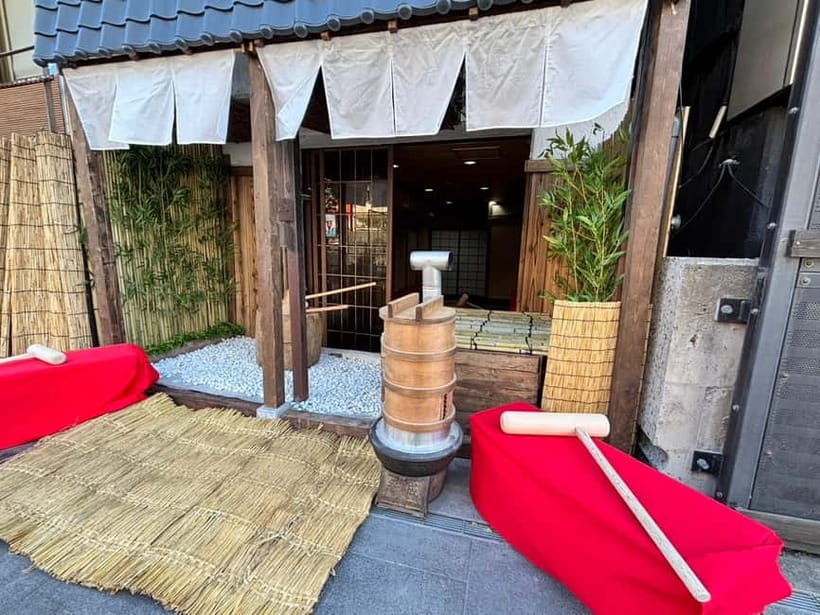
This experience is in Osaka, on Honshu, and it runs as a small, hands-on workshop rather than a big show. Many people find it easiest to locate from the riverfront/canal side, not from the main Dotonbori street area.
A common heads-up: the entrance can be along the canal side, and you might spot a handwritten sign near nearby buildings. If you are walking in a hurry, slow down for a minute and scan the side streets, because the entrance is not always where you expect it on the busiest roads.
The good news is that once you find the spot, the room is set up for doing the work. The space is small, but it is kept clean and organized, which matters when you are handling sticky dough.
More Food Tours in Osaka
- Osaka: Shinsekai Food Tour with 13-15 Dishes at 5 Eateries
★ 4.8 · 2,204 reviews - Osaka Food Tour: 13 Dishes at 5 Local Eateries
★ 5.0 · 2,149 reviews - Hungry Osaka Street Food Tour:15 Tastings & 3 Drinks with a Local
★ 5.0 · 1,727 reviews
The 10-minute mochi background that actually fits into your day
You start with a short introduction, about 10 minutes, that explains mochi pounding and why it matters. The goal is not a lecture, it is a quick sense of origin and significance so you understand what you are doing while you do it.
This matters for two reasons. First, it helps you connect the pounding technique to Japanese tradition instead of treating it like a random food stunt. Second, it keeps the class moving, so you still get plenty of time to work with the rice dough and enjoy the tasting.
If you are coming with kids or teens, this shorter format tends to land better. Adults also seem to appreciate that the story stays focused, leaving time for the fun part, the mochi itself.
Steaming rice, pounding with tradition, and how not to panic
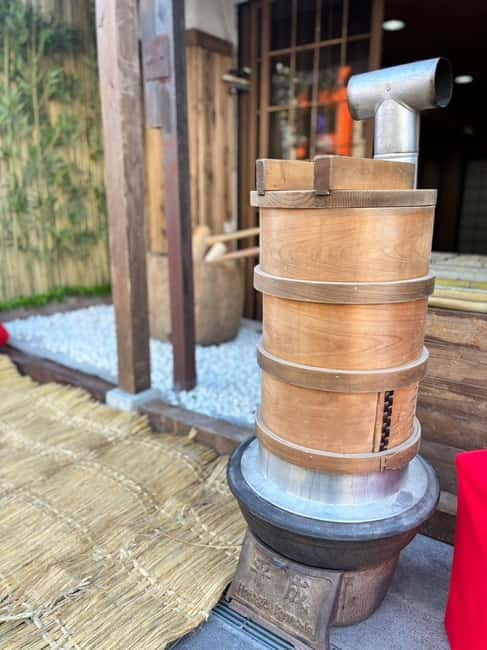
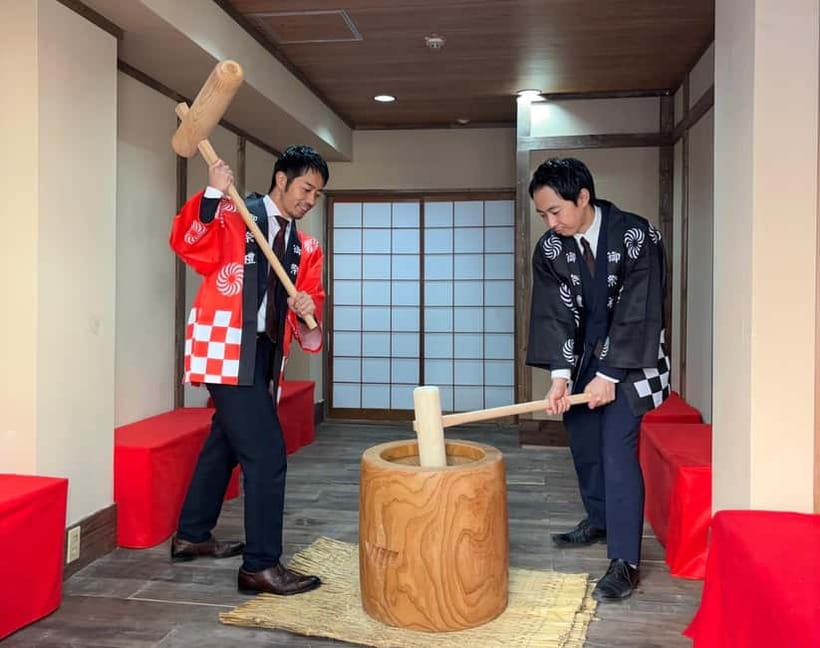
After the intro, the class turns practical. You work through the process of turning glutinous rice into mochi, starting with the steamed rice stage and moving into pounding with traditional tools like a mortar and pestle.
This is where the experience becomes memorable. The guides help you step by step, and you will get hands-on time, including mashing and pounding. You do not just stand around, and the small group size helps the instructors keep an eye on everyone’s technique.
Also, accept that you will use some effort. Several people mention that mochi making requires stamina. That is normal. You are compressing warm, sticky rice dough, and the pounding is physical, even if the time is just about an hour total.
If you have never handled mochi dough before, expect it to feel elastic and tacky. It is part of the magic, but it is also why comfortable clothes help. I suggest wearing long sleeves you do not mind getting a little dusted.
Shaping and rolling your mochi, with help from Seina and crew
Once the rice becomes mochi dough, the class shifts from pounding to forming. Many participants get to shape and roll their own pieces, then finish them before the tasting.
This matters because mochi is not only about flavor, it is also about texture. The workshop structure teaches you how the dough changes as you work it. By the time you shape it, you understand why mochi has that signature soft, chewy bite.
The instructor team is part of why this feels easy. Names that show up in the guide roster include Seina, Taka, Misaki, Moe, Grace, Pari, and Aiko. Even when the group is lively, the teaching stays clear, and the vibe stays friendly.
If you are traveling solo, the pace also helps. Small group classes can feel awkward when you are new, but here the structure gives you a clear role at each step, plus time for the guide to assist.
A few more Osaka days to weigh up
- Osaka Backstreet Nightlife & Street Food Walking Tour
★ 5.0 · 1,011 reviews - Hungry Osaka Street Food Tour: 15 Dishes & 3 Drinks
★ 4.9 · 694 reviews - Kuromon Market Food Walking Tour in Osaka (6 stops, 6 tastes)
★ 5.0 · 550 reviews - Absolute Osaka Food Tour
★ 5.0 · 309 reviews
Toppings and tea: your mochi tasting like a proper dessert sampler
The best part for most people comes at the end: you eat what you make. Your tasting includes classic Japanese seasonings served with a cup of tea.
The toppings listed include kinako (roasted soybean flour), sweet red bean paste, nori, and sweet soy sauce. This combo gives you a good spread of flavors: nutty, earthy, sweet, and savory.
I like that the class does not force one flavor only. You get multiple ways to enjoy mochi, so you can find what you actually like without guessing ahead of time. If you think you might not love red bean, do not dismiss it until you try it with the rest of the setup. The point of the tasting is to let your palate decide.
Also, this is a smart “between meals” stop. People often describe leaving full, which makes sense because you will taste several pieces you made, not just one small sample. If you skip a heavy dinner, you can use this class as your main food moment.
Adult vs family experience: same mochi, different pacing
The workshop offers two options. The Adult Experience is for ages 13 and up and is tailored for a deeper cultural dive. The Family Experience welcomes all ages and is designed to engage and educate kids and adults together.
In practice, both options still center on the hands-on making and the tasting. The main difference is how the teaching is framed and paced, so everyone can participate comfortably.
This is a great format for multi-generation groups. You can have teens, parents, and grandparents in the same room without it turning into a babysitting situation or a lecture. The instructors adapt the class flow so people stay engaged at their own speed.
If you have a very young child, it is worth choosing the Family option rather than assuming you can just bring them along. The workshop specifically sets up the family-friendly version for all ages.
Price and value: why $31 can feel like a steal
At about $31 per person for a one-hour session, this is not a cheap snack. But it is not overpriced either, because the price includes what you would otherwise pay for or lose time searching for.
You get:
- guided mochi pounding instruction
- all necessary materials and ingredients
- a tasting with traditional Japanese seasonings
- instruction in English or Chinese
Transportation is not included, but the workshop itself covers the real costs: ingredients, tools, and teaching time. Also, because the group is limited to 4 participants, you are paying for access to the instructors and the hands-on setup, not a generic crowd experience.
So the value equation is simple. If you want mochi you can actually make, eat, and understand, the price feels fair for Osaka. If you only want to taste mochi without touching dough, you might want a lighter food option instead, because the experience is designed around doing the work.
Practical tips to enjoy mochi pounding without stress
- Wear comfortable clothes suited for a hands-on activity. The dough is sticky, and small mess is part of the deal.
- Plan on arriving with a little time to find the entrance. The workshop is often easiest from the canal side, and signs are sometimes subtle.
- Bring water and keep your next meal flexible. You will likely leave full after the tasting.
- If you are a solo traveler, use the moment for photos. The hosts are used to taking pictures and videos during the class.
- Go with a light attitude. Pounding mochi is physical and imperfect at first, and that is normal. Your first piece is always the hardest.
One more small but useful note: the class language options are English and Chinese. If you want smoother communication, pick the session language that fits you best.
Should you book this Osaka mochi pounding experience?
Book it if you want a hands-on Osaka activity that goes beyond eating dessert. This is one of those rare classes where you do the work, learn a short backstory, then taste multiple flavors right away.
It is especially good if:
- you like interactive food experiences
- you are traveling with family across ages
- you want something memorable that does not require a long time commitment (duration is 1 hour)
- you prefer small groups (limited to 4 participants)
Skip it if:
- you want a totally hands-off tasting only
- you dislike sticky, physical food prep
- you are short on time and cannot handle a short walk to the canal-side entrance
If you are planning a day around Dotonbori, this is a smart addition because it is close to the energy of the area, yet it gives you a quiet, focused activity where you make something you can hold, shape, and eat.
FAQ
How long is the mochi pounding experience in Osaka?
The experience lasts about 1 hour.
How many people are in the group?
It is a small group limited to 4 participants.
What is included in the price?
The guided mochi pounding experience includes all necessary materials and ingredients, instruction by the guides, and a tasting session with traditional Japanese seasonings (served with tea).
What does it cost and what is not included?
The price is $31 per person, and transportation to and from the activity location is not included.
Which languages do the instructors speak?
The instructors provide the experience in English and Chinese.
Are there different options for adults and families?
Yes. There is an Adult Experience for ages 13 and up, and a Family Experience that welcomes all ages.
Newly listed around Osaka
- (Ticket Included) Explore Osaka Castle & Museum of History★ 4.8 · 21 reviews
- Hidden Osaka – Yukaku Red Light Tour & Culinary Adventure★ 4.8 · 96 reviews
- Osaka: Walking Tour and Top Highlights★ 4.8 · 104 reviews
- Same Day OK! Osaka: Local Food, Izakaya & Local Bites Tour!★ 4.8 · 17 reviews
- Osaka: Private Ceramic Painting Workshop★ 5.0 · 13 reviews
- Eat Like a Local in Osaka – Private Custom Street Food Tour★ 4.3 · 33 reviews
- Pickleball in Osaka & Kyoto with Locals!★ 4.6 · 64 reviews
- Osaka:SUMO BEATS SHOWCASE: Taiko Drum and Wagyu burger!★ 4.2 · 37 reviews
Food Tours in Osaka, compared.

Shinsekai Food Tour with 13-15 Dishes at 5 Eateries
Read our review →
Osaka Food Tour: 13 Dishes at 5 Local Eateries
Read our review →
Hungry Osaka Street Food Tour:15 Tastings & 3 Drinks with a Local
Read our review →
Osaka Backstreet Nightlife & Street Food Walking Tour
Read our review →
Hungry Osaka Street Food Tour: 15 Dishes & 3 Drinks
Read our review →
Kuromon Market Food Walking Tour in Osaka (6 stops, 6 tastes)
Read our review →

Kuromon Market Food Walking Tour (6 stops, 6 tastes)
Read our review →Browse the lists this tour appears in