Review · TOKYO TOURS
Tokyo: Karate Experience with Former All-Japan Champion
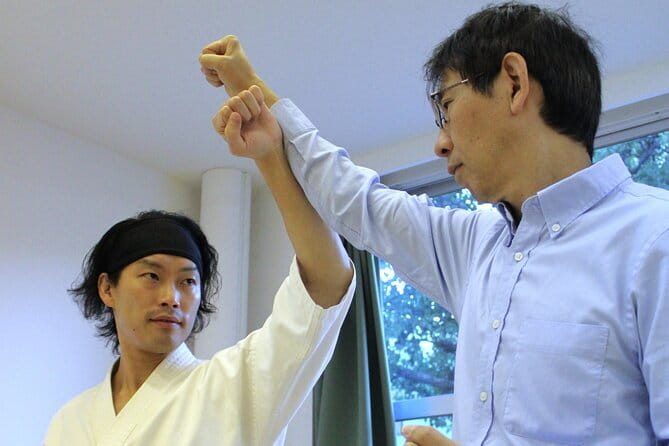
Tokyo karate feels surprisingly grounding. In this 90-minute class, former All-Japan champion Ryo guides you through Standing Zen Training and the core moves of karate in a small group setting. I like how the instruction is clear and practical, and how quickly you start doing real technique work instead of just watching.
What makes it feel extra worthwhile is the combination of high-level coaching and hands-on practice. You get the uniform and pads, and you also get step-by-step breakdowns for punches, blocks, kicks, and non-contact sparring drills. The one thing to consider is that this is still a workout, so if kicks are tough for your mobility, you will want to show up ready to modify and go at the class pace.
In This Review
- Key Points to Know Before You Train
- Finding Azumabashi Hall and Getting Settled Fast
- First Things First, Bowing and Belly Breathing
- Stretching That Targets Real Karate Muscles
- Standing Zen Training: The Posture Skill You Actually Use
- Punches, Blocks, and Kicks Taught in Clean Steps
- The Kumite Essence: Learn Defense Without Physical Contact
- What You Get: Gear Included and Coaching That Matches Your Level
- Price and Value: Is $66.99 Worth 90 Minutes?
- Timing It in Tokyo: Morning vs Afternoon Sessions
- Who Should Book This Karate Experience?
- Should You Book Karate Comic Ryo With Sensei Ryo?
- FAQ
- How long is the karate experience?
- What is included with the class?
- Is there sparring in the class?
- Where do I meet for the experience?
- How many people are in each class?
- Are there different class times available?
- What fitness level do I need?
Key Points to Know Before You Train
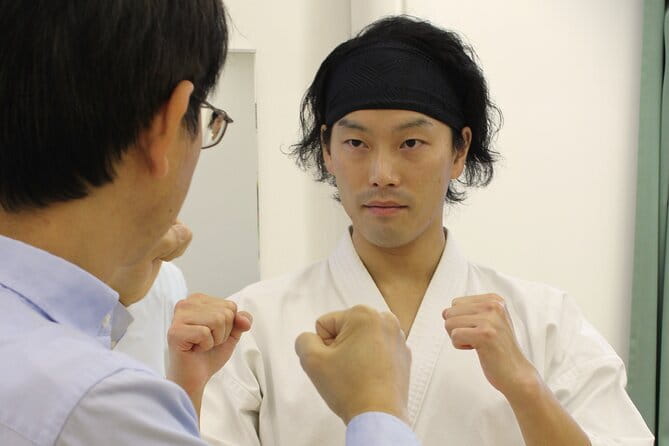
- Former All-Japan champion instruction from Ryo, with 20 years of experience
- Standing Zen Training focus that builds posture, balance, and calm control
- Structured basics for punches, blocks, and kicks, taught in small steps
- No-contact kumite essence so you learn defense timing without physical sparring
- Small group size (max 8) that makes it easier to get personal corrections
- Uniform and pads included, so you can travel light
Finding Azumabashi Hall and Getting Settled Fast
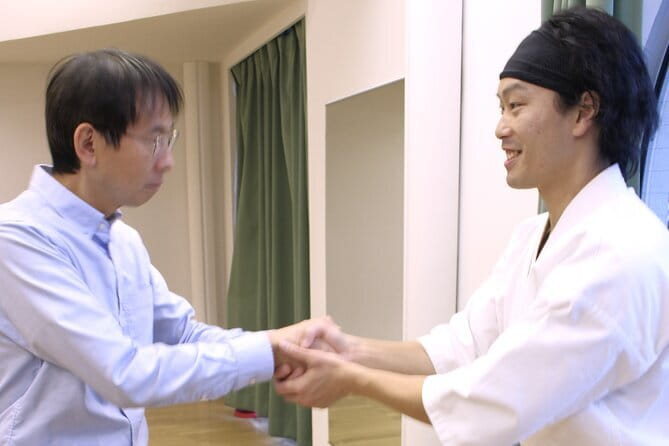
Your class meets at Azumabashi Hall, 1-chōme-23-27 Azumabashi, Sumida City, Tokyo. This area is a practical base because it is close to public transportation, and it keeps your travel day from turning into a puzzle.
The good news is the tour runs as a tight loop. You start there, you train for about 1.5 hours, and you end back at the meeting point. That matters in Tokyo, where time can vanish when you keep hopping lines.
Also, because the class runs in morning and afternoon options, you can slot it into a day that already has nearby sights or treat it as your daily “active reset.” If you are coming off a long walking day in the city, karate is a satisfying way to use your legs in a more intentional way.
A few more Tokyo days to weigh up
- Mt Fuji and Hakone 1-Day Bus Tour Return by Bullet Train
★ 5.0 · 26,383 reviews - 1-Day Tokyo Bus Tour
★ 5.0 · 14,250 reviews - Tokyo: TOKYO SKYTREE® Admission ticket
★ 4.5 · 11,192 reviews
First Things First, Bowing and Belly Breathing
In karate, the etiquette is not an afterthought. The session begins with learning how to bow, because it is literally how the class starts and ends. You are not just doing a ritual for tradition’s sake. Bowing sets the tone: everyone arrives, focuses, and shifts into training mode.
Right after that, you practice deep breathing from the belly. You learn how to breathe with intention so you can stay steady, focused, and less “bouncy.” This is one of those small details that pays off during the techniques, because stable breath helps you hold stances longer and move with less wasted effort.
Expect the early minutes to feel simple, but not shallow. I like this part because it tells you the class is about control, not chaos. You will get an immediate sense that posture and attention are part of the skill, not separate from it.
Stretching That Targets Real Karate Muscles
Then you get stretches for major parts of your body. The focus includes leg muscles and hip joints, plus shoulder blade and chest areas. That makes sense for the kind of techniques you are about to do, especially kicks, blocking motions, and the arm positioning that karate demands.
A quick caution: stretch sessions in martial arts can be “too easy” if you rush them, or “too hard” if you force range. The class is designed for beginners and also for people who have done martial arts before, so you will likely be guided to pace yourself.
If you have any tightness in hips or shoulders, this is the moment to speak up or at least move a bit more slowly in the first rounds. Getting comfortable early usually helps you avoid the mid-class stiffness that makes stances feel twice as long.
Standing Zen Training: The Posture Skill You Actually Use
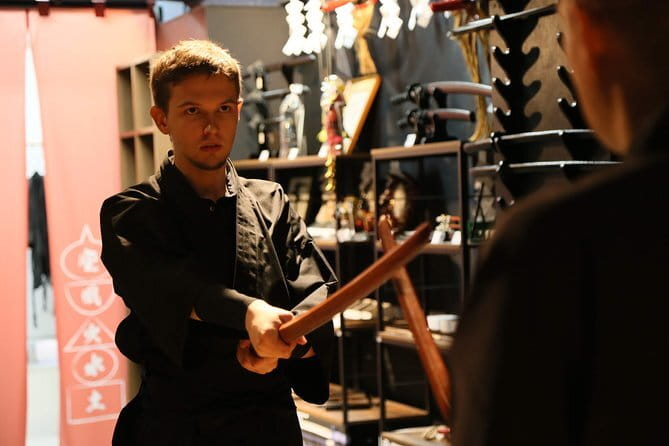
One of the most distinctive parts is learning to master Standing Zen Training. This is not about mystical breathing while standing still for fun. It is about learning how to stand correctly and stay stable while your body works.
In practice, you are training balance and alignment, and you are learning how to hold your body in a way that supports power. When your stance is correct, your punches and blocks come from your base instead of your arms. When your stance is off, you feel it fast, usually as awkward tension in the shoulders or shaky knees.
This section is also a reminder of why karate appeals to beginners. You are not starting with advanced combinations. You start with fundamentals that improve how you move in everyday life too, like better posture and stronger core control.
From the teaching style, I get the sense Ryo cares a lot about explanation. He demonstrates, then breaks the movement down so you can repeat it without guessing. That makes Standing Zen Training less intimidating than it sounds on paper.
A different sort of day in Japan:
- Tokyo: teamLab Planets TOKYO Digital Art Museum Entry Ticket
★ 4.6 · 9,779 reviews - Mt Fuji & Hakone Cruise, Drum Show Bullet Train 1 Day from Tokyo
★ 4.0 · 7,413 reviews - Tokyo: Sumo Show Experience with Chicken Hot Pot and a Photo
★ 4.8 · 6,678 reviews - Tokyo: Shinjuku Food Tour (13 Dishes at 4 Local Eateries)
★ 5.0 · 6,603 reviews
Punches, Blocks, and Kicks Taught in Clean Steps
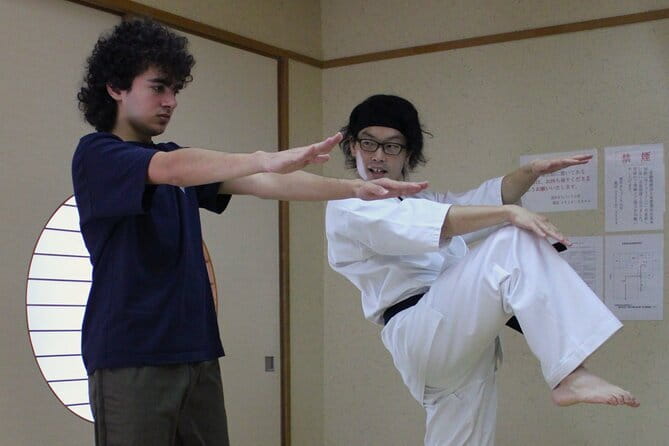
After stance work, you move into the core techniques: punches, blocks, and kicks. Each technique is divided into a few moves so participants can learn in steps rather than being thrown into full speed.
You practice with proper stance throughout, which is important because many people can throw an arm punch but cannot repeat it with consistent body alignment. This is where a good instructor makes the class feel “real.” You learn not only what to do, but how your hips and feet should support the motion.
You also get corrections aimed at precision. The goal is efficiency, not flailing. Ryo’s explanations are clear and he demonstrates the techniques so you can copy the shape and timing.
Here’s a practical tip for you: when you are training kicks, especially the lower ones, focus on stability first, even if your height is limited. Mobility varies from person to person, and the class appears set up to adjust. One participant noted that mobility issues could mean you want even more tailoring, so treat that as a heads up to communicate early if you need modifications.
The Kumite Essence: Learn Defense Without Physical Contact
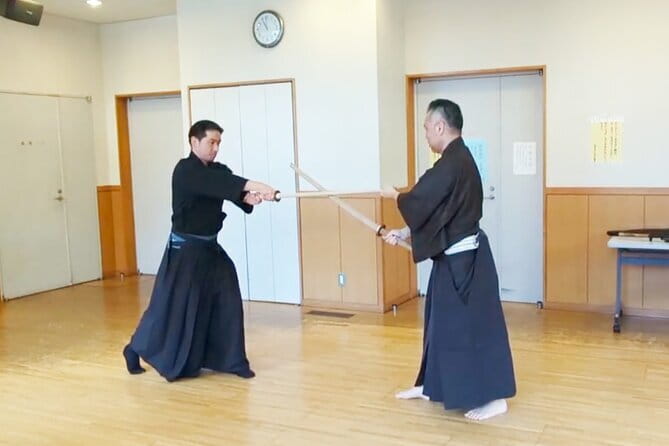
The final portion is about kumite training, but without physical contact. So instead of sparring where you are taking hits, you practice the essence of sparring training in a safer way. It is still intense enough to feel like combat training, but designed to reduce injury risk.
You practice defending against attacks like punches, front kicks, and low kicks. You also learn tips for maximum precision and efficiency, meaning your defense is not just “reacting.” It is about correct positioning and responding in a controlled way.
This part is a big reason the class is beginner-friendly. You still get the adrenaline and timing awareness of sparring practice, but you are not doing uncontrolled contact. It is a smart approach if you want self-defense fundamentals and workout value without worrying about bruises.
If you have martial arts experience already, you might enjoy this section even more, because you can compare your habits. Some people in similar classes have said they noticed differences and similarities between countries practicing the same karate style, including Kyokushin. Even if you are new, you will likely recognize the patterns: stance, alignment, breath, then action.
What You Get: Gear Included and Coaching That Matches Your Level
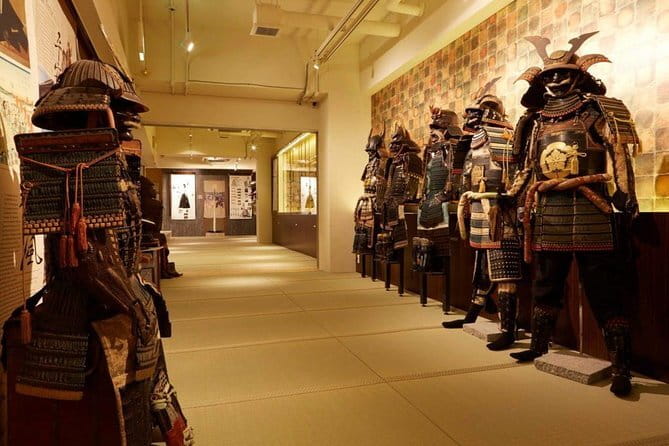
You do not need to bring a uniform. The class includes a karate uniform and pads for ease. That is a practical value point for Tokyo, where packing space matters and buying gear on the fly can turn into a mini project.
The other value piece is personalization. The teaching approach is set up for both beginners and people with prior karate experience. Ryo adjusts the level during the class, which shows up in how each technique is broken down and how corrections land.
From the way Ryo responds to participants’ questions, it sounds like the corrections focus on technique details like posture, core engagement, and how you position your body during defensive and offensive moves. One person even described improvements in posture, stomach power, and sparring skills, which tracks with the training themes of stance and breathing.
Group size matters too. With a maximum of 8 travelers, you are not lost in a crowd. That makes it easier to get feedback and easier to learn faster because the instructor can watch and correct without rushing.
Price and Value: Is $66.99 Worth 90 Minutes?
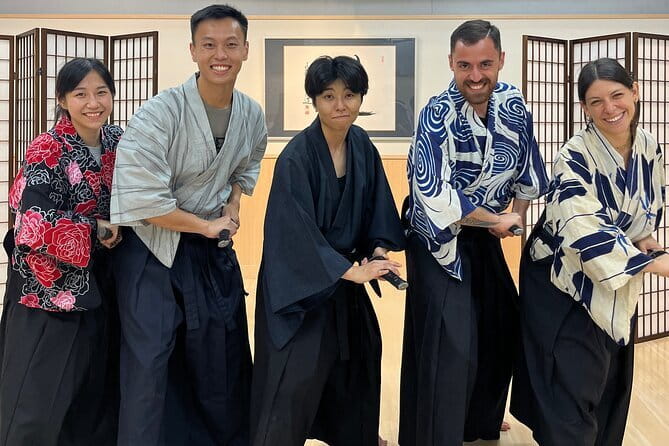
At $66.99 per person for about 1 hour 30 minutes, this is not a “souvenir workshop” price. You are paying for instruction from someone with serious competitive credentials and years of experience, plus the class structure, included gear, and the safe training format.
In terms of value for your trip, the big factors are:
- Included equipment (uniform and pads), which reduces extra spending and packing
- Direct coaching in a small group, which is harder to find than you think in Tokyo
- Active workout with real technique drills, not just demonstrations
- Culture and etiquette through bowing and breathing, which gives the training context
Is it worth it for someone who is totally new? I think yes, especially if you want something active and authentic that is not another museum line. Is it worth it for someone who has done karate before? Also yes, because there is a strong emphasis on corrections and fundamentals, and those always improve technique when you practice them with attention.
If you are expecting a full “private lesson” experience, keep your expectations aligned with the small group format. The class can still feel personal, but it is designed for learning together, not isolating you alone for every second.
Timing It in Tokyo: Morning vs Afternoon Sessions
This is offered as morning and afternoon classes, which gives you flexibility. If you like to start days early, morning works well as a structured way to shake off jet lag and set your energy for the day.
Afternoon can be a good choice if you want to pace yourself after sightseeing, and then finish the day with training that burns energy without requiring a long recovery.
One travel reality: Tokyo trains can be efficient, but you still need time to walk to your meeting point and settle before class. For a smooth start, aim to arrive early enough to not rush the bow and breathing section. The session begins with those fundamentals, so being late makes it harder to join in.
Also, this kind of experience is easier to plan when you book ahead. The average booking window here is about 29 days in advance, which suggests it does fill up at popular times.
Who Should Book This Karate Experience?
This class is a great fit if you want:
- A beginner-friendly introduction to karate basics with step-by-step teaching
- A structured fitness session that focuses on stance, posture, and controlled technique
- A safe way to learn kumite concepts without physical contact
- Authentic instruction from someone who has trained at a high level
It may be less ideal if you are looking for purely passive cultural viewing, because you are moving for most of the session. It may also be harder if you have significant mobility limits and you cannot modify kick range. That said, the instruction is designed to adjust, so you can likely still participate fully with the right mindset and willingness to work within your body that day.
Should You Book Karate Comic Ryo With Sensei Ryo?
I recommend booking if you want a hands-on Tokyo activity that hits the sweet spot of fitness, culture, and real technique. The class structure is simple to follow, the pacing supports different comfort levels, and the no-contact kumite approach is a smart way to learn defense without unnecessary risk.
Book it if you like training with clear explanations, you want to learn how to stand properly, and you are curious about Kyokushin style karate drills and how they translate into practical self-defense timing.
Skip it only if you hate the idea of a focused workout, or if you need something very gentle and purely observational. Otherwise, this is the kind of experience that gives you a skill you can practice later, even after Tokyo’s streets start calling you back.
FAQ
How long is the karate experience?
The class lasts about 1 hour 30 minutes.
What is included with the class?
A karate uniform and pads are included.
Is there sparring in the class?
You learn the essence of kumite training without physical contact, focusing on defense against punches and kicks.
Where do I meet for the experience?
The meeting point is Azumabashi Hall, 1-chōme-23-27 Azumabashi, Sumida City, Tokyo 130-0001, Japan.
How many people are in each class?
The group has a maximum of 8 travelers.
Are there different class times available?
Yes, there are morning and afternoon classes.
What fitness level do I need?
The experience lists a moderate physical fitness level recommendation.
Newly listed around Tokyo
- Private Tokyo Food Tour – A Journey Through Time Through Food★ 5.0 · 36 reviews
- Private Tokyo Tour with Licensed Guide & Vehicle (Max 15 persons)★ 5.0 · 107 reviews
- Private Tokyo Custom Full-Day Tour by Chartered Vehicle★ 5.0 · 16 reviews
- Private Tokyo Custom Half-Day Tour by Chartered Vehicle★ 4.5 · 13 reviews
- Private Outstanding Nikko Tour with English Speaking Driver★ 4.0 · 11 reviews
- Private Sightseeing to Mt Fuji and Hakone with English Driver★ 5.0 · 51 reviews
- Private Snow Monkeys park Day Trip From Tokyo or Nagano★ 4.5 · 26 reviews
- Private Omiya Bonsai Village Tour with Licensed Guide★ 5.0 · 8 reviews
Tokyo Tours, compared.

Mt Fuji and Hakone 1-Day Bus Tour Return by Bullet Train
Read our review →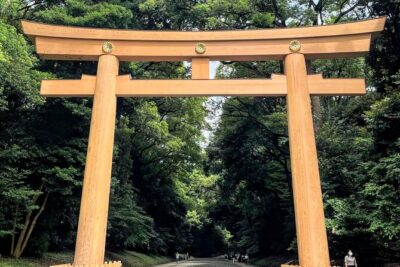


teamLab Planets TOKYO Digital Art Museum Entry Ticket
Read our review →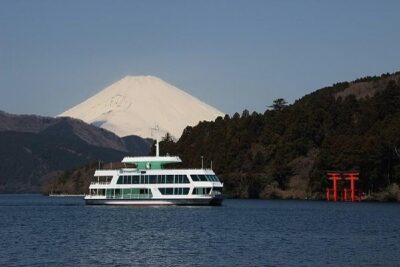
Mt Fuji & Hakone Cruise, Drum Show Bullet Train 1 Day from Tokyo
Read our review →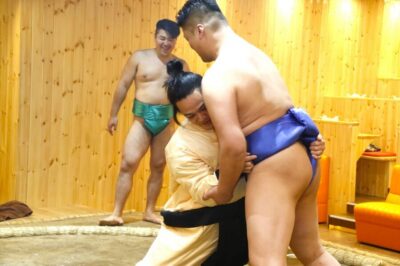
Sumo Show Experience with Chicken Hot Pot and a Photo
Read our review →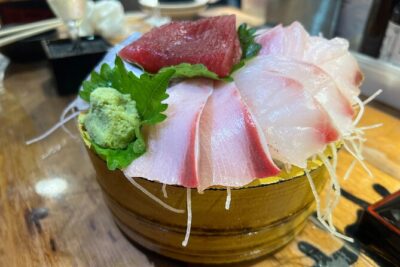
Shinjuku Food Tour (13 Dishes at 4 Local Eateries)
Read our review →