Review · SHOW
Traditional Japanese Music ZAKURO SHOW in Tokyo
Tokyo’s best cultural shortcut is music.
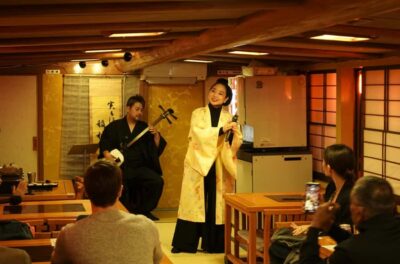
The Traditional Japanese Music ZAKURO SHOW is a one-hour concert in Omotesando that feels both polished and personal. What makes it especially interesting is the mix of live performance with clear dialogue, plus English translations that help you follow what you are hearing without needing a crash course first.
I love how close you get to the musicians, with traditional instruments like koto and taiko coming right to the front of the room. I also love that the show is not just songs, it is guided context, including the secrets of the craft and how different styles fit into Japan’s musical story. One possible drawback: at about 1 hour, you may wish it ran longer if you are hoping for a full-length concert.
In This Review
- Key things to know before you go
- A cozy Omotesando concert built for close listening
- Wagakki instruments you will recognize, and ones you will learn
- Between-song explanations and the English translation you want
- Inside the Zakuro Show program, ancient melodies to a modern cover
- What it feels like when the musicians talk
- Price and value: what $39.64 buys you in Tokyo
- How to plan your hour, plus who will enjoy it most
- Who it is perfect for
- Who might find it less satisfying
- Final call: should you book the Traditional Japanese Music ZAKURO Show?
- FAQ
- How long is the ZAKURO Traditional Japanese Music show?
- What instruments are featured in the performance?
- Is there English translation during the show?
- Where in Tokyo does the show take place?
- What kind of ticket do I receive?
- How much does it cost per person?
- Can I get a refund if my plans change?
- When should I book?
Key things to know before you go
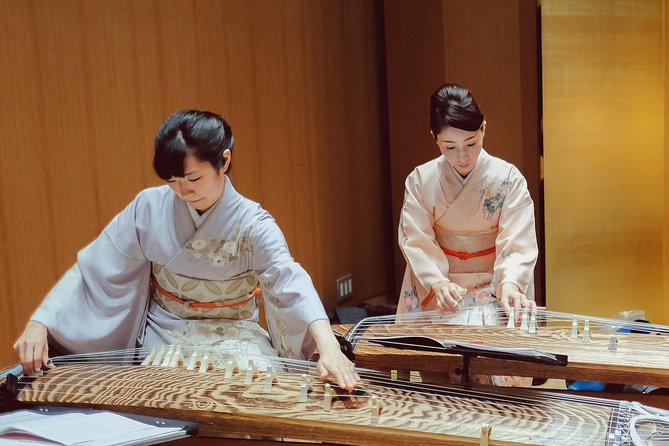
- Close-up wagakki performance in a cozy Omotesando setting, with colorful kimono and instruments near you
- English translations during the show, so explanations land even if you are new to traditional Japanese music
- A program that mixes ancient and modern traditional music, not just one era
- Clear instrument introductions between tunes, including the koto, shamisen, shakuhachi, and taiko
- A modern pop cross-over moment, including a cover of a western hit such as a Nirvana song
A cozy Omotesando concert built for close listening
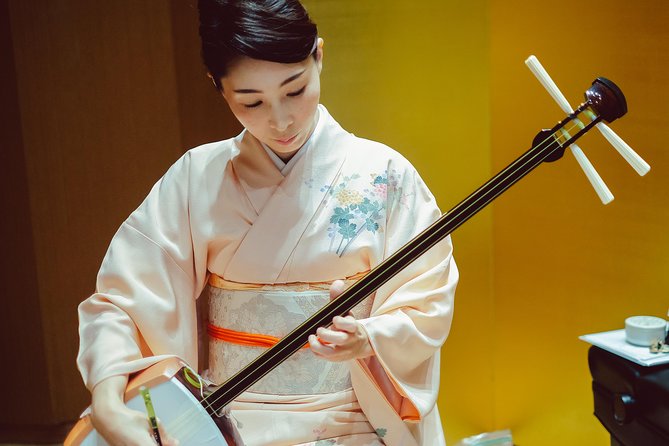
Omotesando is one of those Tokyo areas where you can feel the city’s polished side, but the ZAKURO SHOW keeps the mood warm and human. The setting is described as beautiful and cozy, and that matters for a performance like this. Traditional Japanese music often rewards attention to small details, and a comfortable room helps you actually listen instead of just surviving the time gap between stops.
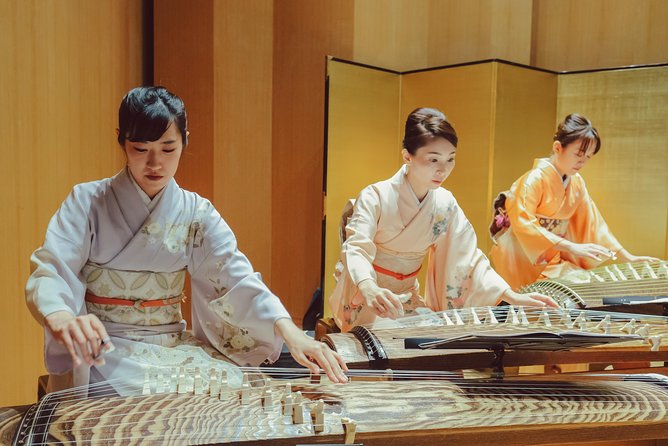
One of my favorite parts of this kind of show is the proximity. Here, the musicians and their instruments are right in front of you, which turns the performance into something closer to a shared moment than a distant stage show. With instruments like the koto and shamisen, you can notice the physical craft of how the sound gets made, not just hear the result.
A few more Tokyo days to weigh up
- Mt Fuji & Hakone Cruise, Drum Show Bullet Train 1 Day from Tokyo
★ 4.0 · 7,413 reviews - Tokyo: Sumo Show Experience with Chicken Hot Pot and a Photo
★ 4.8 · 6,678 reviews - Tokyo: Sumo Show and Dining Experience
★ 4.8 · 2,742 reviews
Wagakki instruments you will recognize, and ones you will learn
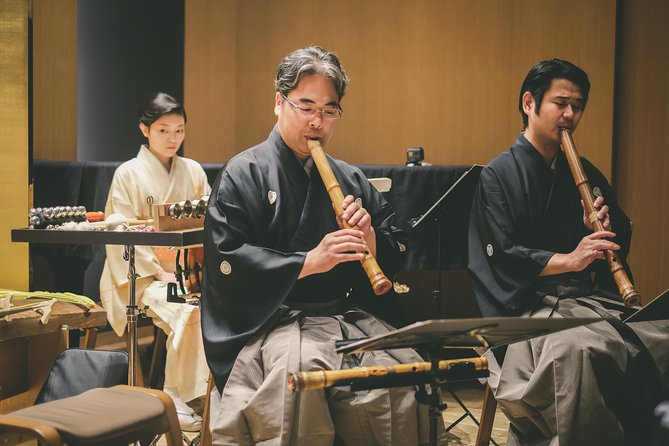
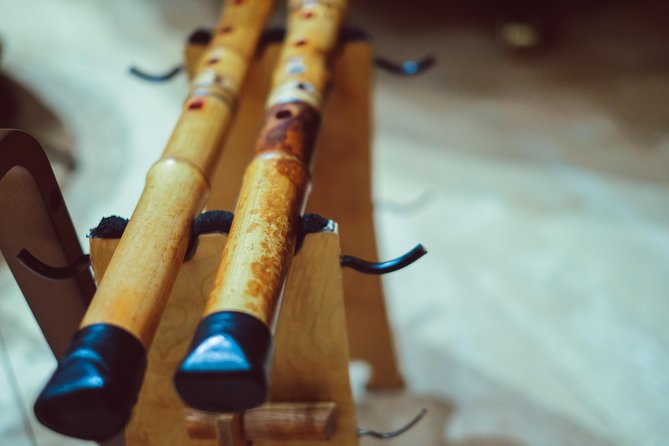
You will hear traditional Japanese instruments that most first-timers can recognize in name, then learn what makes their sound and technique distinct. The core ensemble includes taiko drums and a koto harp, plus other wagakki like the shamisen and shakuhachi flute. You also get a sense of the range, from delicate-sounding instruments to powerful percussion that can fill the room.
Here is why that range is valuable. If you only hear one style of Japanese music, it is easy to assume it all sounds similar. This show actively corrects that. The program is built to let you feel how the instruments work as voices, each with a different role in rhythm, melody, and texture.
One of the practical wins is that the show names and explains what you are listening to as it goes. Instead of you guessing, you get helpful context about each instrument’s character. That is especially great if you are the type of person who likes to understand what you are hearing, not just check a box.
Between-song explanations and the English translation you want
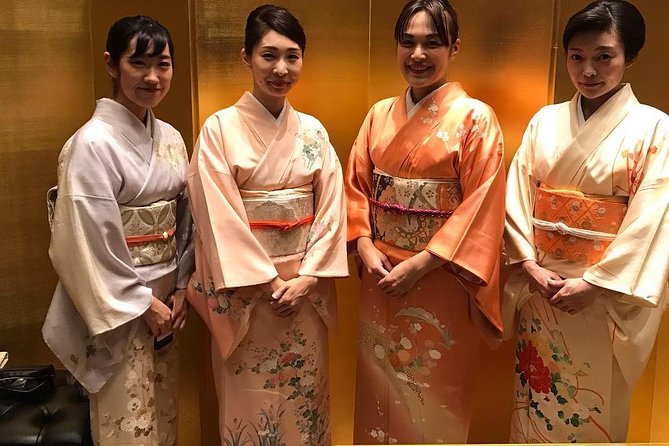
A lot of cultural performances get marketed as educational, then hand you silence between songs. This one does the opposite. Performers wearing colorful kimono provide live commentary, with English translations that make the history and craft accessible.
What that means in real life: you do not have to memorize terminology before you arrive. You can follow along as the show moves. Explanations happen between musical numbers, and they cover things like technical secrets of the musicians’ craft and historical background that helps each tune make more sense.
From the way the show is structured, the goal is to turn listening into learning without making it feel like a lecture. You get dialogue, interaction, and context, and it keeps the hour from feeling like one long musical block. If your brain likes connections, this setup works well.
Inside the Zakuro Show program, ancient melodies to a modern cover
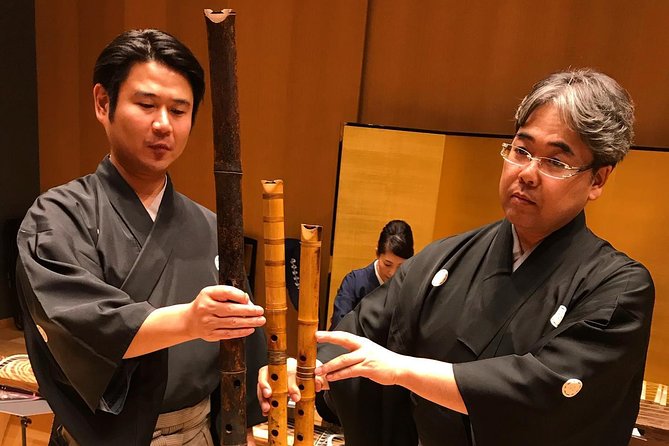
The heart of the experience is the 1-hour Zakuro Show itself. You sit for a live ensemble performance where each tune is selected with context, not just picked for variety. The program includes both ancient and modern traditional Japanese music, so you hear how the sound of wagakki can carry tradition while still speaking to newer audiences.
A key detail is the inclusion of a western hit cover. The show uses that moment to showcase how Japanese instruments can reinterpret something familiar. In the materials you are given, it is described more generally as a western hit cover, and some audience notes point to a Nirvana song version. Either way, the point is clear: you get a quick bridge between your musical world and the one in front of you.
If you worry that a “western cover” might feel distracting, it is worth knowing the show frames it as an experiment in sound. You are not just hearing a gimmick. You are hearing how different instruments translate phrasing, rhythm, and melody, which is exactly where cultural comparisons become interesting instead of awkward.
A different sort of day in Japan:
- Mt Fuji and Hakone 1-Day Bus Tour Return by Bullet Train
★ 5.0 · 26,383 reviews - 1-Day Tokyo Bus Tour
★ 5.0 · 14,250 reviews - Tokyo: TOKYO SKYTREE® Admission ticket
★ 4.5 · 11,192 reviews - Tokyo: teamLab Planets TOKYO Digital Art Museum Entry Ticket
★ 4.6 · 9,779 reviews
What it feels like when the musicians talk
The musicians are not hidden behind a curtain. They play, then talk about what you just heard and what to listen for next. That pattern is a big reason the show earns such strong recommendations.
It also changes the way you listen to the instruments. For example, taiko drums can feel like pure force if you only hear them once. With explanations, you start noticing rhythmic structure. The koto can sound like calm background music unless you learn what kind of melody movement and technique are shaping the sound. The show gives you that listening map.
Price and value: what $39.64 buys you in Tokyo
At $39.64 per person for an approximately 1-hour show, this is priced like a ticket to a proper cultural performance, not like a casual “walk-in” activity. The value comes from what is included in that hour: live musicians, multiple instruments, and real-time English explanation. You are paying for the experience of understanding the music as it happens.
The ticket format also helps. You get a mobile ticket, which reduces stress in Tokyo. When you are running between neighborhoods, being able to pull up your ticket on your phone is genuinely useful.
Also, this show is booked in advance. On average, reservations are made about 33 days ahead. That tells me you should not treat it like a last-minute option, especially if you want a specific time slot that fits your day.
If you need flexibility, the experience includes free cancellation up to 24 hours before start time for a full refund. That lowers the risk of booking early, since plans in Tokyo often shift.
How to plan your hour, plus who will enjoy it most
The biggest practical advantage is simple: it fits. At about 1 hour, the ZAKURO Show works as a mid-day break or an evening cultural stop. You do not have to rearrange your whole itinerary around it, and that makes it easier to pair with other things you already want to do.
The show is also described as near public transportation, which is another quiet win. Tokyo transit can be confusing if you are tired, so choosing an activity that is close to transit saves energy for the parts of your day you actually want to savor.
Who it is perfect for
This is a great match if you:
- want an easy introduction to traditional Japanese music
- like performances that explain what you are hearing
- prefer a shorter, focused cultural activity
- enjoy live, close-up instrument sounds
It is also a strong option if you are in Tokyo for the first time and you want something that does not require specialized knowledge. The English translations and dialogue are built for tourists, not insiders.
Who might find it less satisfying
If you want a long, uninterrupted concert with no talking, you may feel the format is too structured. And if you are hoping for a full-length marathon of music, the 1 hour timing is worth considering. Some people even wish it lasted longer, which says the show is good, but also that it ends quickly.
Final call: should you book the Traditional Japanese Music ZAKURO Show?
If you want a high-impact, easy-to-follow taste of wagakki music in Tokyo, I think you should book. The value is in the combination: live top-level musicians, instruments in front of you, and English commentary that turns listening into understanding.
Book it especially if you are the type who likes to leave a performance knowing what you heard, not just remembering that it sounded beautiful. If you can handle a short show and you enjoy learning in real time, the ZAKURO SHOW is an excellent cultural hour in Omotesando.
FAQ
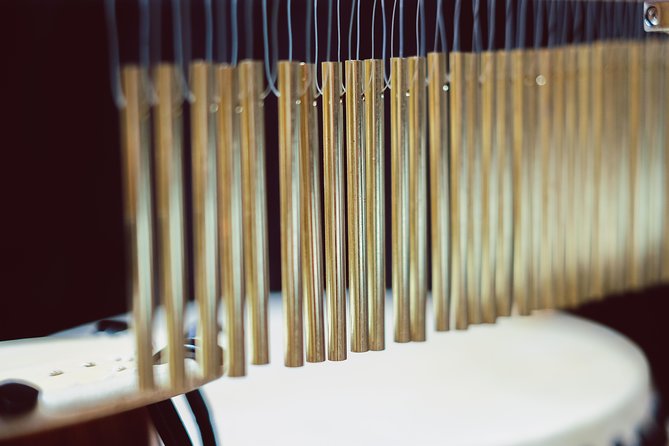
How long is the ZAKURO Traditional Japanese Music show?
It is approximately 1 hour.
What instruments are featured in the performance?
The show includes a traditional ensemble with instruments such as taiko drums, koto harp, shamisen, and shakuhachi flute.
Is there English translation during the show?
Yes. The performers provide live commentary, with English translations for tourist-friendly understanding.
Where in Tokyo does the show take place?
It takes place in Omotesando, Tokyo.
What kind of ticket do I receive?
The experience uses a mobile ticket.
How much does it cost per person?
The price is $39.64 per person.
Can I get a refund if my plans change?
Yes. There is free cancellation, and you can cancel up to 24 hours in advance of the experience start time for a full refund.
When should I book?
On average, this experience is booked about 33 days in advance.
Newly listed around Tokyo
- Private Tokyo Tour with Licensed Guide & Vehicle (Max 15 persons)★ 5.0 · 107 reviews
- Private Tokyo Food Tour – A Journey Through Time Through Food★ 5.0 · 36 reviews
- Private Tokyo Custom Full-Day Tour by Chartered Vehicle★ 5.0 · 16 reviews
- Private Tokyo Custom Half-Day Tour by Chartered Vehicle★ 4.5 · 13 reviews
- Private Outstanding Nikko Tour with English Speaking Driver★ 4.0 · 11 reviews
- Private Sightseeing to Mt Fuji and Hakone with English Driver★ 5.0 · 51 reviews
- Private Snow Monkeys park Day Trip From Tokyo or Nagano★ 4.5 · 26 reviews
- 4 Day Tour – Mount. Fuji, Tokyo, Hakone, Kamakura and Yokohama★ 5.0 · 19 reviews
Show, compared.

Mt Fuji & Hakone Cruise, Drum Show Bullet Train 1 Day from Tokyo
Read our review →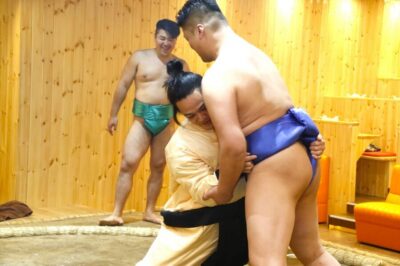
Sumo Show Experience with Chicken Hot Pot and a Photo
Read our review →
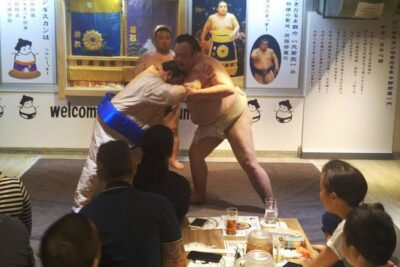

Mt Fuji & Hakone Cruise, Drum Show Bus 1 Day from Tokyo
Read our review →
Tokyo Sumo Entertainment Show with Chicken Hot Pot and Photo
Read our review →