
Review · LICENSED GUIDES & PRIVATE DRIVERS
Aizu 4hr Private Tour with Government-Licensed Guide
Samurai city, no rush. In four hours, this private Aizuwakamatsu walk pairs government-licensed guidance with samurai-era sights, and you shape the route around your interests. Just note the likely tradeoff: entrance fees, transport, and lunch are on you.
You meet your guide in a designated area on foot, then spend the morning or afternoon moving through calm streets at a comfortable pace. It is not a car tour, so wear shoes you can trust and plan to be on your feet most of the time.
In This Review
- Key things to know before you go
- Why Aizuwakamatsu fits a half-day format so well
- Government-licensed guide: what you get besides translation
- Price and value: what $107.78 covers, and what it does not
- Your 4-hour plan: choosing 2 to 3 stops that match your interests
- Tsurugajo history at the Tsuruga Castle Gymnasium stop
- Aizu Old Samurai Residences: free samurai household life
- Higashiyama Onsen valley: a true slow-down moment
- Suehiro Sake Brewery: craft heritage from 1850
- Fukushima Museum in Aizu: compact time for big context
- Iimoriyama: loyalty, resistance, and defeat
- Oyakuen Garden: calm walking with medicinal roots
- How guides make the pacing work in real life
- Best stop combinations for different travel styles
- Who this tour is best for
- Should you book it?
- FAQ
- How long is the Aizu 4-hour private tour?
- Is this tour private?
- How many stops can I choose?
- What type of guide do I get?
- Is pickup included?
- Are entrance fees included?
- Is transportation included in the price?
- Is there a mobile ticket?
- What is the cancellation policy?
Key things to know before you go
- Government-licensed guide who can explain culture and history with context
- Pick 2-3 sites from a menu, so your time goes where you care most
- Walking tour with on-foot pickup in a specific meeting zone
- Mix of classic and quieter stops, from Tsurugajo to a garden and onsen area
- Most admission fees are not included, so you will budget case by case
- 4-hour private format means the pace is set for your group, not the crowd
Why Aizuwakamatsu fits a half-day format so well
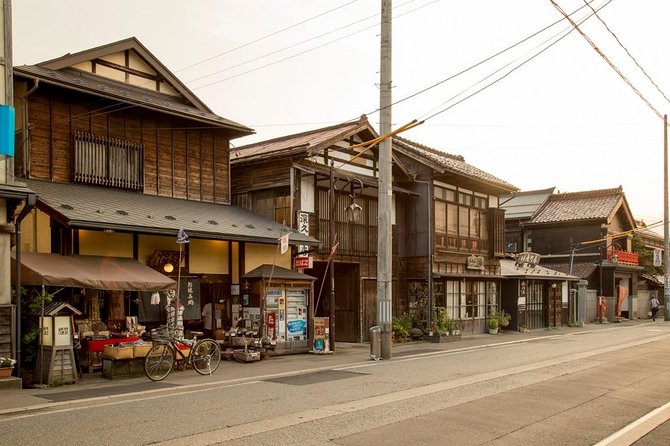
Aizuwakamatsu is the kind of place where “seeing the basics” actually feels satisfying. You are in a former feudal capital, and the town layout makes it easy to connect samurai-era locations with calmer modern streets without spending the whole day in transit.
This tour is built for that reality. You are not trying to cram Aizu into an all-day checklist. Instead, you get a tightly managed 4-hour window where your guide can connect the dots between what you see and why it mattered.
More Private Guides in Sendai:
- Sendai / Matsushima Half-Day Private Tour with Government-Licensed Guide
★ 5.0 · 20 reviews - Sendai / Matsushima Full-Day Private Tour with Government-Licensed Guide
★ 5.0 · 18 reviews - Tokyo 6hr Private Tour with Government-Licensed Guide
★ 5.0 · 3,902 reviews
Government-licensed guide: what you get besides translation
The big value here is the type of guide you are getting. This is a government-licensed local English speaking guide interpreter certification, which matters because the story of Aizu is not simple.
When your guide explains things like the shifts in power, the Boshin War fallout, or how samurai households worked, it lands better than a quick sign-board reading. In practice, guides like Mitzuko and Mitsuko are praised for being enthusiastic, friendly, and methodical, with English that stays clear even when the topic gets complex.
One more subtle benefit: because your guide is licensed and prepared, the tour tends to feel structured. You can ask questions without derailing the whole day.
Price and value: what $107.78 covers, and what it does not
At $107.78 per person for about 4 hours, you are paying mainly for three things:
- A private, licensed guide who stays with you the whole time
- A custom itinerary where you select 2-3 sites
- The guide-led flow that keeps you from wasting time figuring out what to do next
What you do not pay for in the price is just as important:
- Transportation fees and private transportation are not included
- Entrance fees are not included (some stops are free, but not all)
- Lunch and personal expenses are not included
So the “real” cost can creep up depending on your stop choices. If you choose multiple paid sites, you’ll feel it. If you choose the free samurai residences plus one or two paid stops, you’ll keep the budget tighter.
Your 4-hour plan: choosing 2 to 3 stops that match your interests
This is a private tour, so you only share the day with your group. The tour is also walking-based, with pickup on foot where the meeting point is within a designated area of Aizuwakamatsu.
Your guide will customize the route, and you select your must-see spots from the options provided. The sample stop times look like this:
- Several stops are around 30 minutes each
- Higashiyama Onsen is about 1 hour
That timing is a hint about how to choose. If you want one “linger” moment, Higashiyama Onsen is the place to do it. If you want history and structure, shorter stops at multiple sites work better.
A few more Sendai days to weigh up
- Fukushima Daiichi Nuclear Power Plant visit 2 day tour
★ 5.0 · 31 reviews
Tsurugajo history at the Tsuruga Castle Gymnasium stop
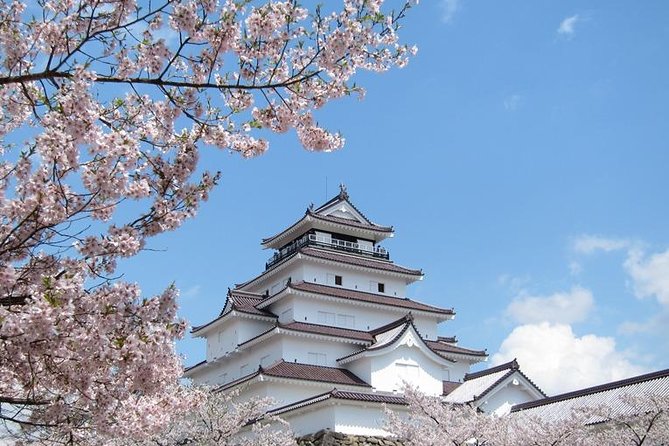
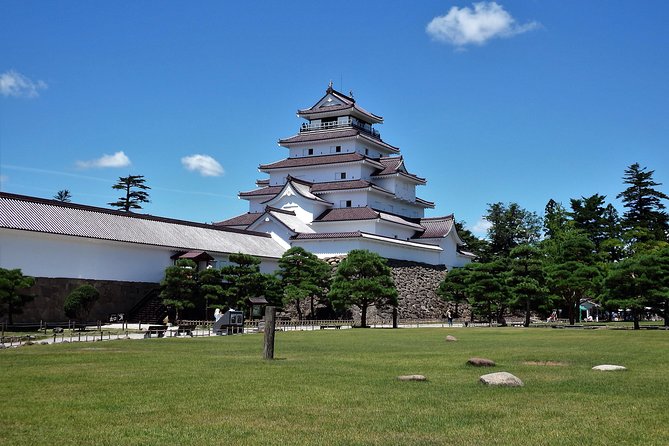
Stop 1: Tsuruga Castle Gymnasium (Tsurugajō), about 30 minutes
This is the type of stop that makes Aizu click. The castle is tied to the region for centuries, with origins in 1384 and many changes in control among Aizu’s rulers. Then the story takes a sharp turn: after the Boshin War of 1868, it was destroyed.
On a guided half-day tour, the value is not just the structure or grounds. It is the explanation of transition, because Aizu sits at a key crossroads in Japan’s shift away from the shogunate system.
Possible drawback to plan for: admission is not included, and 30 minutes is tight. If you like to read every panel slowly or you want a deeper walk around the grounds, you may feel rushed. If you want this stop, pair it with one shorter cultural stop rather than stacking too many long-feeling places.
Aizu Old Samurai Residences: free samurai household life
Stop 2: Aizu Old Samurai Residences (會津武家屋敷), about 30 minutes, admission free
If you love the human scale of history, this is a strong choice. The Aizu samurai residences served as quarters not just for the leading samurai, but also his family, employees, and servants. It is the kind of place where you can picture daily routines, social roles, and how hierarchy played out in real space.
Because it is free, it is also an easy win for value. You can book this stop and reduce the entrance-fee impact compared with adding multiple paid museum or factory locations.
Consideration: it is still time-limited. For people who want a slow, long look, 30 minutes may feel short. For most groups on a private 4-hour schedule, it is a practical introduction that your guide can interpret in context.
Higashiyama Onsen valley: a true slow-down moment
Stop 3: Higashiyama Onsen (東山温泉), about 1 hour, admission not included
Higashiyama Onsen is a hot spring resort area in a valley just east of downtown Aizuwakamatsu. The appeal here is that it gives you a break from strict historical stops and adds a different kind of atmosphere.
Your guide can help you decide how to use that hour. You might focus on the resort area itself and nearby shops, or you might plan around the onsen experience if you want that. The key point is that the tour gives you enough time to feel like you left the historical timeline for a bit.
Possible drawback to plan for: the 1-hour slot is the longest on the list, but it still may not be enough if you want a full bathing session plus leisurely shopping. Also, admission fees for the onsen experience are not included, so check what you want to do before you arrive.
Suehiro Sake Brewery: craft heritage from 1850
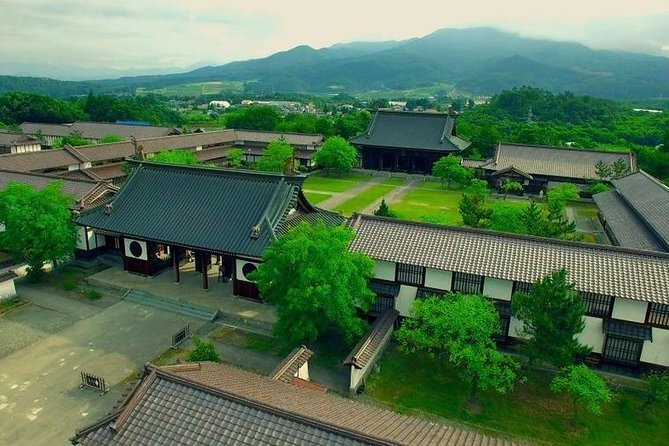
Stop 4: Suehiro Sake Brewery, about 30 minutes, admission not included
Sake is one of the best ways to understand local culture without needing to speak the language perfectly. Suehiro Sake Brewery in Aizu was founded in 1850 and has been family-owned for eight generations. That’s not just a trivia line. It is a clue that you are looking at a living craft tradition, not a one-off museum display.
This is also a helpful counterbalance to castles and samurai residences. You get something tactile, and your guide can connect how regional identity shows up in food and drink.
Consideration: if you do not drink alcohol, your experience will still be interesting because the focus can be on brewing and the business history. But your enjoyment may depend on whether the stop includes tastings or if you mainly want a visual and storytelling visit.
Fukushima Museum in Aizu: compact time for big context
Stop 5: Fukushima Museum (福島県立博物館), about 30 minutes, admission not included
If rainy weather shows up, this stop can be a lifesaver because it is a museum-style option. The museum has a broad permanent exhibition that illustrates Japan’s entire history, including archaeological finds.
On a half-day tour, this is not about reading everything in perfect detail. It is about getting a guided frame, so the things you see across Aizu and the surrounding region make sense in a wider Japanese timeline.
Possible drawback: 30 minutes is fast. If you want to slow down and read every exhibit label, this may not satisfy. The best approach is to treat it as a guided orientation stop, then use your other chosen sites to zoom in on local Aizu stories.
Iimoriyama: loyalty, resistance, and defeat
Stop 6: Iimoriyama, about 30 minutes, admission not included
This stop is for people who want the heavier political and military context. After the fall of the shogunate in 1867, loyal forces concentrated in northern Tohoku. They attempted to resist the new government, but they faced a decisive defeat tied to Tsuruga Castle.
With a licensed guide, this kind of information becomes more than dates. It connects the castle story to what happens afterward, and it helps you understand why Aizu’s memory of those events still shapes the town’s identity.
Consideration: there is no stated admission, but the time slot is still 30 minutes. You may want to pair it with either a place that offers quiet strolling, like Oyakuen, or a place that gives a different emotional tone, like the onsen area.
Oyakuen Garden: calm walking with medicinal roots
Stop 7: Oyakuen Garden (御薬園), about 30 minutes, admission not included
Oyakuen is a Japanese-style garden with a pond, and its name comes from a medicinal herb connection from the 18th century. This is a good “reset” stop. After castle and war context, you can step into something gentler and give your brain room to breathe.
Because the tour is only 4 hours, a 30-minute garden visit is a smart way to add a contrast without losing your whole afternoon to one location.
Possible drawback: it is not free, and it is time-limited. If the weather is rough, you might prefer choosing indoor options like the museum, since 30 minutes outside can feel longer when conditions are uncomfortable.
How guides make the pacing work in real life
A private 4-hour tour is only as good as the pacing. The strongest pattern in the experience is that guides adjust on the fly and keep the group comfortable.
For example, Mitzuko is praised for enthusiasm and very clear English, with the tour described as an easy flow that balances Aizu’s calm feeling with key historical explanations. Mitsuko is noted for linking Aizu’s samurai focus to the transition after Edo and into the Meiji restoration. And Nobuko is highlighted for going above and beyond to escort people around and even help arrange transportation afterward.
What you should take from this: if you have mobility limits, you will still want to tell your guide early. If you feel you need a quick break, ask. A well-run private tour works best when you communicate what your feet and attention can handle.
Also, if you are visiting in colder months, plan for slippery conditions. One guide mentioned cold weather and slippery ground after snow, and that is exactly the kind of detail that matters for a walking schedule. Wear shoes with grip.
Best stop combinations for different travel styles
You choose 2-3 sites, so think in combos:
Samurai history forward
- Tsurugajō stop plus Aizu Old Samurai Residences
- Add either Iimoriyama for the heavier political layer or Oyakuen for a calmer ending
Culture and crafts mix
- Suehiro Sake Brewery plus Aizu Old Samurai Residences
- Add Fukushima Museum if you want bigger national context in a short burst
Relaxed Aizu with one anchor
- Higashiyama Onsen as the main time slot
- Pair with a single history anchor like Tsurugajō or the samurai residences
Rain-friendly option
- Fukushima Museum plus either samurai residences or a garden stop
- Keep Higashiyama Onsen as the optional choice if conditions are decent
Who this tour is best for
This tour is ideal if you want:
- A private experience in Aizuwakamatsu without figuring out logistics
- A short, guided sequence of sites that explain the why, not just the what
- A route that fits your personal interests, because you choose 2-3 stops
It is also a good fit for families who want clarity and patience, as long as everyone is comfortable with walking. If your group includes people who get tired easily, your best move is to pick fewer sites from the start, since the tour is designed around 2-3 choices.
Should you book it?
I would book this tour if you have only a half-day in Aizuwakamatsu and you care about understanding the story behind the samurai reputation. The government-licensed guide is the main reason it feels worth paying for, and the ability to choose 2-3 stops helps you avoid wasting time on things that do not fit your taste.
I would hesitate if you want a strictly low-cost outing, because entrance fees and transport are not included and can add up depending on your picks. I would also think twice if you dislike walking, since this is a walking tour and the pickup is on foot.
If you are traveling with a clear idea of what kind of Aizu you want, this is a strong way to get your bearings fast and leave with a coherent understanding of the place.
FAQ
How long is the Aizu 4-hour private tour?
The tour duration is about 4 hours.
Is this tour private?
Yes. It is a private tour/activity, and only your group participates.
How many stops can I choose?
You can customize the tour by selecting 2 to 3 sites from the list provided in the tour information.
What type of guide do I get?
You get a licensed local English speaking guide.
Is pickup included?
Pickup is offered, and you meet the guide on foot within a designated area of Aizuwakamatsu.
Are entrance fees included?
No. Entrance fees are not included, although some sites listed may be free to enter.
Is transportation included in the price?
Transportation fees are not included, and private transportation is not included either.
Is there a mobile ticket?
Yes, the tour uses a mobile ticket.
What is the cancellation policy?
Free cancellation is available. You can cancel up to 24 hours in advance for a full refund, and cancellations made less than 24 hours before the start time are not refunded.
Newly listed around Sendai
- Sendai Private Izakaya and Bar Tour★ 5.0 · 25 reviews
- Sendai / Matsushima Half-Day Private Tour with Government-Licensed Guide★ 5.0 · 20 reviews
- Sendai / Matsushima Full-Day Private Tour with Government-Licensed Guide★ 5.0 · 18 reviews
- Fukushima Daiichi Nuclear Power Plant visit 2 day tour★ 5.0 · 31 reviews
Licensed Guides & Private Drivers, compared.
Tokyo 6hr Private Tour with Government-Licensed Guide
Read our review →
Kyoto Early Morning Tour with English-Speaking Guide
Read our review →
Tokyo 4hr Private Tour with Government-Licensed Guide
Read our review →
Kyoto 6hr Private Tour with Government-Licensed Guide
Read our review →
Hiroshima / Miyajima Full-day Private Tour with Government Licensed Guide
Read our review →Early Morning Tour with English-Speaking Guide
Read our review →
Tokyo Private Sightseeing Tour by Car- English speaking chauffeur
Read our review →
Mt Fuji Private Tour with English Speaking Driver
Read our review →Browse the lists this tour appears in