
Review · OSAKA TOURS
Ancient Capital Tour: Kyoto and Nara Highlights from Kyoto/Osaka
Kyoto and Nara in one smooth day. This full-day combo tour strings together Arashiyama and the Golden Pavilion, then finishes with Nara deer and the Great Buddha at Todaiji, all without the stress of figuring out trains and transfers. You ride in an air-conditioned vehicle with free Wi-Fi, and you get a mobile ticket, so your biggest job is simply showing up on time.
I especially like that the itinerary hits the must-sees that most people come for, while still giving you a real moment to slow down in each place, not just a drive-by. I also like the value angle: on most options, the important temple entry tickets are included, so you avoid the add-on surprise. If you happen to get a guide like Yuki or Haru, you’re in good hands for clear pacing and helpful on-the-spot tips.
The main consideration is pace. This is a long day with real walking, and some people feel it can feel a bit rushed if you want more time for photos or extra context.
In This Review
- Quick hits before you go
- The Kyoto to Nara logistics that actually matter
- Arashiyama start: bamboo, Katsura River, and morning energy
- Kinkaku-ji Golden Pavilion: why this stop gets your best photos
- Nara Park and Todaiji: deer feeding plus the Great Buddha
- Lunch options: traditional meal versus eating on your own terms
- Tickets and value: what you pay for, and what can be extra
- Guide quality and group size: what “small” feels like
- The walking pace: fun if you pack for it
- Who this tour is best for, and who might want another plan
- Should you book this Kyoto and Nara Highlights tour?
- FAQ
- How long is the Kyoto and Nara highlights tour?
- Where do I meet if I’m starting from Osaka or Kyoto?
- Is the tour guided, and is the guide English speaking?
- Is transportation included, and is the vehicle comfortable?
- Are entry tickets included?
- Is lunch included?
- What dietary needs can you handle?
- How many people are in the tour?
Quick hits before you go
- Two pickup points, two schedules: Osaka (Namba OCAT) or Kyoto Station, so book the right departure date for your location.
- Arashiyama first: bamboo forest walking near Tenryuji and a chance to see Togetsukyo (the moon-crossing bridge).
- Kinkaku-ji with time for the gardens: not just a front gate photo, you get into the temple grounds for a proper stroll.
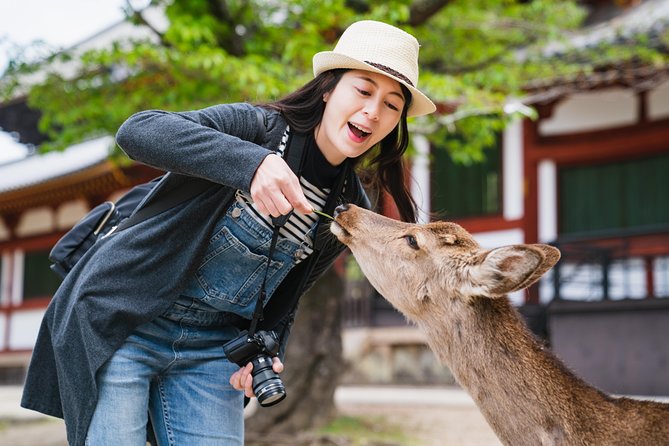
- Nara Park deer time: you can buy senbei and feed the deer that bow for snacks.
- Tickets usually included: Kinkaku-ji and Todai-ji entry are included on most options, but not on the last-minute option.
- A maximum of 42 people: a big enough group for convenience, small enough that the day doesn’t feel like chaos.
The Kyoto to Nara logistics that actually matter
This is a full-day, roughly 9-hour tour that runs by bus between Kyoto and Nara. You start at a meeting point, not a hotel pickup. That means you need to be comfortable getting yourself to the station or bus hub in the morning, but it also keeps the schedule cleaner.
You have two choices when you book, and you should be picky about this:
- Osaka departure: Namba, OCAT 1F (near Daiso), meeting time 8:50 AM
- Kyoto departure: Kyoto Station Hachijo Exit, in the tourist bus parking area, meeting time 9:05 AM
Check in at least 10 minutes early, because the bus leaves on schedule and late arrivals are not refundable. The operator also notes that the plan can shift due to traffic or weather, which is normal in Japan. The key takeaway: build your morning with buffer time so you are not sprinting across a bus lot.
You’ll ride in an air-conditioned vehicle with free Wi-Fi, which helps on the travel stretch. The experience is set up so you do not have to wrestle with complicated public transport routes, one of the biggest reasons this tour works well for first-timers.
A few more Osaka days to weigh up
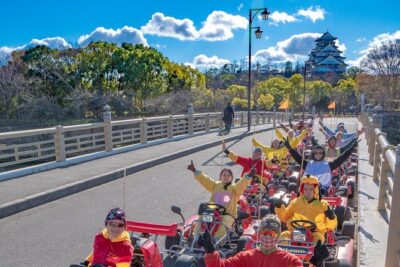
- Osaka Go Karting Tour with Funny Costume
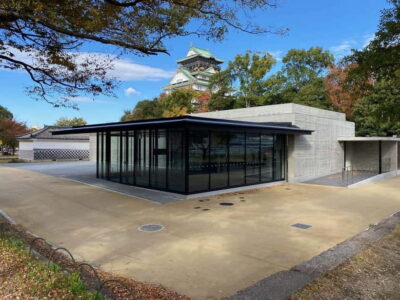
★ 5.0 · 2,658 reviews - Osaka Castle: Museum and Tower Entry Ticket
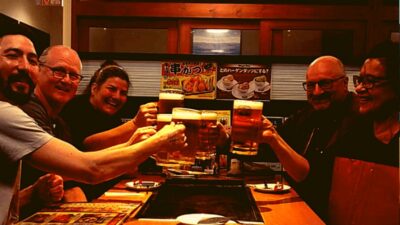
★ 4.5 · 2,380 reviews - Osaka: Shinsekai Food Tour with 13-15 Dishes at 5 Eateries
★ 4.8 · 2,204 reviews
Arashiyama start: bamboo, Katsura River, and morning energy
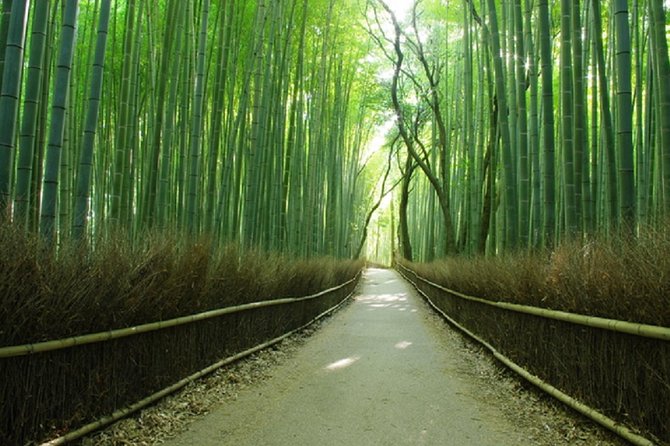
Your first real stop is Arashiyama, and you get about 2 hours here. This is the “arrive, breathe, walk a bit, then start seeing temples” part of the day, which is a smart structure. You begin with a traditional lunch if you select the lunch option, then you head into the area.
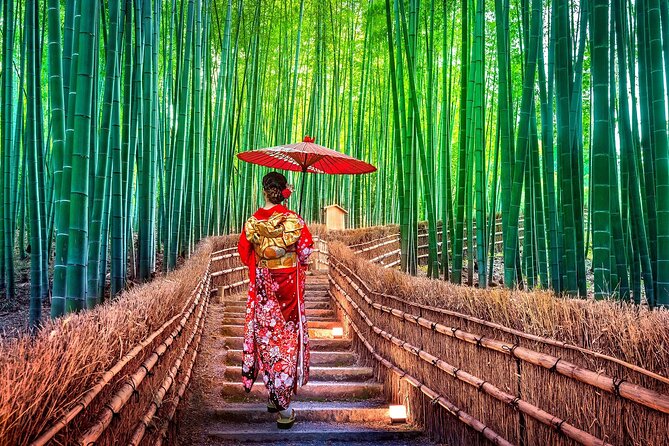
In Arashiyama, the highlight is the Sagano Bamboo Forest area. You’ll walk along the bamboo path and hear the rustle of leaves as you move through the green corridor. The bamboo walk is also tied to the nearby Tenryuji temple area, with the tour describing a stroll along the edge of Tenryuji. That matters because it gives your bamboo photos a bit more texture than just one straight walkway.
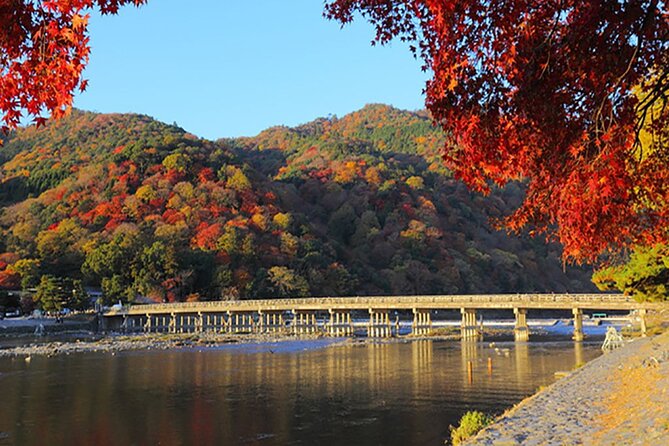
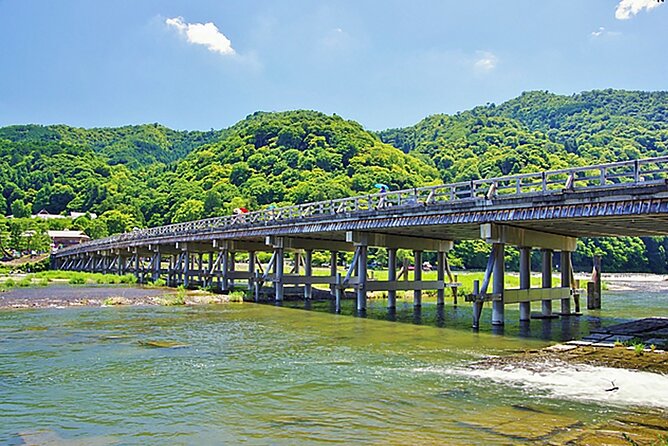
Another specific spot you may notice is Togetsukyo, the moon-crossing bridge, visible as you walk near the Katsura River. Even if you’re not spending hours in Arashiyama, seeing the bridge and river gives you a stronger sense of why this neighborhood is so famous.
If you’re curious about seasonal atmosphere, Arashiyama changes a lot:
- April: cherry blossoms
- November: autumn colors
- Summer: cormorant fishing is mentioned as something locals do
The realistic part: you cannot control crowds. But you can control how you prepare, and I’d show up with comfortable shoes and a camera ready, because this is the stop where the day’s pace begins.
Kinkaku-ji Golden Pavilion: why this stop gets your best photos
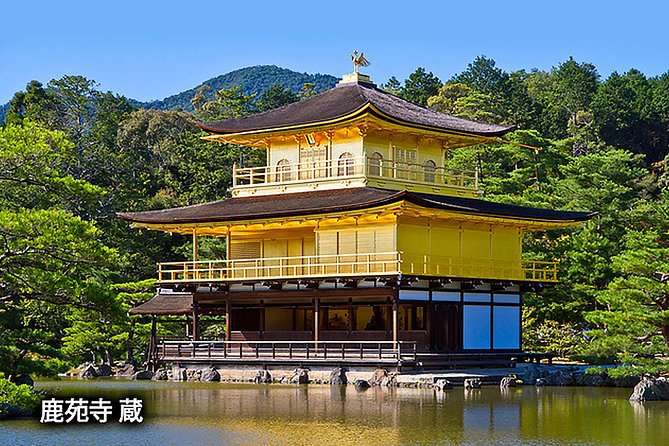
After Arashiyama, you head to Kinkaku-ji Temple, the Golden Pavilion. You get about 45 minutes here, with admission included on most options (it may not be included on the last-minute option).
This stop is a photography machine, no question. The gold-leaf facade catches sunlight, and the tour notes the mirror-like pond view where the temple reflects. In practice, that means timing matters. If the sun is high, the gold can look extra bright. If it’s overcast, you’ll get softer contrast. Either way, you’ll want a quick plan:
- Take a front reflection shot first
- Then step into the gardens area for the slower, calmer views
The itinerary also points out that you can wander the sprawling garden and see grounds that kept their original design from the 14th century. That is the value of Kinkaku-ji as more than a postcard stop. You’re getting a structured visit, and a guide can help you understand what you’re seeing as you move.
One useful heads-up from the tour style: this day moves. If you want the “walk slowly and read everything” version of Kinkaku-ji, you might find 45 minutes a little tight. If you want the best highlights with zero transport stress, this time window works.
Nara Park and Todaiji: deer feeding plus the Great Buddha
Next you head to Nara, and the tour focuses on Nara Park plus Todaiji Temple. You get about 1 hour 30 minutes in Nara Park.
This stop is a two-part experience: wildlife spectacle plus a world-famous Buddhist site.
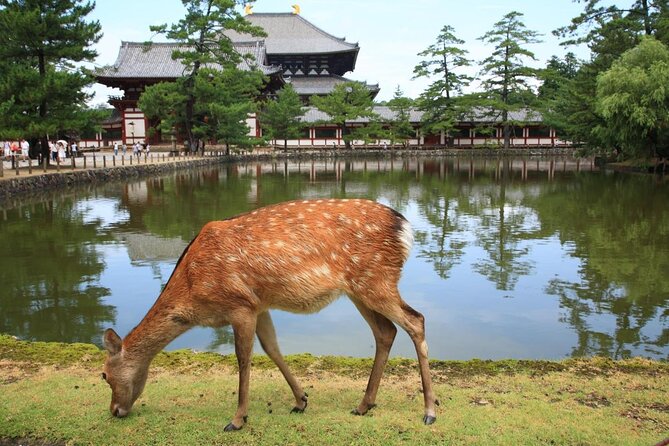
First, you’ll walk through Nara Park, where around 1,200 wild deer roam freely. You can buy senbei (deer crackers) to feed them. The tour specifically notes that the deer are known for bowing when you offer snacks. That bowing behavior is exactly why this place becomes memorable fast. It’s funny, slightly chaotic, and very Japan.
Then you connect to the bigger cultural anchor: Todai-ji Temple, home to one of Japan’s Great Buddha statues. The tour describes it as one of the three titanic Great Buddha statues of Japan. The ticket situation matters again: Todai-ji entry is included on most options, not on the last-minute option.
This is also where you feel the “combo tour” tradeoff. Some people want more time in Nara because deer-watching is easy to lose track of, and Todaiji is big enough that short visits can feel like rushing. Still, the upside is you get both the deer and the Great Buddha in one day, without you needing to map the route yourself.
A different sort of day in Japan:
- Osaka Food Tour: 13 Dishes at 5 Local Eateries
★ 5.0 · 2,149 reviews - Hungry Osaka Street Food Tour:15 Tastings & 3 Drinks with a Local
★ 5.0 · 1,727 reviews - Osaka: teamLab Botanical Garden Entry Ticket
★ 4.5 · 1,710 reviews - Osaka: Tea Ceremony Experience
★ 4.9 · 1,426 reviews
Lunch options: traditional meal versus eating on your own terms
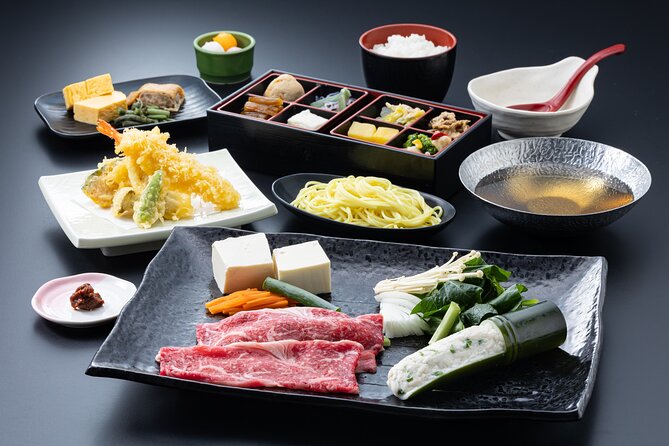
Lunch is handled as an option. If you choose it, you’ll have a traditional meal during the middle of the day, around the Arashiyama portion.
The tour also makes food limitations clear:
- No vegan or halal meals
- Vegetarian requests may be possible if you contact the operator at least 3 days before the tour
- If you choose the last-minute option, lunch may not be included
This is where I’d be practical. If you love trying local restaurants, you may find it’s worth skipping the lunch upgrade and eating near the main streets, where there are plenty of choices. On the other hand, if you’d rather remove decisions from your day and just eat something typical, the included meal can be a convenient way to keep moving.
Also, the lunch option can affect your group’s mood. A set meal keeps everyone together and on schedule, which is good for tempo. But if you’re the type who likes lingering, you may prefer to control your own lunch timing.
Tickets and value: what you pay for, and what can be extra
The tour price is $90.75 per person, and it’s typically booked about 39 days in advance. That price can be a great value in this itinerary because it includes major pieces that add up quickly on your own.
On most options, the tour includes:
- Entry ticket to Kinkaku-ji Temple
- Entry ticket to Todai-ji Temple
On the last-minute option, those entry tickets and meals may not be included. That means before you book, you should check which option you’re actually getting. If you select the version with tickets included, you’re buying fewer surprises and more predictable spending.
There’s also the “hidden value” angle that matters in Kyoto and Nara: transport. This tour removes confusion about getting between cities and getting around the main areas. Even if public transit is manageable, it can be stressful on a tight day. Paying for the bus is basically paying for time and simplicity.
Guide quality and group size: what “small” feels like
This is an English-speaking guided tour, and it runs with a maximum of 42 travelers. That size is the sweet spot for most people. Big enough to run smoothly. Small enough that you can still hear instructions and check where you need to be.
The guides are a big part of the experience quality. Names that show up often include Yuki, Maria, Haru, Riku, and Josh, and the common thread is that strong guides keep things organized and help you plan beyond the tour. People also mentioned guides pointing out what to expect before you arrive, sharing maps by stop, and taking photos for the group.
One more detail that helps your first minutes: there can be confusion at meeting points if directions are vague. If you’re departing from the Namba area, pay extra attention to the exact meeting spot and look for the guides in yellow. That small bit of focus can save you from the awkward wait that happens when everyone arrives at once.
The walking pace: fun if you pack for it
Here’s the honest part. This is a “see a lot” day. You’ll be out and moving across temple grounds and park paths, and some guests felt it included too much walking for the time.
Comfort advice is simple:
- Wear comfortable walking shoes
- Bring a water bottle if you know you get thirsty fast
- Give yourself permission to take quick photos, then move
Is it rushed? Sometimes, yes. But pace also depends on the season, crowd levels, and any schedule adjustments from weather or traffic. If you want slow travel, you’ll probably prefer separate full days for Kyoto or Nara. If you want the big landmarks with minimal logistics stress, this day trip hits the targets.
A useful mindset: treat each stop like a highlight reel. You’ll still get genuine enjoyment from Arashiyama’s bamboo and river area, Kinkaku-ji’s gardens and reflection views, and Nara’s deer feeding plus Todaiji’s Great Buddha. You just won’t get the “read every sign and explore side alleys” version.
Who this tour is best for, and who might want another plan
This tour is a strong match if you:
- Want to cover Kyoto plus Nara in one long day
- Feel uncomfortable building a multi-city plan on public transport
- Prefer guided timing and included entry tickets
- Like classic photo stops and don’t need hours of museum-style pacing
It may be less ideal if you:
- Plan on doing lots of shopping or long sit-down meals between sights
- Want more time in Arashiyama or Nara Park specifically
- Are sensitive to walking distance and moving through crowded spots
Also, if you care a lot about food fit, double-check lunch options early since vegan and halal meals are not provided and vegetarian requests require advance contact.
Should you book this Kyoto and Nara Highlights tour?
If you want the fastest way to get the signature Kyoto mood and the headline Nara moments, I’d book it. The value is strongest when you choose an option with Kinkaku-ji and Todai-ji tickets included, and when you’re staying in Osaka or Kyoto city center where mornings are easy.
Skip it if you already know you want deep time in one place. In that case, either Kyoto or Nara deserves a full day on its own. But if your schedule is tight and you want the best-known sights without wrestling transit, this is one of the more practical ways to do it.
One final check before you hit purchase: confirm whether your option includes the temple tickets and lunch. That detail can change the overall value a lot.
FAQ
How long is the Kyoto and Nara highlights tour?
It runs for about 9 hours.
Where do I meet if I’m starting from Osaka or Kyoto?
Osaka: Namba OCAT 1F near Daiso, meeting time 8:50 AM. Kyoto: Kyoto Station Hachijo Exit in the tourist bus parking area, meeting time 9:05 AM.
Is the tour guided, and is the guide English speaking?
Yes, it includes an English speaking guide.
Is transportation included, and is the vehicle comfortable?
Yes, you travel by air-conditioned vehicle with free Wi-Fi.
Are entry tickets included?
Kinkaku-ji Temple and Todai-ji Temple entry tickets are included on most package options. They are not included on the last-minute option.
Is lunch included?
Lunch is included only if you select the lunch option. It is not included on the last-minute option.
What dietary needs can you handle?
Vegan and halal meals cannot be provided. Vegetarian requests require contacting the operator directly at least 3 days before the tour.
How many people are in the tour?
The tour has a maximum of 42 travelers.
Newly listed around Osaka
- (Ticket Included) Explore Osaka Castle & Museum of History★ 4.8 · 21 reviews
- Hidden Osaka – Yukaku Red Light Tour & Culinary Adventure★ 4.8 · 96 reviews
- Osaka: Walking Tour and Top Highlights★ 4.8 · 104 reviews
- Same Day OK! Osaka: Local Food, Izakaya & Local Bites Tour!★ 4.8 · 17 reviews
- Osaka: Private Ceramic Painting Workshop★ 5.0 · 13 reviews
- Eat Like a Local in Osaka – Private Custom Street Food Tour★ 4.3 · 33 reviews
- Pickleball in Osaka & Kyoto with Locals!★ 4.6 · 64 reviews
- Osaka:SUMO BEATS SHOWCASE: Taiko Drum and Wagyu burger!★ 4.2 · 37 reviews
Osaka Tours, compared.
Shinsekai Food Tour with 13-15 Dishes at 5 Eateries
Read our review →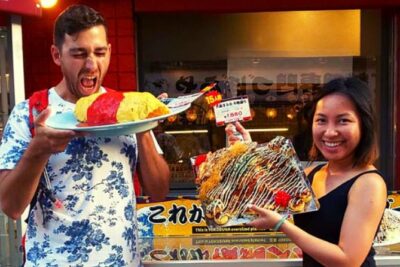
Osaka Food Tour: 13 Dishes at 5 Local Eateries
Read our review →
Hungry Osaka Street Food Tour:15 Tastings & 3 Drinks with a Local
Read our review →
Browse the lists this tour appears in