
Review · LICENSED GUIDES & PRIVATE DRIVERS
Aomori Full-Day Private Trip with Government-Licensed Guide
Aomori has a way of surprising you. This private, licensed guide-led walk strings together standout stops like Wa Rasse for Nebuta Festival floats and Sannai-Maruyama for Jomon-era remains, plus several major museums in between. I like that it’s built around a flexible menu, so you can lean art, culture, or archaeology without losing the thread.
The big plus is the licensed local English-speaking guide, who ties what you see to what Aomori is really about. I also like the way the itinerary hits both festival creativity and ancient roots, so the day feels balanced instead of repetitive. One drawback to plan around: the tour price covers the guide, not museum entry, lunch, or transportation, so your final total depends on what you choose to go into.
This is a walking tour within Aomori city, with pickup on foot inside a designated area. In practice, the experience tends to live or die by your guide, and names like Kazumi (KAZ) and Tomohiko Kudo show up often for helping guests shape the pace and priorities.
In This Review
- Key things I’d plan around before you go
- Starting in Aomori city: Edo grid, WWII scars, modern streets
- Wa Rasse Nebuta Museum: festival floats, minus the August crowds
- Aomori Prefectural Kyodokan: where Jomon pottery becomes a story
- Aomori Contemporary Art Center by Tadao Ando: modern design, quiet power
- Munakata Shiko Memorial Museum: woodblock prints with a local signature
- Aomori Museum of Art and the walk toward Sannai-Maruyama
- Sannai-Maruyama: reconstructed foundations of a Jomon settlement
- Price and logistics: what $154.84 really buys
- Who this private Aomori tour fits best
- Should you book this tour?
- FAQ
- How long is the Aomori private trip?
- Is this tour private for my group only?
- How many sites will we visit?
- Are entrance fees included for museums?
- Is transportation included?
- Where do we meet the guide?
- Does this tour include Hirosaki?
- Do I need to print tickets?
- Is there free cancellation?
Key things I’d plan around before you go
- Wa Rasse makes Nebuta feel personal, with floats from the previous year plus video and sound installations
- Jomon stops bookend the day’s “how it started” theme, from pottery and huts to reconstructed settlement foundations
- You get architecture with meaning, including an Aomori Contemporary Art Center designed by Tadao Ando
- Munakata Shiko’s woodblock prints bring a local art voice to the mix
- Most museums are about an hour each, so wear good shoes and keep snack plans realistic
- No Hirosaki on this one, so your time stays in Aomori city
Starting in Aomori city: Edo grid, WWII scars, modern streets
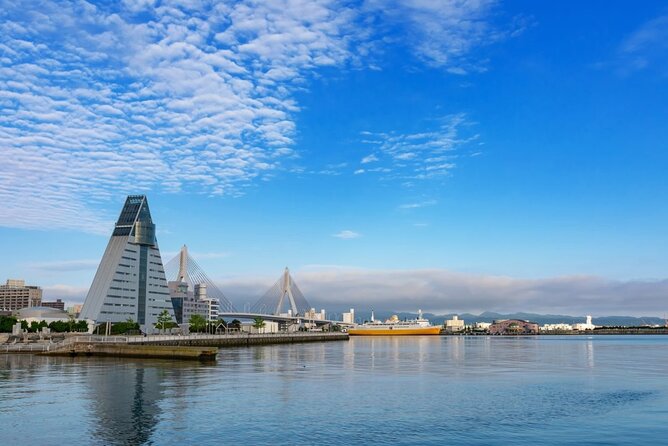
Your day begins in central Aomori, where the city still keeps the older grid pattern associated with the Edo period. Then the real story comes in layers. Aomori city was heavily bombed in World War II, so many of the most visible attractions today are newer buildings rather than preserved old quarters.
That matters because this tour isn’t trying to sell you a postcard version of history. Instead, it shows you how a city rebuilds and evolves, while still carrying long threads forward, like festival tradition and Jomon archaeology.
You’ll be walking, not riding. The tour start is on foot in a designated area, and the day is paced for museum time plus transit on foot between stops. If you’re short on stamina, tell your guide early so you can pick the right combination of 3 to 4 sites.
More Private Guides in Japan:
- Tokyo 6hr Private Tour with Government-Licensed Guide
★ 5.0 · 3,902 reviews - Kyoto Early Morning Tour with English-Speaking Guide
★ 5.0 · 1,427 reviews - Tokyo 4hr Private Tour with Government-Licensed Guide
★ 5.0 · 1,394 reviews
Wa Rasse Nebuta Museum: festival floats, minus the August crowds
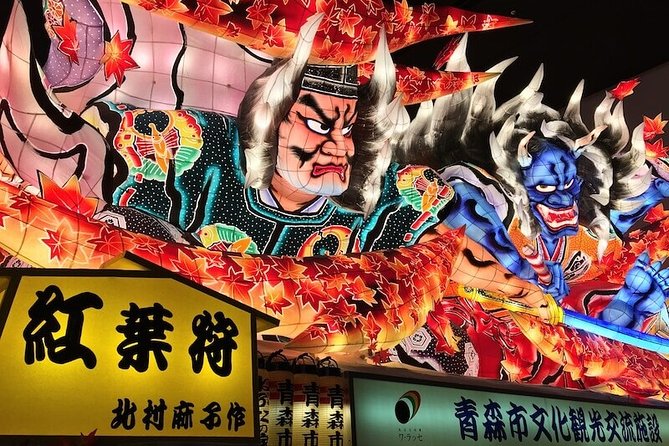
Wa Rasse is the closest thing to a Nebuta Festival crash course without traveling at the festival’s peak. The Aomori Nebuta tradition is famous for giant, brilliantly lit floats, and Wa Rasse is dedicated to that world.
Expect to see five Nebuta floats from the previous year on display, along with video installations, sounds, and photographs. This is a smart stop because it explains the festival through more than just a single highlight. You get context, then you get to look closely at the float artistry.
Why this stop is so worth your time: Nebuta isn’t only a visual show, it’s a Northern Tohoku identity marker. When you see how the floats are presented, you understand the festival as craft, teamwork, and local pride, not just street spectacle.
Practical note: admissions are not included, so if you want Wa Rasse, assume you’ll pay an entry fee separately.
Aomori Prefectural Kyodokan: where Jomon pottery becomes a story
Next up is the Aomori Prefectural Kyodokan, a folk museum focused on deep time. The highlight here is the large collection of Jomon period pottery, paired with miniature reconstructions of Jomon huts and tools.
This is the stop that makes archaeology readable. Pottery can sound technical on paper, but the reconstructions give you a human scale. You start to picture daily life rather than just catalog items.
If you like museums that teach you how to look, this one works. You’ll spend about an hour here, which is a good match for a private format. With a group tour, you usually end up rushing. Here, you can slow down for the pieces that catch your eye.
Admission isn’t included, so check your plan early if you want to control costs.
Aomori Contemporary Art Center by Tadao Ando: modern design, quiet power
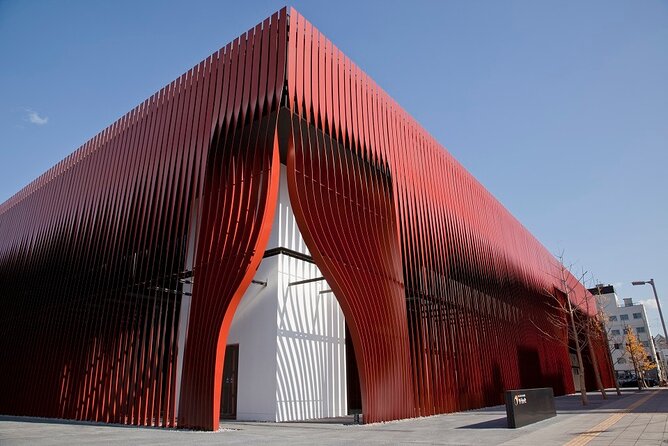
After history and craft, you switch gears to contemporary art. The Aomori Contemporary Art Center sits on the grounds of Aomori Public College, and the building was designed by internationally acclaimed architect Tadao Ando.
The design theme here is the relationship between the building and its water feature, with the architecture described as blending into its setting. That kind of placement matters. You’re not just walking into a white box of art. You’re inside a designed environment that shapes how you move and pause.
This stop is a nice counterweight to the festival museum. Nebuta is kinetic and loud in its original form, even when you’re seeing it through exhibits. The art center is more about stillness, light, and space. For many people, that rhythm keeps the day from turning into a museum marathon with no breaks.
Again, entrance fees are not included.
A few more Japan days to weigh up
- Private Tour to Mt. Fuji and Hakone (Fully Licenced Operator)
★ 5.0 · 1,910 reviews - Fushimi Inari Hidden Hiking Tour (Private Option Available)
★ 5.0 · 1,750 reviews - Private Kyoto Tour with a Local, Highlights & Hidden Gems, Personalised
★ 5.0 · 1,543 reviews - Tokyo Customized Private Tour (Must See Places in 1 Day)
★ 5.0 · 1,499 reviews
Munakata Shiko Memorial Museum: woodblock prints with a local signature
The Munakata Shiko Memorial Museum of Art focuses on the woodblock prints of Munakata Shiko, who was born in Aomori. He’s often referred to as the Vincent van Gogh of Aomori, a nickname that points to how bold and distinct his work can be.
Here, the draw is simple: you’re seeing a single artist’s vision in depth. The museum highlights his woodblock output and includes mention of his masterpiece Ten Great [works], listed in the tour details.
If you’re the type who likes tracing how one creator’s style evolves, this is your stop. If you only care about a quick overview of Japanese art, you might find it slower. But because it runs about an hour, you should be able to get a meaningful taste without feeling trapped.
Admission is not included.
Aomori Museum of Art and the walk toward Sannai-Maruyama
The Aomori Museum of Art is close to the Sannai-Maruyama site, and it’s built as a modern structure that aims to harmonize with the historical surroundings. It’s described as a white cubic building designed by architect Jun Aoki.
This museum is a practical bridge stop. Even if you don’t go deep into every gallery, it helps you shift mental gears from artist prints into the archaeology that you’re about to see outside.
If you tend to get museum-fatigued, this is a good place to prioritize what you want. You can spend the full hour if you enjoy art, or use the time strategically if you’d rather get going to the dig site.
As with the other indoor stops, entrance fees are not included.
Sannai-Maruyama: reconstructed foundations of a Jomon settlement
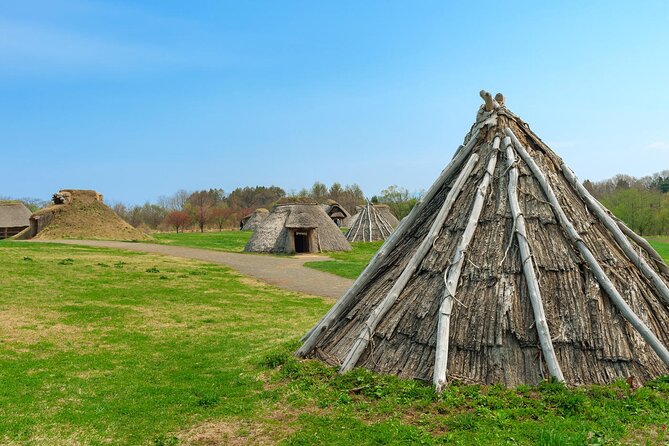
Finally, you reach the anchor stop: Sannai-Maruyama. This archaeological site reveals reconstructed foundations of a Jomon-era settlement. The tour notes that the site was first discovered in 1992 and later declared a special national historic landmark.
Seeing reconstructed foundations is different from looking at artifacts in a case. The scale changes how you understand the past. Instead of holding history still in glass, you’re walking a sense of where buildings once stood. It gives you a stronger mental map of how people structured space in the Jomon period.
This stop is the main reason the tour feels more than a museum circuit. Nebuta connects to local identity through festival craft, while Sannai-Maruyama connects to identity through ancient roots. Put together, the day gives you a “past meets present” feeling without forcing it.
You’ll spend about an hour here, which is long enough to take in the layout, not so long that you feel like you’re standing around.
Price and logistics: what $154.84 really buys
The price is $154.84 per person for a private, licensed guide-led day in Aomori city. At this rate, you’re paying for planning, interpretation, and the simple fact that you won’t be figuring out the order of stops by yourself.
Here’s the tradeoff: transportation fees, entrance fees, lunch, and personal expenses are not included. That means your best value comes if you choose the stops that match your interests, since admission costs can add up across multiple museums.
Also, this tour is walking-based. That keeps the day more intimate and more flexible, but it means you should budget energy. If weather is bad, you’ll rely on your guide’s pacing and your own willingness to keep moving between indoor sites.
One more key point: you cannot visit Hirosaki on this tour, so don’t expect the day to branch out. This is for Aomori city time, planned tightly.
Who this private Aomori tour fits best
You’ll likely love this tour if you want a guided day that mixes festival culture and archaeology, without the chaos of group logistics. It’s also a good fit if you care about art, because the itinerary includes multiple museum stops plus an architecturally significant building tied to Tadao Ando.
It may not be the perfect pick if you want a car-based day trip with long outdoor time and lots of walking in open spaces. The itinerary is museum-heavy, but the walking between stops is still part of the experience.
Should you book this tour?
If your ideal Aomori day includes Nebuta context at Wa Rasse and the Jomon settlement story at Sannai-Maruyama, then yes, I’d book it. The private format and licensed guide add real value here, especially when you want your stops connected by a coherent theme instead of randomly chosen destinations.
Book this one if you’re happy paying separate museum admissions and you’re comfortable with a walking schedule in Aomori city. Skip it if you’re hoping to add another city like Hirosaki, or if you want everything fully ticketed and handled with no extra payments beyond the tour price.
FAQ
How long is the Aomori private trip?
It runs for about 6 hours.
Is this tour private for my group only?
Yes. It is a private tour/activity, and only your group participates.
How many sites will we visit?
The tour is described as customizable, typically choosing 3 to 4 sites from the set list of expected stops.
Are entrance fees included for museums?
No. Entrance fees are not included.
Is transportation included?
No. Transportation fees are not included, and the tour is a walking tour.
Where do we meet the guide?
You meet the guide on foot within a designated area in Aomori city.
Does this tour include Hirosaki?
No. You cannot visit Hirosaki on this tour.
Do I need to print tickets?
A mobile ticket is listed for this experience.
Is there free cancellation?
Yes. You can cancel for free up to 24 hours in advance for a full refund.
Newly listed around Japan
- Hiroshima and Miyajima 1 Day Walking Tour★ 5.0 · 43 reviews
- Hiroshima and Miyajima 1 Day Cruise Tour★ 5.0 · 24 reviews
- Hiroshima & Miyajima: UNESCO A-Bomb Dome & Itsukushima with Local★ 5.0 · 25 reviews
- Hiroshima & Miyajima: Private Full-Day Tour with a Local Guide★ 5.0 · 39 reviews
- Hiroshima 5k Running Tour of Hijiyama Park★ 5.0 · 7 reviews
- Hiroshima and Miyajima Bus Tour with Indian Lunch★ 5.0 · 10 reviews
- Hiroshima and Miyajima 1 Day Bus Tour★ 4.5 · 145 reviews
- Hiroshima Peace Memorial and Atomic Bomb Dome Private Tour★ 5.0 · 37 reviews
Licensed Guides & Private Drivers, compared.
Tokyo 6hr Private Tour with Government-Licensed Guide
Read our review →
Kyoto Early Morning Tour with English-Speaking Guide
Read our review →
Tokyo 4hr Private Tour with Government-Licensed Guide
Read our review →
Kyoto 6hr Private Tour with Government-Licensed Guide
Read our review →
Hiroshima / Miyajima Full-day Private Tour with Government Licensed Guide
Read our review →Early Morning Tour with English-Speaking Guide
Read our review →
Tokyo Private Sightseeing Tour by Car- English speaking chauffeur
Read our review →
Mt Fuji Private Tour with English Speaking Driver
Read our review →Browse the lists this tour appears in