
Review · CITY TOURS
Bonsai Tour & Experience at the Most Sacred City for Bonsai in JP
A train ride and a box of tiny trees can teach you a lot. This is a focused Bonsai-cho experience with hands-on pruning plus time to ask questions. You’ll see excellent outdoor bonsai examples in a place that was built for this art, not just a quick stop.
I especially liked the small group size, which makes it easier to get personal tips while you work. The only catch is budget and expectations, because you’ll likely need to order something at the cafe during the hands-on portion, and museum entry is extra if you want it.
In This Review
- Key things I’d note before you go
- Why Bonsai-cho Is the Place to Learn Bonsai Near Tokyo
- Getting There From Tokyo and What the 2 Hours 30 Minutes Feels Like
- Sightseeing Session: Outdoor Bonsai Gardens and Hundreds of Mini Masterpieces
- Hands-On Pruning and Shaping in the Cafe Workshop
- Jun-san and the Q&A That Makes This Feel Personal
- Museum Entry and Shop Fees, the Stuff That Can Change Your Final Total
- Price and Value: What You’re Paying For at $55.52
- Who This Bonsai Tour Suits Best
- Practical Considerations Before You Book
- Should You Book This Bonsai Tour From Tokyo?
- FAQ
- Where is the tour meeting point?
- What time does the tour start?
- How long is the experience?
- What is the group size limit?
- What is included in the price?
- What is not included?
- Is the ticket mobile?
- Who can participate?
- What happens if someone is unwell or has been drinking alcohol?
- Is cancellation refundable?
Key things I’d note before you go
- Bonsai-cho has a bonsai-focused history tied to local gardeners after the Great Kanto Earthquake.
- Small-group format (max 10) means you can actually ask Jun-san questions while you’re holding tools.
- You get both sightseeing and practice in one 2 hours 30 minutes block.
- Tools are included, but you may still want to pay attention to cafe ordering and optional museum fees.
- It starts at Toro Station and ends back at the same meeting point, so the plan stays simple.
Why Bonsai-cho Is the Place to Learn Bonsai Near Tokyo
If you want the real setting for bonsai, Bonsai-cho is hard to beat. This area in Saitama became known as Bonsai City about 100 years ago, when local bonsai gardeners formed the community after the Great Kanto Earthquake. The point is not just that you’ll see pretty trees, it’s that the town grew around them.
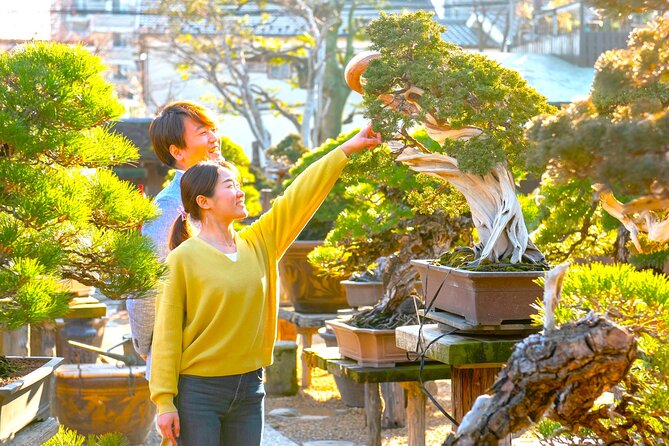
You’re also surrounded by greenery, and the area is home to long-established bonsai gardens. On this tour, you’ll visit an outdoor bonsai garden and see many high-quality specimens with guide commentary. That matters because bonsai is not just an object, it’s an ongoing relationship between the artist and the tree. Being in the right place helps you understand why people here treat bonsai as local craft, not a souvenir.
A few more Tokyo days to weigh up
- Mt Fuji and Hakone 1-Day Bus Tour Return by Bullet Train
★ 5.0 · 26,383 reviews - 1-Day Tokyo Bus Tour
★ 5.0 · 14,250 reviews - Tokyo: TOKYO SKYTREE® Admission ticket
★ 4.5 · 11,192 reviews
Getting There From Tokyo and What the 2 Hours 30 Minutes Feels Like
The tour meets at Toro Station 1-chome in Kita Ward, Saitama, with a 10:00 am start. It runs about 2 hours 30 minutes, and it ends back at the meeting point. That simple loop is a plus if you like your day to have an end time.
The tour is also near public transportation, and you’ll use a mobile ticket. Practically, that means less hassle than paper vouchers and less wandering once you reach the station area. Because the group size is capped at 10 travelers, the guide can keep things moving without turning it into a rushed slideshow.
One more timing note. The day is split into a sightseeing portion first, then a hands-on pruning and shaping portion. That order is smart. You see examples in the morning part, then you try the techniques while the ideas are still fresh.
Sightseeing Session: Outdoor Bonsai Gardens and Hundreds of Mini Masterpieces
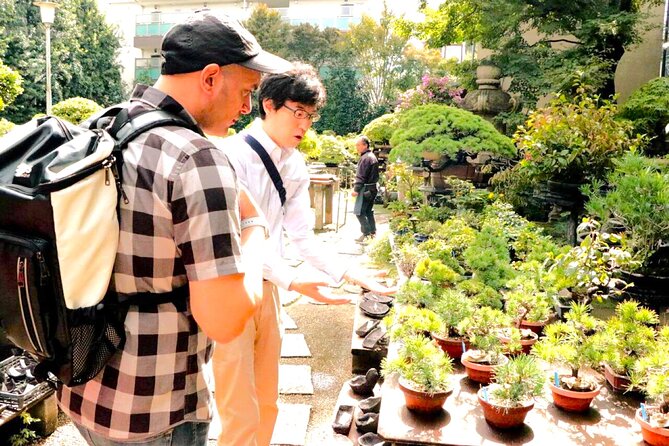
The first half is about seeing bonsai as living art. You’ll visit an outdoor bonsai garden and then spend time at bonsai nurseries where the guide explains what you’re looking at. The focus here is not abstract history, it’s how bonsai works in the real world of branches, trunks, and careful maintenance.
Expect to see hundreds of top-quality bonsai pieces during this part of the experience, with commentary tied to what makes each one interesting. Since bonsai is miniature by design, it can be tempting to think everything is about looks. But the guide’s explanations bring it back to structure, proportion, and technique choices.
You’ll also get some bonsai history along the way, including how the art developed and how Bonsai-cho became established. In one of the strongest reviews, the guide was noted for sharing a brief history on the walk to the nursery. That kind of context helps you stop treating bonsai as just a set of plants and start seeing it as design language.
Hands-On Pruning and Shaping in the Cafe Workshop
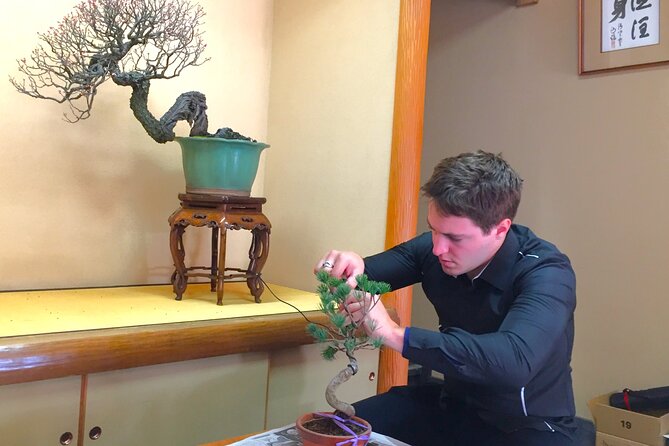
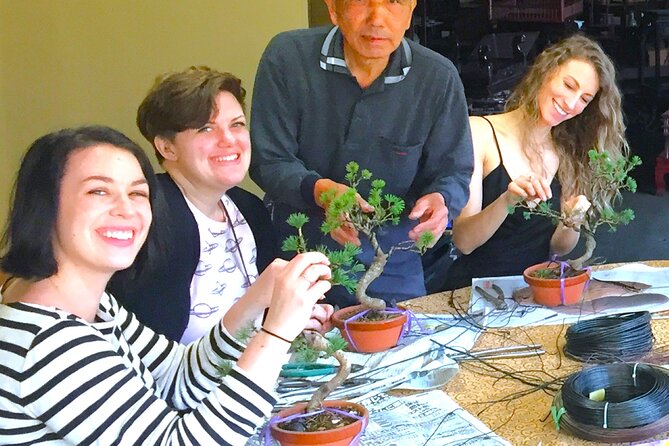
The second session is where you actually work. This is the part that earns the high ratings, because you get to try key bonsai maintenance techniques like pruning and shaping.
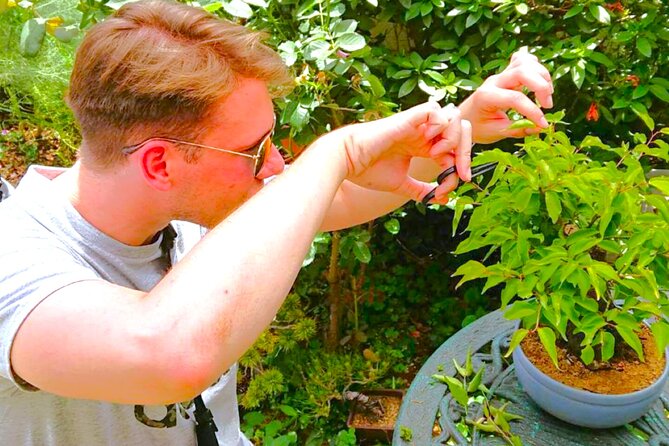
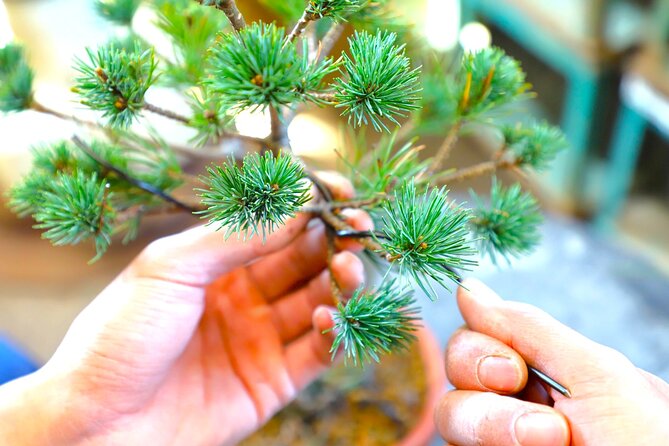
You’ll use bonsai tools as part of the class, and the tool usage fee is included. In addition, the hands-on portion includes technique guidance from your instructor while you’re working, not after. One review specifically called out learning basic actions like wire cutting, trimming, and the care that goes into each step.
Plan to do the class portion at a cafe. That’s also where your budget planning matters. You’ll need to order something there, typically starting around 450 JPY. So treat it as part of the experience, not an optional upgrade. If you’re trying to keep costs tight, that’s the one extra you should plan for ahead of time.
A different sort of day in Japan:
- Tokyo: teamLab Planets TOKYO Digital Art Museum Entry Ticket
★ 4.6 · 9,779 reviews - Mt Fuji & Hakone Cruise, Drum Show Bullet Train 1 Day from Tokyo
★ 4.0 · 7,413 reviews - Tokyo: Sumo Show Experience with Chicken Hot Pot and a Photo
★ 4.8 · 6,678 reviews - Tokyo: Shinjuku Food Tour (13 Dishes at 4 Local Eateries)
★ 5.0 · 6,603 reviews
Jun-san and the Q&A That Makes This Feel Personal
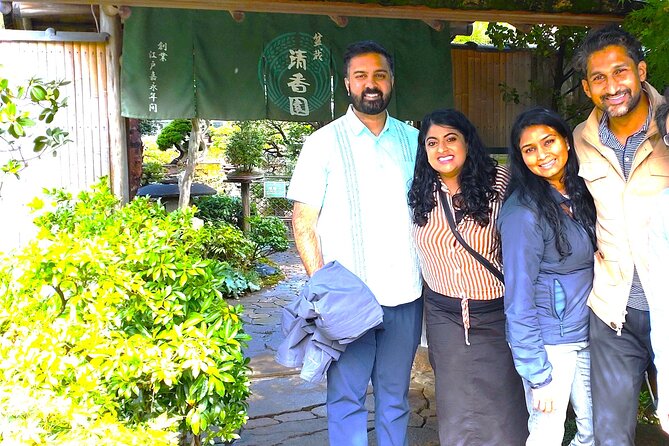
This tour is strongest when the guide is able to connect technique to real questions. The instructor on the experience is named Jun in the reviews, and what stands out is how much time he spends explaining and answering questions.
People liked the fact that he is prompt and meets you at the train station, then starts orienting you quickly. More importantly, he doesn’t just talk bonsai. He also answers questions about Japan in general, which helps if you’re visiting and want a local lens.
And because the group cap is 10 travelers, Jun can adjust his attention based on what you’re doing. If you’re a beginner, you’ll usually need more step-by-step direction. If you already know a bit, you’ll want to ask why certain techniques are used. This format makes those conversations realistic instead of time-limited.
Museum Entry and Shop Fees, the Stuff That Can Change Your Final Total
Two add-ons come up in the provided details. First, there is an admission fee for the Bonsai Art Museum, listed as 310 yen (about $2). This is not included in the tour price, so it’s optional. If you’re a serious bonsai fan and want more context, it’s worth considering. If your priority is hands-on practice, you can likely treat it as a nice bonus rather than a must.
Second, there’s mention of an additional fee if you want to enter a shop without participating in the class. The tour notes that this would need to be indicated at the time of request, and you won’t be admitted without paying. If you’re the type who might wander into a store after class ends, it’s worth knowing the rules before you show up.
Finally, remember that tour work is at the cafe and you’ll be expected to order. Between that, optional museum entry, and any shop choices, it’s easy for a $55.52 tour to turn into a slightly larger day. The good news is you’ll know about these costs up front.
Price and Value: What You’re Paying For at $55.52
At $55.52 per person, you’re paying for a guided, small-group experience that bundles several real costs. Included in the price are the instructor, bonsai tool usage fee, and consumption tax.
What that means for value is simple. You’re not just sightseeing. You’re paying for expert instruction and the ability to practice the techniques yourself, with tools provided. If you’ve ever watched workshops where you mostly observe, this is the opposite. The hands-on part is the point, and it’s scheduled after you’ve had a chance to see bonsai you can use as reference.
What is not included is also straightforward. You should budget for cafe ordering (starting around 450 JPY) and museum admission if you want it (310 yen). With that in mind, this still feels like strong value because the included elements are the expensive part, your guide time and your access to proper tools for pruning and shaping.
Also, the itinerary is tight. At 2 hours 30 minutes, it’s not an all-day commitment. That makes it easier to slot into a Tokyo trip without sacrificing a full travel day.
Who This Bonsai Tour Suits Best
This works well for two groups in particular.
First, it’s a great choice if you’re a bonsai beginner who wants to learn the basics without getting overwhelmed. You’ll get history and the main maintenance techniques, with hands-on time and a guide who can explain what you’re doing in plain terms.
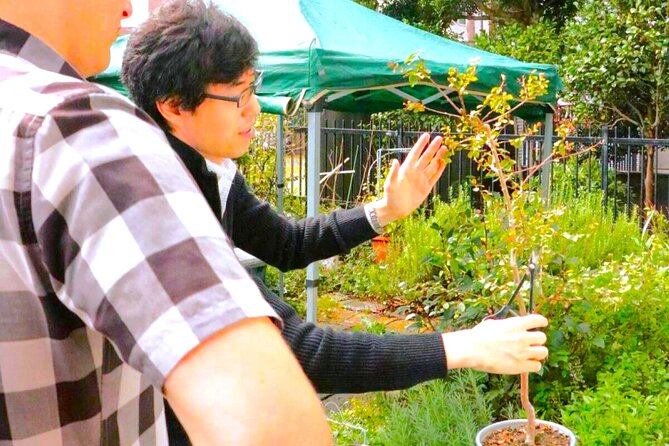
Second, it’s worth it if you’re not brand-new. The tour still includes technique instruction like pruning and shaping, and it’s guided while you hold the tools. If you’re already curious about wire cutting and trimming concepts, you should appreciate the structure of the class and the chance to ask direct questions.
One more fit factor: the group max of 10 keeps it comfortable. If you dislike big tour herds, this should feel more like a lesson with sightseeing attached.
Practical Considerations Before You Book
This experience has a few conditions you should keep in mind so there are no surprises. Participants must be at least 13 years old, and anyone under 18 must be accompanied by an adult. The tour also notes that if someone is unwell or under the influence of alcohol, participation isn’t permitted.
Cancellation is non-refundable and cannot be changed for any reason. That’s the main reason you should be sure about your date before booking.
Also, because the tour uses a mobile ticket and starts at a specific station location, plan to arrive on time. The meeting point is Toro Station 1-chome, and the schedule starts at 10:00 am.
Should You Book This Bonsai Tour From Tokyo?
Book it if you want a bonsai experience that actually teaches technique, not just photos. The best reason to choose this is the mix of outdoor bonsai garden sightseeing and a structured pruning and shaping session, led by Jun with plenty of time for questions. The small group size makes the instruction feel personal.
Skip it if your only goal is museum-style touring, or if you don’t want to do any hands-on work. There are optional extras like the Bonsai Art Museum, but the heart of the experience is the practical class at the cafe.
If you’re building a Japan trip with a little variety beyond big-city sightseeing, this is a smart add-on. It’s short, focused, and tied to a place that genuinely belongs to bonsai.
FAQ
Where is the tour meeting point?
The tour meets at Toro Station 1-chome, Torocho, Kita Ward, Saitama, 331-0804, Japan.
What time does the tour start?
The start time is 10:00 am.
How long is the experience?
It lasts about 2 hours 30 minutes.
What is the group size limit?
The tour has a maximum of 10 travelers.
What is included in the price?
Included are the instructor, bonsai tool usage fee, and consumption tax.
What is not included?
The cafe part requires you to order something (listed starting around 450 JPY). The Bonsai Art Museum admission fee is also not included (listed as 310 yen).
Is the ticket mobile?
Yes, the tour uses a mobile ticket.
Who can participate?
Participants must be at least 13 years old, and anyone under 18 must be accompanied by an adult.
What happens if someone is unwell or has been drinking alcohol?
The tour states that participants who are unwell or under the influence of alcohol will not be permitted to participate, and there are no refunds.
Is cancellation refundable?
No. The experience is non-refundable and cannot be changed for any reason.
Newly listed around Tokyo
- Hitachi National Seaside Park`s Flowers & Ashikaga Flower Park★ 4.5 · 15 reviews
- Holiday Lights Walk Tour Hibiya Midtown Tokyo Station Marunouchi★ 5.0 · 6 reviews
- Tsugaru shamisen performance over traditional dinner★ 5.0 · 9 reviews
- Tokyo Family Photoshoot — Private & Authentic Experience★ 5.0 · 8 reviews
- Hide’s Table A Unique Dinner Gathering Every Wednesday Night★ 5.0 · 20 reviews
- Highlights of Japan Tour: 10-day Small Group★ 5.0 · 14 reviews
- Harajuku Kawaii Fashion and Pop-Culture Tour★ 5.0 · 94 reviews
- Tokyo: Private Transfers to/from Narita Airport(NRT)★ 3.5 · 23 reviews
City Tours, compared.
Private City Highlights Tour with Local Guide
Read our review →
Asakusa, Skytree & Akhihabara Go-Kart City Experience
Read our review →
Hiroshima City 4hr Private Walking Tour with Licensed Guide
Read our review →


Private Haneda Airport (HND) to Central Tokyo City Transfer
Read our review →
3-hour Guided E-Bike Tour of the City’s Hidden Gems
Read our review →
Shibuya City: Daikoku PA GT-R R35, R34, R33 or R32 Tour
Read our review →Browse the lists this tour appears in