
Review · HIROSHIMA TOURS
Experience the Soul of Hiroshima: A Peaceful Koto Workshop
One pluck brings real calm. In Hiroshima, you learn the basics of the Fukuyama koto on instruments crafted in the region that supplies most of Japan’s kotos, and you work toward Echo of Serenity, a peace-focused piece connected to atomic bomb victims. What I love is how hands-on the lesson is, and I also like the video recording you receive at the end. One thing to consider: 90 minutes covers the essentials, so you leave with a complete beginner-level piece, not full mastery.
Instruction is in English and the class is capped at 6, which keeps the pace personal even if you have no music experience. The studio is within walking distance of Peace Memorial Park, so your music lesson stays connected to Hiroshima’s message of peace, not just as a performance.
In This Review
- Key Takeaways Before You Go
- Why This Workshop Feels Like Hiroshima, Not Just a Class
- Your 90-Minute Flow Near Peace Memorial Park
- Fukuyama Koto Craft, 13 Strings, and 1,300 Years of Context
- Posture, Plucking, and the English-First Teaching Style
- Learning Echo of Serenity Without Getting Stuck
- The Finale: Group Performance and Why That Part Matters
- Drinks, Optional Koto Purchase, and Practical Comfort
- Where to Meet, How to Get There, and What to Look For
- Who This Is Perfect For, and Who Might Want to Skip
- Price and Value: Is $50 Worth It in Hiroshima?
- Quick Notes to Plan Your Best Session
- Should You Book This Hiroshima Koto Peace Workshop?
- FAQ
- How long is the workshop?
- How much does it cost?
- Do I need any musical experience or Japanese?
- What ages is the workshop for?
- How large is the group?
- What do I learn by the end of the session?
- Is the workshop connected to peace themes?
- What do I receive to take home?
Key Takeaways Before You Go
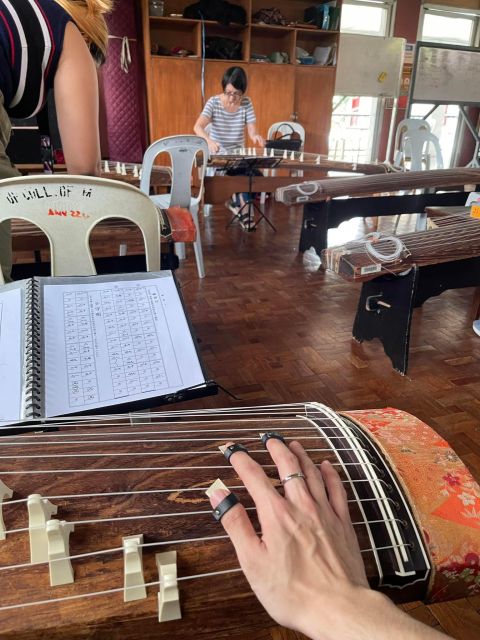
- Fukuyama-made koto sound: you play on instruments born in Hiroshima’s koto heartland, with a reputation for craftsmanship and tone
- A peace memorial through music: you learn a composition honoring atomic bomb victims, turning reflection into a shared sound
- English instruction, zero experience needed: posture, plucking, and basics come step by step
- Small group class size: limited to 6 participants, so you get real coaching instead of watching from afar
- Keepsakes with meaning: you get a performance video and a handfolded origami crane
Why This Workshop Feels Like Hiroshima, Not Just a Class
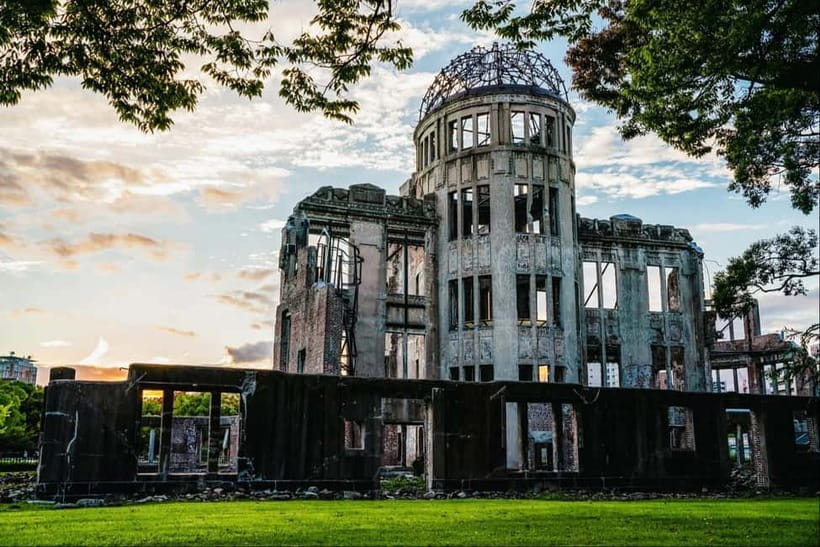
The koto is one of those instruments that instantly changes the room. The tone is clear but not sharp, steady but not flat. And when you’re learning in Hiroshima, the sound takes on a weight that’s hard to explain until you hear it and play it yourself.
I like that this workshop connects technique with meaning. You’re not just memorizing notes. You’re learning Echo of Serenity as a musical prayer for peace, and the instructor guides you to understand what each part of the koto symbolizes.
The other thing I like is the “leave with something” factor. You come away with a complete piece you can point to on your phone later, thanks to the instructor’s video recording. That makes the experience feel personal, not disposable.
A few more Hiroshima days to weigh up
- Peaceful Hiroshima & Miyajima UNESCO 1 Day Bus Tour
★ 5.0 · 5,309 reviews - Hiroshima: Hiroshima and Miyajima UNESCO Sites 1-Day Tour
★ 4.9 · 2,330 reviews - Hiroshima / Miyajima Full-day Private Tour with Government Licensed Guide
★ 5.0 · 1,298 reviews
Your 90-Minute Flow Near Peace Memorial Park
This is a focused 1.5-hour session, designed for beginners. You start at the studio within walking distance of Peace Memorial Park, and the pacing builds in a logical way: context first, then technique, then performance.
In practice, the workshop runs like this. You begin with an introduction to the koto, including where it comes from and why it matters in Japanese culture. Then you hear the peace-themed composition so you can understand what you’re aiming to play.
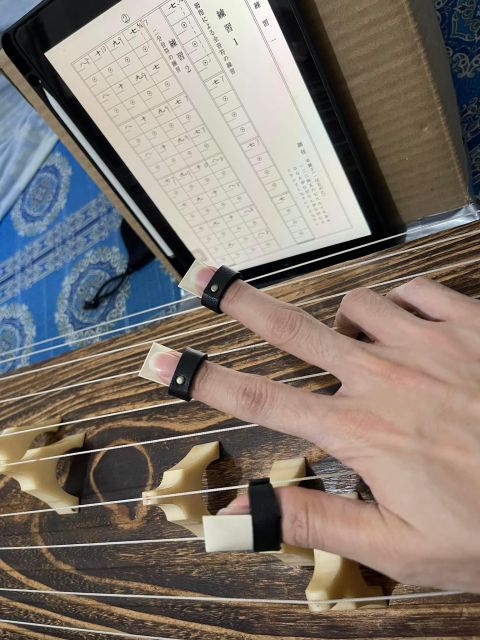
After that, the class turns practical. You work on posture and hand position, then on plucking techniques. You practice enough to join a group performance of the piece, not just play isolated fragments.
At the end, you’re not sent away empty-handed. You receive a recording of your performance, plus a handfolded origami crane. You also get a free soft drink after the session, and coffee, tea, and juice are provided.
Fukuyama Koto Craft, 13 Strings, and 1,300 Years of Context
One of the most valuable parts of this workshop is that it doesn’t treat the instrument like a prop. It gives you the “why” behind what you’re doing with your hands.
The koto has 13 strings and a history stretching back more than a thousand years. Learning that helps you see your beginner mistakes differently, because you understand you’re entering a long tradition of sound-making. You also learn the specific story tied to Fukuyama City, described as the heartland of koto craftsmanship.
Here’s the useful detail you should remember as you’re learning: over 70% of Japan’s kotos are said to be born in Fukuyama. That’s not just trivia. It explains why the workshop emphasizes Fukuyama-crafted instruments, and why the koto you play matters for tone and feel.
You’ll also get symbolism tied to the instrument’s design. Even without knowing Japanese, this kind of explanation lands. It helps you play with attention, not autopilot.
Posture, Plucking, and the English-First Teaching Style
You don’t need Japanese or music training to do well here. The instruction is conducted in English, and that makes a big difference for a beginner because it lets you concentrate on technique instead of decoding language.
The instructor covers the fundamentals you need fast. Think: correct posture, how to place your hands, and how to pluck so the sound comes out clean instead of muted. This is the part that turns a “curious try” into real learning.
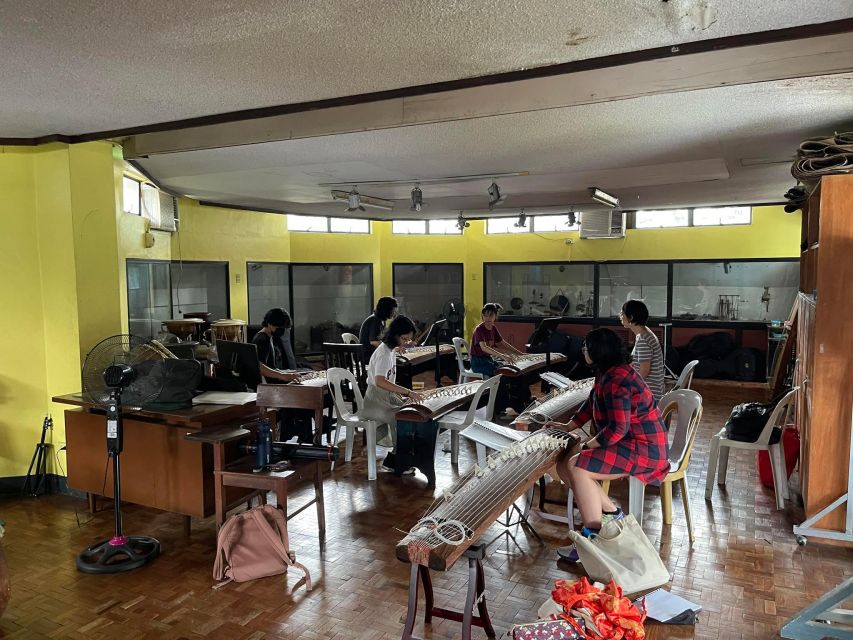
The small group size helps too. With a limit of 6 participants, you’re more likely to get fixes that match your body and your timing. In a bigger class, you might only get generic pointers. Here, you can get the specific kind of “change this, try again” coaching that speeds up progress.
Also, teachers in these sessions are known for building up step by step. One instructor example mentioned Vincent, who explains the history first, then takes students through exercises that lead to a group performance of a composition he composed. Another instructor example mentioned Nicholas, who also started with history and technique, then moved into learning a full piece from scratch.
Even if you don’t get those exact teachers, the structure is clear: history and technique are taught in the same session, and you finish by playing together.
A different sort of day in Japan:
- Hiroshima Historical Walking Tour – Why A-Bomb was Dropped
★ 4.8 · 893 reviews - Hiroshima Peace (Heiwa) Walking Tour at World Heritage Sites
★ 5.0 · 872 reviews - Hiroshima in a Nutshell: Morning Bike Adventure
★ 5.0 · 524 reviews - Hiroshima City 4hr Private Walking Tour with Licensed Guide
★ 5.0 · 437 reviews
Learning Echo of Serenity Without Getting Stuck
The centerpiece is the composition Echo of Serenity. It’s described as a hauntingly beautiful piece honoring atomic bomb victims, and you’re guided to understand it as something bigger than “a song.”
In the room, this matters because you’re learning it in layers. You hear the piece first, then practice sections with the instructor’s guidance, then come together for the finale. That group ending changes the mood, because you go from individual attention to shared sound.
What I find smart about this approach is how it reduces frustration for beginners. Instead of asking you to read everything perfectly from minute one, the workshop steers you toward listening, repeating, and playing what you can. You’re aiming for participation in the full piece, and the teacher helps you get there.
You should also expect that the lesson teaches you enough to play a complete piece by the end of the session. The workshop notes that it can’t cover every aspect of the koto in 90 minutes, but you will learn the basics and eventually be able to play a complete piece. For most first-timers, that’s the sweet spot.
The Finale: Group Performance and Why That Part Matters
The group performance is the moment the workshop becomes more than a lesson. It’s one thing to learn technique. It’s another to hear how koto parts fit together in an ensemble, even when you’re still a beginner.
This finale is also where the peace theme becomes concrete. The piece is framed as a reflection on peace through music. When you join the ensemble, you’re not just absorbing meaning. You’re participating in it.
You’ll also get instructor accompaniment during the performance video. That matters for two reasons. First, it helps you hear your part in context. Second, it makes the recording more useful later when you re-watch and try to remember what you did right.
If you’re traveling with friends or family, the group moment is often what you’ll talk about after you leave. If you’re solo, it still gives you a built-in sense of connection, because you’re part of a small circle of learners making a sound together.
Drinks, Optional Koto Purchase, and Practical Comfort
This workshop doesn’t stop at the music. You get coffee, tea, and juice provided, plus a free soft drink service after the session. It’s a small touch, but it helps you stay comfortable, especially if you’ve been walking around Hiroshima before class.
It’s also possible to purchase a koto on the spot and take it home. The workshop indicates that you can continue lessons online afterward. If you’ve ever wanted a hobby you can actually keep up, this is the one place where your first try could become a long-term project.
For first-timers, buying a full instrument immediately might be a big step. But even if you don’t buy, it’s helpful to see what a proper koto feels like, and to understand why Fukuyama-made craftsmanship gets the attention it does.
Where to Meet, How to Get There, and What to Look For
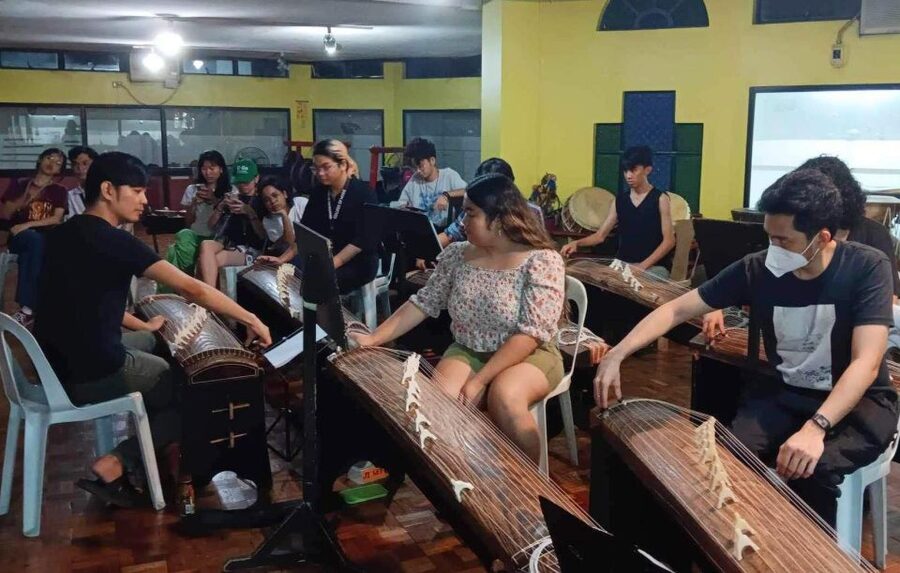
Plan to arrive a bit early and give yourself time to find the building. The listed starting location is 石田第2ビル (Ishida 2 Building).
If you’re arriving by streetcar, get off at Tatemachi station. From there, go straight at the corner past Tully’s coffee shop toward YMCA. When you reach the okonomiyaki restaurant Gokku 悟空, turn right. Then follow the signs to the second floor.
What you’re looking for is the workshop sign on the second floor of the building. If you’re nervous about navigation, build in extra time. This is a simple route once you’re moving, but you want to be unhurried when you’re heading into a focused workshop.
Who This Is Perfect For, and Who Might Want to Skip
This is designed for ages 10 and up, with no musical experience required. That makes it a strong option for families with older kids who can follow directions and handle quiet focus during practice.
It also works for couples and friends. You can learn together in a small group, then compare the feel of your techniques when you watch the performance video later.
Solo travelers often like it for the same reason: you get instruction and a meaningful group finale without needing to coordinate plans with anyone else.
One caution: it’s not suitable for children under 10. If you’re traveling with younger kids, you’ll want a different Hiroshima activity.
Also, remember the time window. If you’re the type who wants lots of repetition or you’re hoping to leave with deep fluency, 90 minutes might feel like a first taste. The workshop aims for a complete beginner-level piece, not a long course.
Price and Value: Is $50 Worth It in Hiroshima?
At $50 per person for 90 minutes, this workshop has good value for two reasons.
First, you get more than a “try it once” experience. The class is hands-on, structured, English instruction is provided, and you learn basics plus a complete piece. With a group limited to 6, you also get more direct coaching than you would in a larger setup.
Second, you receive tangible keepsakes tied to meaning. The performance video is a real artifact, not just a memory you might forget. The handfolded origami crane is also simple but symbolic, and it fits Hiroshima’s themes.
You’re also paying for an experience that blends instrument learning with historical context. The workshop includes the 13-string koto overview, the long 1,300-year timeframe, Fukuyama’s role in koto crafting, and the meaning behind design elements. That context makes the technique feel purposeful.
If your goal is to see Hiroshima in one way that goes beyond sightseeing, this is the kind of activity that gives you an emotional connection you can revisit later.
Quick Notes to Plan Your Best Session
This is a calm studio setting. Pets are not allowed, though assistance dogs are allowed. Alcohol and drugs are not allowed.
If you’d like to reschedule because your day changes, the workshop format has shown flexibility in the past. Still, treat timing like part of the plan and check availability for your preferred start times.
Should You Book This Hiroshima Koto Peace Workshop?
Yes, I think you should book it if you want something hands-on, meaningful, and beginner-friendly in Hiroshima. You’ll learn real technique, play a complete beginner-level piece, and leave with a video recording plus an origami crane.
Skip it if you need a long, slow practice session or you’re traveling with younger children under 10. And if you’re the kind of traveler who only wants casual entertainment, you might find the peace-centered context and reflective nature heavier than you expect.
If you’re open to learning a traditional instrument with a clear purpose, this one is hard to beat for value and emotional payoff.
FAQ
How long is the workshop?
It lasts 90 minutes (about 1.5 hours).
How much does it cost?
The price is $50 per person.
Do I need any musical experience or Japanese?
No. You do not need musical experience, and all instruction is in English.
What ages is the workshop for?
It is for ages 10 and up. It is not suitable for children under 10.
How large is the group?
The group is small, limited to 6 participants.
What do I learn by the end of the session?
You learn the basics of the koto and eventually play a complete piece by the end of the workshop.
Is the workshop connected to peace themes?
Yes. The lesson includes a peace-themed composition, Echo of Serenity, honoring atomic bomb victims, and the experience encourages reflection on peace through music.
What do I receive to take home?
You receive a video recording of your final performance and a handfolded origami crane. Coffee, tea, juice, and a free soft drink after the session are also provided.
Newly listed around Hiroshima
- From Hiroshima: Rabbit Island and Takehara Town Tour★ 5.0 · 15 reviews
- Hiroshima: Private City Highlights Walking Tour★ 4.9 · 73 reviews
- Amazing Hiroshima: Private City Tour with a Local Guide★ 4.3 · 32 reviews
- HiroshimaCity: JapaneseAbacus(Soroban)Workshop nearPeacePark★ 4.4 · 8 reviews
- 3 Departures: Hiroshima & Miyajima Trip with Indian Lunch★ 4.8 · 65 reviews
- Kimono and Tea Ceremony in Miyajima★ 5.0 · 73 reviews
- Hiroshima Local guided Hiking Tour&Open-air Tea Ceremony★ 5.0 · 213 reviews
- Day Trip to Hiroshima & Miyajima with Itsukushima Shrine★ 4.6 · 124 reviews
Hiroshima Tours, compared.
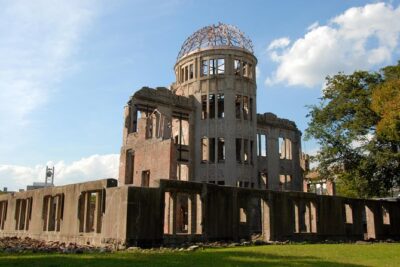
Peaceful Hiroshima & Miyajima UNESCO 1 Day Bus Tour
Read our review →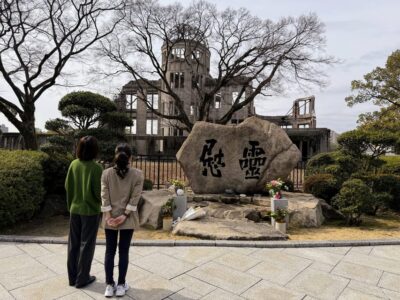
Hiroshima and Miyajima UNESCO Sites 1-Day Tour
Read our review →
Hiroshima / Miyajima Full-day Private Tour with Government Licensed Guide
Read our review →
Hiroshima Historical Walking Tour – Why A-Bomb was Dropped
Read our review →
Hiroshima Peace (Heiwa) Walking Tour at World Heritage Sites
Read our review →
Hiroshima in a Nutshell: Morning Bike Adventure
Read our review →
Hiroshima City 4hr Private Walking Tour with Licensed Guide
Read our review →
Browse the lists this tour appears in