
Review · CYCLING & E-BIKE RIDES
Okunoshima Rabbit Island Cycling Tour with Local Guide
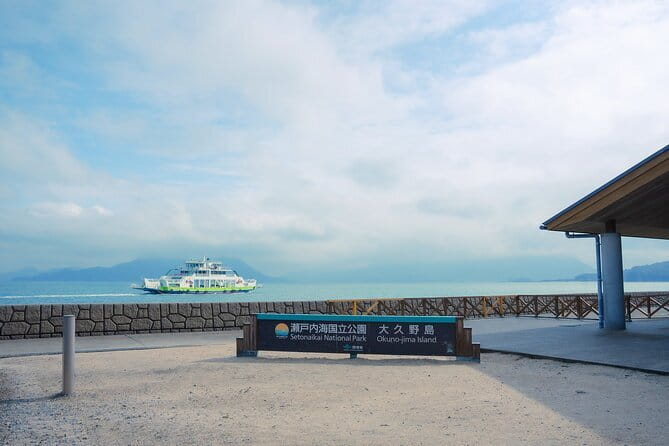
Bicycles, rabbits, and hard history, all in two hours. This Okunoshima Rabbit Island tour pairs a local guide with time on a small island in the Seto Inland Sea, where hundreds of wild rabbits share space with the island’s wartime scars. You’ll ride past key points tied to why Okunoshima was once left off maps, then pause for short photo-friendly stops.
I especially like the bike-first format, which makes it feel doable to cover an island with a clear story arc. And I like the way Junko-style guiding brings context to the rabbit sightings, so you are not just hunting cuteness, you are understanding what you are looking at.
One consideration: several of the most famous structures are view-only because entry is prohibited for safety, so you won’t get close access at every stop.
In This Review
- Key things to know before you pedal
- Why Okunoshima can feel like two different worlds
- Price and timing: is $59.12 good value for 2 hours?
- Getting started at Kyukamura Ohkunoshima, then riding out
- The bike plan: how the island becomes manageable
- Stop 1: Okunoshima Lighthouse views from outside the gates
- Stop 2: 1 hour on Okunoshima Island, rabbits included
- Stop 3: Okuno Shrine, a small stop with rabbit energy
- Stop 4: Nagaura Poison Gas Storage Ruins, view-only but important
- Stop 5: Power Plant Ruins, again, no entry
- Stop 6: Northern Cannon Battery Remnants, where you can see more closely
- What the guides add, and why Junko is repeatedly mentioned
- What to bring so the tour feels smooth
- Weather and flexibility, the real-world part of planning
- Who this cycling tour suits best
- Should you book this Okunoshima Rabbit Island cycling tour?
- FAQ
- How long is the Okunoshima Rabbit Island cycling tour?
- Is this tour private?
- Does the price include the ferry to Okunoshima?
- What is included in the tour price?
- What happens if it rains?
- Where do I meet the guide?
- Can I cancel and get a full refund?
Key things to know before you pedal
- Wild rabbits are the main character, but the tour keeps you aware of the island’s past.
- A local guide like Junko brings context, linking rabbit encounters to why Okunoshima matters historically.
- You cover the island at an easy pace, with a small-circuit feel (Okunoshima is about 4 km around).
- Some sites are prohibited to enter, so expect short viewing stops rather than full-on exploration.
- Group size stays small, with a maximum of 5 travelers, but it can be shared with others.
- Weather can shut it down, if rain odds hit 60% or higher based on the Japan Meteorological Agency forecast.
Why Okunoshima can feel like two different worlds
Okunoshima is often sold as Rabbit Island, and yes, you will see plenty of rabbits roaming freely. But the tour’s real strength is that it does not treat those rabbits like a theme park. It frames them as part of a place that went through something brutal and secretive, then later became peaceful in appearance.
When you ride the loop, the island’s calm can lull you, then your guide brings you back to what happened here. That contrast is the point, and it’s why this is more meaningful than a simple sightseeing ride.
More Bike Rides in Hiroshima
- Hiroshima 2hr Peace Cycling Tour with Local Guide
★ 5.0 · 321 reviews - Hiroshima: Peace Cycling Tour with Local Guide
★ 4.8 · 286 reviews - Hiroshima 3hr Peace Cycling Tour with Local Guide
★ 5.0 · 131 reviews
Price and timing: is $59.12 good value for 2 hours?

At about $59.12 per person for roughly 2 hours, this is a fairly focused experience. You are paying for more than bike rental, you are paying for a guide who connects the rabbit sightings with the island’s wartime story, plus the time spent at multiple themed stops.
The value math gets even better because the tour includes:
- Use of a bicycle
- All fees and taxes
- Travel insurance
Two costs you should plan for, though, are your ferry and your own snacks. The ferry from Tadanoumi to Okunoshima is 360 yen, and food and beverages are not included. If you expect to spend money on drinks or a quick bite, bring a little extra cash or plan ahead.
Also note the practical timing: the stops are short, around 10 minutes at most viewing points, plus a longer stretch where you can actually enjoy the island.
Getting started at Kyukamura Ohkunoshima, then riding out
The tour starts and ends at KYUKAMURA OHKUNOSHIMA (休暇村大久野島). The meeting point is at the hotel address in Tadanoumichō, Takehara, Hiroshima, and the tour finishes in front of the hotel as well.
This matters because it’s one less moving part in your day. You don’t have to coordinate a complicated end point. It’s also helpful that the location is described as near public transportation, so you can slot it into a larger Hiroshima-area plan without a total logistics headache.
The tour is rated for moderate physical fitness. That usually means you’re not training for a mountain stage, but you should still be comfortable cycling for the island’s route.
The bike plan: how the island becomes manageable
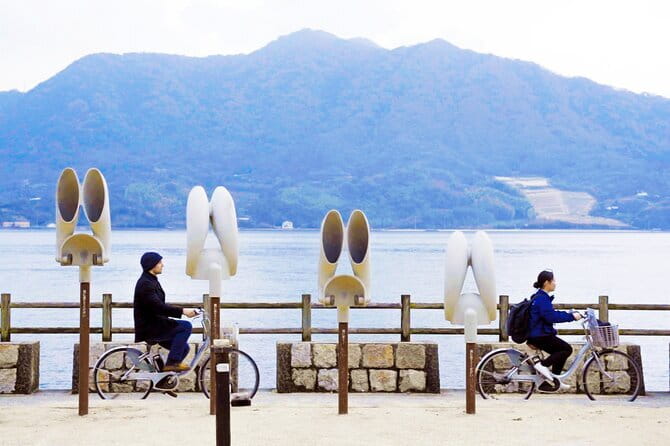
Okunoshima’s shoreline is about 4 km around, which means a guided cycling route feels compact. The tour uses that size to create a sensible rhythm: quick stops for major landmarks, then time where you can slow down and just be on the island.
You’ll likely feel the pace is guided by the story, not by speed. And because the group is capped at 5 travelers (minimum of 2 to run), you are usually not lost in a crowd. It’s a shared tour, so you might ride with others, but it stays intimate.
More Bike Tours in Hiroshima
- Hiroshima in a Nutshell: Morning Bike Adventure
★ 5.0 · 524 reviews - Hiroshima and Miyajima by Bike and Boat
★ 5.0 · 172 reviews - Hiroshima: Best of Hiroshima Guided Bike Tour
★ 4.9 · 89 reviews - Hiroshima Country Cycling: Explore Rural Life 1 HR from City
★ 5.0 · 22 reviews
Stop 1: Okunoshima Lighthouse views from outside the gates
Your first stop is the Okunoshima Lighthouse area. The key detail is that entry is currently prohibited, so you view the lighthouse from a short distance.
This can feel like a letdown if you came for close photos. But it also has a practical side: you can still enjoy the scenery and lighthouse profile without wasting time on blocked access. Your guide uses this kind of stop to set tone early, before you move into the more emotionally heavy sites.
Stop 2: 1 hour on Okunoshima Island, rabbits included

The heart of the experience is the time on Okunoshima Island, roughly 1 hour. This is where you transition from landmark viewing to actual island wandering on bike.
The selling point is clear: wild rabbits. You’ll see them in ways that feel natural, not staged. The island’s relaxed mood is part of the appeal, especially in the Seto Inland Sea setting.
Here’s what I think makes this hour work for most people:
- You are not rushing. The tour gives you time to notice rabbits in different spots.
- You are not separated from the story. The guide’s framing helps you connect what you see with why this place was hidden and later remembered.
You may want to slow your pace mentally during this stop. This is the part where you’ll get the best rabbit interactions, just by not treating it like a race.
Stop 3: Okuno Shrine, a small stop with rabbit energy
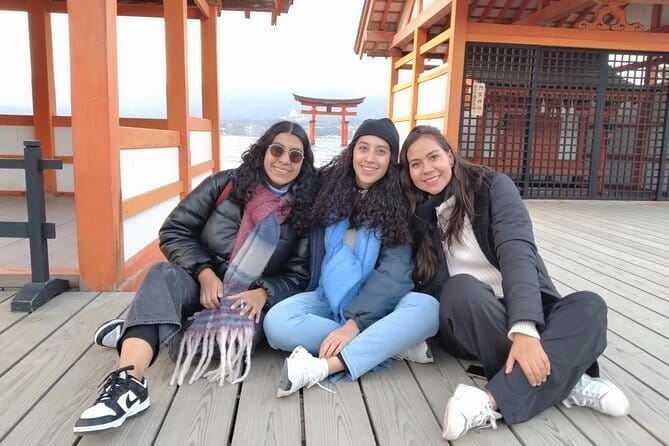
Next comes Okuno Shrine, a brief 10-minute stop. It’s described as the only shrine on the island, and it’s also now home to rabbits.
This is a great example of why a guided tour helps. A short stop could easily feel like a quick token photo. But when rabbits are part of the shrine area, you get a more interesting scene than a typical small island shrine stop.
It’s also a nice reset after the lighthouse view-only moment. This one feels more alive and immediate.
Stop 4: Nagaura Poison Gas Storage Ruins, view-only but important
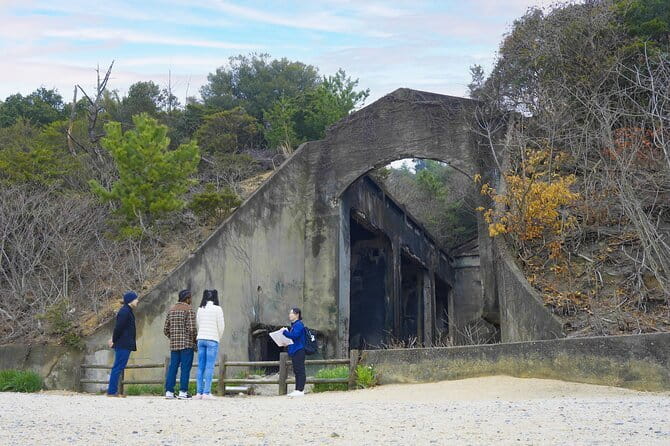
Then you reach one of the most sobering parts of the tour: the Nagaura Poison Gas Storage Ruins. Like the lighthouse, entry is prohibited for safety reasons, so you view it from a short distance.
Even though you cannot go inside, this stop matters. It’s directly tied to the island’s wartime role and helps explain why the island became famous for rabbits only after being known for something dark.
The practical side: these are short stops, about 10 minutes, so you don’t get stuck in one emotionally heavy location for too long. Your guide can pace the information in a way that keeps you moving without feeling rushed.
Stop 5: Power Plant Ruins, again, no entry
The pattern continues at the Power Plant Ruins. This power plant was used for poison gas production here, and entry is also prohibited for safety reasons.
You’ll view it from a short distance for about 10 minutes, which keeps the tour compact. The benefit is that it’s easy to follow the cause-and-effect chain: storage facility, production support, then the military defenses.
If you care about meaning over access, you’ll likely appreciate how these short view-only stops still build a coherent story.
Stop 6: Northern Cannon Battery Remnants, where you can see more closely
Finally, you end at the Northern Cannon Battery Remnants. This time, it’s described as something you can see closely, with a 15-minute stop.
That extra time is welcome. It gives you a chance to look longer and take in details without feeling like the tour is yanking you away at the first decent photo.
It’s also a good final stop because it connects the island’s industrial and wartime roles to its defenses. The rabbits are still there in your mind, but now the timeline feels complete.
What the guides add, and why Junko is repeatedly mentioned
The best moments of this tour are not only the sites, it’s the human thread that connects them. In particular, Junko comes up in feedback as especially kind and passionate about teaching people the island’s difficult past.
That matters because Okunoshima is the kind of place where silence can turn awkward or confusing if you do not have context. A guide helps you read what you’re seeing:
- Why the island was hidden
- What the ruins indicate
- How to hold both realities, rabbits and wartime consequences, in your head at the same time
If you want a tour that respects both the cuteness and the truth, this guided approach is a major part of the value.
What to bring so the tour feels smooth
Food and beverages are not included, so plan a light snack strategy before you go. If you tend to get hungry while cycling and walking, pack something small.
A few more practical ideas:
- Wear weather-appropriate clothing. Rain odds can cancel the tour based on the forecast.
- Bring a phone charger option if you rely on maps and photos. The tour uses a mobile ticket, so you’ll want your device accessible.
- If you’re sensitive to sun, plan for the island time, especially during the 1-hour stop.
Weather and flexibility, the real-world part of planning
This experience depends on good weather. If the Japan Meteorological Agency forecasts a 60% or higher chance of rain by 12:00 PM the day before, the tour is canceled with no cancellation fees.
If it gets canceled due to poor weather, you’ll be offered a different date or a full refund. Also, the tour requires a minimum number of travelers to operate, so if it does not meet that threshold, the same idea applies, alternate date or refund.
In other words, don’t schedule this as your one last-ditch plan. Treat it as a high-likelihood day trip, but be flexible.
Who this cycling tour suits best
You’ll probably love this tour if:
- You want a guided way to see Okunoshima without missing the meaning behind the scenery.
- You enjoy animals but also want context, not just selfies.
- You like efficient days with a clear route, not open-ended wandering.
You might not love it if:
- You strongly prefer hands-on site access. Several major structures are view-only due to safety rules.
- You need long stops. Most stops are 10 minutes or so, with one longer island stretch.
Should you book this Okunoshima Rabbit Island cycling tour?
If you want an Okunoshima day that is both peaceful and honest, I’d book it. The bike makes the island feel manageable, the guide keeps the story clear, and the small group size makes it easy to pay attention. The view-only stops at the lighthouse and the poison gas-related ruins are a real limitation, but the trade-off is time efficiency and safety, plus a structured route that helps you understand the island’s full arc.
If you are already planning a Hiroshima-area itinerary and you want one experience that balances wild rabbits with wartime remembrance, this is a strong option.
FAQ
How long is the Okunoshima Rabbit Island cycling tour?
The tour lasts about 2 hours.
Is this tour private?
No. It is a shared group tour, and other participants may join the same departure. The group size can be up to 5 travelers.
Does the price include the ferry to Okunoshima?
No. The ferry fee from Tadanoumi to Okunoshima is 360 yen and is not included.
What is included in the tour price?
The price includes use of a bicycle, all fees and taxes, and travel insurance.
What happens if it rains?
If the Japan Meteorological Agency forecasts a 60% or higher chance of rain by 12:00 PM the day before the tour, it will be canceled with no cancellation fees. If canceled due to poor weather, you will be offered a different date or a full refund.
Where do I meet the guide?
You meet at KYUKAMURA OHKUNOSHIMA (休暇村大久野島) at 5476-4 Tadanoumichō, Takehara, Hiroshima 729-2311, Japan. The tour ends in front of the hotel.
Can I cancel and get a full refund?
Yes. You can cancel up to 24 hours in advance for a full refund. If you cancel less than 24 hours before the start time, the amount you paid will not be refunded.
More Cycling Tours in Hiroshima
- Hiroshima: City and Miyajima Bike and Boat Tour
★ 5.0 · 20 reviews - Hiroshima Scenic Cycling Guided Tour
★ 5.0 · 19 reviews - Hiroshima: Peace Park, Castle, and Mitaki Temple E-Bike Tour
★ 4.8 · 11 reviews - Hiroshima Country Cycling: Explore Rural Life 1 HR from City
★ 5.0 · 8 reviews
Newly listed around Hiroshima
- Hiroshima Local Life Walking Tour (Private)★ 5.0 · 11 reviews
- The Peace Memorial to Miyajima : Icons of Peace and Beauty★ 4.5 · 31 reviews
- Sake Town Tour in Saijo Hiroshima★ 5.0 · 9 reviews
- Hiroshima & Miyajima All-Inclusive Tour w/Licensed guide Pancho★ 5.0 · 54 reviews
- Private Full Day Hiroshima Tour★ 4.5 · 29 reviews
- Miyajima Island Tour with Certified Local Guide★ 5.0 · 9 reviews
- Hiroshima Country Cycling: Explore Rural Life 1 HR from City★ 5.0 · 22 reviews
- Morning Hiking Tour: Mt. Futaba & Hiroshima’s History★ 5.0 · 25 reviews
Cycling & E-Bike Rides, compared.

3h Tokyo E-Bike Tour: Hidden Gems, and Local Life with guide
Read our review →
Arashiyama Bamboo Forest & Hidden Gems Bike Tour (Early Bird)
Read our review →
5 Top Highlights of Kyoto Full Day Bike Tour (E-bike option)
Read our review →

Hiroshima 2hr Peace Cycling Tour with Local Guide
Read our review →Browse the lists this tour appears in