
Review · WALKING TOURS
Hiroshima Local Life Walking Tour (Private)
Hiroshima changes when you slow down on foot. On a private Hiroshima Local Life Walking Tour, I like how you get off the main strip to visit places such as Ebisu Shrine and the Memorial Cathedral for World Peace, then balance it with everyday culture stops like tea and a stamp maker. I also really enjoy the food-focused stop at Okonomimura, where you learn about Hiroshima okonomiyaki and see the stalls up close.
One possible drawback is simple: it runs as a good-weather walking experience, so plan for rain and wear shoes you can walk in for about two hours.
In This Review
- Key Highlights You Should Know
- A Private Two-Hour Walk That Mixes Daily Life With Atomic Memory
- Meeting on Hondori, Then Learning the City’s Everyday Rhythm
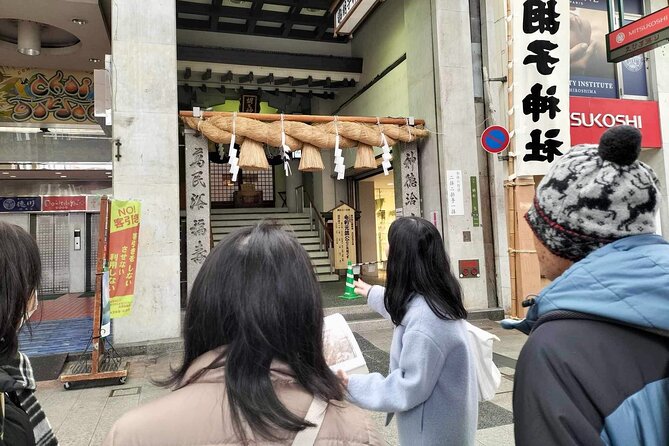
- Hiroshima’s Prosperity Story at Ebisu Shrine (About 400 Years Old)
- From Memorial Cathedral for World Peace to the City’s Rebuilding Traces
- Tea Shops, Hanko Stamps, and Culture Lessons You Can Actually Use
- Okonomimura, Okonomiyaki Basics, and How to Order Like a Local
- Walking Time, Comfort Tips, and What the Schedule Means for Your Day
- Price and Value: What You Pay For and Why It Feels Fair
- Who This Tour Fits Best (And Who Might Want Something Different)
- Should You Book It?
- FAQ
- Where is the meeting point for the Hiroshima Local Life Walking Tour?
- What time does the tour begin?
- How long does the tour last?
- Is this a private tour?
- What is included in the tour price?
- Are admission tickets included for the stops?
- Is lunch included?
- Are service animals allowed?
- What is the cancellation policy if weather affects the tour?
Key Highlights You Should Know
- A private tour with your group only means you can ask questions without feeling rushed.
- Hondori Shopping Arcade as the start point gives you fast context for where daily Hiroshima energy lives.
- Ebisu Shrine visit connects you to a prosperity deity people have valued for about 400 years.
- Memorial Cathedral for World Peace stop ties the atomic bombing to the long work of remembering and praying for peace.
- Local tea and a stamp (hanko) stop turns culture lessons into real, hands-on time.
- Okonomimura okonomiyaki complex lets you tour inside and learn how the dish fits Hiroshima life.
A Private Two-Hour Walk That Mixes Daily Life With Atomic Memory
This is not the kind of Hiroshima tour that only checks big sights and moves on. It is built as a local-life walk, so you spend time in the city the way people actually experience it: shopping arcades, quiet neighborhood lanes, and small cultural stops that feel normal until your guide puts them in context.
In practice, the tour also manages a tough balancing act. You do visit the atomic bomb-related sites and the places tied to rebuilding and remembrance. But the pacing keeps the day human, with breaks that let you see how Hiroshima continues as a working city, not just a memorial destination.
More Walking Tours in Hiroshima
- Hiroshima Historical Walking Tour – Why A-Bomb was Dropped
★ 4.8 · 893 reviews - Hiroshima Peace (Heiwa) Walking Tour at World Heritage Sites
★ 5.0 · 872 reviews - Hiroshima City 4hr Private Walking Tour with Licensed Guide
★ 5.0 · 437 reviews
Meeting on Hondori, Then Learning the City’s Everyday Rhythm
You start at Starbucks Coffee on Hondori, right by 9-1 Hondōri in Naka Ward. That choice matters more than you might think. Hondori Shopping Arcade is described as Hiroshima’s most prosperous street, so it gives you a quick orientation point before the tour slips into smaller roads.
Early on, your guide gives a brief lecture about Hiroshima Prefecture, then shares history about the Hondori Shopping Arcade itself. It sets you up to understand why the neighborhood shapes daily life. You are not just walking, you are learning the geography of how people move, shop, and gather.
I also like that the tour is structured to keep things easy. The listed stops are timed in short blocks, around 20 to 30 minutes each, and then you keep walking between them. That keeps momentum without turning the day into a nonstop sprint.
Hiroshima’s Prosperity Story at Ebisu Shrine (About 400 Years Old)
One of the first culture stops is Ebisu Shrine, a shrine treasured by local people for about 400 years. Ebisu is associated with prosperity in business, and that theme lands well in a city like Hiroshima, where rebuilding and resilience are real parts of modern life.
At this stop, you are not just looking at a gate and leaving. Your guide helps translate what you are seeing, and it is the kind of visit that makes religious sites feel less mysterious and more understandable. Even if you are not religious, you can still grasp the point: communities build meaning over generations, and shrines are one way that meaning stays anchored.
A practical note: you’ll be outside for much of the day. If it is sunny, bring water. If it is chilly, layer up, since you do not get an all-indoor schedule.
From Memorial Cathedral for World Peace to the City’s Rebuilding Traces
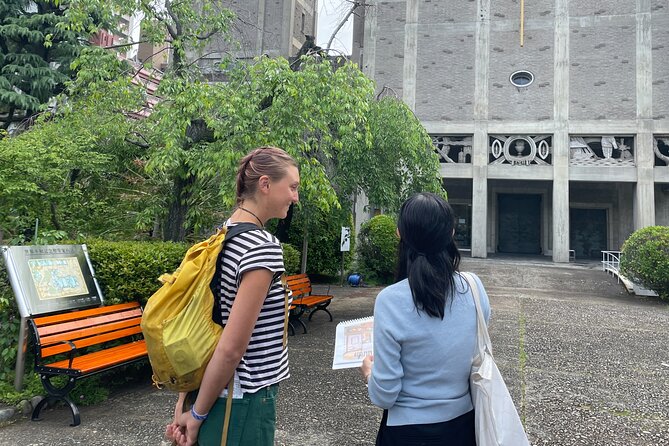
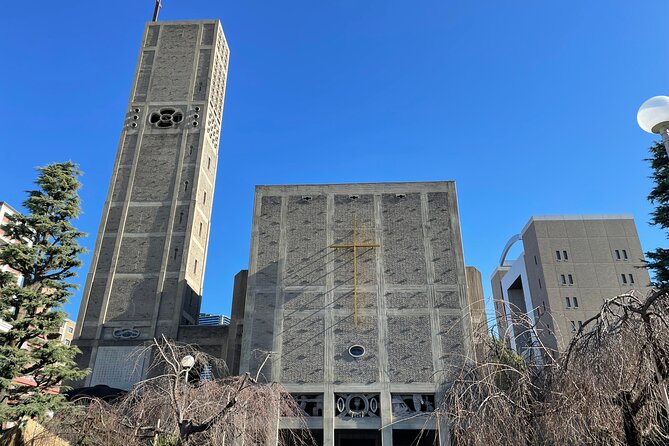
The emotional center of the route is Memorial Cathedral for World Peace, listed alongside the Catholic Noboricho Church. This building was constructed to commemorate the victims of the atomic bombing and to pray for world peace. It is also described as the first postwar building designated as an Important Cultural Property.
This is where good guiding matters. The cathedral is powerful on its own, but your guide’s explanations help you connect the building to its purpose, and why people still care for it. You will also see a key tour detail beyond sightseeing: a portion of the tour proceeds is donated toward the preservation of the Memorial Cathedral for World Peace. That makes your visit feel a little more like participation than consumption.
After that, you continue to another atomic-bomb-related site, Fukuya, Hatchobori Honten. This is described as a building preserved and continued to be used as evidence of traces from the atomic bombing. The idea is that history is not only in documents. Sometimes it is in structures that survived, in what remains visible.
One consideration here: this portion of the tour can feel heavy. If you are traveling with kids, go in knowing the day includes serious memory work. A private format helps, because you can ask your guide to adjust how you talk through things.
A few more Hiroshima days to weigh up
- Hiroshima Walking Tour Why A Bomb was dropped to Hiroshima
★ 5.0 · 347 reviews - Miyajima Half-day Trip Historical Walking Tour
★ 5.0 · 284 reviews - Hiroshima: History of Hiroshima Group Walking Tour
★ 4.8 · 266 reviews - Hiroshima: Food and Culture Guided Walking Tour with Dinner
★ 4.9 · 212 reviews
Tea Shops, Hanko Stamps, and Culture Lessons You Can Actually Use
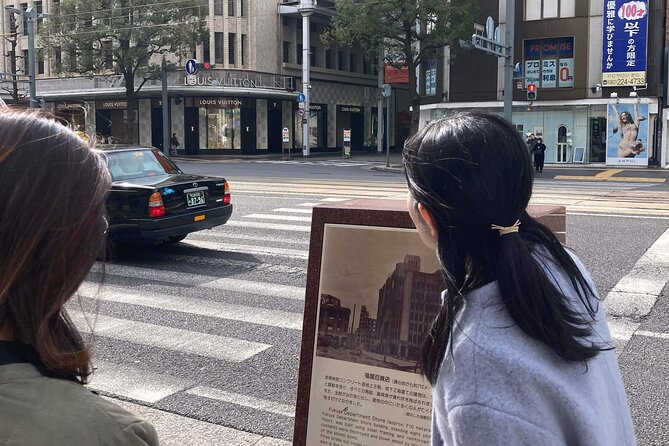
One of the most praised parts of this tour is how it brings culture into smaller, everyday places. The tour overview specifically mentions traditional tea shops and a stamp maker, and the experience includes stops where you learn about Japanese culture through these practical traditions.
In real terms, this is the kind of stop that makes Japan feel closer. You learn how tea fits into local customs, and you get a chance to understand the role of stamps, too. The stamp stop (hanko) is especially memorable because it is a concrete part of life people use.
A bonus from the guided format: Sachi often brings a colleague, and at least one group had a former chemistry teacher along for added explanations. That sort of added context can help you interpret what you see without turning the day into a lecture marathon. It can also make the atomic history stops feel less abstract, since your guide can connect different angles of thinking.
If you like experiences that include small local practices, this section is a big reason to book. It is the difference between watching culture from a distance and seeing how people live with it.
Okonomimura, Okonomiyaki Basics, and How to Order Like a Local
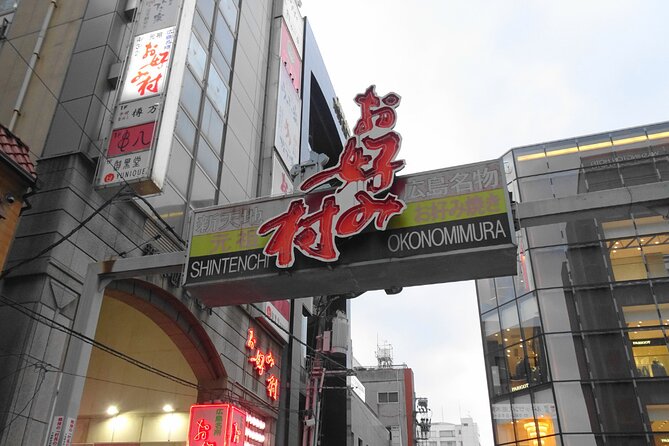
After the more reflective stops, you reach Okonomimura, a collection of okonomiyaki restaurants. Your guide introduces what okonomiyaki is, along with some history, and you can tour inside the building.
This matters for value. You are not only eating at a place on a map. You are learning the dish in context, which helps you recognize what you are actually tasting. Okonomiyaki is a Hiroshima specialty, and your guide’s talk sets you up to understand it as local food culture, not just a tourist meal.
Another subtle win: the tour format gives you time to move around. If you like food halls and stall complexes, you will appreciate that you can see the layout and the energy instead of only stopping at one counter.
One small thing to plan for: lunch is not included in the package. Okonomimura is a food-focused segment, but your ticket does not cover lunch as part of the price.
Walking Time, Comfort Tips, and What the Schedule Means for Your Day
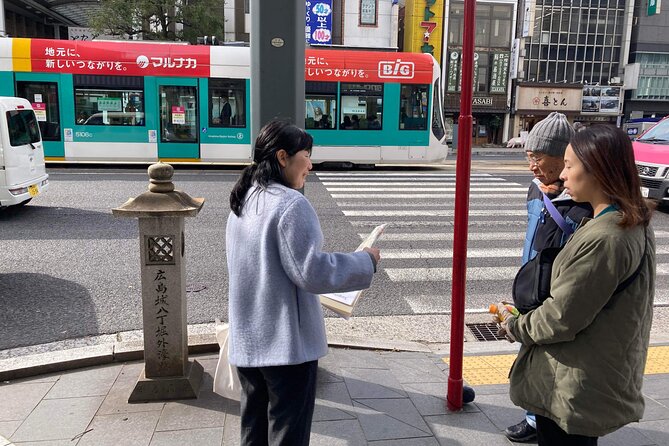
The tour is listed at about two hours, with the start at 10:00 am and the experience ending back at the meeting point. The itinerary timing is built around short site visits, then walking links between them.
For planning, I suggest thinking of this as your morning or early afternoon anchor. You will cover multiple neighborhoods, so it is smart to do it when you are not rushed for dinner plans.
Comfort tips, based on the simple fact it is a walking tour: wear supportive shoes and bring a light layer. You will be outside enough that weather matters. If it rains, the experience notes it requires good weather, and you should expect a different date or a full refund if it gets canceled for poor weather.
Price and Value: What You Pay For and Why It Feels Fair
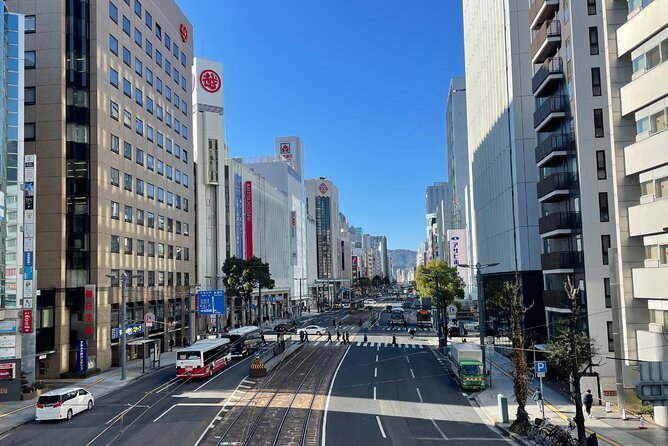
The price is $65.15 per person for a private tour, roughly two hours. At first glance it may seem like a lot, until you look at what is actually included.
The tour includes the guide fee, and the listed stop admissions are marked free. That means you are mainly paying for the guide’s time, the route design, and the access to places you might not naturally find on your own. One of the strongest themes is exactly that: you see parts of Hiroshima you would miss if you only follow standard lists, including religious sites and shops that feel local and less crowded.
You also get something less easy to quantify: the guide helps you interpret serious sites with care, then balances that with everyday culture stops like tea and stamp-making. That kind of day design takes effort behind the scenes, not just a set of coordinates.
And because a portion of proceeds supports preservation of the Memorial Cathedral for World Peace, your money also has a connection to ongoing conservation, not just a one-time visit.
Who This Tour Fits Best (And Who Might Want Something Different)
This is a strong choice if you want Hiroshima to feel personal. It suits families, couples, and solo travelers, and it is private, so you can tailor questions to your interests.
Pick this tour if you:
- Like local neighborhood experiences more than only major landmarks
- Want atomic history but also want the city’s ongoing life
- Enjoy food culture learning, not just eating
- Appreciate a guide who can connect places to meaning
You might want a different tour if you prefer a more relaxed schedule with fewer stops, or if you want only memorial sites with no cultural side streets. This one is designed as a blend.
Should You Book It?
I’d book this Hiroshima Local Life Walking Tour if you want the city to feel lived-in, not boxed-in. The best part is the mix: Hondori’s everyday energy, Ebisu Shrine, the Memorial Cathedral for World Peace, atomic-bomb traces at Fukuya, plus tea and hanko culture, ending with Okonomimura and the okonomiyaki spotlight.
If you are comfortable walking for about two hours and you travel on a day with reasonable weather, it is a very fair-value way to understand Hiroshima from multiple angles. The donation element is a nice extra, and the private format makes the explanations land better than in a crowded group.
FAQ
Where is the meeting point for the Hiroshima Local Life Walking Tour?
The tour starts at Starbucks Coffee – Hiroshima Hondori, 9-1 Hondōri, Naka Ward, Hiroshima 730-0035, Japan.
What time does the tour begin?
The start time is 10:00 am.
How long does the tour last?
It lasts about 2 hours.
Is this a private tour?
Yes. It is private, and only your group will participate.
What is included in the tour price?
The tour includes the guide fee.
Are admission tickets included for the stops?
Each listed stop is marked free for admission ticket.
Is lunch included?
No. Lunch is not included.
Are service animals allowed?
Yes, service animals are allowed.
What is the cancellation policy if weather affects the tour?
You can cancel for a full refund if you cancel at least 24 hours before the experience starts. The experience requires good weather, and if it is canceled due to poor weather you will be offered a different date or a full refund.
Newly listed around Hiroshima
- The Peace Memorial to Miyajima : Icons of Peace and Beauty★ 4.5 · 31 reviews
- Sake Town Tour in Saijo Hiroshima★ 5.0 · 9 reviews
- Okunoshima Rabbit Island Cycling Tour with Local Guide★ 4.5 · 17 reviews
- Hiroshima & Miyajima All-Inclusive Tour w/Licensed guide Pancho★ 5.0 · 54 reviews
- Private Full Day Hiroshima Tour★ 4.5 · 29 reviews
- Miyajima Island Tour with Certified Local Guide★ 5.0 · 9 reviews
- Hiroshima Country Cycling: Explore Rural Life 1 HR from City★ 5.0 · 22 reviews
- Hiroshima Private Tour with a Local – Highlights & Hidden Gems★ 4.5 · 24 reviews
Walking Tours, compared.
Kyoto Geisha Walking Tour: Gion District & Hidden Gems
Read our review →
Tokyo Tsukiji Fish Market Food and Culture Walking Tour
Read our review →
Gion Geisha District Walking Tour – Stories of Geisha
Read our review →
Shinjuku Local Bar and Izakaya Guided Walking Tour
Read our review →
Asakusa Walking Tour with Sensoji Temple Visit
Read our review →
Kyoto Gion Geisha District Walking Tour – The Stories of Geisha
Read our review →Browse the lists this tour appears in