
Review · HISTORICAL TOURS
Hiroshima Peace (Heiwa) Walking Tour at World Heritage Sites
Hiroshima hits you fast, then stays. This 5-hour small-group walking tour ties together the Peace Memorial Museum and the Atomic Bomb Dome with modern views from Orizuru Tower. You get a certified MagicalTrip guide to help make sense of the story, including how Hiroshima rebuilt its life after August 6, 1945.
I also love the human pacing. You’ll stop at key memorials like the Cenotaph for Atomic Bomb Victims and the Children’s Peace Monument, then slow down with lunch at the tower after seeing the Aogiri tree and the dome. One possible drawback: Hiroshima Peace Park and the museum can get crowded, so if the timing is tight you may not see every single exhibit detail.
In This Review
- Key things I’d plan around
- Hiroshima Peace Walking Tour: what this day actually feels like
- Starting point at MontbellJapan, then straight into the Peace Memorial Park
- Peace Memorial Museum: more than exhibits, it’s context you can ask about
- Cenotaph for Atomic Bomb Victims: the moment you slow down
- Children’s Peace Monument: why this stop often gets remembered
- Atomic Bomb Dome and the walk to Aogiri tree: survival made visible
- Orizuru Tower lunch: a break for your feet and your perspective
- The included extras that matter: entrance fees, lunch, tour photos
- Price and value for a 5-hour guided day
- Crowd management: the one thing you should take seriously
- Weather, comfort, and what to pack for this walk
- Food and dietary needs: what you should know before you go
- Who this tour suits best
- Final take: should you book this Hiroshima Peace tour?
Key things I’d plan around
- Small group cap (max 8 travelers) means more time for your questions and better flow between stops
- Certified MagicalTrip guides focus on meaning and context, not just dates and distances
- World Heritage focus centers you on the Peace Memorial sites and the Dome area
- Lunch at Orizuru Tower gives you a calm break plus big city views
- Hot-weather reality matters, especially in summer (bring water and a hat)
Hiroshima Peace Walking Tour: what this day actually feels like
This is the kind of tour where the walking part matters as much as the landmarks. Hiroshima’s Peace sites are close enough to connect by foot, but they are heavy in meaning. With a guide, you move through it with less confusion and more intention.
I like that the tour does not treat the day like a checklist. You start at the Peace Memorial Museum and Park, then you shift to memorial moments, and later you get a wider perspective from Orizuru Tower. The structure helps your brain go from horror to survival, then to the present-day city.
It’s also a practical way to do Hiroshima if you want depth without wrestling with logistics. The tour includes entrance fees for the Peace Memorial Museum and Orizuru Tower, plus lunch. You show up, follow the group, and let the guide handle the flow.
More History Tours in Hiroshima
- Hiroshima Historical Walking Tour – Why A-Bomb was Dropped
★ 4.8 · 893 reviews - Miyajima Half-day Trip Historical Walking Tour
★ 5.0 · 284 reviews - Hiroshima: History of Hiroshima Group Walking Tour
★ 4.8 · 266 reviews
Starting point at MontbellJapan, then straight into the Peace Memorial Park
The meeting point is at MontbellJapan in Hiroshima, in the Kamiyacho area (Naka Ward). It’s near public transportation, which makes getting there easier than it sounds on paper.
From there, you head into Hiroshima Peace Memorial Park, where the day’s tone is set immediately. Even before you step into the museum, you’re walking through a space designed for remembrance. The park area is also where the tour’s transitions make sense, because one memorial leads naturally to the next.
At the first park stop, you’ll visit the Peace Memorial Park and the museum area. The timing is short at the beginning, so think of it as getting oriented and settling in before you go deeper.
Peace Memorial Museum: more than exhibits, it’s context you can ask about
The Peace Memorial Museum is where you learn the story clearly and directly. You’ll spend about an hour here, and the focus is on what happened during the atomic bombing and how Hiroshima’s people coped afterward.
This is not just a history stop. It’s a place where many exhibits carry graphic imagery. If you’re traveling with young kids, or if you know you get sensitive around that kind of material, tell your guide ahead of time so they can guide your pace and help you decide what to focus on.
One reason I think a guide is worth it here is that Hiroshima isn’t a museum you can read like a brochure. The details connect across exhibits, and the guide helps you hold the bigger picture in your head without getting lost in the weeds. That matters if you want to leave with understanding, not just photos.
Cenotaph for Atomic Bomb Victims: the moment you slow down
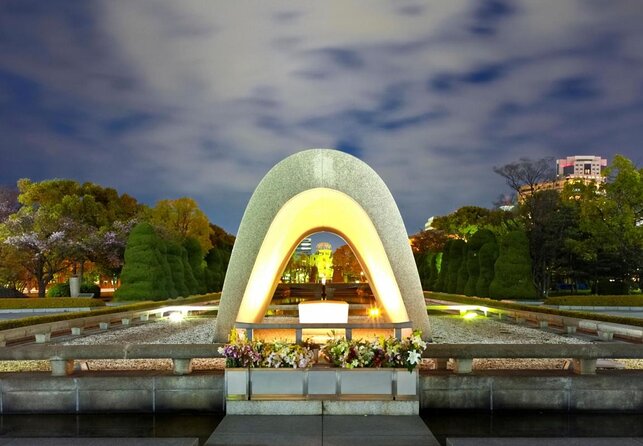
After the museum, the tour moves to the Cenotaph for the Atomic Bomb Victims. This is a brief stop, around 5 minutes, but it’s the kind of moment you won’t want to rush.
This stop works well right after the museum because it changes the tone from learning to reflection. You’re moving from information to commemoration, and that shift helps the day land.
If you’re the type who likes to step back and take your time, this short stop is still enough to pause, look around, and absorb the setting.
More Walking Tours in Hiroshima
- Hiroshima City 4hr Private Walking Tour with Licensed Guide
★ 5.0 · 437 reviews - Hiroshima Walking Tour Why A Bomb was dropped to Hiroshima
★ 5.0 · 347 reviews - Hiroshima: Food and Culture Guided Walking Tour with Dinner
★ 4.9 · 212 reviews - Hiroshima: Peace Walking Tour of World Heritage Sites
★ 4.9 · 190 reviews
Children’s Peace Monument: why this stop often gets remembered
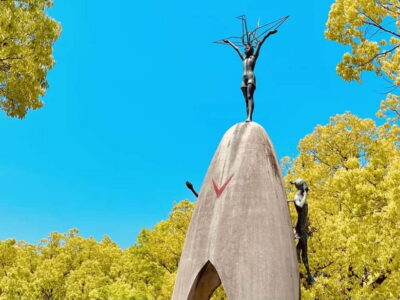
The Children’s Peace Monument is another stop in Peace Memorial Park, explained by your guide. It usually takes around 10 minutes.
This one hits differently for a lot of people because it brings the topic out of abstract history and into the lives that were impacted. The guide’s explanation helps you understand why Hiroshima includes this message specifically, and how it fits into the broader idea of peace efforts.
If you’re traveling with teens, this is often the stop that turns the day from “a sad museum” into “a meaningful lesson.”
Atomic Bomb Dome and the walk to Aogiri tree: survival made visible

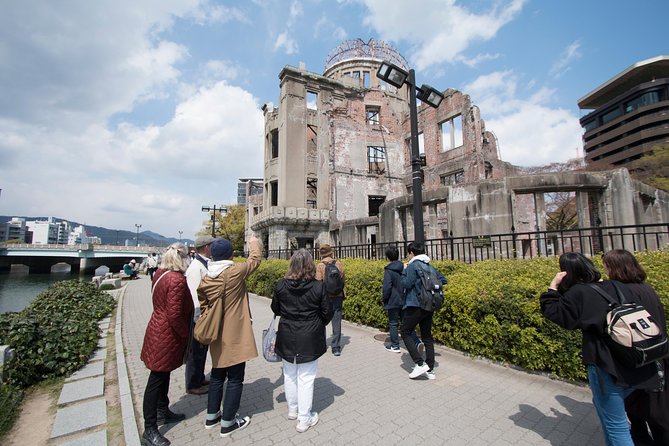
Next you’ll see the Atomic Bomb Dome, often called the Hiroshima Peace Memorial. The tour gives you about 15 minutes here.
It’s one of those places where you can take a photo, but you can’t really treat it like a photo spot. The dome is preserved, and that preservation creates a kind of physical contradiction you feel instantly. Your brain expects an aftermath building to be gone. Instead, it remains, like a witness.
The tour also includes time to see the Aogiri tree, described as a symbol of survival and peace. Even if you only get a short look, it adds another layer to the story. It shifts your focus from one instant in time to the idea of what managed to live on.
Practical note: when you’re at the Dome, watch your footing and keep an eye on group spacing. People stop suddenly for photos, and the area can get busy.
Orizuru Tower lunch: a break for your feet and your perspective
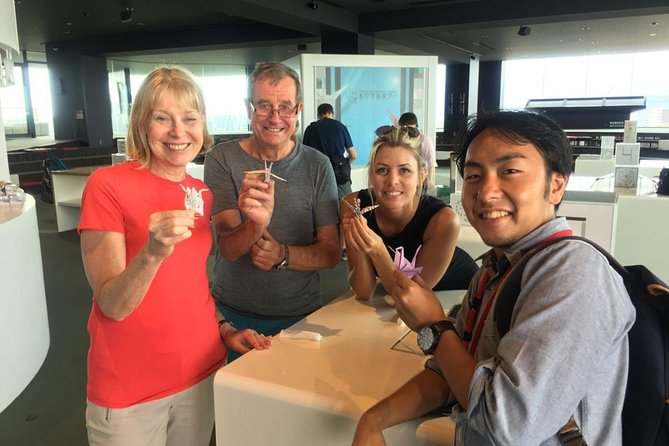
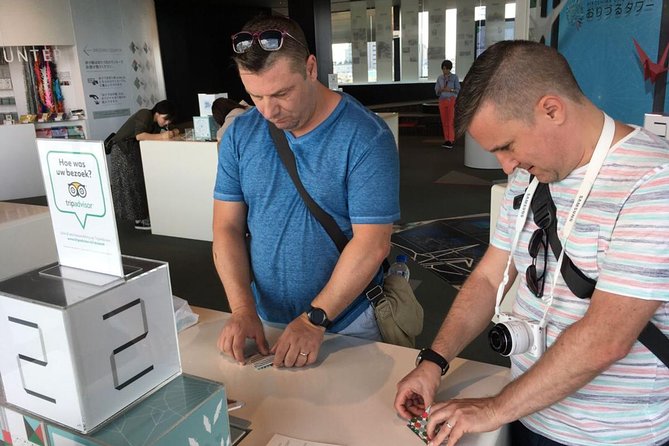
Then comes the reset: lunch. You’ll have lunch at Orizuru Tower, around 30 minutes, and the tour includes the entrance fee tied to the experience.
Eating here is a smart choice. You’ve just spent time in emotionally intense spaces. Lunch gives you a chance to breathe, rehydrate, and let your thoughts settle before you head back out.
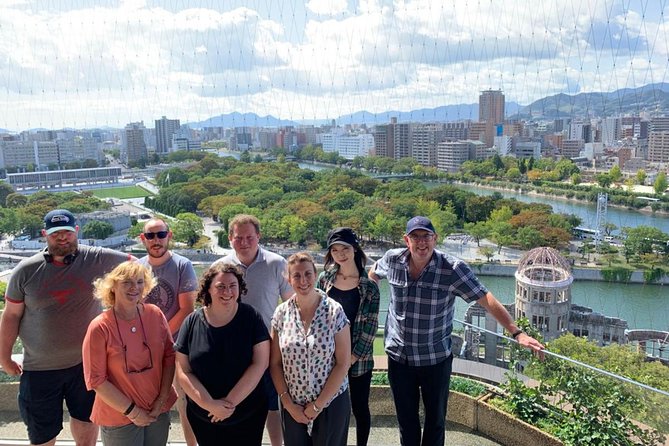
You also get panoramic views of modern Hiroshima from the observatory area. That contrast is part of the point of the tour. The city you see today is not separate from the story you just learned. It’s the continuation of it.
In practical terms, this is also a convenience win. The tour includes lunch, so you don’t have to scramble to find a meal plan mid-day.
The included extras that matter: entrance fees, lunch, tour photos
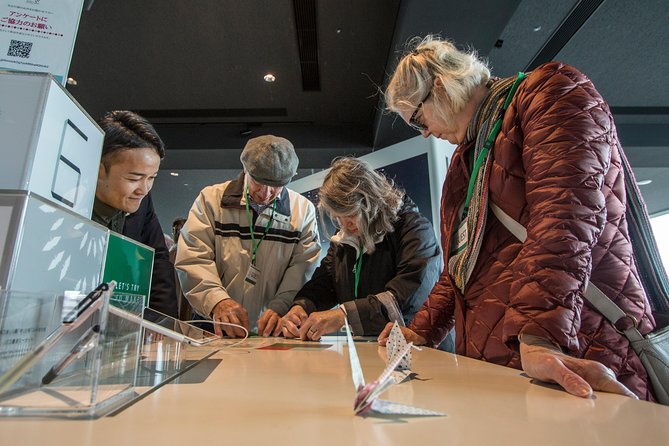
This tour includes:
- Entrance fee of the Peace Memorial Museum and Orizuru Tower
- Lunch
- A certified MagicalTrip guide
- Tour photos
Tour photos sound like a small perk until you realize what happens when you’re traveling in a group. You spend less time handing your phone around and more time being present. It’s also helpful if you’re not planning to shoot constantly during a day when concentration matters.
Lunch being included is also a value factor. You’re not just paying for walking and guiding, you’re paying for a built-in break in the middle of the day with meals covered.
Price and value for a 5-hour guided day
At $94.84 per person for about 5 hours, the value depends on what you want from Hiroshima.
If you’re going to the Peace Memorial Museum and the Dome anyway, you’re already committing to major sites. This price bundles guide time plus major entrance fees plus lunch. On top of that, the tour is capped at 8 travelers, which often makes it easier to ask questions and keep the day moving at a human pace.
The group discount angle can also help if your travel style includes splitting costs with a small circle of friends. And the tour uses a mobile ticket, which is one less thing to worry about.
In short: this is not a budget “see the sites fast” option. It’s a pay-for-meaning option. If that matches your travel goals, the price tends to feel fair.
Crowd management: the one thing you should take seriously
One practical consideration: Hiroshima Peace Memorial Museum and the park area can be very busy, especially at peak times or in certain parts of the year. If the museum gets crowded, it can be harder to pause for every single exhibit.
How to handle that:
- Go with the goal of understanding the main story, not racing for every last detail
- Keep your expectations realistic about time inside the museum
- If you have specific interests, ask your guide at the start so they can suggest what to focus on
A good guide can also help you prioritize without making it feel like you’re skipping.
Weather, comfort, and what to pack for this walk
The tour notes that summer in Japan can be extremely hot and humid, and temperatures can reach very high levels. It also notes winter lows can drop below freezing. That means weather can make a big difference in your comfort on a walking route.
So pack like you’re doing a half-day walk:
- Water (plan to sip even if you do not feel thirsty yet)
- A hat for sun and heat
- Layers if you’re visiting in shoulder seasons or winter
Comfort matters most because the day includes both indoor time and outdoor memorial walking.
Food and dietary needs: what you should know before you go
Lunch is included, but diet rules are not the same as in every country. The tour states that vegetarian options are limited, and it cannot accommodate gluten-free requests for this tour.
It also says allergy-free or dietary substitutions cannot be guaranteed, because food may be prepared in kitchens not controlled by the tour operator. Requests need to be shared at least one day before the tour. Same-day changes may not be possible.
Here’s the practical move: if food matters for you, send your needs early and be ready to make a simple choice if your first option is not available. You’ll enjoy the day more if lunch is settled in advance.
Who this tour suits best
This tour fits best if you want:
- A respectful, guided walk through major Peace World Heritage sites
- Context that helps you connect memorials to real meaning
- A small group pace, not a large bus crowd
- Lunch built in, not a scavenger hunt for food
I’d especially recommend it to first-time visitors to Hiroshima who feel unsure about how to structure the Peace Park area. It’s also a strong choice for anyone who wants to learn from a local guide and ask questions in real time.
If you have mobility challenges, the tour is not recommended for individuals with mobility issues. You may need a private option if walking distance and pacing are a problem.
Final take: should you book this Hiroshima Peace tour?
I’d book it if you want Hiroshima with context, not just photos. The guide-led flow through the Peace Memorial Museum, the Cenotaph, the Children’s Peace Monument, the Atomic Bomb Dome, and the Orizuru Tower view gives you a clear emotional arc.
Choose a different option if you hate museums and prefer pure sightseeing with no heavy material, or if you need guaranteed dietary or accessibility support beyond what’s stated.
If you do book, send dietary requests at least a day ahead, bring water and a hat, and give yourself permission to slow down at the Dome and the memorial points. This is a day where pacing is part of the respect.
More Historical Tours in Hiroshima
- Hiroshima: Miyajima Half-day Historical Walking Tour
★ 4.7 · 100 reviews - Hiroshima: History and Hidden Gems Tour
★ 4.9 · 81 reviews - Hiroshima: Miyajima Private Cultural Tour by Ferry
★ 4.9 · 72 reviews - Hiroshima History Tour : A-Bomb Dome, Peace Memorial & City
★ 5.0 · 43 reviews
Newly listed around Hiroshima
- Hiroshima and Miyajima 1 Day Walking Tour★ 5.0 · 43 reviews
- Hiroshima and Miyajima 1 Day Cruise Tour★ 5.0 · 24 reviews
- Hiroshima & Miyajima: UNESCO A-Bomb Dome & Itsukushima with Local★ 5.0 · 25 reviews
- Hiroshima & Miyajima: Private Full-Day Tour with a Local Guide★ 5.0 · 39 reviews
- Hiroshima 5k Running Tour of Hijiyama Park★ 5.0 · 7 reviews
- Hiroshima and Miyajima Bus Tour with Indian Lunch★ 5.0 · 10 reviews
- Hiroshima and Miyajima 1 Day Bus Tour★ 4.5 · 145 reviews
- Hiroshima Peace Memorial and Atomic Bomb Dome Private Tour★ 5.0 · 37 reviews
Historical Tours, compared.
World Heritage Shirakawa-go and Experience Tours from Kanazawa
Read our review →
World Heritage Kyoto & Nara Uji Authentic Matcha Experience
Read our review →
World Heritage Shirakawa-go Morning Guided Tour
Read our review →
Hiroshima Historical Walking Tour – Why A-Bomb was Dropped
Read our review →
Yanaka Walking Tour: Historic and Traditional District of Tokyo
Read our review →
Shinjuku Historical Walking Tour & Secret Backstreets
Read our review →
Mt. Fuji Heritage Tour: Traditional Villages, Lakes & Shrine
Read our review →Browse the lists this tour appears in