
Review · NAKASENDO TRAIL WALKS
Explore Kiso Valley : Magome – Tsumago Mountain Trail Walk
Kiso Valley gets under your skin fast. This guided Magome to Tsumago trail walk is a practical way to experience a slice of the Nakasendo highway without map stress.
I like how private and customizable the pace feels, plus the day includes bus tickets and entrance fees so you are not juggling small logistics while you are trying to enjoy the scenery and history.
One thing to consider: this is a long day on foot, about 5.5 miles (9 km), and the tour requires a strong physical fitness level, with weather also playing a role.
In This Review
- Quick take on the Magome to Tsumago hike
- Why walking the Nakasendo through Kiso Valley feels different
- Price and what you actually get for $171.31
- Meeting at Nakatsugawa and finishing at Nagiso Station
- Step by step: Magome-juku, the observatory, and the waterfall break
- Otsumago and Tsumago-juku, where preservation turns into context
- Nagisomachi Museum and Wakihonjin Okuya: Edo-period residences up close
- Walking pace, distance, and who should book
- Guides who turn a hike into a story: Ryo, Moto, Harumoto, Kazuo
- Practical tips so your day goes smoothly
- Should you book this Magome to Tsumago trail walk?
- FAQ
- How long is the Magome to Tsumago walk?
- Where do I meet, and where does the tour end?
- What is included in the price?
- Do I need to worry about transport and admission tickets during the day?
- Is this tour good for beginners in terms of walking?
- What happens if the weather is bad?
Quick take on the Magome to Tsumago hike
- 9 km on a guided route keeps you moving at a good touring pace without getting lost
- Bus transfers plus entry fees included, so you spend your energy walking, not planning
- Magome-juku and Tsumago-juku post town details give context beyond the views
- Odaki and Medaki waterfalls are quick stops that break up the walk nicely
- Waki-honjin style residences and museum visit add hands-on Edo-period atmosphere
- Local guides like Ryo, Moto, Harumoto, and Kazuo bring personal, lived-in knowledge
Why walking the Nakasendo through Kiso Valley feels different
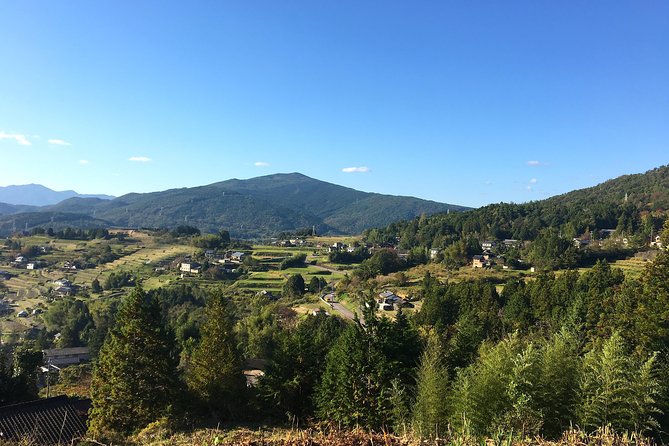
If you have ever seen photos of Japan’s old post towns and thought, I want the story behind this, Kiso Valley is a good place to start. Magome and Tsumago sit along the Nakasendo, the older route that connected Kyoto and Tokyo before modern highways made travel easier. In this region, the trail is not just a path, it is a living timeline.
What makes this walk especially satisfying is that you are not trying to assemble the day yourself. You move between medieval town sections, viewpoints, and preserved streets with a guide who can connect the dots as you go. When you understand what a place was built for, the details start to matter. That is how a 9 km hike turns into something memorable.
You also get a good balance of outdoor time and town time. You are walking through forested trail segments and downhill and uphill stretches, but you are also stepping into preserved areas where architecture and old inn systems explain how travelers lived.
More Walking Tours in Takayama
- Takayama Old Town Walking Tour with Local Guide
★ 4.5 · 50 reviews - Takayama: Takayama Jinya & Old Town Private Walking Tour
★ 4.5 · 32 reviews - Takayama: Private Walking Tour with a Local Guide
★ 4.6 · 29 reviews
Price and what you actually get for $171.31
At $171.31 per person, this is not the cheapest thing you can do in Gifu and Nagano prefectures. But it is not overpriced either, because the day includes several costs that can otherwise sneak up on you.
Here is the value logic as I see it:
- An English guide is included. And from what I have heard from guides like Ryo and Kazuo, their local background and patient answers are a big part of the experience.
- Bus tickets are included, which matters because you start at Nakatsugawa Station and need transport to reach Magome-juku.
- Entrance fees are included, including visits connected to the historical residences and museum stops near the end of the walk.
What is not included is also clear, and that is important for budgeting. You will need to plan for food and drink yourself. If you like to buy snacks as you go, factor that in.
Also, the tour is private, meaning only your group participates. Even if it is booked as a single itinerary, you are not stuck listening to strangers or waiting for other people’s pace. That is a real value if you want a calmer day.
Meeting at Nakatsugawa and finishing at Nagiso Station
This walk is designed like a one-day route from rail to rail, which I love. The start is at Nakatsugawa Station at 9:00 am, meeting at Nakatsugawa Station 2 Chome-1 Otamachi. From there, the group heads to Magome-juku via bus.
The end point is Nagiso Station around 15:45. Your guide helps with the train ticket back to your accommodation. That matters more than it sounds, because after a hike you usually just want to go, not figure out what ticket machine to use while you are tired.
One practical note: the tour is a guided walk with a group day structure, so you should plan to arrive a little early at Nakatsugawa Station and be ready to leave at 9:00. This is not the kind of day where you can casually wander in late.
Step by step: Magome-juku, the observatory, and the waterfall break
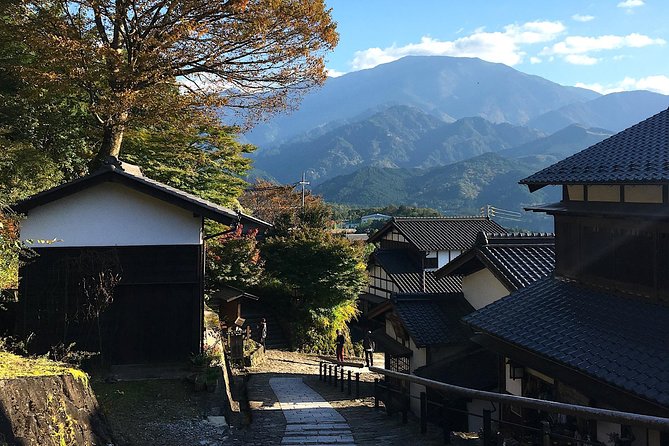
The day starts in Magome-juku, a post town on the Nakasendo. This is where the highway life feel starts. You are not looking at an abstract history project from afar. You are entering a place that was built for travelers.
From Magome-juku, you head to a Magome Observatory just up the slope. This is a short stop, but it is timed well: you get the view without losing much hiking time. The observatory sits at 801 meters, and it is positioned on the highest point of the hiking course between Magome and Tsumago. Expect a wide look over the valley and town layout, the kind of view that helps you visualize where you will walk later.
Then comes an excellent mid-route pause at Odaki-Medaki Waterfalls. This is one of those small stops that keeps the day from feeling like a straight grind. The waterfall is described as two sides: Odaki on the left, Medaki on the right, often thought of as man and woman waterfalls. Even if you do not focus on the naming, the key is the reset. You get a change of tempo, cooler air, and a chance to photograph without rushing.
Short stops like these are not fluff when you have a longer walking day. They keep you fresh, and they make the route feel like a guided journey rather than a checklist.
Compare these Nakasendo Trail walks in Takayama:
- Magome & Tsumago Nakasendo Trail Day Hike with Government-Licensed Guide
★ 5.0 · 38 reviews - Magome & Tsumago Nakasendo Full-Day Private Trip with Government-Licensed Guide
★ 5.0 · 20 reviews - Hiking the Historic Nakasendo Trail [1 Day Tour from Nagoya]
★ 5.0 · 104 reviews - Magome-juku, Tsumago-juku & Ena-kyo 1d Bus Tour from Nagoya
★ 4.6 · 75 reviews
Otsumago and Tsumago-juku, where preservation turns into context

After you settle into the mid-route rhythm, the walk shifts into Otsumago and then Tsumago-juku, and that is where the architecture details start doing heavy lifting.
Otsumago is part of the Tsumago-juku Preservation Area. Here you see houses built with traditional styles such as Hon-Udatsu and Dashibari Zukuri. These terms may sound technical, but on the ground they help explain why streets look the way they do. Udatsu-style structures are tied to the old post town setting, where buildings had specific functions and designs shaped by commerce and travel.
Next is Nakasendo Tsumago-juku. This is a major highlight because you are stepping into the famous inn system that made the Nakasendo work. The town had one Honjin inn and one Waki-Honjin inn, plus 31 Hatago inns for common travelers. That mix is a big deal. It tells you this was not a single accommodation type, it was a whole social system.
Time-wise, you get around 1 hour 10 minutes at this stop area. That feels right. Enough time to browse, take photos, and still feel like you are moving through a living street rather than being herded past everything.
Nagisomachi Museum and Wakihonjin Okuya: Edo-period residences up close
The final stretch leans deeper into history through residential sites, and I think that is one of the best parts of the day. It is one thing to walk past old streets, but it is another to step into how those residences were designed and used.
First is Nagisomachi Museum, inside a Waki-honjin Okuya residence called Hayashiya House. The house is described as a Designated Important Cultural Property. You also get a restoration approach based on late Edo period floor plans, which helps the space feel more grounded than a generic museum set.
From there you visit Wakihonjin Okuya, described as an 1877 residence that served as a waki-honjin and a provision store for generations. The material detail matters: it was built from fragrant Japanese cypress, and the tour notes that Japanese cypress legalization as a building material was recent at the time of construction. That kind of detail makes the building feel like it came from real decision-making, not just old tradition.
These are the stops that tend to make the day click for people who usually prefer cultural context over pure scenic walks. Even if you only remember a few specific facts, you leave with a clearer picture of how the Nakasendo supported travel, trade, and lodging.
Walking pace, distance, and who should book
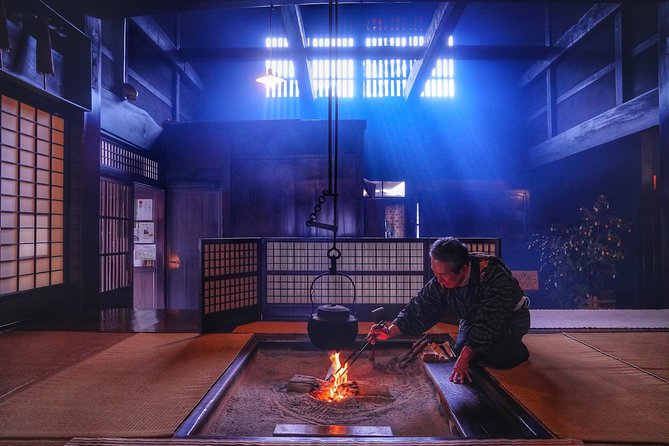
You will walk about 5.5 miles (9 kilometers) in total. The full tour time is about 7 hours, which includes travel between points, stops, and time in town. That is a workable day for active travelers, but it is still a full-day effort.
The tour also says it can be customized to suit your needs. That is useful if your group includes different fitness levels, or if you want a slightly slower pace for photos and questions.
At the same time, the requirements are clear: this experience calls for strong physical fitness. If you normally do long walks and handle hills, you should be fine. If 9 km already feels like a stretch, plan to sit out or consider a shorter alternative.
Weather is another factor. The experience requires good weather, and if it is canceled due to poor weather, you are offered a different date or a full refund. So I recommend planning your travel days with a little buffer.
Guides who turn a hike into a story: Ryo, Moto, Harumoto, Kazuo
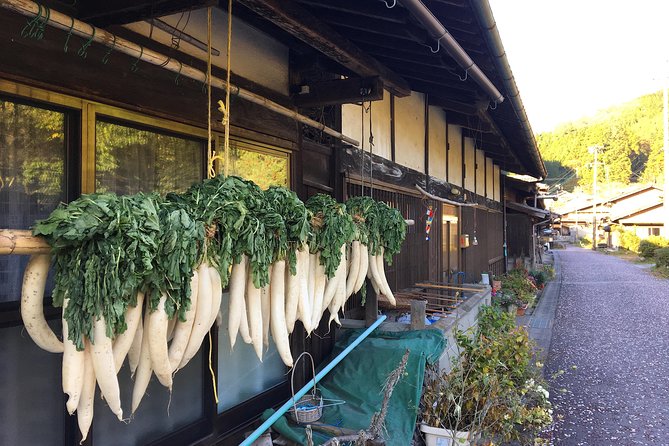
The quality difference here is the guide. In the feedback, names keep showing up, and the themes are consistent: enthusiasm, local background, and a friendly style that makes questions feel normal.
For example:
- Ryo is described as kind, friendly, and especially good at bringing the Nakasendo alive.
- Moto is praised for deep area knowledge and an upbeat, fun approach, with conversation that adds meaning to the walk.
- Harumoto is noted for being a strong first-visit experience, with local culture explanations that make the towns feel real.
- Kazuo stands out for being patient and considerate, helping people move through questions without feeling rushed.
If you like travel that feels personal, this is the style you will probably want. And if you are a first-time Japan traveler, a local guide can help you understand what you are seeing without making it feel like a lecture.
One more small but important point: the tour is private for your group only. That makes it easier for a guide to adjust pace and attention. You do not have to compete with other people for time.
Practical tips so your day goes smoothly
A few things I would plan before you go, based on what this kind of route demands.
- Bring a plan for food and drink. Food and drink are not included, so decide what you will snack on and where you might stop to eat.
- Wear real walking shoes. This is 9 km plus stops, and some segments involve hills and town streets. Comfortable shoes make a bigger difference than you think.
- Arrive on time for the 9:00 am meeting. If you start late, the whole flow feels rushed.
- Charge your phone for photos. You have multiple worthwhile photo moments like the observatory and the waterfall.
- Ask your guide about pacing early. Since the walk can be customized, it is smart to speak up at the start if you want slower breaks or more time at specific stops.
Also, keep expectations realistic: this is not a slow stroll. It is a structured, guided walk that mixes countryside segments and historical town time. If you plan for that, you will enjoy it more.
Should you book this Magome to Tsumago trail walk?
I think you should book if you want:
- a guided way to experience the Nakasendo without navigation stress,
- a day that combines outdoor walking with preserved post town history,
- a private, English-speaking guide who can answer questions as you go,
- and a route where key costs like bus tickets and entrance fees are already handled.
Skip it or choose a different option if:
- 9 km of walking already feels too much for your current fitness,
- you dislike structured schedules and long days,
- or you are traveling with a weather-sensitive plan, since the experience depends on good conditions.
One more confidence boost: the tour has an outstanding track record, with a 5-star rating and 100 percent recommendation based on 33 reviews. That does not replace your own judgment, but it does suggest the format works for most people who want exactly this kind of Kiso Valley experience.
If you are building a first Japan itinerary and you want one day that feels both active and culturally grounded, this is a smart bet.
FAQ
How long is the Magome to Tsumago walk?
The tour lasts about 7 hours and includes walking about 5.5 miles (9 kilometers), plus time for bus transfers and several stops.
Where do I meet, and where does the tour end?
You meet at Nakatsugawa Station (2 Chome-1 Otamachi, Nakatsugawa, Gifu 508-0033) at 9:00 am. The tour ends at Nagiso Station around 15:45, and your guide can help you buy the train ticket back.
What is included in the price?
The price includes an English guide, bus tickets, and entrance fees. Food and drink are not included.
Do I need to worry about transport and admission tickets during the day?
You do not need to arrange bus transport or entrance fees, since both are included. You only need to handle your own food and drink.
Is this tour good for beginners in terms of walking?
The tour is for active travelers and calls for strong physical fitness. It includes about 5.5 miles (9 kilometers) of walking, so you should be comfortable with that distance.
What happens if the weather is bad?
The tour requires good weather. If it is canceled due to poor weather, you will be offered a different date or a full refund.
Newly listed around Takayama
- Private-group Morning Cycling Tour in Hida-Furukawa★ 5.0 · 105 reviews
- Short Morning Cycling Tour in Hida★ 5.0 · 17 reviews
- Private Afternoon Cycling Tour in Hida-Furukawa★ 5.0 · 109 reviews
- Gifu Samurai Sword Town;Japanese Damascus Knife Making Experience★ 5.0 · 27 reviews
- Shirakawago(UNESCO world heritage)/ Onsen / Hiking / 1day tour★ 5.0 · 6 reviews
- Shirakawa-go Half day tour (UNESCO World Heritage near Takayama)★ 5.0 · 9 reviews
- Magome & Tsumago Nakasendo Trail Day Hike with Government-Licensed Guide★ 5.0 · 38 reviews
- Magome & Tsumago Nakasendo Full-Day Private Trip with Government-Licensed Guide★ 5.0 · 20 reviews
Nakasendo Trail Walks, compared.
![Hiking the Historic Nakasendo Trail [1 Day Tour from Nagoya]](https://pic3.japaneseguides.com/wp-content/uploads/hiking-the-historic-nakasendo-trail-1-day-tour-from-nagoya-400x267.jpg)
Hiking the Historic Nakasendo Trail [1 Day Tour from Nagoya]
Read our review →
Magome-juku, Tsumago-juku & Ena-kyo 1d Bus Tour from Nagoya
Read our review →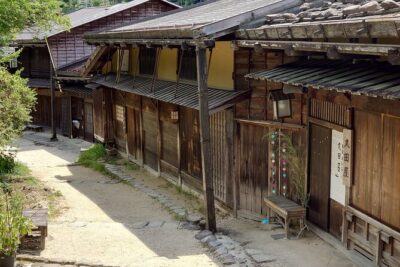
1-Day Tour from Matsumoto: Walk the Nakasendo Trail
Read our review →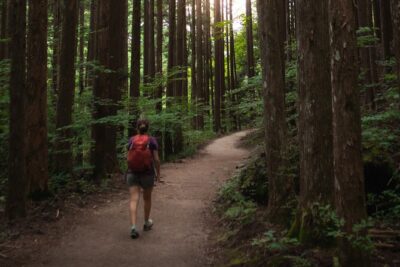
Magome & Tsumago Nakasendo Trail Day Hike with Government-Licensed Guide
Read our review →
1-Day Tour from Nagoya: Hiking the Historic Nakasendo Trail
Read our review →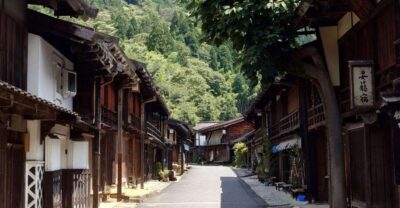
From Matsumoto/Nagano: Nakasendo Trail Walking Tour
Read our review →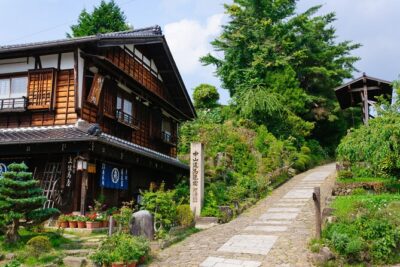
Magome & Tsumago Nakasendo Full-Day Private Trip with Government-Licensed Guide
Read our review →
Browse the lists this tour appears in