
Review · LICENSED GUIDES & PRIVATE DRIVERS
Takayama Half-Day Private Tour with Government Licensed Guide
Takayama can feel small, until you walk it with a guide. This half-day private tour is built around choice, so you spend your time on the old streets and festival storylines that matter to you, with a government licensed English-speaking guide keeping everything clear and well paced.
I love the way you can tailor the route, picking 2 to 3 sites from the classic Takayama lineup instead of being herded through everything. I also like the human touch from guides I saw in past tours, like Yuko’s first-hand explanations of the float world and Lily’s focused historical storytelling that sets the rest of your day on the right track.
One consideration: because it’s a walking tour and you only target a few stops, you need to decide what you truly want to see (temples, markets, or festival museums) rather than assuming you’ll fit it all in.
In This Review
- Key highlights to look for before you book
- Private Takayama walking tour, with a guide who keeps it practical
- Price and value: what you get for about $122 per person
- How the 4 hours usually feel: smart pacing, not a race
- Choose your 2 to 3 stops: the Takayama menu (and what to expect at each)
- Sanmachi Suji: Edo-era merchant streets you can actually walk through
- Hida no Sato (Hida Folk Village): traditional houses without the lecture overload
- Takayama Jinya: where the Tokugawa system shows up in real buildings
- Hida Takayama Art and Festa Forest (Matsuri no Mori): float culture in museum form
- Higashiyama Walking Course: temples, Teramachi vibe, and an easy hill route
- Takayama Festival Floats Exhibition Hall (Yatai Kaikan): the float centerpiece
- Hida-Takayama Miyagawa Morning Market: food and rhythm in the old town
- Hida Kokubun-ji Temple: a three-storied pagoda moment
- Sakurayama Hachimangu Shrine: festival ties and a natural flow to Yatai Kaikan
- Kusakabe Folk Museum: Meiji-era residence style, less time pressure
- Yoshijima Heritage House: sake sign tradition you can see in the details
- Takayama Showa-kan Museum and Hida Takayama Retro Museum: the 1950s and Showa pop culture angle
- Guides who made the difference: real examples from past tours
- Practical tips to make your private tour feel worth it
- Should you book this Takayama half-day private tour?
- FAQ
- How long is the Takayama half-day private tour?
- Is this tour private, or will I join other people?
- Can I customize the itinerary?
- Are entrance fees included?
- What is included in the tour price?
- Is pickup available?
- Is this tour mostly walking?
- Do I get a mobile ticket?
- What is the cancellation policy?
Key highlights to look for before you book

- Licensed English guidance that turns streets and buildings into a story you can actually follow
- Pick your 2 to 3 sites, which is the whole point of doing this privately in a small mountain city
- Festival float expertise on the ground, especially around the Yatai Kaikan area
- Old town atmosphere you can feel at Sanmachi Suji and around the morning market river
- Easy, classic pairings like folk heritage plus a festival museum, or temples plus a gentle park walk
- Real flexibility if you want more outdoors time, like Shiroyama Park and the Higashiyama temple-area route
Private Takayama walking tour, with a guide who keeps it practical
This is a private half-day tour for your group only, and that matters in Takayama. The town is compact, but the details are everywhere, from old merchant houses to festival float culture to the way the area was governed in earlier centuries. A guide helps you connect those dots fast, so your walk feels intentional instead of like random wandering.
You also get the benefit of a licensed local guide who can answer the kinds of questions that pop up mid-walk. In earlier tours, guides like Yuko and Ito-san were praised for being able to explain not just what you’re seeing, but why it matters. Other guides, like Yuki, even adjusted the plan when rain was expected, which is the kind of small operational competence that can save your day.
The tour is also set up for a low-friction start. Pickup is offered, but it is on foot within a designated area, so plan to meet the guide nearby rather than expecting a car pickup.
More Private Guides in Takayama:
Price and value: what you get for about $122 per person
At $122.23 per person for about 4 hours, the value depends on how you like to travel. If you love independent browsing but get frustrated when you do not know what you are looking at, paying for a guide is one of the fastest ways to get your money back in satisfaction.
Here is what you are paying for, in plain terms:
- A licensed English-speaking guide
- The ability to customize your 2 to 3 stops
- A walking route that is paced for sightseeing, not a museum sprint
- A local explanation layer, so you can look at the same street and understand something new
What you are not paying for includes transportation to get to specific paid entrances, and entrance fees are not included for many sites. Still, several stops are free, including Sanmachi Suji and multiple shrines and temples, so you can design a route that keeps costs reasonable.
How the 4 hours usually feel: smart pacing, not a race
Because you choose only 2 to 3 sites, the tour tends to feel unhurried. Instead of rushing from one ticket line to the next, you get time to walk, look closely, and ask questions. This is especially helpful in Takayama, where the details often live in shop signs, timber buildings, and festival-related artifacts.
One more practical point: this is a walking tour. Comfortable shoes are not optional. You will also want to dress for mountain weather swings. In past tours, guides like Yuki specifically warned about expected showers, which tells you the day can change quickly.
Choose your 2 to 3 stops: the Takayama menu (and what to expect at each)
Your guide builds your itinerary from a set of classic options. Below is what each major stop is good for, plus where you might want to think twice.
A few more Takayama days to weigh up
- Kanazawa: World Heritage Shirakawa-go Morning Guided Tour
★ 4.9 · 988 reviews - Kanazawa: World Heritage Shirakawa-go & Two Local Experience
★ 4.9 · 274 reviews - 1-Day Private Rural E-Bike Tour in Hida
★ 5.0 · 188 reviews - Kanazawa/Takayama: Shirakawago & Takayama Private Day Tour
★ 4.8 · 172 reviews
Sanmachi Suji: Edo-era merchant streets you can actually walk through
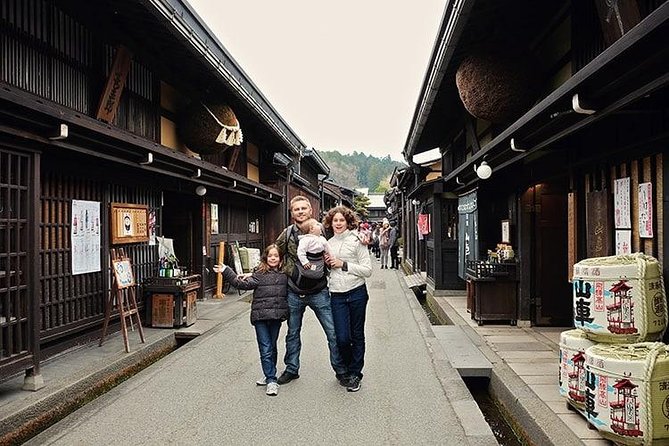
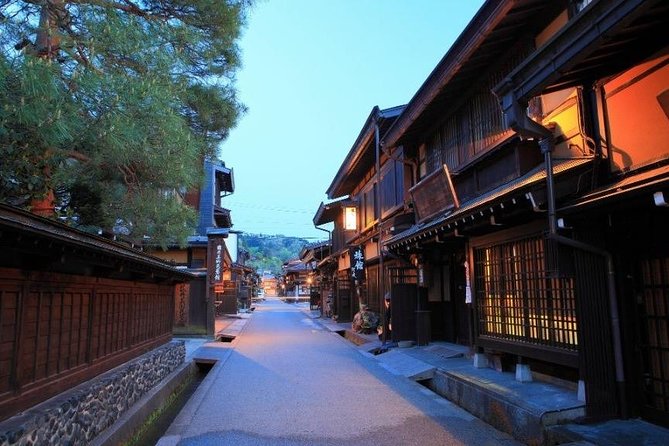
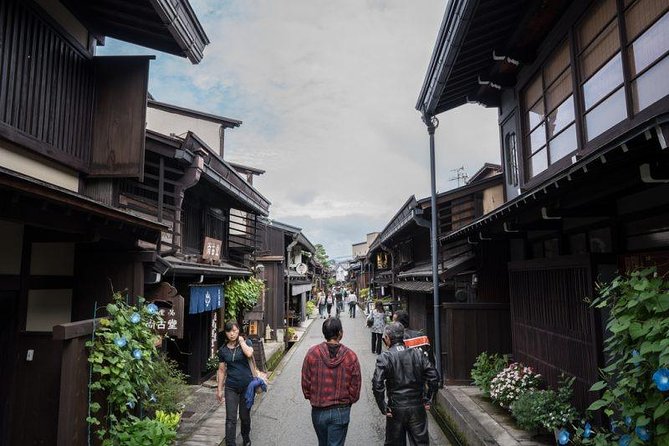
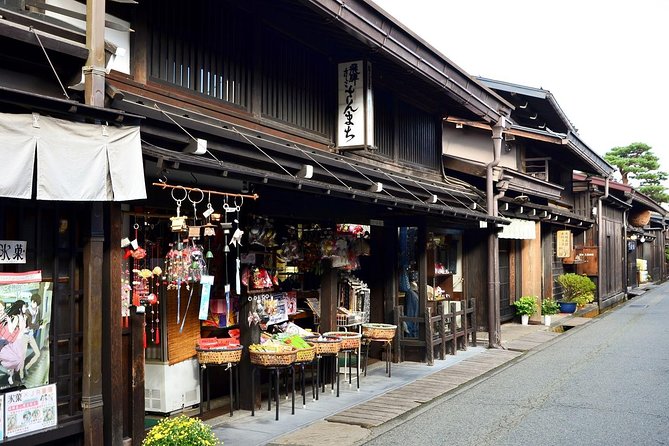
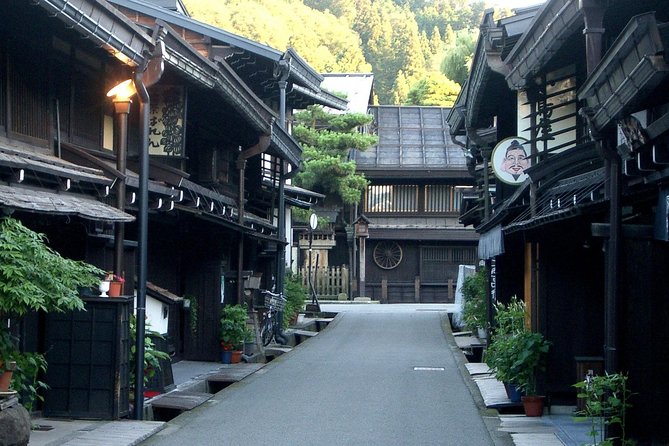
Sanmachi Street, in the old town area of Hida-Takayama, is the most straightforward place to start if you want atmosphere fast. The street is lined with old houses and shops that reflect the Edo period (1603 to 1868). You can browse local specialties and get that postcard-true Takayama feeling without needing tickets.
Why I like using this as a first stop: it helps you get your bearings fast. Once you see the old-town layout, everything else you do later makes more sense.
Possible drawback: because it is an open street area, it can feel like sightseeing shopping if you are not in browsing mode. If your goal is history first, pair it with something more interpretive later, like Takayama Jinya.
Hida no Sato (Hida Folk Village): traditional houses without the lecture overload
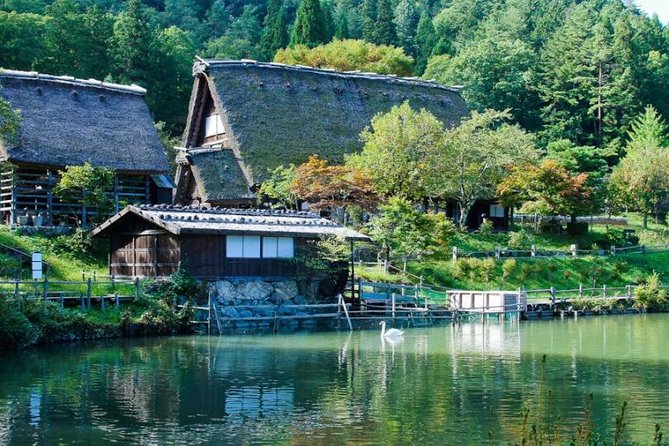
Hida Folk Village is an open-air museum with more than 30 traditional houses from the Hida region. It is great if you want a “how people lived” view, not just a scenic street.
This works especially well as a contrast after Sanmachi Suji. One is focused on the merchant-town vibe, and Hida no Sato shows the broader mountain living traditions around Gifu Prefecture.
Possible drawback: it is mostly outdoors. If you are sensitive to heat or rain, it can be less comfortable than indoor museum stops.
Takayama Jinya: where the Tokugawa system shows up in real buildings
Takayama Jinya was the local government office under Tokugawa Shogunate control starting in 1692, placed there because of the region’s valuable timber resources. This is a good pick if you like structured context. You see how power and resources shaped local life.
What to watch for: look at the overall layout and building role, not just the walls. A guide can help you connect the site to the idea of regional administration.
Possible drawback: the stop is listed as not included for admission. So if your chosen bundle includes multiple paid sites, entrance costs can add up.
Hida Takayama Art and Festa Forest (Matsuri no Mori): float culture in museum form
Festival Forest Museum focuses on the world of Takayama’s famous festivals. You get full-sized replica floats (yatai) and details that explain the festival angle of this town. If floats are your top priority, this is a strong option.
Pairing idea: choose this or the float exhibition hall nearby, then use the festival-focused shrine stop for the outside perspective.
Possible drawback: it is listed as not included for admission. If you are trying to keep the day budget-friendly, you may prefer free float views outside the paid museum areas.
Higashiyama Walking Course: temples, Teramachi vibe, and an easy hill route
The Higashiyama Walking Course (Teramachi area and Shiroyama Park region) is where you go when you want a greener break. It is described as a pleasant walking route through temple town areas, plus a wooded hill section with views.
Why it is a smart choice: it slows the day down. After old streets and museum stops, this route gives you breathing room and a natural sense of Takayama’s mountain setting.
Possible drawback: it is still walking. If you choose both this and a folk village type of stop, you may rack up a lot of time on your feet.
Takayama Festival Floats Exhibition Hall (Yatai Kaikan): the float centerpiece
The Takayama Festival Floats Exhibition Hall is tied directly to the festival schedule, spring dates (April 14 and 15) and autumn dates (October 9 and 10). It is one of the key places to understand how the festival float culture fits into Takayama identity.
If you want a guided version of the float story, this is the best anchor stop. In past tours, guides like Yuko were praised for explaining floats in a way that helped people plan their afternoons and interpret what they would see next.
Possible drawback: admission is not included for this site, so check your bundle choices.
Hida-Takayama Miyagawa Morning Market: food and rhythm in the old town
The Miyagawa Market runs along the Miyagawa River in the old town, generally from around 7:00 (8:00 in winter) to noon. This is a classic morning Takayama feel and one of the easiest ways to taste the region without making a whole meal out of it.
If you are doing this tour in the morning, you can often weave it into your chosen stops naturally, since it is free and time-window friendly.
Possible drawback: the market timing matters. If you book late in the day or your plan runs behind, the market portion may not match your schedule.
Hida Kokubun-ji Temple: a three-storied pagoda moment
Hida Kokubun-ji Temple is a well-known Buddhist temple, and its three-storied pagoda is the headline. The pagoda was constructed in 1820, and it is an iconic Takayama photo stop, just a short walk from JR Takayama Station.
What makes it satisfying in a private tour: you can pair it with the Higashiyama walking route, so the temple feels part of a bigger walk rather than a single stop.
Possible drawback: admission is not mentioned as needed, and it is listed as free. That also means you might share the space with other independent visitors at peak times.
Sakurayama Hachimangu Shrine: festival ties and a natural flow to Yatai Kaikan
Sakurayama Hachimangu Shrine is the venue for the Takayama Festival in autumn. Next to it, the Yatai Kaikan float exhibition hall helps you connect the shrine setting with the float world immediately.
This is a great pick if you want to understand the festival as a whole system: where it happens and how it is represented.
Possible drawback: since admission for the float hall is not included, you might pay for the float experience while the shrine itself stays free.
Kusakabe Folk Museum: Meiji-era residence style, less time pressure
Kusakabe Folk Museum is a historic private residence opened to the public. The building was constructed during the Meiji period in Edo architectural style, which is an interesting mix if you like seeing how eras blend.
In a 4-hour route, this is an option that can work well if you want indoor space or want one more layer beyond the outdoor heritage streets.
Possible drawback: admission is not included, and the stop itself is listed as short. It can feel a bit like a quick architectural look if you were hoping for a longer museum session.
Yoshijima Heritage House: sake sign tradition you can see in the details
Yoshijima Heritage House was built in Meiji 41 (1908). Because it has been a sake brewery since olden times, a huge sakabayashi sign made of Japanese cedar leaves hangs under the eaves.
This is the kind of stop that rewards a guided explanation. Even if you do not drink much, the visual of the sake sign and the brewing connection gives context to how local products shaped identity.
Possible drawback: it is listed as not included for admission, so again, entrance fees can stack.
Takayama Showa-kan Museum and Hida Takayama Retro Museum: the 1950s and Showa pop culture angle
If your group likes modern Japanese nostalgia, Showa-kan Museum reconstructs retro streets from the 1950s. There is even a Midget Alley type of area. Hida Takayama Retro Museum leans into Showa movie references and interactive photo and play elements like posters, toys, and magazines.
These are not necessarily “must” stops for first-time Takayama history seekers, but they can be fun if your group wants variety. Past reviews mentioned surprises with these types of stops when people thought the town would be too small.
Possible drawback: because admission is not included, you might decide to spend that ticket money on a festival float stop if that is your top interest.
Guides who made the difference: real examples from past tours
The strongest praise in prior tours centers on the guide matching the group. Yuko was highlighted for clear explanations of festival floats and a steady sense of where to go next. Lily was praised for deep Takayama historical context that makes the town feel less like a blur.
For outdoors-forward groups, Yoko helped shape a route with more time outside, including Hida Folk Village, the morning market, and Shiroyama Park. Ito-san earned high marks for patient handling of detailed questions, and Yoshi was praised for choosing a non-touristy Hida beef restaurant.
A few helpful “this is how it lands” takeaways for you:
- If you love history, ask your guide to connect the sites you pick to the bigger Tokugawa and festival storylines.
- If you love food, mention it early. Some guides in past tours arranged tasting-style extras like tea or sake and pointed people toward local meals.
- If you have a specific cultural question, bring it up. Good tours turn that into a teachable moment rather than a dead end.
Practical tips to make your private tour feel worth it
A private tour works best when you treat it like a conversation. Before you meet, pick your 2 to 3 sites based on what you will actually remember later, not what looks best on a single photo.
For comfort:
- Wear shoes you trust for uneven pavement and repeated steps.
- Bring a light layer. Takayama weather can shift fast in a mountain setting.
- If rain is possible, plan to keep moving and let your guide adjust. In past tours, guides like Yuki did this well.
For maximizing the guide:
- Ask one “why” question per stop. Why was it built here, why does it connect to the festival, why is this street styled this way.
- If your top interest is festival floats, anchor your route with a float hall and then use shrine context to connect the dots.
Should you book this Takayama half-day private tour?
Book it if you want Takayama highlights without the stress of figuring out what everything means. The customization to 2 to 3 sites, plus a licensed English-speaking guide, is the core value. If your group cares about festival culture, old-town structure, or simply wants a clear plan for a short stay, you will likely appreciate how focused the experience is.
Consider skipping or swapping the stop choices if you hate walking or if you expect a full-day tour with lots of ticketed attractions. This works best when you commit to a short list of priorities and let your guide build the right route around them.
FAQ
How long is the Takayama half-day private tour?
It runs about 4 hours.
Is this tour private, or will I join other people?
It is private. Only your group participates.
Can I customize the itinerary?
Yes. You choose your preferred set of 2 to 3 sites from the tour’s What to Expect list, and your guide will shape the route.
Are entrance fees included?
Entrance fees are not included. Some places listed as free include Sanmachi Suji, Hida no Sato, Higashiyama Walking Course, Miyagawa Morning Market, Hida Kokubun-ji Temple, and Sakurayama Hachimangu Shrine. Other sites are listed as not included.
What is included in the tour price?
You get a licensed local English-speaking guide, a customizable tour based on your 2 to 3 chosen sites, and meet up with your guide on foot within a designated area of Takayama.
Is pickup available?
Pickup is offered, but it is on foot. You will meet the guide in the designated area rather than expecting private car pickup.
Is this tour mostly walking?
Yes. This is a walking tour.
Do I get a mobile ticket?
Yes. The tour includes a mobile ticket.
What is the cancellation policy?
You can cancel for a full refund up to 24 hours before the experience starts. If you cancel less than 24 hours before, the amount paid is not refunded.
Newly listed around Takayama
- Shuriken Experience in Takayama★ 5.0 · 46 reviews
- Special Food tour in Takayama★ 4.5 · 7 reviews
- Shirakawago All Must-Sees Private Chauffeur Tour with a Driver (Takayama DEP.)★ 4.0 · 8 reviews
- Takayama Full-Day Private Tour with Government Licensed Guide★ 4.5 · 13 reviews
- Special Food and Sake Factory Tour in Takayama★ 5.0 · 11 reviews
- Departing from Takayama [Regular sightseeing bus] World Heritage Sites Shirakawago and Gokayama Ainokura★ 4.5 · 137 reviews
- Japanese Cooking Class with Local Family in Takayama Old Town★ 5.0 · 40 reviews
- Ninja Experience in Takayama – Trial Course★ 5.0 · 20 reviews
Licensed Guides & Private Drivers, compared.
Tokyo 6hr Private Tour with Government-Licensed Guide
Read our review →
Kyoto Early Morning Tour with English-Speaking Guide
Read our review →
Tokyo 4hr Private Tour with Government-Licensed Guide
Read our review →
Kyoto 6hr Private Tour with Government-Licensed Guide
Read our review →
Hiroshima / Miyajima Full-day Private Tour with Government Licensed Guide
Read our review →Early Morning Tour with English-Speaking Guide
Read our review →
Tokyo Private Sightseeing Tour by Car- English speaking chauffeur
Read our review →
Mt Fuji Private Tour with English Speaking Driver
Read our review →Browse the lists this tour appears in