
Review · SHRINE & TEMPLE VISITS
Fukuoka’s Sacred Path: Temples, History & Culture
Zen, shrines, and fountains in one tidy loop. I love how this Hakata walk blends Shōfukuji Zen Temple tranquility with big-significance landmarks, all in a set 3-hour rhythm that feels relaxed instead of rushed. You’re not just ticking off sights, you’re learning how faith and everyday life overlap in this part of Fukuoka.
I also like the human side, the way the live guide keeps things conversational and practical, including etiquette and how Buddhism and Shinto are handled side by side. One consideration: it’s still a walking tour, with several stretches between sites, so comfortable shoes matter more than you think.
In This Review
- Key points that make this walk worth your afternoon
- Entering Hakata Station area, where the tour starts
- Shōfukuji Zen Temple, the calm start that sets the tone
- Tōchōji Temple and the 10.8-meter wooden Buddha
- Kushida Shrine, festival fame and a look at Hakata identity
- Canal City Hakata and the dancing fountain show
- Sumiyoshi Shrine, safe travels as a quiet finale
- How the route is timed, and why that matters
- Price and value: what $77 includes, and what it doesn’t
- Who this sacred path walk suits best
- Should you book this tour?
- FAQ
- Which languages are available for this tour?
- How long is the tour?
- Where do I meet the guide?
- What stops are included in the tour?
- What is not included in the price?
- Is this a private or group tour?
- What should I bring?
- Can I get a refund if plans change?
Key points that make this walk worth your afternoon
- Shōfukuji Zen Temple, founded in 1195 by Eisai, gives you the calm start you didn’t know you needed
- Tōchōji Temple’s 10.8-meter wooden Buddha, plus the story of the underground passage symbolizing the afterlife journey
- Kushida Shrine and the Gion Yamakasa connection, including the Yamakasa float on display
- Canal City Hakata fountain show, a quick hit of lights, music, and water artistry
- Sumiyoshi Shrine for safe travels, with vermillion torii gates and a quieter end to the route
Entering Hakata Station area, where the tour starts
The meeting point is right by Hakata Station, outside the West Exit, in front of the Casetify Studio inside Amu Plaza Hakata. It’s an easy start point if you’re already using Hakata Station for transit, and it keeps the whole tour from feeling like a scavenger hunt.
From there, the group heads on foot for short links between stops. That pacing is a big part of why this works well. You get frequent “new place, new story” moments instead of one long slog.
Also, you’re not stuck with one language option. The tour is offered in English and German, and conversational Japanese is available. If you can read a little Japanese, you’ll likely enjoy street signs and shrine notices even more, but it’s not required to get the meaning out of each stop.
More Shrine and Temple visits in Fukuoka:
- Fukuoka: Beppu Hells HotSpring, Frog Temple & Yufuin DayTrip
★ 4.4 · 84 reviews - Fukuoka: Nanzoin Temple and Reclining Buddha Guided Tour
★ 4.5 · 7 reviews - Kyoto: Fushimi Inari, Kinkakuji, Bamboo Grove 1 Day Bus Tour
★ 4.8 · 4,316 reviews
Shōfukuji Zen Temple, the calm start that sets the tone
Shōfukuji is the first stop, and it’s a smart move. The temple is known as Japan’s first Zen temple, founded in 1195 by the monk Eisai. If your idea of Zen is only silence, you’ll still get that feeling here, but you’ll also get the historical thread connecting China, Buddhism, and what Japan built from it.
Expect a guided walk through the grounds with attention to wooden architecture and the feel of a place designed for reflection. You’ll also hear Zen philosophy and learn how meditation fits into the worldview, not as a magic trick, but as a way of training attention.
Practical tip: plan to slow down for photos, especially if you want the classic temple angles with rooflines and courtyards. The guide’s pace is meant to be leisurely, so you can look, listen, and ask questions without sprinting to “catch up.”
Why I think this opening works: it gives your brain a reset before you move into the more dramatic symbolism at other temples and shrines.
Tōchōji Temple and the 10.8-meter wooden Buddha
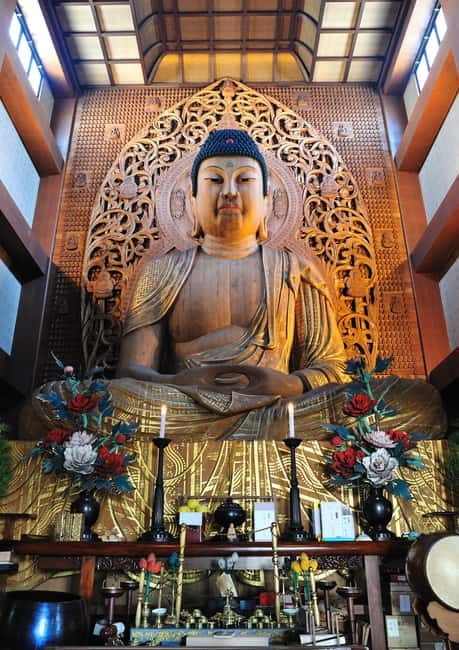
Next comes Tōchōji Temple, one of Fukuoka’s important Buddhist sites. Here’s the headline: it houses Japan’s largest wooden Buddha, a Great Buddha standing about 10.8 meters tall. Even if you’ve seen big statues in other cities, this scale is the kind you feel in your neck muscles when you look up.
The guided time is longer here, about 30 minutes, because there’s a lot to take in. You’re not only looking at a statue, you’re learning how the temple communicates spiritual ideas through structure and symbolism.
One of the most memorable features is the underground passage. The temple uses it as a symbol of a journey through the afterlife. Even if you don’t think you’ll be the “symbol person,” this is the kind of story that helps you interpret why people treat certain spaces with seriousness.
Practical tip: bring a camera, but also bring patience. Big statues and strong indoor or shaded lighting can make phone photos tricky. Take a couple quick shots, then put the phone away long enough to just stand and absorb the place.
Kushida Shrine, festival fame and a look at Hakata identity
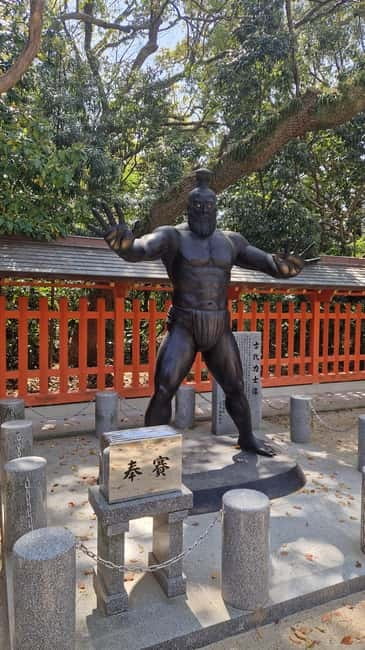
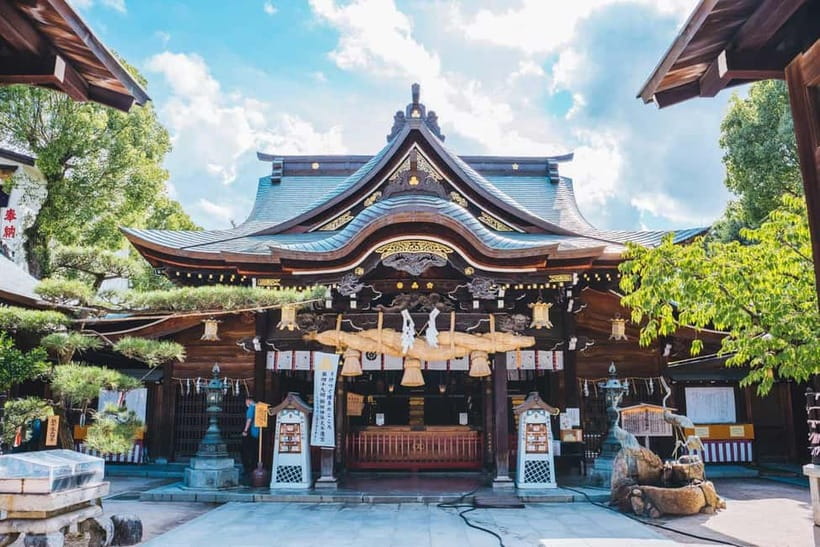
Kushida-jinja Shrine is where history starts to feel like something happening right now, because it’s closely tied to the Gion Yamakasa festival. You’ll have a guided sightseeing segment of around 30 minutes, which is enough time to see what the shrine represents and how the festival energy connects to Hakata’s identity.
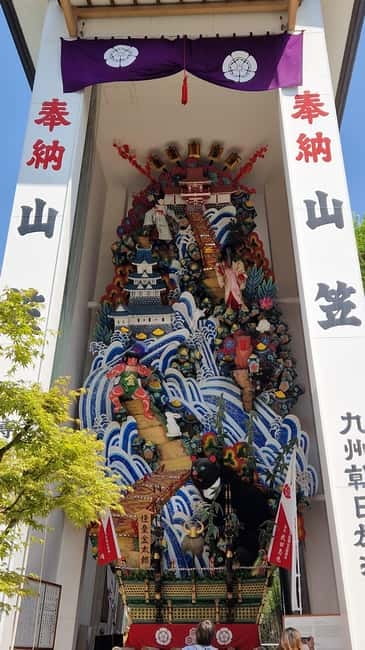
Kushida Shrine is famous for hosting the grand Hakata Gion Yamakasa each summer. The most eye-catching part for many people is seeing the towering Yamakasa float on display. It’s one of those objects that instantly tells you this community likes height, motion, and effort, not just ceremony.
What makes this stop valuable is the context. You’ll learn how Shinto traditions work in daily life and how they show up through seasonal events. You’ll also get etiquette guidance, the kind that helps you behave respectfully without making it awkward.
If you’re the type who likes to understand what you’re seeing, this is a highlight. The shrine links spiritual practice to civic pride, and that’s a useful way to understand Fukuoka beyond postcards.
Practical tip: expect a longer, more step-heavy shrine area compared with the Zen grounds. Bring that comfortable shoe confidence and keep an eye on where you’re walking, not just on what you’re photographing.
A few more Fukuoka days to weigh up
- Fukuoka Essentials: History, Culture, & Charms
★ 4.8 · 39 reviews - World Heritage Shirakawa-go and Experience Tours from Kanazawa
★ 5.0 · 4,049 reviews - World Heritage Kyoto & Nara Uji Authentic Matcha Experience
★ 5.0 · 1,573 reviews - Kanazawa: World Heritage Shirakawa-go Morning Guided Tour
★ 4.9 · 988 reviews
Canal City Hakata and the dancing fountain show

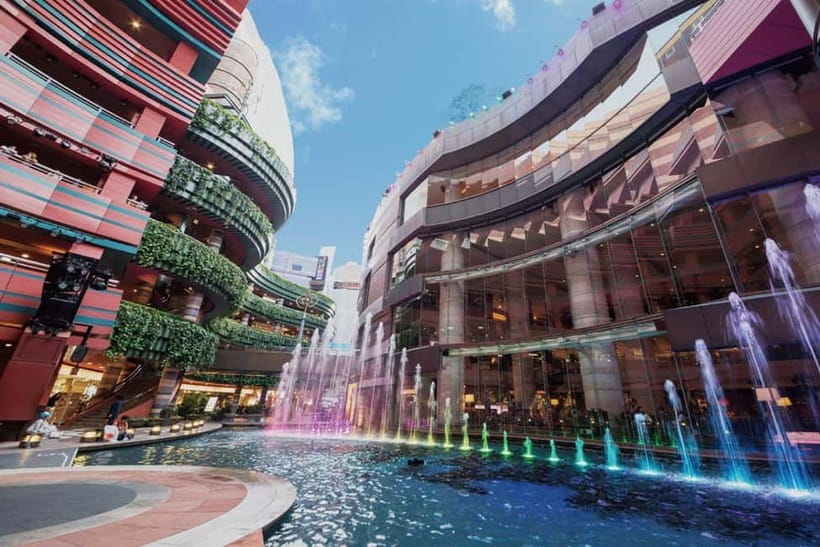
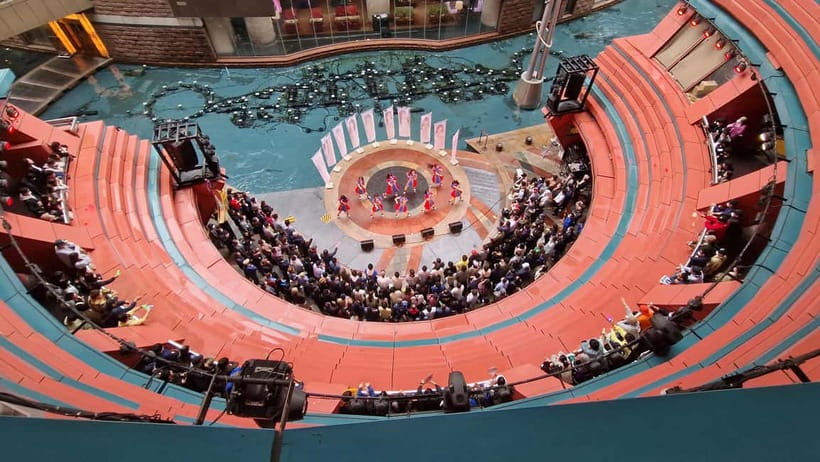
After temples and shrines, Canal City Hakata acts like a gear shift into modern Fukuoka. You’ll walk over, then spend a short 15 minutes sightseeing at the complex.
The big moment is the dancing fountain show. It combines lights, music, and water artistry, so it lands for both people who love culture and people who just want a fun break from walking and reading signs.
This stop isn’t about shopping details or deep mall exploration. It’s about atmosphere. You get a taste of Fukuoka’s present-day energy, which matters because this whole route is really about the city’s range, not only its sacred spaces.
Practical tip: timing depends on the show schedule. You’ll want to look for where the show zone is and position yourself early enough to see the water and lights clearly.
This is also a good place to reset your legs. Even 10 to 15 minutes of sitting or slow standing can make the final shrine feel easier.
Sumiyoshi Shrine, safe travels as a quiet finale
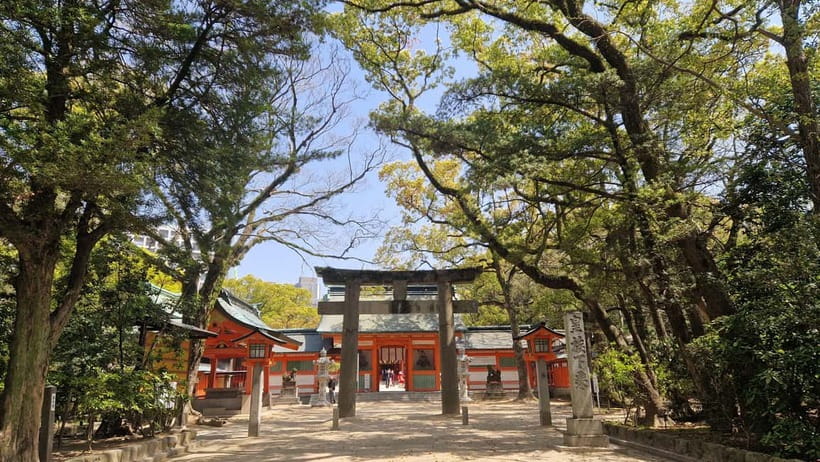
The last spiritual stop is Sumiyoshi Shrine, dedicated to safe travels and protection. It’s also described as one of Japan’s oldest Sumiyoshi shrines. That oldness matters here because shrines like this often function less like tourist exhibits and more like active places of prayer.
Expect a guided visit of around 25 minutes. You’ll see distinctive vermillion torii gates and enjoy a calmer feeling than the festival-focused sites. This is a thoughtful ending after the larger spectacle of temples and the modern flash of Canal City.
What I like about finishing here: it gives the route a purpose. The story stops being only cultural explanation and becomes something more personal. Safe travel is a theme every visitor can relate to, even if you don’t participate in prayers yourself.
Practical tip: this is a good time to ask the guide about what you’ve learned, like how locals think about protection or how people understand the relationship between Shinto and Buddhist practices.
How the route is timed, and why that matters
This whole experience runs about 3 hours. In that time, you’re covering several nearby districts on foot, but the route is structured to keep your energy steady.
Here’s the practical rhythm you can expect:
- You start near Hakata Station.
- You spend guided time at Shōfukuji (about 20 minutes) and Tōchōji (about 30 minutes).
- Kushida Shrine gets more time for sightseeing, about 30 minutes, including the Yamakasa float display.
- Canal City is shorter, about 15 minutes, centered on the fountain show.
- Sumiyoshi Shrine finishes with about 25 minutes of guided time.
Why I think the timing is smart: you get enough guided explanation at each spiritual site without dragging on so long that you lose the thread. And because the walking segments are broken up, you can keep your attention instead of going on autopilot.
One small caution: if you arrive early and wander around the meeting area, don’t overdo it. The first walking link is only around 10 minutes, but if you’ve already walked a lot that day, you’ll feel it more.
Price and value: what $77 includes, and what it doesn’t
The price is listed as $77 per person for a 3-hour guided walking tour. For that money, you’re getting:
- A local guided walking tour focused on historic and cultural sites
- Visits to Shōfukuji, Tōchōji, Kushida Shrine, and Sumiyoshi Shrine
- A stop at Canal City for the fountain show
- Explanations of Buddhism and Shintoism, plus local festivals and everyday customs
- A small group experience for a more personal feel
What’s not included is also clear: transportation costs and food and drinks. That means you’ll want to plan your transit to Hakata Station on your own, then eat before or after the walk.
Is it good value? I think it is, mainly because the tour includes actual guided time at multiple major spiritual sites, not just a quick exterior photo line. Plus, the Canal City fountain show is an added layer that keeps the route from becoming all seriousness, all the time.
If you love learning from a guide, $77 for 3 hours tends to make sense. If you mostly want unstructured sightseeing, you might feel like a guide adds cost. But this tour is built around interpretation, etiquette, and stories, which is where you get your money’s worth.
Who this sacred path walk suits best
This tour fits best if you like a mix of spiritual sites and city life, and you enjoy explanation as much as views. It’s a good choice if:
- You want a coherent route through Hakata’s temples and shrines in a short time
- You care about how Buddhism and Shinto are practiced and understood together
- You enjoy festivals and want the Gion Yamakasa connection tied to a real place
- You like a relaxed pace where you can ask questions
It’s also ideal for people who don’t want to spend half a day hopping between far-apart stops. Everything here is close enough to do on foot without feeling like a long hike.
The biggest practical watch-out is walking. Some stretches between the sites can add up, so if your legs are sensitive, plan for breaks and keep your shoes supportive.
Should you book this tour?
I’d book this walk if you want an easy, structured way to understand Hakata through Shōfukuji, Tōchōji, Kushida Shrine, and Sumiyoshi Shrine, then end with Canal City’s fountain show. It’s not just sightseeing, it’s guided culture with real context, and the pace is designed to keep it enjoyable.
Skip it only if you strongly prefer independent temple and shrine time with no guidance, or if you know you struggle with multi-stop walking. Otherwise, this is a solid way to turn one afternoon into something meaningful and, yes, a little fun with that dancing fountain finale.
FAQ
Which languages are available for this tour?
The tour is available in English and German. Conversational Japanese is also available.
How long is the tour?
The tour lasts about 3 hours.
Where do I meet the guide?
You meet just outside Hakata Station’s West Exit, in front of the Casetify shop at Amu Plaza Hakata.
What stops are included in the tour?
The tour includes visits to Shōfukuji Zen Temple, Tōchōji Temple, Kushida-jinja Shrine, Sumiyoshi Shrine, and a stop at Canal City for the fountain show.
What is not included in the price?
Transportation costs and food and drinks are not included.
Is this a private or group tour?
It is listed as a private group experience, with a small group for a more personal feel.
What should I bring?
Wear comfortable walking shoes and bring a camera. It’s also suggested to bring money for souvenirs.
Can I get a refund if plans change?
Yes, free cancellation is offered up to 24 hours in advance for a full refund.
Newly listed around Fukuoka
- Fukuoka: Yufuin & Beppu Day Tour (Dazaifu / Brewery Options)★ 4.6 · 31 reviews
- Fukuoka: Okinawa-Style Shisa Amulet Making Workshop★ 5.0 · 7 reviews
- Fukuoka: Private Nightlife and Hidden Gems Tour with a Local★ 5.0 · 11 reviews
- Fukuoka Private Custom Tour with Local Guide★ 5.0 · 11 reviews
- Fukuoka: Takachiho Gorge, Amano Iwato & Scenic Train Tour★ 3.8 · 12 reviews
- Fukuoka: Nanzoin Temple and Reclining Buddha Guided Tour★ 4.5 · 7 reviews
- Fukuoka: Hakata Doll Painting Experience★ 4.8 · 30 reviews
- Fukuoka Private and Personalized Walking Tour with a Local★ 4.7 · 46 reviews
Shrine & Temple Visits, compared.
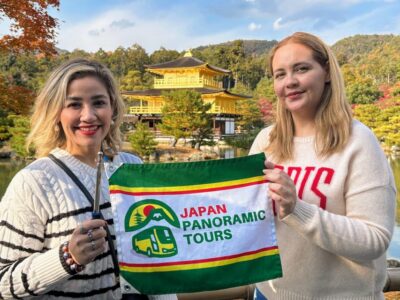
Fushimi Inari, Kinkakuji, Bamboo Grove 1 Day Bus Tour
Read our review →

Meiji Shrine, Asakusa, Skytree Bus Tour and Cruise
Read our review →
Fushimi Inari Hidden Hiking Tour (Private Option Available)
Read our review →
Osaka/Kyoto:Kinkakuji,Arashiyama,FushimiInariShrine,NaraPark
Read our review →
Asakusa Walking Tour with Sensoji Temple Visit
Read our review →
Nikko: Kegon Falls, Lake Chuzenji & Toshogu Temple
Read our review →
Kamakura & Enoshima Day Trip including Temple Tickets
Read our review →Browse the lists this tour appears in