Review · OSAKA TOURS
Hidden Osaka – Yukaku Red Light Tour & Culinary Adventure
Osaka has a side few tours explain well. This 3.5-hour night outing in the Yukaku area and Shinsekai combines street-level history with food you likely would not order on your own. You get small-group pacing and a guide who focuses on how to act respectfully in a real neighborhood, not a theme park set.
I like that the tour is built for adults, not youngsters. You’ll walk through Tobita Shinchi, a street with nearly 100 years of presence, and then head to Shinsekai and Tsutenkaku, tied to the old Luna Park era.
One thing to weigh: the subject matter is adult and the food is meant for the bold. If you are sensitive to mature topics, or if you have strict allergy needs, this is not the kind of tour to gamble on.
In This Review
- Key points before you go
- The hook: why this Yukaku walk is different
- Meeting point and timing: plan your 6:00 pm start
- Stop 1, Tobita Shinchi: old streets, real stories, and one big pop-culture link
- Stop 2, Shinsekai and Tsutenkaku: eating as you walk through the old Luna Park area
- The food and drinks: bold choices, real local pacing
- A practical note on costs
- Allergy and dietary limits
- What the guides focus on: rules, respect, and the human context
- Why this matters more than you think
- Group size and pacing: small is better here
- Accessibility and who it suits
- Practical tips to make the night smoother
- Should you book Hidden Osaka Yukaku Red Light Tour and Culinary Adventure?
- FAQ
- How long is the tour?
- Where does the tour start?
- What areas are covered during the tour?
- How many people are in the group?
- Is the tour suitable for families?
- What happens if weather is bad?
Key points before you go
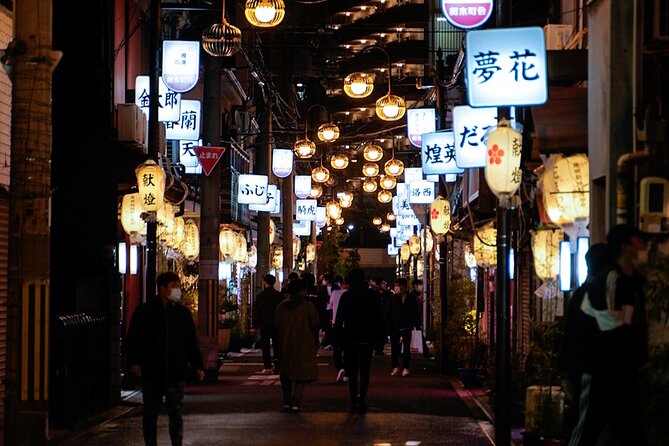
- Tobita Shinchi street history: includes a stop tied to Demon Slayer visuals and the legacy of the last of its kind.
- Shinsekai and Tsutenkaku on foot: former amusement-park vibes around the landmarks locals still use daily.
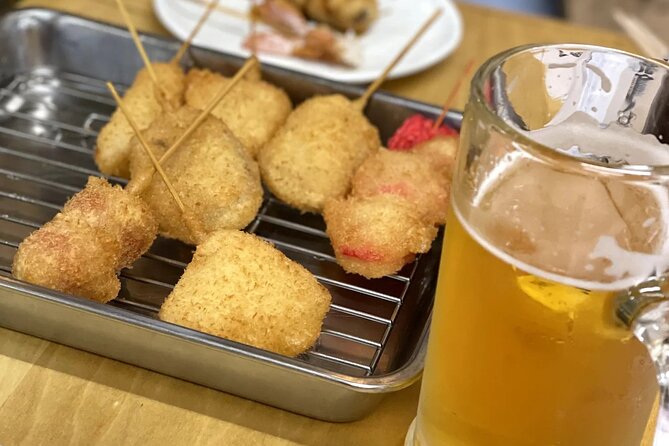
- Bold izakaya-style tasting: hand-picked dishes paired with a drink, including Osaka classics like kushikatsu and doteyaki.
- Respect and rules in the Yukaku: you get practical guidance on what is appropriate, and how to observe properly.
- Max 8 people: small group size that keeps the night moving and the questions coming.
- Mobile ticket plus short day plan: a clean 6:00 pm start, about 3 hours 30 minutes, and you’re back where you started.
The hook: why this Yukaku walk is different
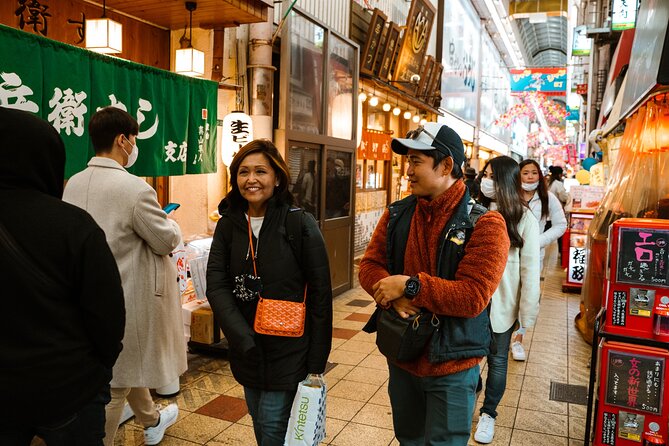
Most Osaka nights you see are light on context. This one is the opposite. Instead of treating the red light district like a curiosity, the tour frames it as part of the city’s social history, and then gives you the ground rules for visiting respectfully.
What makes the experience feel “real” is that you are not just looking. You are walking with local guidance through Tobita Shinchi, then shifting gears to Shinsekai, where the old-school fun has become regular hangout life for locals.
The format also helps you get value fast. You start at 6:00 pm and finish back at the meeting point, about 3 hours 30 minutes later. That matters because many food tours either wander too long or stuff all the eating into one rushed sprint. Here, the balance is the whole point.
A few more Osaka days to weigh up
- Osaka Go Karting Tour with Funny Costume
★ 5.0 · 2,658 reviews - Osaka Castle: Museum and Tower Entry Ticket
★ 4.5 · 2,380 reviews - Osaka: Shinsekai Food Tour with 13-15 Dishes at 5 Eateries
★ 4.8 · 2,204 reviews
Meeting point and timing: plan your 6:00 pm start
You meet at Causerie, 1-chōme-2-28 Taishi, Nishinari Ward, Osaka 557-0002. It’s also described as near public transportation, so you should be able to get there without a complicated commute.
The big practical thing: plan to arrive a few minutes early. This tour is about nighttime movement through busy streets, and it runs as one continuous program. If you show up late, you can end up feeling behind, especially since the walking portion is tied to history stops and food timing.
Also bring the right mindset for evening weather. The experience requires good weather, so if rain is in the forecast, be prepared. One guide tip that comes through strongly in the overall feedback is to bring an umbrella, and you’ll likely be happier if you do.
Stop 1, Tobita Shinchi: old streets, real stories, and one big pop-culture link
Your evening’s first major chapter is Tobita Shinchi. This is the retro shopping street you’ll recognize as soon as you slow down: narrow lanes, old-style storefronts, and a neighborhood layout that feels built for walking, not car travel.
The historical angle is not vague. You’re told why Tobita Shinchi matters as the last of its kind in all of Japan, and you get context for the way the district developed and why it persists in today’s Osaka.
One standout detail: you visit a building that became the model for the red light district edition of Demon Slayer. Even if you are not deep into anime, it’s a useful anchor. It helps you connect what you see in front of you with something familiar, then the guide explains how that fictional layer maps to the real place.
Why I think this stop is valuable for you
If you want Osaka beyond the postcard route, this is the section that sets the tone. A red light district can be hard to understand from a distance. Here, you get explanation, then you walk the street with that context in your head, so it stops being just shock value.
Possible drawback
This part can feel intense if you expected a light sightseeing stroll only. The tour sets a respectful, rules-based approach, but you still need comfort with the topic being openly discussed. If that makes you uneasy, think carefully before booking.
Stop 2, Shinsekai and Tsutenkaku: eating as you walk through the old Luna Park area
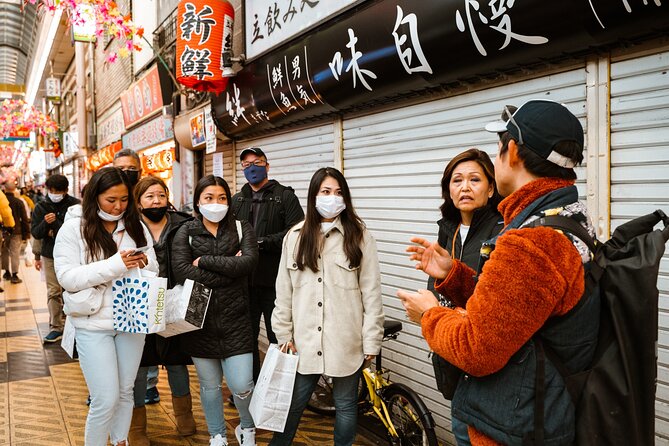
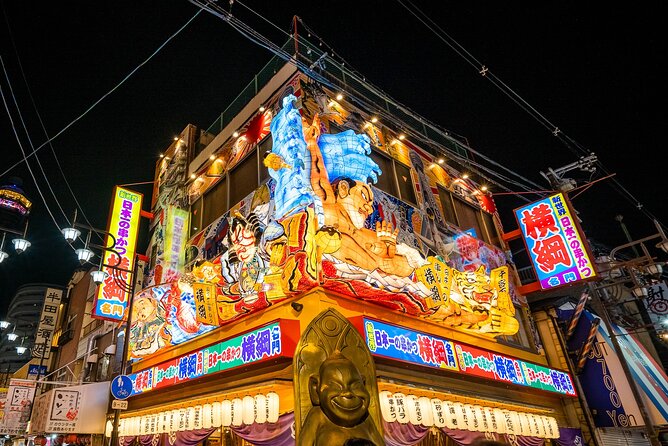
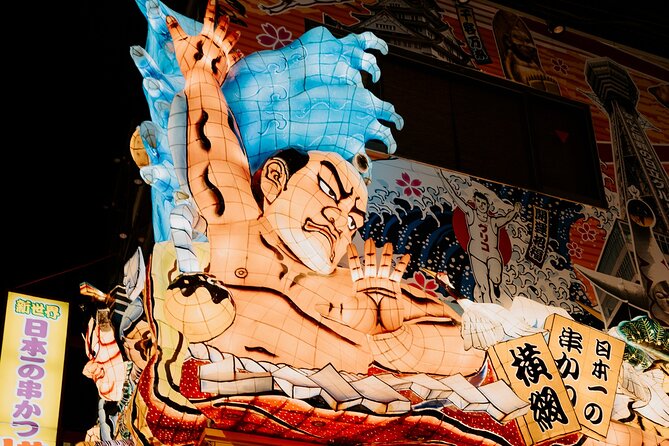
After Tobita Shinchi, you shift into Shinsekai and Tsutenkaku. This is where the night turns more social and snack-focused. Shinsekai is tied to the older amusement-park era around Luna Park, and Tsutenkaku is a landmark that locals keep using as a reference point.
The tour includes a walk while eating, so you’re not stuck in one place waiting for your next bite. During this stretch, the guide also shares history tied to the Tsutenkaku founder and what the area represented over time.
What you eat here matters because Osaka food is about flavor, texture, and comfort. This tour leans into that with classic items you can’t always find in the same form elsewhere.
You’ll likely taste Osaka icons such as:
- Kushikatsu: breaded and deep-fried skewers, often eaten in a quick rhythm that makes street snacking feel easy
- Doteyaki: a hearty, savory stew-like dish associated with Osaka’s older local tastes
In the descriptions of the experience, there’s also mention of stopping at tiny spots where locals eat and even sing karaoke. That’s a big reason this section feels different than a typical “see a landmark, take a photo, leave” plan.
A different sort of day in Japan:
- Osaka Food Tour: 13 Dishes at 5 Local Eateries
★ 5.0 · 2,149 reviews - Hungry Osaka Street Food Tour:15 Tastings & 3 Drinks with a Local
★ 5.0 · 1,727 reviews - Osaka: teamLab Botanical Garden Entry Ticket
★ 4.5 · 1,710 reviews - Osaka: Tea Ceremony Experience
★ 4.9 · 1,426 reviews
The food and drinks: bold choices, real local pacing
This is billed as a culinary adventure with a hand-picked selection of dishes paired with a drink. The tour is very clear about the vibe: the food is for the bold and adventurous, and you should be ready to try things you may not have ordered before.
That’s a good deal for you if you like to eat first and think later. Osaka’s izakaya culture rewards curiosity, and the tour nudges you into ordering decisions you might avoid out of uncertainty.
A practical note on costs
The tour data references an average izakaya spending of around ¥4000. That’s useful as a reality check. Even when tasting is planned, nighttime food costs in small local places can add up quickly.
What I recommend: plan your budget as if you will spend something beyond the base price. If you are trying to keep a tight cash plan, read your booking details carefully before you go, and bring extra money to avoid a stressful scramble.
Allergy and dietary limits
There’s a clear warning that the provider will not be responsible for allergies or accidental ingestion. So if you have serious dietary constraints, you need to handle this with caution.
Practical approach: tell your guide clearly what you can and cannot eat. If you are unsure whether an ingredient is in something, ask. This is not the kind of tour where you should assume the kitchen will adapt on the fly.
What the guides focus on: rules, respect, and the human context
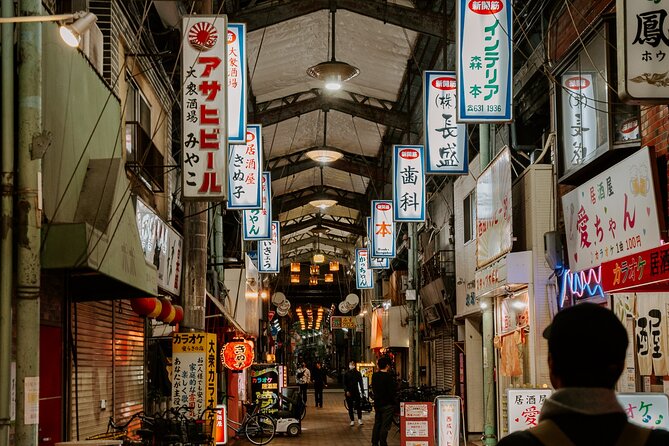
One of the most praised parts of this experience is how the guide handles the topic. You are taught protocol and cultural nuance around the Yukaku district, and you get clarity on legality issues that many visitors misunderstand.
You can feel the difference immediately. Without that framing, red light districts turn into either sensational storytelling or awkward silence. With guidance, you know what you’re allowed to do and what respectful observation looks like in a real neighborhood.
Guides highlighted by name in the feedback include Leo, Rui, and Haruki. The common thread is that they keep things friendly while still delivering facts, history, and practical direction. Some guides are also described as funny, which helps if you’re tense at first.
Why this matters more than you think
In a place like this, ignorance can turn a curiosity into disrespect fast. The tour’s value is not only what you learn, it’s how you are coached through behavior, from entering areas to how to observe during the walk.
That also makes the whole thing easier to enjoy. You stop second-guessing and start paying attention.
Group size and pacing: small is better here
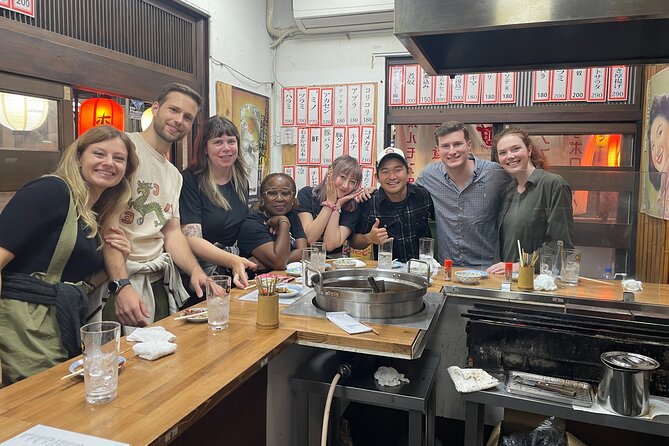
The group cap is 8 travelers. That size is ideal for this type of night because:
- you get time to ask questions without the guide repeating themselves constantly
- the walk stays tight enough for the group to stay together
- the guide can manage pace at each stop, rather than losing people in crowds
A couple of pieces of feedback point out a potential issue: the food and drink portion may feel spaced in a way that could be improved, and some people wish they had more time walking inside the red light district itself.
So here’s the realistic expectation you should hold: this tour is a blend, not a pure walking-only experience. If you want maximum time purely in the densest streets, you might feel you could get more of that. If you want context plus food plus guidance, this format usually lands well.
Accessibility and who it suits
The tour says most travelers can participate. Since the tour is a nighttime walking experience across neighborhood streets, you should assume you’ll be on your feet for long stretches.
Who it suits best:
- adults who want a different side of Osaka
- travelers who like food tasting and do not mind trying unfamiliar dishes
- people who appreciate local rules and history, not just photos and headlines
Who should reconsider:
- anyone uncomfortable with adult subject matter
- anyone with strict allergies or dietary needs that require guaranteed accommodations
- travelers who want a calmer, family-friendly atmosphere
Practical tips to make the night smoother
Here are the things that help most in a guided night walk like this.
- Wear comfortable shoes. You are walking through two neighborhoods, and the pace changes based on food timing.
- Bring an umbrella if rain is possible. You are going out in the evening and weather can shift quickly.
- Keep an open mind with the food. The menu is described as bold and adventurous, so plan to taste, not just skim.
- Bring small bills and a realistic food budget. The tour references izakaya spending around ¥4000, and cash in small places can simplify things.
- Ask about allergies early. The responsibility disclaimer is there for a reason, so don’t wait until the last second.
Should you book Hidden Osaka Yukaku Red Light Tour and Culinary Adventure?
Book it if you want Osaka that feels like a real city after dark. This tour gives you context for Tobita Shinchi as the last of its kind in Japan, then balances that with Shinsekai and Tsutenkaku history tied to the old Luna Park era. Add in the planned food tastings like kushikatsu and doteyaki, plus drink pairings, and you get an evening that is both educational and fun.
Skip it if you want a gentle, family-friendly sightseeing tour. This experience is for mature audiences and involves adult territory, so your comfort matters more than the schedule.
If you match the vibe, you’ll probably love the way the guides steer the night with practical rules, historical framing, and small-group pacing. For a first-time Osaka night that goes beyond the standard highlights, it’s a strong choice.
FAQ
How long is the tour?
It runs about 3 hours 30 minutes.
Where does the tour start?
The meeting point is Causerie 1-chōme-2-28 Taishi, Nishinari Ward, Osaka 557-0002, Japan. The tour ends back at the same meeting point.
What areas are covered during the tour?
You visit Tobita Shinchi and then walk in Shinsekai around Tsutenkaku.
How many people are in the group?
The group size is capped at a maximum of 8 travelers.
Is the tour suitable for families?
The tour is described as for mature audiences only, so it is not aimed at families with kids.
What happens if weather is bad?
The experience requires good weather. If it is canceled due to poor weather, you will be offered a different date or a full refund.
Newly listed around Osaka
- 2 Hours of Bar Hopping in Osaka Style★ 5.0 · 22 reviews
- Same-Day Osaka Food Crawl with local food and Hidden gems★ 5.0 · 114 reviews
- Osaka Authentic Local Izakaya Hopping Experience: Food & Drinks★ 5.0 · 99 reviews
- Well-balanced BENTO (lunch box) Cooking Class★ 5.0 · 35 reviews
- Anime Cosplay Photshoot-50 Digital Photos Provided★ 5.0 · 8 reviews
- OSAKA:Feel the Power! Learn Taiko Drum from Professionals★ 5.0 · 28 reviews
- Three Types of Ramen Cooking Class in Osaka★ 5.0 · 119 reviews
- Urban Canvas: Osaka Street Art Bike Tour★ 5.0 · 47 reviews
Osaka Tours, compared.

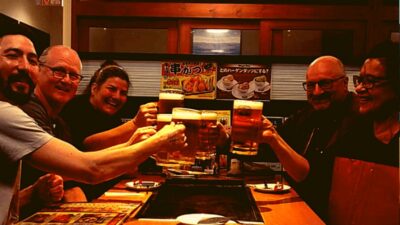
Shinsekai Food Tour with 13-15 Dishes at 5 Eateries
Read our review →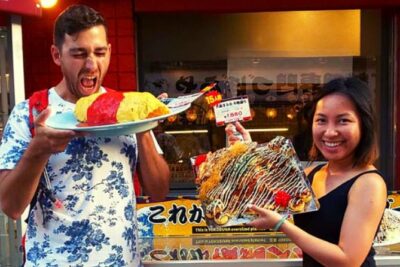
Osaka Food Tour: 13 Dishes at 5 Local Eateries
Read our review →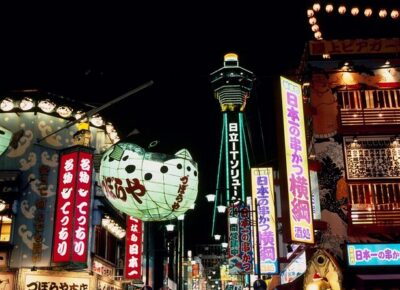
Hungry Osaka Street Food Tour:15 Tastings & 3 Drinks with a Local
Read our review →