Review · TOKYO TOURS
IKEBANA experience
Make flowers look intentional in Tokyo. This Ikebana lesson with Hiromi turns a quick flower-arranging session into a calm, hands-on cultural experience, and I really like how it starts gently from the basics while you create your own arrangement. I also like the added finish in a Japanese setting, with matcha and Japanese sweets. One possible drawback: it is about 1.5 hours, so if you are hoping for deep mastery, you will want to buy supplies and practice after.
The class meets near Toritsu-daigaku Station in Meguro, and it is a private experience, meaning it is just your group in Hiromi’s home studio. You will use a mobile ticket, and you should plan for good weather since the experience requires it.
In This Review
- Key highlights at a glance
- Meeting Hiromi in Meguro, inside a real Japanese home
- 90 minutes of Ikebana basics, taught carefully in English
- From sample to your own arrangement, with real feedback
- The best part is often the pause: matcha, wagashi, and tatami calm
- Tea ceremony basics if you want to go further
- Price and value: what $115.31 buys you in real-world terms
- Logistics that actually matter in Tokyo
- Who should book this, and who might want another option
- Tips to get more out of your 1.5 hours
- Should you book Hiromi’s Ikebana class?
- FAQ
- Where does the Ikebana class meet?
- How long is the class?
- Is the class private?
- Do I need Japanese language skills?
- What is included at the end of the lesson?
- What if the weather is bad?
Key highlights at a glance
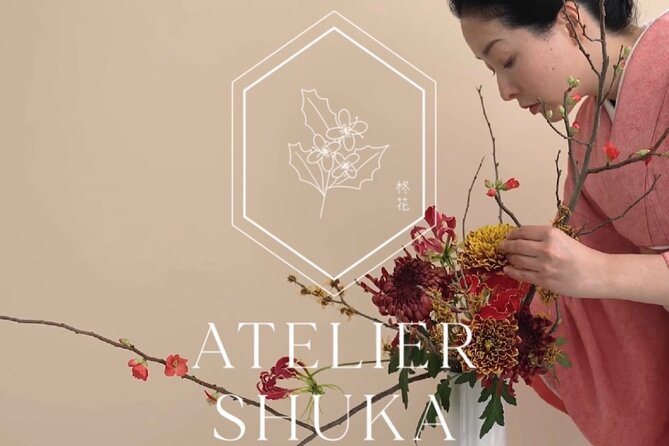
- Private home-studio setting in a Japanese house, not a busy workshop space
- English instruction that teaches the fundamentals and supports your questions
- Textbook-guided structure, with a sample first and then your own arrangement
- Matcha and wagashi after class, served in a tatami room
- Optional tea ceremony basics if there is time and you want to go further
Meeting Hiromi in Meguro, inside a real Japanese home
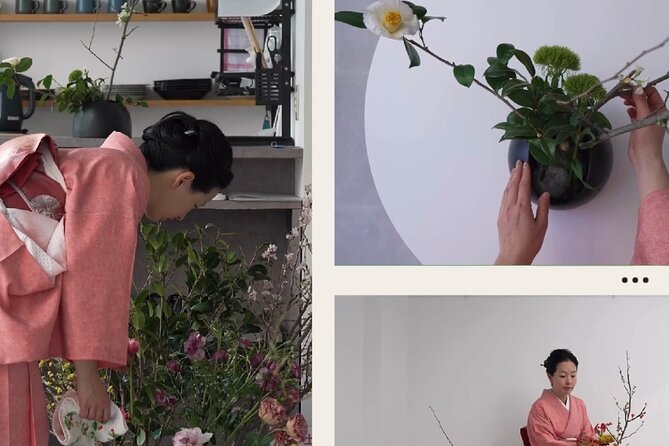
This experience is one of those Tokyo activities that feels more like you are being invited into someone’s daily life than dropped into a standard tourist routine. The meeting point is Toritsu-daigaku Station, then you head to the location in Meguro (Nakane, 1-chōme). It is close to public transportation, so you are not stuck planning for complicated access.
What I appreciate most is the sense of privacy. The experience is listed as a private tour for your group, and in practice that matters. In a shared class, people rush. In a private setting, the pace feels calmer and you can ask small questions without feeling like you are slowing anyone down.
The studio setting also shapes the vibe. Several descriptions point to Japanese-style rooms, including tatami spaces, plus the feel of a home with garden views. That matters for Ikebana because the art is about line, negative space, and quiet intention. If you are learning it in a calm room, the lesson makes more sense right away.
If you are the type who wants a hands-on cultural moment without big crowds, this is a strong match.
A few more Tokyo days to weigh up
- Mt Fuji and Hakone 1-Day Bus Tour Return by Bullet Train
★ 5.0 · 26,383 reviews - 1-Day Tokyo Bus Tour
★ 5.0 · 14,250 reviews - Tokyo: TOKYO SKYTREE® Admission ticket
★ 4.5 · 11,192 reviews
90 minutes of Ikebana basics, taught carefully in English
You learn Ikebana through gentle instruction in English. The approach is practical: you do not just watch, you make. The teacher is set up to work with beginners, and also to adapt if you already have a style you want to learn or an arrangement you want to try using a textbook.
Here is the structure you should expect:
1) Hiromi makes a sample first, while referring to a textbook style.
2) You then create your own arrangement.
3) After you finish, she checks your work and gives comments or revisions.
4) You take a photo of your final piece.
That flow is more valuable than it sounds. Many workshops end right when you start moving flowers around. Here, you get the whole cycle: model, practice, feedback, and a moment to capture what you made. For souvenirs, photos matter. For learning, the corrections are what turn a pretty result into a correct one.
Also, do not underestimate the “carefully and gently” part. Ikebana can sound intimidating because it has rules. In class, the rules become understandable, not scary.
One more small note: the art focuses on the beauty of the flower’s line and water, which usually means you do not need a huge pile of blooms. That can make the process feel less chaotic and more like design.
From sample to your own arrangement, with real feedback
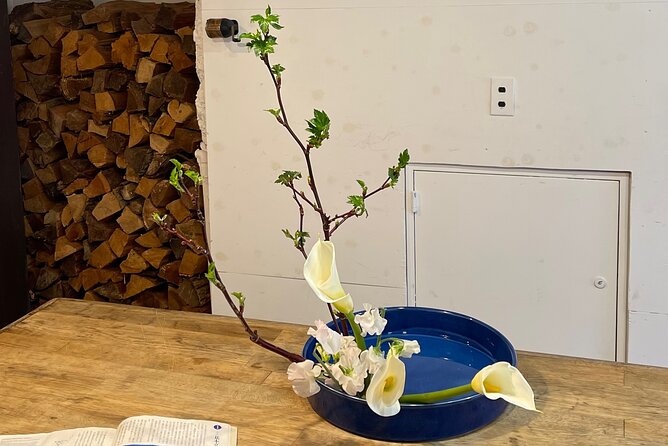
During the class, you will see how to cut the flowers properly and how to arrange them with intention. Then you do it yourself. This is the part you will feel most strongly if you have never done Ikebana before.
Starting with a sample is helpful because Ikebana has proportions that matter. You can copy the idea quickly when you see it built step-by-step. Then, when it is your turn, you get to make decisions rather than just follow a craft tutorial.
What you should look for during your own creation:
- Line first, flowers second. You are shaping a visual path.
- Space matters. Empty areas are part of the design, not mistakes.
- Water and structure matter. Even with fewer stems, placement and support change the result.
After you arrange, Hiromi comments or revises. This is a big deal for beginners. It is easy to end up with something that looks fine but misses the key idea. Feedback helps you leave with a piece you feel proud of, not just a kit you completed.
You also get a photo after revisions. That helps you remember what “correct” looks like when you try again later at home.
The best part is often the pause: matcha, wagashi, and tatami calm
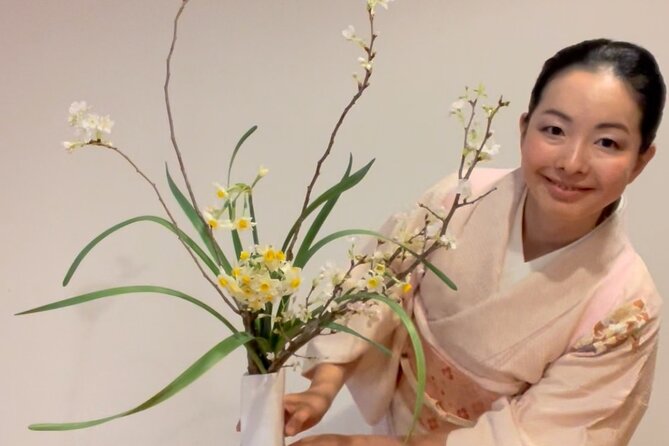
If you like your cultural lessons with a sensory finish, this one delivers. After the class, if you have time, Hiromi prepares Japanese sweets and matcha. Many notes mention wagashi, and the setting is often described as a tatami room.
This is not filler. It is the cultural rhythm of Japan: make, reflect, then slow down with tea and sweets. Matcha also connects nicely to the mindset behind Ikebana. Both ask you to pay attention to small details, and both reward patience.
If you are planning this in the middle of your Tokyo sightseeing, consider timing it for when you can actually enjoy the tea after. You do not want to gulp matcha on your way to the next train. Treat the last part like a mini reset.
One practical tip: since the art often uses fewer flowers and a smaller, more controlled setup, you are likely to leave feeling calmer than after some high-energy activities. The tea finish makes that feeling stick.
A different sort of day in Japan:
- Tokyo: teamLab Planets TOKYO Digital Art Museum Entry Ticket
★ 4.6 · 9,779 reviews - Mt Fuji & Hakone Cruise, Drum Show Bullet Train 1 Day from Tokyo
★ 4.0 · 7,413 reviews - Tokyo: Sumo Show Experience with Chicken Hot Pot and a Photo
★ 4.8 · 6,678 reviews - Tokyo: Shinjuku Food Tour (13 Dishes at 4 Local Eateries)
★ 5.0 · 6,603 reviews
Tea ceremony basics if you want to go further
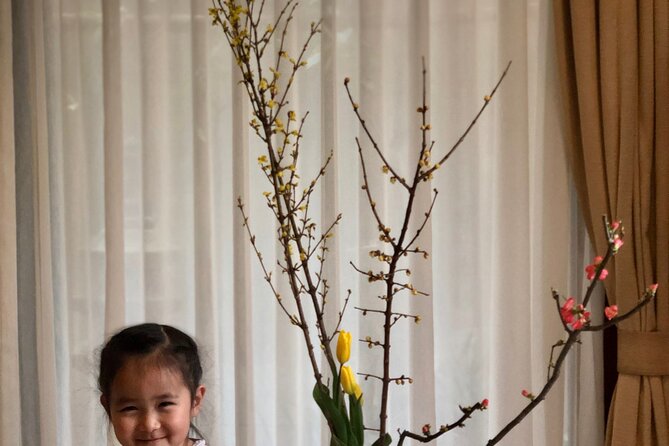
There is an option baked into the experience: if you have time after the lesson, you can learn how to make basic tea ceremony.
The lesson is not described as a full long tea course. Think of it as a simple, approachable add-on for curious minds. If you already care about Japanese culture, this can connect dots between the quiet gestures of tea and the intentional gestures of Ikebana.
If you are deciding between this and another cultural workshop, this optional extra makes it more than a one-note class. It is still primarily an Ikebana lesson, but you get a chance to extend your understanding of tea manners and basics.
Price and value: what $115.31 buys you in real-world terms
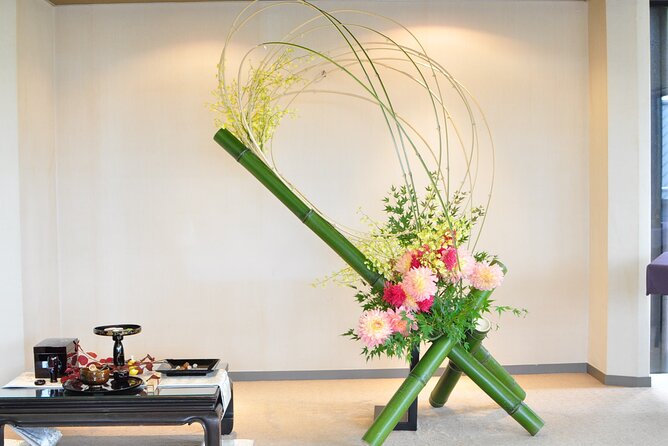
At $115.31 per person for about 1.5 hours, the price can seem high if you compare it to generic craft classes. But compare it to what you actually get:
- Private instruction from Hiromi in her home setting
- English teaching for the fundamentals, including cutting and arranging technique
- Feedback and revisions so your final arrangement improves
- Matcha and Japanese sweets after class
- A structured class flow, sample first then you create, with a photo at the end
- The option to learn basic tea ceremony if time allows
That combination is the key value. This is not just a take-home flower craft. It is guided design, plus cultural context, plus a finish in the traditional style.
If you are traveling with someone, the value can feel even better because the private format means your attention is not split across unrelated participants.
One consideration: the class length is fixed. You will likely want to continue at home, and some notes mention you can purchase supplies so you can keep practicing. If you plan to do that, set a budget for materials afterward.
Logistics that actually matter in Tokyo
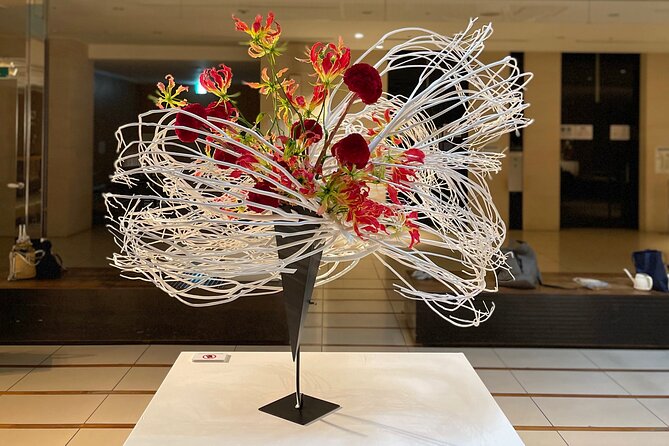
The meeting point is near Toritsu-daigaku Station, then you go to the class location in Meguro (Nakane, 1-chōme-5-1). The experience is set up with public transportation access, and you get a mobile ticket.
Plan for a little travel time from your hotel. Toritsu-daigaku is not as central as Shinjuku or Shibuya, but that is part of the appeal. You are spending your lesson in a more local pocket of Tokyo.
Weather matters here. The experience requires good weather, and if it is canceled for poor weather you should expect a different date or a full refund. That is worth keeping in mind if you are scheduling several outdoor-ish plans that week.
A small comfort point: the class says most people can participate. That usually means it is beginner-friendly and not built on specialized skills. If you have mobility limitations, you might still want to ask ahead about comfort in a tatami-style room, but no specific limitations are listed in the information here.
Who should book this, and who might want another option
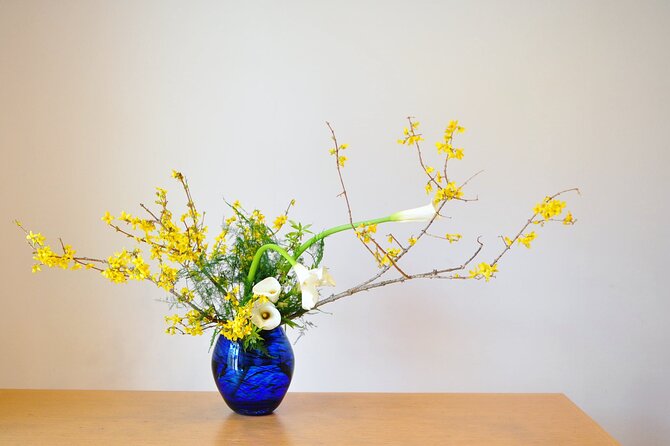
This class is a great fit if you want:
- a hands-on art lesson, not just a museum stop
- English-guided instruction that starts from the basics
- a calmer pace, with tea and sweets as part of the experience
- an experience that feels like Japanese home culture, because the setting is a Japanese-style residence
It also sounds workable for families and multi-generation groups. Notes include kids enjoying freestyle-style Ikebana, and even non-flower people enjoying the session. If you are going as a family, the short duration helps, and the teacher’s patience is a theme.
I would consider a different option if you are after a long multi-session art training program. This is built for a first arrangement and a solid introduction. You can take that foundation home, but you will not complete years of practice in 90 minutes.
Tips to get more out of your 1.5 hours
You do not need to be artsy to enjoy this. You just need to show up ready to follow instructions and ask questions. Still, these small moves can make a difference:
- Come with time to enjoy tea after. The sweets and matcha are part of the payoff.
- Ask what style you should practice at home. The teacher may be able to point you toward how to continue.
- Plan for supplies if you want to repeat it. Notes mention you can purchase supplies so you can continue making arrangements.
- Pay attention to line and water. Even if you only remember one thing, make it that.
- Take your photo thoughtfully. You will want it when you try to recreate the look later.
If you are nervous about cutting flowers or arranging plants, that is normal. The class flow is designed to reduce that stress with a sample first and step-by-step guidance.
Should you book Hiromi’s Ikebana class?
I think you should book this if you want a Tokyo activity that is genuinely interactive and culturally grounded. The private home-studio setting, English instruction, the structured sample-to-your-own workflow, and the finish with matcha and wagashi make it feel complete. For $115.31, you are paying for guidance plus a traditional experience you cannot really replicate from a YouTube video.
You might skip it if you want a long course, or if you are traveling during uncertain weather and cannot be flexible on dates. The good news is the lesson is short, so it is easier to fit into a day, and the weather requirement is clear.
If you do book it, you are not just learning how to place flowers. You are learning a way to slow down and see space, line, and intention. That is the kind of souvenir you keep using after the trip ends.
FAQ
Where does the Ikebana class meet?
You start at Toritsu-daigaku Station in Tokyo, then the activity ends back at the meeting point.
How long is the class?
Plan for about 1 hour 30 minutes.
Is the class private?
Yes. It is private, and only your group participates.
Do I need Japanese language skills?
No. The lesson is taught carefully and gently in English.
What is included at the end of the lesson?
If there is time after class, Japanese sweets and matcha are prepared. Basic tea ceremony may also be taught if you are interested and there is time.
What if the weather is bad?
The experience requires good weather. If it is canceled due to poor weather, you will be offered a different date or a full refund.
Newly listed around Tokyo
- Private Tokyo Food Tour – A Journey Through Time Through Food★ 5.0 · 36 reviews
- Private Tokyo Tour with Licensed Guide & Vehicle (Max 15 persons)★ 5.0 · 107 reviews
- Private Tokyo Custom Full-Day Tour by Chartered Vehicle★ 5.0 · 16 reviews
- Private Tokyo Custom Half-Day Tour by Chartered Vehicle★ 4.5 · 13 reviews
- Private Outstanding Nikko Tour with English Speaking Driver★ 4.0 · 11 reviews
- Private Sightseeing to Mt Fuji and Hakone with English Driver★ 5.0 · 51 reviews
- Private Snow Monkeys park Day Trip From Tokyo or Nagano★ 4.5 · 26 reviews
- 4 Day Tour – Mount. Fuji, Tokyo, Hakone, Kamakura and Yokohama★ 5.0 · 19 reviews
Tokyo Tours, compared.
Mt Fuji and Hakone 1-Day Bus Tour Return by Bullet Train
Read our review →


teamLab Planets TOKYO Digital Art Museum Entry Ticket
Read our review →
Mt Fuji & Hakone Cruise, Drum Show Bullet Train 1 Day from Tokyo
Read our review →
Sumo Show Experience with Chicken Hot Pot and a Photo
Read our review →
Shinjuku Food Tour (13 Dishes at 4 Local Eateries)
Read our review →