Review · TOKYO TOURS
Imperial Palace run with fun trivia by an Imperial Palace geek
Tokyo’s Imperial Palace, but in running shoes. An early-morning loop with Imperial Palace trivia turns sightseeing into something you can actually do at 8:30 am. I especially like how this feels small-group and personal, and how the guide invites questions instead of rushing you through.
One thing to consider: it is still a light active outing. You’ll want moderate fitness, and the tour runs in good weather, with separate costs for lockers and possibly rentals.
The guide for this one is YUKO, and her style comes through in the way the run is paced with frequent little breaks for stories, views, and photos.
In This Review
- Key highlights worth waking up for
- Why this Imperial Palace morning feels different
- Getting set up at JOGLIS (and what costs extra)
- Stop-by-stop: gates, slopes, bridges, and the Edo Castle story
- Stop 1: JOGLIS briefing and the start area
- Stop 2: Hanzomon Gate and the Miyake-zaka descent
- Stop 3: Sakuradamon Gate and Fuji beliefs
- Stop 4: Sakuradamon square, the clock secret
- Stop 5: Nijubashi (Two-tiered Bridge) photo moment
- Stop 6: Gyoko-dori Avenue and the Tokyo Marathon finish feel
- Stop 7: Kokyo Otemon Gate and Edo Castle details
- Stop 8: Fujimi-yagura, the little castle turret
- Stop 9: Tenshudai remains and the reconstructed model
- Stop 10: Kita Hanebashi-mon Gate, then the uphill push
- Stop 11: Daikancho-dori and old daimyo residences
- Stop 12: Chidorigafuchi Park and cherry tree secrets
- Stop 13: Back to JOGLIS for the finish
- Trivia and Q&A with YUKO, the Imperial Palace geek
- Running vs walking, and the pace you can realistically handle
- Price and value: what $90 buys you, and what to plan for
- Who this tour suits best (and who might want another plan)
- Quick checklist before you go
- Should you book this Imperial Palace run?
- FAQ
- Is this tour running-only?
- What language is the tour in?
- How long is the tour and how big is the group?
- Where do we meet, and what time does it start?
- What’s included in the price?
- Are lockers and showers included?
Key highlights worth waking up for
- Early start, fewer crowds: you run the Imperial Palace circuit earlier in the day.
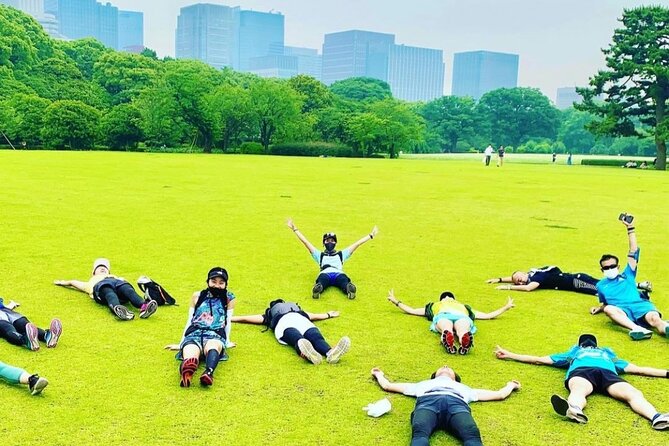
- Small group (max 8): you get attention and room to ask questions.
- Gate-to-gate pacing: the route is broken into short segments, with walking options.
- Imperial Palace trivia from YUKO: fun facts tied to what you see right then.
- Photo stops at real landmarks: like Nijubashi Bridge and the “marathon finish line” vibe area.
- Locker and shower options at JOGLIS: not included, but convenient.
Why this Imperial Palace morning feels different
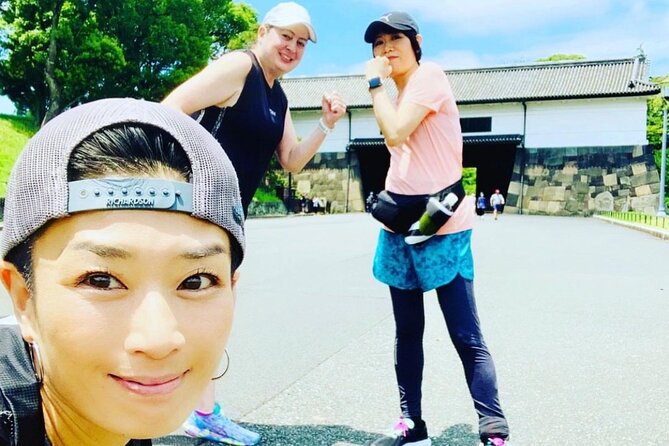
Most Imperial Palace sightseeing is slow. This one is active, but not punishing. You get the feeling of seeing Tokyo’s most formal grounds without the big, late-morning crowd crush.
Two things make it work. First, it is built around short blocks of running. That matters because it keeps the energy up, even if you are not training for a race. Second, your guide uses the route itself as the script. Gates, slopes, bridges, and gardens become the answers to the trivia you get along the way, so it clicks fast.
If you love history, great. If you love movement, also great. If you want both, this tour hits the sweet spot.
A few more Tokyo days to weigh up
- Mt Fuji and Hakone 1-Day Bus Tour Return by Bullet Train
★ 5.0 · 26,383 reviews - 1-Day Tokyo Bus Tour
★ 5.0 · 14,250 reviews - Tokyo: TOKYO SKYTREE® Admission ticket
★ 4.5 · 11,192 reviews
Getting set up at JOGLIS (and what costs extra)
You meet at JOGLISJapan in Kojimachi (Chiyoda City), starting at 8:30 am. This is a practical choice. It puts you close enough to start moving quickly, and it keeps you from spending the morning hunting for your first landmark.
Here is the money reality up front. The tour price covers the guide fee, and it uses a mobile ticket. Locker access is optional and costs 1,500 yen per person. The showers are tied to that same option, so if you want to freshen up after, plan for the extra yen.
Also note: running clothes, shoes, and towels are available for rent for a fee. If you are arriving from another part of Japan or you packed light, that can save you. Just don’t count on it being free.
If you run, bring your own shoes if you can. If you walk, you still want shoes with grip. The route includes uphill sections, so comfort matters.
Stop-by-stop: gates, slopes, bridges, and the Edo Castle story
The route is a full loop experience, with a lot of key Imperial Palace points in about 2 hours 30 minutes. Below is what to expect, in the order you’ll move through, and why each stop makes sense.
Stop 1: JOGLIS briefing and the start area
You begin with a briefing on Imperial Palace history and the rules of the Imperial Palace Run. This is where you learn how the group keeps things smooth and respectful.
Then you start your run at JOGLIS. There’s also a note that if you want to use changing lockers and showers, it’s an additional 1,500 yen.
This first stretch is about getting your bearings, not testing your stamina. It sets the tone: you are in a guided outing, not a solo sprint.
A different sort of day in Japan:
- Tokyo: teamLab Planets TOKYO Digital Art Museum Entry Ticket
★ 4.6 · 9,779 reviews - Mt Fuji & Hakone Cruise, Drum Show Bullet Train 1 Day from Tokyo
★ 4.0 · 7,413 reviews - Tokyo: Sumo Show Experience with Chicken Hot Pot and a Photo
★ 4.8 · 6,678 reviews - Tokyo: Shinjuku Food Tour (13 Dishes at 4 Local Eateries)
★ 5.0 · 6,603 reviews
Stop 2: Hanzomon Gate and the Miyake-zaka descent
Your running tour starts from Hanzomon, one of the Imperial Palace entrances. From there, you look toward the National Theatre and the Diet Building as you descend Miyake-zaka, described as one of Tokyo’s most beautiful slopes.
This is a good segment for photos, but more importantly, it is a nice transition from “I’m starting” to “I’m moving through real Tokyo views.” If you are tired of flat sightseeing, this helps.
Stop 3: Sakuradamon Gate and Fuji beliefs
Next you pass under Sakuradamon, the Imperial Palace’s largest gate. You also hear about the belief in Mt. Fuji, which many Japanese cherish.
Then there’s a quick energy reset at what your guide calls a power spot. That kind of pause is not just spiritual, it’s practical: you get a moment to regroup without losing the flow of the tour.
Stop 4: Sakuradamon square, the clock secret
Right after, you get a themed pause in Sakuradamon square. The focus here is the secret of the clock where many runners gather.
Even if you think you know the area, this is the sort of detail that makes a guided run feel worth it. You’re not just jogging by, you are learning what to notice.
Stop 5: Nijubashi (Two-tiered Bridge) photo moment
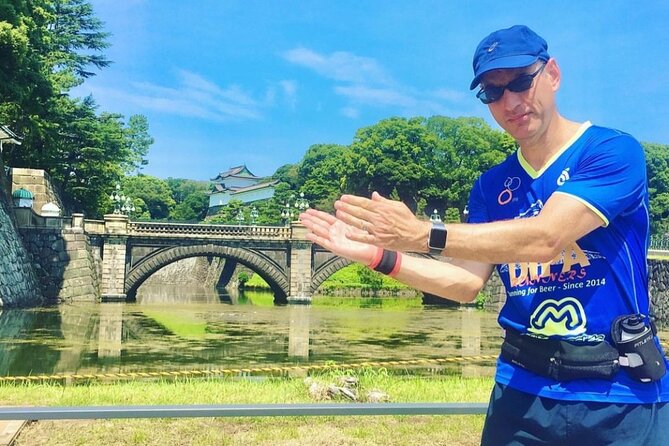
You visit Ni-ju Bashi, the two-tiered bridge. This is one of the most photogenic Imperial Palace views, and the itinerary builds in time for a commemorative photo.
The value of this stop is simple: you get the classic scene without wandering around trying to time the best angle. Early in the morning also helps your photos because the area is calmer.
Stop 6: Gyoko-dori Avenue and the Tokyo Marathon finish feel
At Gyoko-dori Avenue, you hit the finish-area vibe of the Tokyo Marathon. You talk about secrets tied to Tokyo Station, the Emperor, and the marathon theme.
You also get a picture moment that intentionally mirrors the finish-line scene. If you’ve ever watched marathon coverage, you’ll recognize the energy.
This is a fun segment because it ties global sports culture to local landmarks. Even if you do not run, the narrative gives the place personality.
Stop 7: Kokyo Otemon Gate and Edo Castle details
Now you reach Kokyo Otemon Gate and enter the East Gardens. Before entering the garden, there’s baggage inspection, so keep that in mind if you carry a backpack or extra layers.
Otemon Gate was the main gate of Edo Castle, and you’ll see a Shachihoko (those rooftop creatures you often spot around Japan’s castle traditions).
This stop is a bridge between “modern Tokyo views” and “old castle bones.” You start to feel the Imperial Palace as a living map of earlier eras.
Stop 8: Fujimi-yagura, the little castle turret
Next you get Fujimi-yagura. The guide frames it as a “little castle,” a substitute for the Edo Castle keep.
Even without a big dramatic ruin, that wording helps you understand what you are seeing. You’ll look at the turrets with more meaning, not just as scenery.
Stop 9: Tenshudai remains and the reconstructed model
Then you visit Tenshudai, the remains of the main tower. You’ll see stone walls of the Edo Castle keep.
The original keep is destroyed by fire, so you cannot see it in full scale, but you can see a reconstructed model. This is where the tour balances realism with explanation, so you do not leave wondering what you are missing.
If you like “what is real, what is rebuilt,” this is a strong stop.
Stop 10: Kita Hanebashi-mon Gate, then the uphill push
You return outside through Kita Hanebashi-mon Gate, described as the drawbridge of Edo Castle.
From here, there is an uphill climb, but you run at your own pace. That phrase matters. You are not being forced into a workout mode. You can walk, slow down, or keep a steady jog depending on how you feel.
This is also a place where your shoes and breath matter more than speed.
Stop 11: Daikancho-dori and old daimyo residences
Daikancho Street (Daikancho-dori) was where daimyo residences were during the Edo period. The tour also mentions that it’s known as a cherry blossom viewing spot.
Even if it is not cherry blossom season, the fact that this street has a long seasonal rhythm helps you imagine the area differently.
Stop 12: Chidorigafuchi Park and cherry tree secrets
You reach Chidorigafuchi Park, another famous cherry blossom spot. The guide teaches “secrets” of cherry trees that Japanese people cherish.
If you’re visiting in spring, you’ll appreciate why this spot is legendary. If you’re not, you can still take the stories, because it teaches you how locals think about the trees, not just when they bloom.
Stop 13: Back to JOGLIS for the finish
Finally, you return to JOGLIS and get dismissed. If you paid for facilities, you can take a shower.
This last part keeps things tidy. You do not end up stranded miles away from where you started, and you’re set up to head back into the rest of your day.
Trivia and Q&A with YUKO, the Imperial Palace geek
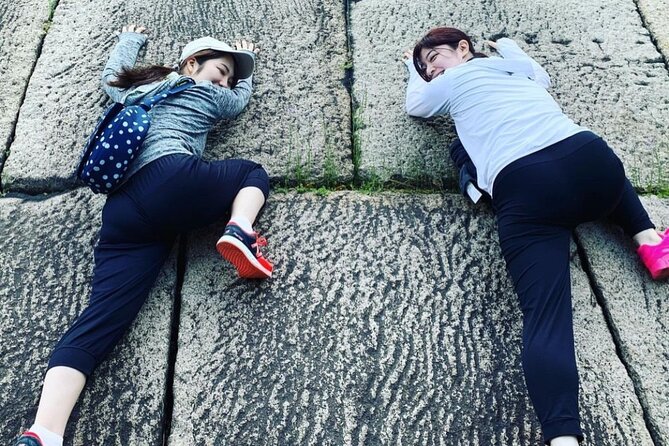
The biggest praised aspect here is the guide. YUKO is clearly passionate about both the Imperial Palace and running, and that shows in the tour style.
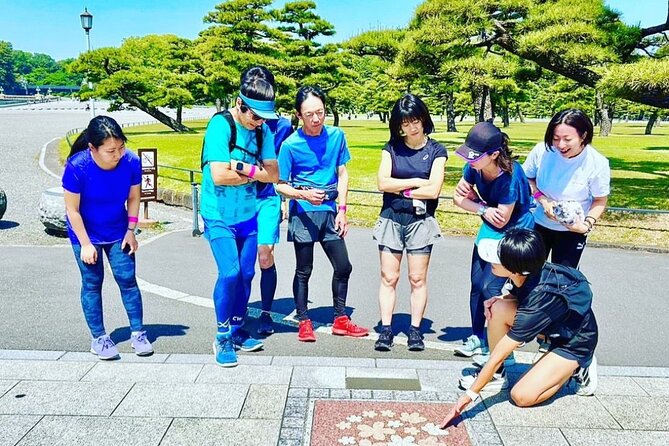
What you should expect is more than random facts. The trivia links to the exact gate, bridge, street, or tower you are seeing. It makes the places feel less like a checklist and more like a connected story you can hold in your head.
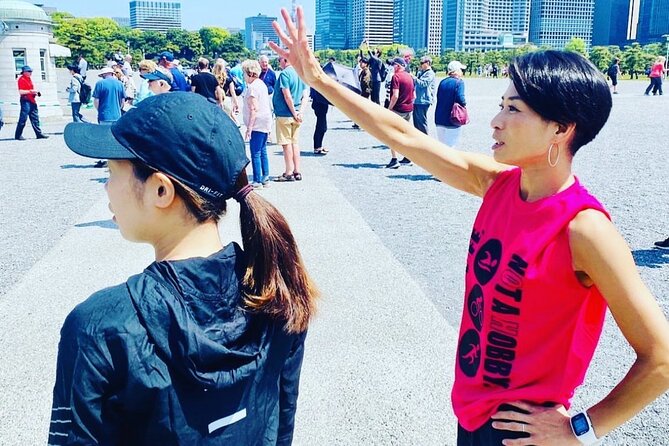
There’s also genuine room for questions. That matters in Tokyo, where signs can be clear but context can be missing. When you ask, you are not just collecting information, you are getting a local way to interpret what you are looking at.
And yes, the pacing is friendly. This is not only running start to finish. It includes stops and even walking breaks, so you stay comfortable while still moving through a lot of ground.
Running vs walking, and the pace you can realistically handle
This tour is designed for casual runners and exercise enthusiasts. The route is active enough to feel like a workout, but the built-in pauses mean you don’t have to treat it like a race.
Important practical point: you can also walk if running is not your thing. That means you can still get the full story route without forcing your body.
If you are new to running, the frequent stop-and-go format can feel manageable. If you are an experienced runner, you may still enjoy it because your pace is guided by the scenery and the stops, not by chasing distance.
Your main consideration is weather. The tour requires good weather, and if conditions are poor, you will be offered a different date or a full refund.
Price and value: what $90 buys you, and what to plan for

At $90, you might wonder if this is just a novelty run. Here’s the value logic.
You are paying for the guide fee, and in return you get:
- a small group capped at 8 travelers
- a structured route with time at key landmarks
- guided trivia tied directly to what you see
- Q&A time so you get more than photos
Not included are extra costs that can pop up:
- Locker and shower at JOGLIS: 1,500 yen per person
- A note that admission ticket at JOGLIS stop 1 is not included
- Possible rental fees for running clothes, shoes, and towels
The good news is that the gates and main stops are listed as free for visitors in the itinerary. So most of your spend is about the guide and optional convenience items, not buying tickets for every stop.
For many people, the best part is not the running itself. It’s the interpretation. You leave knowing what you looked at, and you understood why it matters.
Who this tour suits best (and who might want another plan)
This is a great match if you want:
- Imperial Palace views early, with less crowd pressure
- a morning activity that feels like exercise without being a brutal workout
- a guide who will answer questions in Japanese and simple English
- a route packed with recognizable landmarks, from Hanzomon to Chidorigafuchi
You might choose a different kind of tour if you cannot handle light uphill segments at a comfortable pace, or if you hate weather-based scheduling. Also, if you prefer to roam fully on your own timetable, this route is structured, with stops and timing.
Quick checklist before you go
- Wear running clothes and shoes or plan to rent gear for a fee
- Bring a towel if you like, or consider rentals
- Decide in advance if you want the 1,500 yen lockers and showers
- Use Japan mornings. Start time is 8:30 am, so plan transport accordingly
- Expect a guide-led route with frequent story stops, not a nonstop run
Should you book this Imperial Palace run?
If you like mornings, you’ll probably enjoy it. If you want more than standard photos, you’ll like it even more. The combination of an early start, a small group, and YUKO’s Imperial Palace trivia makes the experience feel efficient and alive.
I’d book it if you fall into one of these buckets: casual runner, Tokyo walker who likes structure, or history fan who wants the facts delivered while you move. If your goal is only to sit and take your time, skip this and go at your own pace. But if you want a fun, guided loop around one of Tokyo’s most important places, this is a smart value choice.
FAQ
Is this tour running-only?
No. It’s a running tour, but if running isn’t your thing, you can also walk. The route is paced with stops, and you run at your own pace on the uphill part near the end.
What language is the tour in?
The tour is conducted in Japanese and simple English, so it works for Japanese and English speakers.
How long is the tour and how big is the group?
It runs for about 2 hours 30 minutes, and the group size is limited to a maximum of 8 travelers.
Where do we meet, and what time does it start?
You meet at JOGLISJapan, Chiyoda City, Kōjimachi (FMセンター地下 1F), and the start time is 8:30 am. The tour ends back at the meeting point.
What’s included in the price?
The price includes the guide fee. A mobile ticket is used.
Are lockers and showers included?
No. If you want to use the lockers and showers at JOGLIS, it costs an additional 1,500 yen per person. There is also a note that admission at the JOGLIS stop is not included.
Newly listed around Tokyo
- Private Tokyo Food Tour – A Journey Through Time Through Food★ 5.0 · 36 reviews
- Private Tokyo Tour with Licensed Guide & Vehicle (Max 15 persons)★ 5.0 · 107 reviews
- Private Tokyo Custom Full-Day Tour by Chartered Vehicle★ 5.0 · 16 reviews
- Private Tokyo Custom Half-Day Tour by Chartered Vehicle★ 4.5 · 13 reviews
- Private Outstanding Nikko Tour with English Speaking Driver★ 4.0 · 11 reviews
- Private Sightseeing to Mt Fuji and Hakone with English Driver★ 5.0 · 51 reviews
- Private Snow Monkeys park Day Trip From Tokyo or Nagano★ 4.5 · 26 reviews
- 4 Day Tour – Mount. Fuji, Tokyo, Hakone, Kamakura and Yokohama★ 5.0 · 19 reviews
Tokyo Tours, compared.
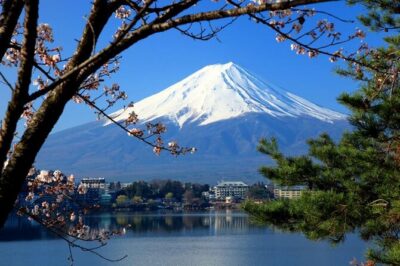
Mt Fuji and Hakone 1-Day Bus Tour Return by Bullet Train
Read our review →

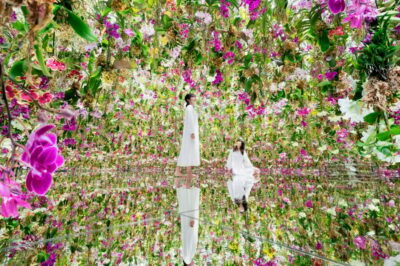
teamLab Planets TOKYO Digital Art Museum Entry Ticket
Read our review →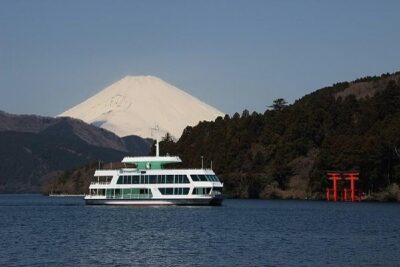
Mt Fuji & Hakone Cruise, Drum Show Bullet Train 1 Day from Tokyo
Read our review →
Sumo Show Experience with Chicken Hot Pot and a Photo
Read our review →
Shinjuku Food Tour (13 Dishes at 4 Local Eateries)
Read our review →