
Review · TRADITIONAL MUSIC & DANCE SHOWS
Japanese Traditional Music Show in Tokyo
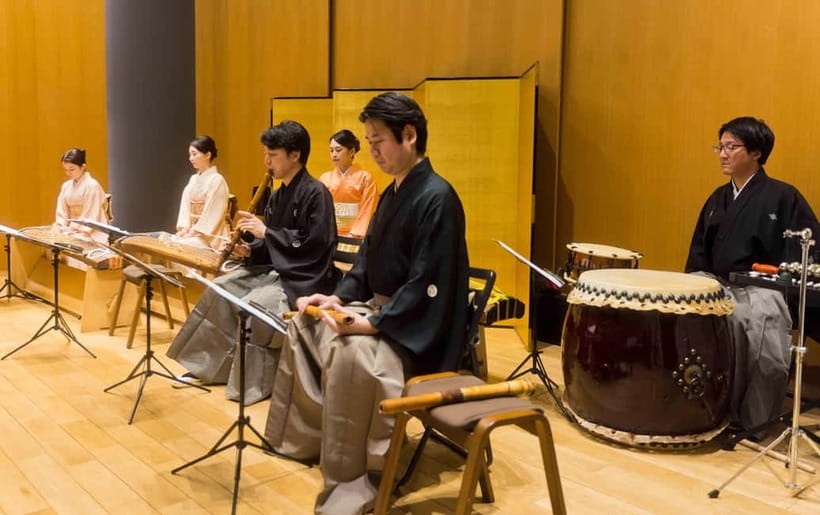
A short show can still hit hard. ZAKURO SHOW is a small, up-close wagakki concert in Tokyo where musicians play right in front of you and explain what you are hearing. I especially loved the instrument history lessons worked between songs, and the mix of ancient and modern pieces that keeps the sound fresh. One thing to consider: the venue is intentionally limited, so it is not a huge production, it is a quick, intimate 1 hour experience.
If you like culture that feels human, this is for you. The host and musicians guide you through Japanese harp (koto), shamisen, shakuhachi flute, and taiko drums, with explanations in both English and Japanese. Because it is focused and time-boxed, you will get a strong introduction, not an all-night deep dive.
In This Review
- Why ZAKURO SHOW Feels Different From Typical Tokyo Performances
- Arriving at Hall 60 Near Meiji-Jingumae and Harajuku
- Inside the Concert: Up-Close Wagakki With Real Context
- The Instrument Lineup You Will Actually Hear
- How the Program Moves From Ancient to Modern
- The Host Experience: Translation and Instrument Stories
- Photos, Videos, and Meeting the Musicians Afterward
- Price and Value: Why $38 Is a Smart Tokyo Use of Time
- Who This Is Best For (and Who Might Want Something Else)
- Quick Practical Tips Before You Go
- Should You Book ZAKURO SHOW in Tokyo?
Why ZAKURO SHOW Feels Different From Typical Tokyo Performances
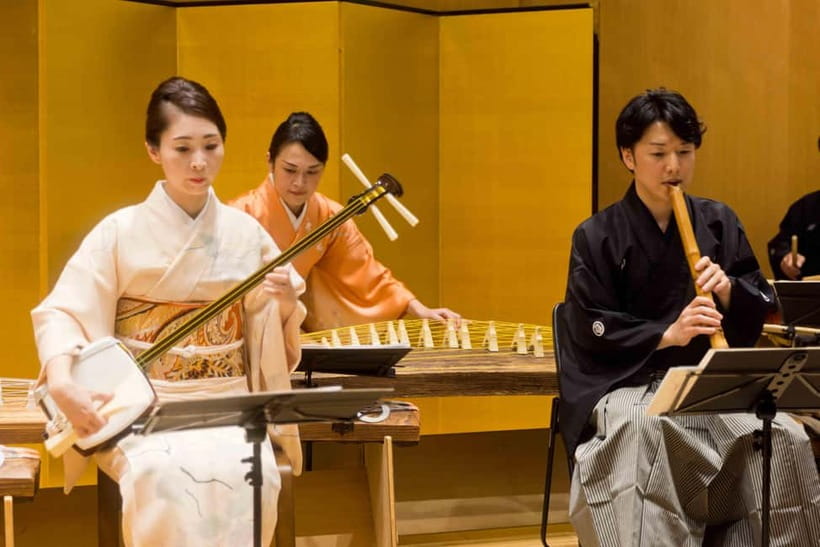
Most live music shows in Tokyo either go full performance with minimal explanation, or they lean heavily into explanation without letting the instruments really speak. This one balances both. The program is designed to help you follow along, so you do not have to guess what each piece is doing or why the instruments sound the way they do.
What makes it work is the way the music and context are stitched together. You are not just watching people in kimono play. You get the story behind the instruments and the pieces, then you hear those sounds in real time. That makes the concert easier to remember afterward, and easier to recognize if you hear these instruments again in another setting.
Arriving at Hall 60 Near Meiji-Jingumae and Harajuku
Your meeting point is Hall 60. It is very walkable from two major stations, which is handy in Tokyo where streets can shift your route fast.
Plan to head to:
- Meiji-Jingumae Station, Exit 7, about a 1 minute walk
- JR Harajuku Station, Omotesando Exit, about a 5 minute walk
A reserved seat and a ticket line skip are included, so once you arrive, the process stays simple. I suggest you arrive a few minutes early anyway, just to settle in, find your row quickly, and get comfortable before the musicians start.
This matters because the audience is intentionally limited and numbered. The show is meant to feel intimate, not distant. If you want that close-to-the-stage atmosphere, being on time helps.
Compare these Traditional Music and Dance shows in Tokyo:
- Ninja+Kabuki Tokyo
★ 4.5 · 512 reviews - Tokyo: Ninja Kabuki Performance
★ 4.2 · 330 reviews - Tokyo: KABUKI Show at Kabukiza Theatre Admission Ticket
★ 4.8 · 152 reviews
Inside the Concert: Up-Close Wagakki With Real Context
The core experience is a one-hour program of Japanese traditional music featuring wagakki, meaning instruments made in Japan’s traditional style. The best part is that you are not left alone with unfamiliar sounds.
Right up front, the musicians and host explain what you are hearing and how these instruments work. That includes the history of the instruments involved in the performance. In practice, that turns the concert into a guided listening session. You catch details like how plucked strings carry differently from blown flute tones, or how taiko hits create physical impact in a small space.
The show is built for both tourists and Japanese residents, and it runs in English and Japanese. So even if you only understand part of the explanation, you still get enough cues to stay connected to the music.
The Instrument Lineup You Will Actually Hear
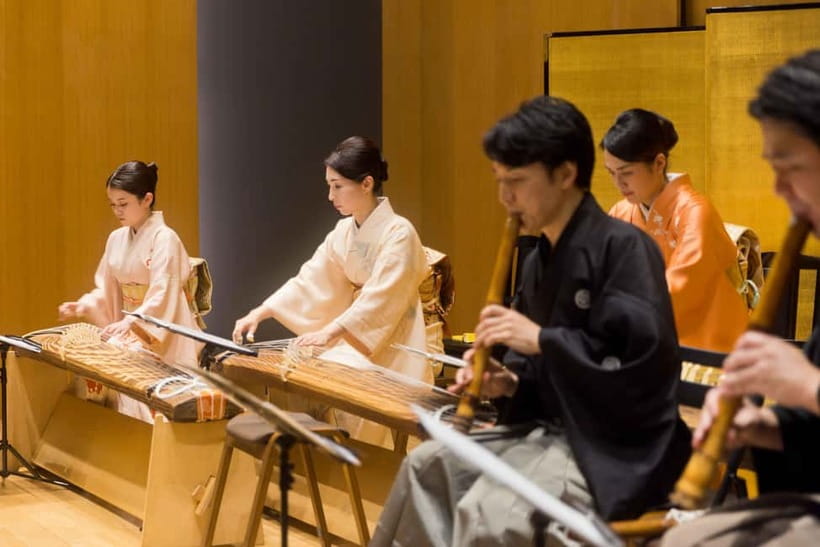
This is not a “one instrument, maybe two” kind of concert. You get a range, and the variety is the point.
Here is what is performed:
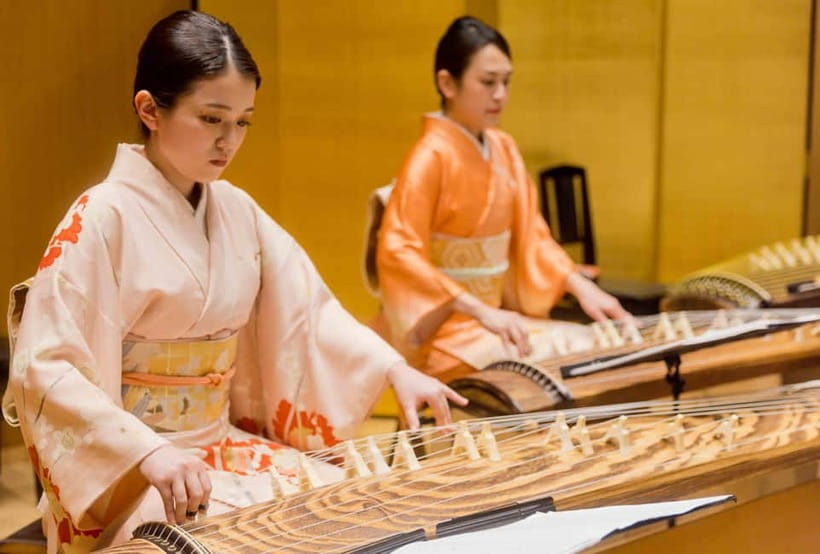
- Koto, the Japanese harp
- Shamisen, the three-stringed instrument
- Shakuhachi, the bamboo flute
- Taiko drums
Seeing how these instruments behave side-by-side is the whole value. The koto can sound bright and lyrical, the shamisen can add bite and rhythm, the shakuhachi can feel airy and haunting, and taiko can feel powerful and percussive.
Even if you are not a music nerd, this lineup makes it easier to understand why Japanese traditional music is not just one sound. It is different textures and different techniques that come together.
How the Program Moves From Ancient to Modern
One reason I like this show is that it does not treat tradition like a museum piece. The program includes both ancient and modern Japanese traditional music.
That matters because you are not only hearing older compositions. You also hear how traditional instruments and styles stay relevant today. The show even includes a cover of a Western hit, used as a contrast point so you can hear the unique sound of Japanese instruments in a familiar melody.
If you have ever wondered how traditional instruments would sound outside their usual repertoire, this is your answer. You get the same emotional meaning of a pop melody, but delivered through instruments with very different voices and attack.
A few more Tokyo days to weigh up
- Mt Fuji & Hakone Cruise, Drum Show Bullet Train 1 Day from Tokyo
★ 4.0 · 7,413 reviews - Tokyo: Sumo Show Experience with Chicken Hot Pot and a Photo
★ 4.8 · 6,678 reviews - Tokyo: Sumo Show and Dining Experience
★ 4.8 · 2,742 reviews - the SUMO show
★ 5.0 · 1,960 reviews
The Host Experience: Translation and Instrument Stories
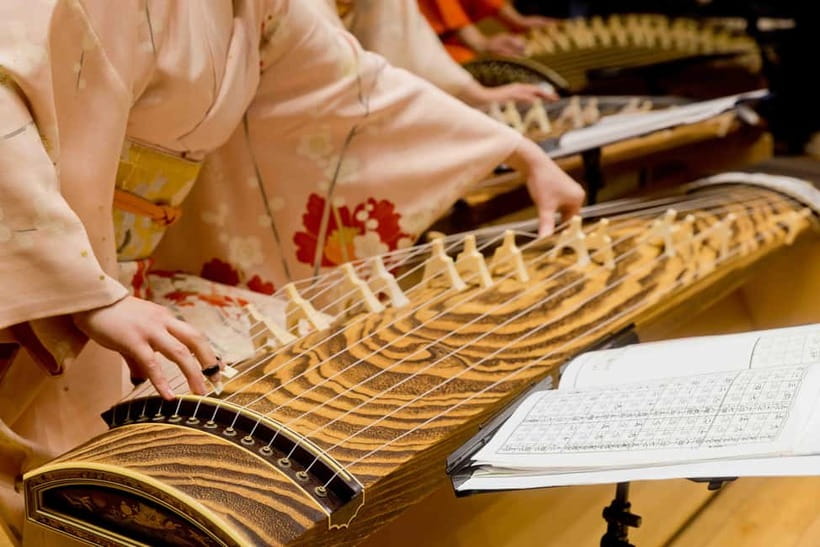
The host or greeter is part of what makes this feel accessible. Explanations are offered in English and Japanese, and the way the information is woven into the concert is gentle. It does not feel like a lecture that interrupts the music.
Instead, the host guides you through the instrument changes and helps connect each piece to what came before. You hear why a particular sound is made, how the instrument is used, and how that instrument developed over time.
This is also where the show earns its “you will actually understand it” reputation. If you have ever sat through a cultural performance with no context, you know how frustrating that can be. Here, the explanations help you follow along while still enjoying the music.
Photos, Videos, and Meeting the Musicians Afterward
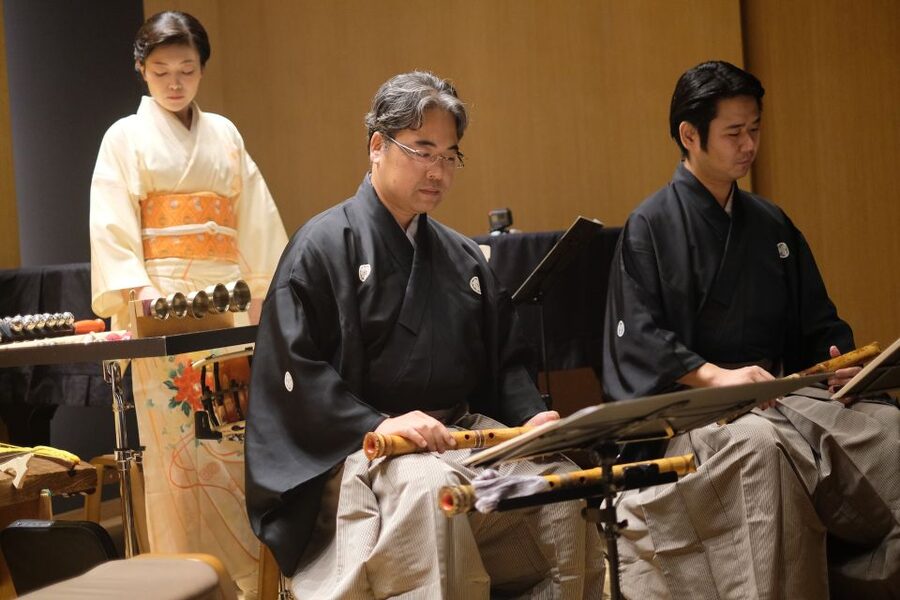
You are allowed to take photos and videos during the show. That is a big plus in Japan, where concert photography rules can vary wildly.
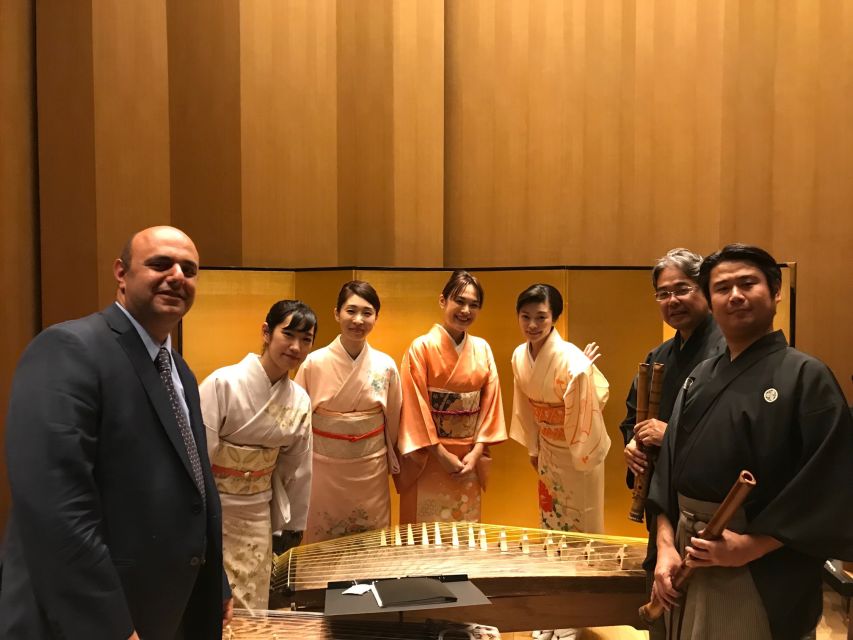
Then, after the music, you can take photos next to the musicians. This is not just a quick wave-by either. The show is designed so you can have that closer interaction moment after the performance.
So you leave with two kinds of memories:
- A record of the concert itself
- A face-to-face photo moment that makes the experience feel personal
If you care about capturing the look of traditional instruments up close, this is also a useful way to remember details later when you compare instrument sounds from other performances you might see in Tokyo.
Price and Value: Why $38 Is a Smart Tokyo Use of Time
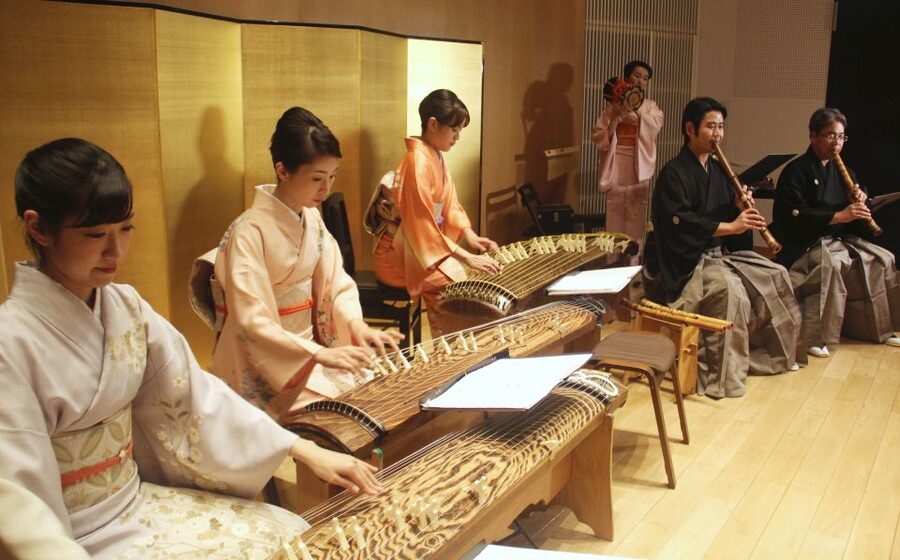
At $38 per person for a one-hour reserved-seat concert, the value is strong if your goal is cultural learning without a half-day commitment.
Here is what you are paying for:
- A reserved seat
- A guided, explained concert program
- Up-close access to multiple traditional instruments
- Translation in English and Japanese
- Photo and video opportunities, plus photos with the musicians afterward
Tokyo can be expensive when you add up “ticket plus transportation plus time.” This experience keeps the math simpler. It is compact, centrally reachable, and you do not need to figure out complicated logistics beyond finding Hall 60.
If you are short on time and want one cultural activity that gives you both sound and context, this price is easy to justify.
Who This Is Best For (and Who Might Want Something Else)
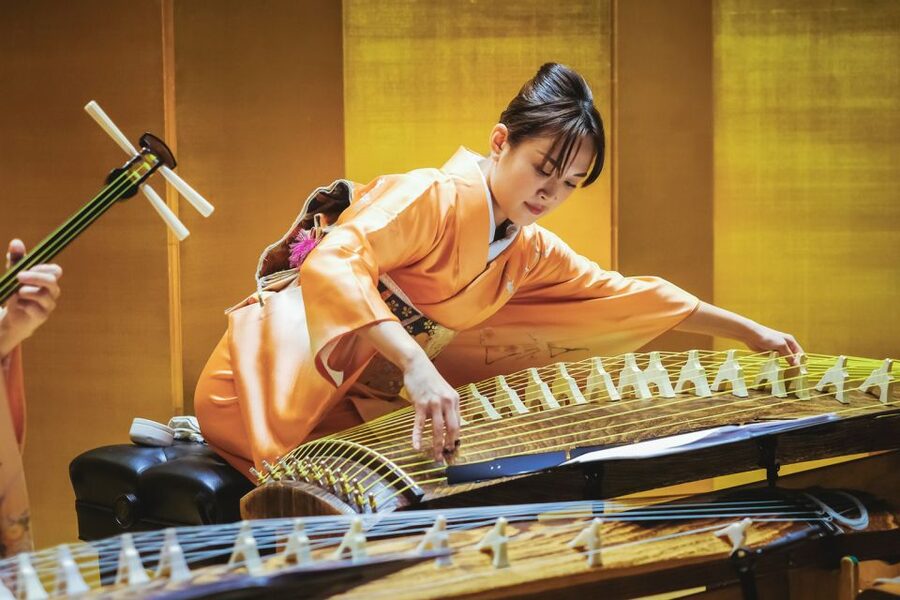
This show fits best if you fall into one of these groups:
- You want Japanese culture you can understand quickly
- You like live music but also appreciate an explanation
- You are traveling with teens or first-time Japan visitors who want something memorable and easy to follow
- You are curious about instruments beyond what you can learn from videos
It might not be the best choice if you want a long multi-hour workshop, deep hands-on craft time, or a full night of performances. This is a focused one-hour concert. You get a strong introduction, then you move on.
Quick Practical Tips Before You Go
A few small choices can make a big difference:
- Arrive early enough to settle, especially because the audience space is limited
- Bring your phone fully charged if you plan to record the show
- If you are sensitive to seated performances, choose a seat that works for your comfort level when you arrive, since the seating is reserved and numbered
Also, if you like structure, you will appreciate the way each tune is selected with context. It is designed so you can connect the dots as the program changes.
Should You Book ZAKURO SHOW in Tokyo?
I would book it if you want an easy-to-follow introduction to wagakki that still feels real and close. The biggest reasons are the combination of an intimate venue, instrument history explanations, and multiple instrument types all in one hour.
If your schedule allows just one guided cultural music stop, this is a smart one. You get reserved seating, translation support, and memorable photo moments without turning your evening into a complicated project.
Newly listed around Tokyo
- Kawagoe 4hr Private Tour with Licensed Guide (Kawagoe Dep)★ 5.0 · 13 reviews
- Kawagoe:Family-Friendly Kimono & Yukata Experience at WARGO★ 5.0 · 11 reviews
- Shinjuku Nightlife Tour★ 5.0 · 15 reviews
- Samurai Show Ticket with 2 Drinks:SHINJUKU *18 years or older★ 4.0 · 44 reviews
- Tokyo Walking Tour with Licensed Guide Shinjuku★ 5.0 · 114 reviews
- Full-Day Private Nikko Tour from Tokyo wd English Speaking Driver★ 4.5 · 6 reviews
- Shinjuku, Tokyo: Samurai Show Ticket in Kabukicho with 2 drinks★ 5.0 · 6 reviews
- Kabukicho Macabre Tour The Real Tokyo Vice★ 5.0 · 33 reviews
Traditional Music & Dance Shows, compared.

OSAKA NIGHT FUSION Japanese Taiko Kabuki Samurai Dance Show
Read our review →
KABUKI Show at Kabukiza Theatre Admission Ticket
Read our review →
KABUKI, BUNRAKU, etc. presented by National Theatre
Read our review →
Browse the lists this tour appears in