
Review · TRADITIONAL MUSIC & DANCE SHOWS
TAIKO, Japanese Drum Experience from Kyoto
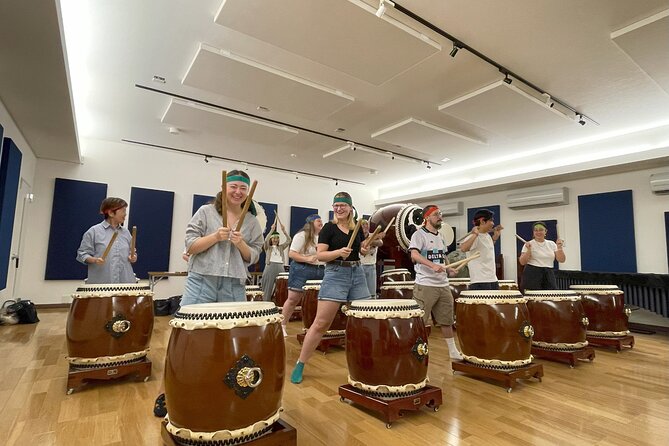
Taiko is louder than you expect. In this Kyoto experience, you learn the moves, write a wish on a hachimaki, and play your first simple rhythm with a small group. I like that it is not just watching drums from the sidelines, you get hands-on guidance and a pro demo in the middle of the lesson.
Two things I really like. First, it is beginner-friendly, no prior drumming needed, and the instruction is tailored to your skill and fitness level. Second, you mix performance with culture, starting with taiko history and adding the calligraphy moment before you play.
One thing to consider is the schedule is tight and punctuality matters, because late arrivals can miss the entire drumming portion and there are no refunds if you do not make the start time.
In This Review
- Key highlights to know before you go
- Kyoto taiko: more than a show, it is a skill you can take home
- Getting to Takatsuki from Kyoto Station, without getting stuck in a taxi trap
- First you learn the meaning: taiko history and why the drum matters
- Hachimaki calligraphy: a wish you write before you play
- Watch the pro: powerful taiko demonstration with real instruction cues
- Learning the basics: movements, technique, and playing in sync
- Your first taiko piece: performing together and actually feeling musical
- Dressing up for photos: happi, hachimaki, and a keepsake you will remember
- Price and value: what about $115.62 actually covers
- Who should book this Kyoto taiko lesson (and who should skip it)
- Should you book? My take on the decision
- FAQ
- How long is the taiko experience from Kyoto Station?
- Where do I meet for the Kyoto taiko class?
- Do I need any taiko or music experience?
- What happens during the lesson?
- Is the calligraphy and hachimaki included?
- What transportation is included?
- How much do observers pay if they do not participate?
- Do I pay in advance or on the day of the activity?
- Are children allowed?
- What if the weather is bad?
Key highlights to know before you go
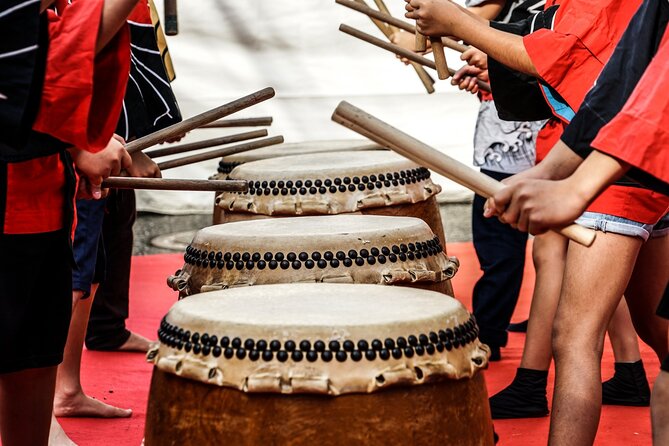
- Small group format (up to 15 travelers) means you get more face time with the instructor.
- Start-to-finish structure includes history, a calligraphy activity, a pro demonstration, then your own drumming.
- Beginner instruction covers basic movements and techniques, so you do not need to be musical to participate.
- Make-and-take keepsake includes your hachimaki (headband) and a commemorative photo in traditional costume.
- Real getting-there plan from Kyoto Station uses train plus a short cab, and direct taxi from Kyoto is discouraged due to time and cost.
Kyoto taiko: more than a show, it is a skill you can take home
If your Kyoto plans lean heavy on temples, markets, and photo stops, this is a fun way to shift gears. You are still learning Japanese culture, but you are doing it with your body, not just your camera. The core promise here is simple: you learn how to play taiko even if you have never hit a drum before.
The lesson also respects that people arrive with different levels of comfort. You get step-by-step coaching on the basic movements and techniques, and it is adjusted to your skill and fitness level. That matters because taiko is physical, and the goal is to help you play without feeling lost or overwhelmed.
I also like the cultural pairing. You get an explanation of taiko’s history and importance in Japanese culture, then you write your wishes in simple calligraphy on a hachimaki. It is the kind of activity that makes the drumming feel connected to the broader traditions of Japan, not like a random stunt.
One practical bonus: after all the instruction and practice, you play a simple piece of music with your fellow participants. You end with more than a souvenir, you end with a short performance you actually took part in.
Compare these Traditional Music and Dance shows in Kyoto:
- Traditional Japanese Music show & Experience Tour in Kyoto
★ 5.0 · 57 reviews - From Kyoto: Japanese Drum Taiko Workshop in Osaka
★ 4.7 · 11 reviews - Kyoto: Taiko Drum Workshop
★ 4.3 · 10 reviews
Getting to Takatsuki from Kyoto Station, without getting stuck in a taxi trap
This experience starts at Kyoto Station. You begin with a short train ride, about 12 minutes, then a cab ride to the studio area. The whole process is designed so you do not have to figure out local transit on the fly, and it is part of what you are paying for.
Expect this timing: you travel first from Kyoto Station by JR train, then take a cab for about 10 minutes to the venue. With transfers included, you should plan to return to Kyoto Station about 2.5 to 3 hours after the start time. The exact timing can shift with the train schedule, so I suggest you do not book a tight dinner right after.
Here is the big tip: avoid taking a taxi directly from Kyoto to the studio. The information provided is clear that a direct taxi can take more than an hour and cost a lot, and traffic could make it even longer. The train plus shared cab plan is the sensible route.
Also, Kyoto Station is large. You need to find the meeting spot near the central exit area, and the guidance specifically warns not to confuse it with the Shinkansen central ticket gate. Arrive 15 minutes early and give yourself cushion to walk and confirm you are in the right place.
If you are late, they cannot wait, and missing the start time can mean you will not participate even if you call. That is not meant to be strict, it is just how the day runs with transport and scheduled class flow.
First you learn the meaning: taiko history and why the drum matters
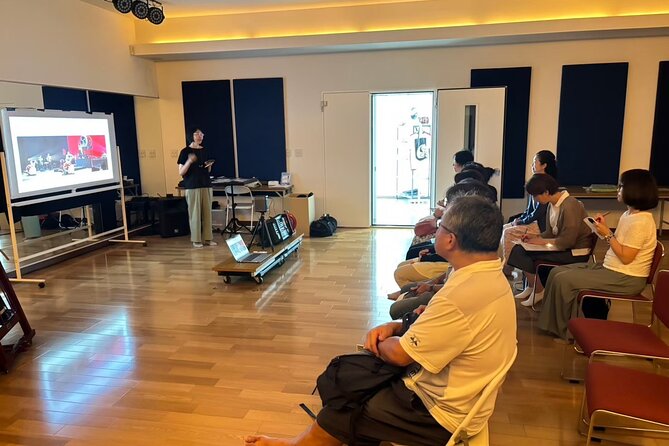
Before you touch the drum, the session starts with a brief explanation of taiko’s history. The goal is to connect the sound you are about to make to the role drums played in Japanese culture. It is not just background trivia, it is the why behind what you will be doing.
This part helps you focus during the hands-on teaching. When you understand that taiko is tied to Japanese tradition and has long been used in cultural settings, the lesson feels purposeful rather than mechanical. You are not simply learning a rhythm, you are learning a cultural practice.
If you like context, you will probably enjoy the way the history sets the tone. And if you are more of a hands-on person, do not worry, this is brief enough that it does not drag before the fun part.
Hachimaki calligraphy: a wish you write before you play
One of the most memorable and visually satisfying steps is the calligraphy activity. You get a hachimaki headband, a traditional Japanese style of headband, and you write your wishes in simple kanji.
This is a great break from the drum focus, and it gives you something personal in your hands before the noise starts. It also works well for non-musicians, because it is creative and low-pressure. Even if your handwriting is not perfect, the point is participating.
In the session flow, this comes before the pro demonstration. So while others are getting ready to watch the powerful taiko performance, you also have a little moment of calm, choose what you want to write, and get in the mood.
A few more Kyoto days to weigh up
- PERFECT KYOTO 1-Day Bus Tour
★ 5.0 · 13,518 reviews - Kyoto: Fushimi Inari, Kinkakuji, Bamboo Grove 1 Day Bus Tour
★ 4.8 · 4,316 reviews - Kyoto: Tea Ceremony in a Traditional Tea House in Kiyomizu
★ 4.9 · 3,519 reviews - Kyoto Geisha Walking Tour: Gion District & Hidden Gems
★ 4.7 · 3,273 reviews
Watch the pro: powerful taiko demonstration with real instruction cues
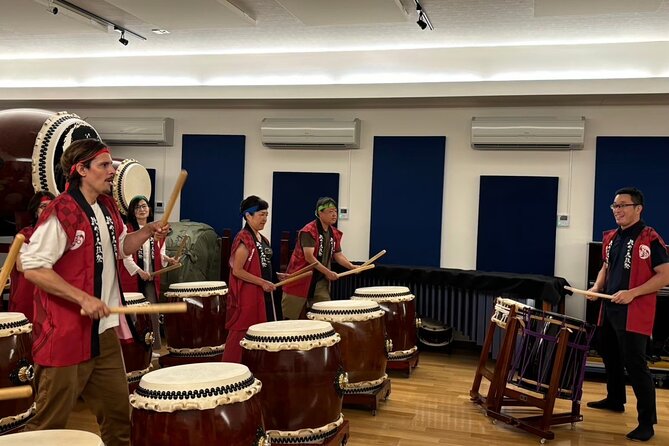
Next comes a professional taiko demonstration by the instructor. In past sessions, the pro is often described as Aoi-sensei or Aoi-san, and watching that live is part of the appeal. It is not just theatrics, you can see the technique in action, the arm position, the timing, and how the energy transfers into the drum.
The information you get before you play helps here. When you watch someone play with confidence, it becomes clearer what the instructor means when they teach the basics afterward. You also get a sense of the volume and the physicality, so you are not surprised when your turn comes.
One review-style takeaway from the experience is that the professional demonstration is impressive enough to make you sit up and pay attention. If you like performance, this part alone is worth showing up early for, and it also sets a motivating tone for beginners.
Learning the basics: movements, technique, and playing in sync
After the demo, the friendly instructor teaches you the basic movements and techniques of taiko drumming. The lesson is tailored to your skill and fitness level, so you are not stuck doing something that is too intense or too complicated.
You will go from understanding the basics to practicing them with the group. The class is built so that you can follow along, even if you are not a musician. That matters, because taiko is not like tapping a rhythm on a table. You need coordination, posture, and timing.
You are also supported by an English-speaking guide. Guides shown in prior experiences include Michiko-san and others working as interpreters, and they help make sure you understand what the instructor wants you to do. If language is a concern, this is one of the strongest parts of the whole format.
One more practical point: taiko can feel like a workout. Even though you are not there to train for anything, expect your heart rate to rise because it is full-body movement. If you have mobility concerns, the fact that instruction is tailored helps you scale and participate safely.
Your first taiko piece: performing together and actually feeling musical
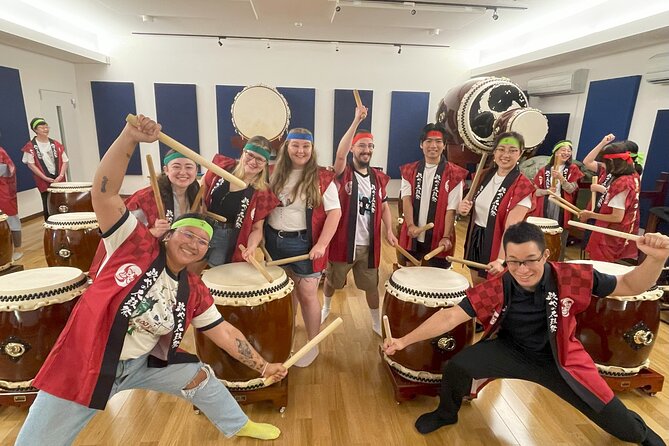
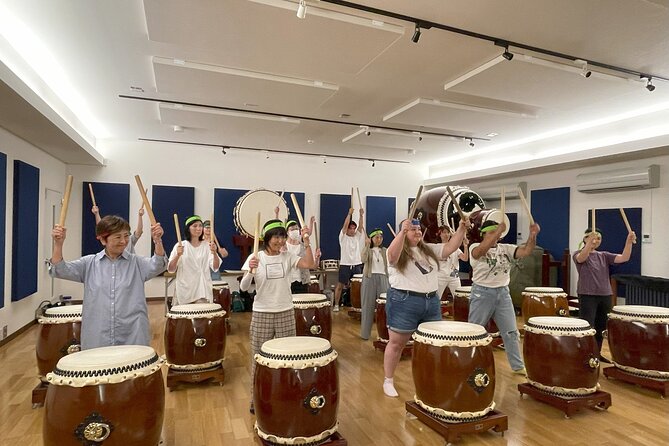
The best payoff comes at the end, when you play a simple piece of music with your fellow participants. This is where the class shifts from learning to doing.
You do not need to master everything to enjoy this part. The rhythms are designed for first-timers, and the instructor’s job is to get you to the finish line as a group. When you hear everyone play together, it clicks in a way that watching alone never can.
Also, because this is a small group, you get more of that shared moment. With larger classes, you can feel like an observer even when you are holding a drum. Here, the structure makes it more likely you are contributing from start to finish.
Dressing up for photos: happi, hachimaki, and a keepsake you will remember
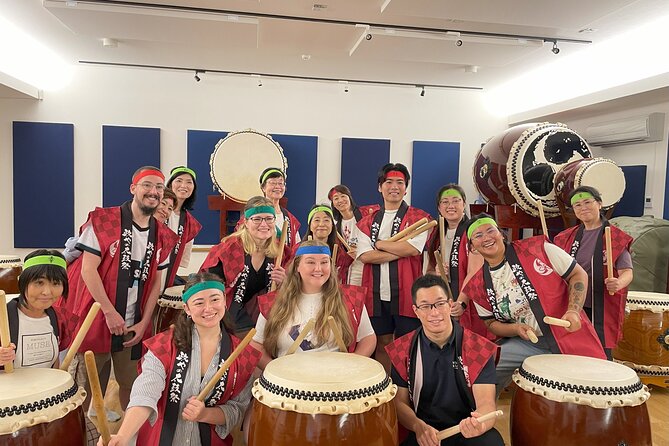
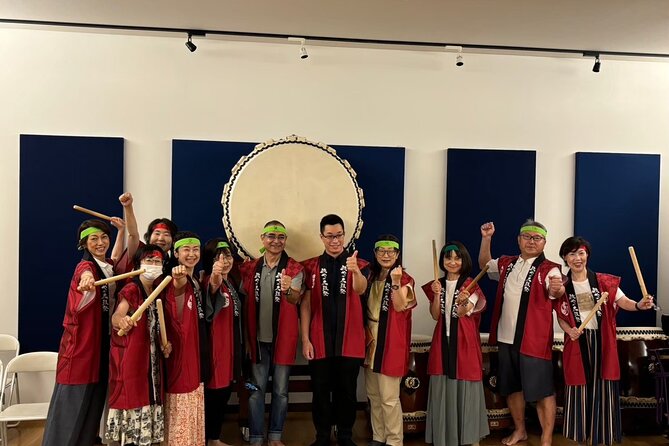
To close, you get a commemorative photo in traditional Japanese costume. The costume includes a happi and your hachimaki. This is a simple ending, but it adds a lot to the feeling of completion.
The photo matters because it records something that is hard to describe later. You are not only doing an activity, you are wearing the symbols tied to that activity. It is a visual reminder that you learned a new skill during your Japan trip.
If you like travel souvenirs that are more than a paper bag, this is a good one. You can take it home, show friends, and it will make your taiko story easier to tell.
Price and value: what about $115.62 actually covers
At $115.62 per person, this experience is not just cheap entertainment, but it also is not priced like a private lesson. The value comes from the full package: instruction from a taiko instructor, a pro demonstration, the studio time, the hachimaki calligraphy activity, the costume photo, and transportation support from Kyoto Station.
The inclusions also cover guide support in English, plus access to studio equipment and participation materials. There is also a one-way JR ticket to Takatsuki Station, and car transport to and from the studio is part of the plan.
For your money, you are paying for time with a professional, not just a scripted tour. That is the big difference between a taiko lesson and a normal sightseeing stop. You leave having done something with guidance, and you get a cultural craft element to match the drumming.
One extra note: observers who do not participate have a separate cost, and the information says it is 9,000 yen per person. If you want someone to watch, do not assume they can just tag along for free. Make sure you handle the observer option properly, including notification so transport can be arranged.
Who should book this Kyoto taiko lesson (and who should skip it)
This is a smart fit if you want an active cultural experience without needing any musical background. If you are traveling with friends, you will likely enjoy the group energy when it comes time to play the simple piece together.
It is also a good choice for people who want a break from temples and streets. Taiko gives you something physical and memorable, and you get history context so it still feels grounded in Japanese culture.
You may want to think twice if you are traveling with very young kids. The information is specific that children under 7 years old are not allowed to participate. That means families should plan other activities for younger children.
And if you hate time-sensitive plans, take the punctuality warning seriously. Train schedules control the start. Arrive early, find the correct meeting point near the central exit kiosk area, and do not count on waiting.
If you get nervous about language, the English-speaking guide support helps. In past sessions, interpreters like Michiko-san have supported English understanding throughout, and that is a big part of why beginners tend to feel comfortable.
Should you book? My take on the decision
If you want one Kyoto day that feels hands-on and culturally meaningful, I would book this. The combination of beginner-friendly instruction, a professional demonstration, and a final group performance gives you a complete experience, not just a taste.
The calligraphy on the hachimaki is also a strong bonus. It turns the lesson into something you can hold, write, and take home, and it gives you a personal connection before you start drumming.
Just be honest about your schedule. The transport adds time, the total experience runs roughly 2.5 to 3 hours back to Kyoto Station, and missing the start can cost you participation. If you plan around that, you will get a fun skill, a cultural craft moment, and a photo you will actually want to show.
FAQ
How long is the taiko experience from Kyoto Station?
Plan on about 2 hours 30 minutes for the experience including transfers. You should expect to return to Kyoto Station about 2.5 to 3 hours after the start time.
Where do I meet for the Kyoto taiko class?
You start at Kyoto Station at Higashishiokoji Kamadonocho, Shimogyo Ward, Kyoto 600-8216, Japan. The meeting is near public transportation, and you should arrive 15 minutes early.
Do I need any taiko or music experience?
No. The class is designed for all levels, and it uses step-by-step instruction for beginners.
What happens during the lesson?
You will learn about taiko’s history, try simple calligraphy on a hachimaki, watch a professional taiko demonstration, then practice basic techniques with an instructor. You end by playing a simple piece with the group and taking a commemorative photo.
Is the calligraphy and hachimaki included?
Yes. The included items list includes the Japanese hachimaki (headband) for the calligraphy activity.
What transportation is included?
The plan includes a one-way ticket to JR Takatsuki Station, plus a car ride to and from the studio (shared cab concept is noted in the details). The meeting point is Kyoto Station and the activity ends back there.
How much do observers pay if they do not participate?
The price for observing without participating is 9,000 yen per person.
Do I pay in advance or on the day of the activity?
You need to pay in cash in Japanese yen at the drum studio on the day of the tour.
Are children allowed?
Children under 7 years old are not allowed to participate.
What if the weather is bad?
The experience requires good weather. If it is canceled due to poor weather, you will be offered a different date or a full refund.
If you want, tell me your travel dates and who is going (age range, drumming comfort level). I can help you pair this with realistic Kyoto plans before and after so you do not end up rushing.
Newly listed around Kyoto
- Kyoto:Family-Friendly Kimono & Yukata Experience at WARGO★ 5.0 · 147 reviews
- Traditional Japanese Music show & Experience Tour in Kyoto★ 5.0 · 57 reviews
- Traditional Japanese Washi Papermaking- Kyoto morning★ 5.0 · 77 reviews
- Tour in Kyoto with a Goverment Certified Tour Guide★ 3.5 · 117 reviews
- Kyoto: Golden Pavilion, Nijo Castle, Nishiki Market. Private★ 5.0 · 16 reviews
- The Kyoto VIP Experience!★ 5.0 · 20 reviews
- A Unique Antique Kimono and Tea ceremony Experience in English★ 5.0 · 109 reviews
- TREASURES of Kyoto: Fushimi Inari, Kiyomizu Temple, and more!★ 5.0 · 20 reviews
Traditional Music & Dance Shows, compared.


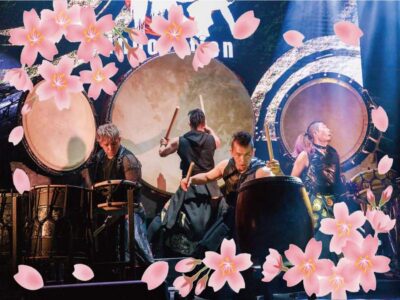

OSAKA NIGHT FUSION Japanese Taiko Kabuki Samurai Dance Show
Read our review →
KABUKI Show at Kabukiza Theatre Admission Ticket
Read our review →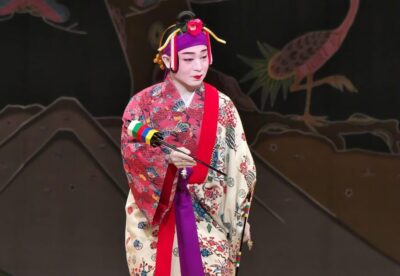
KABUKI, BUNRAKU, etc. presented by National Theatre
Read our review →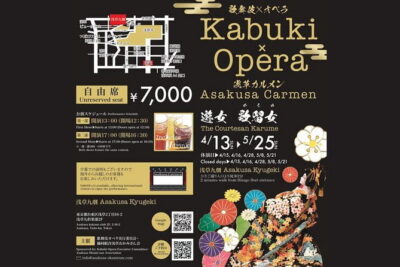
Browse the lists this tour appears in