
Review · LICENSED GUIDES & PRIVATE DRIVERS
Kanazawa 6hr Private Tour with Government Licensed Guide
Kanazawa clicks into focus with a guide by your side. This 6-hour private tour pairs a government licensed local English speaker with a short, flexible list of top places, so you can move between gardens, temples, chaya districts, samurai areas, and food streets without feeling rushed.
I love the undivided attention of a private guide, and I love the customizable itinerary that lets you choose 3 to 4 stops that match your interests and energy.
My one main caution: it is a walking tour with no private vehicle, and entrance tickets for most sites are not included, so you will want to budget for admissions and wear good shoes.
In This Review
- Key highlights to expect
- Why a private guide makes Kanazawa feel easy
- Building your 3 to 4 stop itinerary without overdoing it
- Kenrokuen Garden, the must-see with time to look closely
- D.T. Suzuki Museum and Myoryuji, the Ninja Temple myth explained
- Higashi Chaya District and Kanazawa City Nishi Chaya Museum
- Seisonkaku Villa and Nagamachi Samurai District, a lived-in Edo feeling
- 21st Century Museum, modern art next to classical icons
- Omicho Market and Kanazawa Castle, food and power in the same day
- Oyama Shrine, the Maeda founder connection
- How the guides add value beyond the stops
- Price and value, what your money is buying
- Should you book this Kanazawa private walking tour?
- FAQ
- How long is the Kanazawa private tour?
- Is this a private tour?
- Can I customize which sights we visit?
- Are entrance fees included?
- Is there pickup, and how does the meeting work?
- What is the tour style and transportation?
- What if my plans change?
Key highlights to expect
- Government licensed English speaking guide who can explain what you are looking at, not just point at it
- Pick 3 to 4 stops from a strong Kanazawa menu, instead of being forced into a full day loop
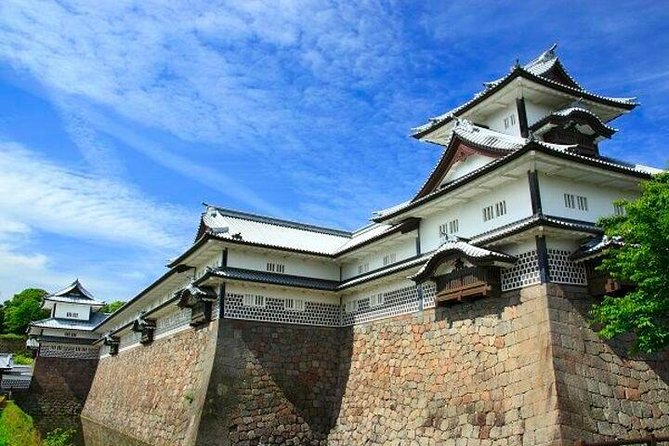
- Kenrokuen Garden as a signature start, with time to understand its layout and seasonal appeal
- Chaya district context in both Higashi and Nishi chaya areas, including how geisha entertainment fits the Edo-era districts
- Samurai and Maeda connections through places like Nagamachi, Seisonkaku Villa, and Oyama Shrine
- Food time with Omicho Market where you can browse and snack, with local dining tips from your guide
Why a private guide makes Kanazawa feel easy
Kanazawa can be one of those cities that rewards slow walking and good context. The streets and neighborhoods make sense when someone explains the big threads, like the Maeda clan influence and how leisure districts like chaya grew alongside temples and samurai life.
On this tour, you get that kind of context in a format that is simple. It lasts about 6 hours, and you stay in the city on foot. Instead of following a rigid script, you can customize your list of 3 to 4 stops, which is a big deal when your group includes different interests or different stamina levels.
More Private Guides in Kanazawa:
- Kanazawa 4hr Private Tour with Government Licensed Guide
★ 5.0 · 89 reviews - Kanazawa All Must-Sees Private Chauffeur Sightseeing – English Speaking Driver
★ 5.0 · 7 reviews - Tokyo 6hr Private Tour with Government-Licensed Guide
★ 5.0 · 3,902 reviews
Building your 3 to 4 stop itinerary without overdoing it
The tour is designed around a practical idea: Kanazawa has a lot worth seeing, but your best day happens when you do fewer things and understand them better. You will choose from the provided set of highlights, and most stops are built as about 1 hour each.
Here is how I’d plan it if you want a balanced mix:
- Choose one anchor garden or major cultural site: Kenrokuen Garden is the classic starting point.
- Add one temple or philosophy angle: D.T. Suzuki Museum or Myoryuji, the Ninja Temple.
- Add one neighborhood texture stop: Higashi Chaya District, Nishi Chaya Museum, or Nagamachi Samurai District.
- Add one “real-life Kanazawa” taste stop: Omicho Market and nearby areas, or Kanazawa Castle if your group likes history.
If you only pick one museum-type stop, I would pair it with either Higashi/Nishi chaya or a samurai area, because the city themes connect better that way.
Kenrokuen Garden, the must-see with time to look closely
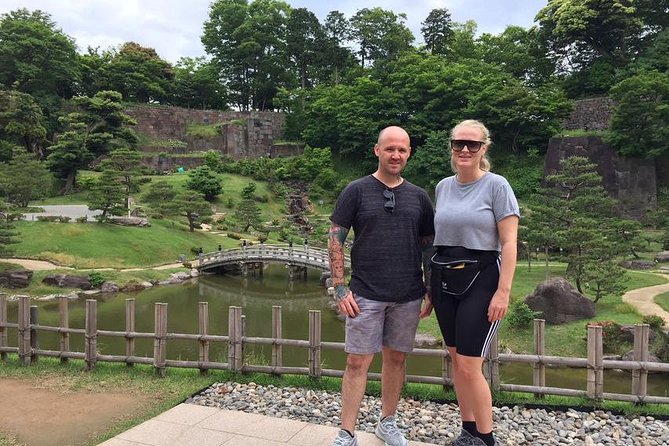
Kenrokuen Garden is a signature Kanazawa experience. It is famous as one of Japan’s three most beautiful gardens, and it is the kind of place where your experience depends on how you move through it.
On the tour, you can expect around 1 hour at Kenrokuen. That is enough time to get your bearings, wander at an easy pace, and listen for your guide’s explanations of how the garden composition creates changing views. Admission is not included, so plan to pay that separately.
Tip for your planning: if you can, schedule Kenrokuen for your first major stop. It helps you understand the city’s “made for strolling” layout and makes the rest of the day feel more coherent.
D.T. Suzuki Museum and Myoryuji, the Ninja Temple myth explained
Most first-timers expect a temple called Ninja Temple to be about ninjas. Myoryuji Temple is called Ninjadera, but it is not actually connected to ninja in the way the name suggests. It was built by the Maeda lords during the Edo Period, so the real story is about how local power and religious sites shaped each other.
Paired with Myoryuji, the D.T. Suzuki Museum adds a different angle. It is a small museum commemorating Suzuki Daisetz Teitaro, a Buddhist philosopher. Expect a slower, more reflective hour where your guide can connect his ideas to what you are seeing around the museum.
Both stops are typically about 1 hour, and admission tickets are not included. The payoff here is mental variety: you get philosophy and you get a corrected myth.
Good to know: if your group includes one person who is skeptical about “history lectures,” this combo can still work, because the sites themselves are distinctive. Myoryuji has that instantly memorable nickname, and the Suzuki Museum gives you a reason to slow down.
A few more Kanazawa days to weigh up
- World Heritage Shirakawa-go and Experience Tours from Kanazawa
★ 5.0 · 4,049 reviews - Kanazawa: Kenrokuen Tea Ceremony Experience
★ 4.8 · 1,139 reviews - Kanazawa Half Day Tour (Private Guide)
★ 5.0 · 361 reviews - Kanazawa Full Day Tour (Private Guide)
★ 5.0 · 323 reviews
Higashi Chaya District and Kanazawa City Nishi Chaya Museum
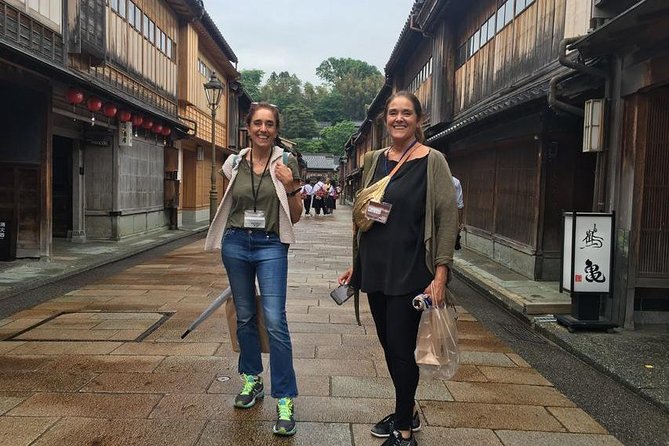
If you want to understand Kanazawa beyond gardens and castles, chaya districts are a smart choice. A chaya is a teahouse-style entertainment venue where guests are entertained by geisha who perform song and dance. In the Edo Period, chaya were found in designated entertainment districts.
Higashi Chaya District is one of the most recognizable areas for this. Admission is free for the time on your schedule, and you get about an hour to experience the atmosphere and learn what the entertainment district role meant in everyday city life.
Kanazawa also has a preserved Nishi chaya district experience through the Kanazawa City Nishi Chaya Museum. If your itinerary needs one more chaya-flavored stop, it is a good way to broaden what you understand from Higashi.
Practical photo tip: ask your guide for photo placement advice. Some guides focus on where to stand to make the street and building lines look right in photos, which saves you time and gets you better angles.
Seisonkaku Villa and Nagamachi Samurai District, a lived-in Edo feeling
To balance the entertainment districts, you want the “work and power” side of Kanazawa’s past. Two of the best choices from the menu are Seisonkaku Villa and Nagamachi Samurai District.
Seisonkaku Villa was built in the last years of the Edo Period by a Maeda lord for his mother. It is often described as one of the most elegant samurai villas still remaining. Expect about 1 hour here. Admissions are not included, so treat it as a paid cultural stop worth the time.
Nagamachi Samurai District sits at the foot of the former Kanazawa Castle. It helps you visualize where samurai families lived, with a historic atmosphere that makes the city feel more human than just museum-like.
Nagamachi is also free for the scheduled stop, which makes it a high-value option if you are watching your budget.
How to pair them: if you like architecture and interior style, go Villa first or second. If you prefer atmosphere and street-level “how people lived,” go Nagamachi first, then end with Seisonkaku if the day feels tiring.
21st Century Museum, modern art next to classical icons
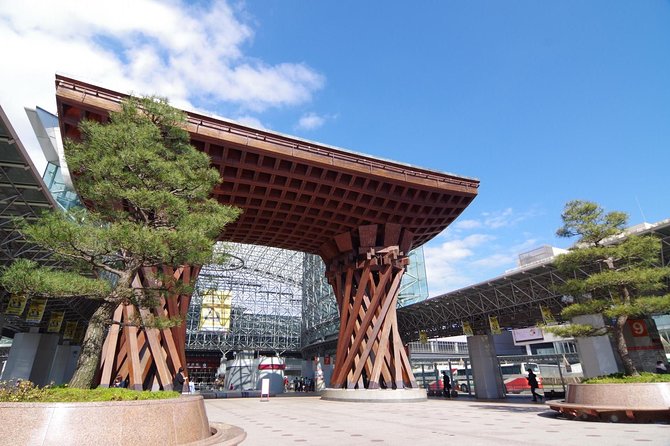
Kanazawa has a knack for mixing eras. The 21st Century Museum of Contemporary Art opened in 2004 and sits close to Kenrokuen, so it can slot in cleanly after your garden time.
The museum stop on this tour is about 1 hour. Admission is not included, so factor that cost into your day if you choose it. The value is perspective change. After temples, samurai districts, and chaya neighborhoods, contemporary art gives your brain a reset while still keeping you in Kanazawa’s cultural flow.
This stop also works well if you want something that feels less like a lecture. Even if your group does not think of itself as art people, the guided explanations can help you connect what you see to why Kanazawa invests in culture.
Omicho Market and Kanazawa Castle, food and power in the same day
Omicho Market is one of the most practical “do something real” stops on the list. It is Kanazawa’s largest fresh food market since the Edo Period. Today it is a network of covered streets with about 200 shops and stalls. Admission is free for the scheduled time, and it is typically about 1 hour.
This is where you can browse, snack, and get advice on what to eat without turning your day into a guessing game. Your guide can also point you toward a simple lunch plan in the area, which is helpful since lunch is not included in the tour.
Kanazawa Castle is the history counterweight. It served as the seat of the powerful Maeda Clan from 1583 to the end of the Edo Period. If you want to understand why the city layout feels the way it does, a castle context helps tie the Maeda story together.
Castle admission is not included, and the stop is about 1 hour. The tradeoff is time and ticket cost, but the benefit is clearer city context, especially if you skipped Oyama or Seisonkaku.
Smart pairing: If you pick Omicho and Castle in the same day, you get both sides of the Maeda world, everyday life and political power.
Oyama Shrine, the Maeda founder connection
Oyama Shrine is dedicated to Maeda Toshiie, the first lord of the Maeda Clan. The shrine was constructed in 1599 by Maeda Toshinaga on Mount Utats. It is another stop built around Edo-era connections, and it helps explain why those Maeda ties keep showing up across the city.
Your scheduled time here is about 1 hour, and admission tickets are not included.
If your group loves history, Oyama is a strong “meaning” stop after you have walked through samurai or castle-related areas. If your group prefers lighter, scenic time, you might skip Oyama and put your fourth pick into Higashi Chaya or Omicho Market instead.
How the guides add value beyond the stops
A big part of why this tour scores so well is the way guides handle questions and adjust your pace. In the guide lineup you might be matched with, people like Asa, Yoshi, Shoten, Keiko, Yumiko, Tomoko, and Hiroko are all mentioned for patient, conversational English and for turning locations into stories you can actually use.
A few practical ways that shows up:
- Guides help you understand culture, not just dates and names.
- Guides can help with local logistics advice, like how to handle public transportation if you are moving between areas on your own.
- Guides often make photo time easier by pointing out where to stand for the best composition.
- Some guides will go a bit longer if they feel you still have energy to see more.
None of this replaces your own curiosity, but it makes the city feel less like a checklist.
Price and value, what your money is buying
At $155.22 per person for about 6 hours, you are paying for something that usually costs extra when you try to DIY: a government licensed local English guide plus private time that you can shape around your interests.
Entrance fees and transportation are not included, and lunch is not included. That is the main cost to keep in mind. When you budget for admissions at places like Kenrokuen, the museums, and the villa, the total day cost will grow.
Still, the value is strongest when:
- You want to choose only 3 to 4 stops and not waste time deciding.
- Your group includes different interests, like garden time plus philosophy plus food.
- You care about understanding why Kanazawa is the way it is, not just taking photos.
If you plan to visit many paid attractions anyway, a guide often pays back through smarter sequencing and better choices about which sites to prioritize.
Should you book this Kanazawa private walking tour?
Book it if you want an efficient, high-context Kanazawa day. This works especially well for a first trip where you want Kenrokuen and at least one deeper cultural layer, like D.T. Suzuki Museum or Myoryuji.
Skip it or adjust your plan if your group hates walking or you want a low-cost day. The tour is built for foot travel, and admissions for most stops are not included, so it is not the cheapest way to visit Kanazawa.
If you like a plan that is flexible, and you want your time to feel purposeful rather than chaotic, this is a strong choice. Choose your 3 to 4 stops with intention, bring comfortable shoes, and let the guide connect the dots between gardens, chaya entertainment, samurai neighborhoods, and the Maeda story that shapes much of the city.
FAQ
How long is the Kanazawa private tour?
It runs for about 6 hours.
Is this a private tour?
Yes. It is private, meaning only your group participates.
Can I customize which sights we visit?
You can customize your itinerary by choosing 3 to 4 sites from the provided options.
Are entrance fees included?
No. Entrance fees are not included, and admission tickets are listed as not included for several stops. Some stops are marked free for the scheduled visit time.
Is there pickup, and how does the meeting work?
Pickup is offered, and the tour is a walking format. Pickup is on foot, and you meet your guide within a designated area.
What is the tour style and transportation?
It is a walking tour. Transportation fees are not included, and there is no private vehicle provided.
What if my plans change?
Free cancellation is available up to 24 hours in advance for a full refund. If you cancel less than 24 hours before the start time, the amount paid is not refunded.
Newly listed around Kanazawa
- Private Tour of Shirakawago and Gokayama from Kanazawa★ 5.0 · 50 reviews
- Taste of Kanazawa (Food tasting in Omicho Market & Higashi Chaya)★ 5.0 · 58 reviews
- Kanazawa private 1 day/Photoshoot by professional photographer★ 5.0 · 33 reviews
- Private Tour of Shirakawago from Kanazawa (Half Day)★ 5.0 · 24 reviews
- Private Ring Craft Experience in Kanazawa★ 5.0 · 22 reviews
- Private Tour Kanazawa, Shirakawago, Hida Furukawa,Takayama★ 5.0 · 108 reviews
- Noto Full Day Driving Tour (Private Car)★ 5.0 · 6 reviews
- Noto peninsula 1 day/Photoshoot with professional photographer★ 5.0 · 9 reviews
Licensed Guides & Private Drivers, compared.
Tokyo 6hr Private Tour with Government-Licensed Guide
Read our review →
Kyoto Early Morning Tour with English-Speaking Guide
Read our review →
Tokyo 4hr Private Tour with Government-Licensed Guide
Read our review →
Kyoto 6hr Private Tour with Government-Licensed Guide
Read our review →
Hiroshima / Miyajima Full-day Private Tour with Government Licensed Guide
Read our review →Early Morning Tour with English-Speaking Guide
Read our review →
Tokyo Private Sightseeing Tour by Car- English speaking chauffeur
Read our review →
Mt Fuji Private Tour with English Speaking Driver
Read our review →Browse the lists this tour appears in