Review · TOKYO TOURS
Kintsugi Experience: Art of Golden Joinery in Tokyo
Tokyo does mindful crafts well. This small-group Kintsugi lesson turns broken ceramics into a gold-touched keepsake, and it teaches the why as much as the how. I love the chance to learn the philosophy behind kintsugi, and I love the fact you leave with your own repaired plate. One thing to consider: you cannot bring personal pottery, and kids under 6 cannot enter the atelier.
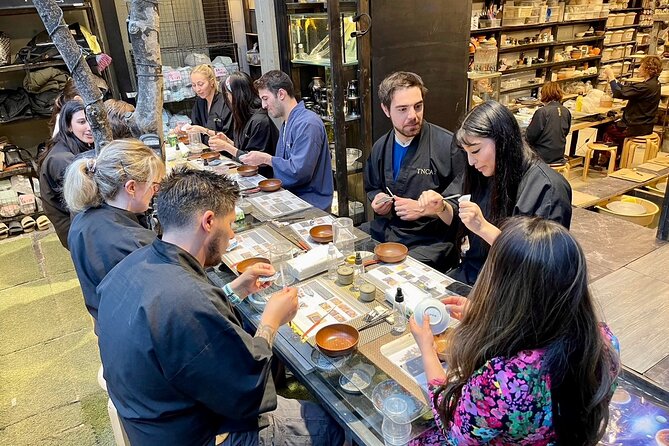
You start at the TNCA Minami-Aoyama Studio in the Omotesando area, then you get suited up in a samue while your instructor guides you through the repair using lacquer mixed with gold. The group stays capped, so you are not stuck watching from the back of a room.
The only catch is logistics. You make your own way to the studio, the studio location can be a little tricky to find if you arrive late, and the experience is non-refundable and cannot be changed after booking.
In This Review
- Key points before you go
- Minami-Aoyama Studio, and how to actually show up on time
- Kintsugi 101: why gold repairs matter in Japanese culture
- The hands-on session: samue, technique, and gold lacquer steps
- The souvenir you bring home: your repaired plate, not a generic keepsake
- Master Taku timing, plus why a small class feels worth it
- Price and value: what you get for about $59.69
- Who should book this kintsugi workshop
- Should you book this Tokyo Kintsugi experience?
- FAQ
- How long is the Kintsugi lesson?
- Where does the experience start?
- Is this class beginner-friendly?
- Can I repair my own broken pottery?
- Is there an age limit?
- Is the price refundable or changeable?
Key points before you go
- Small group limits, up to 10 in the atelier for hands-on help and clearer feedback
- Gold lacquer repair on a studio plate, no personal items allowed
- Wear a samue and learn the cultural meaning behind kintsugi and wabi-sabi
- Take home your finished piece, packaged for travel in a way that makes souvenirs less stressful
- Possibility to meet Master Taku in the 11:00 AM class, with the artisan often present
Minami-Aoyama Studio, and how to actually show up on time

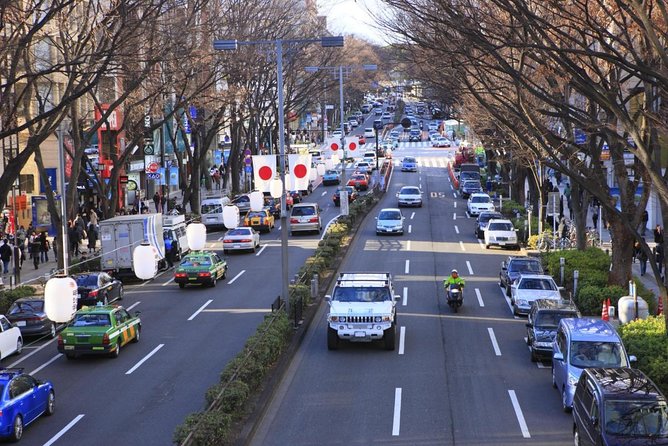
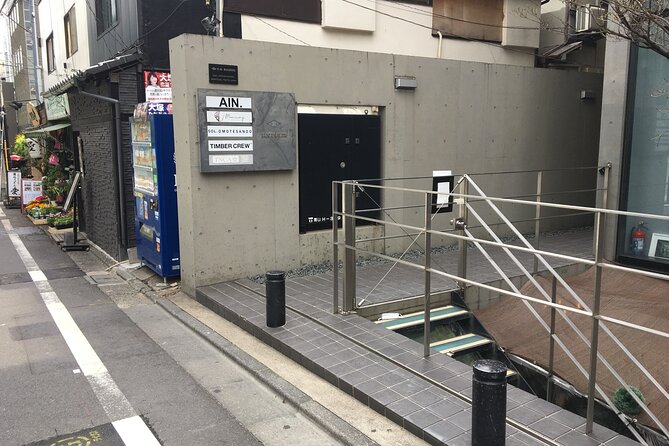
This class is based in Tokyo’s Minami-Aoyama neighborhood, in the Omotesando area, at the TNCA Minami-Aoyama Studio, 3-chōme-8-2 Minamiaoyama, Minato City, Tokyo 107-0062. It is listed as near public transportation, and the studio is central enough that you can use the metro without drama.
Here is the practical bit: plan to arrive a bit early and give yourself buffer time. More than one review mentions that finding the studio can be hard, and that the experience can feel quieter than you expect when people show up at the last second. That is not you being “bad,” it is just the nature of a small atelier space.
Also, make it easy on yourself by skipping food plans around the lesson time. Food and drinks are not included, and the workshop runs about an hour, so it is best to grab something before or after you are done.
A few more Tokyo days to weigh up
- Mt Fuji and Hakone 1-Day Bus Tour Return by Bullet Train
★ 5.0 · 26,383 reviews - 1-Day Tokyo Bus Tour
★ 5.0 · 14,250 reviews - Tokyo: TOKYO SKYTREE® Admission ticket
★ 4.5 · 11,192 reviews
Kintsugi 101: why gold repairs matter in Japanese culture
Kintsugi is not only a technique. It is a mindset. The lesson frames breakage and repair as part of an object’s history, not a reason to throw it away, so you come away thinking differently about stuff you own.
That cultural angle is a big part of why the class is so satisfying. Instead of treating the craft like a quick souvenir factory, you learn how Japanese aesthetics value beauty in imperfection. You hear about the philosophy behind the repairs, including the ideas tied to wabi-sabi, the acceptance of flaws and age.
I like that the workshop teaches both sides. You get hands-on practice with the materials, but you also get language and context for what you are doing. That makes the finished plate feel personal, not random.
The hands-on session: samue, technique, and gold lacquer steps
The workshop lasts about one hour. You meet your teacher and a small group of no more than 10 guests in the studio, then you don a samue, a traditional craftsperson’s garment. It is a small detail, but it helps you switch gears from sightseeing mode into workshop mode.
You will not be repairing your own pottery. The studio provides a ceramic plate you use during the lesson and you take home afterward. That keeps the instruction consistent, and it avoids the problem of every student showing up with a different kind of break that needs different approaches.
During the session, your instructor guides you through the kintsugi method using lacquer mixed with gold. You are shown the process step-by-step, and the class is designed to be doable even if you have zero art background. Many people specifically praise how clear the instructions are and how patient the team is while they help with the tiny details.
One more thing: this is a capped environment, which matters. With fewer people, the instructor can check your work and correct issues before they become permanent. That is how you end up with a plate that looks intentional, not like an experiment.
The souvenir you bring home: your repaired plate, not a generic keepsake
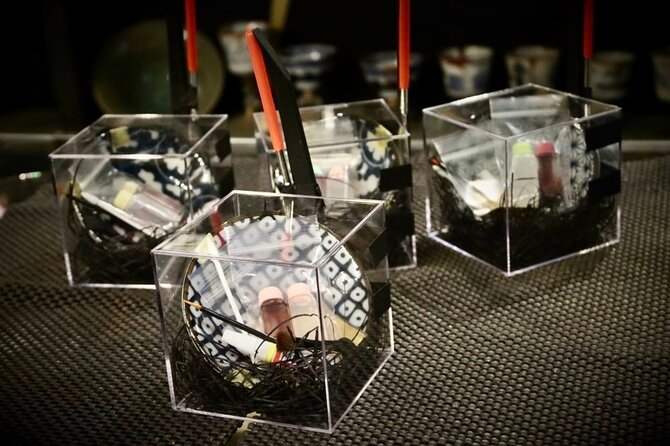
Your take-home item is the repaired ceramic plate you work on in class. This is the best kind of souvenir for Tokyo: small enough to carry, meaningful enough to remember, and made by your hands in a short time.
Packaging is also part of the value. Reviews mention the pieces are packed well for travel, which is a big deal because gold lacquer repairs need care. You do not want to arrive home to a sad story about a cracked bag and a fragile plate.
Since personal items are not allowed, you might think you are limited. But the studio plate is actually a gift. It means you are working with the right kind of ceramic for the technique and the end result is something the studio knows how to support from start to finish.
Plan to treat it like a real craft object after you finish. Even if the class is only an hour, you are leaving with something delicate and beautiful.
A different sort of day in Japan:
- Tokyo: teamLab Planets TOKYO Digital Art Museum Entry Ticket
★ 4.6 · 9,779 reviews - Mt Fuji & Hakone Cruise, Drum Show Bullet Train 1 Day from Tokyo
★ 4.0 · 7,413 reviews - Tokyo: Sumo Show Experience with Chicken Hot Pot and a Photo
★ 4.8 · 6,678 reviews - Tokyo: Shinjuku Food Tour (13 Dishes at 4 Local Eateries)
★ 5.0 · 6,603 reviews
Master Taku timing, plus why a small class feels worth it
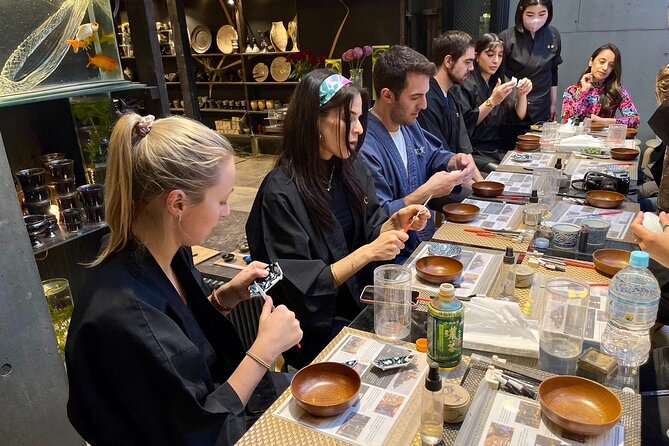
You might get the chance to meet Master Taku in the 11:00 AM class. The experience also notes that the owner and master artisan is often present in the atelier work.
Even if you do not catch Taku at your specific time slot, the lesson still feels personal because the group stays small. The experience is capped for a reason. It keeps the teaching practical, keeps the pace comfortable, and it reduces the common workshop problem where one person asks one question and everyone else loses time.
There is also a wider cap of 20 travelers for the full activity. In other words, you are not in an assembly line. You are in a craft space.
If you are the kind of traveler who likes seeing the person behind the craft, this is a strong fit. Tokyo has plenty of performances, but this is a quiet, skill-based kind of interaction, with real focus on the work.
Price and value: what you get for about $59.69
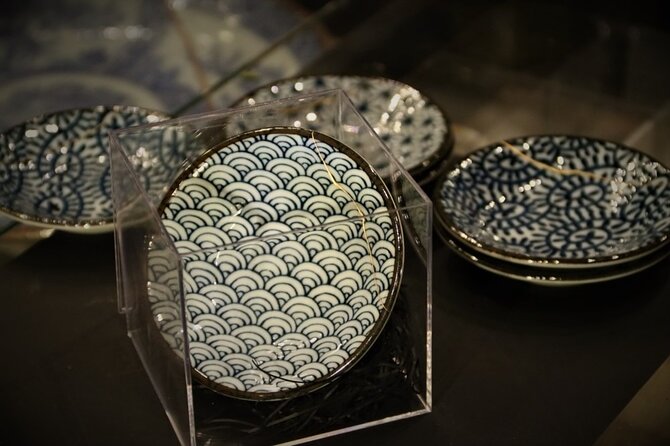
At $59.69 per person, this is not a bargain craft made with cheap supplies, and it is not a high-end private atelier either. It sits in the middle in a way that feels fair for what you receive.
Here is what your price covers: the lesson fee, the ceramic plate you use and take home, all necessary equipment, and all taxes, fees, and handling charges. That matters because many workshops quietly charge extra for materials or tools.
Also, the experience includes group discounts, and it runs long enough to matter. You are not paying just for a photo opportunity. You are paying for a guided repair with gold lacquer, in a capped setting where you actually get help.
If your goal is to buy an inexpensive souvenir, you will find cheaper. But if your goal is a souvenir with meaning and a real technique behind it, this is one of the more practical values in a Tokyo arts-and-crafts day.
Who should book this kintsugi workshop
This class is best for you if you want something creative but not intimidating. People repeatedly point out that the workshop is designed for beginners, and the process is easy to copy because it is taught clearly. It is also a nice choice if you like crafts that feel a little meditative. You spend time concentrating on careful work, not juggling a crowded itinerary.
It is also a great match if you care about cultural context. The philosophy part is not tacked on. It is part of the lesson, so you leave understanding why the gold is there and why the repaired lines are treated as beautiful.
It is not a great fit if you want to repair your own broken pottery. The studio plate is provided, and personal items are not allowed.
And it is not a fit for young kids. Under 6 years of age, you cannot enter the atelier due to safety reasons from the establishment. If you are traveling as a family with small kids, you will need an alternate plan for that age group.
Should you book this Tokyo Kintsugi experience?
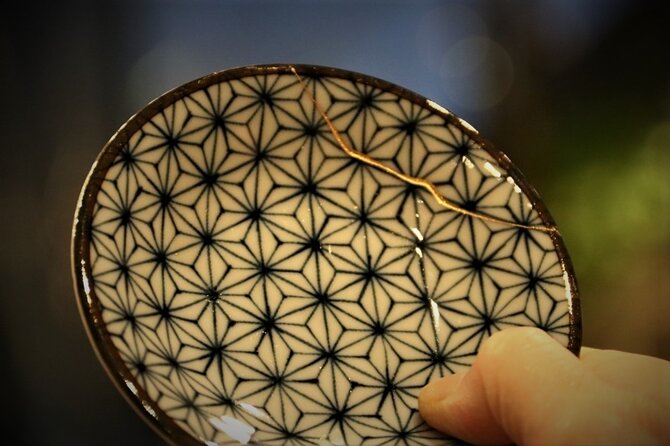
Yes, book it if you want a hands-on Tokyo craft with a real cultural idea behind it, and you want a souvenir you can carry home without stress. The combination of small-group instruction, a guided gold-lacquer repair, and a plate you get to take home makes the hour feel like more than a quick activity.
Skip it if your main goal is using your own ceramics, or if your schedule makes it hard to arrive on time at the studio. With small ateliers, punctuality helps everyone, and the location is not something you want to gamble on with zero buffer time.
If you like wabi-sabi thinking, thoughtful making, and learning a technique you can talk about for years, this is a strong choice.
FAQ
How long is the Kintsugi lesson?
The lesson runs about 1 hour (approx.).
Where does the experience start?
You meet at the TNCA Minami-Aoyama Studio, 3-chōme-8-2 Minamiaoyama, Minato City, Tokyo 107-0062, Japan. The activity ends back at the meeting point.
Is this class beginner-friendly?
Most travelers can participate, and the workshop is taught in a guided, step-by-step way with the studio providing the materials and equipment.
Can I repair my own broken pottery?
No. The studio provides a ceramic plate for the lesson, and personal items are not allowed.
Is there an age limit?
Yes. Under 6 years of age cannot enter the atelier due to safety reasons from the establishment.
Is the price refundable or changeable?
This experience is non-refundable and cannot be changed for any reason. If it is canceled because a minimum number of travelers is not met, you’ll be offered a different date or a full refund.
Newly listed around Tokyo
- Tokyo private transfer for Yokohama Port★ 4.5 · 63 reviews
- Tokyo Allstar Food Tour★ 4.5 · 206 reviews
- Luxury Kimono Photoshoot at Ginza Tokyo★ 5.0 · 7 reviews
- Tokyo Art Aquarium Museum E-Ticket with optional Tokyo Metro Pass★ 5.0 · 17 reviews
- Tokyo: Best Ginza Food Tour at 3 Local Eateries★ 5.0 · 83 reviews
- Private One Day Nikko Tour with Bilingual driver★ 3.5 · 11 reviews
- PRIVATE tour in 180SX to Daikoku+++++★ 5.0 · 6 reviews
- Kabuki Talk★ 5.0 · 10 reviews
Tokyo Tours, compared.

Mt Fuji and Hakone 1-Day Bus Tour Return by Bullet Train
Read our review →


teamLab Planets TOKYO Digital Art Museum Entry Ticket
Read our review →
Mt Fuji & Hakone Cruise, Drum Show Bullet Train 1 Day from Tokyo
Read our review →
Sumo Show Experience with Chicken Hot Pot and a Photo
Read our review →
Shinjuku Food Tour (13 Dishes at 4 Local Eateries)
Read our review →