
Review · SHRINE & TEMPLE VISITS
Koyasan: Half-Day Guided Tour of Okuno-in & Key Temples
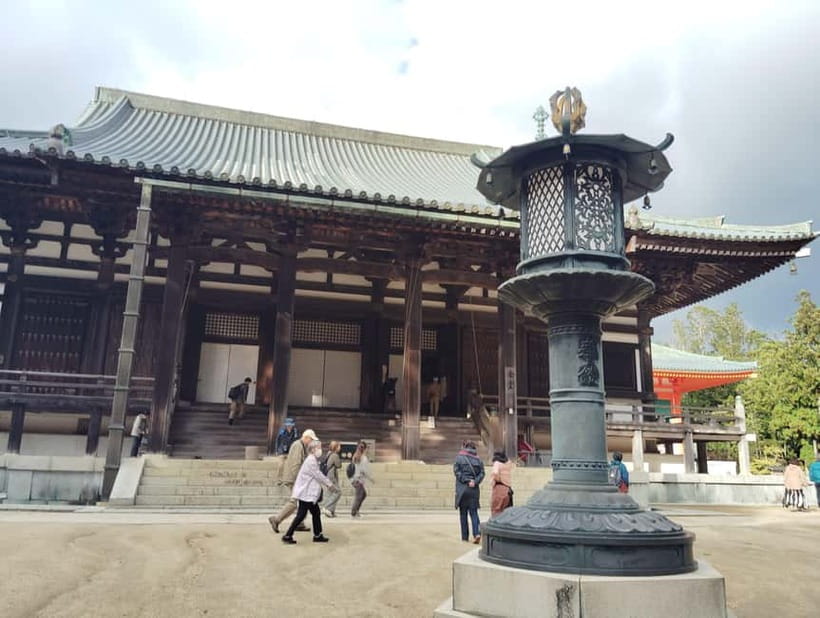
Koyasan feels like a different pace the moment you enter. I love how this tour threads together Okuno-in and the Kongobuji Temple with clear explanations, so the sites make sense instead of feeling like a checklist. The visit to Danjo Garan lands with real meaning, not just pretty scenery. One possible drawback: you will do a good amount of walking on uneven ground in a mountain setting, so it helps to plan for that.
This is a half-day tour that’s long on impact. It’s built around a tight route, includes temple admissions, and keeps you moving with a live English or Japanese guide. If you want Koyasan’s quiet, religious core without taking over your entire day, this is a strong choice.
In This Review
- Key highlights
- Koyasan in a tight 4 hours: what this half-day really delivers
- Start at Naka-no-hashi: how the meeting point shapes your first impressions
- Okuno-in inner sanctuary: the monk’s tomb, cedar shade, and quiet focus
- Kongobuji Temple: central authority, historic hospitality, and the architecture’s role
- Danjo Garan and the symbolic pagoda: ascetic practice at the center
- Timing, lunch on Mount Koya, and what to bring for comfort
- Price and value: why $128 can feel fair, and when it might not
- Who should book this Koyasan tour, and who should look elsewhere
- Should you book it? My practical take
- FAQ
- How long is the Koyasan half-day guided tour?
- What sites are included in the tour?
- What is the meeting point?
- Does the price include temple admissions?
- Are meals included?
- What languages are the guides?
- Is the tour private?
- Is flash photography allowed in the temples?
- Is this tour suitable for wheelchair users or mobility impairments?
Key highlights
- Okuno-in’s inner sanctuary mood, with mossy headstones, giant cedar trees, and the famous monk’s tomb area
- Kongobuji Temple access, including the central temple role and the interior where nobles were entertained
- Danjo Garan’s ascetic-practice focus, where you see Koyasan’s philosophy expressed in space and rituals
- The symbolic pagoda and core temple complex views, in the heart of Koyasan rather than the outskirts
- A private-group experience, so your questions and pace can actually matter
Koyasan in a tight 4 hours: what this half-day really delivers
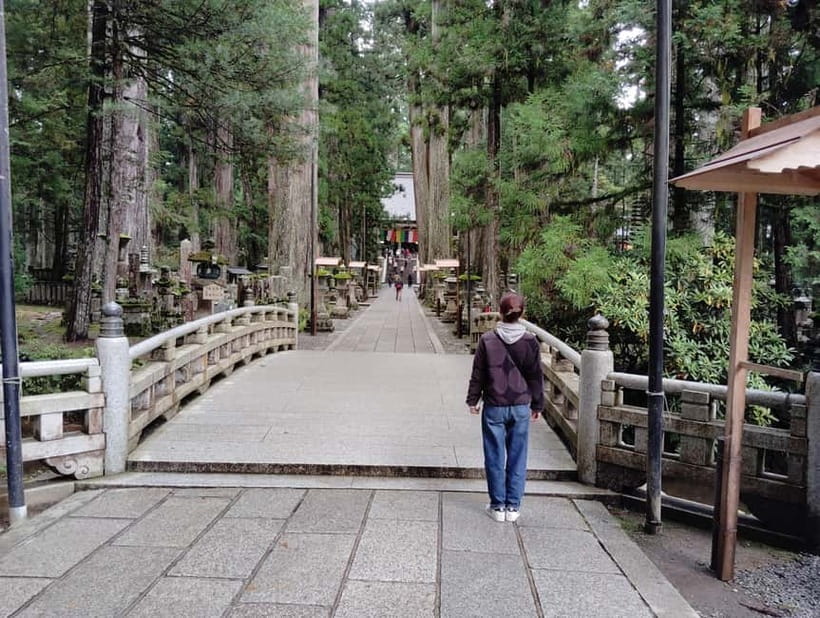
Koyasan is one of those places where the details are the story. This tour does a smart job of picking the spots that give you the full picture, starting with the quiet gravity of Okuno-in and ending at the core temple area tied to ascetic practices. You get temple time at each stop, plus a guide who helps you understand what you’re seeing.
I especially like that the route is built around meaning. Okuno-in is not just a cemetery, it’s an inner sanctuary with centuries of spiritual momentum. Kongobuji is not just a beautiful building, it’s the central temple that administers Koya Mountain. And Danjo Garan is where the practices and philosophy feel most alive in the space itself.
The tour is 4 hours total, and it stays practical. There’s a short bus ride between areas, and there’s a dedicated lunch window on Mount Koya, so you are not trying to eat in between temple crowds.
More Shrine and Temple visits in Japan:
- Kyoto: Fushimi Inari, Kinkakuji, Bamboo Grove 1 Day Bus Tour
★ 4.8 · 4,316 reviews - Kyoto: Tea Ceremony Ju-An at Jotokuji Temple
★ 4.9 · 3,207 reviews - Tokyo: Meiji Shrine, Asakusa, Skytree Bus Tour and Cruise
★ 4.7 · 1,986 reviews
Start at Naka-no-hashi: how the meeting point shapes your first impressions
You begin at the public restroom in front of the Naka-no-hashi bus stop. It’s a useful detail because Koyasan can feel confusing when you first arrive, and a clear starting spot reduces stress. Your guide will be holding a yellow sign with the DeepExperience logo, which helps you spot them quickly.
Once you’re together, the tone is set fast. You are not just handed directions. The guide frames what you’re about to see, which helps you pick up the symbolism as you walk. This matters at Koyasan, because a lot of visitors get distracted by “cool things to photograph” and miss what those things mean.
If you’re the kind of traveler who likes to arrive slightly early, I’d do that. Being on time helps because you want your energy for the first walking stretch, especially if the weather cools down on the mountain.
Okuno-in inner sanctuary: the monk’s tomb, cedar shade, and quiet focus
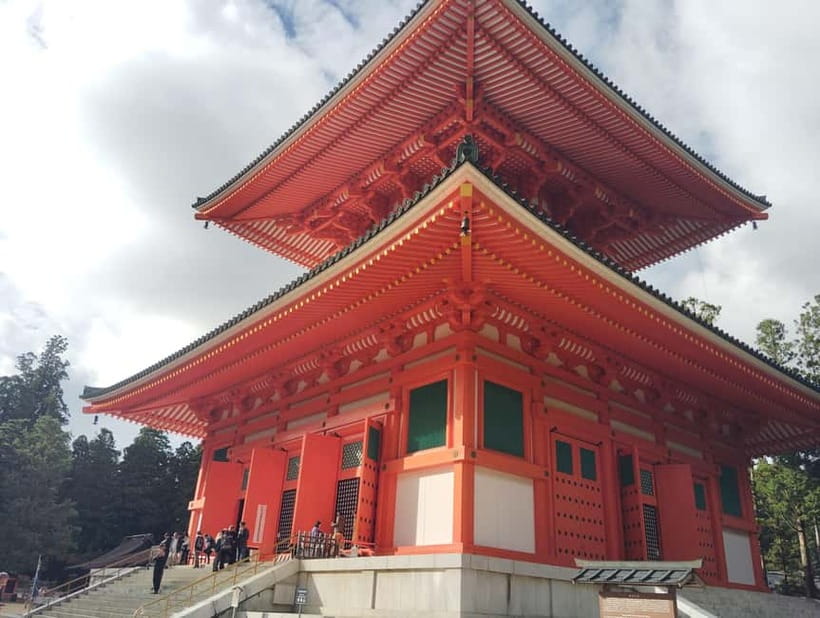
Okuno-in is the heart of the experience for a lot of people, and for good reason. You step into a calm, mossy atmosphere where the headstones feel softened by time, and the giant cedars do their own quiet work overhead. This is where Koyasan’s sacred mood becomes real.
The most famous draw is the area connected to a monk said to have continued meditating about 1,000 years ago. Even if you don’t know the fine details of the story, you can feel why that legend matters. The tomb tradition around him is designed for people who want to sleep near that spiritual presence, so the atmosphere is meant to be hushed and reflective.
On this stop, you get 75 minutes with a guided visit, which is enough time to actually slow down. You are not rushed through the highlights. Instead, your guide points out key features of the sanctuary so you understand what you’re looking at as you move under those massive trees.
Photography rules are part of the atmosphere here. Flash photography is not allowed, and you will want to keep your phone use respectful. If you’re photographing, take a breath first, then shoot. That little pause keeps the experience from feeling like a mad dash.
Kongobuji Temple: central authority, historic hospitality, and the architecture’s role
After Okuno-in, the tour shifts from quiet sanctuary to institutional center with a short coach ride. Kongobuji Temple is the central temple that administers Koya Mountain, so it gives you the “how this all works” layer.
You’ll spend about 1 hour here with a guided visit. This is where the architecture and interior details start to make more sense, because you understand the temple’s administrative and cultural role. The tour also highlights that many monks once lived here, and the interior was used to entertain nobles when they visited Koyasan.
I like stops like this because they correct a common mistake. At religious sites, it’s easy to treat everything as purely ceremonial. Kongobuji reminds you that places like Koyasan were also organized communities, with structure and relationships. That context makes the other areas feel less like random points of interest and more like part of a living system.
Look for how the guide explains what each area is meant for. Even if some details are new to you, the explanation helps you notice patterns in the space, and that’s what turns a “pretty temple visit” into an informed one.
A few more Japan days to weigh up
- Tokyo 6hr Private Tour with Government-Licensed Guide
★ 5.0 · 3,902 reviews - Tokyo: Shinjuku Local Bar and Izakaya Guided Walking Tour
★ 4.9 · 1,794 reviews - Tokyo: Private City Highlights Tour with Local Guide
★ 4.8 · 1,433 reviews - Kyoto Early Morning Tour with English-Speaking Guide
★ 5.0 · 1,427 reviews
Danjo Garan and the symbolic pagoda: ascetic practice at the center
The final major stop is Danjo Garan, described as the center of Koyasan’s ascetic practices. This is where the tour’s storyline comes together. Okuno-in gives you quiet presence. Kongobuji gives you organization and tradition. Danjo Garan shows you the practices and philosophy that tie everything to daily devotion and disciplined training.
You get about 50 minutes at Danjo Garan, and it’s a strong ending. The area includes Koyasan’s symbolic pagoda and other key attractions within the core heart of the mountain complex. The goal here is not just to see buildings. The goal is to understand that Koyasan’s spiritual life is focused, intentional, and still connected to ancient beliefs.
Also, ending around the temple complex area tied to Danjo Garan helps you wrap your head around the whole visit. You’re not leaving before it fully lands. You finish with the feeling that this is not a museum of Buddhism. It’s a continuing tradition.
A practical tip: save your toughest questions for this last stop. If the guide has been answering as you go, you’ll have better context by now, and your questions will get more satisfying answers.
Timing, lunch on Mount Koya, and what to bring for comfort
This is a mountain day, even though it’s only half-day. Between temple walks, you have a lunch window on Mount Koya lasting about 40 minutes. You are also given guidance to plan for limited food purchasing options, so it’s smart to bring water and, if you like, a snack to tide you over.
What to bring is simple, but don’t treat it like a suggestion. The tour recommends comfortable shoes, warm clothing, a camera, water, and insect repellent. I’d add one more practical thought: keep your hands free. If you’re carrying a bag or camera strap, you’ll feel it more on uneven paths and temple steps.
Weather is a big deal here. Koyasan can be cooler than the city, and you’ll walk enough that you’ll notice the temperature shift. Layering is the move. You want to be warm when you stop and not overheating when you’re moving.
Rules matter too. Smoking is not allowed, and flash photography is off the table. These aren’t just “polite” reminders. They help preserve the sacred atmosphere and keep the tour moving smoothly through sensitive spaces.
Price and value: why $128 can feel fair, and when it might not
At $128 per person for about 4 hours, this tour sits in the “you’re paying for guidance and temple access” category. That price is easier to justify because admissions are included for Okuno-in, Kongobuji Temple, and Danjo Garan, and you’re also paying for a professional guide.
If you’re someone who wants to go beyond wandering, the value gets stronger. A guide helps you interpret what you see at each stop, and that’s where Koyasan turns from impressive to meaningful. The private-group format also matters. You’re not fighting for time to ask questions, and the guide can handle your pace.
What might make it less ideal is if you mainly want a quiet self-guided walk with no explanation. In that case, you could spend less and build your own route. But if you want the full storyline, with context for the monk tomb area, the central administration role at Kongobuji, and ascetic practice at Danjo Garan, this half-day structure is a good deal.
One more small value point: the tour includes a short bus ride and a timed lunch break. That reduces the mental load, especially if you’re navigating Koyasan for the first time.
Who should book this Koyasan tour, and who should look elsewhere
This fits best if you want a focused, high-impact introduction to Koyasan. I’d especially recommend it if you like:
- Religious sites with strong context, not just photos
- Guides who answer questions and help you notice details
- A half-day plan that covers multiple key areas without feeling like you’re rushing
It’s not suitable for people with mobility impairments or wheelchair users, since there is a lot of walking on uneven surfaces.
Also, if you hate group logistics and prefer total freedom, the private-group format helps, but you still have a fixed route and timing. This is guided time, not open-ended wandering.
If you’re planning a winter visit, the warm clothing tip is not optional. December and similar months can feel colder on the mountain, and your comfort will affect how much you enjoy those cedar-shaded paths.
Should you book it? My practical take
Book this tour if you want Koyasan’s most important spiritual stops in one clean half-day, with a guide who makes the meaning click. The big win for me is the progression from Okuno-in’s monk-tomb sanctuary to Kongobuji’s central temple role to Danjo Garan’s ascetic-practice heart. That arc is what makes the time feel efficient and satisfying.
Skip it or reconsider if you’re very mobility limited, or if you’d rather explore on your own and don’t care about guided interpretation. In Koyasan, self-guided walking can be beautiful, but the real advantage of this particular tour is that it helps you understand why each place matters.
If you want a Koyasan day that feels calm, informed, and well-paced, this is the kind of half-day plan you’ll be grateful you chose.
FAQ
How long is the Koyasan half-day guided tour?
The tour duration is 4 hours.
What sites are included in the tour?
You visit Okuno-in, Kongobuji Temple, and the Danjo Garan area.
What is the meeting point?
Meet at the public restroom in front of the Naka-no-hashi bus stop. The guide will be holding a yellow sign with the DeepExperience logo.
Does the price include temple admissions?
Yes. Admission to Okuno-in, Kongobuji Temple, and Danjo Garan is included.
Are meals included?
No. Meals and beverages are not included, though there is a lunch window during the tour.
What languages are the guides?
The live tour guide is available in English and Japanese.
Is the tour private?
Yes, it is listed as a private group.
Is flash photography allowed in the temples?
Flash photography is not allowed.
Is this tour suitable for wheelchair users or mobility impairments?
No, it is not suitable for people with mobility impairments or wheelchair users.
Newly listed around Japan
- Kowakien Yunessun Hot Springs Entry Ticket★ 4.2 · 23 reviews
- Kumamoto : Iconic Statues World of Pirates Adventure Tour★ 5.0 · 7 reviews
- Kumamoto: Castle Admission Ticket★ 5.0 · 6 reviews
- Kobe: Sake Brewery Tour with Tasting Sake★ 4.7 · 9 reviews
- Kobe: Urban Aquarium AQUARIUM×ART átoa Entry Ticket★ 4.9 · 20 reviews
- Kobe Private Food Tour with Local Guide★ 4.6 · 9 reviews
- Kobe: Sake Brewery Tour with Tasting and Kobe Beef Bites★ 5.0 · 11 reviews
- Kobe: Guided Tour of Nunobiki Waterfalls and Herb Garden★ 5.0 · 11 reviews
Shrine & Temple Visits, compared.
Fushimi Inari, Kinkakuji, Bamboo Grove 1 Day Bus Tour
Read our review →
Meiji Shrine, Asakusa, Skytree Bus Tour and Cruise
Read our review →
Fushimi Inari Hidden Hiking Tour (Private Option Available)
Read our review →
Osaka/Kyoto:Kinkakuji,Arashiyama,FushimiInariShrine,NaraPark
Read our review →
Asakusa Walking Tour with Sensoji Temple Visit
Read our review →
Nikko: Kegon Falls, Lake Chuzenji & Toshogu Temple
Read our review →
Kamakura & Enoshima Day Trip including Temple Tickets
Read our review →Browse the lists this tour appears in