
Review · SHRINE & TEMPLE VISITS
Make a temple stamp book with artist
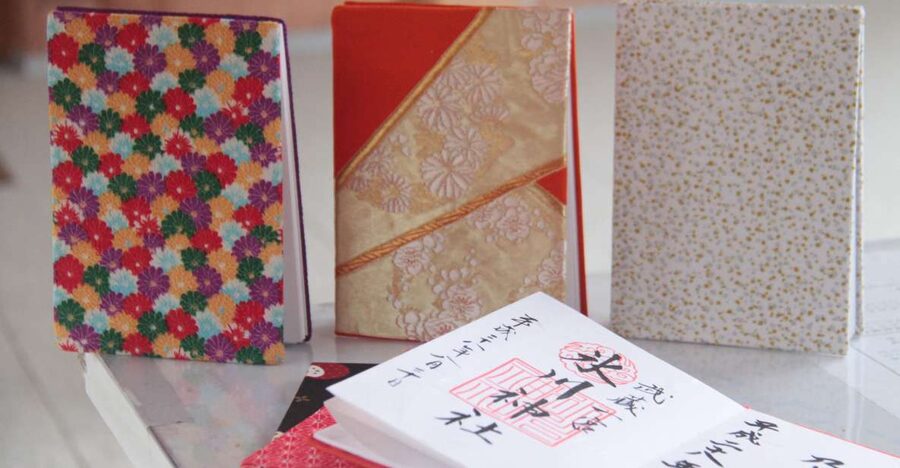
A temple stamp book can sound simple, but this workshop turns it into a real hands on Japan moment. You start by picking from 100-plus kimono fabrics to design your own goshuin notebook, then you learn how to visit a shrine properly before stamping it for the first time. It is also handy that everything happens near popular sights around Shibuya.
Two things I really like: you get creative control at the start, and the instruction is practical, not just cultural storytelling. Chikako Oshiro teaches the process of folding and gluing so you leave with a booklet that is meant to be used.
One consideration: you do need a bit of mobility, since the route to the classroom and shrine involves about 10 steps and it runs rain or shine. Also, while the workshop fee is included, the stamp fee at the shrine is not, so plan for that extra cost.
In This Review
- Key things to know before you go
- Designing Your Goshuin Notebook With Real Fabric Choices
- From Blank Pages to a Goshuin Notebook You Can Use
- Learning Shrine Etiquette, Not Just How to Take a Photo
- The Shrine Visit for Your First Stamp
- Getting There Near Shibuya, and How the 2 Hours Feel
- Price and Value: What $38 Really Buys
- Who Should Book This Goshuin Workshop?
- Should You Book Chikako Oshiro’s Goshuin Workshop?
- FAQ
- How long is the workshop?
- Is the experience rain or shine?
- What is included in the $38 price?
- What is not included?
- What language is the instructor?
- How big is the group?
- Where do I meet the instructor?
- Is it suitable for young children?
Key things to know before you go
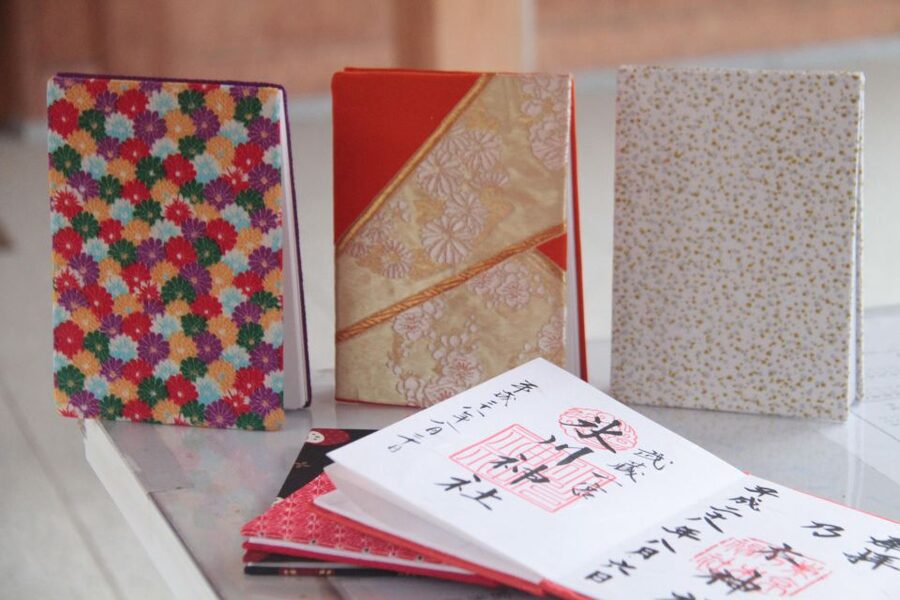
- Over 100 kimono fabrics let you build a goshuin notebook that actually looks like you picked it, because you did
- Folding and gluing training so your book is assembled the proper way, ready for stamps
- Formal shrine etiquette coaching so your first goshuin feels right, not awkward
- Small group up to 8 people, which makes questions easy and pace comfortable
- A local shrine visit for your first stamp, turning craft into a real trip memory
- Rain or shine timing with a short walk that includes about 10 steps
Designing Your Goshuin Notebook With Real Fabric Choices
If you like the idea of collecting goshuin but want more than a quick stop, this format makes sense fast. You begin in the workshop area with a large selection of kimono fabrics, and the choice you make shapes the whole feel of your notebook. This is not just picking a pattern to match a photo, it is part of how your goshuin story starts.
Chikako Oshiro leads you through the materials and guides you to select fabrics you genuinely like. The best part for me is that the fabrics give your notebook personality on day one, so you are not leaving with a generic craft item. One neat bonus from the experience feedback is that the teaching includes meaning behind what you are seeing, so your fabric choices feel more grounded in tradition.
If you are the type who enjoys small decisions that make a souvenir more personal, you will enjoy this section. It is also a good way to calm the pace of a busy Tokyo day, since Shibuya area sightseeing can be intense and loud.
More Shrine & Temple Visits in Tokyo
- Tokyo: Meiji Shrine, Asakusa, Skytree Bus Tour and Cruise
★ 4.7 · 1,986 reviews - Tokyo: Asakusa Walking Tour with Sensoji Temple Visit
★ 4.8 · 1,583 reviews - Nikko: Kegon Falls, Lake Chuzenji & Toshogu Temple
★ 4.6 · 1,577 reviews
From Blank Pages to a Goshuin Notebook You Can Use
Once you choose your fabrics, the workshop shifts into making. You learn how to assemble a goshuin notebook the proper way, using folding and gluing so the papers hold up to the stamp process. This is exactly the kind of skill that makes the activity feel worth it, because you are building something functional.
You are taught the process step by step, which matters when you are working with paper and glue in a short 2-hour window. The group stays small, capped at 8 participants, so it is easier to get help while you are in the middle of crafting rather than at the end.
You will also decorate and finish your booklet as part of the experience. That part is key, because goshuin books are meant to be used repeatedly as your journey continues. A detail I appreciate from the experience feedback is that instructors provide extra glue for later, which helps if you collect more stamps after the workshop. That small practical touch can save you from a frustrating repair later.
Learning Shrine Etiquette, Not Just How to Take a Photo
The goshuin part is only half the story. The other half is learning how to visit a shrine formally, which is where this workshop adds real value beyond crafts.
Chikako Oshiro teaches you what to do and how to do it, so your first stamping moment follows the expected flow. You learn the basics of how shrine visits are typically done, including how to behave so you do not feel like you are improvising on the spot.
This matters because goshuin are personal and ritual-based. If you rush in without understanding, the experience can feel like stamp collecting with guesswork. Here, you get enough guidance that you can focus on the moment instead of worrying about whether you are doing it right.
Also, the instruction includes stories and context about goshuin stamps and the role of shrines. That extra background helps the activity click, especially if you are new to Japanese shrine culture. You end up with both the artifact and the why behind it.
The Shrine Visit for Your First Stamp
After your notebook is made, you head out to a local shrine for your very first goshuin stamp. This is the part that turns the workshop from a standalone craft session into something that feels connected to your trip.
Your shrine visit is led with the etiquette coaching in mind. That means you are not just walking into a shrine and hoping it goes smoothly. You should expect to collect one first stamp to start your goshuin notebook, and you will likely feel more confident than if you had done this on your own without training.
One practical point: the stamp fee at the shrine is not included in the workshop price. You will need to budget for that once you arrive. Plan to bring cash just in case, since small shrine transactions are often easiest with on hand payment.
If you are pairing this with sightseeing around Shibuya, the shrine stop is a smart way to add cultural depth without losing an entire day. You get an experience that is rooted in routine, not a staged tourist performance.
More Shrine and Temple visits in Tokyo:
- Tokyo: Nikko Toshogu Shrine and Kegon Waterfall Tour
★ 4.5 · 1,266 reviews - Tokyo Panoramic 1 Day: Meiji Shrine, Asakusa, Odaiba and SKYTREE®
★ 4.5 · 1,222 reviews - Asakusa Senso-ji Temple and Old Tokyo Walking Tour
★ 5.0 · 560 reviews - Tokyo: Zen Meditation at a Private Temple with a Monk
★ 5.0 · 510 reviews
Getting There Near Shibuya, and How the 2 Hours Feel
This workshop is designed to fit into a day that already includes Tokyo landmarks. The meeting point is in front of the entrance located between a drug store and Cozy Corner, the cake shop. It is a simple landmark style meeting spot, which is helpful when you are navigating busy streets.
The total duration is 2 hours, so expect a steady pace: fabric choice, crafting, then instruction and the shrine visit. Because the schedule is tight, you will want to arrive on time and ready to work. If you are the type to wander into side streets, set a buffer so you do not compress the start.
The experience runs rain or shine. That is great if you want less weather stress, but it also means you should wear shoes you can handle for a short walk. There are about 10 steps involved to reach the classroom and shrine area, so this is not ideal if you have mobility impairments.
A big advantage is the small group size, limited to 8 participants. In practice, that means you are more likely to get hands on help and clearer answers, especially when you hit glue, folding, or placement questions.
Price and Value: What $38 Really Buys
At $38 per person, this is not a cheap craft class, but it is also not priced like a high end private tour. The value comes from what is included: your workshop fee for making the goshuin notebook and the guided shrine visit coaching.
You are paying for three things at once:
- Hands on fabrication instruction (folding, gluing, finishing)
- Organized fabric access (over 100 kimono fabrics to choose from)
- A guided shrine visit so you can collect your first stamp properly
The main extra cost to expect is the stamp fee at the shrine. Other than that, the experience provides what you need for the workshop, and one account notes the instructor even provides extra glue for later reminders of stamps. That sort of “small help” can be the difference between a souvenir you admire once and a book you keep using.
If you are planning to collect goshuin during your trip anyway, this workshop can be a smart starting move. You get your notebook made correctly and you learn etiquette at the same time, so your later shrine visits feel simpler.
Who Should Book This Goshuin Workshop?
This workshop fits best if you want something practical and meaningful, not just a photo stop. It is perfect for first-timers who want to understand shrine manners and leave with a functional goshuin notebook.
You will likely enjoy it if:
- You like hands on activities and want to build a souvenir you can use
- You care about doing shrine rituals respectfully
- You want a small group experience instead of a big tour
- You are visiting Shibuya and want a cultural add-on close by
It is not suitable for children under 3 years. And if mobility is a concern, keep in mind the route involves about 10 steps and you will be moving between the classroom and shrine, rain or shine.
If you already know everything about goshuin etiquette and you just want stamps, you might find a self guided approach cheaper. But if you want the full “make it, learn it, stamp it” package, this is a strong choice.
Should You Book Chikako Oshiro’s Goshuin Workshop?
I would book it if you want your first goshuin experience to feel guided and calm. The combination of fabric choice, guided assembly of the notebook, and etiquette teaching makes it more than a craft. You end with a usable goshuin book and confidence for what comes next.
I would think twice if you are on a strict budget once you factor in the stamp fee at the shrine. I would also choose another option if stairs and short walking in the rain are tough for you.
If you are staying near Shibuya and want an experience that feels grounded in Japanese tradition, this workshop is a great fit. It turns a small collection habit into a story you can hold, page by page.
FAQ
How long is the workshop?
The workshop lasts about 2 hours.
Is the experience rain or shine?
Yes, it runs rain or shine.
What is included in the $38 price?
The workshop fee is included.
What is not included?
The stamp fee at the shrine is not included.
What language is the instructor?
The instructor speaks English.
How big is the group?
It is a small group limited to 8 participants.
Where do I meet the instructor?
Meet in front of the entrance located between a drug store and Cozy Corner (cake shop).
Is it suitable for young children?
It is not suitable for children under 3 years.
Newly listed around Tokyo
- Made from flour in 30min! Ramen-noodle Making Experience!★ 4.8 · 24 reviews
- LGBTQ+ Tokyo Then and Now★ 4.9 · 44 reviews
- TOKYO DRIFT 5.0 Real Fast & Furious Experience★ 4.9 · 59 reviews
- Kyoto: Nijo Castle World Heritage Guided Tour with Admission★ 4.9 · 37 reviews
- Kintsugi Experience with Arita Ware in Tokyo (English Guide)★ 4.8 · 20 reviews
- Asakusa Kimono/Yukata Rental & Photography_Tsutsuji★ 5.0 · 12 reviews
- Kawagoe Private Custom Tour with Local Guide★ 5.0 · 29 reviews
- Kamakura Temples Private Guided Tour from Tokyo★ 4.8 · 21 reviews
Shrine & Temple Visits, compared.
Fushimi Inari, Kinkakuji, Bamboo Grove 1 Day Bus Tour
Read our review →
Meiji Shrine, Asakusa, Skytree Bus Tour and Cruise
Read our review →
Fushimi Inari Hidden Hiking Tour (Private Option Available)
Read our review →
Osaka/Kyoto:Kinkakuji,Arashiyama,FushimiInariShrine,NaraPark
Read our review →
Asakusa Walking Tour with Sensoji Temple Visit
Read our review →
Nikko: Kegon Falls, Lake Chuzenji & Toshogu Temple
Read our review →
Kamakura & Enoshima Day Trip including Temple Tickets
Read our review →Browse the lists this tour appears in