
Review · WALKING TOURS
Miyako Island: Stars & Jungle Night Walking Tour
Night in Miyako is when nature wakes up. I love the night jungle walk and the chance to spot island life, from coconut crabs to smaller nocturnal surprises, and I especially like the stargazing when skies are clear. My only caution is that animal and star sightings are not guaranteed, and a bright moon can mute the sky.
You start off by meeting at the Kurima Island Center parking area, then you head into the dark with a flashlight. I also like that the tour is set up for a wide age range, ages 3 to 65, so you can bring kids without turning it into an all-adult party.
If you are pregnant, under 3, or you have a chronic condition, this tour is not for you. It is also not suitable for wheelchair users or for people over 65, and you should think twice if you have back or heart problems or a serious fear of the dark.
In This Review
- Key takeaways
- A 90-minute night walk in Miyakojima’s Imgya Park
- Price and timing, what $31 really covers
- Meeting at Kurima Island Center and the walk to Tako Park
- Coconut crab dreams, island creatures, and what not to expect
- Stargazing under limited light pollution, moon makes the difference
- What you need to bring, plus the rules that keep it safe
- Language on the ground, why it can change your experience
- Who this tour suits, and who should skip it
- My value check: worth it if you go in the right mindset
- Should you book the Miyako Island Stars and Jungle Night Walking Tour?
- FAQ
- Where is the meeting point for the tour?
- How long is the tour?
- What age range is this tour suitable for?
- Does the tour guarantee animal sightings or stargazing?
- Does the tour run in rain?
- What language is the tour in?
- What should I bring and what is not allowed?
Key takeaways
- Coconut crab sightings are the big moment, but you cannot count on it every night
- Low light pollution stargazing is a real draw when conditions line up, but the moon matters
- A guided night walk through subtropical jungle gets you looking for creatures you would miss in daylight
- Guide language can vary, so expect either Japanese or English depending on the day
- No toilets on site, so plan a quick stop before you go
- Rules are strict about touching, which is good for wildlife and good for your peace of mind
A 90-minute night walk in Miyakojima’s Imgya Park
This tour is basically two experiences that work together: a guided walk through Miyakojima’s subtropical jungle after dark, plus a chance to look up at the stars. It runs 90 minutes, which is short enough to feel doable even for kids, but long enough to make the night feel real, not rushed.
The setting is the key. Miyako is far enough from big city light that the sky can look different from what you are used to. At the same time, once you get into the park, your focus shifts from scenery to spotting life. In the dark, you notice motion, sound, and movement patterns more than color, and that changes the whole mood of the island.
What makes it “tour-worthy” is the structure. You are not just wandering. You follow a guide who knows what to look for in this ecosystem. Guides you might meet include Kyoka and Hinata, and both names come up in ways that suggest personality plus solid interpretation. That matters because the success of a night walk often depends on where you stand and what you are curious about.
One more honest point: you will be walking on uneven ground, so comfortable shoes matter. And you will spend time looking down, so no, it is not a fashion show.
More Evening Tours in Okinawa
- Ishigaki: Jungle Walk and Stargazing Night Tour
★ 4.5 · 149 reviews - Okinawa Ishigaki Island Night Starry sky and Jungle night tour
★ 4.5 · 132 reviews - Okinawa Miyako Star Gazing & Subtropical Jungle Night Tour
★ 5.0 · 97 reviews
Price and timing, what $31 really covers
At about $31 per person for 90 minutes, you are paying for more than “a walk at night.” You are paying for a guide, nighttime lights, and the safety structure that comes with a planned group outing in a wildlife area.
Here is what is included in the value:
- A live guide
- Nighttime walking tour support, including light
- Liability insurance
Transportation is not included, which is a big deal for island touring. The tour meets at a specific parking location, so you need a way to get there. If you are already in the right area, the price looks fair. If you need extra rides just to reach the start, you may feel it in your overall budget.
Timing also matters. Start and end times can shift depending on the season and field conditions. The tour also runs even in light rain, which is helpful for planning, but it also means you should expect the ground to be damp and the experience to feel different than a perfectly dry night.
Meeting at Kurima Island Center and the walk to Tako Park
You meet at the parking lot in front of Kurima Island Center. The tour then moves into the park area for roughly an hour of walking before you loop back to the same meeting point.
That simple round-trip format is useful. It keeps the logistics easy because you are not trying to find your way out of a dark place on your own. You also stay close to the start, which helps if someone in your group is tired or anxious about the dark.
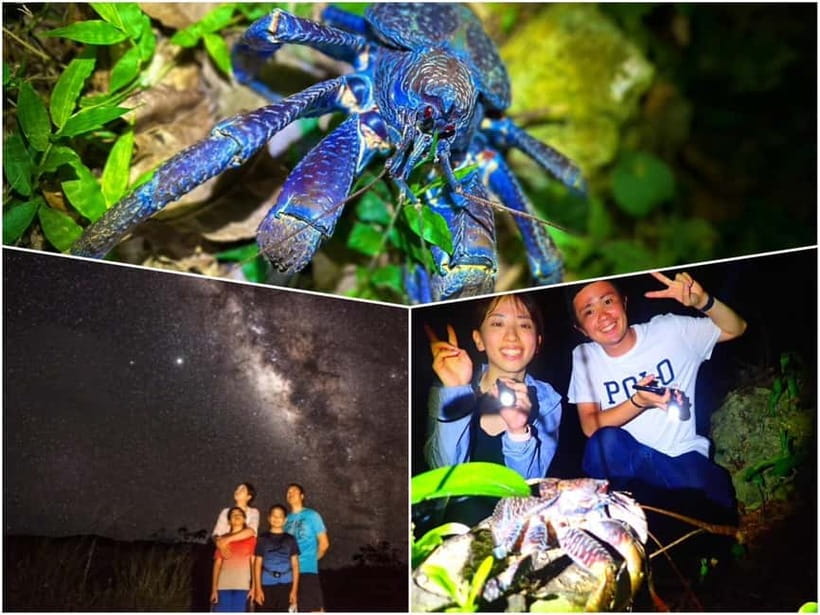
The walk itself is where you earn the fun. You get a flashlight and move along as the guide talks about what is active at night in Miyako’s subtropical ecosystem. Because it is nighttime, the “path” is not just about getting from point A to point B. It becomes a guided observation route.
Also, plan for the fact that you might share the trail space with other groups. If there are multiple night tours running, you can end up waiting at turns or stops while everyone keeps pace. It is not a deal-breaker, but it can make the experience feel a little less intimate.
Coconut crab dreams, island creatures, and what not to expect
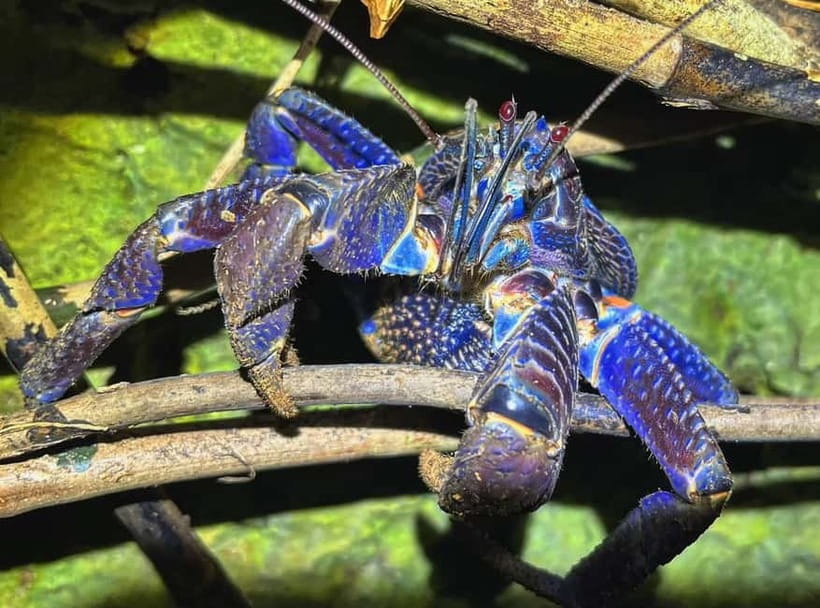
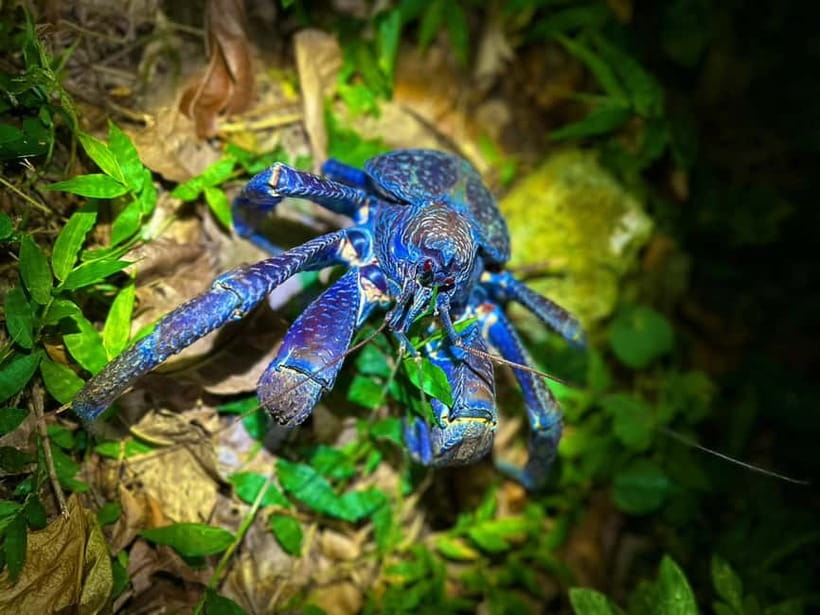
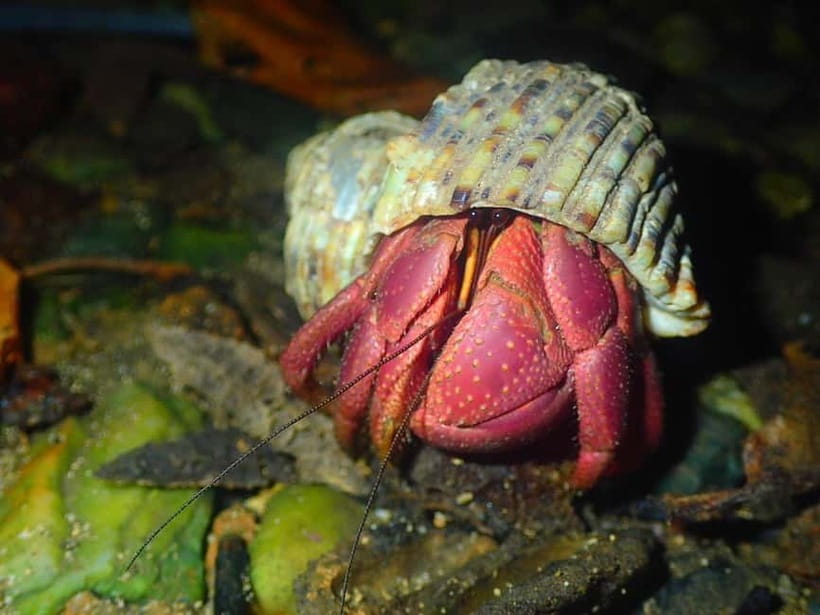
The headline creature is the coconut crab. It is a legend-level animal, and when you hear it mentioned in a Miyako night walk, you instantly understand why people sign up. This tour explicitly sets you up to search for island-specific creatures, including the coconut crab.
But I would not plan your night like you are guaranteed to see one. The tour is clear about this: wildlife sightings cannot be guaranteed, and what you can see will vary.
That variability is not a failure. It is the whole reality of a wildlife night. Animals show up based on their own schedules, the weather, and what is happening in that patch of jungle that night.
Still, you can stack the odds in your favor by going in with the right mindset:
- Expect lots of looking, not lots of certainty
- Stay patient if the guide slows down for scanning or listening
- Be ready for surprises that are not the coconut crab
- Follow the rules about not touching animals or plants
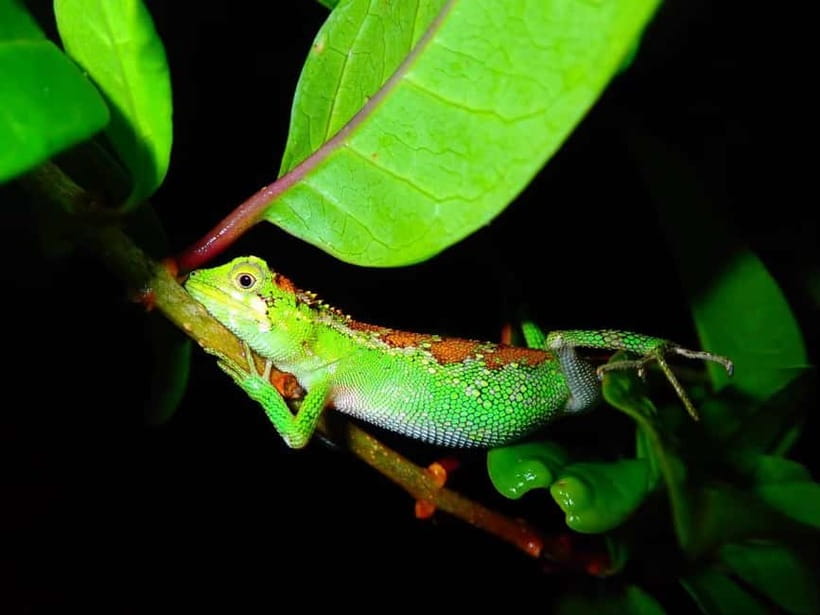
One thing to keep in mind, especially if you dislike webs: some nights can be spider-heavy. The tour discourages touching, so you are meant to observe rather than interact, but you may still see webs very close to the path. So yes, you will likely look where you put your feet more than you want to.
In the best-case scenario, the guide helps you spot movement and patterns you would miss solo. In the less-great scenario, you might feel like you spotted most things yourself. That often comes down to guide communication that night, especially if your group language expectations are not aligned.
A few more Okinawa days to weigh up
- Kyoto Geisha Walking Tour: Gion District & Hidden Gems
★ 4.7 · 3,273 reviews - Tokyo Tsukiji Fish Market Food and Culture Walking Tour
★ 5.0 · 3,184 reviews - Kyoto: Gion Geisha District Walking Tour – Stories of Geisha
★ 4.7 · 2,187 reviews - Night Walk in Gion: Kyoto’s Geisha District
★ 4.5 · 2,003 reviews
Stargazing under limited light pollution, moon makes the difference
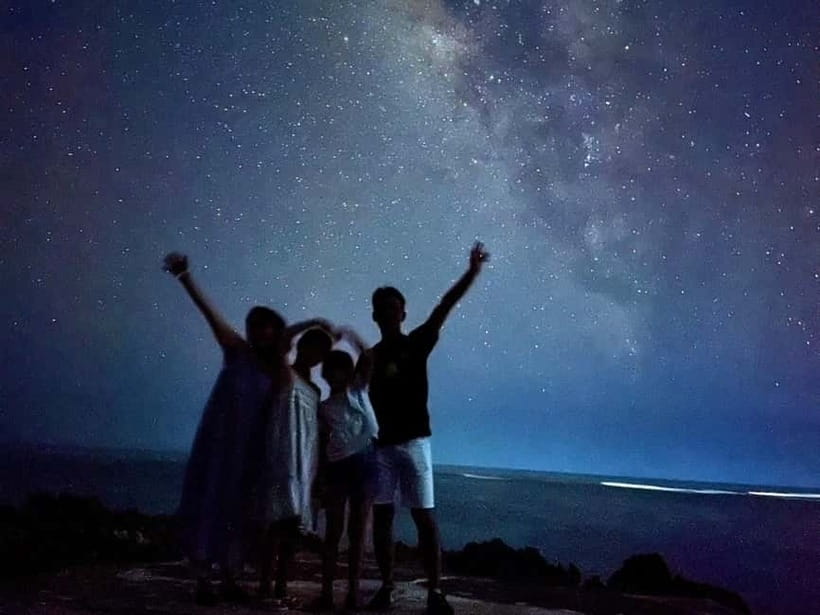
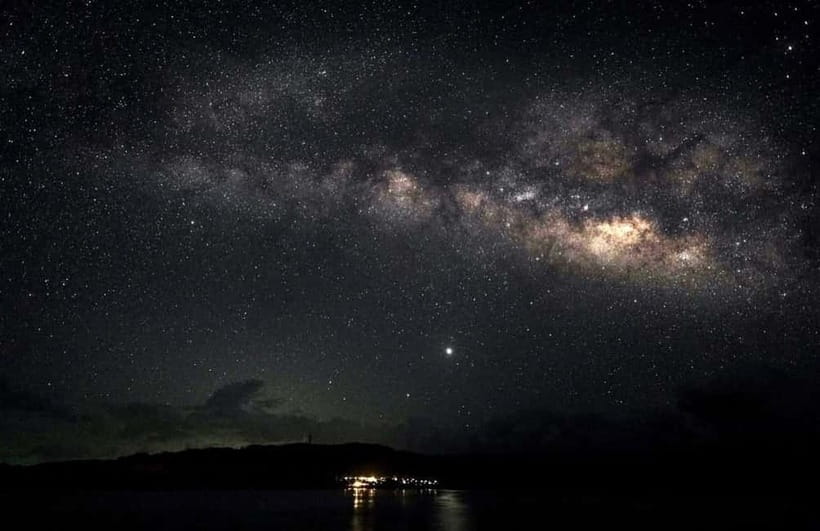
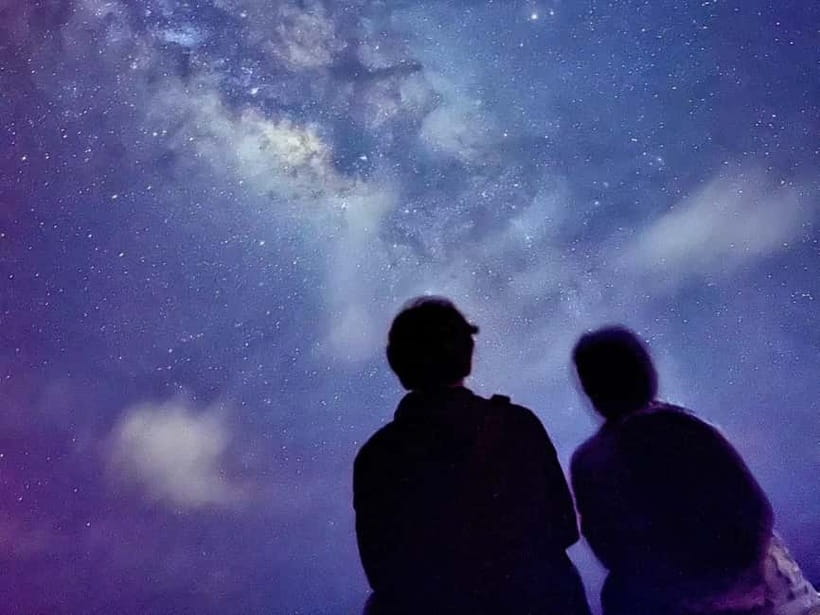
After the walk, the sky is the payoff. Miyakojima’s lower light pollution can make stars look sharper and more plentiful than you get near big cities. On a clear night, it can feel like you are inside the dark instead of just standing under it.
However, this is not a planetarium promise. Star visibility varies from night to night, and it is explicitly not guaranteed. The moon can be the swing factor. If the moon is bright, it can wash out the stars even when the sky is clear.
A practical way to think about it: treat stargazing as the potential bonus, not the core event. The night walk is the dependable part. If you happen to get a great sky, great. If you get a moon-bright night, you will still have your creature hunt and the guided night atmosphere.
If you care about the stars, bring that curiosity with you during the walk. The guide will often explain what the night sky means and how it connects to the island’s night rhythm. But if you are not lucky with conditions, you still leave with a better sense of how Miyako looks after dark.
What you need to bring, plus the rules that keep it safe
This tour gives you light, but you should still prepare like you are heading into an outdoor nature area in the dark. The essentials list is straightforward:
- Comfortable shoes
- Water
- Insect repellent
- Flashlight
Also, use the restroom before you arrive. There are no toilets on site. That is the kind of detail that can ruin a night if you forget.
The rules are also clear, and they are there for a reason:
- No smoking
- No alcohol or drugs
- No littering
- No touching animals
- No touching plants
- No baby carriages
You cannot treat this as a casual “hands-on wildlife” experience. You are meant to observe from a safe distance. And because the guide controls the route, sticking to the plan keeps you and the animals safer.
One more safety note that affects your comfort: this tour is suitable for ages 3 to 65, but it is not for people with back problems, heart problems, chronic medical conditions, or fear of the dark or confined spaces without checking first. Even if you are healthy, the pace and uneven ground are worth thinking about.
Language on the ground, why it can change your experience
The tour is offered in Japanese or English. The important catch is that it may be conducted in Japanese only depending on the day’s reservations.
That can change your whole experience. If you speak English, you are still likely to understand the general flow, but detailed creature explanations may land better with an English guide. If your language needs are strict, check what language is scheduled when confirmation comes through.
In the positive side of the experience, guides like Kyoka and Hinata are praised for making the nature feel accessible. In the negative side, limited English ability and less active animal searching can make the tour feel like less value, especially if you were hoping for lots of interpretation rather than just the walk.
My advice: go with curiosity, not perfection. Even with language gaps, you will still get the guided night context. And if you know a few nature terms, you can bridge the rest with body language and the group’s questions.
Who this tour suits, and who should skip it
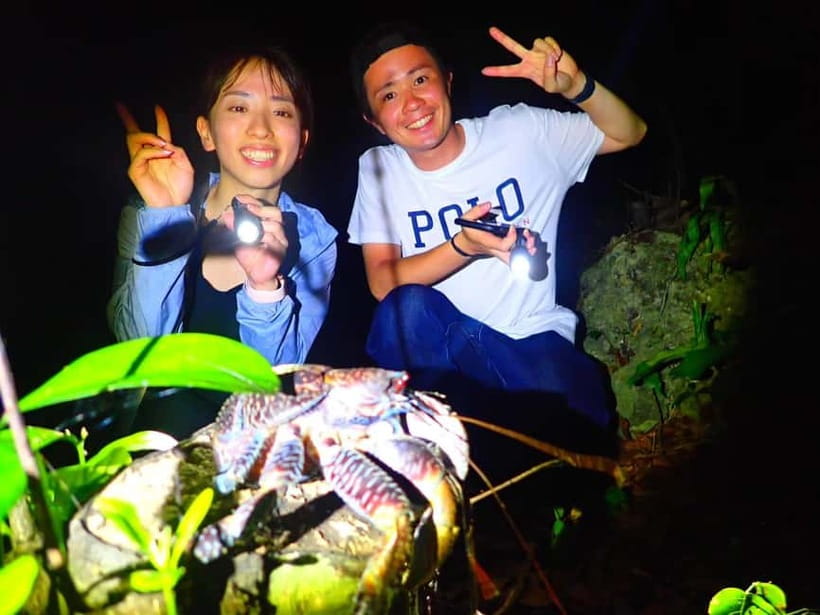
This is one of those tours that tries to work across ages, and the age range is clearly stated: ages 3 to 65. It also says it is not suitable for:
- Children under 3
- Pregnant women
- Wheelchair users
- People over 65
- People with back problems
- People with heart problems
- People with chronic medical conditions (you cannot participate)
So who is it ideal for?
- Families who want an easy night activity that feels educational but not heavy
- People who like wildlife and prefer looking to photographing
- Anyone visiting Miyakojima who wants a night-time view of the island, not just beaches in daylight
If you are afraid of the dark, you may want to think hard. The tour can involve walking in darker areas where you are relying on a flashlight and the guide’s lead. You can ask in advance about your comfort level, since the tour specifically flags fear of the dark and confined spaces.
My value check: worth it if you go in the right mindset
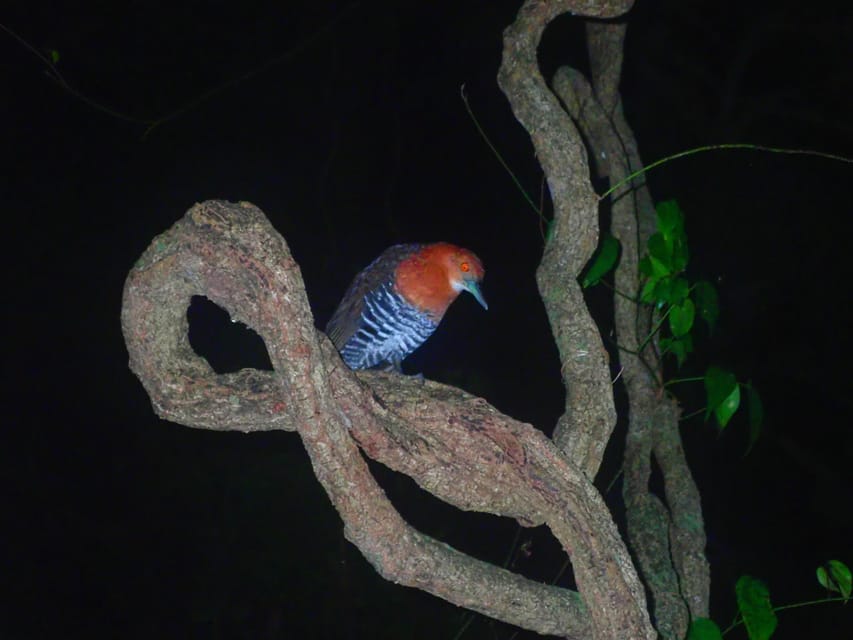
For $31, this tour makes sense when you want a guided chance at Miyako’s night ecosystem. The cost feels more justified when you value the guide’s interpretation and the structured search for creatures, not when you expect guaranteed sightings.
You should also expect that the night walk is more about observation than action. You will not be in a theme park. You will be on nature time. That means:
- Animal sightings vary
- Stargazing varies
- The moon can reduce star visibility
- Rain can change conditions, though the tour still runs in light rain
If you come with patience and a willingness to be impressed by small things, the experience has a lot going for it. If you want guaranteed big wildlife or guaranteed star views, you might leave feeling underwhelmed.
Should you book the Miyako Island Stars and Jungle Night Walking Tour?
Book it if you want a family-friendly night outing that connects you to Miyakojima’s subtropical ecosystem, and you are excited by the possibility of spotting island creatures like the coconut crab. It is also a good choice if you like structured walks where someone else handles the “where to look” part.
Skip it if:
- You need a fully predictable stargazing show
- You cannot handle walking in the dark
- You have a medical limitation listed as not suitable
- You cannot reach the meeting point on your own, since transportation is not included
If you do book, set your expectations to match the nature reality: look for the guide’s clues, take your time, and keep your eyes moving between the ground and the sky.
FAQ
Where is the meeting point for the tour?
The meeting point is the parking lot in front of Kurima Island Center.
How long is the tour?
The tour lasts about 90 minutes.
What age range is this tour suitable for?
It is suitable for ages 3 to 65. It is not suitable for children under 3, pregnant women, people with back or heart problems, people with chronic medical conditions, wheelchair users, or people over 65.
Does the tour guarantee animal sightings or stargazing?
No. Wildlife sightings cannot be guaranteed, and star visibility varies from night to night.
Does the tour run in rain?
The tour proceeds in light rain. If safety in the field cannot be ensured, the tour may be canceled.
What language is the tour in?
It is offered in Japanese or English, but it may be conducted in Japanese only depending on the day’s reservations.
What should I bring and what is not allowed?
Bring comfortable shoes, water, insect repellent, and a flashlight. Smoking is not allowed, and alcohol and drugs are not permitted. You also cannot touch animals or plants, and you should not litter.
More Evening Experiences in Okinawa
- Okinawa Ishigaki Sunset SUP or Canoe Tour
★ 5.0 · 61 reviews - Kyoto Night Foodie Tour in Gion (9+ dishes + 6 Sake tastings)
★ 5.0 · 1,762 reviews - Kyoto: Gion Magical Night Walking Tour with Geisha Insights
★ 4.9 · 1,286 reviews - Tokyo Night Foodie Tour in Shinjuku – Seasonal Sushi, Wagyu Beef
★ 5.0 · 1,161 reviews
Newly listed around Okinawa
- Tea Ceremony experience with simple kimono in Okinawa★ 4.7 · 7 reviews
- Shuri+Naha: Cycling Tour Explore Water Heritage with E-Bike★ 4.9 · 22 reviews
- Snorkeling Activity in Okinawa Miyako Japan★ 4.5 · 29 reviews
- Private Stargazing Photography Tour In Kabira Bay★ 5.0 · 8 reviews
- Original Street Kart Experience in Naha, Okinawa★ 4.9 · 39 reviews
- Okinawa Private Custom Tour with Local Guide★ 5.0 · 7 reviews
- Okinawa: Tropical Dream , Ryukyu Mura, Banta Cafe Bus Tour★ 4.3 · 19 reviews
- Okinawa:Naha:Kerama Island Experience 1Dive and Snorkeling★ 4.4 · 99 reviews
Walking Tours, compared.

Kyoto Geisha Walking Tour: Gion District & Hidden Gems
Read our review →
Tokyo Tsukiji Fish Market Food and Culture Walking Tour
Read our review →
Gion Geisha District Walking Tour – Stories of Geisha
Read our review →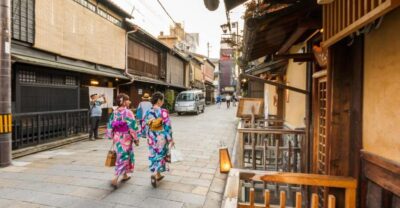
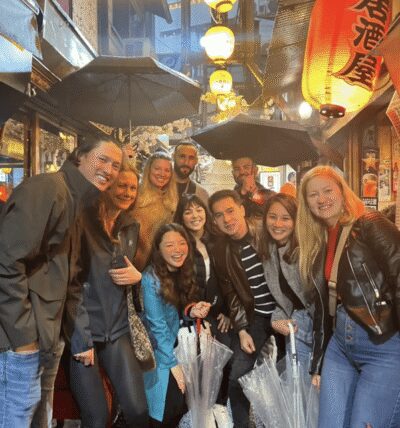
Shinjuku Local Bar and Izakaya Guided Walking Tour
Read our review →
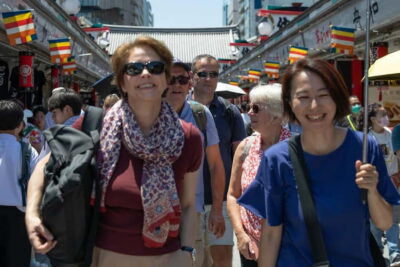
Asakusa Walking Tour with Sensoji Temple Visit
Read our review →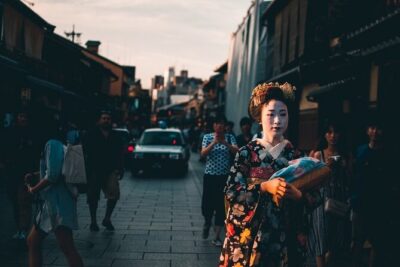
Kyoto Gion Geisha District Walking Tour – The Stories of Geisha
Read our review →Browse the lists this tour appears in