
Review · SUMO STABLE VISITS
Morning Sumo Practice Viewing in Tokyo
Seeing sumo this close is rare. This morning practice tour in Tokyo gets you into a wrestler’s stable area, where you can watch warmups and bouts at ground level, then understand the rules and the Shinto roots behind the sport. I especially love the access to a sumo stable and the small-group feel with an English guide like Joji, Dawn, Jeff, or Aki, who clearly know how to set you up for what you’re seeing. One thing to plan for: you’ll sit on a cushion on a flat floor with no chairs for about two hours.
You start near Tokyo Skytree and end at Naruto-beya Sumo Stable, so the morning has a real sense of Tokyo geography and momentum. Your ticket also includes donations to the stable, and the day’s refuel is chanko nabe, a wrestler-style lunch you do not find at casual snack stops. If you hate early mornings or floor seating, this may feel like a stretch, but for most people it is the most memorable kind of Tokyo sports culture.
In This Review
- Key things to know before you go
- Morning Sumo Practice in Tokyo: why this feels special
- Price and value: what you are really paying for
- The morning start: Tokyo Skytree Station and getting there early
- Stop 1: Tokyo Skytree briefing and basic sumo rules
- Stop 2: Inside the stable at Naruto-beya Sumo Stable
- Floor seating, cushions, and no chairs
- What you actually watch during practice
- The atmosphere: intense, calm, and very human
- Photo time and donations: the human side of stable visits
- Chanko nabe lunch: refueling the sumo way
- What to bring (and what to assume) for a smooth visit
- Who this tour is best for
- A note on weather and timing
- Should you book this morning sumo practice tour?
- FAQ
- What time does the morning sumo practice tour start?
- Where is the meeting point and where does it end?
- How long is the tour?
- Is the tour offered in English?
- Is there a chance to take photos with the wrestlers?
- Will there be chairs to sit on?
- What is included in the ticket price?
- Does the experience depend on weather?
Key things to know before you go
- You sit on the floor: no chairs, cushion required, expect about two hours like that.
- Real stable access: you visit a working sumo stable, not a museum, and watch training up close.
- A guide gets you ready: you learn basic rules before you watch, so you can follow the action.
- Donations are included: part of your ticket goes to the stable.
- Photo time is possible: there’s a good chance you’ll get a photo session with wrestlers.
- Chanko nabe lunch is part of the experience: a traditional meal that fits the sumo lifestyle.
Morning Sumo Practice in Tokyo: why this feels special
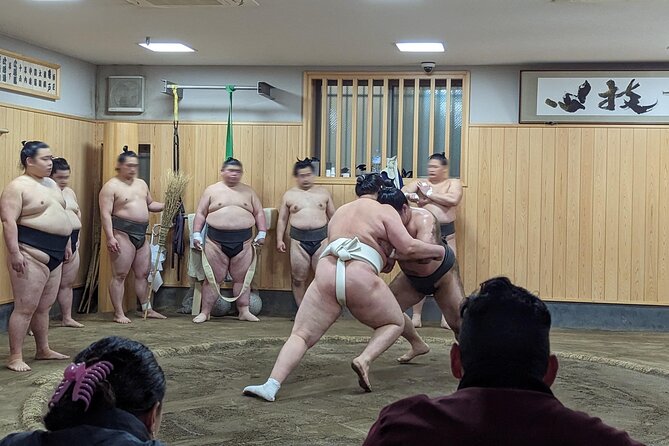
If you like sport, this is one of those Tokyo experiences that actually rewards attention. Sumo training is not just showy spectacle. It is routine, repetition, and ritual, and the best part is that you can see it from close range, right where the wrestlers work.
This tour also does a smart thing: it teaches you how to watch before you sit through the action. The guide briefing at the start helps you understand what you are seeing, the simple rules, and why certain movements matter. That turns it from a vague, cool glimpse into something you can genuinely follow.
The other big value is access. Getting into a stable is hard to do on your own. With a scheduled group and a stable connection, you get a chance most independent travelers miss.
Compare these Sumo Stable visits in Tokyo:
- Tokyo: Sumo Show Experience with Chicken Hot Pot and a Photo
★ 4.8 · 6,678 reviews - Tokyo: Sumo Show and Dining Experience
★ 4.8 · 2,742 reviews - the SUMO show
★ 5.0 · 1,960 reviews
Price and value: what you are really paying for
At about $99.08 per person for roughly three hours, this is not a bargain tour, but it is also not priced like a luxury show. The value is in three places:
First, you get English guiding from a local certified expert. If you have ever watched sumo without any context, you know how much time you waste trying to decode what is happening. This tour aims to fix that.
Second, your ticket includes donations to the stable. That matters because you are not just consuming a performance. You are supporting the place and the people who maintain the daily operation.
Third, the format is small, with a maximum of 10 travelers. Smaller groups make it easier to hear the guide, follow instructions, and be comfortable during floor seating.
If you are the kind of traveler who likes genuine access, not just sightseeing, this price starts to make sense.
The morning start: Tokyo Skytree Station and getting there early
The tour begins at 7:30 am at Tokyo Skytree Station. That early start is part of the point. Morning practice has a different energy than later viewing slots, and you also avoid most of the day’s crowd pressure.
You do not get hotel pickup or drop-off, so plan to arrive under your own steam via public transportation. The meeting point is described as near public transit, which is exactly what you want for a morning plan.
Also, treat the meeting time as real. People who want the smoothest experience will arrive with a little buffer. It helps because you want time to settle in before the guide briefing.
Stop 1: Tokyo Skytree briefing and basic sumo rules
The first stop is Tokyo Skytree, where the guide gives you context and teaches you how to watch. There is also time built in, about 30 minutes.
What you gain here is the ability to enjoy the stable session instead of just staring at big men doing big movements. The guide sets you up with simple rules for watching practice and explains what to look for. Even if you know almost nothing about sumo right now, this pre-briefing helps you notice patterns like how wrestlers warm up, how practice bouts flow, and how discipline and ritual show up in daily routine.
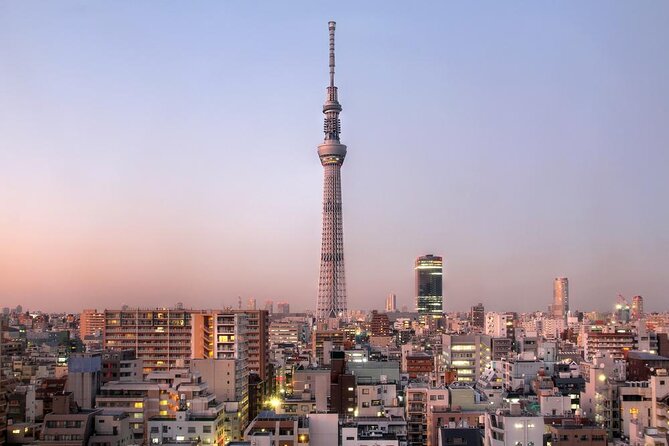
Tokyo Skytree itself is a visual warm-up too. You will likely feel small next to the huge structure, and it is an easy, recognizable landmark to start from. It also keeps the morning from feeling like a straight sprint from train station to stable with no breathing room.
One practical note: this stop is about orientation. It is not a long sightseeing detour, so keep your expectations aimed at the briefing and the transition into stable time.
A few more Tokyo days to weigh up
- Mt Fuji and Hakone 1-Day Bus Tour Return by Bullet Train
★ 5.0 · 26,383 reviews - 1-Day Tokyo Bus Tour
★ 5.0 · 14,250 reviews - Tokyo: TOKYO SKYTREE® Admission ticket
★ 4.5 · 11,192 reviews - Tokyo: teamLab Planets TOKYO Digital Art Museum Entry Ticket
★ 4.6 · 9,779 reviews
Stop 2: Inside the stable at Naruto-beya Sumo Stable
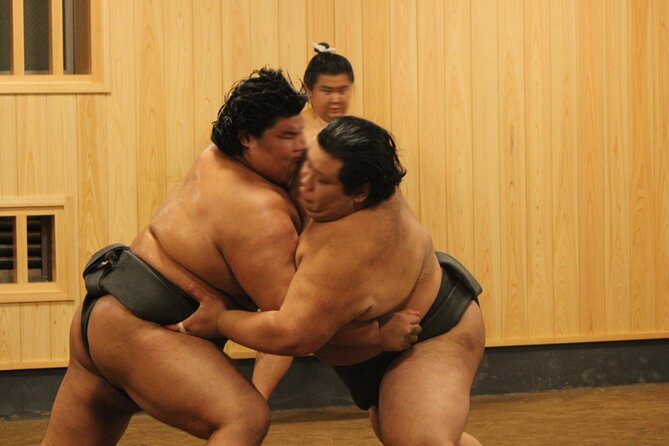
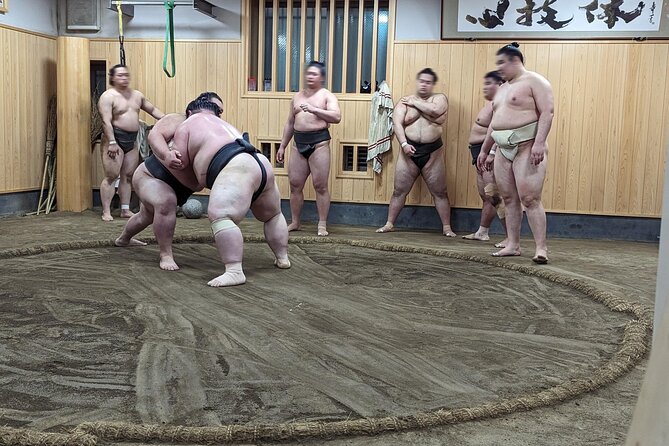
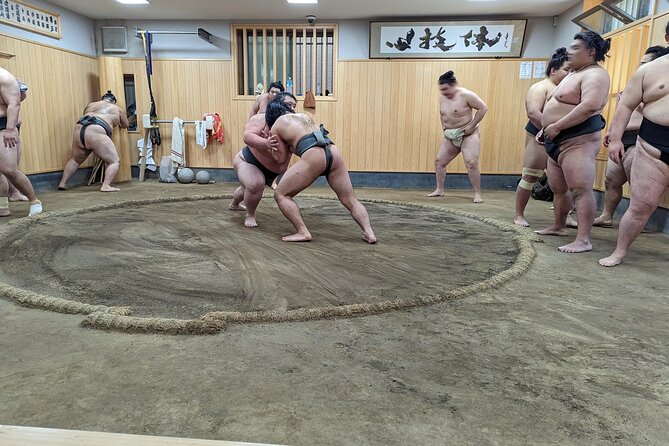
The tour then heads into Sumida and focuses on watching training from inside the stable. You spend about two hours at the stable area, and this is where the whole experience becomes real.
The stable you end at is Naruto-beya Sumo Stable. That matters because this is not a generic viewing room. It is part of a working sumo environment, so the viewing feels grounded and authentic.
Floor seating, cushions, and no chairs
This is the key “consideration” part of the experience. You must sit on a cushion on a flat floor, and there are no chairs available. Plan for that. If your knees or hips do not like floor seating, bring whatever coping strategy you can, like loosening stretches before you go and eating earlier so you are not squirming in discomfort.
Also, based on real experiences shared by past participants, plan on no toilets on site. That means you should use restrooms before you enter the stable area and be smart with drinks.
What you actually watch during practice
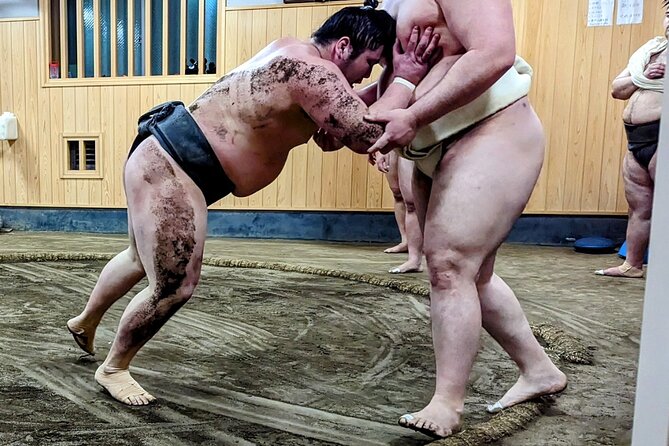
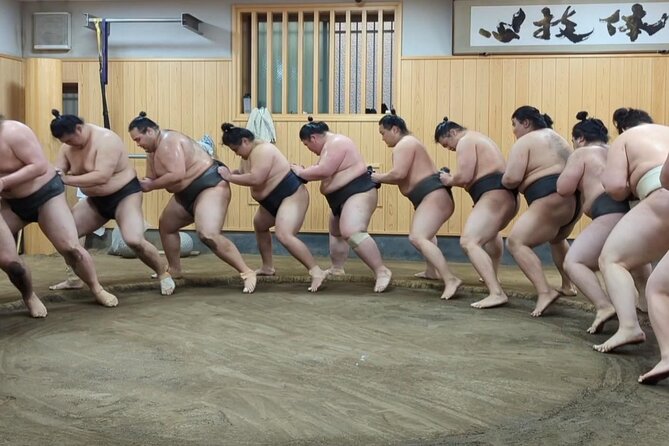
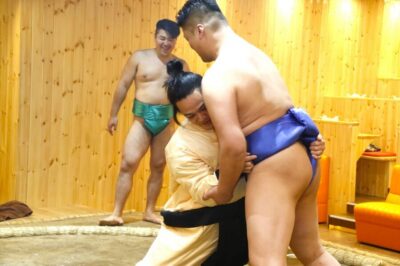
You see wrestlers warming up and engaging in practice bouts. In many cases, being close changes everything. You can see details in how they move, how they prepare, and how practice plays out as a training rhythm rather than an event with a start-and-finish script.
You are also learning the cultural side, including the ancient Shinto roots connected to sumo. That is not presented as a random trivia lecture. It fits what you see, because sumo is full of ritual behaviors that you can spot once you know what you are looking for.
The atmosphere: intense, calm, and very human
Up close training can surprise you if you expected something purely theatrical. The pace feels disciplined. The wrestlers are focused, and you notice teamwork in warmups, even while they practice competing with one another.
In a small group, you also get better rhythm with the viewing. You are not squeezed behind tall people in a crowd. You are positioned to watch, listen, and follow the guide’s explanations while you sit.
Photo time and donations: the human side of stable visits
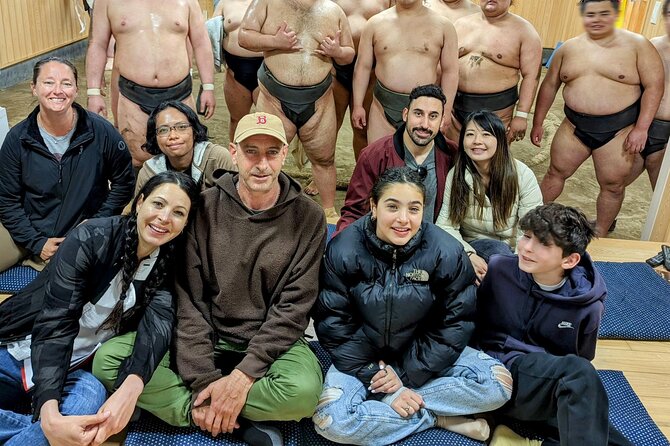
Your ticket includes donations to the stable. That means your visit supports the daily life and work of a stable, not just a tourist stop.
There is also likely a photo moment. The experience info says there is a photo shooting session most likely, and the overall guidance promises a good chance to take photos with the wrestlers after the practice. Whether you get the exact photo opportunity depends on how the stable manages its schedule that day, but you should treat it as a realistic expectation.
If your main goal is photos, the best approach is to listen carefully to the guide instructions. Photo time usually goes faster than you think, and the group format means you want to avoid wasting time fumbling phones or bags.
Also, remember this is a training space first, not a photo studio. The best photos tend to come from people who stay calm, follow directions, and respect the flow.
Chanko nabe lunch: refueling the sumo way
After you finish watching practice, you refuel with chanko nabe, a traditional wrestler-style meal.
Chanko nabe is a meal built for training bodies. It is hearty and comforting, which matters because this is an early, active morning. Even if you are not a huge fan of stew-style comfort food, it can be a great cultural match for the morning you just experienced.
One good part about this inclusion is that you do not have to figure out where to eat right after training. Your day has structure: watch, learn, eat, and then move on with the rest of Tokyo.
What to bring (and what to assume) for a smooth visit
The tour info is clear about the “no chairs” reality, and that shapes your packing list.
Bring
- Comfortable layers for a morning start, since Tokyo mornings can feel cool
- Shoes you can walk in easily from transit to the stable area
- Something small to keep your phone handy if photo time happens
Assume
- You will sit on a floor cushion for around two hours with no chairs
- You should plan bathroom timing before stable time, since toilets are not available on site
- Your schedule runs early, and the tour is about the stable session more than long sightseeing
And since you get an English guide, you will not need to figure out the rules on your own.
Who this tour is best for
This is ideal if you want authentic culture mixed with sport, not just a checklist stop.
You will love it if
- You enjoy sports but also want the traditions behind them
- You like small groups and direct guidance
- You want a morning activity that feels local, not staged
- You are curious about Shinto roots tied to sumo rituals
You might want to skip it if
- Floor seating is a deal breaker for you
- You want lots of walking around Tokyo landmarks instead of a structured morning focused on one stable
- You do not like early starts, since the day begins at 7:30 am
A note on weather and timing
This experience requires good weather. If conditions are poor, you may be offered a different date or a full refund. Plan your Tokyo schedule with a bit of flexibility around this type of early morning, because weather can matter when the experience involves outdoor transit and a specific stable day.
Should you book this morning sumo practice tour?
I’d recommend booking if you want one unforgettable Tokyo morning that goes beyond watching from far away. The combination of stable access, English guiding, and chanko nabe makes it a strong value, especially given the small group size and the fact that your ticket includes donations to the stable.
If you have strong concerns about sitting on the floor, no chairs, or limited restroom access, you should think carefully before committing. But if you can handle floor seating for a couple hours, this is one of the most authentic sports-and-culture experiences you can add to Tokyo without feeling like you bought a generic tour.
FAQ
What time does the morning sumo practice tour start?
The tour starts at 7:30 am.
Where is the meeting point and where does it end?
You start at Tokyo Skytree Station and the tour ends at Naruto-beya Sumo Stable.
How long is the tour?
The duration is approximately 3 hours.
Is the tour offered in English?
Yes. Guiding is in English by a local certified expert guide.
Is there a chance to take photos with the wrestlers?
Most likely, there is a photo shooting session, so you should expect a good chance to take photos with the wrestlers.
Will there be chairs to sit on?
No. You must sit on a cushion on a flat floor, and there are no chairs available.
What is included in the ticket price?
Included are donations to the stable, guiding in English, and a lunch of chanko nabe. Mobile ticket delivery is also part of the experience.
Does the experience depend on weather?
Yes. It requires good weather, and if it is canceled due to poor weather, you will be offered a different date or a full refund.
Newly listed around Tokyo
- From Tokyo: Mount Fuji Sightseeing One Day Trip★ 4.5 · 42 reviews
- Customizable Private Tour in Mt Fuji from Tokyo by Car or Van★ 5.0 · 107 reviews
- Mount Fuji Full Day Private Tour with English Speaking Driver★ 5.0 · 23 reviews
- Mount Fuji Full Day Tour form Tokyo Lake Kawaguchi & Yamanaka★ 5.0 · 9 reviews
- Full Guided Mt. Fuji & Shiba-Sakura Festival One Day Pvt.Tour★ 5.0 · 6 reviews
- Tokyo: Mount Fuji Must-see Attractions One Day Sightseeing Tour★ 4.5 · 13 reviews
- Mount Fuji Day Tour:Lake Kawaguchi, HealingVillage,Oshino Hakkai★ 4.5 · 8 reviews
- Mt.Fuji day trip with English Speaking Chauffer★ 5.0 · 39 reviews
Sumo Stable Visits, compared.
Sumo Show Experience with Chicken Hot Pot and a Photo
Read our review →

Tokyo Sumo Entertainment Show with Chicken Hot Pot and Photo
Read our review →
Tokyo Grand Sumo Tournament Viewing Tour with Tickets
Read our review →

Sumo Show & Experience w/ Optional Kimono & Hot Pot
Read our review →Browse the lists this tour appears in