
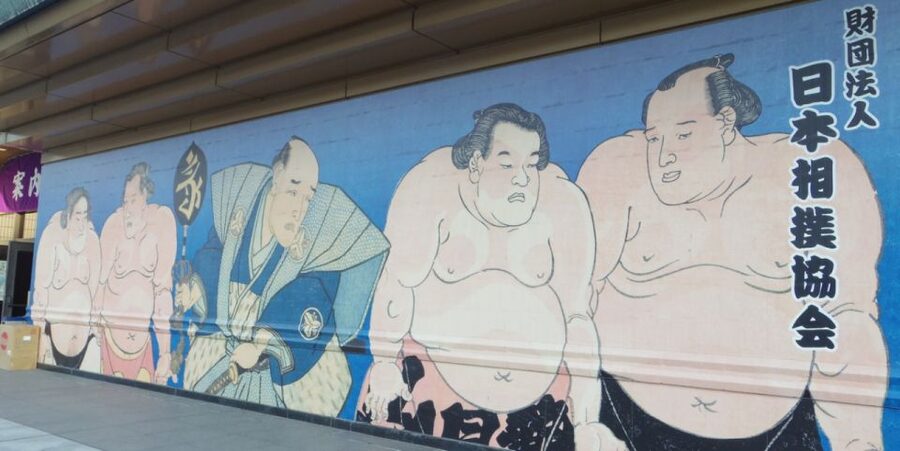
Review · SUMO STABLE VISITS
Tokyo: Sumo Tournament Tour with Chair Seat Tickets
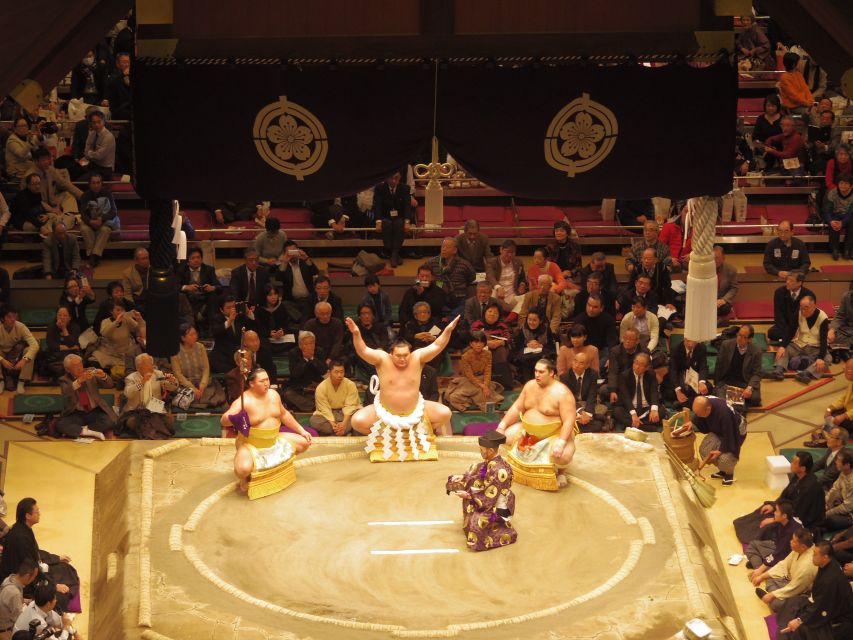
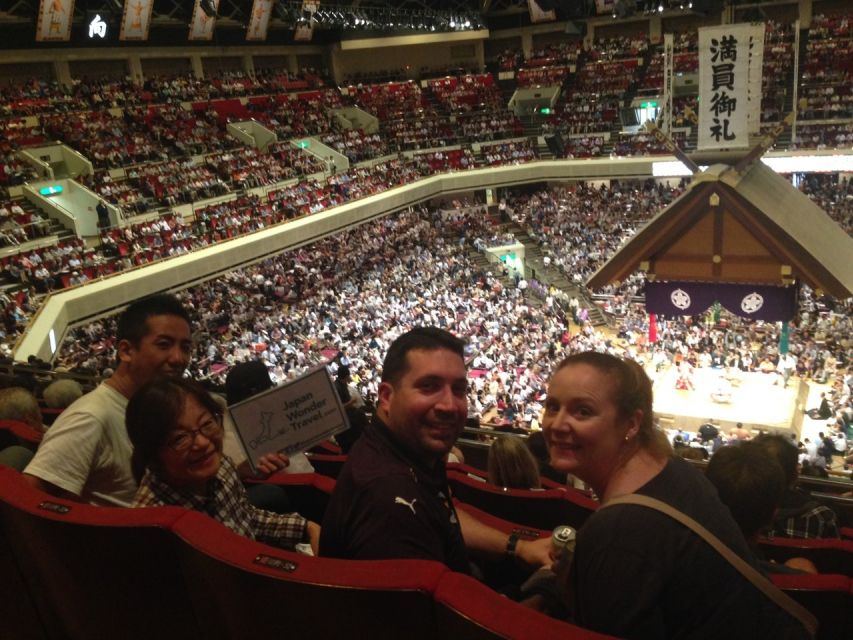
Tokyo sumo is louder than you expect. You’ll sit in the 2F chair seats at Ryogoku Kokugikan and catch the full rhythm of tournament day, from the ring-entering ceremonies through Makuuchi bouts. I also love that you’re not just watching blind, an English-speaking guide helps you follow the rules, ranks, and crowd cues as the day unfolds. One heads-up: the seats are high, so if you want ultra-close wrestling action, you may feel a bit far depending on where you land.
What makes this tour work is the human factor. Guides like Taka, Mieko, Sho, and Hiro were repeatedly praised for passion, clear explanations, and knowing how to point out what matters in each bout. And if you choose the supporter-kit option, you get a practical way to join the cheering instead of just standing there wondering when to react.
In This Review
- Key things to know before you go
- Ryogoku Kokugikan, where sumo feels like sumo
- Your afternoon schedule, from 2:15 PM meeting to 6:00 PM finale
- How to watch sumo once the match starts
- 2F chair seats vs 1F box seats, view tradeoffs that matter
- The guide is the difference between watching and understanding
- Ring-entering ceremonies: where the mood is set
- Cheer like a local: the supporter kit option
- Getting there, check-in, and how to avoid the common confusion
- Food and drinks inside: what’s included, what to confirm
- Price and value: why $141 can make sense here
- Who this tour suits best (and who might want a different plan)
- Should you book this Tokyo sumo chair-seat tournament tour?
- FAQ
- What time does the tour start and end?
- Where is the meeting point?
- What ceremonies and matches are included in the schedule?
- What seating do I get?
- Is there an English-speaking guide?
- Is the sumo supporter kit included?
- Is food included?
- Can children attend?
- Are baby strollers allowed?
- Is the venue wheelchair accessible?
Key things to know before you go
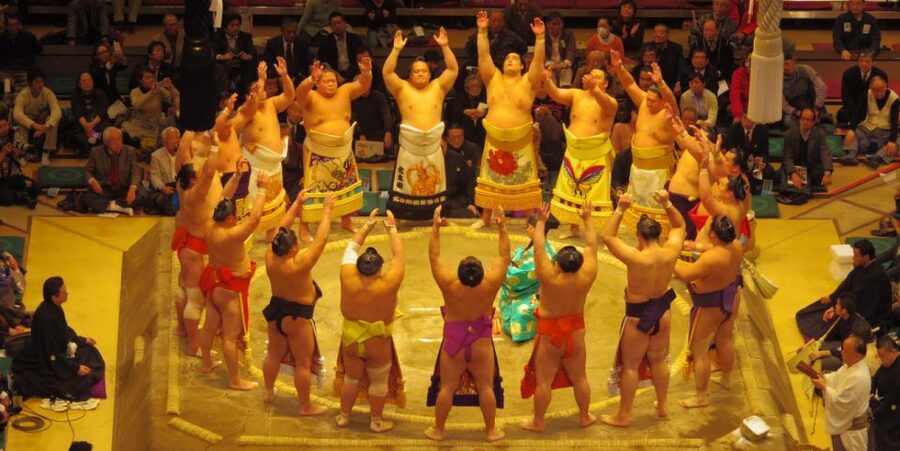
- Real Tokyo tournament timing, with ring-entry ceremonies and Makuuchi matches scheduled in a tight window
- 2F chair seats or 1F box seats, with seat choice limited by design
- English explanations during the whole event, not just a quick pre-talk
- Makuuchi and Yokozuna ceremonies, so you see more than just the final whistle
- Optional sumo supporter kit, built for cheering with the local crowd
- Ryogoku meeting point at 2:15 PM, so you can get settled before the action starts
Ryogoku Kokugikan, where sumo feels like sumo
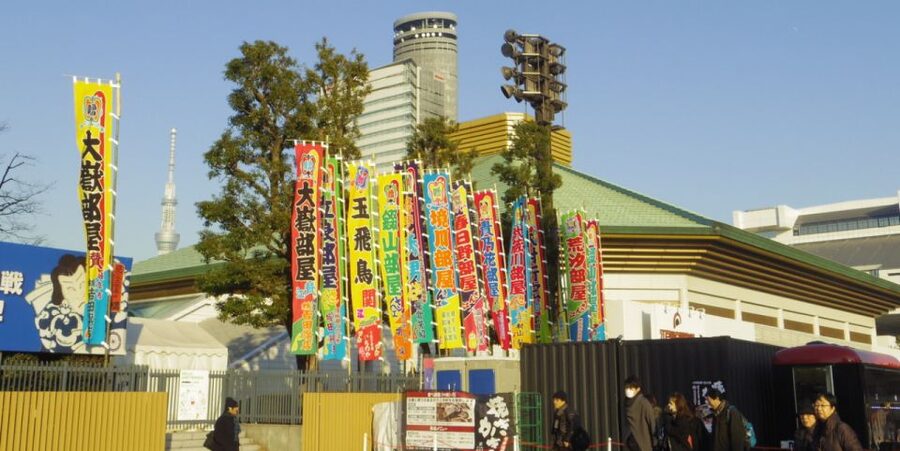
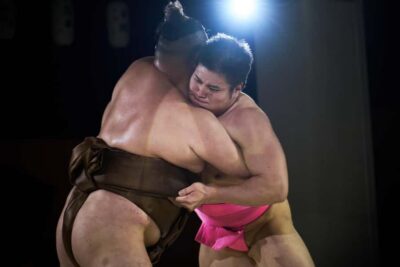
Ryogoku Sumo Stadium is the heartbeat of Tokyo sumo. Even if you’ve watched clips online, tournament day hits different. You’re in a bowl designed around one thing: fast, brutal bouts inside a sacred-looking ring, followed by ritual and pageantry that make the sport feel ancient and very real at the same time.
This tour is especially good for first-timers because you get context while you’re actually there. The guide helps you connect what you’re seeing to what the wrestlers are trying to do, why the crowd reacts the way it does, and what the different ranks mean. That matters because sumo is not just strength. It’s balance, timing, grip, and strategy, and the small details are what you start noticing once somebody explains them.
And yes, it’s also fun. You get to participate. With the right gear and a little coaching from your guide, you can cheer like you belong in the arena, not like you’re waiting for the next commercial break.
Compare these Sumo Stable visits in Tokyo:
- Tokyo: Sumo Show Experience with Chicken Hot Pot and a Photo
★ 4.8 · 6,678 reviews - Tokyo: Sumo Show and Dining Experience
★ 4.8 · 2,742 reviews - the SUMO show
★ 5.0 · 1,960 reviews
Your afternoon schedule, from 2:15 PM meeting to 6:00 PM finale
The day runs like a sports event, not a long sightseeing day. You meet at the West Gate of JR Ryogoku Station at 2:15 PM, then head to Ryogoku Sumo Stadium with your guide.
Here’s the tournament flow you should plan around:
- You arrive and get settled before the big ceremonies.
- 3:40 PM: ring-entering ceremony for the Makuuchi division
- 3:55 PM: ring-entering ceremony for the Yokozuna (top rank)
- 4:10 PM: Makuuchi division bouts begin
- 6:00 PM: the event ends
This timing is a big part of the value. You’re not spending half your day in transit, and you’re not arriving late to the important parts. If you’re building a Tokyo itinerary and want one day that feels like a true experience, this fits neatly.
How to watch sumo once the match starts
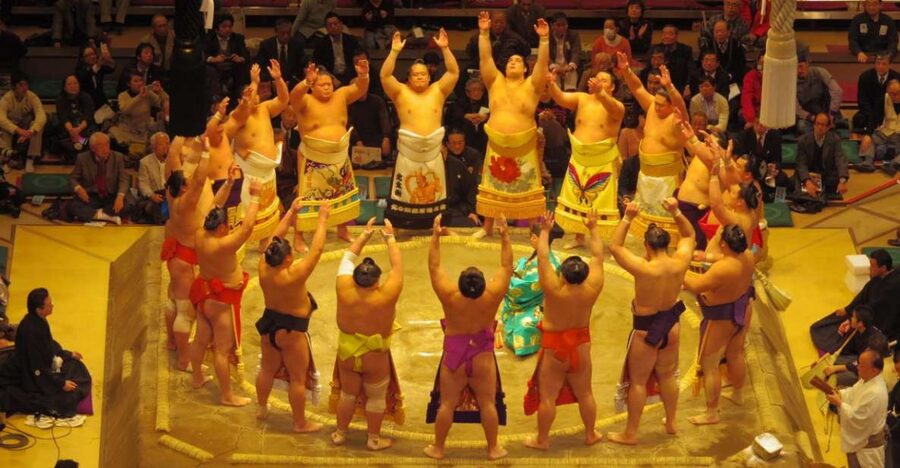
The best part of sumo is also the trickiest for beginners: you need to know what counts as a win. During the bouts, you’re watching wrestlers try to do two main things:
- Force the opponent out of the ring
- Get any part of the opponent’s body to touch the ground
That sounds simple. In practice, it’s a fast puzzle of feints, grip fighting, and sudden bursts of power. The difference between feeling lost and feeling hooked is understanding what you should watch in each second. That’s where your guide earns their seat.
In particular, guides tend to explain:
- why certain moves are worth respect, even if they do not immediately look like a “punching match”
- how crowd reactions often match what the wrestlers are attempting
- how ranks and momentum can shape the tone of the day
If your guide hands out a simple paper list of the day’s fights and wrestlers, that can be a game-changer. Having the names and matchups in front of you helps you follow without constantly craning your neck at signage.
2F chair seats vs 1F box seats, view tradeoffs that matter
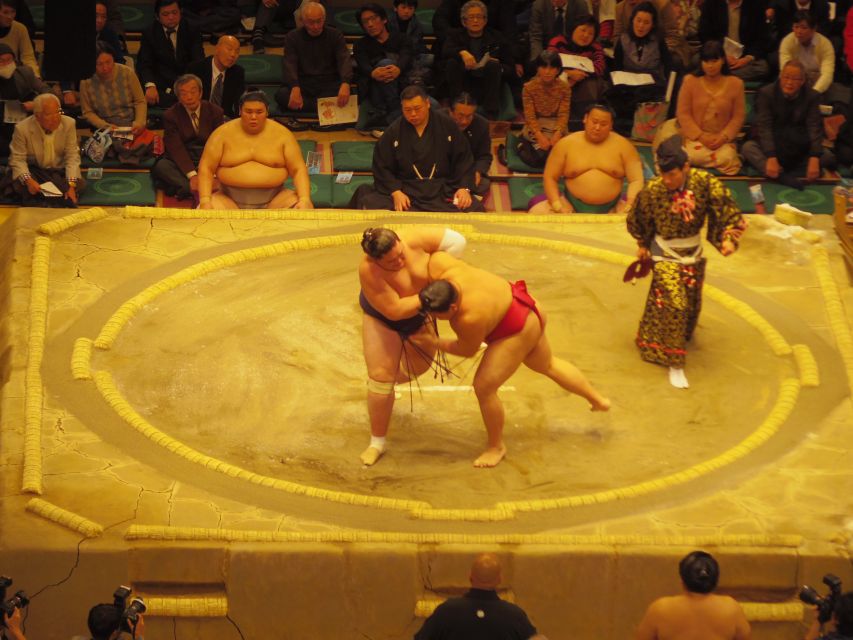
Your option determines what kind of view you get. The tour offers:
- 2F chair seats (common for the basic chair-seat option)
- 1F box seats (only box seats on the first floor)
Two practical realities:
- You cannot choose specific seats. Your guide hands out the tickets on the tour date, and the exact location depends on the allocation.
- The arena is “small stadium” style, so views are generally decent, but the feeling of distance can still vary.
So what should you expect?
- With higher seating, you usually get a more complete view of the ring and movement patterns.
- With lower seating (1F box seats), you may feel closer to the action, but box seating also means a different layout and sometimes more rigid sight lines.
If you’re the type who wants to see faces, sweat, and the instant of contact, you’ll probably prefer 1F box seats. If you want the full tournament atmosphere and clarity across the entire ring, 2F chair seats can still be excellent, especially since you’re there for the ceremonies and the overall flow of bouts, not just one wrestler’s highlight reel.
A few more Tokyo days to weigh up
- Mt Fuji and Hakone 1-Day Bus Tour Return by Bullet Train
★ 5.0 · 26,383 reviews - 1-Day Tokyo Bus Tour
★ 5.0 · 14,250 reviews - Tokyo: TOKYO SKYTREE® Admission ticket
★ 4.5 · 11,192 reviews - Tokyo: teamLab Planets TOKYO Digital Art Museum Entry Ticket
★ 4.6 · 9,779 reviews
The guide is the difference between watching and understanding
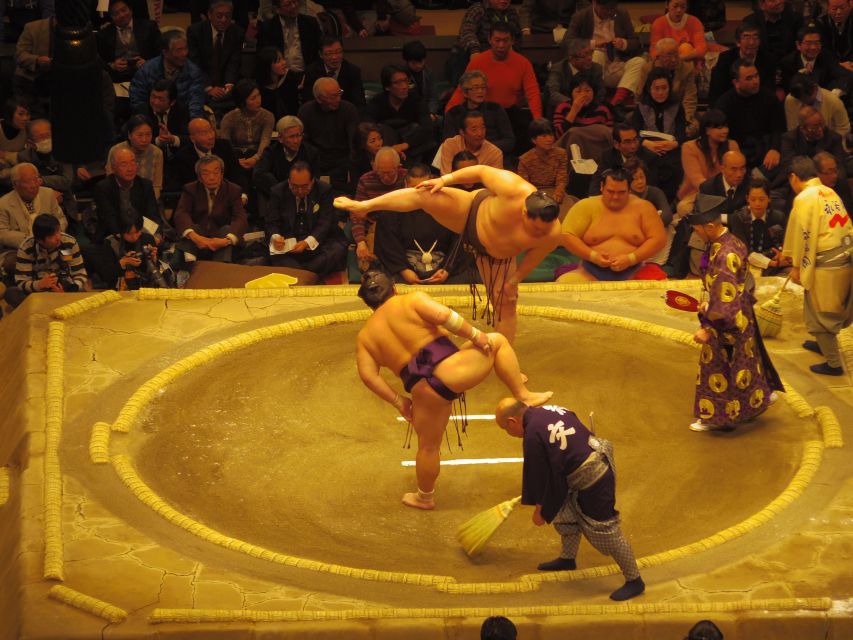
For this kind of event, the ticket is only half the story. The other half is what happens between the bouts, and how you read the bout itself.
The English-speaking guides on this experience are repeatedly singled out for being passionate and hands-on. Many guides also stick with the group for the full event and answer questions as they come up. That gives you permission to stop trying to “figure it out” from the stands.
Guides like Taka, Taku, Taka again in a different booking, Mieko, Sho, Kent, Hiro, Mia, Kaz, and Take all show up in the overall guide reputation for reasons that matter to you:
- they connect rules and ranks to the matches you’re actually seeing
- they guide your cheering so it feels synchronized with what’s happening in the ring
- they help you recognize wrestlers and moves instead of just watching shapes collide
If you’ve ever walked through a museum without captions and felt like you were guessing, this is the sumo version of captions with a pulse.
Ring-entering ceremonies: where the mood is set
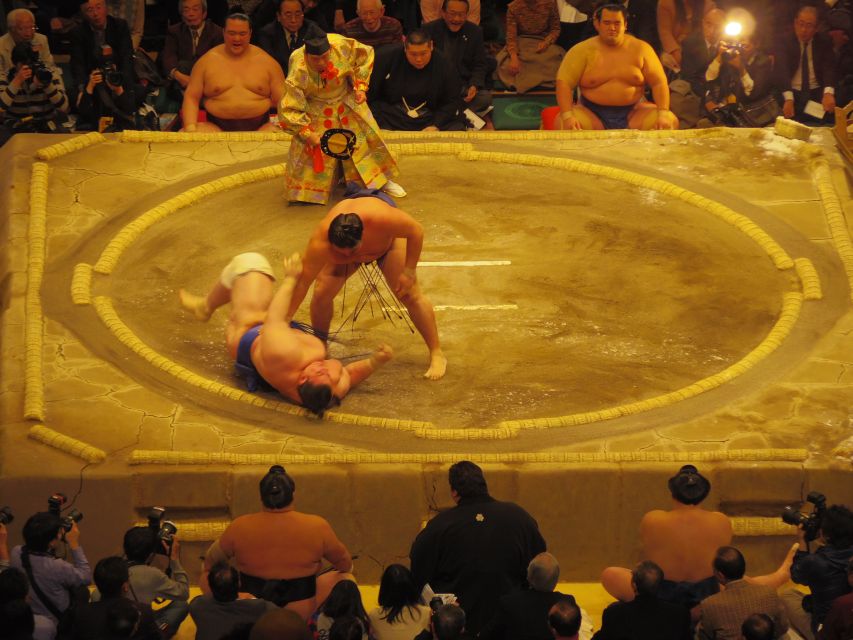
A lot of people only think about the bouts. But the ceremonies are part of why sumo feels special in Japan.
You’ll watch two major ring-entering moments:
- Makuuchi ceremony at 3:40 PM
- Yokozuna ceremony at 3:55 PM
Even if you don’t know the names, you’ll feel the atmosphere shift. The arena becomes more formal, more attentive. It’s a reminder that sumo is not only sport, it’s also ritual, hierarchy, and tradition played out in real time.
If you want one reason to book a guided tournament instead of just trying to grab tickets and go, this is it. The guide helps you understand what you’re looking at and why those moments matter.
Cheer like a local: the supporter kit option
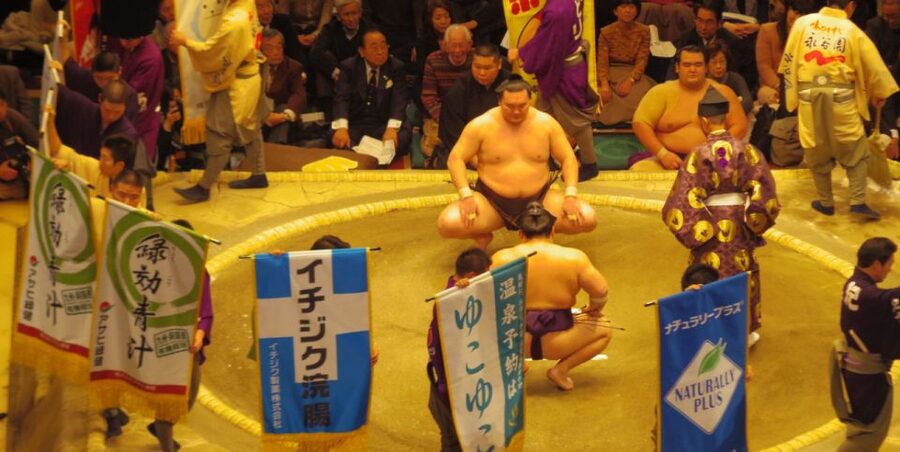
Sumo arenas have a rhythm to the cheering. When you know what’s happening, you can react at the right moments instead of clapping randomly like a polite tourist.
If you choose the sumo supporter kit, you’ll get tools designed for cheering. Your guide can also cue you on how to join in. That can add a fun layer, especially if you’re traveling with kids, a group of friends, or anyone who enjoys being part of the action instead of just observing.
A simple rule: treat the kit as your cue sheet for the crowd. Once you start cheering together, the day feels less like a show and more like a shared event.
Getting there, check-in, and how to avoid the common confusion
Start early enough and you’ll be fine. The meeting time is 2:15 PM at the West Gate of JR Ryogoku Station. Your guide will be with you to get you to Ryogoku Kokugikan.
The one real logistics warning from the experience culture: multiple tour groups can meet at the same place at the same time. When that happens, it’s easy to mix up instructions like meeting points or group labels.
So do this:
- check your email closely for the specific instructions you receive
- be ready to confirm your group details quickly
- arrive a few minutes early so you’re not rushed
If you’re prone to “I’ll figure it out later,” this is the one time you should actually read the message.
Food and drinks inside: what’s included, what to confirm
By default, food and drinks are not included. That’s normal for this kind of ticketed event.
However, there is a Lunch option. The experience info notes that if you have allergies or dietary restrictions, you should tell them at booking or after reserving. Some departures also include a lunch-style component people talk about, but you should not assume it’s part of your package unless you selected it.
My practical advice: if you care about lunch, confirm exactly what option you booked before the day arrives. The cost of being disappointed on a long travel day is not worth the guessing.
Inside the stadium, you will find places to buy food and drinks, and prices are described as reasonable in the overall experience feedback. So even if you skip lunch, you can still eat.
Price and value: why $141 can make sense here
At $141 per person, this isn’t a bargain. But it can be good value for a very simple reason: Tokyo sumo tournament tickets are hard to get when you are traveling on a schedule.
This tour packages three things together:
- admission to a tournament
- a guided experience that helps you understand what you’re seeing
- seating in a defined category, either 2F chair or 1F box
If you’ve ever tried to secure tournament tickets on your own, you know the stress level. When tickets sell out fast, paying a bit more to avoid the scramble can be worth it. And the guide time adds a lot. You’re buying not just a seat, but a learning layer and smoother entry to the stadium.
If your priority is comfort and reduced hassle, the price starts to look fair. If your priority is minimizing cost and you’re confident you can navigate ticketing yourself, you might question it. For most people, though, this is one of those experiences where the package saves both time and brainpower.
Who this tour suits best (and who might want a different plan)
This is a strong pick if you:
- want a real Tokyo sumo tournament, not a staged show
- prefer guided context for rules, ranking, and what to watch
- enjoy being in the crowd and understanding how the action works
- want an English-speaking guide to handle the flow of the afternoon
It’s less ideal if you:
- need wheelchair accessibility, since it is listed as not suitable for wheelchair users
- rely on baby strollers, because baby strollers are not allowed
- travel with large luggage, because large luggage cannot be brought into the seating area
If you’re traveling with a child, children 3 and under enter for free but they won’t have their own seat and need to sit on your lap. Children 4 and up need their own tickets.
Should you book this Tokyo sumo chair-seat tournament tour?
If you want your Tokyo trip to include one day that feels unmistakably Japanese, I’d book it, especially if you care about understanding the sport as you watch it. The combination of tournament access, a guided English explanation, and the chance to join the crowd makes this far more than a ticket.
Choose the seat option based on your style:
- pick 2F chair seats if you want great overall visibility and atmosphere
- pick 1F box seats if you want the best chance of feeling closer to the action
If the timing fits your dates and your budget is in range, this is one of the easiest ways to catch sumo at the top level without turning your trip into a ticket-collecting mission.
FAQ
What time does the tour start and end?
You meet at the West Gate of JR Ryogoku Station at 2:15 PM and the experience ends back at the meeting point at 6:00 PM.
Where is the meeting point?
The meeting point is the West Gate of JR Ryogoku Station (the exact meeting point may vary depending on the option booked).
What ceremonies and matches are included in the schedule?
You’ll see the Makuuchi ring-entering ceremony at 3:40 PM, the Yokozuna ring-entering ceremony at 3:55 PM, and the Makuuchi division games starting at 4:10 PM.
What seating do I get?
Depending on the option selected, you get either 2F chair seats or 1st floor box seats. You cannot choose specific seats.
Is there an English-speaking guide?
Yes. The tour includes a professional English-speaking guide.
Is the sumo supporter kit included?
The supporter kit is included only if you select the option that includes it.
Is food included?
No. Food and drinks are not included. If you book a Lunch option, you should inform them about allergies or dietary restrictions.
Can children attend?
Children 3 years old and under can enter for free but must sit on your lap. Children 4 years and up need their own tickets.
Are baby strollers allowed?
No. Baby strollers are not allowed.
Is the venue wheelchair accessible?
The experience is not suitable for wheelchair users.
Newly listed around Tokyo
- Tokyo private transfer for Yokohama Port★ 4.5 · 63 reviews
- Luxury Kimono Photoshoot at Ginza Tokyo★ 5.0 · 7 reviews
- Tokyo Allstar Food Tour★ 4.5 · 206 reviews
- Tokyo Art Aquarium Museum E-Ticket with optional Tokyo Metro Pass★ 5.0 · 17 reviews
- Tokyo: Best Ginza Food Tour at 3 Local Eateries★ 5.0 · 83 reviews
- Private One Day Nikko Tour with Bilingual driver★ 3.5 · 11 reviews
- PRIVATE tour in 180SX to Daikoku+++++★ 5.0 · 6 reviews
- Kabuki Talk★ 5.0 · 10 reviews
Sumo Stable Visits, compared.
Sumo Show Experience with Chicken Hot Pot and a Photo
Read our review →
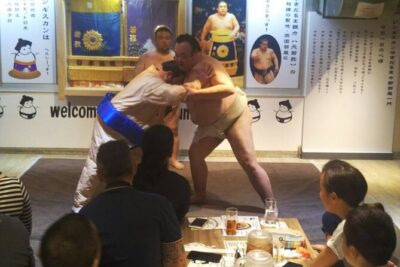
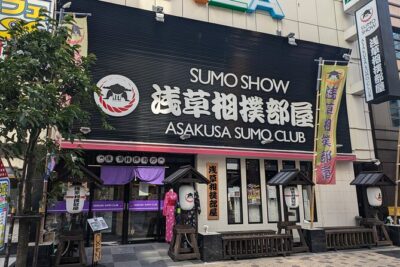
Tokyo Sumo Entertainment Show with Chicken Hot Pot and Photo
Read our review →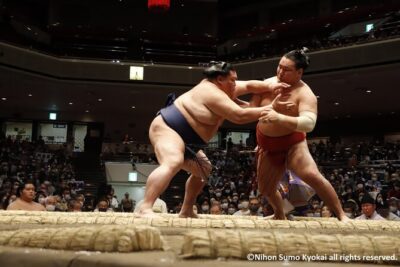
Tokyo Grand Sumo Tournament Viewing Tour with Tickets
Read our review →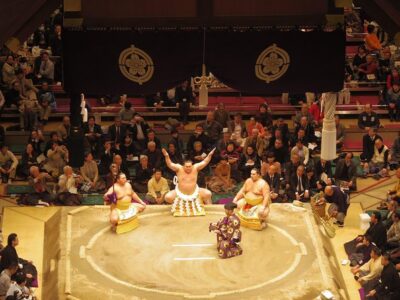
Sumo Show & Experience w/ Optional Kimono & Hot Pot
Read our review →
Authentic Sumo Experience in Tokyo: Enter the Sanctuary
Read our review →Browse the lists this tour appears in