
Review · SUMO STABLE VISITS
Tokyo Grand Sumo Tournament Viewing Tour with Tickets
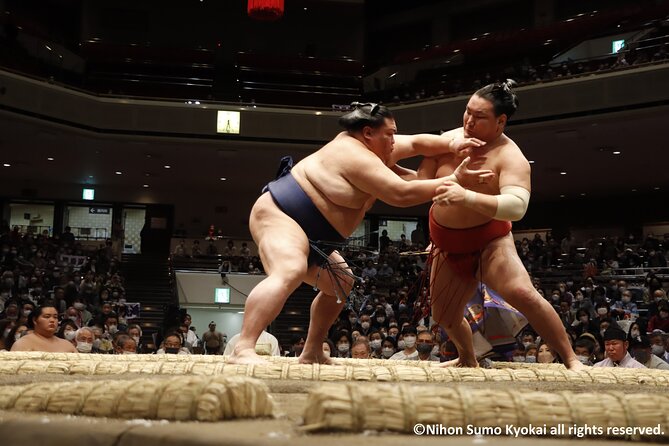
Sumo is louder than you expect. This experience gives you Grand Sumo tournament tickets plus an English interpreter guide who translates the rules and explains what you are seeing. I also like the Ryogoku View Hotel intro, where you get sumo-focused exhibits before you hit Ryogoku Kokugikan. One thing to plan for, ceremonies can interrupt the flow, so you may wait briefly before you reach your seat.
You are in the right place, Ryogoku, the home of Tokyo sumo. Expect about 4 hours, ending around 6 pm back at Kokugikan. The ticket is delivered as a mobile ticket, and you will have an English brochure and a same-day ranking list, so your afternoon has context, not just noise.
In This Review
- Key things I would zoom in on
- Ryogoku View Hotel sumo intro before you walk to Kokugikan
- Inside Ryogoku Kokugikan: seats, museum moments, and how matches unfold
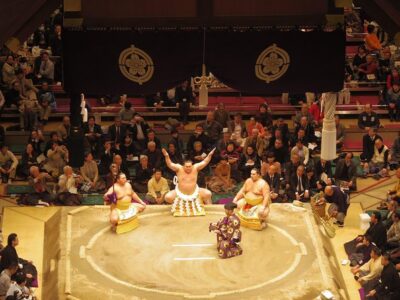
- A key detail to notice: elevated ring, clay, and sand
- Another detail that makes top matches feel different
- Plan for seating delays during key ceremonies
- Timing the big moments: the makuuchi entrance, yokozuna ring walk, and bow-twirling
- S and A class vs B class: why the start time matters
- S vs A vs B seats: snack, drink, and the cheering towel
- A small but practical tip about the towel
- What I’d watch out for: food rules, bags, strollers, and arrival timing
- Bring less stuff than you think
- Food and drink rules inside Kokugikan
- Arrive early, or you risk losing your seat
- Group seating may be spread out
- Price and logistics: why $124 can feel worth it (or not)
- Who should book this tour, and who might skip it
- Should you book Tokyo Grand Sumo Tournament Viewing Tour with Tickets?
- FAQ
- Where do I meet the guide?
- Where does the tour end?
- What do I get with S and A class seats?
- Can I bring food and drinks into Kokugikan?
- Is there an English brochure and ranking list?
- What happens if I cancel?
Key things I would zoom in on
- Hotel-based sumo warmup gives you the why behind the sport before the action starts
- English explanations inside the arena help you follow rankings, pairings, and customs
- Ceremony timing can affect seating during entrances and other formal moments
- S vs A vs B seat differences include snack, drink, and a cheering towel only for S and A
- Makuuchi details like kesho-mawashi help you spot the top-division cues fast
- Small groups (up to 19) make it easier to ask questions and get oriented quickly
Ryogoku View Hotel sumo intro before you walk to Kokugikan
The meeting point is Ryogoku View Hotel near the arena. You start with a lecture led by a National Government Licensed English Guide Interpreter. Even before anyone hits the ring, you get the basics that make the later matches snap into focus.
I like this structure because sumo looks simple until you understand the rhythm. You will hear how the tournament is organized, how wrestlers are grouped by division and rank, and what the key ceremonies mean. The tour then moves you toward Ryogoku Kokugikan, so you are not left navigating the venue with zero clue.
You also get a chance to look at sumo-related exhibits at the hotel. The vibe here is calm and educational. You can take a minute to study memorabilia and see ceremonial items, including aprons linked to older traditions. This matters because sumo is not just a fight. It is a full performance with uniforms, ritual, and status built into the experience.
One practical note: your group size is capped at 19. That is big enough for energy, but small enough that the guide can actually stay close and help with questions.
Compare these Sumo Stable visits in Tokyo:
- Tokyo: Sumo Show Experience with Chicken Hot Pot and a Photo
★ 4.8 · 6,678 reviews - Tokyo: Sumo Show and Dining Experience
★ 4.8 · 2,742 reviews - the SUMO show
★ 5.0 · 1,960 reviews
Inside Ryogoku Kokugikan: seats, museum moments, and how matches unfold
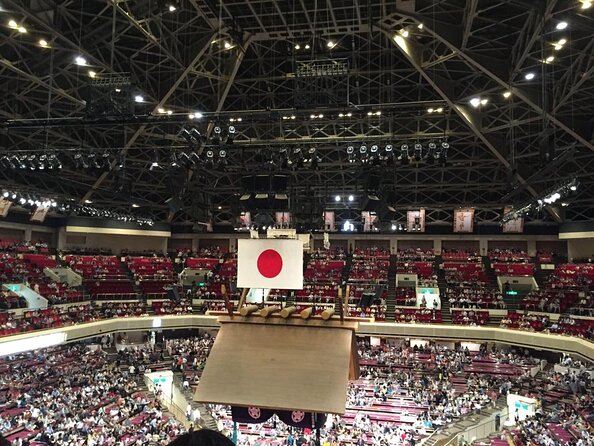
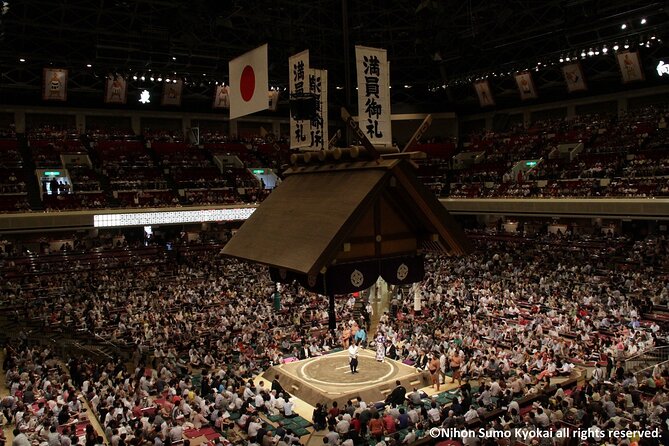
Ryogoku Kokugikan is the kind of place where you can feel the tournament before you even see a match. The plan is to get you seated in your section and then start watching a sequence of bouts that generally moves from lower divisions to higher-ranked matches later in the day.
Your guide provides an English brochure and an English-style sumo-ranking list for the day’s events. That makes a huge difference for first-timers. Instead of watching two men collide and hoping you later figure out who mattered, you can follow who is in what division and where the bout fits into the schedule.
There are also quiet ways to take in the venue before the noise peaks. In the entrance lobby, you can look at championship flags and other items associated with champion sumo. It is also a popular photo spot. And the arena area includes a Sumo Museum, with items such as woodblock prints and folding screens. How much time you spend there will depend on timing, but it is there if you need a breather between ceremonies and matches.
A key detail to notice: elevated ring, clay, and sand
When you finally get your first full view of the ring, the elevated dohyo stands out. It is made of clay and topped with a layer of sand. Once you understand how much the sport depends on balance, grip, and footwork, the visuals become clearer. The sand is not decoration. It is part of how you read the wrestlers’ movements.
Another detail that makes top matches feel different
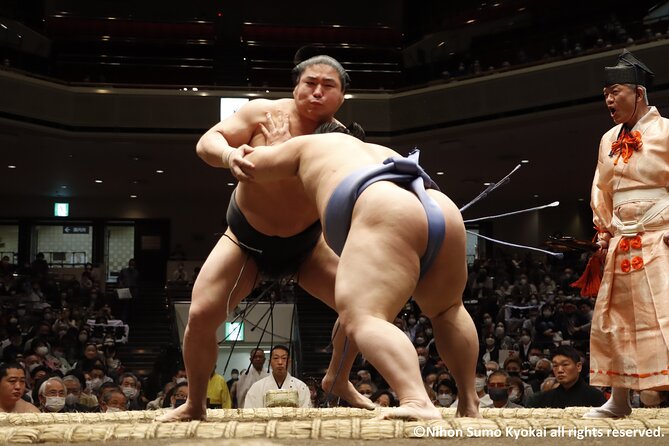
At some point, your guide will point out the ceremonial apron called kesho-mawashi. This is worn only by wrestlers in the top division, referred to as makuuchi. When you spot it, you instantly know you are watching the upper tier of professional sumo, not a warmup round.
A few more Tokyo days to weigh up
- Mt Fuji and Hakone 1-Day Bus Tour Return by Bullet Train
★ 5.0 · 26,383 reviews - 1-Day Tokyo Bus Tour
★ 5.0 · 14,250 reviews - Tokyo: TOKYO SKYTREE® Admission ticket
★ 4.5 · 11,192 reviews - Tokyo: teamLab Planets TOKYO Digital Art Museum Entry Ticket
★ 4.6 · 9,779 reviews
Plan for seating delays during key ceremonies
One of the most helpful bits of etiquette guidance is knowing that seating can pause. If a match, a ring entrance procession, a ceremony speech, or the ring entering procession for higher-ranked wrestlers is happening when you arrive at your section, you may need to wait. Your guide cannot provide explanations during those moments either. It is normal, just plan your patience.
Also, seats may not be designated ahead of time. You will be told your seat assignment on the day, and seating can be spread across different sides of the arena.
Timing the big moments: the makuuchi entrance, yokozuna ring walk, and bow-twirling
The afternoon is built around ceremony beats. These are the moments where the crowd reacts on cue, and they are also the moments where understanding the sequence makes you enjoy it more.
There is a planned makuuchi wrestler ceremonial entrance and a yokozuna ring entrance around 15:40. If there are yokozuna present that day, the crowd goes extra loud for their entry. If no yokozuna are present, that specific entrance will not take place. Either way, your guide explains what you are seeing, so you are not relying on guessing.
Then makuuchi division sumo matches begin around 16:00. This is when the action usually feels most intense, not only because of matchups, but because the athletes you are seeing represent the top ranks in the tournament structure.
Finally, there is a bow-twirling ceremony around 18:00. It is a fitting capstone to the experience. The crowd shifts from match energy to a more reflective end-of-session mood, and it helps you process what you watched rather than just leaving mid-sprint.
S and A class vs B class: why the start time matters
Your seat class affects timing. For S and A, the window is listed as 13:10 to 18:00. For B, it is listed as 14:30 to 18:00. If you want more ceremony time and earlier access to the flow of events, S or A is the better fit. If you prefer a slightly later start, B still covers the core tournament viewing block.
S vs A vs B seats: snack, drink, and the cheering towel
This is where the value math gets real.
All seat classes are 2nd floor chair seating. But S and A include extra perks. For S-class and A-class seats, you get a light snack plus a drink, specifically a Kokugikan specialty yakitori and drink, with one per person. You also receive a cheering towel. The towel is handed out with the seating experience, and you are encouraged to take it home as a souvenir.
B-class seats do not include the light snack, drink, or cheering towel. You can still buy food and drinks at vendors inside the arena.
If you have dietary concerns: vegetarian options are not available for the included snack. So if you are vegetarian or have strict dietary needs, you will likely be skipping the included food and purchasing other options instead.
A small but practical tip about the towel
The cheering towel cannot be customized, and requests for specific colors or wrestler names are not accepted. Plan to enjoy it as a general tournament keepsake rather than a personalized souvenir.
What I’d watch out for: food rules, bags, strollers, and arrival timing
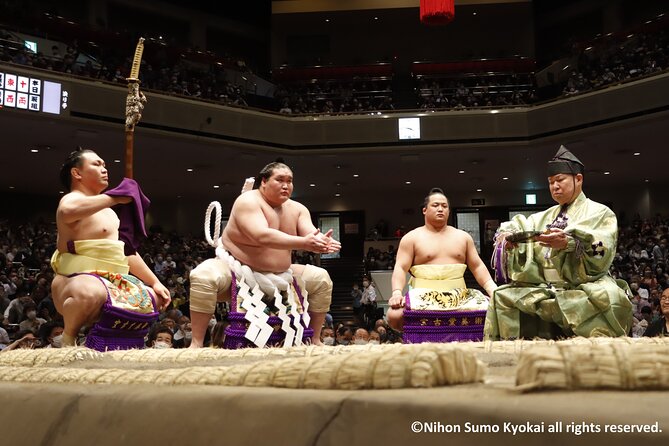
This tour runs on a tight schedule and the arena runs on strict rules, so I suggest you treat logistics as part of the fun, not a nuisance.
Bring less stuff than you think
Strollers have storage areas on the 1st and 2nd floors, but strollers cannot be brought into the arena seating area. The tour has no responsibility for theft or loss in storage areas, so do not leave anything valuable unattended.
Suitcases and large luggage cannot be brought into the seating area, and the hotel does not offer baggage storage for you. If you are arriving with rolling bags, plan ahead using coin lockers near your lodging.
Food and drink rules inside Kokugikan
Bringing food and drinks, including alcohol, into Kokugikan is prohibited. You will need to buy refreshments from vendors inside the arena. For S and A seats, you already receive the light yakitori and drink included with the tour, but outside that, you still shop on-site.
Arrive early, or you risk losing your seat
You need to arrive and meet the guide 10 minutes before the tour start time. Late arrival can cancel reservations. The day can run on ceremony timing, and you do not want to be the person racing the clock.
Group seating may be spread out
If your booking is divided across multiple reservations, group members might not sit together. Seating can be across the main, opposite, east, and west sides. That is normal for how arenas manage capacity.
Price and logistics: why $124 can feel worth it (or not)
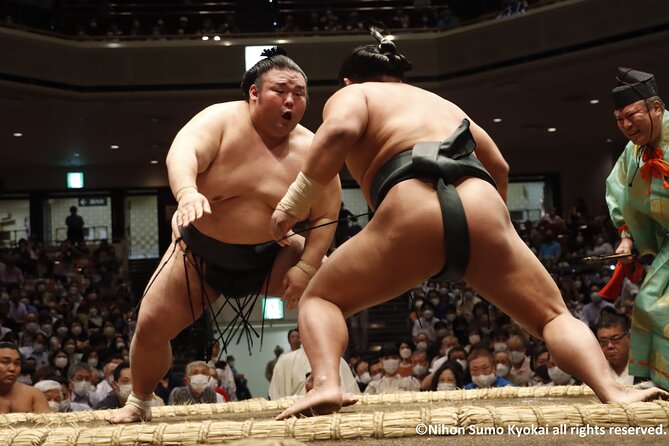
At $124 for about a 4-hour experience, you are paying for two things that are hard to replicate on your own: access and context.
First, tournament tickets at the Grand Sumo level can be extremely hard to secure if you are not local or not planning far ahead. This tour handles the ticket piece by including a mobile ticket in your package, which takes one big stressor out of your trip.
Second, sumo makes more sense with a translator who explains what you are watching. The guide provides rules translation and uses the English brochure plus the same-day ranking list to place each bout in the tournament structure. That is not fluff. If you try to “wing it,” you will still enjoy the spectacle, but you will miss the meaning behind rank, division, and ceremony.
That said, this is still a premium experience. If your goal is only to sit in a seat and watch any match with no guidance, you might decide you can manage independently. But if this is your first sumo tournament, or you want the sport to click quickly, the included coaching and English materials are where the price starts to justify itself.
Also remember what you do and do not get. There is no hotel pickup or drop-off included. The tour starts at the hotel and ends at Kokugikan around 6 pm, so you should already have a plan for getting back out after the bow-twirling ceremony.
Who should book this tour, and who might skip it
This fits best if:
- You are seeing sumo for the first time and want the rules, ranking, and ceremonies explained in plain English
- You care about understanding makuuchi top-division cues like kesho-mawashi
- You would rather pay for guided logistics than wrestle (pun intended) with tournament logistics on your own
- You want a small group experience with an English guide nearby for questions
You might skip or consider a different option if:
- You are mainly after the lowest-effort viewing and do not need help understanding what you are watching
- You have strong dietary needs that conflict with the included yakitori snack on S/A seats
- You hate waiting around for seating when ceremonies or processions pause the flow
Should you book Tokyo Grand Sumo Tournament Viewing Tour with Tickets?
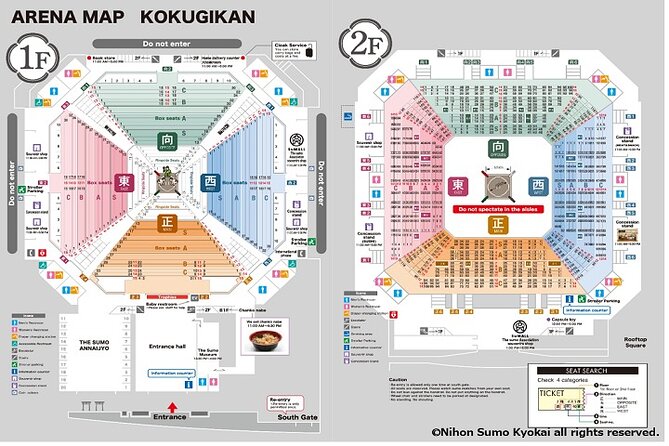
If you want sumo to feel like a story you can follow, I think this is an easy yes. The best part is that you do not just watch. You understand why the crowd reacts when it does, what the ranking context means, and what makes the top division moments special.
Choose S or A if you like value perks like the included yakitori and drink and the cheering towel. Choose B if you want a later start and are fine handling food and souvenirs on your own inside the arena.
My final advice: treat the early arrival requirement seriously, and plan dinner near Kokugikan for after 18:00. Do that, and your first sumo tournament in Tokyo will feel less like a ticket purchase and more like you joined a real cultural event with the volume turned way up.
FAQ
Where do I meet the guide?
You meet at Ryogoku View Hotel, near the sumo stadium area. You should arrive about 10 minutes before the tour start time.
Where does the tour end?
The tour ends at Ryogoku Kokugikan National Sumo Arena around 6:00 PM. You will head to your next destination on your own after that.
What do I get with S and A class seats?
With S and A seats, you get 2nd floor chair seating plus a light snack (Kokugikan specialty yakitori and a drink) and a cheering towel. B seats do not include the snack, drink, or cheering towel.
Can I bring food and drinks into Kokugikan?
No. Bringing food and drinks, including alcohol, into Kokugikan is prohibited. You can buy refreshments from vendors inside the arena.
Is there an English brochure and ranking list?
Yes. You are provided a sumo information pamphlet in English and a sumo-ranking list for the day’s events.
What happens if I cancel?
This experience is non-refundable and cannot be changed for any reason. If you cancel or request an amendment, the amount you paid will not be refunded.
Newly listed around Tokyo
- Tokyo private transfer for Yokohama Port★ 4.5 · 63 reviews
- Luxury Kimono Photoshoot at Ginza Tokyo★ 5.0 · 7 reviews
- Tokyo Allstar Food Tour★ 4.5 · 206 reviews
- Tokyo Art Aquarium Museum E-Ticket with optional Tokyo Metro Pass★ 5.0 · 17 reviews
- Tokyo: Best Ginza Food Tour at 3 Local Eateries★ 5.0 · 83 reviews
- Private One Day Nikko Tour with Bilingual driver★ 3.5 · 11 reviews
- PRIVATE tour in 180SX to Daikoku+++++★ 5.0 · 6 reviews
- Kabuki Talk★ 5.0 · 10 reviews
Sumo Stable Visits, compared.
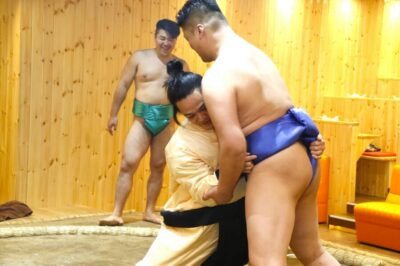
Sumo Show Experience with Chicken Hot Pot and a Photo
Read our review →
Tokyo Sumo Entertainment Show with Chicken Hot Pot and Photo
Read our review →
Sumo Show & Experience w/ Optional Kimono & Hot Pot
Read our review →
Authentic Sumo Experience in Tokyo: Enter the Sanctuary
Read our review →Browse the lists this tour appears in