
Review · FULL-DAY
Mount Koya: Full-Day Private Guided Tour from Osaka
Mount Koya quiets your brain fast. This full-day private guided tour is built around Japan’s Shingon pilgrimage sites, letting you move through Koyasan in an order that feels natural and calmer than random sightseeing. I especially like the route starting at the Daimon Gate and finishing at Okunoin’s vast cemetery, and I also love the city-to-country shift: 2.5 hours on the train, then a cable car ride up into mountain silence. One thing to consider: you will pay a few items on top of the tour price, like lunch and monument entrance fees, and you should expect walking on temple grounds.
You also get real human help, not just a map on your phone. Reviews mention guides such as Sayoko (French-speaking) and Mouloud, with clear explanations and smooth coordination before you even leave Osaka. The guide is available in English, French, or Japanese, and the experience is private or small-group, which matters when you want thoughtful pacing at sacred stops. The day is listed at 7 hours, so it is a proper commitment, not a quick hit between errands.
If your ideal day is low-effort, this one may feel like a full workday in robes and stone pathways. But if you want to understand what you are seeing, and you care about not rushing, the structure makes sense. Start early enough to feel the shift from everyday life to the spiritual world, then let the mountain’s key sites unfold in sequence.
In This Review
- Key things you’ll notice on this Mount Koya day trip
- Osaka to Koyasan, how the day’s rhythm actually works
- Namba departures, train time, and the cable car effect
- First stop: Daimon Gate, the threshold into the sacred world
- Danjō-garan: Shingon Buddhism’s historic center, made readable
- Kongobu-ji Temple: spiritual space with an administrative side
- Lunch on Mount Koya: Buddhist vegetarian food you can actually taste
- Okunoin and Oku no In: the scale of the cemetery and the meaning of quiet
- Price and value, what $241 really covers
- Who this private Mount Koya tour fits best
- Tips to get the most from the day
- Should you book Mount Koya from Osaka with a private guide?
- FAQ
- How long is the Mount Koya private guided tour from Osaka?
- What are the starting locations in Osaka?
- How do you travel from Osaka to Mount Koya?
- What sites do you visit on Mount Koya?
- Is lunch included in the tour price?
- Are temple entrance fees included?
- What languages are available for the live guide?
- Is the tour private?
- Is the tour wheelchair accessible?
- What is the cancellation and payment policy?
Key things you’ll notice on this Mount Koya day trip
- Daimon Gate first, a meaningful threshold into Koyasan, with guided context before you start walking
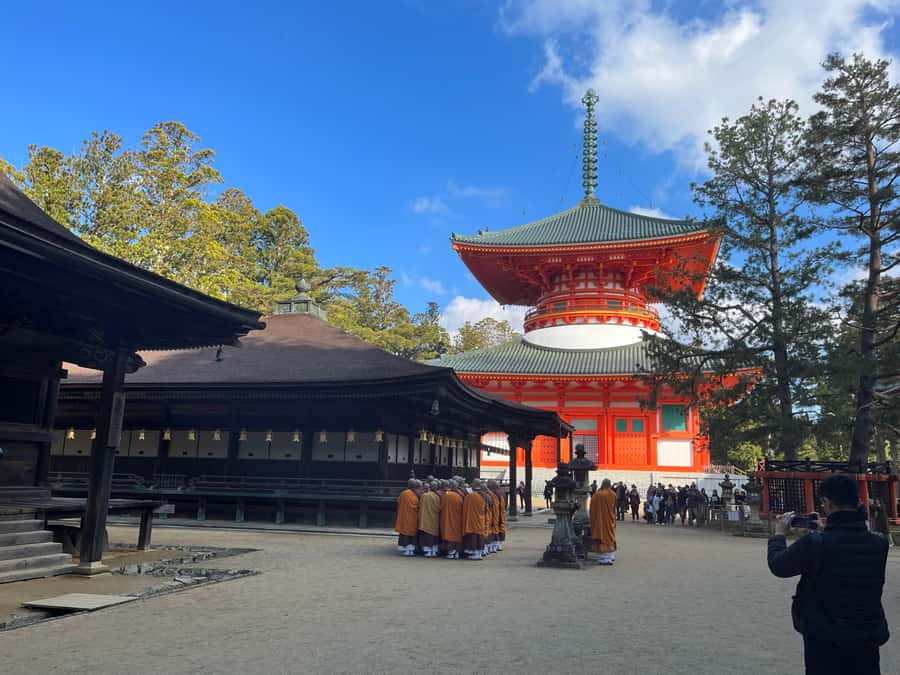
- Danjō-garan in the Shingon heart area, a practical way to understand the roots of the pilgrimage tradition
- Kongobu-ji Temple with its mix of spiritual importance and administrative presence
- Okunoin and Oku no In, including the scale of the cemetery and the mausoleum of Kōbō Daishi
- Private or small-group flexibility, with time to ask questions instead of just following the crowd
- City-to-mountain travel flow, train plus cable car, so the scenery change is part of the experience
Osaka to Koyasan, how the day’s rhythm actually works
This tour is designed as a single, coherent day: you leave Osaka, travel into the countryside, then spend your time on Mount Koya walking temple routes with a guide. The big win is that the schedule matches the mood shift. Instead of arriving, snapping photos, and leaving, you get time for the slow transition from urban noise to mountain stillness.
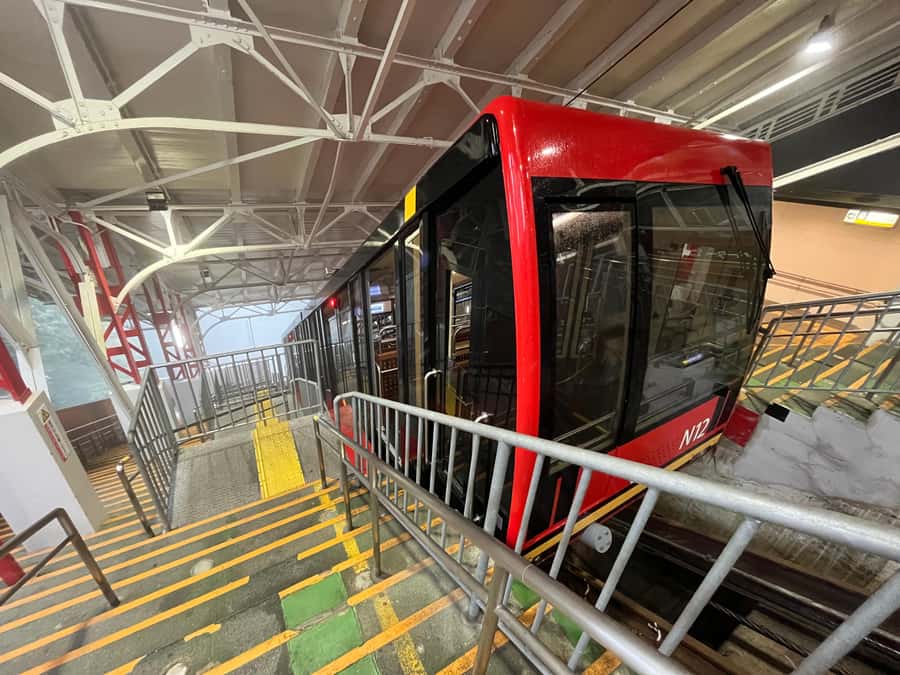
The day is roughly 7 hours total. The moving time is real too: you take the train for about 2.5 hours, then continue upward by cable car. That matters because it frames the mountain experience as something you travel to, not something you pop into.
If you start from Namba Hiroba Square (Pedestrian Paradise) or Namba Station, you are also starting in a place that makes sense for a first Osaka day or for visitors staying nearby. From there, you are not left to figure out which platform or which transfer. Your guide handles the flow.
A few more Osaka days to weigh up
- Osaka Go Karting Tour with Funny Costume
★ 5.0 · 2,658 reviews - Osaka Castle: Museum and Tower Entry Ticket
★ 4.5 · 2,380 reviews - Osaka: Shinsekai Food Tour with 13-15 Dishes at 5 Eateries
★ 4.8 · 2,204 reviews
Namba departures, train time, and the cable car effect
There are two starting options in Osaka: Namba Hiroba Square (Pedestrian Paradise) or Namba Station. That choice is more than convenience. It can help you match the tour start to where you already are based on your hotel location.
Once you are on the train, the countryside shift starts happening before you ever see temple roofs. This is one of the reasons I like guided Mount Koya days: the travel part teaches the setting. When you finally ride the cable car up, you are already primed for the change in air, light, and sound. That means when the temples appear, it feels like a destination, not a stop.
One practical caution: because the tour includes public transport and a cable car ride, you should build your day around it. This is not the right plan if you are trying to squeeze in other major Osaka sights immediately after. The mountain day takes your attention.
First stop: Daimon Gate, the threshold into the sacred world
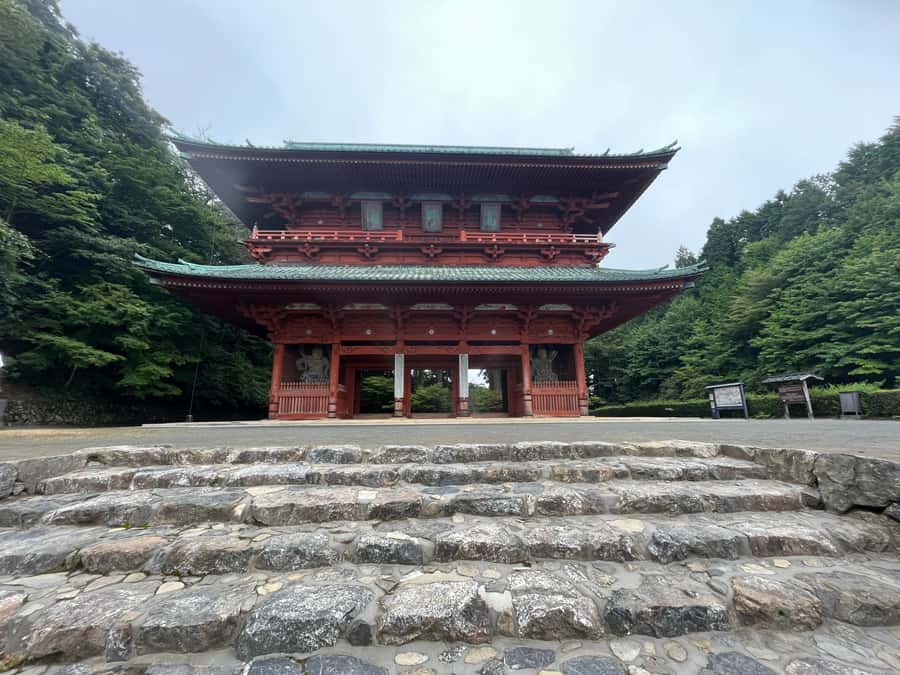
You arrive and start at the Daimon Gate. This is the kind of “don’t skip this” moment. The gate works like a symbolic border between everyday life and the spiritual space beyond it. With a guide, that meaning becomes more than decoration. You know why you are walking through, not just that you are taking a picture.
The visit includes time to look around and guided explanation, then you walk about 30 minutes from there to the Shingon core area. Starting here also helps you set the emotional tempo of the day. You are not starting with the busiest looking building or the easiest viewpoint. You start with the passage that frames everything that follows.
A small drawback to keep in mind: any major sacred entrance can still feel crowded depending on the time of day and conditions. The upside is that the tour route order is built to move you through key sites without you getting stuck in the worst of the tourist flow.
Danjō-garan: Shingon Buddhism’s historic center, made readable
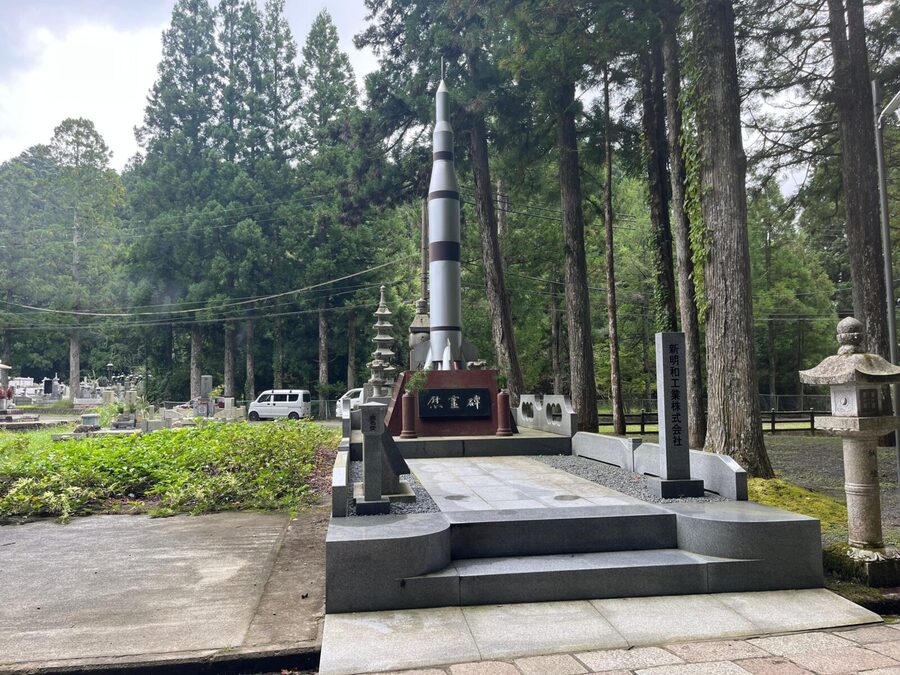
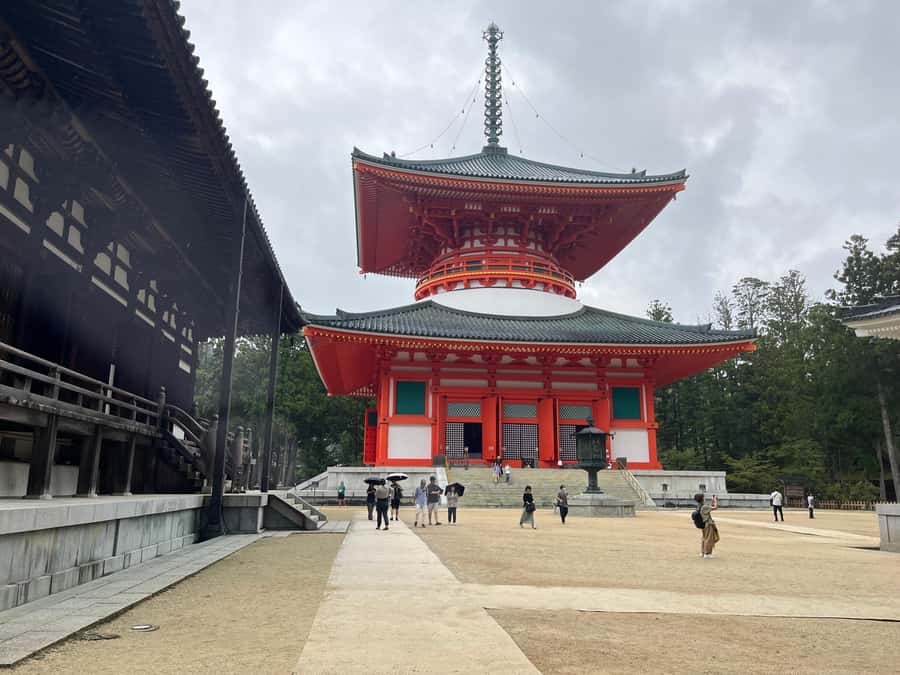
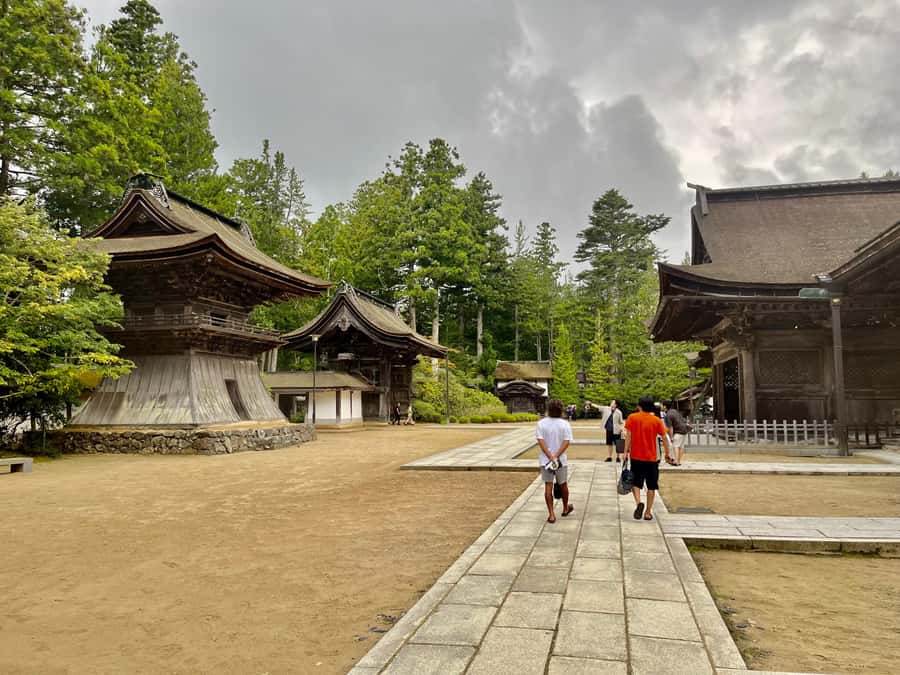
After the gate, you head to Danjō-garan, the historic center of the Shingon Buddhist sect dating back to the 9th century. This is where you begin to understand Mount Koya not as a scenic hillside, but as a living religious system with institutions, rituals, and long continuity.
The stop includes about 1 hour for visit, guided explanation, and walking time. That time balance is useful. Some temple visits feel like a quick checklist. Here, you get a guided pacing that helps you notice relationships between structures and the meaning of the complex as a whole.
What I like about this segment is the way it gives you “mental hooks” for the rest of the day. When you then move on to other temples, the background stops feeling abstract. You can place what you see into the Shingon story, instead of guessing.
If you dislike walking inside large complexes, you might find this section a bit active. But the tour is still structured as a day on foot, and the walking time is built into the 7-hour plan.
A different sort of day in Japan:
- Osaka Food Tour: 13 Dishes at 5 Local Eateries
★ 5.0 · 2,149 reviews - Hungry Osaka Street Food Tour:15 Tastings & 3 Drinks with a Local
★ 5.0 · 1,727 reviews - Osaka: teamLab Botanical Garden Entry Ticket
★ 4.5 · 1,710 reviews - Osaka: Tea Ceremony Experience
★ 4.9 · 1,426 reviews
Kongobu-ji Temple: spiritual space with an administrative side
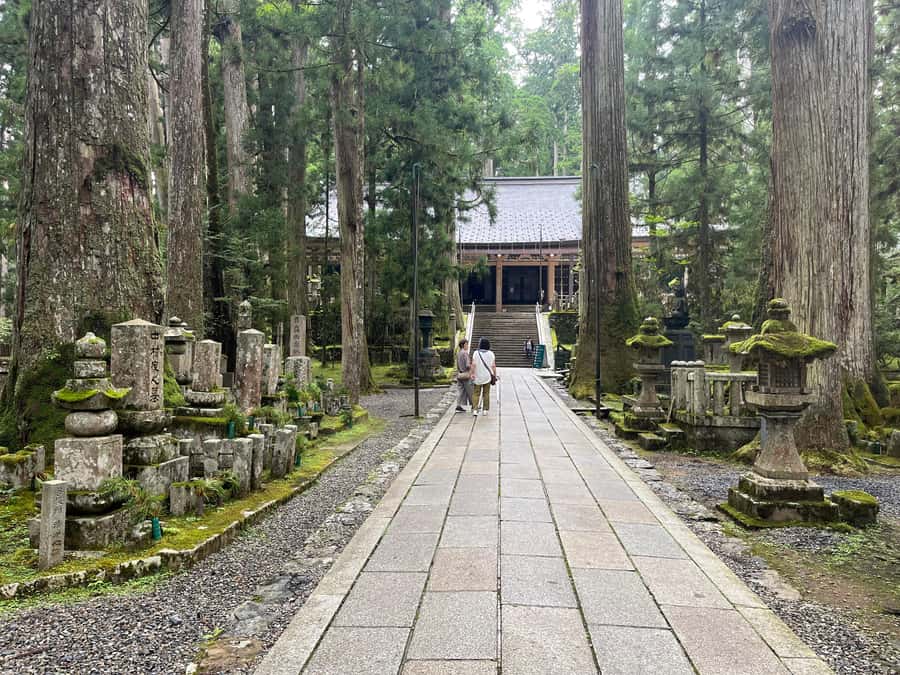
Next comes Kongobu-ji Temple, again with about 1 hour for visit, guided explanation, and walking time. This stop stands out because Kongobu-ji has a dual identity: it is tied to Hideyoshi Toyotomi, and it also functions as an administrative center today.
That combination matters for how you experience it. Many temple spaces are purely ceremonial in how visitors relate to them. Kongobu-ji adds a layer that makes the place feel functional, not just symbolic. You get the sense that the faith is maintained through organization as well as spirituality.
From a practical standpoint, this is also a good “middle of the day” anchor before you reach Okunoin and the cemetery area, which is bigger and more reflective by nature. You are still moving and learning, but you are not yet in the most expansive space.
Lunch on Mount Koya: Buddhist vegetarian food you can actually taste
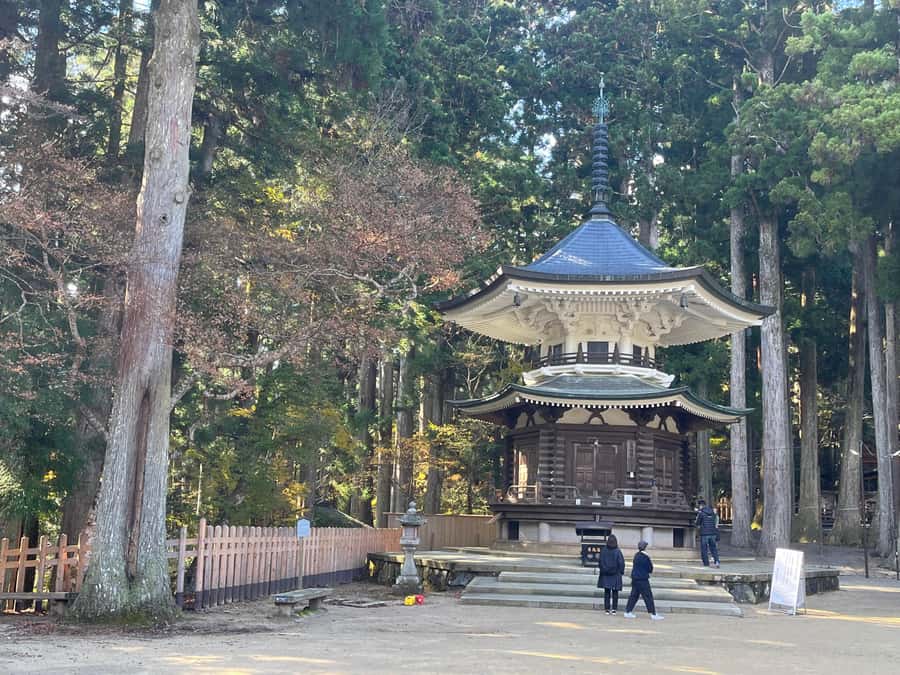
You get a lunch break at a local restaurant, timed for about 1 hour. Lunch is not included in the tour price. The listing places it at around 2,000 JPY per person, and the guide fees include lunch for the guide, not lunch for you. So you will want to budget for your own meal.
One of the best details from the experience is the specific style of food. Reviews mention Buddhist vegetarian options such as tofu goma or tofu au sésame. That matters because it is not just a random set meal. It is cuisine connected to the temple setting, which helps the day feel consistent instead of turning into a generic tourist lunch.
If you have dietary needs, you may want to mention them to the operator when booking, since you will be eating in a local restaurant chosen as part of the day plan. Still, based on what is described, the menu approach is grounded in vegetarian Buddhist cooking.
Okunoin and Oku no In: the scale of the cemetery and the meaning of quiet
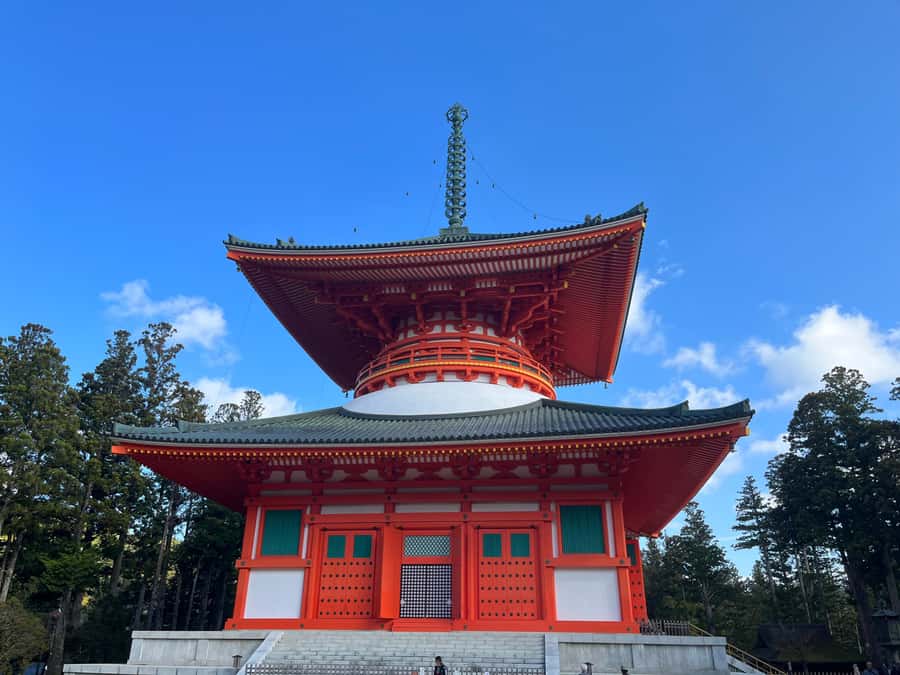
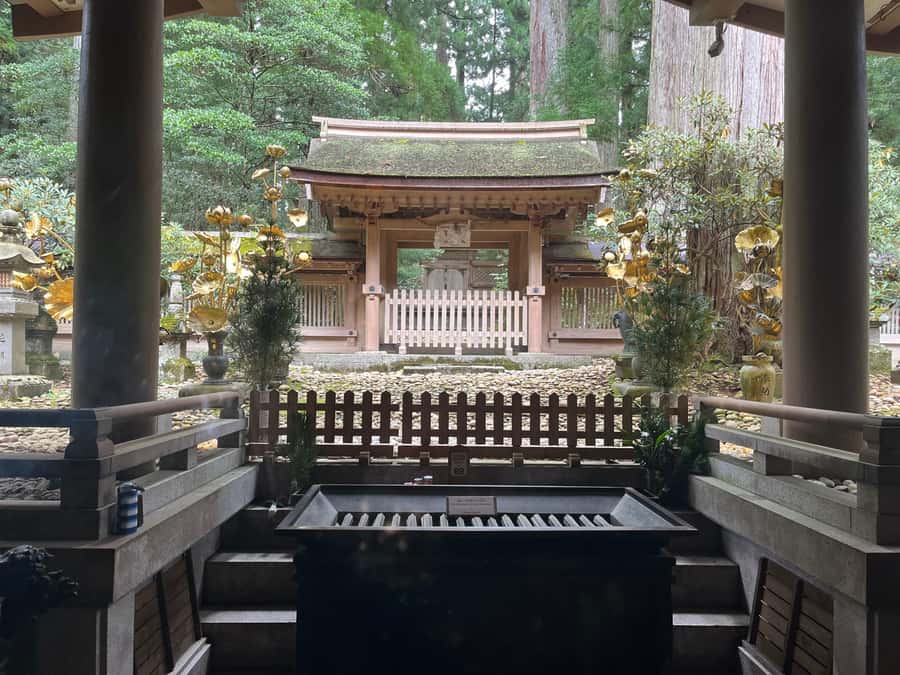
The final major stop is Okunoin Temple. This is where Mount Koya becomes unforgettable for many people. The cemetery area known as Oku no In is described as Japan’s largest cemetery, and it includes the mausoleum of Kōbō Daishi plus around 200,000 graves of people who wanted to rest with him.
The tour includes about 1 hour here for visit, guided explanation, and walking time. That is enough to understand why people slow down at Okunoin. It is not a place designed for speed. Even without chasing every side path, the atmosphere and scale do the work for you.
Also, the route ends at Okunoin mae in Koyasan. That final positioning helps you finish in the right zone, rather than leaving you halfway across the area.
A consideration: because this is a large cemetery space, shoes matter. You should plan on walking and being on your feet for most of the day. If you are someone who gets overwhelmed by crowds, Okunoin can be intense at peak times, but starting earlier in the day and following this order tends to make the experience feel more balanced.
Price and value, what $241 really covers
The price is listed at $241 per person for a 7-hour private guided tour. That can sound high if you think of it as just transportation. But this is not only a ride out of Osaka.
What you are paying for is:
- A live guide experience (English, French, or Japanese)
- Guided time inside the temple complexes
- The guide’s entrance, lunch, and transport fees
What you are not paying for (and you should plan for) includes:
- Transport fees for you, listed as less than 4,000 JPY per person per day
- Lunch fees for you, around 2,000 JPY per person
- Entrance to monuments, listed as about 1,000 JPY per person each for Danjō-garan and Kongobu-ji Temple
So the true cost depends on your personal spending on lunch and the exact transport charges for the day. Still, the structure is clear: the guide is included deeply in the experience, and you are not left to puzzle out the day while you pay for tickets separately.
In value terms, I think this price makes sense when you care about context and pacing. If you just want photos and you already know what you are looking at, you can DIY. But if you want the meaning explained at each threshold and complex, a private or small-group guide is what turns Mount Koya from scenery into understanding.
Who this private Mount Koya tour fits best
I think this tour is a strong match if you:
- Want a private or small-group day, so you can ask questions and move at a human pace
- Appreciate sacred context, especially around Shingon Buddhism and Kōbō Daishi
- Prefer guided logistics when traveling from Osaka by public transport
- Want the day structured to avoid feeling like you are chasing the tourist crowd
It is also listed as wheelchair accessible. If accessibility is a priority for you, this listing is a promising sign, but you should still ask how walking routes are handled for your mobility needs before you go.
This might be less ideal if you:
- Hate walking on temple grounds and would rather minimize steps
- Are hoping to keep spending totally flat, because lunch and monument entrances are extra
Tips to get the most from the day
A few practical moves will make the day smoother.
First, bring comfortable shoes. Okunoin is the kind of place where you feel every step, and the tour is planned as a day on foot through multiple temple zones.
Second, accept that lunch and some entrances are add-ons. It is normal for Japanese temple days to have paid entries and set meals, and here the listing makes that clear.
Third, lean into the guide explanations. The tour order matters. Starting at Daimon Gate gives you a framework, Danjō-garan supplies the Shingon center, Kongobu-ji adds the administrative-spiritual layer, and Oku no In provides the emotional finale. When you follow that sequence, you see more than you would if you just jumped between buildings.
Finally, if you have language needs, pick based on comfort. English, French, and Japanese are available. Reviews include French-speaking guidance from Sayoko, and coordination and guiding from Mouloud, which is a good sign that the experience can be handled well in multiple languages.
Should you book Mount Koya from Osaka with a private guide?
If your goal is to understand Mount Koya, not just visit it, I would book this style of tour. The route logic is thoughtful, starting at Daimon Gate and ending at Okunoin’s Oku no In cemetery where Kōbō Daishi is enshrined and the scale reaches around 200,000 graves. The train plus cable car flow also helps you feel like you are traveling into a different world.
I would say hold off or consider an alternative only if you are sensitive to walking, or if you want a totally no-extra-cost day. Otherwise, the $241 private price buys you what you actually need on a mountain day, a guide who helps you read the place as you go, plus a calm order that makes the sacred spaces feel like a journey instead of a checklist.
FAQ
How long is the Mount Koya private guided tour from Osaka?
The duration is 7 hours.
What are the starting locations in Osaka?
You can meet at either Namba Hiroba Square (Pedestrian Paradise) or Namba Station, depending on the option booked.
How do you travel from Osaka to Mount Koya?
You take the train for about 2.5 hours, then you go up to Mount Koya by cable car.
What sites do you visit on Mount Koya?
You visit Daimon Gate, Danjō-garan, Kongobu-ji Temple, and Okunoin Temple (Oku no In). The tour finishes at Okunoin mae in Koyasan.
Is lunch included in the tour price?
Lunch fees are not included. Lunch is listed at around 2,000 JPY per person.
Are temple entrance fees included?
Entrance to monuments is not included. Entrance is listed as 1,000 JPY per person for Danjō-garan and 1,000 JPY per person for Kongobu-ji Temple.
What languages are available for the live guide?
The live tour guide is available in English, French, and Japanese.
Is the tour private?
It is available as a private or small-group tour.
Is the tour wheelchair accessible?
Yes, it is listed as wheelchair accessible.
What is the cancellation and payment policy?
You can cancel up to 24 hours in advance for a full refund, and you can reserve now and pay later.
Newly listed around Osaka
- Matcha Tea Bowl Experience in Osaka★ 5.0 · 11 reviews
- Master Washoku: 5 Core Techniques for Authentic Cooking★ 4.7 · 7 reviews
- Learn Zen in a class of making Matcha tea near Osaka Castle★ 4.8 · 17 reviews
- Learning Shodo with a kimono and Trying Samurai Calligraphy★ 4.2 · 7 reviews
- Kyoto: Immersive Arashiyama & Fushimi Inari by Private Car★ 5.0 · 35 reviews
- Katsu Curry OR Bento Making Cooking Class & Local Shop Tour★ 4.9 · 11 reviews
- JAPAN 7Days Unlimited 4G SIM (OSAKA Pick-up)★ 4.6 · 9 reviews
- Himeji: Private Guide Tour of the Castle from Osaka or Kyoto★ 4.5 · 7 reviews
Full-Day, compared.

Mount Fuji Full-Day Private Tour from Tokyo (Customizable)
Read our review →
Hiroshima / Miyajima Full-day Private Tour with Government Licensed Guide
Read our review →
Full-Day Guided Bus Tour to Top Highlights & Tickets
Read our review →
5 Top Highlights of Kyoto Full Day Bike Tour (E-bike option)
Read our review →Browse the lists this tour appears in