
Review · SUMO STABLE VISITS
Nagoya: Grand Sumo Tournament Tour
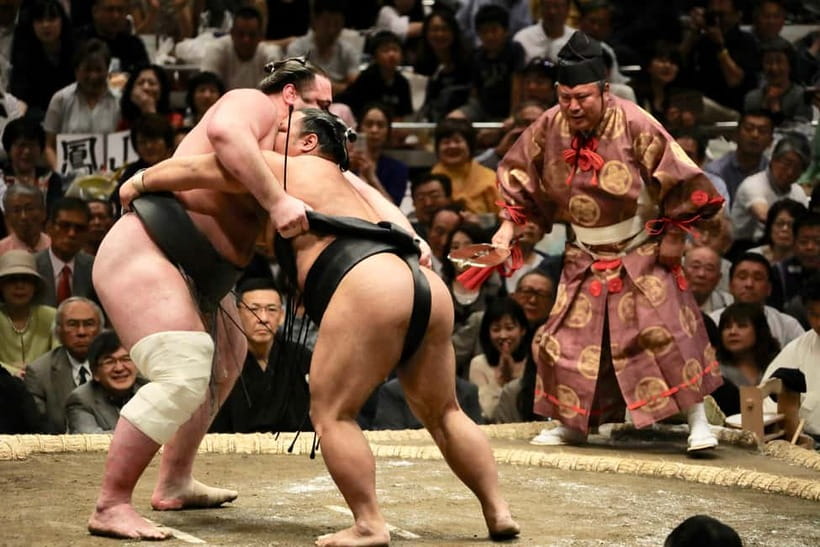
Sumo clicks when someone explains the rules. The Nagoya Grand Sumo Tournament Tour turns a busy arena into an easy, fun day, with English guidance you can actually hear, plus materials that help you understand the bouts in real time. Guides such as Keiko, Yuki, and Mari bring the traditions to life, and the setting includes a bonus look at Nagoya Castle before the action starts.
What I like most is how practical the tour design feels. I love the earphone guide system, because the commentary stays clear even from farther seats, and you do not miss the key moments. I also like the match-day tools, the English wrestler pamphlet the guide walks you through, and the cheering towel used at the right time so your support feels connected to the bout, not random.
The one thing to weigh is value for your budget. At $225 per person, it is a premium ticket, and you are committing to a 15:00 start plus a full 3 hours of top-division bouts, so it helps to be the type of person who can focus for a while.
In This Review
- Key tour highlights that make it worth your time
- Nagoya from Osaka and Kyoto: the smart shortcut to sumo
- 15:00 top-division bouts with live guidance you can actually hear
- Your match-day cheat sheet: pamphlet, towel, and sumo booklet in English
- Optional Nagoya Castle walk: Tokugawa strategy and the Honmaru details
- Seating, timing, and small-group flow inside the arena
- Guides who set the tone: energy, explanations, and group support
- Price and Logistics: what $225 buys you, and where it might feel steep
- Who should book this Nagoya sumo tour
- Quick practical tips before you go
- Should you book this Nagoya Grand Sumo Tournament Tour?
- FAQ
- What time does the sumo tournament viewing start?
- Where do we meet for the tour?
- Is there an optional Nagoya Castle stop?
- What language is the tour provided in?
- Are seats included, and what kind are they?
- Do I get help hearing the guide from far away?
- What extra items do I receive?
- Is hotel pickup or drop-off included?
Key tour highlights that make it worth your time
- Real-time headset commentary that keeps pace with what is happening in the ring
- English wrestler pamphlet with photos and profiles, guided as the matches roll
- Cheering towel for a chosen wrestler, with timing cues from the guide
- Sumo primer booklet so rules and rituals make sense fast
- Optional Nagoya Castle walk near the sumo arena, with Tokugawa-era context
- Assigned chair seating at the sumo tournament (Chair S or Chair A)
Nagoya from Osaka and Kyoto: the smart shortcut to sumo
Nagoya has a rare advantage: you can base yourself in the bigger, more famous Kansai hubs and still get to a real grand sumo tournament day. From Osaka, it is about a 50-minute train ride, and from Kyoto it is about 34 minutes. That matters because sumo is already a full experience, so you do not want extra travel stress eating your energy.
The tour meets at Meijo Line Nagoyajo Sta. (M07), Exit 7 on the ground. You find the guide by a recognizable signboard. Then you head into the arena area for the tournament block, with the option to add the Nagoya Castle walking tour tied to the same day.
Nagoya itself is not just an airport stop or a transit point. The city’s story starts around Nagoya Castle, built in the early 17th century by the Tokugawa clan. Even if you are only visiting for a few days, this gives your sumo day more weight. You are not just watching a sport, you are also seeing the political and cultural background that helped shape how Japan organized power and ritual.
If you care about smooth transitions, this layout works. The meeting point is clear, the tour stays compact and focused, and you return to the same meeting spot when it ends.
Compare these Sumo Stable visits in Nagoya:
- Tokyo: Sumo Show Experience with Chicken Hot Pot and a Photo
★ 4.8 · 6,678 reviews - Tokyo: Sumo Show and Dining Experience
★ 4.8 · 2,742 reviews - the SUMO show
★ 5.0 · 1,960 reviews
15:00 top-division bouts with live guidance you can actually hear
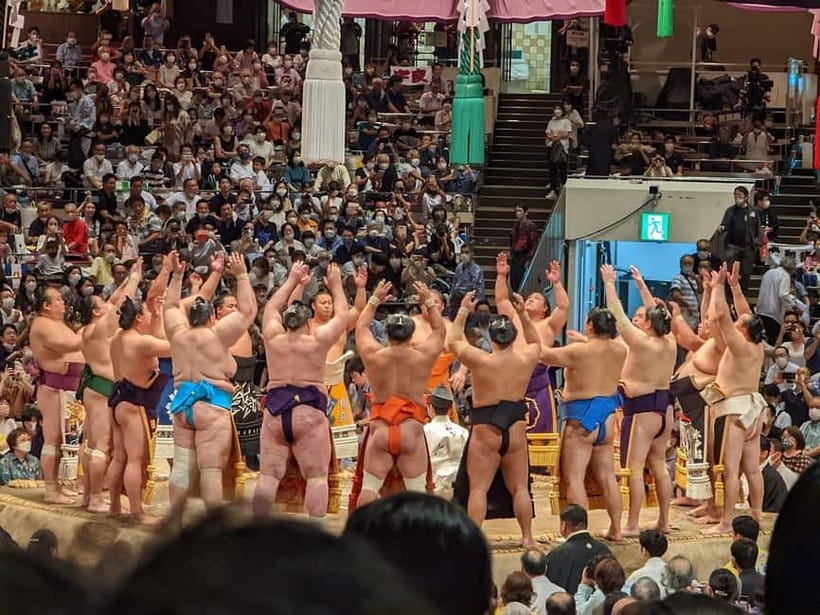
The centerpiece is the grand sumo tournament viewing, with top-division wrestlers and real-time commentary throughout. The bouts run for 3 hours starting at 15:00. This start time is not arbitrary. If you start too early and drift through long stretches, it is easy to get bored and lose momentum before the main matches land. The tour’s timing pushes you to stay locked in for the best part of the day.
The big upgrade is the earphone guide system. Sumo arenas can be noisy, and seats can put you farther from the action. Here, your guide provides live commentary through your headset, so you can follow what is going on without relying on perfect visibility or guessing.
This is also where first-timers benefit the most. Sumo has rules and small rituals that you might miss when you watch on your own. With the guide calling out what matters and when, the bout becomes easier to track: grips, momentum shifts, and the moments that decide the outcome.
I also like the rhythm the tour sets. You are not just sitting there for hours. You have something to listen for, and that keeps you mentally engaged. The tour design basically prevents the common problem of staring at a ring and hoping you will understand in time.
Your match-day cheat sheet: pamphlet, towel, and sumo booklet in English
If you want to understand sumo fast, the tour gives you the tools you would otherwise hunt down. You receive:
- A pamphlet with photos and profiles of each wrestler, with English translations
- A sumo booklet that explains a lot about how sumo works
- A cheering towel tied to a specific wrestler the guide chooses for the group
What makes these items useful is timing. The guide walks you through the pamphlet as you watch. That turns names and faces into context. Instead of seeing a parade of unfamiliar wrestlers, you start catching patterns and learning who is who before each bout matters.
The cheering towel is a fun twist, and it is not just a gimmick. The guide shows you how to use it when your wrestler is about to fight. That small instruction changes the experience. You are not cheering blindly, you are participating in the flow of the tournament the way fans do.
And because you also get a sumo primer booklet, the explanations can stick better. After a few bouts, you stop thinking in terms of random events and start seeing the structure behind the drama.
This is one of the tour’s strongest value points, especially if it is your first sumo tournament. You can still enjoy the pageantry on your own, but understanding the why behind each moment is where the experience becomes genuinely satisfying.
Optional Nagoya Castle walk: Tokugawa strategy and the Honmaru details
Before the sumo action (or around the lead-up to it), you can add an optional walking tour of Nagoya Castle. The castle grounds are closely tied to the sumo venue area, so it feels like a natural pairing rather than a separate sightseeing detour.
The guide focuses on four big historical and architectural themes:
1) The historical backdrop for when and why the castle was constructed
2) How the Tokugawa clan mobilized feudal lords who were once antagonistic toward the clan
3) Architectural techniques used to build it
4) How effective the castle was as a fortress and a dungeon
This is the kind of context that helps the castle feel like more than scenery. Even if you are not an architecture person, those points connect the buildings to power, control, and daily reality in the early 1600s.
One standout feature is the Honmaru Palace, described with emphasis on fine materials and decorative detail. You see the use of hinoki cypress wood, along with decorative metal fittings, plus art found across walls, ceilings, and sliding doors.
For photos, the palace details give you more than generic views. For understanding, the guide helps you read the building like a system. If you like linking “what you see” to “what it meant,” this castle segment fits your style.
Practical note: the castle walk is optional, but it is still outdoors. Wear comfortable shoes, because walking comfort is what lets you enjoy the details instead of counting down the minutes.
A few more Nagoya days to weigh up
- From Nagoya: Gujo, Hida Takayama, and Shirakawa-go Day Tour
★ 4.4 · 398 reviews - Ghibli Park 1-Day Bus Tour from Nagoya
★ 4.5 · 277 reviews - From Nagoya: Hida Takayama & Shirakawa-go Tour w/Opt. Lunch
★ 4.5 · 256 reviews - Hiking the Historic Nakasendo Trail [1 Day Tour from Nagoya]
★ 5.0 · 104 reviews
Seating, timing, and small-group flow inside the arena
This is a small group tour. That matters because sumo is not a passive show. You want a guide who can keep your group together, answer questions, and keep the commentary synced with the bout flow. Larger tours can feel chaotic in an arena, but a smaller group helps the experience feel organized.
You get chair seating at the tournament, specifically Chair S or Chair A. I like assigned seating for two reasons. First, it removes the scramble factor. Second, it lets the guide and earphone system do their job, since everyone is in roughly comparable viewing zones.
The schedule is also set for attention. You start at 15:00 for 3 hours of bouts. That means you are not burning your whole day waiting around. It also means the tour is best if you can hold your focus across multiple matches.
If you get restless easily, consider that sumo tournaments move in their own tempo. The match flow is exciting, but you still have stretches between big moments. The guide commentary is built to fill those gaps with meaning, so the bouts feel less like random transitions.
A detail I really appreciate is that the guide provides real-time explanations and uses the provided materials during the viewing block. That creates a steady loop: look at the ring, check your pamphlet context, hear the live commentary, then react with the towel at the right moment.
Guides who set the tone: energy, explanations, and group support
A big part of why this tour earns such strong marks is the guide. You may meet guides such as Keiko, Yumi, Yuki, Mari, or Sunny Yoko. Across different guide styles, the common theme is clear: they bring sumo to life with energy, friendly pacing, and explanations that make rituals and rules feel less mysterious.
Some guides lean into storytelling, connecting bouts to tradition. Others focus on practical clarity, breaking down what you are watching and why it matters. Either way, the goal is the same, you should feel like you understand what is going on, not like you are just watching a fast sport without context.
There is also a “group” element. Guides encourage you to support the tournament atmosphere together, including using favorites and cheering at the right moments with the towel. That shared cheering is small, but it changes how fun the day feels.
One more thing I noticed in the guide patterns is responsiveness. If people get turned around on the way to the meeting spot, guides in this program can handle it, keeping the experience on track.
Price and Logistics: what $225 buys you, and where it might feel steep
Let us talk money, because $225 per person is not a casual add-on. This price is premium, and it is justified only if you value the guided components.
Here is what your ticket includes:
- Tournament seating (Chair S or Chair A)
- English real-time commentary through an earphone guide system
- English wrestler pamphlet with photos and profiles, used during the bouts
- Cheer towel and instructions on when to use it
- A sumo booklet
- Optional Nagoya Castle walking tour
- The tour operates in English
- No hotel pickup or drop-off
So the value is not just “you get into sumo.” You also get translation support, a match-day context system, and active engagement through the towel. If you are going alone and trying to figure out rules by yourself, you might spend time and energy just trying to make sense of what you are seeing. This tour compresses that learning curve.
Still, if you already know a lot about sumo, or if you are mainly in it for the spectacle, you may feel the price more sharply. In that case, you could consider whether you need the full set of translated materials and headset commentary.
Also remember that the tour does not include hotel pickup or drop-off. You have to get yourself to Meijo Line Nagoyajo Sta. Exit 7 on your own. That is fine if you are already using local transit, but it is a factor if your plan depends on door-to-door transfers.
Who should book this Nagoya sumo tour
This tour is ideal if:
- You are seeing sumo for the first time and want to understand rules and rituals quickly
- You prefer guided experiences with English commentary and practical context
- You enjoy interactive touches like cheering a chosen wrestler with a towel
- You want to add Nagoya Castle to the same day without extra planning
It is also a solid choice if you are traveling from Osaka or Kyoto and want a focused day trip that does not waste time.
It may not be the best fit if:
- You are on a tight budget and want the lowest-cost way to attend
- You get tired sitting for long stretches, even with commentary
- You dislike structured tours and prefer free-form wandering
Quick practical tips before you go
A few small choices help your day go smoother:
- Wear comfortable shoes for the optional castle walking portion
- Build your day around a 15:00 start, because the tournament viewing block drives the schedule
- Plan to arrive at Meijo Line Nagoyajo Sta. Exit 7 and find the guide by the signboard
Also, since the tour is in English, you can relax about translating on your own. You still get the full experience, and you can focus on watching and listening.
Should you book this Nagoya Grand Sumo Tournament Tour?
Yes, if you want your first sumo tournament day to feel understandable, fun, and well-paced. The combination of headset commentary, the English wrestler pamphlet, and the cheering towel is the kind of practical guide support that turns confusion into enjoyment.
Skip it only if you are strongly budget-driven, already fluent in sumo basics, or not up for a 15:00 to 3-hours viewing commitment. For everyone else, this is one of the smarter ways to experience both sumo and Nagoya Castle in a single, organized afternoon.
FAQ
What time does the sumo tournament viewing start?
The tour’s top-division sumo viewing is scheduled for 3 hours starting at 15:00.
Where do we meet for the tour?
The meeting point is Meijo Line Nagoyajo Sta. (M07), Exit 7 on the ground. The guide will be holding a recognizable signboard.
Is there an optional Nagoya Castle stop?
Yes. There is an optional Nagoya Castle walking tour included, tied to the area where the sumo arena is located.
What language is the tour provided in?
The tour is offered in English.
Are seats included, and what kind are they?
Yes. You get chair seating at the sumo tournament, either Chair S or Chair A.
Do I get help hearing the guide from far away?
Yes. The tour includes an earphone guide system so you can hear the guide clearly even from a distance.
What extra items do I receive?
You receive a pamphlet with English wrestler photos and profiles, a sumo booklet, and a cheering towel for a particular wrestler.
Is hotel pickup or drop-off included?
No. Hotel pickup and drop-off are not included.
Newly listed around Nagoya
- Nagoya: Traditional Japanese Sweets-Making Workshop★ 4.6 · 14 reviews
- Nagoya: Full-Day Nagoya City Tour★ 5.0 · 8 reviews
- From Nagoya: Shirakawa-go UNESCO Village Day Trip w/ Pickup★ 4.0 · 8 reviews
- Nagoya Private Custom Tour with Local Guide★ 5.0 · 15 reviews
- Nagoya: Japanese Traditional Sweets making and Tea Ceremony★ 4.9 · 76 reviews
- Nagoya Highlight Tour guided by friendly locals★ 5.0 · 7 reviews
- Nagoya: Full-day Kisoji Nakaendo Trail Tour★ 5.0 · 6 reviews
- Nagoya: Customized Private Tour★ 4.6 · 15 reviews
Sumo Stable Visits, compared.
Sumo Show Experience with Chicken Hot Pot and a Photo
Read our review →
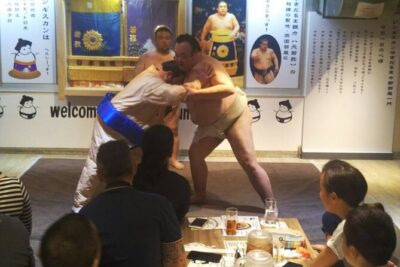
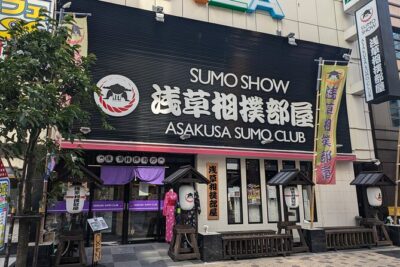
Tokyo Sumo Entertainment Show with Chicken Hot Pot and Photo
Read our review →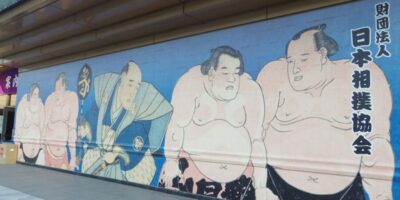
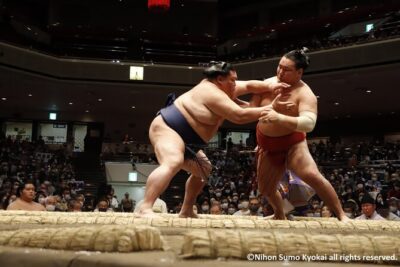
Tokyo Grand Sumo Tournament Viewing Tour with Tickets
Read our review →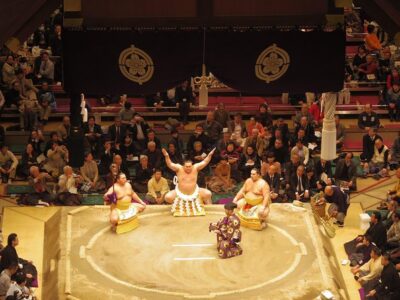

Sumo Show & Experience w/ Optional Kimono & Hot Pot
Read our review →Browse the lists this tour appears in