
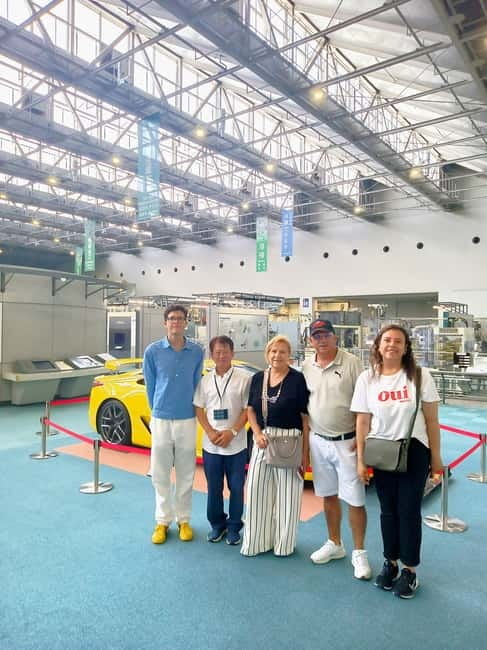
Review · MUSEUMS
Nagoya: Toyota Commemorative Museum Guided Tour
Looms and cars tell the same Toyota story. I love the G-type automatic loom by Sakichi Toyoda and the live machinery that brings manufacturing to life, but if you want a pure car-only show, the textile start may feel a bit slow.
You’ll also be touring inside a beautifully preserved red-brick factory building, which makes the whole lesson feel more real than a typical museum. The English guide can make the engineering click, and in one recent tour I saw a guide named Kono praised as charming and packed with context. One practical note, the museum is not ideal for wheelchair users or people with mobility impairments.
In This Review
- Key things I’d bank on
- Toyota Commemorative Museum in Nagoya: why this tour feels different
- Meeting inside トヨタ産業技術記念館, and how the guide actually helps
- Textile Machinery Pavilion: the G-type automatic loom and Sakichi Toyoda
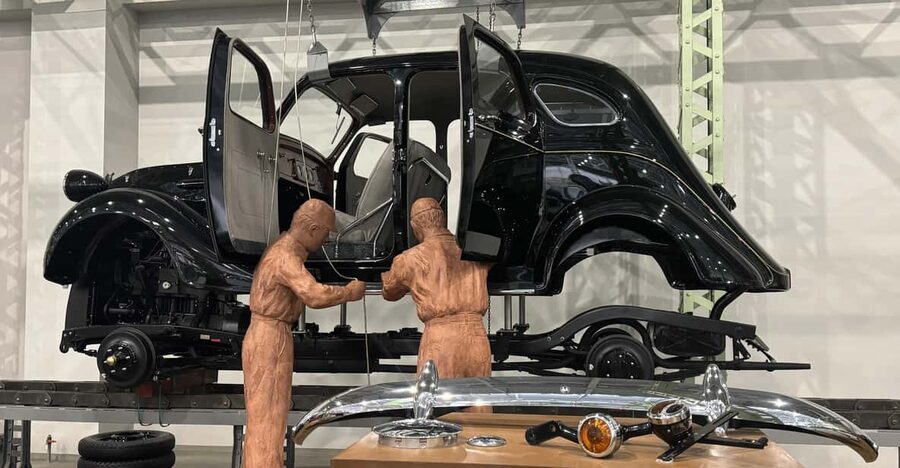
- Automotive Pavilion: pressing, welding, assembly, and the Toyoda Model AA
- From textile company to global powerhouse, and the sustainability thread
- How the 90-minute and 3-hour options feel in real life
- Price and value: does $77 make sense?
- Who should book this Nagoya Toyota museum tour
- Final call: should you book?
- FAQ
- How long is the Nagoya Toyota Commemorative Museum guided tour?
- Where do I meet the guide for this tour?
- What language is the live tour guide?
- What’s included in the ticket price?
- What is not included?
- Can I take photos inside the museum?
- Is this tour for the Toyota Kaikan Museum in Toyota City?
- Is the museum closed on specific days?
Key things I’d bank on
- The G-type automatic loom shows why textile automation mattered before Toyota meant automobiles
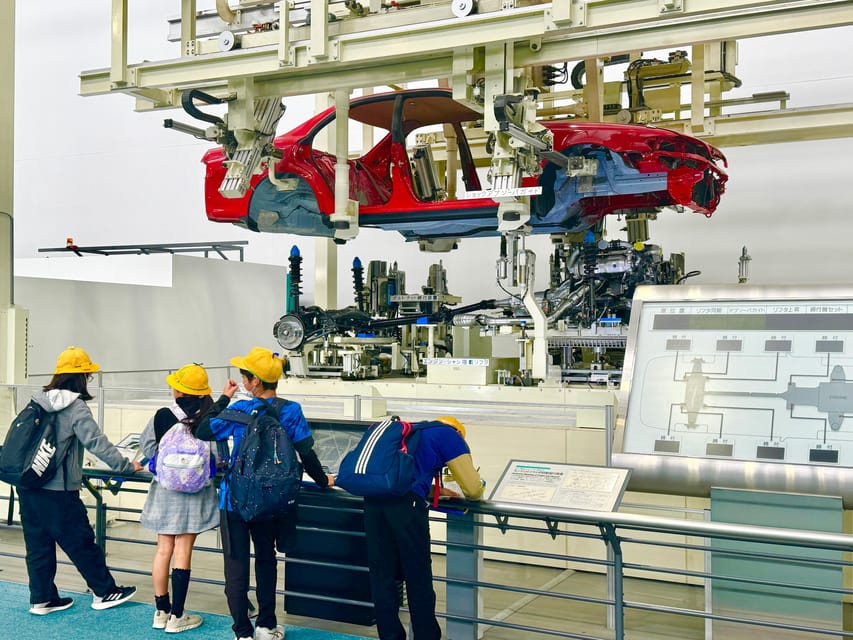
- Live manufacturing demonstrations help you understand pressing, welding, and assembly instead of just reading about them
- Toyota’s first passenger car, the Toyoda Model AA adds a satisfying milestone moment
- Both Textile and Automotive Pavilions are included, so you get the full loom-to-car arc
- Sustainability tech is part of the story, including hybrid and hydrogen fuel cell vehicles
- You meet your English guide inside the museum, next to the ticket counter with a yellow DeepExperience sign
Toyota Commemorative Museum in Nagoya: why this tour feels different

This is a Toyota history tour, but the angle is what makes it fun. Instead of starting with badges and brochures, you begin with machinery tied to Sakichi Toyoda and the world of textiles. That shift changes how you see what Toyota became later.
I like that the focus stays on how things are made. You watch processes and you hear what they were solving. It is less about myth and more about practical innovation, which is exactly what you want in an engineering-minded museum.
One bonus: the museum setting helps. The exhibits live inside a preserved red-brick factory building. Even if you only half-pay attention, the atmosphere keeps you curious and moving from room to room with purpose.
And yes, you do get cars, including the Toyoda Model AA. But the tour keeps reminding you that the automotive leap did not come from nowhere. It came from learning to build better machines, then applying those habits to new industries.
A few more Nagoya days to weigh up
- Tokyo: teamLab Planets TOKYO Digital Art Museum Entry Ticket
★ 4.6 · 9,779 reviews - Osaka Castle: Museum and Tower Entry Ticket
★ 4.5 · 2,380 reviews - Tokyo: Samurai Ninja Museum Guided tour and Experience
★ 4.6 · 1,010 reviews
Meeting inside トヨタ産業技術記念館, and how the guide actually helps
Your tour starts at トヨタ産業技術記念館 (Toyota Commemorative Museum of Industry and Technology) in Nagoya. The meeting point is practical, right next to the ticket counter inside the museum. Your guide holds a yellow sign with the DeepExperience logo, so you do not have to wander around guessing.
This is an English live-guided experience, and that matters more than you might think. Museums often become silent reading marathons. Here, the guide provides the story thread so you understand why each machine matters. That also makes the live operational displays easier to follow because someone is pointing out what to watch.
The tour can be private or in a small group. That tends to help with questions, especially if you care about how parts get made or why certain inventions were breakthroughs. The vibe is not formal museum lecture energy. It is more like a guided walkthrough where you can ask, then keep moving.
What to bring is simple. Wear comfortable shoes. Bring a camera, and also bring water since you will be standing and walking inside and between pavilions. Flash photography is prohibited in certain areas, so plan on regular camera mode and respect posted rules.
Also note a timing reality. The museum is closed on Mondays, or the following day if Monday is a national holiday. If you are building your Nagoya schedule, put this on a day when you are not banking on last-minute access.
Textile Machinery Pavilion: the G-type automatic loom and Sakichi Toyoda
This tour starts in the Textile Machinery Pavilion, and it is a smart choice. You get the background of how Toyota’s roots formed when the company focused on textile machinery. That early industrial foundation explains why Toyota later cared so much about production methods.
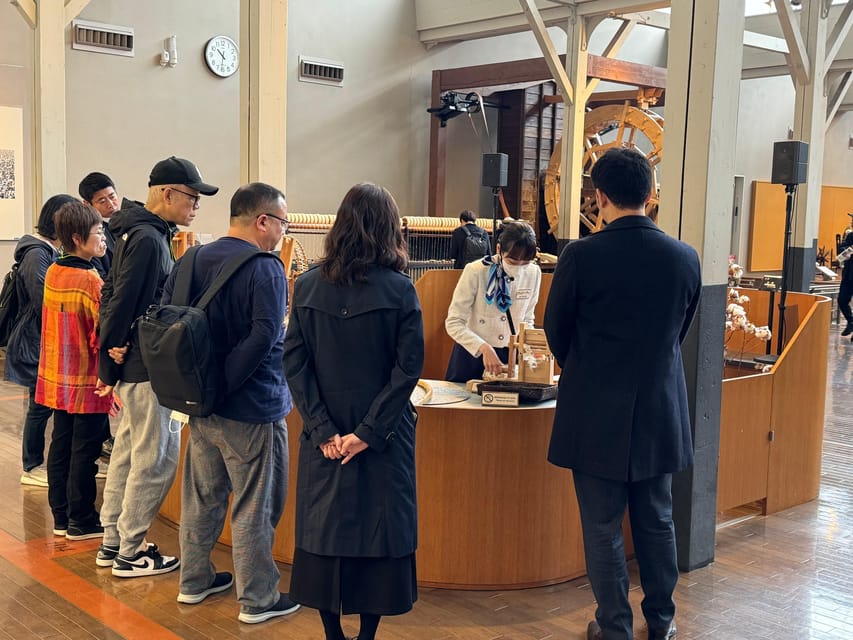
The star feature is the G-type automatic loom, invented by Sakichi Toyoda. If you like watching machines do their job, this is where your attention will actually stay locked in. You can see historic looms in action, not just polished examples behind glass.
Why this matters for you: the loom is not a trivia item. It is a window into automation and reliability. A loom has to keep working consistently, or the whole system fails. Understanding that kind of mechanical thinking helps you see the logic behind later Toyota manufacturing culture.
The guide’s job here is to connect the dots. You will learn how these looms helped revolutionize textile manufacturing and why that was a big deal for the company’s growth. The goal is to show you that Toyota’s later automotive success was built on a skill set, not a sudden lucky break.
In plain terms, this section makes the museum feel less like a company timeline and more like an engineering story. If you are the kind of person who likes to understand the how behind the what, this pavilion delivers.
Automotive Pavilion: pressing, welding, assembly, and the Toyoda Model AA
After the textile wing, you move to the Automotive Pavilion. This is where the tour shifts gears from cloth-making machinery to car production and the technological evolution behind it.
The displays focus on manufacturing processes, and you will see operational machinery tied to key steps like pressing, welding, and assembly. Rather than passively reading about factory stages, you can watch the processes and learn what the machines were designed to do.
That live element is the point. When you see a process in motion, you start to understand why small improvements can add up fast in mass production. You also get a better sense of what production engineers mean when they talk about repeatability and precision.
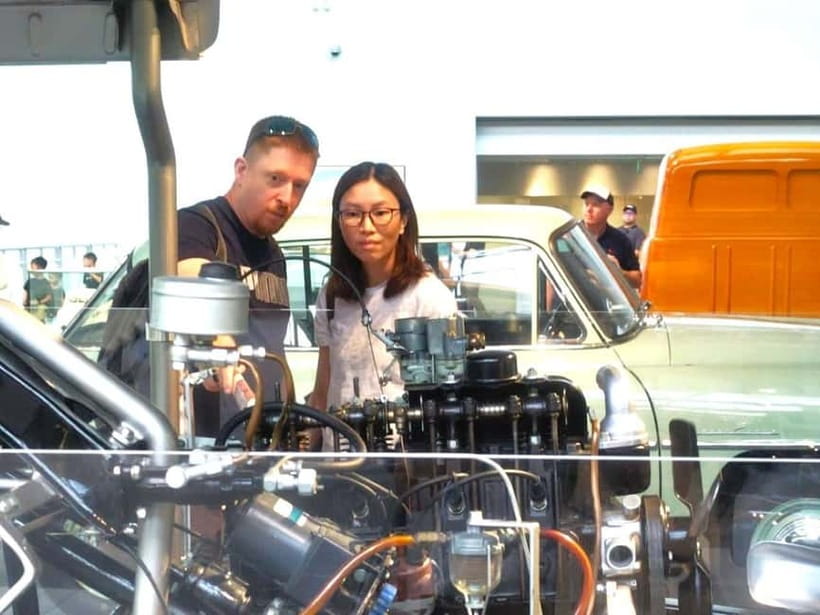
Then comes the car milestone moment. You can admire iconic vehicles, including Toyota’s first passenger car, the Toyoda Model AA, plus other markers in automotive history. It is a satisfying payoff after the loom and machinery segment. The tour basically says, here is where the skill set led.
You will also hear explanations from skilled operators who bring the machinery to life while walking you through how key components were developed and manufactured. That operator-led energy helps avoid the museum trap where exhibits become museum furniture.
If you are worried this will be too technical, do not. The guide translates the mechanical ideas into an understandable story, so you do not need an engineering degree to get value.
A different sort of day in Japan:
- From Nagoya: Gujo, Hida Takayama, and Shirakawa-go Day Tour
★ 4.4 · 398 reviews - Ghibli Park 1-Day Bus Tour from Nagoya
★ 4.5 · 277 reviews - From Nagoya: Hida Takayama & Shirakawa-go Tour w/Opt. Lunch
★ 4.5 · 256 reviews - Hiking the Historic Nakasendo Trail [1 Day Tour from Nagoya]
★ 5.0 · 104 reviews
From textile company to global powerhouse, and the sustainability thread
One of the best parts of this tour is that it does not treat Toyota’s growth as magic. You learn how a smaller textile business expanded and evolved into a global powerhouse. That arc is built into the way the museum is organized, textile first, then automotive.
For you, the takeaway is about cause and effect. You see the early focus on machinery and industrial improvement, then you watch the later shift into automobiles. It becomes clearer why Toyota manufacturing choices later looked the way they did.
The sustainability angle is also part of the story. You can learn about Toyota’s contributions through hybrid and hydrogen fuel cell vehicles. Even if you are not a tech deep-dive person, it is useful to see how a company frames its future. It is not just nostalgia for early cars, it is a link between past engineering and modern energy thinking.
This sustainability segment can also help you connect museum learning to the real world. When you see that Toyota keeps evolving its technology approach, you understand why the company keeps investing in production systems and component development rather than relying only on new models.
In other words, the tour gives you a through-line. It is not just “here are old machines.” It is “here is how problem-solving travels across industries.”
How the 90-minute and 3-hour options feel in real life
The experience comes in lengths of 90 minutes up to 3 hours, so you can choose based on how much time you want to spend watching machines and asking questions. The important detail is that both the Textile Machinery Pavilion and the Automotive Pavilion are included, so you are not choosing one pavilion over the other.
With the shorter option, expect a faster pacing. You’ll still see the major highlights like the G-type automatic loom and the key automotive processes. The difference is how long you linger at each display and how much time you have to let the guide’s explanations sink in.
With the longer option, you typically get more breathing room. That helps with live operational displays because you can watch the machine do its job without rushing to the next stop. It also gives you more time to absorb the story thread from textile to automotive to sustainability.
For first-time museum visitors, I usually recommend the longer option if your schedule allows. The museum is not huge in a way that forces you to sprint, but it is detailed enough that extra time makes the experience feel complete rather than compressed.
And if you only have a limited window in Nagoya, the 90-minute course still seems like a solid bet, since you are still covering both pavilions in one guided visit.
Price and value: does $77 make sense?
At $77 per person, this tour is not the cheapest museum ticket in Nagoya. But for that money, you get admission plus an English live guide and access to both pavilions in one structured visit.
Here is why that value can work for you. The museum is focused on machinery and process details. Without a guide, it is easy to miss what you are supposed to notice and why it matters. With a guide, the same machines turn into an understandable story about innovation and production.
You also get the benefit of live operational displays and explanations from operators. That kind of hands-on viewing usually costs more elsewhere, especially when you add guided interpretation.
Is it a value if you are only casually curious about Toyota? Maybe not. But if you like industrial history, manufacturing, and the engineering logic behind big brands, this feels like money well spent. The tour turns a place you might otherwise pass by into a reason to slow down and pay attention.
Also remember what is not included. Food and drinks are not part of the price, and you will need to handle transportation to and from the museum on your own. Plan to grab snacks elsewhere nearby if you stay for the longer option.
Who should book this Nagoya Toyota museum tour
This experience is ideal if you fall into any of these groups:
- You enjoy how things are made, not just what exists
- You like industrial design, machinery, and process-focused museums
- You want a Toyota story that starts earlier than the usual car timeline
- You like seeing milestones such as the Toyoda Model AA with context
It is also a good fit for collectors and enthusiasts who want a themed visit rather than a generic walk-through. And if you are the type who appreciates why a company became a powerhouse, the textile-to-automotive structure will feel satisfying.
Who might reconsider: this tour is not suitable for people with mobility impairments or wheelchair users. If that applies to you, it is worth checking accessibility needs directly with the operator before booking, since you should not plan on it being easy to navigate.
One more key point for planning. This is not a visit to the Toyota Kaikan Museum in Toyota City, and it is not the Toyota Automobile Museum in Nagakute City. If you are trying to choose between Toyota-related museums in the region, you’ll want to pick the right one for your interests.
Final call: should you book?
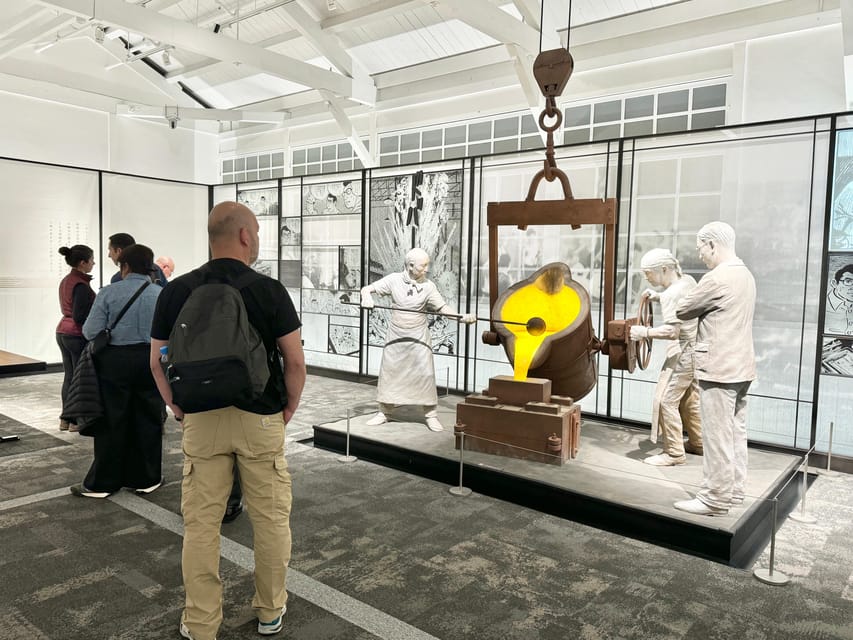
I think you should book this tour if you want Toyota through the lens of machinery, production, and invention, not just brand storytelling. The G-type automatic loom and the operational automotive process displays are the kind of museum moments that stick with you because you can actually see the work being done.
If your schedule is tight, the 90-minute option still covers both pavilions and hits the biggest highlights. If you can spare more time, the 3-hour option lets you watch longer and understand more without feeling rushed.
Now, one last practical tip. Wear comfortable shoes and give yourself a little time to cool down after the automotive displays. Your feet will notice the walking, even when the exhibits are worth it.
FAQ
How long is the Nagoya Toyota Commemorative Museum guided tour?
The guided tour runs for 90 minutes up to 3 hours, depending on the course you choose.
Where do I meet the guide for this tour?
The meeting point is next to the ticket counter inside the Toyota Commemorative Museum of Industry and Technology. The guide will hold a yellow sign with the DeepExperience logo.
What language is the live tour guide?
The live tour guide is in English.
What’s included in the ticket price?
You get admission to the Toyota Commemorative Museum of Industry and Technology and access to both the Textile Machinery Pavilion and the Automotive Pavilion.
What is not included?
Food and drinks are not included, and transportation to and from the museum is also not included.
Can I take photos inside the museum?
Photography is allowed, but flash photography is prohibited in certain areas.
Is this tour for the Toyota Kaikan Museum in Toyota City?
No. This tour is for the Toyota Commemorative Museum of Industry and Technology in Nagoya. It is not the Toyota Kaikan Museum in Toyota City.
Is the museum closed on specific days?
Yes. The museum is closed on Mondays (or the following day if Monday is a national holiday).
Newly listed around Nagoya
- Tea Ceremony Experience★ 4.8 · 7 reviews
- Nagoya: Traditional Japanese Sweets-Making Workshop★ 4.6 · 14 reviews
- Nagoya: Full-Day Nagoya City Tour★ 5.0 · 8 reviews
- From Nagoya: Shirakawa-go UNESCO Village Day Trip w/ Pickup★ 4.0 · 8 reviews
- Nagoya Private Custom Tour with Local Guide★ 5.0 · 15 reviews
- Nagoya: Japanese Traditional Sweets making and Tea Ceremony★ 4.9 · 76 reviews
- Nagoya Highlight Tour guided by friendly locals★ 5.0 · 7 reviews
- Nagoya: Full-day Kisoji Nakaendo Trail Tour★ 5.0 · 6 reviews
Museums, compared.

teamLab Planets TOKYO Digital Art Museum Entry Ticket
Read our review →
Samurai Ninja Museum Guided tour and Experience
Read our review →
Tea Museum Tickets and Matcha Grinding Experience
Read our review →
Skip the lines Basic Ticket at SAMURAI NINJA MUSEUM KYOTO
Read our review →
Skip the lines Basic Ticket at SAMURAI NINJA MUSEUM TOKYO
Read our review →
Tokyo Studio Ghibli Museum and Ghibli Film Appreciation Tour
Read our review →
Geiko Maiko Dance of Kyoto & Visits of Gion Museum
Read our review →Browse the lists this tour appears in