
Review · LICENSED GUIDES & PRIVATE DRIVERS
Nikko Full-Day Private Walking Tour with Government-Licensed Guide (Tokyo DEP.)
Nikko feels huge in one day. This private, government-licensed walking day lets you pick 3 to 4 Nikko stops and build a bespoke route without stress or guesswork. I love the hotel pickup and drop-off plus tight timing that keeps you moving, but you should budget extra for transportation and entrance tickets since they are not included.
The best part is how you get control. Instead of a fixed loop, your guide shapes the day around waterfalls, lakes, shrines, and gardens, based on what you care about most and what your feet can handle.
In This Review
- Key highlights you will feel fast
- Why Nikko works best with a private plan
- Pickup, meeting point, and how your 9 hours move
- How to choose your 3 to 4 Nikko stops (so you do not regret it)
- Tosho-gu, Taiyū-in, and the Tokugawa power story
- Kegon Falls and Lake Chuzenji, the water day option
- Senjogahara, Kanmangafuchi Abyss, and that myth-and-gorge mix
- Rinnoji and the calmer side of Nikko’s temple complex
- Botanical garden, Tamozawa Imperial Villa, and the Edo-Meiji contrast
- Shinkyō Bridge, Kirifuri Falls, and viewpoint options when timing matters
- Kanaya Hotel History House, plus how to build a memorable day
- Price and value: what $224.02 really buys you
- Guide quality: what the best matches have in common
- Should you book this Nikko private walking tour?
- FAQ
- How many places will we see in Nikko?
- Are entrance tickets included for the Nikko sites?
- Is transportation from Tokyo included?
- Where do we meet the guide?
- Can the guide drop us somewhere other than the meeting point?
- Is there free cancellation?
Key highlights you will feel fast
- Government-licensed English-speaking guidance that keeps you oriented between sites
- Pick 3 to 4 stops from a strong menu of temples, waterfalls, and nature spots
- Hotel pickup and drop-off so your day starts and ends with less friction
- Purpose-built walking format that trades buses for closer, more personal sightseeing
- Stops timed for a full day with about 30 minutes per chosen location
- Real guide talent on the ground with excellent communication like Siezo, Yoshii, and Kazu (English and French)
Why Nikko works best with a private plan
Nikko is one of those places that can swallow a whole trip if you are not careful. You have major shrine architecture, Buddhist temples, famous waterfalls, and a lake area that feels like a mountain retreat. Doing it solo means spending extra time figuring out routes, ticket counters, and which stop actually fits your day.
That is why this format clicks. You are not locked into one “standard” itinerary. You choose a small set of stops, and then the guide builds the order, so you get the most satisfying mix in limited time.
The guides you will be teamed up with tend to be praised for staying organized and making families and couples feel comfortable from the first pickup moment. People like Kazu and Yoshii are called out for clear communication and smooth handling of the day, which matters a lot when you are crossing multiple religious sites and scenic areas in one long outing.
The one caution is simple: it is not an all-inclusive package. Even with hotel pickup, you will still pay for transport to and within Nikko, and you should expect entrance fees for many sites.
More Private Guides in Tokyo
- Tokyo 6hr Private Tour with Government-Licensed Guide
★ 5.0 · 3,902 reviews - Tokyo 4hr Private Tour with Government-Licensed Guide
★ 5.0 · 1,394 reviews - Tokyo Private Sightseeing Tour by Car- English speaking chauffeur
★ 5.0 · 1,004 reviews
Pickup, meeting point, and how your 9 hours move
Your tour is designed as a walking tour, with an approximate 9-hour total day. The meeting is in the Asakusa area, near Asakusa Station (the address listed is 1 Chome-4 Hanakawado, Taito City). You meet on foot within the designated Tokyo area, then start working the day with your guide.
At the end, your guide drops you off at your hotel or another place you want. That drop-off flexibility is underrated. After a full day in mountain air, you do not want to wander around trying to land the right train with tired legs.
One more reality check: the tour price covers the licensed guide and the customized planning for chosen sites, but transportation fees, lunch, and entrance fees are not included. There is also a Nikko Pass all area Ticket listed at 4,520 JPY per person, and it is not included. If you plan to use a lot of local transport during your Nikko day, you might price that pass against what you actually plan to ride.
If you want a low-stress day, the tradeoff is clear. You will pay extra for tickets and rides, but you buy back time and sanity by not wasting it figuring out logistics.
How to choose your 3 to 4 Nikko stops (so you do not regret it)
Because you pick 3 to 4 sites, your decisions shape the whole mood of the day. This is where you can get strategic.
If you love temple and shrine atmosphere, combine:
- Toshogu and its related Tokugawa sites (Tosho-gu plus Taiyū-in and Futarasan Shrine are a natural trio)
- Shinkyō Bridge for the iconic gateway moment
If you want nature and photography:
- Kegon Falls plus Lake Chuzenji
- Add Kanmangafuchi Abyss for that river trail walk in the gorge area
If you like history beyond the main shrine complex:
- Tamozawa Imperial Villa Memorial Park
- Rinnoji Temple
- The Kanaya Hotel History House for a quieter, older building story
A practical tip for choosing: think in textures. Pick at least one “architecture” stop and one “outdoor” stop if you can. That way, your day never feels like only stone or only water. The guides tend to build these mixes smoothly, and couples like Mari Noda are specifically praised for producing the right balance of nature and culture, even with limited time.
Tosho-gu, Taiyū-in, and the Tokugawa power story
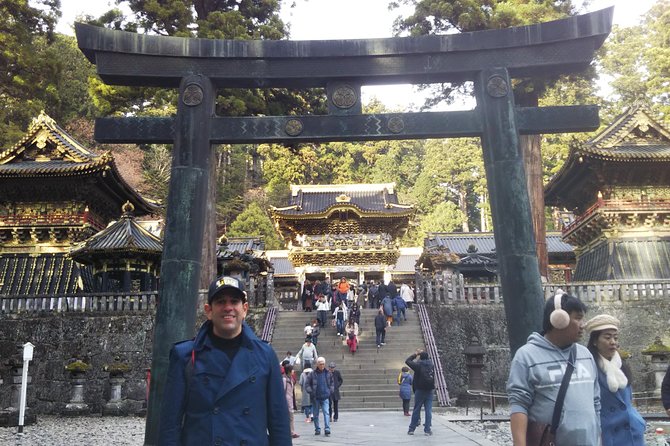
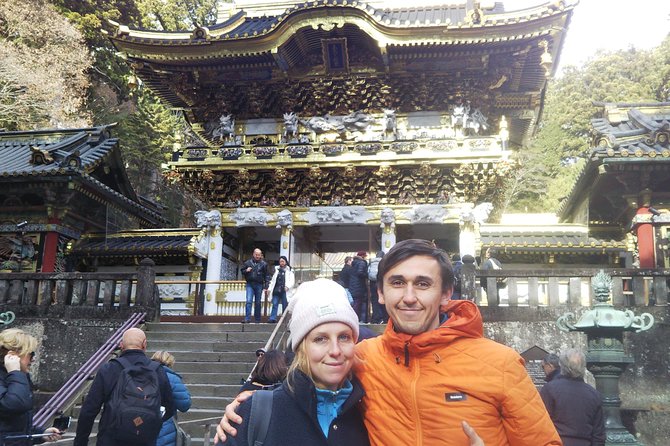
Tosho-gu is Nikko’s signature. You are visiting the final resting place of Tokugawa Ieyasu, founder of the Tokugawa Shogunate, plus nearby shrines and temples. Even if you are not a history buff, the setting makes the role of this family feel real. It is not just a building, it is a statement, placed in the mountains with intention.
A helpful way to enjoy it: decide what you want to notice. Some people go in looking for specific decorations. Others focus on why the complex feels so carefully staged. With a guide, you can shift attention fast instead of bouncing between plaques and missing the story thread.
Taiyū-in is the mausoleum of Iemitsu, the third Tokugawa shogun. It is described as lavish and arranged in a layout that resembles Toshogu’s. If you only have time for one major Tokugawa stop, Toshogu usually gets the spotlight. If you have an extra slot, Taiyū-in gives you the chance to see how the style and symbolism echo through different leaders.
Futarasan Shrine sits next to Toshogu in central Nikko and is much older than its famous neighbor, founded in 782 by Shodo Shonin. The point is that Nikko is not one single vibe. It is a cluster of religious layers, where older traditions sit beside later power displays. With a guide, you can move beyond the simple “see the shrine” checklist and understand why these places belong together.
Possible drawback if you hate crowds of polished stone: these flagship complexes are the star attractions, so time matters. The private format helps because your guide can keep you moving through the day without you standing around as much as you would on a group tour.
More Walking Tours in Tokyo
- Tokyo Tsukiji Fish Market Food and Culture Walking Tour
★ 5.0 · 3,184 reviews - Tokyo: Shinjuku Local Bar and Izakaya Guided Walking Tour
★ 4.9 · 1,794 reviews - Tokyo: Tsukiji Fish Market Food and Walking tour
★ 5.0 · 1,724 reviews - Tokyo: Asakusa Walking Tour with Sensoji Temple Visit
★ 4.8 · 1,583 reviews
Kegon Falls and Lake Chuzenji, the water day option
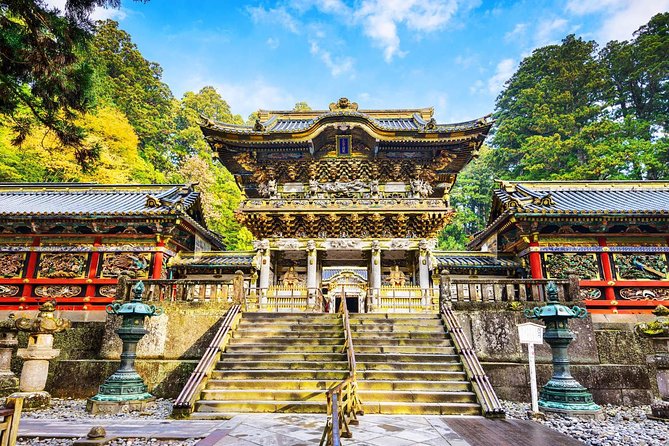
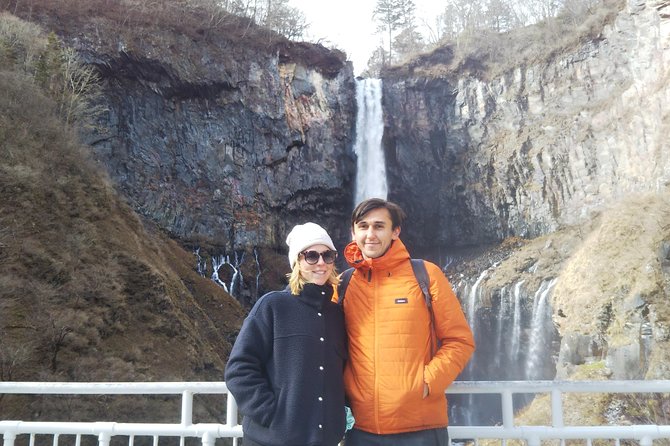
If your ideal Nikko day includes big views and a soundscape, start with Kegon Falls. It is Nikko’s most famous of 48 waterfalls. Water from Lake Chuzenji drops 97 meters straight down to the rocks. The description also notes a special lift for visitors, which is important because it affects how you experience the falls. Instead of trudging the whole way, you can get to viewpoint areas more efficiently.
Time is tight for any single stop, since the chosen sites are around 30 minutes each. That means you should come with a plan: do you want the main overlook, or do you want a slower moment to watch the falls and let the mist settle? If you are the type who likes to stand still and actually look, tell your guide. A good guide will keep your priorities intact.
Then pair Kegon with Lake Chuzenji if you want a softer contrast. Lake Chuzenji is Nikko’s largest lake in Tochigi, framed by 25 kilometers of nature. It also has a human story. The area used to be a summer resort for foreigners in the late 19th and early 20th centuries, and there were villas of French residents mentioned in the description. That makes the lake feel like a mix of scenery and a sense of “this place was loved before it became a must-see.”
Why it is valuable: you get one stop that is pure drama and one stop that is more of a wide breathing space. Even if you are moving fast, that rhythm keeps your day from feeling like a sprint.
Senjogahara, Kanmangafuchi Abyss, and that myth-and-gorge mix
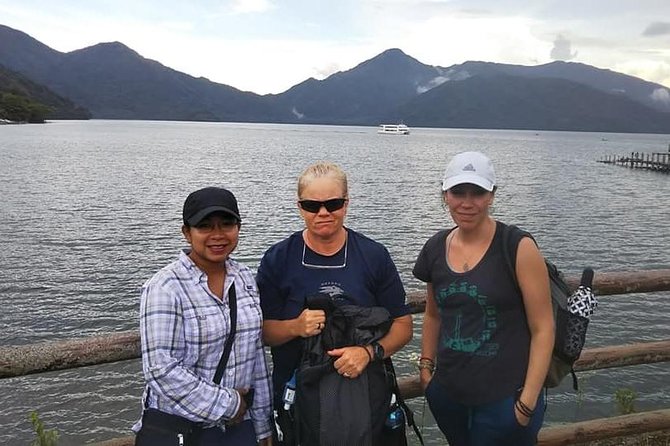
Senjogahara Field is the kind of place you remember because it is odd in a good way. “Senjogahara” translates to battlefield, tied to a mythical story where the gods of Mount Nantai and Mount Akagi fought to claim nearby lakes. It also sounds like a place where you can understand the region as more than just sightseeing. Mountains and water here connect to storytelling.
Kanmangafuchi Abyss brings you to a different kind of experience. It was formed by an eruption of nearby Mount Nantai. The gorge area is only a few hundred meters long, and the description highlights a pleasant riverside walking trail. That matters because it means you are not trapped in a long hike just to get the famous view. You can enjoy the space in a compact way, which fits a private day with time limits.
If you are choosing between waterfalls and abysses, think about your preferred pacing. Waterfalls tend to be loud and dramatic. A gorge trail tends to be calmer and more walkable. Pairing them can work well because you get two different kinds of nature energy.
One more small consideration: because this is a walking tour, winter and shoulder-season conditions can affect comfort. In at least one experience, the road and walkways were not ideal due to snow footprints left the prior day. Bring good shoes and give yourself a little extra buffer for slower footing.
Rinnoji and the calmer side of Nikko’s temple complex
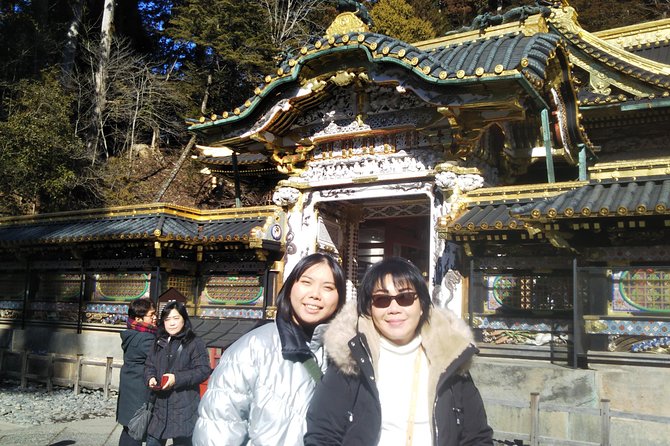
Rinnoji Temple is Nikko’s most important temple and was founded by Shodo Shonin, the Buddhist monk credited with introducing Buddhism to Nikko in the 8th century. That founding detail gives context. You are not just seeing a pretty temple, you are stepping into an older chain of religious influence.
Rinnoji’s main building is called Sanbutsudo, and the complex is described in a way that emphasizes its importance. If you already plan to see Toshogu, Rinnoji adds balance. Toshogu is about the Tokugawa story in a huge ceremonial setting. Rinnoji helps you understand the spiritual layer that existed alongside that later political power.
If you prefer a “less showy, more reflective” stop, Rinnoji fits well. With a private guide, you can choose the depth you want, instead of spending your whole visit scanning from a distance.
Botanical garden, Tamozawa Imperial Villa, and the Edo-Meiji contrast
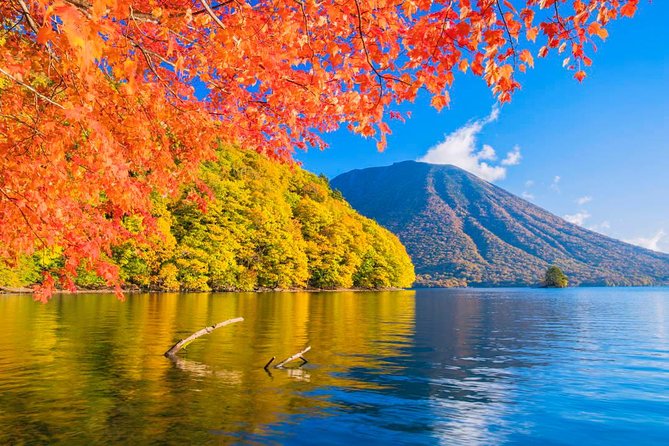
Not every Nikko stop has to be about shrines and waterfalls. If you want a slower, more refined feel, add Nikko Botanical Garden. It is owned and maintained by the University of Tokyo, described as a branch of the university’s main research garden at Koishikawa. That means the garden is not just decorative. It has an academic backbone, which makes it a great choice if you like plants and quiet wandering.
Tamozawa Imperial Villa Memorial Park is for people who enjoy architecture and period blending. The villa is described as combining traditional Edo and early Meiji Period architecture across 106 rooms. It was erected in Nikko in 1899 and used parts of a residence, which ties the villa story to Nikko’s role as a retreat and cultural stop.
This combination gives you a thoughtful contrast: nature you can walk through at your pace (botanical garden) and historical buildings that show how aesthetics and politics shifted over time (imperial villa). If your day starts with grand shrine settings, these options prevent your schedule from turning into only stone and crowds.
Shinkyō Bridge, Kirifuri Falls, and viewpoint options when timing matters
Shinkyō Bridge is the classic entry moment. It stands at the entrance to Nikko’s shrines and temples and is technically part of Futarasan Shrine. The description also notes it is ranked as one of Japan’s three finest bridges. This is a great stop to include because it anchors your day. It is easy to photograph, easy to understand, and it puts you in the right mood for what comes next.
Kirifuri Waterfall is a second waterfall option if you are not going all in on Kegon. It is located northeast of the temples and shrines of Nikko, below the Kirifuri Highlands. It is described as a two-tiered waterfall, 75 meters high. If you already saw Kegon, Kirifuri helps you compare shapes and surroundings, instead of seeing only one kind of waterfall.
Akechidaira Observation Area is a viewpoint choice, tied to views over Irohazaka Slope. One important heads-up in the details: ropeway is closed for maintenance from January 16, 2026 until August 31, 2027. If your trip falls in that window, you may not get the same access or experience tied to that viewpoint route. If you care about this stop, factor in alternatives your guide can suggest from the remaining options.
Kanaya Hotel History House, plus how to build a memorable day
The Kanaya Hotel History House is a small detour with a different flavor. It is a historical building in Nikko that served as the predecessor of the well-known Kanaya Hotel. It is the kind of stop that helps you see Nikko as lived-in culture, not only scenic landmarks.
This is also a useful “recovery” choice if you want something lighter after shrine-heavy mornings. If you pick it wisely, you can end your day with a calmer pace instead of fighting your way through only outdoor viewpoints.
If you want your day to feel complete, I like the “architecture plus nature” formula: one major shrine complex moment (Toshogu or Rinnoji), one water or lake stop (Kegon, Kirifuri, or Lake Chuzenji), and one connector stop (Shinkyō Bridge or Kanmangafuchi). With only 3 to 4 picks, those connectors help the day feel like a coherent story.
Price and value: what $224.02 really buys you
At $224.02 per person, this is not a cheap day trip. But it is also not just transportation with a guide tagalong. What you are really paying for is:
- A licensed local English-speaking guide
- A flexible plan that you customize by choosing 3 to 4 sites
- Time savings from not figuring out routes between temples, waterfalls, and nature spots
- Hotel pickup and drop-off to reduce your Tokyo friction
What you are not paying for includes transportation fees, entrance tickets, lunch, and other personal expenses. Many of the specific sights listed show that admissions are not included, and the tour also lists the Nikko Pass all area Ticket as an extra option at 4,520 JPY per person.
So the value math depends on you. If you would otherwise spend time bouncing between train lines, ticket counters, and indecision, the guide fee starts to look like a time purchase, not just an added cost. If you are the kind of traveler who already knows the best routes and likes to self-manage everything, you might see the price as steep compared with do-it-yourself Nikko planning.
But if your goal is a smooth day with less stress and better decision-making, this price is easier to justify.
Guide quality: what the best matches have in common
The guides behind this experience are repeatedly praised for being punctual, organized, and good at adjusting to preferences. Names that show up in the experiences include Siezo, Yoshii, Kazu, Yusuke, Nobu, Yuki, Hiro, and Mari Noda. You will not need to pick a person in advance from the info provided, but the takeaway is that you are likely to get strong communication and careful day management.
Language also matters. One guide is described as fluent in English and French, which is a nice perk if you want extra nuance. Even if you only speak basic English, you can still expect clear guidance, because multiple guides are noted for excellent communication and taking care of details from pickup.
If you have a very specific interest, you will benefit from the fact that your itinerary is customizable. Want more temple symbolism? Ask for it. Want more nature viewing time? Ask for that. The tour is set up for exactly that kind of control.
Should you book this Nikko private walking tour?
Book it if:
- You want a stress-light day where someone else handles the in-between parts
- You like having choices, since you pick 3 to 4 sites
- You want a mix of shrines and scenery without losing hours to navigation
Skip it or rethink it if:
- You hate paying extra for entrance fees and transport
- You expect every famous stop in Nikko to be covered in a single day
- You are traveling during the ropeway closure window if Akechidaira access is a must for your plans
If you book, do one thing that helps a lot: choose your 3 to 4 stops with a theme. One temple-heavy choice, one outdoors choice, and one “connector” stop like Shinkyō Bridge or Kanmangafuchi makes the day feel like it has shape, not just a list of locations.
Also note this tour averages a booking window far in advance, so do not wait until the last week if your dates matter.
FAQ
How many places will we see in Nikko?
You will choose a customizable set of 3 to 4 sites from the available options. Each stop is timed at about 30 minutes.
Are entrance tickets included for the Nikko sites?
No. Entrance fees are not included, and the sight list indicates that tickets are not included for many of the stops.
Is transportation from Tokyo included?
Transportation fees are not included, and private transportation is also not included. The details mention hotel pickup and guide meet-up in Tokyo, but you should plan for your own transport costs.
Where do we meet the guide?
The listed meeting area is near Asakusa Station (1 Chome-4 Hanakawado, Taito City). The guide meet-up is on foot within the designated Tokyo area.
Can the guide drop us somewhere other than the meeting point?
Yes. The guide will drop you off at your hotel or anywhere else you want.
Is there free cancellation?
Yes. You can cancel up to 24 hours in advance for a full refund.
Newly listed around Tokyo
- 1 Day Nikko Walking Tour, Toshogu and Kanmangafuchi from Tokyo★ 5.0 · 12 reviews
- Nikko Private Tour by public transportation★ 4.0 · 7 reviews
- Nikko Private Tour from Tokyo with Licensed Guide and Vehicle★ 4.5 · 15 reviews
- Nikko one day trip GREEN NUMBER PLATES★ 4.5 · 47 reviews
- Nikko Toshogu, Kegon waterfall, Lake Chuzenji One Day Pvt. Tour★ 5.0 · 22 reviews
- Nikko Full day private experience with English speaking Driver★ 5.0 · 14 reviews
- Nikko Day Tour Private with English Speaking Driver★ 4.5 · 12 reviews
- Nikko Private Day Tour with Guide by Car (from Tokyo)★ 4.0 · 16 reviews
Licensed Guides & Private Drivers, compared.
Tokyo 6hr Private Tour with Government-Licensed Guide
Read our review →
Kyoto Early Morning Tour with English-Speaking Guide
Read our review →
Tokyo 4hr Private Tour with Government-Licensed Guide
Read our review →
Kyoto 6hr Private Tour with Government-Licensed Guide
Read our review →
Hiroshima / Miyajima Full-day Private Tour with Government Licensed Guide
Read our review →Early Morning Tour with English-Speaking Guide
Read our review →
Tokyo Private Sightseeing Tour by Car- English speaking chauffeur
Read our review →
Mt Fuji Private Tour with English Speaking Driver
Read our review →Browse the lists this tour appears in